




| DIRECTORY OF NIGHTCLUBS | ||
|
|
|
|
|
|
|
|
|
|
|
|
|
|
|
|
|
|
|
|
|
|
|
|



| DIRECTORY OF NIGHTCLUBS | ||
|
|
|
|
|
|
|
|
|
|
|
|
|
|
|
|
|
|
|
|
|
|
|
|
This song is part of his upcoming album “Sueño Alcanzado”, a production that will be released on May 30 and represents the culmination of years of musical research, fusing the classic salsa sound with jazz influences and the romantic tradition of boleros.
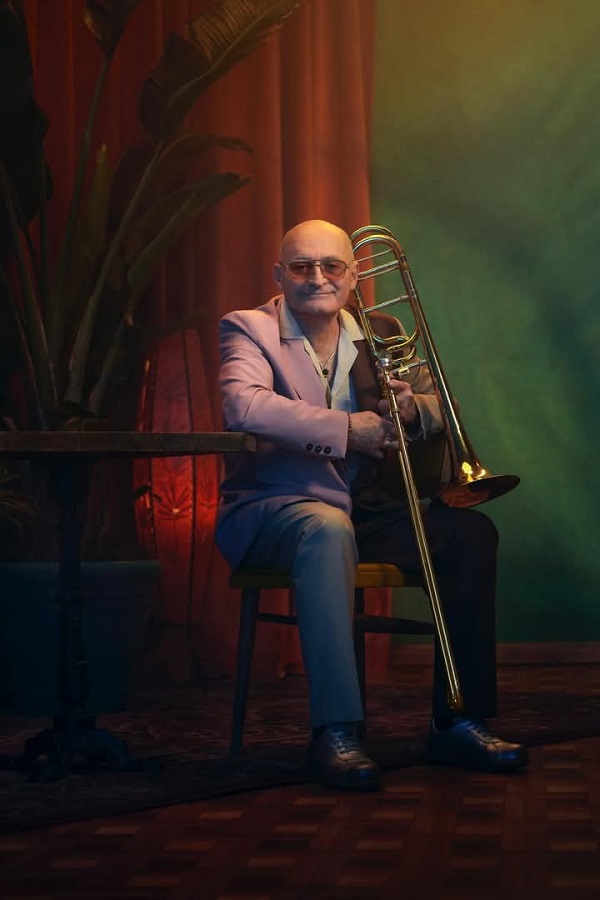
In “La Rumba Me Llama”, Dudamel brings his trombone to the forefront of a vibrant composition that captures the essence of the rumba as an inescapable call. With a musical structure that evokes the great salsa orchestras and an impeccable instrumentation.
The piece stands out for its meticulous arrangements, powerful brass and an irresistible cadence, faithful to the spirit with which Dudamel has approached his music. The track is an invitation to the dance floor and a testament to the rhythmic power that has defined his career.
The album Sueño Alcanzado not only takes its name from a personal concept of triumph, but also from one of his most significant pieces.
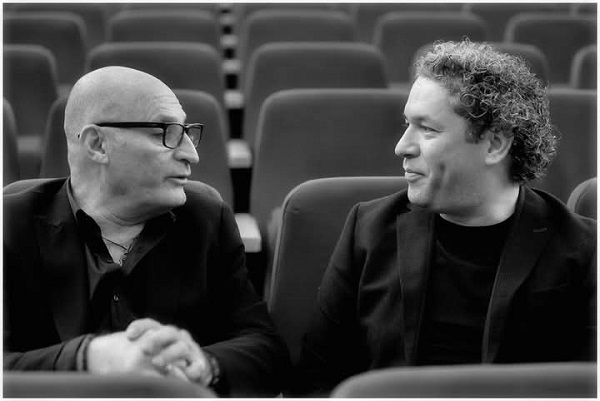
Dedicated to her son and with her special participation on violin, this piece encapsulates the spirit of a project that transcends the musical to become a testimony of life.
More than a nostalgic production, “Sueño Alcanzado”, of which the song “La Rumba Me Llama” is part, is the reflection of an evolution. The music that accompanied him since his childhood now takes a new form under his direction, in a creative process that has brought together talented musicians with whom he shares the same vision.
His orchestra, based in Madrid, has become the vehicle to continue taking his proposal to international stages, demonstrating that salsa is still alive in every note and every drum beat.
Oscar Dudamel Virtuoso Musician, Trombonist and Orchestra Conductor.
Oscar Dudamel, a Venezuelan trombonist, discovered his passion for salsa as a child when he first heard “La Murga” by Willie Colón. Although his formal musical training began with Maestro Pablo Canela and later continued within El Sistema as a classical musician, that early experience left a profound mark on him, inspiring his dream of playing the trombone and solidifying his love for salsa as his ultimate passion.
Dudamel was born on January 14, 1961, in Barquisimeto, Venezuela. He grew up in a musical family where every gathering was celebrated with music, fostering his passion for the art from a young age. His parents purchased him a trombone, and he began his studies at the Yamaha Music Academy.
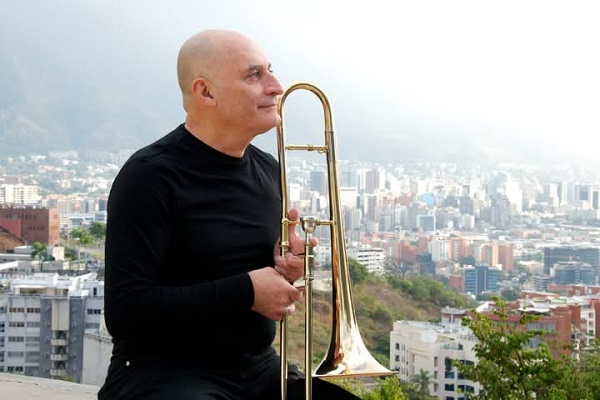
In addition to his Cuatro training, Dudamel began studying and playing various percussion instruments, further broadening his musical repertoire.
His academic training took place at the Lara State Conservatory in Barquisimeto, and at the National System of Youth and Children’s Orchestras and Choirs of Venezuela, also known as El Sistema.
During his teenage years, he became a member of the Youth Orchestra of Lara State (El Sistema Lara) and the Liceo Mario Briceño Iragorry Band, where he had the opportunity to expand his musical knowledge and explore various genres.
Over the years, he became a member of the Lara Youth Symphony Orchestra of Lara, part of the national network of Venezuela’s El Sistema orchestras, actively participating in classical music.
However, his fascination with the Caribbean rhythms of salsa never disappeared. Thus, he combined his classical training with his passion for salsa, performing with renowned artist and sharing the stage with legends of the genre, such as Héctor Lavoe, Ismael Rivera, Ismael Miranda, Celia Cruz, Justo Betancourt, Marvin Santiago, and other great artists.
Dudamel’s surname is synonymous with music. He is the father of Gustavo Dudamel, one of the most acclaimed classical music conductors in the world. Gustavo’s well-known fondness for salsa stems from his father, who recently fulfilled his lifelong dream of releasing a solo album titled Sueño Alcanzado, dedicated to his son.

Research Sources:
Contact: Katie Baloian of Radio Notas (Compartiendo Ideas)
Alberto Crespo (Pianist and Arranger)
Also Read: Mariana “The Sonera of Venezuela and for the world”
Cuba has an extensive list of talented musicians and a great musical and artistic tradition that are truly the envy of many countries, so it is impossible to cover all the exponents of this land of talents. However, in this opportunity, we talked to one who sets the bar very high among them all, the incredible arranger, composer, sound engineer and multi-instrumentalist Kiki Valera, whom we have been able to interview for the March edition.
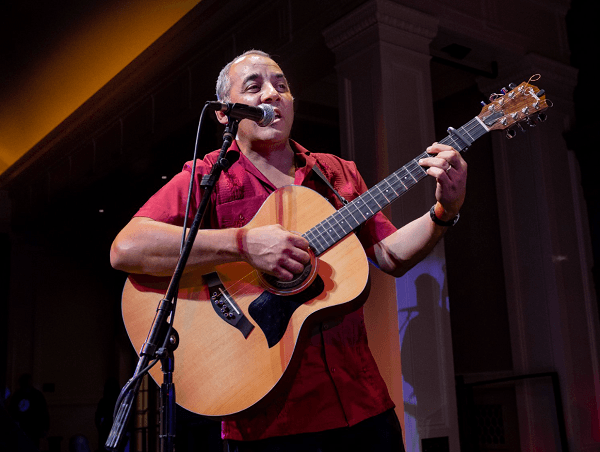
The first thing to point out about Kiki is that he was born into a very musical family in the easternmost part of the island of Cuba, specifically in Santiago de Cuba, which is an area well known for the presence of the now world famous Cuban son. In addition to that, his father, Don Felix Valera, inherited from his family and ancestors those musical genes that came from his grandparents, great-grandparents and further back.
So much so that Don Felix was a music teacher in the small town of San Luis, which was 30 kilometers from Santiago de Cuba, while his mother was a dance teacher. Both were recent graduates of the first national school of art instructors that was founded in the country in the early 1960s, while Kiki was just being born.
Growing up surrounded by all this environment, music was the first thing he heard and lived, not to mention that the artist already had the necessary conditions and abilities to dedicate himself to this world professionally. When he was six years old, his father gave him a Cuban tres, one of the most iconic instruments of the son, and taught him his first songs, melodic motifs, tumbaos, among other things.
One thing to mention is that the Valera Miranda family does not consist of professional musicians as such, but rather empiric musicians who frequently get together at family events such as birthdays, Christmas, New Year holidays and vacations to play the tres, the bongo, the maracas, the guitar, among many other instruments.
As a child, this was all very normal for him until he realized that his interest in music was genuine and he entered the Conservatorio Esteban Salas in Santiago de Cuba to study classical guitar. It was thanks to his studies that he realized that his family’s thing with music was something really authentic that had been developing a very long time ago, more precisely since the 19th century.
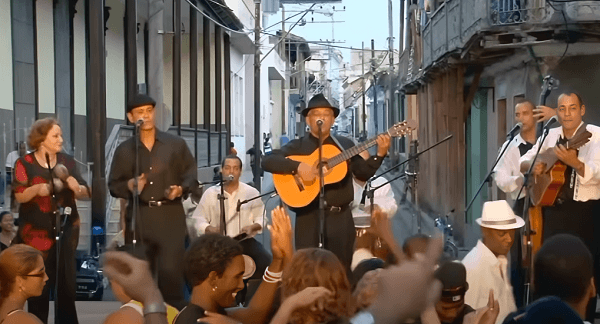
It turns out that a now deceased musicologist named Danilo Orozco was conducting a sociological survey in the eastern part of the country and happened to be a good friend of his father. In one of their many talks, Don Felix told him much about the family history with music for several generations, which caused Orozco’s curiosity and he got to the rural area where the family had lived. These visits determined that the oldest ancestors were true carriers of the roots of son in the eastern region, to the point that this researcher even made a documentary and the Valeras of that time recorded two albums with a didactic approach to show the cultural phenomenon that happened in that family nucleus.
After all this, Kiki felt even more destined to continue the legacy of his ancestors in music, but with a little more academic training and more modern touches in keeping with the times. That was more than 40 years ago.
There is a whole resurgence of genres, already thought forgotten, by the passage of time, but thanks to tributes by certain fashion artists, they have risen from the ashes to occupy the place that should never have been taken away from them. We have the example of Bad Bunny with his album ”DeBÍ TiRAR MáS FOToS”, which focuses on the cultural and musical heritage of Puerto Rico and makes use of salsa, plena, and boleros to show the musical richness of the Island of Enchantment. We can also mention Desorden Público’s upcoming album ”Salsa All-Ska” which pays homage to salsa as part of the celebration of its 40 years of musical trajectory. Not to mention the 2024 Latin Grammy Awards which paid tribute to salsa and counted with the presence of Oscar D’ Léon, Tito Nieves, Marc Anthony and La India among its guests.
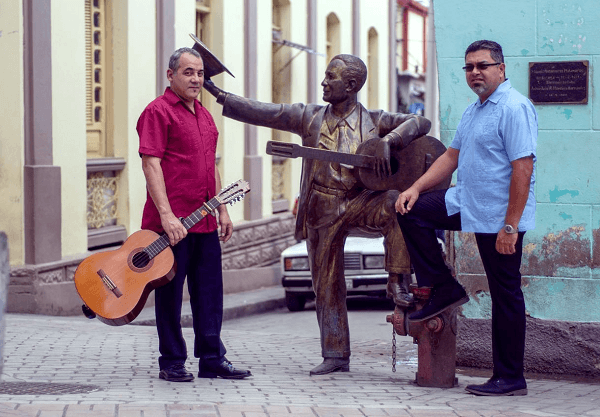
On this phenomenon, Kiki considers that artists in general are the reflection of their time and the manifestation of the environment in which they develop. For the same reason, he believes it is inevitable wanting to look back to understand where we come from, no matter how many years pass. ”After you study a genre such as reggaeton, you can tell that it has been nourished by other musical manifestations that preceded it. Moreover, when musicians are given the task of acquiring technical and theoretical knowledge of music, they always try to innovate by recreating the foundations of the genres in which they work” said Kiki on this interesting and important subject.
”There is a saying that if we don’t know where we come from, it’s hard for us to know where we are going and this is the case. Contemporary musicians generally provide their vision of music and create new concepts, fusions and rhythmic patterns, but all this always comes from the past to a certain extent. To build something new, you need a base” he continued.
Changing the subject radically, we wanted to know when Kiki decided to leave his country to settle in the United States, specifically in Seattle, to which he replied that he arrived here on April 2, 2013. The main reason why he left was due to his partner Naomi Bierman, who convinced him to move to start a life together in another place.
With that decision, the musician had to make a total shift in mindset, since he had lived in Cuba all his life and came from a very close-knit family. He had to give up the closeness he had with his loved ones, culture, values and climate to adapt to a completely different way of life in a territory that was nothing like his own.

Read also: His father’s love for music rocketed him to stardom
The Bay Area continues to be the source of much talk in the Latin music scene and very talented singer and vocal coach Laura Bravo is the perfect example of that. The young but experienced artist gave us the honor of talking exclusively with us to learn a little more about her ambitious career and everything achieved over the years.

Laura tells us that she has been interested in music all her life, as her grandparents, aunts, uncles and cousins were always dancing and listening to music at home. In fact, her grandfather had a vinyl record player in which he always played boleros and Peruvian criollos waltzes, which inspired him to bring out his guitar and teach her little 6-year-old granddaughter to play. This led Laura to take a genuine interest in music and participate in events and recitals at school where she could evolve in this area.
On reaching the age of 12, her godfather gave her the opportunity to study music and singing at the Lima Museum of Art, Peru. At that age, she offered small concerts in which she was learning what she needed to pursue a more formal career in the future, something that she would achieve a few years later.
She also participated in a singing contest called ”Codigo Fama” and in some talk shows of the famous host Monica Zeballos on gifted children on Univision.
After completing her education, Laura moved to the United States when she was 17 years old, since she had many relatives living in California and already planned to move there at some point. That is how she, her parents and sister had been getting all the important immigration paperwork done for about ten years until they met all the requirements to be able to travel. In that state, her aunts, uncles, cousins and grandparents were already waiting for her and welcomed her immediately after arriving in the country.

Laura is currently involved in a cumbia band known as La Explosiva Sonora MX, with which she recently played at Giants Stadium in Oracle Park while supporting her local baseball team. The band also has a large presence at events and private parties where it makes attendees dance to their happy and catchy tunes.
In addition to that, she also has her own acoustic duo called Laura and Ray, a project she has with her uncle for the past two years. With him, she has taken over the Summer Nights and Orchard Days at the famous Filoli Country House.
All this without mentioning that he has also been collaborating with the orchestra VibraSÓN for some time with great musicians such as Jake Jacobs, Manny Martínez, Luis Morales, Carlos Caro and many others.
Collaboration between Laura and the group Marco Díaz y El Tren started thanks to a mutual friend, percussionist Julio Pérez. Marco Diaz and Laura coincided in the same orchestra and he invited her to sing with his own band in a small concert at the San Jose Flea Market, which represented a first test for her in the group and was very successful.
The singer says she has so much fun playing with the guys, which she considers a very important part of the work she is doing with them. ”The guys are all extremely professional and it is an honor for me to be able to share this experience with them. I always learn a lot from Marco Diaz, Saul Sierra and Julio Perez’‘ said Laura about Marco Diaz and El Tren.
Although Diaz, Sierra and Perez have been playing together for many years and Laura was the last to arrive, they have all been able to mesh with each other without any problems and hope to stay together for many years to come.

Laura discovers her participation at The NAAM Show as a wonderful experience. At the time, she was collaborating with a local cumbia band called Sonora San Jose, which was invited to attend the event in the 2022 edition.
She says it was not easy to get to the event venue and she and her colleagues stayed in an Airbnb during those days. She remembers with a laugh how she would wake up the other guests with her vocal warm-ups very early in the morning to be ready for the show.
Sonora San Jose was the first group to perform at 11 a.m. and its members shared with many other very professional musicians from whom they learned a lot.
Laura is well known for working with salsa, merengue, cumbia, rock, pop and many other Latin genres. The reasons why she has been so concerned with covering many genres is that she likes to nurture from the energy of all kinds of people and reach as many audiences as possible.
”I’ve been a person who has said yes to many things. Whenever the opportunity to learn a new genre presents itself, I take it without thinking” says Laura about her musical styles.
Laura Bravo is an artist who is always open to try new things and does not limit herself to what she already knows, which has been a big part of the key to her success. It is a pleasure to have talked to her and we invite you to listen to what she has to offer in all her projects.


Fine Rumbero, Singer, Composer, Arranger, Percussionist, Actor and Orchestra Director well known since the late 40’s, especially as a guaguancó singer.
He began touring the world in 1949 and met his later wife in 1960 in Peru.
That same year, he settled in New York, participating in the local scene. He participated in the LP “Patato y Totico” in 1967, he also participated with his brother Eloy Martí in a Quintet accompanied by Gene Golden for the year 1979.
Israel López (Cachao), Arsenio Rodríguez, Héctor Cadavieco, Francisco Valdés, Papaíto, Tony Mayari and Mario Cadavieco also worked on that album.

In it Martí is involved with talents such as: Tony Cofresí, Andy and Jerry González, Yomo Toro, Paquito Pastor, Ray Romero, Claudio Roditti and Ignacio Berroa, among others.
“Iya Modapue” is in itself a guaguancó with open rumba, being at the same time the favorite number of the ‘Grupo Folklórico’, and even the first groove to be recorded.
The levels of experimentation and the freedom to unload several rhythms in a single musical performance are the factors producing the attraction of the musicians for “Iya Modupue” (which means Thank You Mother).
The vocal part is in the hands of Virgilio Martí. The trumpet of “Chocolate” Armenteros, the trombones of José Rodríguez and Reinaldo Jorge, the flute of Gonzalo Fernández and the percussion of Frankie Rodríguez stand out.
The song was interpreted by Virgilio Martí, who also plays the congas. In “Se Me Olvidó”, the violin of Cuban Alfredo de la Fe, the quinto of Julito Collazo, the street redoblante of Jerry González and a Mexican marimba played by Andy González in counterpoint to the notes of the double bass, also played by Andy, stand out. Here it is worth mentioning that Alfredo de la Fe is a virtuoso violinist and among his many performances, I remember his work with Eddie Palmieri, Larry Harlow (the wonderful Jew), the Fania All-Stars and the avant-garde Típica 73.
In the early 80’s he formed a band with brothers Andy and Jerry González, and percussionist Ignacio Berroa.
It is worth mentioning Virgilio Martí’s 1985 performance in the film by Cuban filmmaker León Ichaso entitled “Crossover Dreams” (Sueños truncados).
In it, the Havana native plays the role of “Cheo Babalú” and vocalizes the song “Llora Timbero”.
In that film production made in New York City, he also participates with actor Rubén Blades, who plays the role of “Rudy Veloz”, where they sing the song “Todos Vuelven”.
In 1990, he contributed to the “Soundtrack” of the movie Azucar Amarga.
He maintained a great skill in converting songs from other genres into rumba arrangements.
We can mention the adaptation of the theme of the Brazilian composer Jorge Ben, “Más Que Nada” in which he appears on the LP with Patato and Totico.
Virgilio Marti – Guaguanco (1979)
Tracks:

Information realized (June 1, 2024)
Also Read: Carlos “Nene” Quintero comes from a family of musical prodigies
Contributor: Dj. Augusto Felibertt (International Salsa Magazine)