• Skip to primary navigation
  • Skip to main content

International Salsa Magazine

  • HOME
  • Previous editions
    • 2026
      • ISM / May 2026
      • ISM / April 2026
      • ISM / March 2026
      • ISM / February 2026
      • ISM / January 2026
    • 2025
      • ISM / December 2025
      • ISM / November 2025
      • ISM / October 2025
      • ISM / September 2025
      • ISM / August 2025
      • ISM / July 2025
      • ISM / June 2025
      • ISM / May2025
      • ISM / April 2025
      • ISM / March 2025
      • ISM / February 2025
      • ISM / January 2025
    • 2024
      • ISM / December 2024
      • ISM / November 2024
      • ISM / October 2024
      • ISM / September 2024
      • ISM / August 2024
      • ISM / July 2024
      • ISM / June 2024
      • ISM / May 2024
      • ISM / April 2024
      • ISM / March 2024
      • ISM / February 2024
      • ISM / January 2024
    • 2023
      • ISM / December 2023
      • ISM / November 2023
      • ISM / October 2023
      • ISM – September 2023
      • ISM – August 2023
      • ISM July 2023
      • ISM Edition June 2023
      • ISM – May 2023
      • ISM April 2023
      • ISM March 2023
      • ISM February 2023
      • ISM January 2023
    • 2022
      • ISM December 2022
      • ISM November 2022
      • ISM October 2022
      • ISM September 2022
      • ISM August 2022
      • ISM July 2022
      • ISM June 2022
      • ISM May 2022
      • ISM February 2022
      • ISM January 2022
    • 2021
      • ISM December 2021
      • ISM November 2021
      • ISM October – 2021
      • ISM September 2021
      • ISM August 2021
      • ISM July 2021
      • ISM May 2021
      • ISM April 2021
      • ISM June 2021
      • ISM March 2021
      • ISM February 2021
      • ISM January 2021
    • 2020
      • ISM December 2020
      • ISM November 2020
      • ISM October 2020
      • ISM September 2020
      • ISM August 2020
      • ISM July 2020
      • ISM June 2020
      • ISM May 2020
      • ISM April 2020
      • ISM March 2020
      • ISM February 2020
      • ISM January 2020
    • 2019
      • ISM December 2019
      • ISM November 2019
      • ISM October 2019
      • ISM Septembre 2019
      • ISM August 2019
      • ISM July 2019
      • ISM June 2019
    • 2016
      • ISM December 2016
      • ISM November 2016
  • Spanish
  • Download Salsa App
    • Android
    • Apple

Search Results for: Son

How To Be A Successful Social Dancer

North America / USA / New York

Social dancing is one of my favorite things about the Latin dance world. There’s something magical about going to any social, but especially one in New York City. As I step out of the elevator and into the social, New York’s busy streets fade away and transported to an entirely different time and place. Music vibrates through the room. The air hangs heavy with sweat. Here I am free to feel, to create, to imagine. Here I am safe.

But it didn’t always feel this way. There was a time when the idea of going to any social left me anxious and uncomfortable. I felt nervous asking leaders to dance. I dreaded the part in the dance when he would let me go and leave me on my own for shines––what would I do?! Surely I’d run out of steps and embarrass myself.

The biggest thing that has changed since then and now is my ability to follow. As I’ve become a better follower, I’m able to devote more energy to creating actual movement while I’m social dancing, and spend less time thinking about which foot I step with or which hand I take.

Dancer - Social
Dancer – Social

For me, a lot of the magic of social dancing comes from the movement itself. That dancer’s high comes from the physical exertion itself, the endorphins your body creates as it bends and twists, contracts and lengthens.

Practicing the very fundamentals of leadand-follow will help you get to this state in your own social dancing. Take classes and private lessons too, but don’t forget to spend time practicing on your own. Without dedicated practice, you’ll waste all of the time and money you spend on classes. It doesn’t matter if you practice in a studio space or in your living room, just devote time to practicing.

It’s also helpful to set a goal for yourself each time you go out social dancing and focus on that one particular thing all night. For example, if you just learned a new pattern in class, try to use it at least once during each dance. If you’re working on transferring your weight, pay special attention to your six/seven or your two/three during every dance.

Actively creating a community is another large part of being a successful social dancer. While the salsa scene is an incredibly diverse community, it still has a strong Latin influence, and there are certain Latin cultural norms present throughout any salsa community regardless of city, state, or country. Perhaps the one that took me the longest to figure out is the idea that it’s your responsibility to go around and say hello and goodbye to everyone in the room, whether you know them well or not.

Growing up I was taught that it is rude to ask questions or insert yourself into a conversation with people you don’t know that well. It took me a while to learn and understand that at a salsa social, it’s considered rude not to. Be the person who walks into the room and says hello to everyone with a kiss on the cheek. Say hello to them even if you don’t know their name, or don’t quite recognize their face. Even if doing so feels a bit uncomfortable. Make sure to make the rounds and say goodbye before you leave the event too.
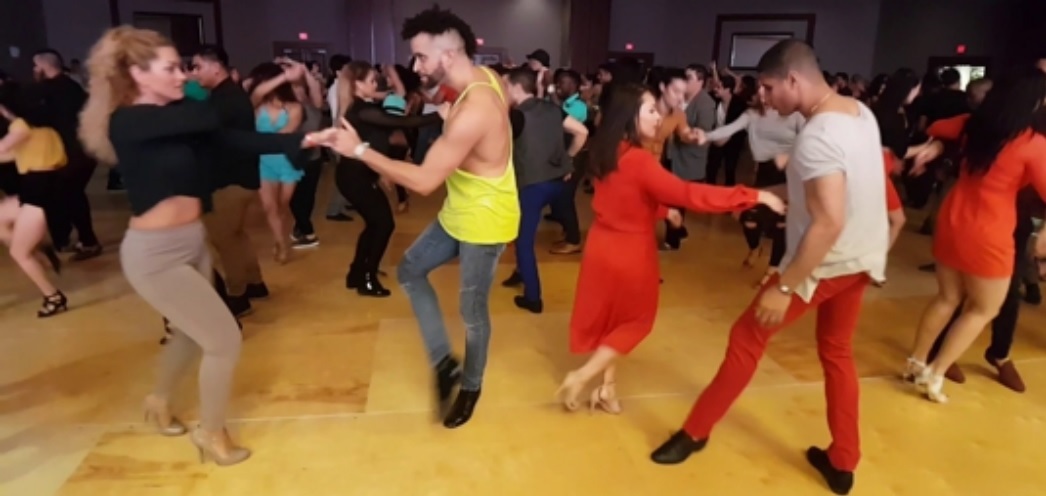
Dancers dancing at the social

Successful social dancers also ask others to dance. Followers, this applies to you as much as it does to leaders! Ask the person you really want to dance with to dance, even if you’re scared to do it. Ask the person you’re not excited about dancing with too. It will make their night. Ask the regulars in the community you see all the time, the newcomers, and out of town visitors.

Finally, a huge part of creating any community is showing up. You don’t have to go out social dancing every weekend, but do make an effort to go out regularly. Show up and show your support for recurring socials, as well as those special events and anniversary parties. The social dancing community only flourishes as much as the people in it and for this global community to grow, we all have to devote energy and time to it.
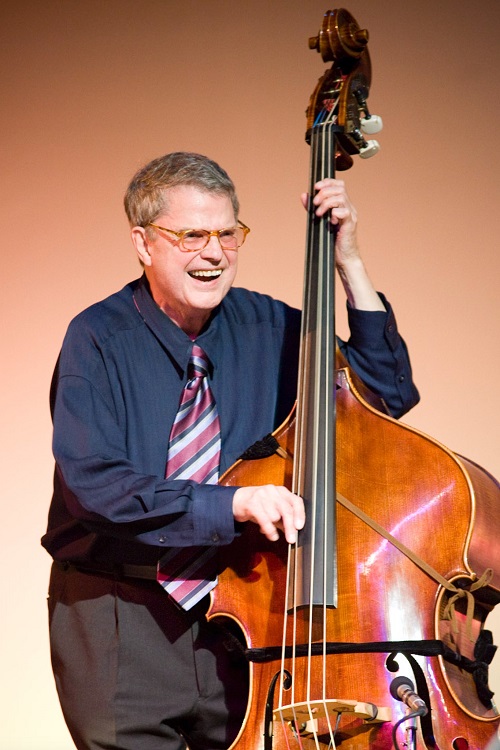
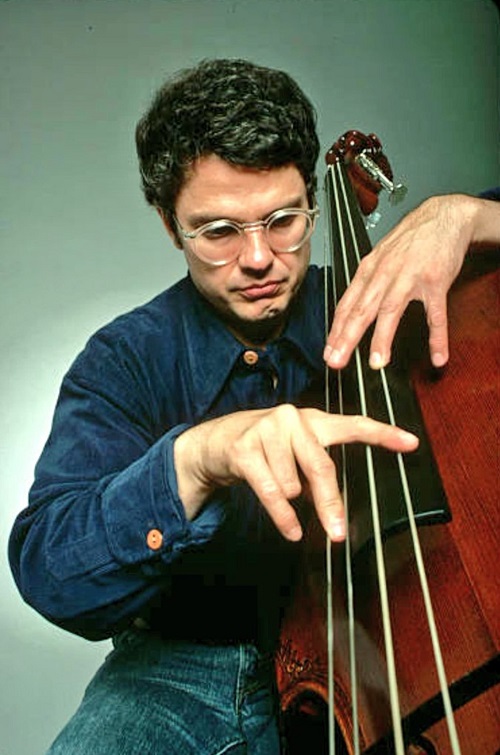
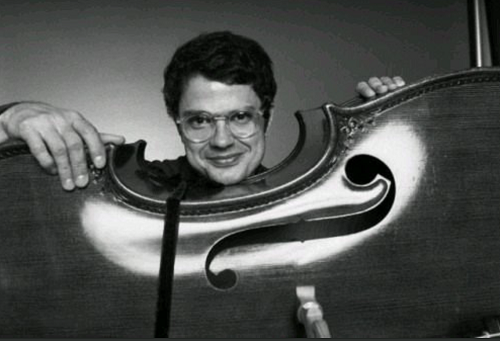
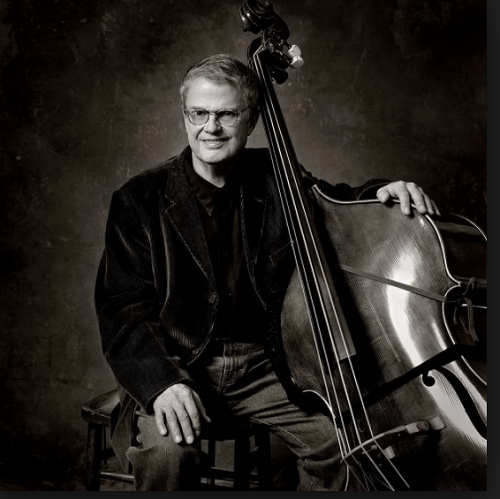
Charlie Haden was an extraordinary double bassist and composer who was a key figure in the history of modern jazz.

Double bassist and composer extraordinaire, Charlie Haden (Shenandoah, Iowa, August 6, 1937 – Los Angeles, California, July 11, 2014).

Charlie Haden began his professional activity in 1959 with Ornette Coleman’s quartet, a key figure in the history of modern jazz, and very soon began to investigate in that direction that Coleman initiated known as free jazz.

In that context, Charlie Haden participated in the recording baptism of that movement with the album recorded on May 22, 1959 for the Atlantic label and entitled: “The Shape of Jazz to Come” with the invaluable collaboration of Don Cherry, another incomparable musician and leader together with Coleman of that revolutionary musical movement that still lasts today.

Charlie Haden (August 6, 1937- July 11, 2014)

Charlie Haden in 1960 participated with another double bass player, Scott LaFaro in an operatic manifesto entitled: “Free Jazz” of whom both were distinguished representatives in their instrument.

In 1964 he worked with Denny Zeitin’s trio and in 1966 he returned with Ornette Coleman while expanding his performance area with collaborations left and right.

In these areas he stood out for his participation in the work, studio and recording meetings of the “Jazz Composer’s Orchestra” and in 1969 he was finally able to realize a wish he had been pursuing for years: to record his first album under his own name with the Liberation Music Orchestra.

With original arrangements by Carla Bley, the music of the Liberation also stood out for the political character of the songs, being the first time that, in that context, a jazz group echoed the popular songs alluding to the Republican side of the Spanish Civil War.

After the album recorded by Impulse in 1976 entitled: “Song for Che” in homage to Ernesto Che Guevara, Charlie Haden formed with Don Cherry, the quartet “Old and New Dreams” with which he toured throughout Europe, Asia and North America. At the end of the eighties, Charlie Haden elaborates a new musical discourse within the framework of his new formation entitled “Quartet West”.

The founding album of this new discourse was an extraordinary album generically entitled “Quartet West”, a musical manifesto of great beauty and one of the essential albums of contemporary jazz. From 1990 onwards, Charlie Haden explores more intimate jazz universes, introducing the duo format into his discourse.

Charlie Haden
Charlie Haden

In this context, the musician explores himself in the composition and his relaxation together with the other protagonist discovers us a music of great inventiveness, clean in the execution and approached from a purely instrumental point of view.

This is how on Thursday, November 14, 2002, Charlie Haden appears in Seville at the Central Theater with the master of the guitar, Jim Hall to offer a portentous concert, full of sensitivity, art and talent.

Fortunately Apoloybaco was present that magical night in Seville and Charlie Haden is still making music of the highest level. ~ (apoloybaco)

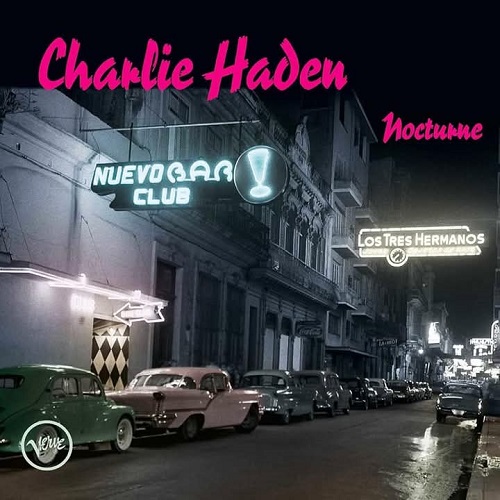
Charlie Haden teams up again with the young Cuban pianist Gonzalo Rubalcaba in this melancholic and relaxing album. Ignacio Berroa on drums and percussion completes the main trio.

Special guests include tenor saxophonists Joe Lovano and David Sánchez, violinist Federico Britos Ruiz and guitarist Pat Metheny (one track only).

Charlie Haden photo 1978 Roger Ressmeyer

Rubalcaba contributes orchestrations on two tracks, both of which omit drums and percussion. Haden’s intention is to explore the bolero, a distinctive Latin dance rhythm that Ignacio Berroa accentuates with a soft, subtle snare drum roll, played with brushes, that begins on the “y” of the first beat of the measure and ends on the second.

This rhythm is perfect for a slow dance and, in fact, the whole album is very romantic, with bittersweet melodies and lilting cadences.

The only problem is that Berroa’s bolero figure is present on almost every track, perhaps what you would expect from a bolero album, but there is no getting around the fact that the music sounds pretty much the same on every track.

 (To be fair, Berroa is not the only one guilty of uniformity.) Most of the songs, except for two Haden originals and one by Rubalcaba, are Cuban and Mexican standards, and they are beauties. Haden’s reluctance to mess with them is understandable.

Charlie Haden fue un gran padre.

But the arrangements, always straightforward, fade too easily into the background.

Nocturne may be the best music for a candlelit dinner party, but Haden and his guests are capable of much more.  David R. Adler.

Charlie Haden – Nocturne (2001)
Temas:
01. En La Orilla Del Mundo (At The Edge Of The World) (Martin Rojas)
02. Noche De Ronda (Night Of Wandering) (Maria Teresa Lara)
03. Nocturnal (Sabre Marroquin/José Mojica)
04. Moonlight (Claro De Luna) (Charlie Haden)
05. Yo Sin Ti (Me Without You) (Arturo Castro)
06. No Te Empeñes Mas (Don’t Try Anymore) (Marta Valdès)
07. Transparence (Gonzalo Rubalcaba)
08. El Ciego (The Blind) (Armando Manzanero)
09. Nightfall (Charlie Haden)
10. Tres Palabras (Three Words) (Osvaldo Farrès)
11. Contigo En La Distancia·En Nosotros (With You In The Distance·In Us) (Cèsar Portillo De La Luz/Tania Castellanos)

Músicos:
Charlie Haden (Bajo)
Gonzalo Rubalcaba (Piano, Orquestación)
Ignacio Berroa (Percusión, Batería)
Joe Lovano (Saxo tenor en temas #1, #4, #7, #11)
David Sánchez (Saxo tenor en temas #6, #10)
Pat Metheny (Guitarra acústica en tema #2)
Federico Ruiz (Violín en temas #1, #5, #8)

Grabado del 27 al 31 de agosto de 2000 en Criteria / The Hit Factory Studios, Miami, FL.

Charlie Haden - Nocturne (2001)
Charlie Haden – Nocturne (2001)

Research Sources:

L’Òstia Latin Jazz

Dj, Augusto Felibertt

Also Read: Andy Gonzalez started as a musician at the age of 13 in the Latin Jazz Quintet in New York

Puerto Rican singer Max Rosado and what he had achieved in Washington DC

Puerto Rican singer Max Rosado is one more example of everything Puerto Ricans have accomplished and continue to achieve on a musical level in the United States, so it is a great pleasure for us to speak with this phenomenal artist about his life and career in the following lines. Below are the most important topics covered in our conversation with Rosado.

Max posing for the camera
Max Rosado singing for the camera

What caught Max’s attention in music in the first place?

Since he was very little, Max always had a great love for music and this is largely due to his mother, who loved salsa and instilled this taste in her son from a very young age. She loved La Fania All Stars, Hector Lavoe and Frankie Ruiz, who were practically the first artists Max listened to as a child.

As he grew up, he also listened to other salsa exponents such as Jerry Rivera, Rey Ruiz and Luis Enrique, who strengthened in the youngster his taste for romantic salsa which was very fashionable at the time. 

Since he was six or seven, Max was already singing those songs he always listened to on the radio, but he did not take formal music classes until he was 17, which is when he took his artistic inclinations much more seriously. Moreover, at the university level, he started to get involved in bomba, plena and salsa ensembles, thanks to which he met Ramon Sanchez, who is Jerry Rivera’s musical director and arranger for many other artists such as Jerry himself, Frankie Ruiz and Gilberto Santa Rosa. 

Professional start in music

The mentorship he received through these ensembles he played with helped him enormously and his first professional contact with salsa was in 2011 with Rey Ruiz, for whom he worked doing backing vocals and with Guillermo Calderon, who gave him the opportunity to do some dates with them.

Max during a celebrating of a quinceañera
Max Rosado during the celebrating of a quinceañera

He was also able to work with great arranger Tommy Villariny, who worked for El Gran Combo de Puerto Rico. Gilberto Santa Rosa and finally his son Oscar Villariny. Thanks to this contact, Max may have formed part of the orchestra Villariny Salsa Project for some time.

All these experiences were teaching him what he needed to know about the Puerto Rican musical environment and the musicians of his homeland. He has also been able to improve as an artist and have more experience in the genre.

All this adds up to his training at the university with classes related to piano, arrangements, improvisation and other areas of music to understand it and his colleagues so much better.

The 7th St. Band

Back in 2020, Max was planning on forming his own band and finally becoming independent. When he left Puerto Rico and moved to Washington DC in 2018, he met people like Leonardo García, Dominic Patrick Noel and Eduardo Padua, who were also working on their own projects and aroused the artist’s interest in exploring the idea of creating his orchestra again.

It was then that, the following year, he started to perform with his own group in Cincinnati, specifically at an event known as Salsa On The Square. Since then, he could finally make his dream come true and sing live with his own project, with which he has been able to travel to various cities.

As for the name of the group, The 7th St. Band, it owes it to the name of the street Max grew up in Puerto Rico, but he translated it into English to give it that American touch it has.

Max and Villariny Salsa Project
From left to right, Max Rosado, Villariny Salsa Project (composed of Oscarito Villariny and Victor Gabriel), Michelle Brava, and Kayvan Vega

What has Max learned from the artists he has worked with?

Just like Max has worked with Jerry Riera and Ray Ruiz, he also did the same with Luisito Carrion, Ismael Miranda, Jose Alberto El Canario, Daniela Darcourt, among many others. When we wanted to know what he learned from these big names in the industry, he explained that he tends to observe other artists and their engagement with the public to learn well from each one. In the case of Daniela Darcourt, he told us that her talent, interpersonal gifts and human warmth pleasantly surprised him and he was glad to have been able to meet and work with her.

By working with El Canario, Max noted that he was ”a master of the stage” who has an exceptional and admirable audience management. Talking again about Jerry Rivera, it was an honor for him to have worked with ”El Niño Bonito” of the 90’s whose songs are still chanted with the same feeling as many years ago.

Something that Max admires about all of them is the way they have maintained their positions over the years. He himself notices it in his shows when he plays some of their iconic songs and makes people go crazy with happiness. These are timeless lyrics and artists that Max hopes to belong to one day. 

Max and Noel
Max Rosado next to Argentine singer and songwriter Noel Schajris, who is also a former member of the duo Sin Bandera

Read also: Dina y Los Rumberos makes Portland and its surroundings dance

ISM presents 2 Venezuelan DJ with a great passion for Salsa

Latin America / Venezuela / Caracas

DJ Katiuska Oropeza

Katiuska Oropeza. Born in Caracas, the capital of salsa in Venezuela, currently based in the Carabobo State, Valencia – Venezuela.

DJ Katiuska Oropeza
DJ Katiuska Oropeza

He mentions “My passion for salsa began at the age of 3, influenced by my father who was a great connoisseur of this genre and at the age of 7 I already wanted to learn to play the timbal since I love percussion.

Over the years and by chance I got to know the salsa movement produced by a number of virtual collection salsa stations where a number of music lovers gather to enjoy and keep alive what is the essence and basis of salsa, I become passionate and I begin an incredible learning about everything that Venezuelan salsa is and that is when I become a programmer for the pioneering station on the Internet called www.rumbayguateque.com through this I was the representative in Venezuela of Mr. Alfredo Maleta Torres, the last singer who had the Joe Cuba sextet.

Today I try to spread the little that I have learned from this genre that has an endless history and from time to time participating as a musicalizer in different salsa events.” “Long live salsa forever.”

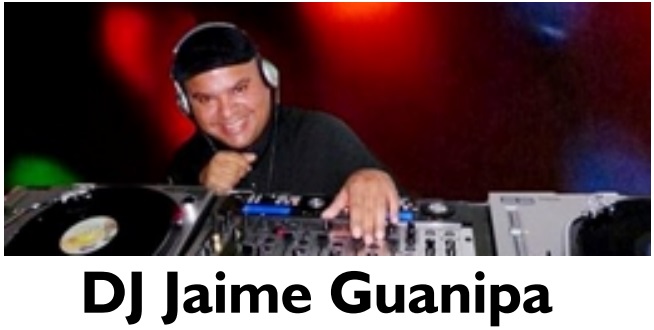
DJ Jaime Guanipa

During his interview on La Maceta radio conducted by me, Jaime mentioned that he was born in December 1966 in Caracas Venezuela, a native of Sarria belonging to the La Candelaria parish, where he grew up in two aspects in his early years, between Sarria and Alta Vista. in Catia parish Sucre also in Caracas.

His first tangible experience within Latin music called “SALSA” was thanks to the Venezuelan “PHIDIAS DANILO ESCALONA” who gave him this label that has immortalized the genre, and for Jaime’s memory it was in 1973 with the premiere of the movie “Nuestra Cosa Latina” and The SALSA Movie in different theaters in Caracas, and through its soundtrack I was shocked, and began to develop a definitive taste within the musical field, nurturing and wanting to be more extensive…

In this way, through the years, I achieved a broader knowledge within the Latin American culture, where it was enriched by absorbing like a sponge everything related to the environment and listening to Radio where they moderated great knowledge to which I can name our Venezuelans and connoisseurs. and moderators in different Radio stations in Modulated Amplitude for the time in Caracas such as Phidias Danilo Escalona, ​​Floro Manco, Enrique Bolívar Navas, Héctor Castillo, Rafael Rivas, among other great broadcasters, achieving a very solid understanding within the majesty of salsa , but…

DJ Jaime Guanipa
DJ Jaime Guanipa

As of 1979 he has the concern to share and listen to the coarsest of our Latin music, beginning with family parties and friends, then he made comments and selected music from the acetate discs that were in said meetings, being this a cult and from 1982 he defined himself as a DJ. Salsero, enriching the technology and the true art of the moment, which is research, the study of the genre and the credits of his albums that logically were and are in LP format.

Generating in this way a breeding ground for experimentation and musical selection, it is from this moment referring to the date in which his experience and exchange of criteria between friends who throughout these years have followed and accompanied him within this passion, having successes as Salsero Musicalizer in extinct venues in the city of Caracas for the years 1985 to 1990, was triggered.

Later, in 1993, he temporarily retired due to family responsibilities, but without ever abandoning my passion for music and genre research both here in my country Venezuela and abroad, and in 2008, he decided to resume after a reasonable time. my most significant taste for salsa musicalization, already for the moment obtaining many valuartes but with its due time within the genre, evolving distinctively in terms of its versatility and exponents, highlighting that for me it is not a challenge since due to the concept earned and maintained has given me a preferential position within the taste of the salsero and the dancer that…

I call demanding, experience experience gained due to the fact that at the time I was surrounded by great friends who love the salsa genre that many of them share today, which is why and subscribed to current technology and its ease of access, it means that in a masterly way I can give the what the dancing public really wants and desires in each meeting, event and party, without a doubt, before it I expose an interactive referential synthesis of my time in this exciting world as it is and I define “Salsa musicalization in Caracas nightlife ”.

Maite Hontele in CONCERT!

Europe / France / Utrecht

A great musician is someone who can enlighten the stage only with his/her presence, this is the case when Maite Hontele is on stage. Full-house, the stage full of colors and all the audience is ready to dance and enjoy the best rhythm: SALSA!

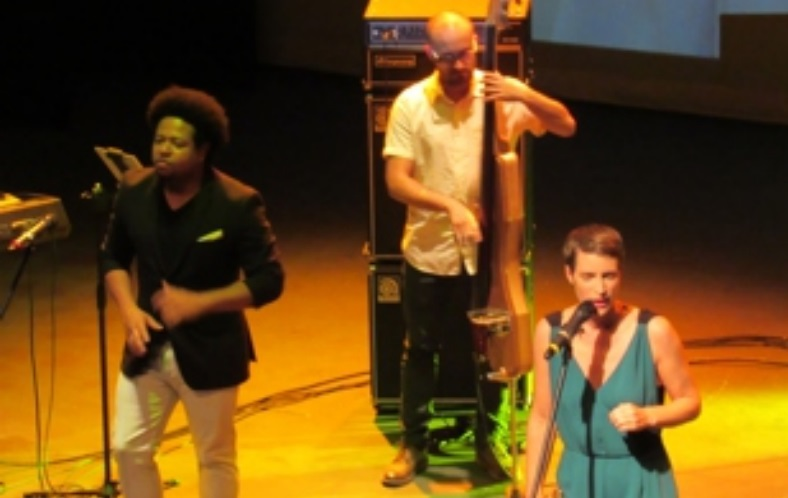
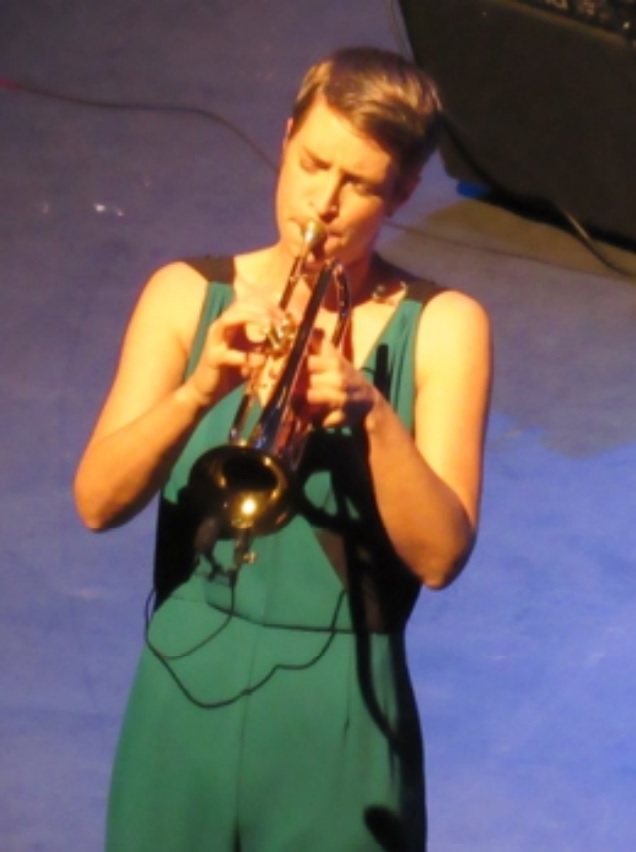
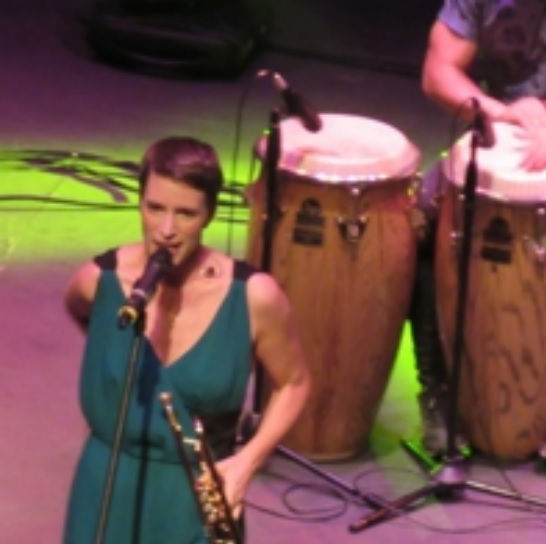
International Salsa Magazine had the honor to be part of the last concert of Maite Hontele, the incredible dutch trumpeter, in Caracas, Venezuela.

Maite Hontele in concert

The silence is interrupted with the beautiful sound of a characteristic trumpet playing a melody, the stage gets full of musicians and Maite comes out with the biggest smile that characterize her.

She starts with a speech where she explains how thankful she is for being there, talks a little bit about Colombia, and then the party starts! Two hours full of hits of herself, Oscar d’ Leon, and many other artists, with the performance of her Colombian band by her side.

Maite Hontele
Maite Hontele

But let’s get deeper in who is her. Maite Hontelé is a trumpeter who was born in Utrecht, Holland, and was raised with music. Her parents owned a huge collection of salsa and son Cubano, and every day she would listen to Latin music, quite unusual for a Dutch girl. After playing a few years with the local brass band, she decided to become a musician, and studied latin and jazz trumpet at the Conservatory of Rotterdam.

Her first big tour was life-changing. She went to Colombia, the country where she now lives. In 2004, Maite Hontelé toured with the world-famous Buena Vista Social Club. In 2009 Maite launched her first album, Llegó la Mona, a salsa-tribute to Colombian music. This album was made with the purpose to tour more in Colombia. Among the gigs she played was the Medellin Jazz Festival.

That year has been very important for her. Not only did Maite record her first album, she also found the place where she wanted to continue to live and make music. That’s when she decided to move to Medellin, Colombia.

Maite Hontele
Maite Hontele

In 2010, she released her second production, Mujer Sonora. The album is focused on oldschool styles such as son and charanga, but also contains some spicy salsa-tracks. This album was presented at the 2010 North Sea Jazz Festival, and on various international tours. In 2011 and 2012 Maite toured many countries with her band, and was a guest with Ruben Blades, Yuri Buenaventura, Issac Delgado, Diego Galé (DVD-recording), Juan Carlos Coronel, Oscar D’León, and many others.

Her 3rd album, Déjame Asi, was released in April 2013. She is currently touring Europe and Latin America.

“My Outlaw Loredo is the most elegant gig-bag in the universe. A perfect match for me!” Maite Hontelé

Maite Hontele in concer - Photo
Maite Hontele in concert – Photo

The show ends with the best energy. Maite Hontele is not only an amazing trumpeter, but also a great singer and composer. We are glad to be part of his musical journey.

  • « Go to Previous Page
  • Page 1
  • Interim pages omitted …
  • Page 74
  • Page 75
  • Page 76
  • Page 77
  • Page 78
  • Interim pages omitted …
  • Page 268
  • Go to Next Page »

International Salsa Magazine (ISM) is a monthly publication about Salsa activities around the world, that has been publishing since 2007. It is a world network of volunteers coordinated by ISM Magazine. We are working to strengthen all the events by working together.