• Skip to primary navigation
  • Skip to main content

International Salsa Magazine

  • HOME
  • Previous editions
    • 2026
      • ISM / March 2026
      • ISM / February 2026
      • ISM / January 2026
    • 2025
      • ISM / December 2025
      • ISM / November 2025
      • ISM / October 2025
      • ISM / September 2025
      • ISM / August 2025
      • ISM / July 2025
      • ISM / June 2025
      • ISM / May2025
      • ISM / April 2025
      • ISM / March 2025
      • ISM / February 2025
      • ISM / January 2025
    • 2024
      • ISM / December 2024
      • ISM / November 2024
      • ISM / October 2024
      • ISM / September 2024
      • ISM / August 2024
      • ISM / July 2024
      • ISM / June 2024
      • ISM / May 2024
      • ISM / April 2024
      • ISM / March 2024
      • ISM / February 2024
      • ISM / January 2024
    • 2023
      • ISM / December 2023
      • ISM / November 2023
      • ISM / October 2023
      • ISM – September 2023
      • ISM – August 2023
      • ISM July 2023
      • ISM Edition June 2023
      • ISM – May 2023
      • ISM April 2023
      • ISM March 2023
      • ISM February 2023
      • ISM January 2023
    • 2022
      • ISM December 2022
      • ISM November 2022
      • ISM October 2022
      • ISM September 2022
      • ISM August 2022
      • ISM July 2022
      • ISM June 2022
      • ISM May 2022
      • ISM February 2022
      • ISM January 2022
    • 2021
      • ISM December 2021
      • ISM November 2021
      • ISM October – 2021
      • ISM September 2021
      • ISM August 2021
      • ISM July 2021
      • ISM May 2021
      • ISM April 2021
      • ISM June 2021
      • ISM March 2021
      • ISM February 2021
      • ISM January 2021
    • 2020
      • ISM December 2020
      • ISM November 2020
      • ISM October 2020
      • ISM September 2020
      • ISM August 2020
      • ISM July 2020
      • ISM June 2020
      • ISM May 2020
      • ISM April 2020
      • ISM March 2020
      • ISM February 2020
      • ISM January 2020
    • 2019
      • ISM December 2019
      • ISM November 2019
      • ISM October 2019
      • ISM Septembre 2019
      • ISM August 2019
      • ISM July 2019
      • ISM June 2019
  • Download Salsa App
    • Android
    • Apple
  • Spanish

Search Results for: Sonora+Matancera

Profile of Raimundo Elpidio Vázquez Lauzurica: The Guardian of the Rhythm in Sonora Matancera

The heir to a musical dynasty that defined the sound of the “Dean of Latin Ensembles”

On March 15, 1934, the Jesús María neighborhood in Havana saw the birth of one of the most solid figures in Cuban syncopation: Raimundo Elpidio Vázquez Lauzurica. Known worldwide as “Elpidio Vázquez,” his destiny was written between the strings of a double bass and the mystique of Cuba’s most iconic musical group.

As the son of the legendary Pablo Vázquez Gobín (“Bubú”) and the older brother of master pianist Javier Vázquez, Elpidio did not just inherit an instrument he inherited a historical responsibility.
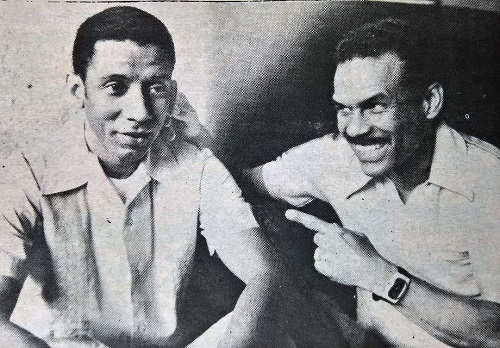
Javier Vazquez y Elpidio Vazquez

His formal connection with Sonora Matancera began in 1952, when he started subbing for his father. It didn’t take long for his talent to secure him the permanent spot, becoming the rhythmic backbone of the institution until the end of his career.

Legacy and Musical Contributions: Beyond the Double Bass

Elpidio Vázquez was not just a performer; he was a sonic architect. His ability to maintain a precise tumbao allowed Sonora Matancera to preserve that unmistakable harmonic signature that captivated the entire continent.

In addition to his technical prowess, Elpidio shined as a composer, contributing tracks that became essential hits:
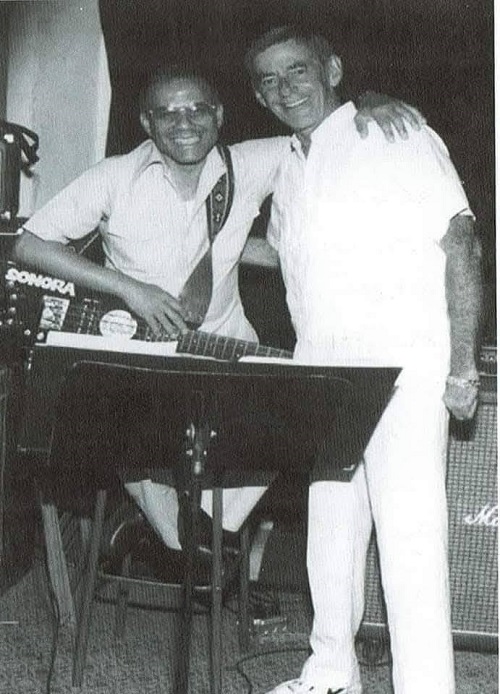
Elpidio y Vazquez y Celio Gonzalez
  • “Le dio con la sartén”: A guaracha recorded by the “Flaco de Oro” (The Golden Thin Man), Celio González, in late 1959.
  • “La negrita inteligente”: A gem performed by the Queen herself, Celia Cruz, in 1961.

His versatility led him to explore other musical horizons. He participated in the vibrant Cuban descarga (jam) sessions alongside Osvaldo “Chihuahua” Martínez and collaborated on historic recordings with giants of salsa and bolero, such as Ismael Rivera, Daniel Santos, Johnny Pacheco, Justo Betancourt, and Roberto Torres.

The Double Bass: Unlike many bassists of the salsa era who quickly transitioned to the Baby Bass or the electric bass, Elpidio is remembered for his mastery of the acoustic double bass, maintaining that organic, deep sonority of traditional, evolved Cuban son.

Recognition and Saying Goodbye to the Stage

One of the most memorable chapters of his career took place in 1989, during the 65th-anniversary celebration of Sonora Matancera. Organized by Gilda Mirós, Elpidio rocked world-renowned stages like Carnegie Hall and New York’s Central Park, reaffirming the band’s timeless relevance.
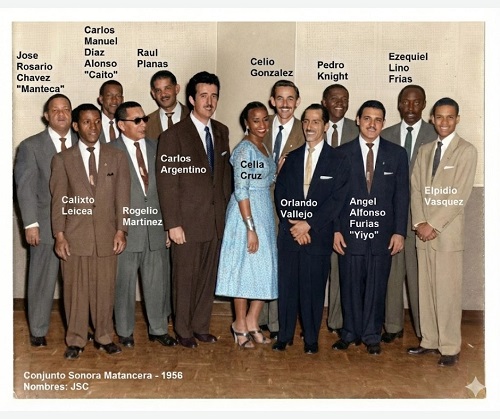
La Sonora Matancera en el año 1956

Career with Sonora Matancera

  • The Historic Handover: In 1952, Elpidio took on the responsibility of replacing his father on the double bass for Sonora Matancera. This was no small task, as he had to maintain the characteristic tumbao that had defined the group’s sound for decades.
  • Sonic Signature: He is credited with imprinting a robust harmonic stamp and a rhythmic stability that allowed Sonora to back the biggest stars of the era (Celia Cruz, Nelson Pinedo, Bienvenido Granda, etc.) with flawless precision.
  • Exile and Continuity: Like the rest of the group, he left Cuba in 1960, continuing his career abroad and participating in Sonora’s prolific New York era and their international tours.

A historical footnote: After the death of Rogelio Martínez, it is said that Elpidio was designated as the group’s musical director by public deed. However, in a gesture of humility and after decades of dedication, he preferred to retire in New Jersey, letting his brother Javier take the helm for the orchestra’s new era.
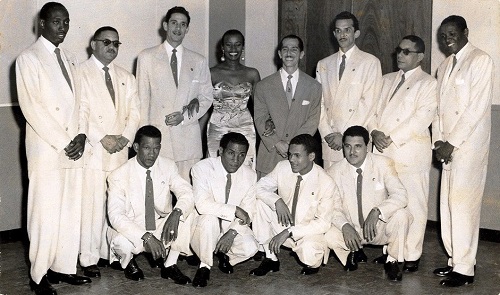
Sonora Mattancera
Sonora Mattancera

Today, the figure of Elpidio Vázquez remains a symbol of artistic fidelity and musical excellence the bridge between the tradition of “Bubú” and the modernity of New York salsa.

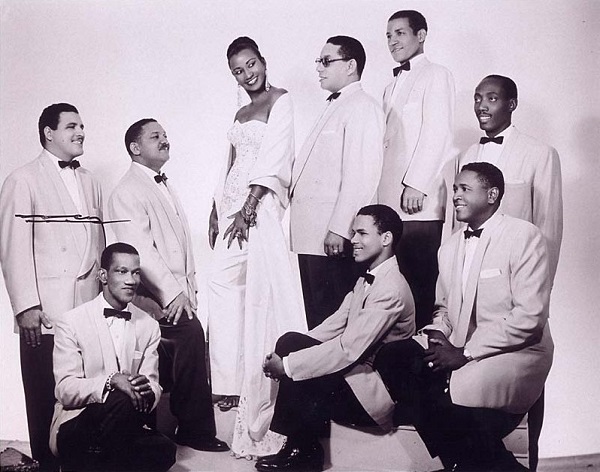
Also Read: La Sonora Matancera musical congregation of long trajectory and its sound quality, is one of the most popular in the Caribbean island “Cuba”

La Sonora Matancera musical congregation of long trajectory and its sound quality, is one of the most popular in the Caribbean island “Cuba”

It was founded in Matanzas in 1924 under the name of La Tuna Liberal.

Its first members were: Valentín Cané, director and tres player, Manuel Valera, guitar and second voice, Manuel Sánchez (Jimagua), timbal, Ismael Governa, cornetín, Pablo Vázquez Govín (Bubú), double bass, Domingo Medina, guitar, Ismael Goberna, cornetín, Julio Govín, guitar, José Manuel Valera, guitar, Juan Bautista Llopis, guitar.

In 1926 Carlos Manuel Díaz Alfonso (Caíto), falsetto voice and maracas, and Rogelio Martínez Díaz (El Gallego), guitar, joined the group and it adopted the name Sexteto Soprano.

On January 12, 1927, under the name of Estudiantina Sonora Matancera, they moved to Havana. In November of that year they recorded their first two recordings for the Victor label: Fuera, fuera, chino, by José Manuel Valera, and El porqué de tus ojos, by Valentín Cané.

With the definitive name of Conjunto Sonora Matancera, it began its transmissions on the radio station El Progreso Cubano (later Radio Progreso). At that time it appeared on Radio Atwater Kent; in 1932, at the suggestion of Rogelio Martínez Díaz, it took the name of Sonora Matancera, and began its performances in the Havana Sport dance academies, and later in Marte and Belona, and later became part of the cast of CMQ Radio. In 1935, trumpeter Calixto Leicea joined the group; in 1939, composer, pianist and orchestrator Severino Ramos, who gave the Sonora its distinctive sound with his orchestrations.

La Sonora Matancera congregación musical de larga trayectoria y su calidad sonora, es una de las más populares en la isla caribeña “Cuba”

In 1944 pianist Lino Frias and trumpeter Pedro Knight Caraballo joined the group, who with Calixto Leicea formed the most interesting trumpet duo in the history of Cuban ensembles; in 1945 singer Bienvenido Granda Aguilera; in 1948, Angel Alfonso Furias (Yiyo), tumbadora. At this time the Sonora Matancera was formed by Rogelio Martínez Díaz, director, guitarist and chorus; Pablo Vázquez Govín (Bubú), double bass; José del Rosario Chávez (Manteca), timbal; Ángel Alfonso Furias (Yiyo), tumbadora, who replaced Valentín Cané; Calixto Leicea, first trumpet; Pedro Knight Caraballo, second trumpet; Lino Frías, pianist; Carlos Manuel Díaz Alfonso (Caíto), falsetto voice and maracas; Bienvenido Granda, singer and claves; and Celia Cruz, who soon became the stellar singer we knew and the mainstay of the Sonora Matancera hits. Thus began a period that critics have called the golden age of the Sonora.

In 1950, with the advent of television, the Sonora Matancera was one of the first musical groups to perform on this medium. It also signed a contract with the Seeco record company, with whose recordings it made a name for itself in the international market. In 1952, Raimundo Elpidio Vázquez replaced his father, Pablo Vázquez, on double bass (when Rogelio Martínez Díaz died in 2001, he took over the leadership of the group).

In 1926, it changed its name to “Septeto Soprano”. That same year, Carlos M. Díaz “Caíto” accompanied Eugenio Pérez in the choir.

Later in 1927, on Caíto’s recommendation, Rogelio Martínez joined the group and the name of the group was changed to Estudiantina Sonora Matancera.

Sonora Matancera
Sonora Matancera

With a great desire to improve the group travels to Havana where they get in touch with the record company “RCA Victor” and make their first recording on January 12, 1928.

At the beginning of the thirties, the group began to adapt to the new rhythms that were appearing at that time as well as adapting new instruments, such as the grand piano, which was played for the first time in the group by Dámaso Pérez Prado, who years later would become the “King of the Mambo”.

But it was in 1935 when the group took the name La Sonora Matancera, and with this change it introduced a new trumpet player: Calixto Leicea, who replaced Ismael Goberna, who died a few months later due to health problems.

The unforgettable José Rosario Chávez “Manteca”, who replaced the resigned “Jimagua”, also joined the band. Humberto Cané joined the group playing the tres and his father Valentín Cané began playing the tumbadora.

In 1938, Dámaso Pérez Prado retired and left the vacant piano position to Severino Ramos, who soon after became the musical arranger of the group.

During the first years of the forties they made presentations in dance academies, cabarets and in Radio Progreso Cubano, they also included in their repertoire: guarachas, montunos.

On January 6, 1944, two musicians from Arsenio Rodriguez’s group joined the group: Lino Frias (author of the popular song Mata Siguaraya) who began to play the piano and Pedro Knight who became the second trumpet player of the Sonora Matancera.

In the month of December, Bienvenido Granda enters the band recommended as vocalist, being his first recording “La Ola Marina” by Virgilio González, and with him they sign a contract with the nascent record label Panart Records. Valentín Cané, Israel del Pino, Caíto and Humberto Cané made recordings with this label.

In the middle of 1946 the founder Valentín Cané suffers asthmatic problems that force him to leave the group, dying two years later. Before the group joined Panart Records, it recorded other songs for the “Varsity” label, without the name of the Sonora Matancera appearing on the labels, here the first version of “Se Formó la Rumbantela” by Pablo Cairo, “Tumba Colorá”, “El Cinto De Mi Sombrero”, Bienvenido Granda and Humberto Cané participated in these numbers.

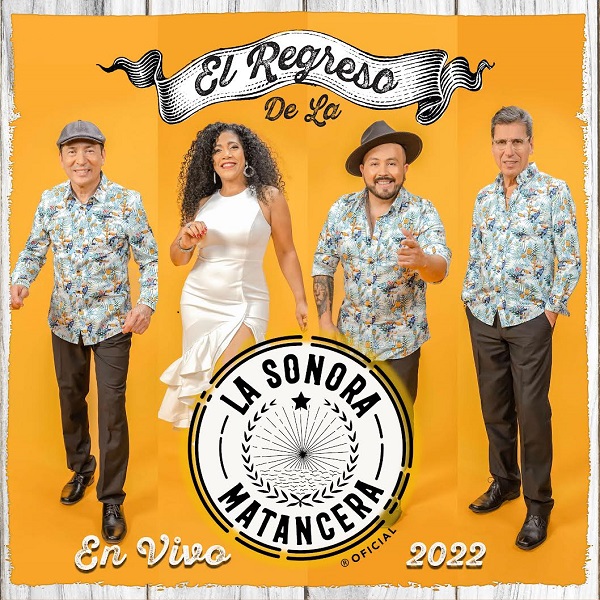
El Regreo de La Sonora Matancera 2022 2023

Members

Trumpets: Calixto Leicea and Pedro Knight

Double Bass: Elpidio Vázquez, replacing his father Pablo Vázquez, “Bubu”.

Piano: Lino Frías

Timbales, Bongó and Campana: José Rosario Chávez “Manteca” Chávez

Tumbadora: Ángel Alfonso Furias “Yiyo”.

Guitar and Choir: Rogelio Martínez

Maracas and Chorus: Carlos Díaz Alonso “Caíto”.

Claves and Choir: Bienvenido Granda.

Last January 13, 2023 they turned 99 years old and are still going strong from generation to generation.

Source:

Enrrique “Culebra” Iriarte, Venezuelan pianist, arranger and orchestra conductor.

Bibliography: Ecured Cuba

La Sonora Matancera 

You can read: Carlos “Patato” Valdés one of the best percussionists in the history of Latin Jazz

Severino Ramos, the true architect behind the legendary group “Sonora Matancera”

From 1940 to 1957, he was in charge of the arrangements, rehearsals, repertoire, hiring of the vocalists and that very particular sound, so imitated but never equaled that the “Dean of the Conjuntos” possessed.

All that sonority is due to this pianist, composer and arranger born in Matanzas, Cuba, on June 2, 1903.

Severino Ramos Betancourt was born on June 1, 1903 in Matanzas, Cuba. He was a composer, pianist, orchestrator and arranger, one of the great Cuban musicians, he worked as pianist and arranger in the Conjunto Sonora Matancera, later he founded the Sonora Cubana.

Since he was a child, music, musicians and instruments were his passion. In his family, grandparents and uncles, had to do with the bungas of Matanzas (a bunga was a small group that included piano, violin, clarinet and flute). As a child he met Cheo Jiménez and Eduardo Betancourt, trombonist of Miguel Failde’s orchestra.

Later he went to Havana where he worked successively as a tailor’s assistant, insurance collector, doorman in a cabaret, traveling salesman, substitute musician in theaters, radio stations, and a thousand other occupations that appeared along the way before becoming a professional musician, during that time he received lessons from Felix Covarrubias.

Sonora Matancera

Severino Ramos joined the famous Conjunto Sonora Matancera in 1942, as a pianist, after unsuccessful attempts to occupy positions in the Sexteto Mikito (later Conjunto Casino), replacing Enrique Rodriguez, and in other Havana groups.

Severino’s character does not go with the style of intense and nocturnal work of the group, presentations in radio stations, dances (preference of Rogelio Martínez its director), contracts in La Tropical, Cabaret Tropicana, regional Centers: Asturian Center, Galician Center and trips to provinces; so he decides at the request of the director of the Sonora to look for another pianist for the group and he stays to make the arrangements, rehearsals, preparation of repertoire, etc…, From that moment on, the star of the Conjunto Sonora Matancera really began to shine in the firmament of popular acceptance.

He became, in keeping with his calm character, an orchestra man performing all these tasks and some others, such as visiting radio stations, theaters and other places to obtain contracts for the group.

The fruits contributed by Severino Ramos between 1940 and 1957 are of extraordinary value, perhaps what makes his work more visible are his arrangements and the preparation of the regular and guest singers that accompanied the Sonora such as: Bienvenido Granda, Daniel Santos, Myrta Silva, Celia Cruz, Leo Marini, Bobby Capó, Nelson Pinedo, Estanislao Laíto Sureda, Carlos Argentino and Celio González, among others.

After the Sonora Matancera

The last days of Severino Ramos in favor of Cuban Music were as musical director of Radio Progreso since 1957, when he left the Sonora, simultaneously with the prolific and very important work at the head of the many record labels he created.

After 1959, in that first decade, 1960, many record labels emerged in Havana, plus those that came from before and he multiplied himself making arrangements, forming momentary groups, forming groups to accompany Orlando Contreras, Blanca Rosa Gil, Orlando Vallejo, Ñico Membiela, many more. He formed the Sonora de Severino Ramos and helped create the Conjunto Caney.

The following is a small sample of songs that were arranged by Severino Ramos for the Sonora Matancera:

El Tíbiri Tábara with Daniel Santos

Qué corto es el amor, with Mirtha Silva

Burundanga, Yerbero Moderno, Tu Voz, Luna sobre Matanzas, with Celia Cruz

Who will be? With Nelson Pinedo

Yo no soy guapo with Vicentico Valdes

Sujetate la lengua, with Bienvenido Granda

Aunque me cueste la vida, on the 19th, El negrito del Batey with Alberto Beltrán

El gallo, la gallina y el caballo with Manuel Licea

Piel Canela with Bobby Capó

Maringá, with Leo Marini

Who will it be? With Nelson Pinedo

Las Muchachas, with Carlos Argentino

Translated with www.DeepL.com/Translator (free version)

Severino Ramos died in Havana on November 2, 1969.


Home

La Sonora Ponceña Returns To Salsa County

The only performance with Yolanda Rivera & Mario “Mayito” Rivera will be at the Lehman Center

The name “La Sonora Ponceña” is in honor of the Cuban band La Sonora Matancera and its hometown (Ponce – Puerto Rico)

La Sonora Ponceña “National Treasure of Puerto Rico” together with its leader Enrique Arsenio “Papo” Lucca returns to Salsa County (The Bronx) with the special guests Yolanda Rivera and the Cuban singer Mario “Mayito” Rivera (former member of Los Van Van) onstage at one of New York’s leading non-profit performing arts centers, Lehman Center.

This unique presentation, long-awaited by its fans, will be on Saturday, May 14th at 8 PM at the Lehman Center for the Performing Arts located at 250 Bedford Park Blvd West, Bronx, New York 10468 and the online price per ticket ranges from between $45 – $100. https://www.lehmancenter.org/sonora-poncena

La Sonora Ponceña gained popularity in 1960 during its trip to New York City to give a series of presentations and established itself as one of the most demanded orchestras among Hispanics.

The legendary band, for more than 65 years, has made uninterrupted performances and has been recognized as one of the best Salsa orchestras for its fusion of traditional Cuban sounds with the modern style of Latin Jazz.

In 1967, under the direction of Papo Lucca, they released the first LP Hachero Pa’ Un Palo with the Inca label (a subsidiary of Fania). This album was an overwhelming success in New York as well as its second record production Fuego en el 23 (1969). The famous band from Puerto Rico recorded 29 more albums for this record label, including eight with the singer Yolanda Rivera, La Ceiba with Cuban singer Celia Cruz (1979), and in 1980 New Heights from which they began to establish the internationalization of the orchestra.

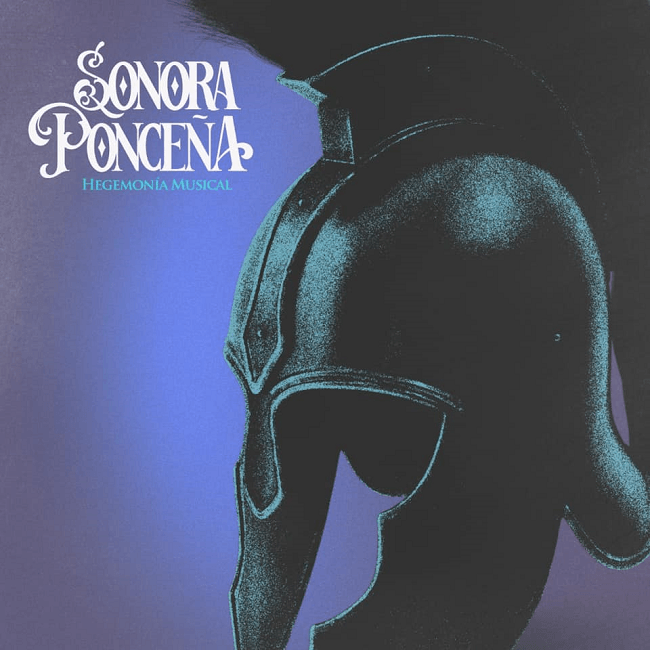
Musical Hegemony consists of 8 tracks including Caminando Con Mi Padre, Nadie Toca Como Yo, and Borrachera

This last year (2021), during the pandemic period, La Sonora Ponceña launched two new record productions: Hegemonía Musical (June 2021) and Christmas Star (November 2021).

The last one is the fourth Christmas-themed album in his career. “Thirteen years after our last Christmas production, we seek to present a record work that is a true reflection of the sound and musical quality that we always want to offer our audience”, Papo Lucca told digital media.

While “Salsa Que Cura To” is the first single taken from their most recent album Hegemonía Musical and whose authorship and interpretation is by Jorge Nicolai Avilés (vocalist of the band) with musical arrangements by Papo. Musical Hegemony, nominated in the Tropical Album of the Year category at the Billboard 2021 awards, was made with great dedication and professionalism as indicated on its official social media. “…We thank the public for the support they have been giving to this latest album that was worked with much love and dedication to the memory of our always remembered Enrique “Quique” Lucca Caraballo (RIP) and all our dear followers… And we will continue working as we have been doing for 67 years to place in your consideration what best of our music, soul, perseverance, and professionalism that seek to bring joy and enjoyment to all our dancers… Thank you very much!”

The song “Borinquen” (1980) with Sonora Ponceña becomes her a famous Salsa star

Yolanda Rivera will also perform at this event. She was born in Ponce (Puerto Rico) and moved to New York City with her family during her childhood. Her first opportunity as a singer was in 1969 in Willie Rosario’s band. In 1975 she returned to Puerto Rico and performed in several orchestras, including Joe Rodríguez’s La Terrifica. Her career reached its peak when she joined La Sonora Ponceña in 1977. The song “Borinquen” from the album Unchained Forcede (1980), a musical tribute to her native country (Puerto Rico), made her a Salsa star. Yolanda Rivera is considered one of the main and most famous singers of La Sonora Ponceña with songs like “Rumba en el Patio” and “Madrugador”. Her repertoire includes Salsa, Plena, Bolero, Guaguancó, Son Montuno, and Guaracha.

Mario “Mayito” Rivera (El Poeta de La Rumba)

The second special guest tonight will be Mario “Mayito” Rivera. His vocal skill and masterful interpretation of Cuban music in modern and traditional styles earned him the nickname “El Poeta de La Rumba”. Mayito was born in Pinar del Río (Cuba) and has training degrees from the National School of Art and the Higher Institute of Art. After his educational training in Cuba, he joined the band of the Cuban singer Albita Rodríguez and played bass in the Moncada group. From 1992 to 2011, Mayito was the lead voice and face of the successful Cuban band, Los Van Van, earning a Latin GRAMMY® and two nominations with them.

Federico Betancourt “Pioneer of Salsa in Venezuela”

Latin America / Venezuela / Carabobo

Jesús Federico Betancourt was born in the city of Valencia, Carabobo state, on March 22, 1940. He was always attracted to music from a very young age.

Photo of Federico Betancourt on stage

In his adolescence, he liked Cuban rhythms, being influenced by Sonora Matancera, Mon Rivera, Eddie Palmieri and Joe Cotto. Before entering the entertainment world, he works at the Bank of Venezuela.

He affirms that he has not carried out formal studies at the musical level, learning the necessary theory to be able to perform as an orchestra conductor, but without interest in interpreting any instrument, but with a well-tuned ear, which has allowed him to remain in the music business for decades. , in fact on certain occasions he is named as the King of the Güiro.

Photo by Federico Betancourt

His career began when he entered the Los Selectos Orchestra, where they played songs by the Billos Caracas Boy’s and the Los Melodicos Orchestra, which were at their peak in the 1960s, all this in a particular way, said Orchestra did not go beyond that.

In 1965, Federico Betancourt decides to satisfy his artistic restlessness and founds a band called Federico y su Combo Latino. The members that made up this band were chosen from among the founder and together with Roberto Monserrat.

But it was not until the middle of 1966, when the twenty-six (26) year old undertook the recording of the LP that would make him famous forever. This record production entitled LLEGO LA SALSA, would mark an important stage in Venezuelan Salsa, because it was the first LP that made use of the word SALSA in the country.

Federico Betancourt
Federico Betancourt

Federico Betancourt himself recounts that the Venezuelan announcer Phidias Danilo Escalona had a Radio Program called LA HORA DE LA SALSA, EL SABOR Y EL BEMBÉ, where all the Cuban and Puerto Rican Caribbean rhythms that were fashionable at the time were placed, among those who highlighted La Sonora Matancera with Celia Cruz, Tito Puente, Joe Cuba, Tito Rodríguez among others, and who was the one who supported them the most in terms of recording the album.

The production was recorded under the Palacio label, and the LP was titled LLEGÓ LA SALSA, he affirms that the title was chosen without taking into account the importance that it would revert in the future, he also affirms that it was not the name that gave him success , the album was a “bump” in sales, since all the songs were the most requested at the time, using his words: “The album sold like hot cakes”.

The music lovers of the time requested it on specialized sites such as the LA SALSA album. Federico says: “The father of the word SALSA was Phidias Danilo Escalona, ​​he used it for the first time in his radio program, and I, humbly, with the success of my LP, gave him the push for its mass use.”

Federico Betancourt - Photo
Federico Betancourt – Photo

In Venezuela, the word SALSA was welcomed by the public willingly, since it suggested a mixture of flavors, which was exactly what happened in the Phidias program, but at the level of rhythms. After the appearance of Federico’s album, all the shows that were performed at the level of Caribbean and Cuban rhythms, carried the name of SALSA.

It is important to name the musicians who took part in this historic production: The musicians are: Ali Rojas Bongo and Cencerro, Roberto Monserrat Music Director and Timbal, Pedro Medina Congas, Alfredo Arcas Trombone, César Pinto Trumpet, Enrique Iriarte Piano, Rafael Prado Bass, Carlín Rodríguez Singer and maracas, Dimas Pedroza Singer, Federico Betancourt Güiro and Director of the Orchestra. The musical arrangements were by the famous trumpeter Eduvigis Carrillo (RIP). Production themes:

Llego la Salsa CD - Federico su Combo Latino
Llego la Salsa CD – Federico su Combo Latino
1.- Cocolía

2.- Conmigo
3.- El Pachanguero

4.- Sancocho Caliente
5.- Guaguancó Manía

6.- Celosa

7.- Despierta Rumbero

8.- No Critiquen
9.- Saoco

10.- Baila Yemaya
11.- Café Y Pan

12.- Que Me Querías

After the success obtained with the record work, the time came for the first international outing, which was to Colombia, in 1969. It happened because the singer of Los Melodicos, Víctor Piñero, informed Betancourt that he was stuck in Cartagena and Barranquilla with the themes El Cobrador and Federico Boogaloo. After the information, the young musician went to the neighboring country and got a contract for the famous Reina del Mar parties, in Cartagena, on November 11, 1969.

The experience of the band was so good, that in 1970 they returned to visit the country. From then until our days Federico y su Combo continues to be an emblematic and legendary band in Venezuela, for this reason the WEB of the classy salsero SALSA BRAVA, offers its respects to such an important salsa figure.

Discography
1966 Llegó La Salsa Palacio (LPS-6171)
1966 Salsa y Sabor Palacio (LPS-6185)
1967 Más Salsa Palacio (LPS-6205)
1967 Durísimo – Vol. 4 Palacio (LPS-6216)
1968 Federico Boogaloo Palacio (LPS-6228)
1968 Psicodélico Con Salsa Gilmar (LPG-110)
1969 Mejor Que Nunca Gilmar (LPG-111)
1969 Vibración y Ritmo Sonus (102-17080)
1970 Dos Sets Velvet (LPV-1539)
1970 La Machaca Velvet (LPV-1539)
1973 Federico Si Te Pone A Bailar Palacio (LPS-6332)
1975 Derrape De Salsa BASF (10.068)
1976 Siguelo Ahí…. a Lo Cortico BASF (10.070)
1977 Ayer y Hoy BASF (10.076)
1977 Esto Es Lo Mejor Palacio (LPS-6372)
1978 Mis Exitos y Más BASF (10.079)
1978 Sabor Foca (LPF-10.037)
1979 Federico y Su Combo Foca (LPF-10.120)
1979 Federico y Su Orq. – El Maestro Discomoda (DCM-1128)
1980 Federico y Su Orq. con Memo Morales Discomoda (DCM-1148)
1982 No Le Digan Integra (PF-14.075)
1983 Nuevamente Palacio (LPS-66.541)
1984 SaaaBroooSo! Palacio (LPS-66.552)
Compilation
1996 Mis Exitos y Más…Vol.1 Sonograma
1996 Mis Exitos y Más…Vol.2 Sonograma
1996 Mis Exitos y Más…Vol.3 Sonograma
2005 El Pionero De La Salsa Palacio
2008 Salsa De Oro Gilmar


  • Page 1
  • Page 2
  • Page 3
  • Interim pages omitted …
  • Page 10
  • Go to Next Page »

International Salsa Magazine (ISM) is a monthly publication about Salsa activities around the world, that has been publishing since 2007. It is a world network of volunteers coordinated by ISM Magazine. We are working to strengthen all the events by working together.