• Skip to primary navigation
  • Skip to main content

International Salsa Magazine

  • HOME
  • Previous editions
    • 2026
      • ISM / March 2026
      • ISM / February 2026
      • ISM / January 2026
    • 2025
      • ISM / December 2025
      • ISM / November 2025
      • ISM / October 2025
      • ISM / September 2025
      • ISM / August 2025
      • ISM / July 2025
      • ISM / June 2025
      • ISM / May2025
      • ISM / April 2025
      • ISM / March 2025
      • ISM / February 2025
      • ISM / January 2025
    • 2024
      • ISM / December 2024
      • ISM / November 2024
      • ISM / October 2024
      • ISM / September 2024
      • ISM / August 2024
      • ISM / July 2024
      • ISM / June 2024
      • ISM / May 2024
      • ISM / April 2024
      • ISM / March 2024
      • ISM / February 2024
      • ISM / January 2024
    • 2023
      • ISM / December 2023
      • ISM / November 2023
      • ISM / October 2023
      • ISM – September 2023
      • ISM – August 2023
      • ISM July 2023
      • ISM Edition June 2023
      • ISM – May 2023
      • ISM April 2023
      • ISM March 2023
      • ISM February 2023
      • ISM January 2023
    • 2022
      • ISM December 2022
      • ISM November 2022
      • ISM October 2022
      • ISM September 2022
      • ISM August 2022
      • ISM July 2022
      • ISM June 2022
      • ISM May 2022
      • ISM February 2022
      • ISM January 2022
    • 2021
      • ISM December 2021
      • ISM November 2021
      • ISM October – 2021
      • ISM September 2021
      • ISM August 2021
      • ISM July 2021
      • ISM May 2021
      • ISM April 2021
      • ISM June 2021
      • ISM March 2021
      • ISM February 2021
      • ISM January 2021
    • 2020
      • ISM December 2020
      • ISM November 2020
      • ISM October 2020
      • ISM September 2020
      • ISM August 2020
      • ISM July 2020
      • ISM June 2020
      • ISM May 2020
      • ISM April 2020
      • ISM March 2020
      • ISM February 2020
      • ISM January 2020
    • 2019
      • ISM December 2019
      • ISM November 2019
      • ISM October 2019
      • ISM Septembre 2019
      • ISM August 2019
      • ISM July 2019
      • ISM June 2019
  • Download Salsa App
    • Android
    • Apple
  • Spanish

Search Results for: Sonora+Matancera

Juan Antón ”El Blanco” from La Clave Del Blanco

Everything started in Peru for Juan

There is always a pool of new talents to be known and analyzed, since our Latin countries are the cradle of great artists of all kinds, especially in the area of music. Today it was the turn of the talented Peruvian Juan Antón.  

We have taken the audacity to contact the leader of the orchestra La Clave Del Blanco, Juan Antón, to know the most important details of his professional life and his current group. We are very pleased to present to our readers the most important details of this pleasant and enlightening conversation, which lasted for almost half an hour.   
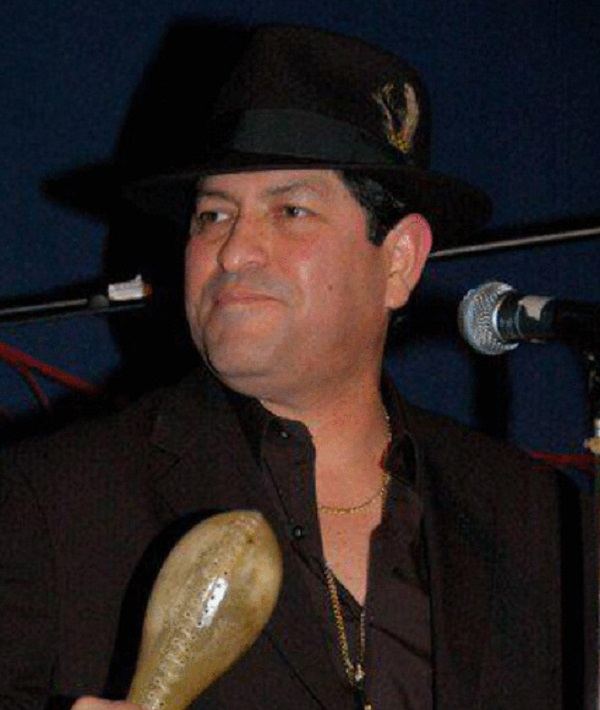
Peruvian singer Juan Antón
Peruvian singer Juan Antón, Leader of La Clave Del Blanco

First contacts with music 

Juan Antón was born in Peru, specifically in El Callao, a port city near Lima which is well known to all salsa lovers. Like most of the salseros who have passed through International Salsa Magazine, Juan started getting interested in music since he was a child and enjoyed La Sonora Matancera and, later on, the salsa music that came from New York. 

However, although he was always a lover of the aforementioned musical genre, his career began with Peruvian Creole music, which is composed of waltzes, jarana, black music, among other variants. 

When he leaned towards this kind of music, he sang with guitar, cajón and bass at parties in a bohemian way. He had some proposals to work with Creole music in a more professional way, but he accepted due to the pile of responsibilities he had with his work and studies. He was doing well at the time, but admits that he regrets that decision today because it would have been a good start.  

United States 

While it is true that his first steps in the world of music were taken in Peru, it was in the United States that he finally began to be part of more professional groups. 

Juan’s first opportunity in that respect came when he was at a Peruvian party where his compadre was given a Creole music ensemble. Knowing those present that he sang, they invited him to accompany the ensemble and perform with them, which Juan accepted and did. 

The musicians of the group liked his work so much that they asked him for his number and later called him to sing with them. At that time, he met Jorge Del Castillo, a well-known guitarist from the San Francisco Bay Area, who invited him to join a group he was forming and gave him a CD, asking him to learn those songs. The group would be called Kokos Band.   

When Juan was listening to the CD in his car, he found out that it was salsa and not Creole music. When he went to tell Jorge that he gave me the wrong CD, he said it was the correct one and the future group would be singing salsa. 

Since Creole music and salsa are very different, Juan had to learn a number of details such as the clave, the signals to the musicians, the way of singing, among other things. 

Some time later, the story repeated itself. The conguero of Kokos Band proposed him to join the orchestra he was creating, with which he became much more successful and went to more renowned events such as the inauguration of a museum for Puerto Rican and Cuban baseball players. Its name was Orquesta Liberazión. 

Being Peruvian, Juan was really proud that attendees mostly from Puerto Rico and Cuba complimented his work the way they did. Considering that both countries have been the cradles of the main exponents of salsa, the congratulations from this group were very important to him.   

The third and last orchestra he played with was Saboriche. His time with this group made him realize that he had what it took to become independent and create his own project.   
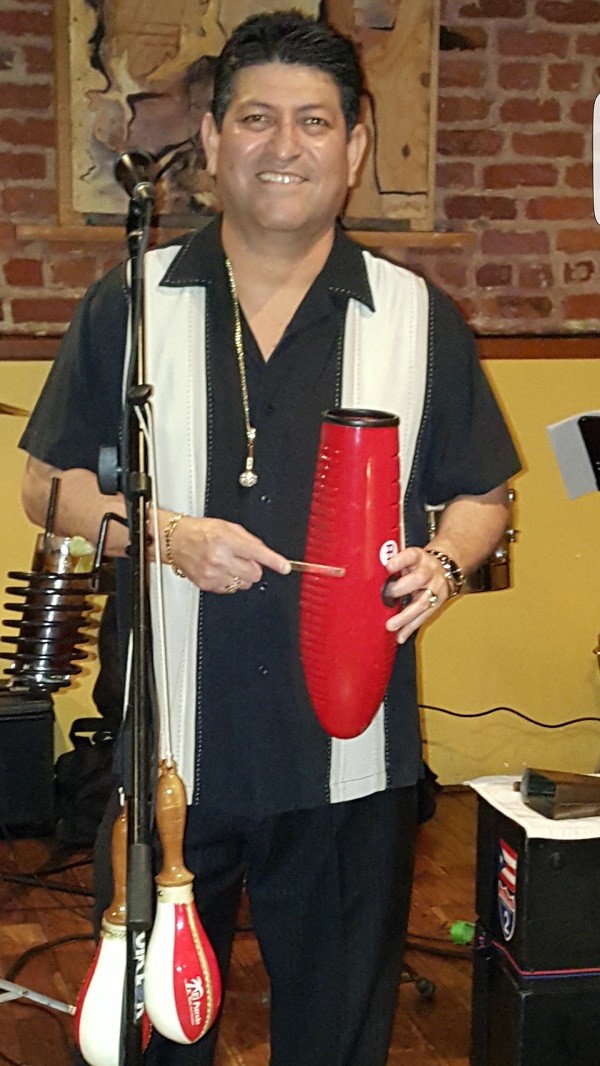
Juan Antón at The Cigar Bar
Juan Antón and La Clave del Blanco performing at The Cigar Bar & Grill

La Clave Del Blanco 

One of Juan’s greatest inspirations to devote himself to music was La Clave Del Callao, since the music of this band influenced him and he liked it very much. In addition to that, the name by which many began to know Juan in the San Francisco Bay Area was ”El Blanco”.  

Both of these things led him to name his own orchestra ”La Clave Del Blanco”. 

Salsa Con Caché  

In addition to his facet as a singer, Juan also had a radio show at La Grande 1010 AM and its name was ”Salsa Con Caché”, which was on the air for only one year. Its cancellation was due precisely to the professional commitments the artist had with his music.   

He decided to call ”Salsa Con Caché” to this space because ”caché” in many countries means ”elegant” and ”refined”. This is precisely the salsa style he has always liked. 

One of the things that set this program apart from others of their kind in the San Francisco Bay Area is that Juan always talked about the history of the artists and the orchestras playing on the air so that listeners would know all this information. Other programs only played background music and did not add more elements to the programming. 

Juan was so successful that he received hundreds of phone calls daily and was even appeared in the now defunct San Francisco Chronicles as one of the best salsa shows at the time. 

This success was due to the enormous constancy and important information the announcer had. Although Juan does not regard himself as a scholar in the matter, he assures us that he had what it took to keep listeners hooked to his knowledge. He even commented that he had a private collection of more than 600 original CDs in all languages, which he bought gradually.   

This extensive music collection helped him a lot to offer a varied repertoire during the time when ”Salsa Con Caché” was on the air.   
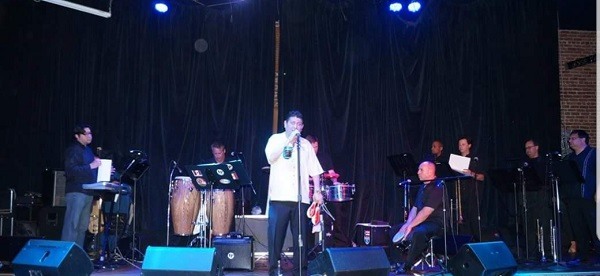
Juan Antón as an announcer
Juan Antón was also an announcer and his show was called ”Salsa Con Caché”

Recruiting talent for La Clave del Blanco 

During his journey through the orchestras where he played, Juan got to know a lot of musicians, especially during his time with Orquesta Liberazión. He became friends with many of them and, when he started forming his own orchestra, he asked them to be part of it. 

Since he managed to establish his group, the singer has always made sure to deliver what he promises. This means that, if he makes an offer for the work done, he always honors the full amount. For Juan, ”The most important thing in this business is the given word”, so you always have to deliver what you promise at the beginning. 

With respect to the above, Juan has lived this same situation with orchestras he has worked with, so he does not want to have debts with the musicians he hires. This is how he has gained their trust and, whenever he needs them, they are there for him. 

Read also: Guantanamo music director, arranger and composer Julio Avila 

Stelio Bosch Cabrujas a remarkable musician, but completely forgotten by the new generations

One of the greatest Venezuelan arrangers that Venezuela’s tropical music could have had passed away on May 5, 1979, 44 years without Stelio Bosch Cabrujas.

Bosch Cabrujas was the arranger and assistant director of both Billos and Los Melódicos and was the architect of the success of both orchestras in the 60’s and 70’s.

A remarkable musician, but completely forgotten by the new generations.

Stelio deserves to have his place of honor in the tropical music of the Caribbean. Stelio, a native of the State of Bolivar, from a very young age, entered the musical field as a musician and arranger.

Billo Frometa, Renato Capriles, Rogelio Martínez y Stelio Bosch Cabrujas

His musical beginnings date back to the 40’s, when he performed “Campesino” for the then Billo’s, where he was recorded by Victor Perez.

Stelio’s musical baggage at the beginning was as a tres player for La Sonora Caracas, he worked with Pedro J. Belisario’s orchestra in the 50’s. He arranged a lot for the radio programs in the musical shows that they presented under the auspices of various commercial brands.

History of Sonora Caracas

Surrounded by an aura of mystery, elusive discography, and a special attraction as a pioneer of the son groups in Caracas. For a long time it was the musical platform for many local tours and recordings of Caribbean music luminaries, when they visited us in the golden age of radio and incipient television. Backed by more than a hundred immortal recordings, ranging from some of the first acetate recordings of Celia Cruz, to Daniel Santos and his theme forbidden by the always conservative Catholic Church.

Contrary to what some critics thought at the time, it was not a bad copy of its namesake matancera, they began under the structure of a septet, and later in their golden age they abstained from using the nasal choirs, they managed a structure of three trumpets, a clear hammer of the bongo accompanied by the congas, in a group with its own personality and that served as a school for some of the most important orchestra directors of the coming decades in our country.

La Sonora Caracas
La Sonora Caracas

The first Sonora Caracas

In September 1933, our capital was musically shaken by the visit of the Trio Matamoros, famous movie and record stars, who during their twenty continuous days at the prestigious Teatro Ayacucho, stirred up a bucolic Caracas with their sones and boleros, and when they traveled to the west of our country1, they sowed the seeds of the first son groups in Venezuela.

He was in the quintet Los Modernos, who on several occasions accompanied Felipe Pirela on TV. He was the pianist.

He worked for Los Guaracheros de Manolo (when he left Billo’s) and also worked with the Orquesta Sans Sousi.

He worked for a short time in Carlos Guerra’s orchestra and from there he made the leap to Renato Capriles’ Melodicos, recommended by Freddy Coronado when he was the director of LM.

Los Melodicos
Los Melodicos

When Coronado left the direction of LM, Stelio took over the musical direction and catapulted them to the fat and unequaled sound of lm in the 60’s, which represented a sonority like few others.

When Stelio left lm, Manolo Monterrey’s orchestra joined the harmonies, and he suggested to Manolo that he return to lm, which the Antillean cyclone accepted and returned triumphantly to Renato’s organization.

At the beginning of the 70’s Stelio goes to work with the most popular band in Venezuela and there Stelio’s arrangement work gives another big hit, his contribution is immense and Billo’s goes on to live one of the greatest decades that Billo Frómeta’s group has ever had.

Billo Caracas Boys
Billo Caracas Boys

The contribution of Stelio Bosch Cabrujas to tropical music is worthy of study and review, to be included in university courses so that the new generations of arrangers and musicians understand the legacy of a musician who is threatened to be forgotten, it is up to us to make sure that this does not happen and it is mandatory to keep his memory alive.

Sources:

Newspaper library of the popular music of Venezuela.

Gherson Maldonado

Iliana Capriles (Oficial)

Read Also: Renato Capriles, the man who imposed the rhythm with “Los Melodicos”

Fidel Antillano “The greatest satisfaction of a musician is to finish a quality product and see the acceptance of the public” 

Latin America/ Venezuela / Caracas

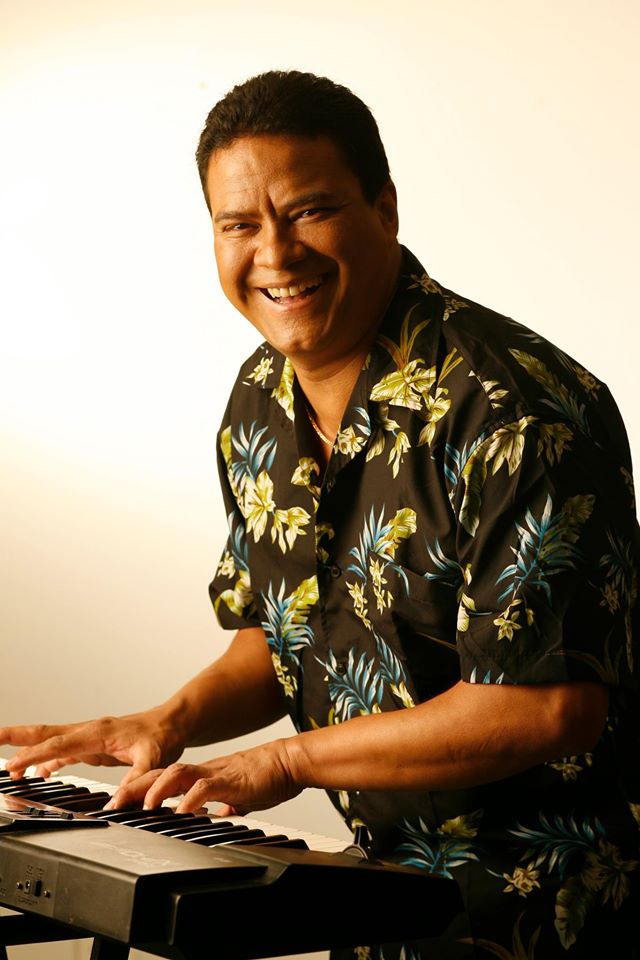
Salsa is an expression of life within the caraqueño and Latin American neighborhoods. This fusion of rhythms has known how to slip in and no one escapes its magic and enchantment. Such is the case of pianist, composer and arranger Fidel Gregorio Antillano, born in the city of Caracas on June 10, 1962 and raised in one of the city’s sound districts, Los Frailes de Catia, where he lived surrounded by salsa groups, street performers, carnival and Christmas parties, enjoying the golden age of the salsa boom.

Fidel Antillano - Photo
Fidel Antillano – Photo

This genre influenced his destiny and allowed him to make it his way of life. Salsa is a cultural condiment with the flavor of many countries, which has managed to transcend borders.

Almost always at home the musical vein is lit. Was this your case? 

“There was influence from my relatives, in my house there was always music, it was like a big jukebox, La Billos, Los Antaños del Stadium, la Sonora Matancera, Barbarito Diez, Casino de la Playa, among others, my grandmother lived in El Retiro, in La Pastora, she had a piano, when I went to visit her with my dad, I sat at the piano and I liked what I felt, music was part of my family, my dad was a great music lover, he bought all kinds of records, classical music, Creole music, tango”.

Did your grandmother or your father play the piano?

“No, my grandmother Gregoria “Tata” -we called her that because of our affection-, she was an amateur but she did not play it, she had it as a reference, she played cuatro, my uncle also played cuatro and guitar, my father did not play anything, he bought many Lps, given the house we had -the piano was a kind of furniture that embellished and gave cache to the house-“.

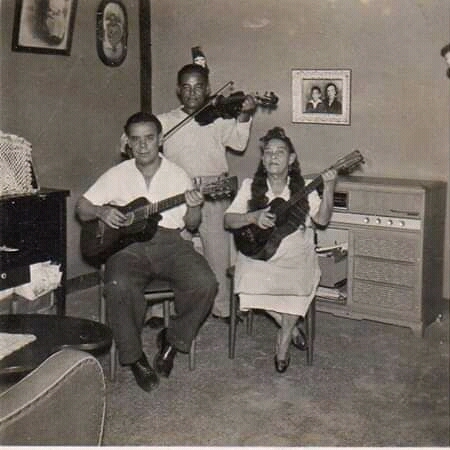
Family photo of Fidel Antillano's uncles Isaías, Pablo and his grandmother Tata
Family photo of Fidel Antillano’s uncles Isaías, Pablo and his grandmother Tata

“My older brother -on my father’s side- he did have some knowledge, he was the most educated, in that house there were harps, cuatro, maracas, records, my family on my father’s side were very fond of music, from our musical family tree we have four musicians -Julito Antillano, Denis Antillano, José “Kikin” Fernández and me”.

What anecdotes or memories do you have of the piano?

“At the time of the construction of La Cota Mil, my grandmother’s piano was taken to my father’s house, at that time I began to kill a fever, I was about 10 years old, it was the time of the gazebos to choose the queens of the neighborhoods, the Sexteto Juventud was in fashion with its theme Caramel and Chocolate; at Christmas and Carnival we did not peel a rehearsal of the groups that lived in Catia”.

That would be the first impulse to awaken the gift within 

“Yes, that was my first impulse, I inherited that musical vein from my grandmother and my father, they were close to salsa and folk musicians, besides, my father and my uncle bought a lot of Long Play (elepé), I started working with my

brother in a shoe store and started buying records.

Fidel, I understand that you are a self-taught musician. How was that learning process and deciding that the piano would be the instrument to play?

“Yes, I am a self-taught musician, back in the 70s we used to hear Nico Monterola’s Orquesta Renovación, La Banda y Su Salsa Joven on the radio. To my surprise, we used to meet with those musicians and we used to go and hang around their rehearsals, this had a big impact on me, there were many shows, it was a coming and going of groups of the moment”.

Orquesta Renovacion
Orquesta Renovacion

When I was 18 or 19 years old, seeing Salsa Mayor, Pacheco, Carlos “El Grande”, all those great musicians, I made the decision to learn to play an instrument, I looked for a teacher or someone who would teach me to play the piano -Salsa was underestimated and that’s why they thought it shouldn’t be studied”.

He got a teacher

“No, because of what I’ve told you, salsa was seen with bad eyes, the scholars did not see it as music would be, look, at that time I was exchanging the Lp with my friends, in one of those exchanges a friend lent me the album “Musical Conquest” by Sonora Ponceña, when I heard the song ‘Ñañara’ I fell and the entrance of the piano played by Papo Luca, that simple montuno, I was hooked – I said; this will be my thing!

That was the leap you’re hoping for 

“Yes, that was the big jump, I went uphill because I didn’t know what a chord was, I didn’t know anything, I mounted 4 songs with simple chords, taking the first steps I fell in love, then I joined people with more knowledge”.

“As there was no one to teach me, I saw books, I had chords of the songs and I was guided by a music theory book, I learned to decipher the codes, music is a code, I read the Swing Latino magazine -from my friend Angel Mendez-, without stepping on a school, I was fed up; one must know about harmony, contra punto, I bought the Berklee harmony book and many more, -I rubbed shoulders with other musicians -some records came as a clinic, all this was feeding me”.

He was his own teacher and a very disciplined student

“I was my own teacher and I took on a discipline because that’s what I wanted, if you went to an institution where they gave music lessons and you said you wanted to play salsa, the musician was fined or thrown out, they were treated in a derogatory way”.

It was worth the effort, from being an empirical musician to playing with the best orchestras.

“I started with Grupo Fósforo, back in 81, we only wanted to play, it was a sextet, Mr. Manuel Ibarra passed me the notes and I didn’t know much about playing, then Jesús “Mandinga” Torres, took me to see different groups, That’s when I decided to introduce brass into the sextet and it became an orchestra, -all the arrangements were done by me-, I had any number of records and many songs from those Lp were not played or played by other orchestras -Gran Combo, Sonora Ponceña, among others-“.

He is a collector

“Not a collector as such, but I do like it, not with the eagerness that any collector has to obtain all the production, as La Sonora Ponceña says, but I have my Lp”.

What happened with the group Fósforo?

“It dissolved because they each started playing for different orchestras.”

And then the Grupo Fósforo   

“Mandinga tells me that Carlos “Tabaco” Quintana needs a pianist, I clarify to him that I do not know how to read the scores, that he gives me the papers that I have the album, I began to listen to the album and I saw the papers, with that I completed the study, and I was increasing the experience, I recorded in the production of Tabaco and his Group Futuro”.

“Then with Dimas and his Orchestra Alegria, it was the first album I recorded professionally in the year 85, through those works I was doing with Dimas, I know Mauricio Silva, I felt afraid because Mauricio already had experience, he was the producer of Dimas’ album, but everything flowed, on the way I know many other professionals”.

“In the year 87 Roberto Blades came to Venezuela to the famous events Consul, Alberto Vergara recommended me Manuel Guerra and we made several tours by some regions of the country, then Julito – my nephew – told me that Naty Martinez needed a pianist”.

Fidel Antillano
Fidel Antillano

How was your time with Naty’s orchestra and your separation?

“Thanks to the album I made with Dimas, many doors opened for me, he believed in me and I will always be grateful for that. Through this album, Naty hired me, he already had references from me, and I recorded 4 of his productions with him -Naty, El Legendario, returned, In Dos tiempos and Proyecto Maelo-, with Naty I made my debut at the Poliedro de Caracas, I met Ray Barreto and the pianist Ricky González -he passed me some tricks-, we also went to Colombia and alternated with Grupo Niche and Joe Arroyo, a great growth and learning”.

“I left the Orchestra with a good relationship with Naty, so much so that he called me later to record in the productions, En dos Tiempos and Proyecto Maelo”.

It was a very fast growth 

“Yes, I’ve even recorded jingles, I was with the Orquesta Café de Caricuao, I was with Erick Franchesky in the production where he pays tribute to Billos”.

From Salsa orchestras to working with one of the greatest exponents of Caribbean popular music, maestro Porfi Jimenez 

“At the time that erotic salsa was introduced, I started to play with Porfi, merengue and snail soup were in fashion, all that music was in great demand, it was a boom, weekly there were 3 or 4 dances, this dragged a great group of followers, with it I go to Tenerife to some carnivals, I have great respect and admiration for the master”.

His time with the group of Porfi opened the doors to work with the group “Los Roques” of Tenerife

“Of course, however, I had left my resume there and one day they called me and told me that they were going to send me the ticket, I was with them for about 7 months, I played in the carnivals of Tenerife, it was something apotheosis, dances and dances did not let me come – laughs – they played merengue, I was blessed to visit Africa”.

All this accumulation of experience allows him to decide to create his own orchestra

“When Porfi was in the merengue boom, however, most of us musicians were salsa musicians, and because of that need to play our rhythm I decided to create my orchestra, but before doing the Combo Antillano we had an orchestra called La Gran Fuga, the singer was Edgar dolor, we killed fever with that orchestra and eventually I played with Naty and Porfi, because of so much activity I played with my orchestra on the days I had free, it was a good time for the groups”.

What happened with La Gran Fuga?

“We made it to occupy the days we had free with Porfi’s orchestra, at that time it had suffered a drop in the number of performances, but when it came back up, we didn’t have time or space to play, – well – it didn’t really dissolve, in fact they always give us caps to reassemble”.

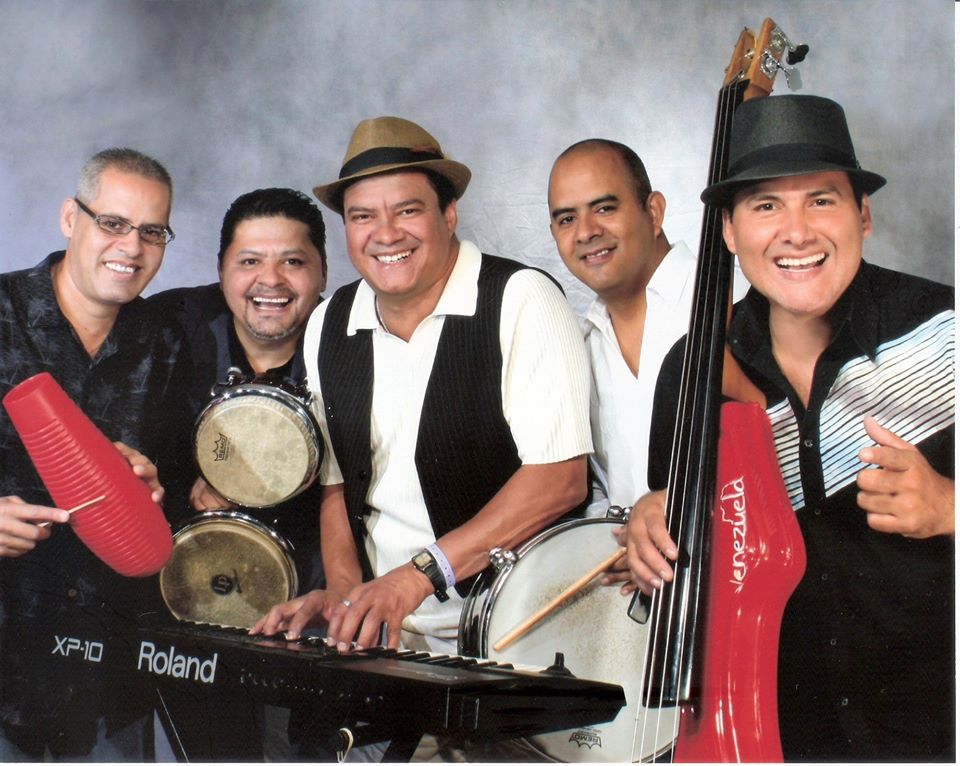
From being the musician of the Orchestra Dé, to being the owner of El Combo Antillano and taking responsibility for a team

Combo Antillano
Combo Antillano

“A great responsibility and commitment, but it was time to do the same, we opened the compas playing music from the Gran Combo of Puerto Rico, that was the end, we played the greatest hits of the moment, no other band did, on Tuesdays that was full of people in the different places where we worked, this served as a bridge and accompanied other artists, Andy Montañez and other groups, this made me think about making original songs to record.

What was your first composition?

“The “Afro-Caribbean Music Festival” took place at the New Circus in Caracas, with 30 orchestras participating. Lil Rodríguez asked the orchestras to play original songs, and my first composition was a tribute to Caracas”.

At that moment they take a prize as the most applauded group of the night 

“Yes, that was impressive, with Leah’s song, a Mongo Santamaría song, it was something new for the moment, an instrumental discharge”.

Tell us about your record productions

“My first production is called Háblame de Melao (2010), in most of the songs I do the lyrics and arrangements, was something new, the black Mendoza puts me to record and tells me to do theme by theme, we made 21 track, but in the album only put 19, this production was made to recognize the singers, Dimas Pedroza, Teo Hernandez, Angel Flores, Larry Tovar, Luis del Valle “Don Wicho”, Rodrigo Mendoza, Eloy Rios, a tribute to them and highlight our people.

“The second, Fidel and the descarga de los Frailes (2013), here we handle the Salsa, Latin Jazz, Danzón, has a lot of instrumental music before starting the rumba, I had the desire to work and create with a sense of belonging, I made an innovation in the melody with the electric guitar and flute, I did not want to continue recording on wet”.

“and, Caracas en su Salsa (2018), is a tribute to the Salsa of Caracas, in this production we have 14 songs”.

Through this production you made a documentary with the same name, which begins with a beautiful phrase of Cabrujas “Caracas Suena. The city was made to be heard, not to be seen”. How would your interpretation of this hidden city be?

“There is a city that cannot be seen, but it is there, and although the media does not show it to us, we can notice it, through, for example, the musical groups that exist in our neighborhoods and that become visible when there are events, like the one organized by Héctor Castillo (+) in 1983, where we could realize that there was a whole cultural movement hidden in each of our neighborhoods”.

“So I urge this type of inter-neighborhood events, which allow the visibility of the hidden Caracas.

Another of his passions is composition. At what point does the muse come to him?

“At first sight I fell in love -laughs-, -Bella Cubana-, to compose you must have a little bit of each thing, love, dislike, joy, sadness, they are not always experiences of the composer, sometimes if, in the variety is the taste, in my case I work with the rhythmic part and I put lyrics, and more than muse is a mixture”.

He makes songs with meaning that captivate the audience

“You like your audience to identify with your songs, the lyrics are thought-provoking.”

Does the song I don’t want to live in the dark have to do with any experience?

“That one was written by Carlos Navarro and I arranged it for him, it was a personal experience of his. I was in a treatment centre and he talked to me about it, I decided to do the arrangement”.

In the music industry we have many issues of strip and shrinkage, is the case of Domina tu lengua

“Sometimes people think that a song can be a strip and shrink, because of the content of the lyrics, in this case it is not, this was written by the Cuban producer Luis Llamo”.

What gives you the most pleasure as a musician?

“Finishing the product with quality and seeing the acceptance of the public, when you are in the studio and you realize that it looks better, then it sounds on the radio, seeing that the public sings it, dances it, that’s priceless, that’s the greatest satisfaction”.

Which of your productions has given you the most satisfaction?

“Tell me about Melao.”

Why?

“There is a great variety of rhythms in it, I had the opportunity and the satisfaction of exchanging with a large number of people from outside, in it is the theme Pa’ Barlovento, in it exported what is ours, our native rhythm, Venezuelan Sangueo, the Culo e’ Puya, the San Millán”.

What have been your musical influences?

“I wouldn’t be a musician if it wasn’t for Papo Lucas, trying to emulate what he did, as a musician, arranger and person, I admire him a lot, from here comes my influence, -in what time he learned everything he knows-, that makes him incredible, apart from the master Tony Monserrat, an independence with his left hand, he was a virtuoso”.

Many begin by imitating a style, versioning lyrics from other groups. What do you think of the copies, has creativity been lost?

“It’s a resource that is used, at a certain moment, it’s a hook, I barely had the opportunity to do my work, one must have the ability to discern where to play each song, maybe many are afraid of not liking it, or not being accepted”.

What do you think this fear is about? 

“Perhaps not to be broadcast on the radio stations.”

He believes that more support is needed from the various media

“Yes, the lack of support sometimes makes one fear, it’s worrying to touch on a subject and the track gets empty.”

That’s when the artist turns to the hated payola

“I don’t agree with the payola, but it is a necessary evil, all the work that an orchestra owner does generates expenses, and after making an investment you need a retribution; previously live performances were a springboard, they projected a lot to the groups, that has declined a lot”.

What has happened to the Bolero in productions, you don’t listen to them anymore?

“The record companies are more determined to sell, that’s why I think they stopped recording, the new generation should identify with that rhythm, there are many beautiful boleros and if they stop recording they might be forgotten”.

Fidel, what new projects are on the way?

“Right now I’m recording with Angel Flores -record pocket- the song is called Callejon 107, is dedicated to the experiences of Latin American neighborhoods, is a son montuno very tasty, lyrics by Flores and with arrangements by this server”.

At this time when humanity is going through a hard test for its survival, what message would you leave behind?

“There is advice to live a life attached to good habits, one must live under these guidelines, the book of proverbs is wisdom… The man who walks in integrity walks confidently”.

By Eling Blanco, ISM Jounalist Correspondents, Caracas, Venezuela

Vicentico Valdés “The elastic voice” of Bolero in Cuba and the Caribbean

“The earrings that the moon lacks I have kept to make you a necklace”.

Vicente Valdés was born in the neighborhood of Cayo Hueso, Havana, on January 10, 1921. He was the younger brother of Alfredito Valdés (1908-1988), a versatile singer who performed with numerous sones groups, ensembles and orchestras in Cuba until, around 1940, he settled outside Cuba, mainly in New York and Mexico, where he continued his artistic career.

Vicente Valdés Una Vez

Two of Vicente’s other brothers, Marcelino and Oscar, stood out as percussionists, and the latter also as a singer in the Irakere group.

Also known as “La voz elástica” Vicentico is one of the most celebrated interpreters of the bolero with a great interpretative strength and dramatization in his performance for the benefit of couples in love who enjoy his songs to this day.

Valdés was part of “El Septeto Nacional”, the orchestra of Cheo Belén Puig, “La Cosmopolita”, the orchestras of Noro Morales, Arturo Núñez and Tito Puente,

In 1937, recommended by Alfredo, Vicentico sang for a short time with the Segundo Septeto Nacional, a group that had been founded to share the multiple artistic commitments that the renowned Septeto Nacional of Ignacio Piñeiro received at that time. He was also a member of the sones sextet Jabón Candado.

Vicentico Valdés La voz elástica del Bolero en Cuba

Later, he replaced Alfredo as a singer in the orchestra of Cheo Belén Puig, one of the most famous Cuban groups of the charanga format. Later, he joined the jazz band Cosmopolita, led by Vicente Viana and later by pianist and composer Humberto Suárez.

Together with Marcelino Guerra Rapindey and Cristóbal Dobal, among others, he was part of the sextet Los Leones.

In the mid-1940s, due to the difficult economic situation in Cuba after World War II, Vicentico, like many other Cuban artists of the time, went to Mexico to explore new horizons for his work in music.

In the Mexican capital he performed with Humberto Cané’s conjunto Tropical, and the orchestras of Arturo Núñez, Rafael de Paz and Chucho Rodríguez, with whom he later recorded with Benny Moré. In those years he received his first ovations on the stage of the Follies.

In Mexico, between 1946 and 1947, he made recordings for the Peerless label, backed by the orchestras of the Mexican Rafael de Paz and the Cuban Absalón Pérez.

The repertoire chosen for these records consisted almost entirely of guarachas, afros and sones montunos, which had been popularized in Cuba by Orlando Guerra Cascarita with the Orquesta Casino de la Playa.

Vicente Valdés
Vicente Valdés

Vicentico was hired as a singer of the musical group of the Puerto Rican pianist Noro Morales in New York at the end of 1947. In that city he had a successful season at the Hispanic Theater which, according to the chronicles of the time, “consecrated him in the taste of the Latin community”. He also performed at the Million Dollars, Park Plaza and Puerto Rico theaters.

In 1948 he joined Tito Puente’s orchestra as a singer, along with his brother Alfredo. With Puente he recorded his first boleros (among them “Quiéreme y verás”, by José Antonio Méndez) for the Seeco label. Until then he had been used mainly as an interpreter of upbeat numbers. With Tito Puente he made numerous recordings throughout his career.

In 1953, the Seeco record company promoted a group of recordings with the Sonora Matancera, which had great repercussion in Cuba, where he was hardly known, and in other Caribbean countries.

Among the pieces recorded in Havana in November of that year were two boleros (“Una aventura”, by Elisa Chiquitica Méndez and “Decídete mi amor”, by José Antonio Méndez), a genre in which he achieved the greatest triumphs of his career.

From then on, in New York, with great studio orchestras conducted by René Hernández, Joe Cain, and later Charlie and Eddie Palmieri, he made new recordings that were quickly distributed throughout Latin America.

Their repertoire during this stage (early 1960s) included boleros and songs by authors of different tendencies and styles; the Cubans René Touzet, Javier Vázquez, José Antonio Méndez, Piloto y Vera, Pepé Delgado, Juan Pablo Miranda, Marta Valdés and the Rigual brothers; the Puerto Ricans Silvia Rexach, Myrta Silva and Rafael Hernández; the Dominicans Rafael Solano and Manuel Troncoso; and the Mexicans Manuel Prado, Luis Demetrio and Armando Manzanero.

Vicente Valdés y La Oquesta de Bobby Valentin

La Sonora Matancera among others no less important. He also excelled in other genres such as Mambo, Guaguancó, Son and Guaracha.

He was an exceptional singer with a particular style that set the standard and also spread the best Latin American bolero composers, particularly those of the Cuban Feeling, of which he was a valuable promoter at an international level. His career as a soloist was impeccable.

He died in a New York hospital on the morning of June 26, 1995, according to a heart attack.

Source: En Caribe

Sonora Matancera

Read also: La Sonora Matancera musical congregation of long trajectory and its sound quality, is one of the most popular in the Caribbean island “Cuba”

Alberto Beltrán “A mí me llaman el negrito del Batey” and Bailar medio apreta’o con una negra bien sabrosa

Alberto Amancio Beltrán (Palo Blanco, La Romana, May 5, 1923 – Miami, February 2, 1997) was a Dominican singer, known in the Latin American musical world as “El Negrito del Batey”.

Early years

Beltrán was born in the town of Palo Blanco, in the province of La Romana. As a child, he barely had a basic education because his family’s economic situation forced him to sell candy on the streets. At the age of fourteen he was attracted to music and debuted as an amateur singer on the radio. This first artistic incursion led him to take singing lessons.

Alberto Beltrán “A mí me llaman el negrito del Batey”

From 1946 to 1951 he belonged to several groups in his country, such as “Brisas de Oriente”. Later, he formed his own group called “Dominican Boys”.

International projection

In 1951 he emigrated to Puerto Rico. There, he recorded with “Los Diablos del Caribe”, a group led by Mario Hernández, the song “El 19”.

 He then traveled to Cuba, first to Santiago and then to Havana on July 15, 1954, to work with the Puerto Rican composer and singer Myrta Silva on Radio Mambí.

On August 16 of that same year, he was requested by the Sonora Matancera and recorded the composition Ignoro tu existencia by Rafael Pablo de la Motta and Aunque me cueste la vida by the Dominican Luis Kalaff. Both songs, in bolero rhythm, were recorded on the same 78 rpm disc.

On November 16, he recorded the merengue El negrito del batey composed by Medardo Guzmán, which catapulted him internationally as it became a sales hit.

From there came the nickname with which he became popular. That same day he also recorded the boleros Todo me gusta de Ti by Cuto Esteves, Enamorado de la inspiración by José Balcalcer and, for the second time, El 19 by Radhamés Reyes Alfau.

Beltrán nació en la localidad de Palo Blanco en Cuba

On January 18, 1955 he recorded his last pieces with the Orquesta Sonora Matancera. Then, he spent some time in Venezuela where he left phonographic records with the orchestras “Sonora Caracas”, Los Megatones de Lucho and the Orquesta de Jesús “Chucho” Sanoja.

Alberto Beltrán
Alberto Beltrán


Hired by the Dominican musician settled in Venezuela, Billo Frómeta, he participated in two albums recorded in Cuban studios: “Evocación” (1956) in which he performed as a soloist and “La Lisa-Maracaibo”, in which he shared credits with the Cuban singer Carlos Díaz.

What does El negrito del batey mean?

In the Dominican Republic the batey smells of black and the black often smells of batey. Both evoke in their generality misery and human abandonment, fruit of injustice and discrimination. This is so, although it pains us to say it


The Negrito of the Batey

They call me the little black man of the batey

Because work for me is an enemy

To work I leave everything to the ox

Because work was made by God as a punishment

I like the merengue apambicha’o

With a black woman who is a retrechera and a good girl

I like to dance de medio la’o

I like to dance half tight with a tasty black girl

Hey!

Get your ass out of here!

There!

They call me the little black guy from the batey

Because work for me is an enemy

To work I leave everything to the ox

Because God made work as a punishment

I like the merengue apambicha’o

With a black woman who is a retrechera and a good girl

I like to dance de medio la’o

I like to dance half tight with a tasty black girl

Hey, there!

And you tell me if it’s not true

Merengue much better

And you say if it’s not true

Merengue much better

Because that of working

It’s a pain for me

Because that of working

To me it causes me pain, it sounds!

The meek ox works hard

But he never gets dengue fever

The meek ox works hard

But he never gets the dengue

I’ll dance with a good black woman

I’ll dance to a good merengue

But I never get tired

To dance a good merengue, it sounds!

There, candela!

Finbroso, hey!

The gentle ox works hard

But he never gets the dengue

A lot of work the gentle ox works hard

But he never gets the dengue

But I never get tired

Of dancing a good merengue

But I never get tired

Of dancing a good merengue, it sounds!

There!

Dominicanize!

Alberto Amancio Beltrán

Sonora  Matancera

Read also: International Salsa Magazine presents Alexander Abreu and his Habana de Primera

  • « Go to Previous Page
  • Page 1
  • Interim pages omitted …
  • Page 4
  • Page 5
  • Page 6
  • Page 7
  • Page 8
  • Interim pages omitted …
  • Page 10
  • Go to Next Page »

International Salsa Magazine (ISM) is a monthly publication about Salsa activities around the world, that has been publishing since 2007. It is a world network of volunteers coordinated by ISM Magazine. We are working to strengthen all the events by working together.