• Skip to primary navigation
  • Skip to main content

International Salsa Magazine

  • HOME
  • Previous editions
    • 2026
      • ISM / April 2026
      • ISM / March 2026
      • ISM / February 2026
      • ISM / January 2026
    • 2025
      • ISM / December 2025
      • ISM / November 2025
      • ISM / October 2025
      • ISM / September 2025
      • ISM / August 2025
      • ISM / July 2025
      • ISM / June 2025
      • ISM / May2025
      • ISM / April 2025
      • ISM / March 2025
      • ISM / February 2025
      • ISM / January 2025
    • 2024
      • ISM / December 2024
      • ISM / November 2024
      • ISM / October 2024
      • ISM / September 2024
      • ISM / August 2024
      • ISM / July 2024
      • ISM / June 2024
      • ISM / May 2024
      • ISM / April 2024
      • ISM / March 2024
      • ISM / February 2024
      • ISM / January 2024
    • 2023
      • ISM / December 2023
      • ISM / November 2023
      • ISM / October 2023
      • ISM – September 2023
      • ISM – August 2023
      • ISM July 2023
      • ISM Edition June 2023
      • ISM – May 2023
      • ISM April 2023
      • ISM March 2023
      • ISM February 2023
      • ISM January 2023
    • 2022
      • ISM December 2022
      • ISM November 2022
      • ISM October 2022
      • ISM September 2022
      • ISM August 2022
      • ISM July 2022
      • ISM June 2022
      • ISM May 2022
      • ISM February 2022
      • ISM January 2022
    • 2021
      • ISM December 2021
      • ISM November 2021
      • ISM October – 2021
      • ISM September 2021
      • ISM August 2021
      • ISM July 2021
      • ISM May 2021
      • ISM April 2021
      • ISM June 2021
      • ISM March 2021
      • ISM February 2021
      • ISM January 2021
    • 2020
      • ISM December 2020
      • ISM November 2020
      • ISM October 2020
      • ISM September 2020
      • ISM August 2020
      • ISM July 2020
      • ISM June 2020
      • ISM May 2020
      • ISM April 2020
      • ISM March 2020
      • ISM February 2020
      • ISM January 2020
    • 2019
      • ISM December 2019
      • ISM November 2019
      • ISM October 2019
      • ISM Septembre 2019
      • ISM August 2019
      • ISM July 2019
      • ISM June 2019
  • Spanish
  • Download Salsa App
    • Android
    • Apple

Search Results for: Timbales

Luis “Perico” Ortiz: six decades of impeccable musical trajectory

The lobby of the Centro de Bellas Artes in Caguas served as a prelude to the concert, entitled Tocando y contando historias (Playing and telling stories), for which we came to enjoy “Perico” and his guests. Mario Ortiz, Jr. brought together a dozen trumpet players (Luis Figueroa, Richie Segarra, Roby Texeira, Rafael Lebrón, Kevin Ibáñez, Ricardo Marrero, Kenneth Torres, Rubén Días, Ricky Zayas and Simón Rivera) to pay tribute to Luis “Perico” Ortiz by performing his most emblematic solo: ‘Coro Miyare’.
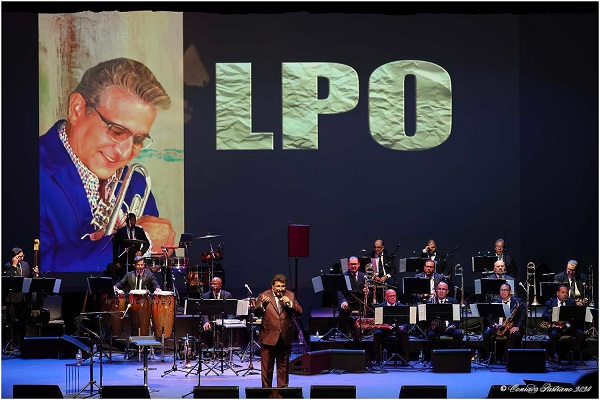
Luis "Perico" Ortiz and his Orchestra
Luis “Perico” Ortiz and his Orchestra

Once in the concert hall, the child trumpeter Daniel Torres (whom Perico predicted would be his successor) and Luis “Perico” Ortiz kicked off the concert with a fun trumpet correspondence. The musicians, turned into actors, shared with us the scene in which we saw Luis “Luisín” Ortiz as a child, playing ‘Quítate de la vía Perico’ with his trumpet; introduction that gave way to the custodian of Ismael Rivera’s legacy (“Moncho” Rivera) to sing the emblematic theme to which “Perico” owes his nickname, while the audience enjoyed images of “Maelo” on a giant screen. The short film defined how “El Sonero Mayor”, personified by “Moncho” told “Luisín”, that from that moment on he would be called “Perico”.

Moncho also interpreted ‘Bilongo’, a song in which Richard Carrasco stood out on the bongo after the saxophones made themselves felt with forcefulness. “Perico” also claimed his turn with the trumpet solo that preceded a resounding “Buenas noches” in the voice of the virtuoso trumpet player.

The orchestra was integrated by: Luis “Perico” Ortiz on musical direction; Yturvides Vilchez, Jan Duclerc and Rolando Alejandro Lora on trumpets; Rafy Torres, Jorge Díaz, Randy A. Román, Mario Alonso Ángel Marulanda on trombones; Roberto Calderón on baritone saxophone, Luis Daniel Valentín Muñiz on tenor saxophone; Antonio Luis Orta and Luis Fernando Hernández on alto saxophones; David Marcano on timbales; Gadwin Vargas Vélez on congas; Richard Carrasco Ayala on bongo; Juan Manuel Rivera Colón on piano; Carlos Luis Martínez Peña on bass; Henry Santiago and David Carrero on backing vocals.
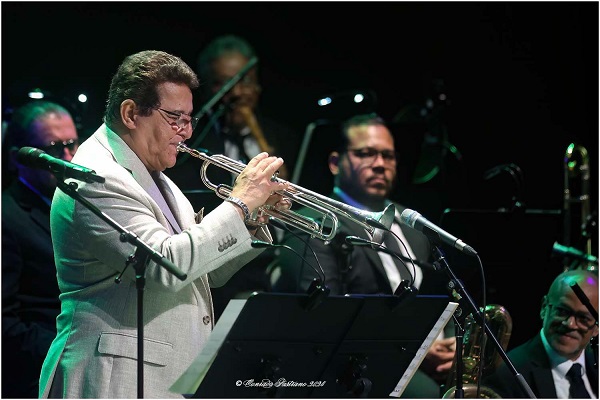
Luis “Perico” Ortiz
Luis “Perico” Ortiz

Then, Henry Santiago received the microphone to sing ‘Tres grandes amigos’. For the song, which refers to Tito Rodríguez, Tito Puente, and Machito; “Perico” introduced “Manolito” Rodríguez and Arianelys Ortiz Cruz, a blind autistic timbalera player.

He was followed by Norberto Vélez, who performed ‘Julián Del Valle’ (1978, Súper salsa) and ‘De patitas’ (1979, Luis “Perico” Ortiz, One of a kind) – songs of great vocal and interpretative difficulty, popularized by the unmistakable voice of Rafael De Jesús – with his usual sympathy. Nor-Bert once again demonstrated his powerful voice, and was matched by the saxophones, whose forcefulness did not diminish the power of Vélez’s voice.

“La India” arrived with her usual energy to interpret ‘Químbara’ and “Manolito” did his part singing ‘La Reina es la rumba’, in company of “La India”, alternating on the soneos.

Coro Miyare” made use of Richard Carrasco’s unbeatable performance in the bongo solo with drumsticks -which had been popularized by Roberto Roena-, followed by the crushing solo by “Perico”, the piano solo by Juan Rivera, the conga solo by Gadwin Vargas and the timbales solo by David Marcano.
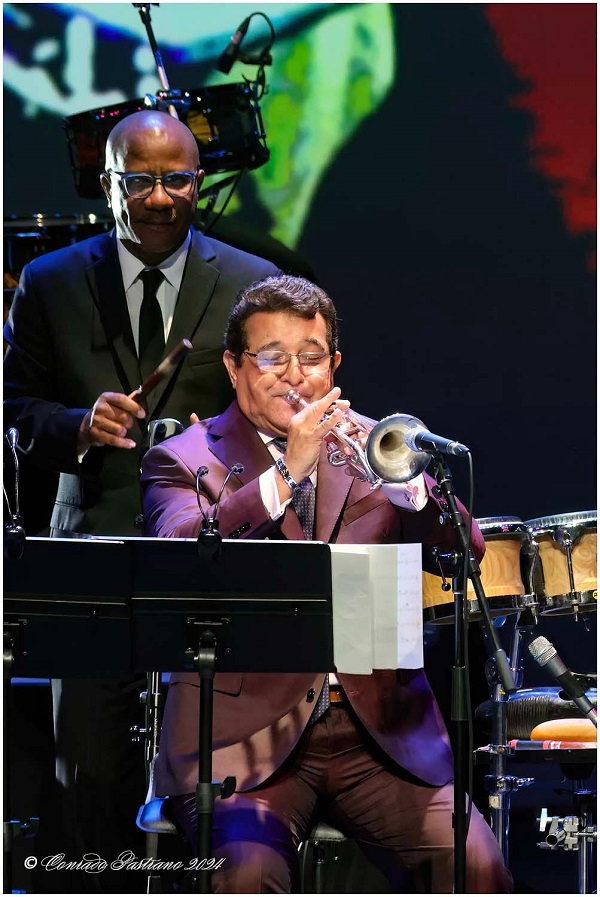
Richard Carrasco Ayala en el bongó y Luis “Perico” Ortiz

The highlight of the concert was Gilberto Santa Rosa’s brilliant renditions of ‘Atrevida’ and ‘Planté bandera’; recorded and immortalized by Tommy Olivencia’s La Primerísima, to which Santa Rosa briefly belonged.

After the intermission, as a tribute to the “Niño bonito de la salsa”, “Perico” invited Tony Vega to the stage to perform ‘Así se compone un son’ and ‘Borinquen tiene montuno’, the latter adorned with an elaborate trumpet solo by “Perico”.

“Perico” brought Gerardo Rivas to the stage to perform ‘Río abajo va’ (1985, La vida en broma), popularized in the voice of Domingo Quiñones. Gerardo explained that he had accepted the invitation to participate in the concert without knowing which song he was going to sing, in a clear allusion to the vocal difficulty of reaching Domingo’s vocal register. Gadwin Vargas sprinkled the theme with a conga solo with a mozambique beat, very well achieved. Gerardo’s second song, ‘Perico lo tiene’, brought to the stage the cacique of the Rivas dynasty (“Jerry” Rivas, singer of El Gran Combo de Puerto Rico) on the tres and Richie Bastar (bongos player of La Universidad de la Salsa). While Bastar took over on the bongo and the bell, Richard Carrasco took over the güiro. At the end of the intervention, “Jerry” asked for a round of applause for the mulato mayor, Don Rafael Ithier, who was enjoying the concert with all of us who were there.

Then, “Perico” dedicated ‘Perfume de gardenias’ to his mother; a speech that was enjoyed with an instrumental prelude performed by “Perico” and a great vocalization by “El Caballero de la Salsa”.

Next up was Rubén “Panamá” Blades, who received a standing ovation from the audience. This made visibility difficult, although it did not affect our enjoyment of the audio. Blades was in charge of the big hits ‘Plástico’ and ‘Pedro Navaja’ (1978, Siembra). During ‘Pedro Navaja’ Gadwin Vargas replicated the conga sound that Eddie Montalvo immortalized on the recording.

The stage was full when all the guests arrived to perform ‘Como vivo yo’, after Perico announced with a trumpet solo the song that would end the show.

As Luis “Perico” Ortiz said, the vote of love and confidence that we witnessed there will be remembered as an unrepeatable evening, which detailed what has been six decades of impeccable career that the trumpeter, composer, arranger and music producer has achieved.
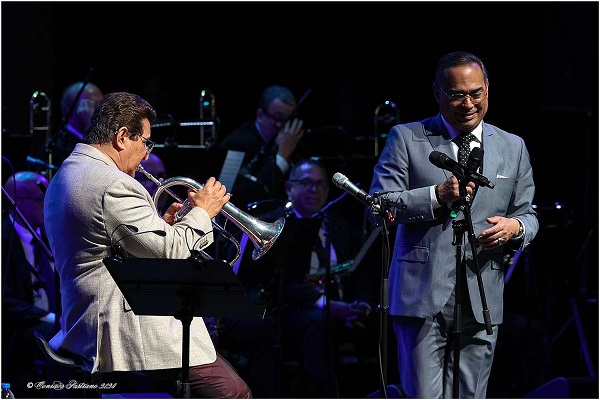

Luis “Perico” Ortiz y Gilberto SantaRosa
Bella Martinez Puerto Rico 


Also Read: ¡Attack Sergio! Unbreakable: A fun read because of the contradictory content

Los Van Van and their 50th Anniversary

North America / USA / New York

Los Van Van returns to Lehman Center Performing Arts to celebrate their 50th Anniversary

For this special concert the Cuban legendary orchestra will join with the most popular lead Los Van Van vocalists: Mario “Mayito” Rivera and Pedro Calvo

Date: Saturday, June 1st

Show: 8:00PM

Cost: $50 – $100

Venue: 250 Bedford Park Boulevard West Bronx, New York 10468

Low cost onsite parking available for $5!

Los Van Van in concert

Lehman Center for the Performing Arts presents the return of Grammy-winning dance orchestra, Formell y Los Van Van, who bring direct from Cuba their blend of Afro-Cuban, disco and funk back to Lehman Center to celebrate their 50th Anniversary on Saturday, June 1st at 8PM.

Heralded as Cuba’s greatest dance orchestra known worldwide for their iconic live performances, Formell y Los Van Van features three of the late founder Juan Formell‘s children: Samuel Formell (Leader and Drummer/Timbalero) , Juan-Carlos Formell  (Bassist)  and the family’s youngest daughter, Vanessa Formell (lead vocalist).

BIO: Formell y Los Van Van, nicknamed the “Cuban Music Train,” is regarded as one of the most influential bands in the history of 20th century Cuban popular music. Founded in 1969 by Juan Formell when he was 27 years old, the band pioneered Songo, a hybrid rhythm that blended Cuba’s native folkloric son music with the go-go of the 1970s and has electrified dance floors in Havana for over forty-five years.

The band’s original members were: Juan Formell (bandleader, bass player, and songwriter), Cesar “Pupy” Pedroso (piano, songwriter), and Jose Luis “Changuito” Quintana (drums and timbales). Each one were music conservatory trained from a young age and were fascinated with the soul, go-go and disco music that dominated U.S. radio.

They named their dance band “Los Van Van” (which literally means “they go-go”) after the go-go fad, and pioneered the hybrid of son and go-go music – Songo – which can now be found throughout Latin jazz, pop, and world fusion.

And if the genius of Songo wasn’t enough, they also developed the complex rhythmic style that became known as Timba that was adapted by other bands in the ‘90s. Los Van Van soon became one of the best-known Cuban groups in the world, maintaining a loyal fan base throughout Latin America, Europe and Japan propelled by hits such as: “La Sandunguera,” “Anda, Ven y Muévete,” “Te Traigo” and “Yuya Martinez.”

Pedrito Calvo
Pedrito Calvo

In 1993, Changuito left the band and was replaced by Formell’s son Samuel who also proved to be an outstanding composer as evidenced by the song: “Te Pone La Cabeza Mala”, the title track of one of their best albums.  Although American politics hindered their ability to break into the U.S. market, their popularity in the U.S. grew throughout the ’90s, and the band toured the U.S. for the first time in 1997, including a memorable concert at Lehman Center.

Two years later, Los Van Van was honored with the GRAMMY® Award for Best Salsa Performance for their fifteenth album, Llegó…Van Van — Van Van is Here and in 2013, the Latin Recording Academy awarded Juan Formell with a special Grammy for a Lifetime Achievement of Artistic Excellence.

With over 40 albums to their credit, Formell y Los Van Van’s 2015 album Homenaje A Juan Formell: La Fantasia, was 80% completed at the time of Juan Formell’s death in 2014 and was finished under the direction of his son Samuel with another son, Juan-Carlos Formell.

The album’s release on Reyes Records in December, 2014 was on the 45th anniversary of the band’s founding and it features several of the band’s hit dance tracks refreshed with contemporary arrangements as well as many new songs including the widely popular: “Somos Diferentes”, “Todo se Acabó” and “La Moda”. Sony Music released it worldwide in 2016 and it earned a 2017 Grammy nomination for the Best Tropical Latin Album.

The group’s most recent album “Los Van Van son La Patria” is scheduled to be released on Cuba’s Engrem label later this summer.

Mario Mayito Rivera
Mario Mayito Rivera

BIO: Mario “Mayito” Rivera is nicknamed “El Poeta de La Rumba” for his ability to vocally interpret all forms of Cuban music in both modern and traditional styles with a colorful range that can be powerfully dynamic or tender and soft.

He was born in Pinar del Rio, Cuba, and has degrees from both the Escuela Nacional de Arte and the Instituto Superior de Arte. After college, he joined the band of Cuban singer Albita Rodríguez and played bass in Grupo Moncada.

From 1992 to 2011, Mayito was the characteristic voice and face of the extremely successful Cuban band, Los Van Van. He sang many of the band’s salsa hits, for which he was rewarded with a Latin GRAMMY® and two nominations.

Bio: Pedro “Pedrito” Calvo is a popular Cuban-born vocalist known for his charismatic and unique singing style which often includes clever word play and expressive rhythmic vocal sounds. Pedrito started his professional career singing with his father’s orchestra and years after with several Cuban orchestras including:

La Riviera, La Orquesta de Julio Valdés, and La Ritmo Oriental with hits such as: “Mi Socio Manolo” and “Aquí el que Manda es Mulé”. He was the most famous for his time (1974-2001) with Los Van Van, where he was part of the infamous lead singing trio of Los Van Van along with Mayito Rivera and Roberto Hernández.

Event Details:
www.LEHMANCENTER.org

”Alma Del Barrio” celebrates 50 years of operation

The United States has a great number of Latin music radio programs that always sought to promote the best of Latin talent through their frequencies and one of them is ”Alma Del Barrio” of the well-known radio station KXLU, which is celebrating its 50th anniversary.   

Against all odds, ”Alma Del Barrio” celebrates five decades on the air after all the effort of its hosts and the team involved in such a noble and necessary feat. We say ”against all odds” because it is not common that projects submitted by university students did not used to last long and ended up being replaced by programs of the same style.  

In addition to the above, decades-long programs usually have a single host and comfortable time slots each week. However, ”Alma Del Barrio” was the exception to this rule and, today, continues to prove that limits can be overcome.  

Founders of Alma Del Barrio
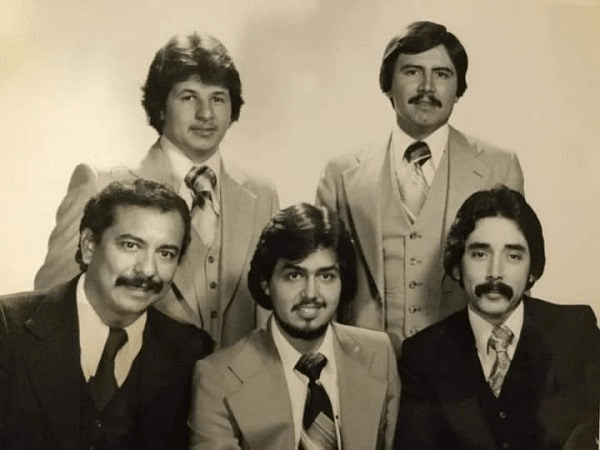
Founders of ”Alma Del Barrio” Steve Lopez, Enrique ”Kiki” Soto, Gustavo Aragon, Eddie Lopez, and Hector ”La Voz” Resendez

Beginnings of ”Alma Del Barrio” 

After so long, ”Alma Del Barrio” has remained up to date and continues to keep people’s taste.  

Its main founders were Enrique ”Kiki” Soto and the late Raúl Villa, who at the time were two young students with many ideas and eager to achieve interesting things. The program was aired for the first time in 1973. A few years later, Hector Resendez, a freshman in college, contacted Enrique and Raul in order to write an article about this new radio show, but it would not be long before he joined the main founders in the project they were developing.   

Three years later, in 1976, student at Loyola Marymount University Eddie Lopez joined the program on the third anniversary of ”Alma Del Barrio”, show in which he would spend the next 46 years bringing the best Afro-Cuban music to the audience every Sunday between 2pm and 6pm.  

On a number of occasions, Resendez said that ”Alma Del Barrio” was not created to be hosted by great famous personalities, but by dynamic young people who wanted to be part of a small team that was just starting operations.   

At the beginning, the new hosts only had one hour of broadcast time to show what they were made of, but at the same time, they did their best to get more airtime and have more presenters in the program. They wanted to include a not very popular genre on the station at that time, which was salsa, something totally innovative for the station. 

In those years, salsa was understood as that set of genres coming from Afro-Cuban music and the novice hosts thought it would be a fine attraction to the Latino communities of Los Angeles. That set of genres came from Cuba, Puerto Rico, Panama, Colombia and the Dominican Republic. This is when record labels and music promoters renamed these rhythms as ”salsa” in order to make it easier for programs and hosts to identify the music.  

Eddie Lopez in Alma Del Barrio
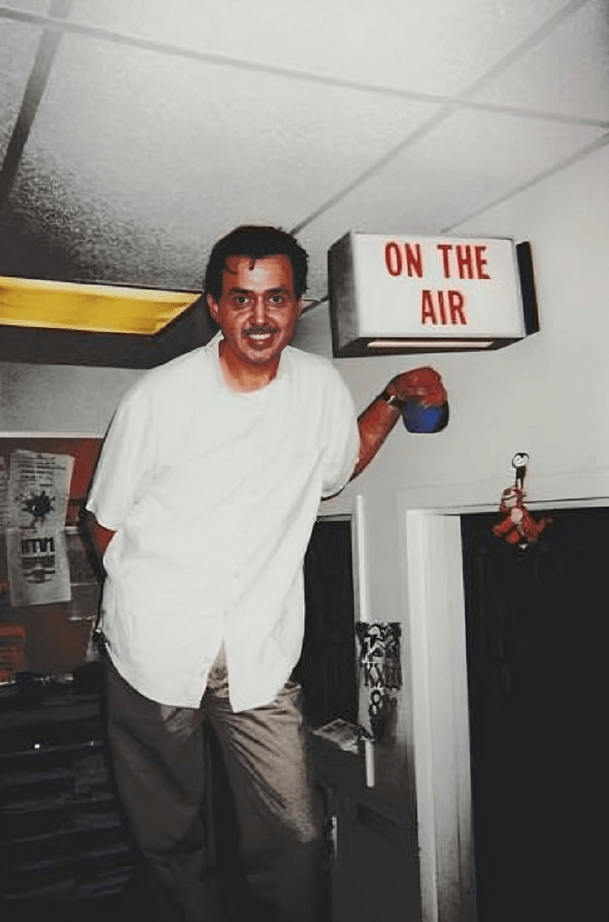
Eddie Lopez working on the radio station

‘’Alma Del Barrio”’ programming 

The traditional programming of most of the stations consisted of jazz, rock and classical music, but then salsa was incorporated thanks to the increasing popularity that this genre was gaining. 

One thing Resendez said is that one of the most famous rock groups was Santana, so the announcer and the rest of his cabinmates were surprised that the musicians of the band knew so much about Afro-Cuban music in terms of percussion. Let us remember that the popular song ”Oye Como Va” was written by ”El Rey De Los Timbales” Tito Puente a decade and a half before the band recorded it.   

This union of rock and salsa was what gave the hosts the confidence to use trendy Anglo-Saxon genres as a means to promote Latin music.   

On top of that, the guys were clear that jazz fans would be receptive to Latin jazz, since great jazz musicians like Dizzy Gallespie hired Cuban percussionists in their orchestras. If on other stations, this music was successful, ”Alma Del Barrio” was no exception. Fortunately, they were not wrong.   

Logo of Alma Del Barrio
Current logo of ”Alma Del Barrio”

Last years of “Alma Del Barrio’’ 

During the last years of ”Alma Del Barrio”, the program team has made great efforts to join and create links with the community, whether it would be through sponsorships, advertisements, public services, donation campaigns, among other things.   

Through all this community service they offered, they also made their own work known and many listeners began to enjoy this great team’s talent while listening to good music and varied programming. 

The program has also been and is part of great annual and historical festivals such as the Salsa Fest. This day is always reserved for the audience to share with the new and old hosts of ”Alma Del Barrio” and many of the station staff, who always spread their enthusiasm to those present with their good energy.   

”Alma Del Barrio” and its hosts have brought joy to their followers, but there have also been some sad moments. One of them was the death of DJ Eddie Lopez in January 2023, leaving a great void in the station and the hearts of those who faithfully followed his career through the KXLU circuits during the last decades. 

Read also: Singer and manager of Cambalache Pancho Chavez 

Singer and manager of Cambalache Pancho Chavez

Peru continues to give much to talk about with regards to salsa and the guest we have this time is clear proof of that. We are talking about the talented singer and backup singer Francisco ”Pancho” Chávez, who has been kind enough to talk to us to reveal unpublished details of his life and career in his native country and, of course, in the United States. 

Pancho, who currently serves as vocalist and manager of the Orchestra Cambalache, has a very long career in the U.S. Latin music scene, to the point that his group has established itself as one of the top salsa bands in the northwestern United States. It is a great honor for us to have an artist of this stature in this January 2024 edition.  

Pancho from Cambalache
Francisco ”Pancho” Chavez, manager and lead singer of Cambalache

Pancho’s Musical beginnings 

Pancho’s first contact with music happened thanks to his mother’s family, many of whom were musicians. Although the young man never go into business in his country, he was able to see how to handle things thanks to his relatives until moving to the United States in 1997. 

One or two years later, someone gave him a double album by El Gran Combo de Puerto Rico that, he says, he played a million times because he really liked it. This material was one of his great inspirations to dedicate himself to salsa as a genre and nobody could change his mind.   

It was in Seattle that he started making music with college friends when he was already living in the United States, implying that he was not yet formally dedicated to music. In fact, Pancho was studying business at the time and was looking for a small musical group with other young college students he met around 1999.   

This group turned out to be Cambalache, which he founded along with Colombian musician Camilo Suarez. This would be the first and only group to which the Peruvian has belonged, so everything he knows about music and the industry was learned with this same project.   

He always stood out for his talent to sing and do vocals, but he also learned to play some instruments such as the congas, timbales, bongos, cowbells, among others. He also learned a bit of sound engineering and can work a little in this area, although he recognizes that he is not yet an expert.   

Pancho and Maelo
Puerto Rican salsa singer Maelo Ruiz and Pancho Chavez

Recruiting talent for Cambalache   

Pancho says that there were not many Latinos at the university back then, so he and Camilo forged a strong friendship and shared many common interests, especially music. 

At the time, both were facing the economic problems typical of a college student and saw music as an opportunity to make a little extra money during their summer vacation. Camilo knew other musicians, so he contacted them and proposed them to join the orchestra they were creating. 

Pancho and Camilo had thought of a group of five or six people, but there were so many interested in joining the orchestra that the first rehearsals included about 13 people. In the end, solely for economic reasons, they only accepted nine members, of which only he remains.   

All these members, including Camilo himself, ended up working with other artists and groups and obtaining new opportunities in the musical field.   

Clasiqueando 

Cambalache’s first album was ”Clasiqueando”, which was released almost 20 years ago. Pancho assures that the acceptance to the material was very nice, even though the details are not so refined and worked.   

The success they had was a surprise for Pancho and the rest of the group, since the scope they expected was local. “We were surprised that people called us from many countries saying they had heard the album and loved it. There were even companies in countries like Japan and Italy that wanted to buy us songs for distribution” Pancho said on the issue. 

It was a great start for everything that came next for the group in the years to come.   

Pancho and Porfi
Pancho Chavez and Venezuelan arranger, producer, and musician Porfi Baloa

Why choose Seattle 

Pancho and his musicians chose Seattle as their base of operations because he and all the members of Cambalache have lived there for many years. That is exactly the city the Peruvian chose to make his living there and he never left it. 

It is also in Seattle where they all have their jobs and occupations outside of music and where they meet to rehearse and deal with all the affairs related to the orchestra. 

In the beginning, it was very hard for them because the Latino audience was not very large when they created the project. However, that has been changing, and today, many Latinos live in the city and maintain their Latino customs, including music.   

Other tasks besides music 

In addition to being the vocalist and manager of the orchestra Cambalache, Pancho is also a business administrator and manages his own event company whose main element is, of course, music. In this company, Pancho and his staff are in charge of hiring artists and bands for private events. Of course, Cambalache is involved in the operation of this project. 

The event center managed by the Peruvian singer has a capacity for 500 people and has its own stage. He rents it to hold events there and has all types of clients waiting.   

They have hired artists such as Gilberto Santa Rosa, Tito Nieves, El Gran Combo de Puerto Rico, Willie González, Conjunto Bahía, Frecuencia Latina, among others. 

Read also: Producer and saxophonist Martin Franco talks about his passion for music 

Poncho Sanchez visited us at the Salsa Museum

Like every month, we are going to dedicate this edition to a very special name in the Latin music scene and it is about the extraordinary percussionist and conguero Poncho Sanchez, who has given us the honor of donating some of his congas and the suit he wore during the Grammy Awards to the Spaha Salsa Gallery Museum.   

In gratitude to such a generous act, we want to dedicate the following lines to his brilliant career and everything he has contributed to Latin music with his work and talent.    

Poncho playing the congas
Poncho Sánchez playing the congas live

Poncho’s beginnings in music 

Pablo Sanchez, better known as Poncho Sanchez, is currently a percussionist and salsa singer who leads a renowned Latin jazz and Cuban music band. He became such a talented artist after a long journey in the difficult and competitive music industry. 

Poncho is the son of two Mexicans from different cities who had eleven children, the musician being the youngest of them all. From a very young age, he developed an intense love for music, which led him to learn to play instruments on his own.   

Although Poncho was born in Laredo, Texas, he spent all his childhood in Los Angeles with his family. In that place, he began to have a lot of contact with American jazz, Latin jazz and soul. During his adolescent years, his musical tastes were dominated by artists such as Mongo Santamaría, James Brown, John Coltraine, Miles Davis, among many others.   

Poncho at Catalina Bar
Poncho Sánchez performing at Catalina Bar and Grill in Hollywood

When he decided he wanted to take music up professionally, he began to teach himself to play the congas, guitar, drums, timbales and flute. This is how he was preparing for what was to come in his professional life later on.   

When he reached adulthood in his twenties, he was playing in various dance clubs for a while, until finally he got Cal Tjader and his group to notice his talent and invite him to join them.   

Today, Poncho is very grateful to Cal and said that he learned a lot from him during the time he was in the group. In fact, he even recalled in an interview that he gave him some lessons just as he was a teacher and Poncho was a student. This, in order to be on par with his bandmates and be able to put on a good show to the public.   

Poncho and Tito Puente
Poncho Sánchez and Tito Puente ”The King of Timbales”

Poncho as a soloist  

In 1980, Poncho finally managed to form his own group with which he began to carry out certain projects, although he had not completely departed from Cal’s band. In fact, the conguero worked with the musical director till the end of his days in 1982.   

Just a few months later, he signed with the Concord Records label to release his first official solo album, which he titled ”Sonando”, marking the beginning of a partnership that remains intact to this day. So far, Poncho has some two dozen recordings with Concord.  

Following decades of starting his career, Poncho saw his dreams become a reality when he won a Grammy for ”Best Latin Album” in 1999 thanks to the Latin soul album he had recorded at the time. That’s when the artist finally felt that everything he had worked for in the previous years had paid off.   

As for his latest album called ”Trane’s Delight”, Poncho seeks to pay homage to the artists who have inspired him and helped him develop his own art, as he considers that these personalities have been a fundamental basis for his growth as a music professional. 

Johnny Cru ISM corresponde in New York City

Read also: The Great Pichie Pérez and his brilliant career 

  • « Go to Previous Page
  • Page 1
  • Interim pages omitted …
  • Page 10
  • Page 11
  • Page 12
  • Page 13
  • Page 14
  • Interim pages omitted …
  • Page 28
  • Go to Next Page »

International Salsa Magazine (ISM) is a monthly publication about Salsa activities around the world, that has been publishing since 2007. It is a world network of volunteers coordinated by ISM Magazine. We are working to strengthen all the events by working together.