• Skip to primary navigation
  • Skip to main content

International Salsa Magazine

  • HOME
  • Previous editions
    • 2026
      • ISM / April 2026
      • ISM / March 2026
      • ISM / February 2026
      • ISM / January 2026
    • 2025
      • ISM / December 2025
      • ISM / November 2025
      • ISM / October 2025
      • ISM / September 2025
      • ISM / August 2025
      • ISM / July 2025
      • ISM / June 2025
      • ISM / May2025
      • ISM / April 2025
      • ISM / March 2025
      • ISM / February 2025
      • ISM / January 2025
    • 2024
      • ISM / December 2024
      • ISM / November 2024
      • ISM / October 2024
      • ISM / September 2024
      • ISM / August 2024
      • ISM / July 2024
      • ISM / June 2024
      • ISM / May 2024
      • ISM / April 2024
      • ISM / March 2024
      • ISM / February 2024
      • ISM / January 2024
    • 2023
      • ISM / December 2023
      • ISM / November 2023
      • ISM / October 2023
      • ISM – September 2023
      • ISM – August 2023
      • ISM July 2023
      • ISM Edition June 2023
      • ISM – May 2023
      • ISM April 2023
      • ISM March 2023
      • ISM February 2023
      • ISM January 2023
    • 2022
      • ISM December 2022
      • ISM November 2022
      • ISM October 2022
      • ISM September 2022
      • ISM August 2022
      • ISM July 2022
      • ISM June 2022
      • ISM May 2022
      • ISM February 2022
      • ISM January 2022
    • 2021
      • ISM December 2021
      • ISM November 2021
      • ISM October – 2021
      • ISM September 2021
      • ISM August 2021
      • ISM July 2021
      • ISM May 2021
      • ISM April 2021
      • ISM June 2021
      • ISM March 2021
      • ISM February 2021
      • ISM January 2021
    • 2020
      • ISM December 2020
      • ISM November 2020
      • ISM October 2020
      • ISM September 2020
      • ISM August 2020
      • ISM July 2020
      • ISM June 2020
      • ISM May 2020
      • ISM April 2020
      • ISM March 2020
      • ISM February 2020
      • ISM January 2020
    • 2019
      • ISM December 2019
      • ISM November 2019
      • ISM October 2019
      • ISM Septembre 2019
      • ISM August 2019
      • ISM July 2019
      • ISM June 2019
  • Spanish
  • Download Salsa App
    • Android
    • Apple

Search Results for: Timbales

Déjalo, the latest track by Pedro Conga y su Orquesta Internacional

The song -composed by Pablito Ruiz- is catchy and brings us the essential style of the orchestra with the renewed touch added by singer Pedro Blasini.

Pedro Conga y su Orquesta Internacional

Within the first 16 seconds, Rafael ‘Bodo’ Torres on piano and Pedro Perez on bass create a lively and energetic musical introduction, perfectly arranged by Roberto Perez.

Pedro Conga y su Orquesta Internacional photos by Adriana Vega

Twenty seconds after the melody starts, Pedro Blasini’s voice enters accompanied by the timbales in a hushed tone.

Through this recording, Pedro Blasini establishes himself as the lead vocalist of the International Orchestra of his uncle, the notable percussionist: Pedro Conga.

The arrangement combines musical intricacy with the required flexibility to captivate listeners searching for love dramas in the salsa de golpe scene.  And when it comes to beats and cuts, within the first ten seconds of the opening minute, Jan Duclerc’s unique trumpet cut fuses seamlessly with Pedro Conga’s tumbadora, creating the perfect harmony to complement the lead vocal.

At the 1:30 mark, José Joel Díaz introduces his timbal cymbal with subtlety, underlining the prominence of the conga.  Raúl Díaz’s bongó delivers consistent accompaniment, providing a masterclass in both rhythm section perfection and percussion timing.

Pedro Conga y su Orquesta Internacional

From the 1:40 mark onwards, the harmonies of Charlie Cruz, Nino Segarra, Alejandro Villegas, and Blasini himself shine.

At minute 2:34, “Bodo’s” piano collaborates with Pedro Perez’s bass to demonstrate their musical partnership, resulting in exceptional musical performances.

The vocalist harmonizes well with the tumbadora, as the drumbeat establishes its presence from the very first minute and gradually intensifies until, during the lead-up to the third minute of the song, the coordination between the lead’s tumbadora and Héctor Morales’s trombone unequivocally proves that (as they say in Puerto Rico) “there is no one for anyone.”

It is clear that there are no bounds to the experience and innovation behind the musical production led by Julio “Gunda” Merced, Rafael “Bodo” Torres, and Santo Santiago.

Pedro Conga, a Puerto Rican musician, displays his exceptional talent through his music.

Pedro Conga
Pedro Conga

He was born in Humacao, Puerto Rico. He explains that he received the pseudonym “Conga” during the years he spent accompanying Justo Betancour. Betancour bestowed the name upon him due to his prodigious talent on the congas. Pedro “Conga” subsequently established himself as a master, doing invaluable work in fostering the growth of SALSA. His orchestra was privileged to welcome vocalists of the highest caliber, including:

He carried out this mission with unmatched finesse and superior quality.

Anthony Cruz, Tito Rojas (“El Gallo de la Salsa”), Ismael Ruiz (“Maelo”), Rafy Cruz, and Edgardo Diaz.

Among his songs are “Pienso en ti,” “Tú me niegas tanto amor,” “No te quites la ropa,” “Quiero volver,” “Te quiero amor,” and “Si supiras,” among others that have become salsa classics.

The productions he created with his orchestra achieved great success not just in Puerto Rico, but also in the United States, Europe, Colombia, Venezuela, Panama, and Peru.

Furthermore, he has received international acclaim for his productions due to the versatility and freshness showcased in each album.

Pedro Conga is renowned in the music industry for his ability to blend rhythm, flavor, and emotion into a single composition.

Bella Martinez Puerto Rico

Also Read: Ray Barretto Giant Force y A Conguero’s Conguero

[Read more…] about Déjalo, the latest track by Pedro Conga y su Orquesta Internacional
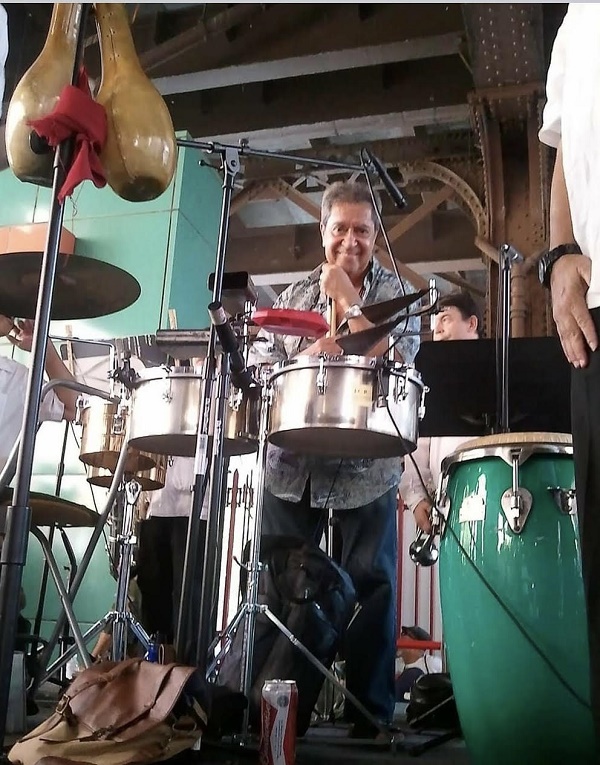
Nicky Marrero is an innovator, timbalero and bongo player, living legend of our Afro-Latin and Caribbean music.

Nicolás Marrero Jr. “Nicky Marrero” was born in the Bronx, New York, on June 17, 1950, to a Puerto Rican father and mother (born in San Germán and Corozal, respectively).

He had formal studies in drums during his adolescence, but more could the sounds of Tito Puente and Willie Bobo, his major influences.

Nicky Marrero is an innovator, timbalero and bongo player, living legend of our Afro-Latin and Caribbean music.

He debuted in music with a high school ensemble called Orquesta Caribe.

However, his first recording session was at the age of 15 with the original band of another teenager born in 1950: Willie Colón.

Curiously, at the time of these sessions, three pillars of the Alegre All-Stars, Charlie Palmieri, Louie Ramirez and Kako, were present in the studio, and young Nicky was invited to participate as a timbalero.

In 1968 he was recruited by Eddie Palmieri, who by then, as a consequence of internal problems, gradually disbanded his original orchestra: La Perfecta.

Nicky Marrero joins the orchestra shortly after recording the album “Champagne,” the album “Justicia” (1969), where, still under the powerful voice of Ismael Quintana, Nicky begins to explore his own sound (listen to his solo in the song “My Spiritual Indian”),

The decade of the 70’s opens for him with three important events: the classic album “Vámonos Pa’l Monte”, his participation with Patato in the album “Portrait Of Jennie” by Dizzy Gillespie and the beginning of his career as a percussion teacher, as a member of the faculty of the East Harlem Music School, the school of Johnny Colón, legendary pianist and one-time pioneer of boogaloo.

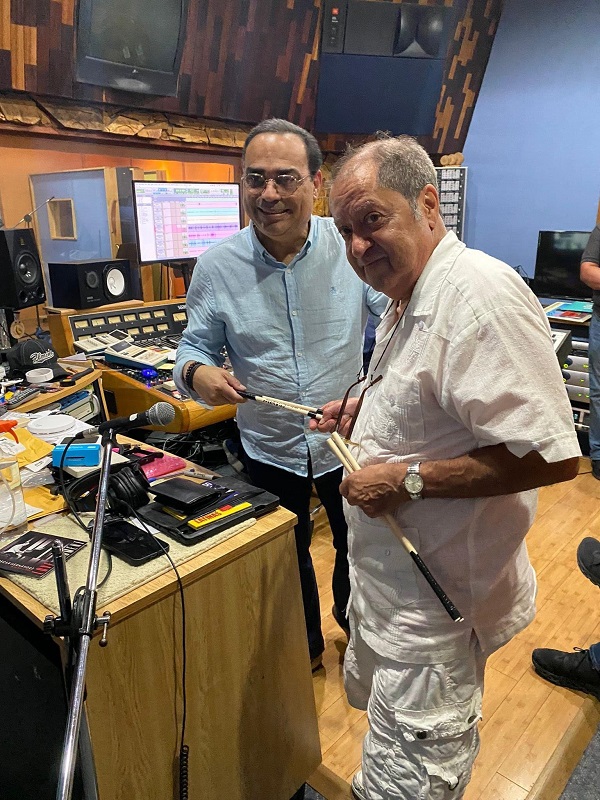
Ggilberto Santa Rosa y Nicky Marrero

At this institution Nicky gives his first lessons to a 13 year old boy named Jimmy Delgado.

In 1972 Nicky is invited to participate in the Afro-American Music Festival. 1975 he joins the troupe of the Wonderful Jew, Larry Harlow, then he is part of the Revelation Orchestra, two years with the Novel Orchestra.

In fact, thanks to his internship with Harlow’s band, Nicky was already part of Fania Records’ staff of musicians, recording as timbalero, bongos player and even drummer (and one of his first assignments for that label as a studio musician was the album “Pa’ Bravo Yo” by Justo Betancourt, produced by Harlow himself in 1972).

In 1973 he was included in the Fania All-Stars, replacing Orestes Vilató.

Marrero received an invitation from Pacheco to make his debut with them at Yankee Stadium in August of that year. Ironically, despite the events that separated Vilató from the stellar orchestra, he remained part of Fania’s studio staff. In fact, Vilató and Marrero crossed paths on countless sessions for various artists on the label between 1973 and 1980, in most cases with Marrero on timbales and Vilató serving as bongos player.

His multiple sessions for Fania (Ismael Miranda, Ismael Quintana, Héctor Lavoe’s first solo album (“La Voz”), Justo Betancourt and others), he also participates in “Sun Of Latin Music,” Eddie Palmieri’s classic par excellence and the first album to win a Grammy in the then debut category of “Best Latin Album.”

Roberto Roena y Nicky Marrero

He is also invited to participate in the first of several rock sessions, this one specifically as an all-around percussionist for the group Electric Flag: “The Band Kept Playing”.

He travels with Fania to the African continent, later Jerry Masucci gets a potentially lucrative contract for the Fania All-Stars with Columbia Records, for recording purposes the orchestra is reduced to a sextet: Pacheco, Barretto, Nicky, Roberto Roena, Bobby Valentin and debuting with the orchestra, Papo Lucca.

This is how Nicky, without being a band leader, not only became a star member of the Fania All-Stars, but also an “exclusive artist” of the Fania label. And as such, he appears on several albums that are not necessarily Latin and travels with Fania to Europe (the first of several subsequent visits) and Japan. Together with Harlow, Vilató on bongo, Eddie “Guagua” Rivera on bass, Frankie Rodríguez on congas, Harry Viggiano on guitar and Pablito Rosario on percussion, he recorded an album of downloads for the Japanese market under the curious group name of Belmonte (“Olé”). [This album is very difficult to obtain.

1977 he joins Tipica’73, an orchestra which he joins shortly after the release of the previous album: “Rumba Caliente,” ironically replacing Vilató once again. The album in question, for which Nicky alternated between his timbales set and the drums proper, is “The Two Sides Of Tipica’73,” the band’s most progressive album.

Nicky introduces drum toms to his rhythm kit (the only drum component Nicky overlooks in his regular timpani set is the hi-hats).

Nicky even recorded his first drum solo on the song “Yo Bailo De Todo” on that album. By this time, production at the Fania label and its subsidiaries was exhausting and the salsa boom in New York was in full swing.

Exhausting tours with the Fania All-Stars, he travels with Tipica’73 to Havana, Cuba, the first time in 20 years of economic blockade and open political friction that a New York Latin orchestra performs in the home of son, Nicky’s visit with La Tipica and Orestes Vilató’s own visit the following year, replacing him with the Fania All-Stars, helped to restore the timbal and bongo to the importance they should never have lost in Cuba.

Nicky Marrero Leyenda Fania

To this day, Nicky remains healthy and active in music.

Also Read: The legendary singer Guadalupe Victoria Yolí Raymond “La Lupe”

Willito and Japhet from La Sonora Ponceña

The stories of two great musicians

The island of enchantment, Puerto Rico, has been one of the places with the most talented musicians in Latin America, so it is always worth mentioning some of the most important names in the music scene in this beautiful land. Today it is the turn of talented musicians Willito López Vázquez and Japhet O. Rodríguez from the world-famous orchestra La Sonora Ponceña. 

Next, we will talk a little about both salsa exponents’ stories separately so that our readers can get to know these great personalities of the entertainment world who are not so famous for some.  

Willito López 

Wilfredo López Vázquez, artistically known as Willito López, is a famous percussionist whose career over time has been brilliant and has countless great collaborations with other exponents of the genre such as Tito Puente, Eddie Palmieri, Tito Nieves, Jerry Rivera, Luis Perico Ortiz, Lalo Rodríguez, Bobby Valentín, among many others.   

One of the instruments that makes this musician excel more than another is the conga and it is present in several of the greatest records of La Sonora Ponceña, the orchestra to which the artist currently belongs. 

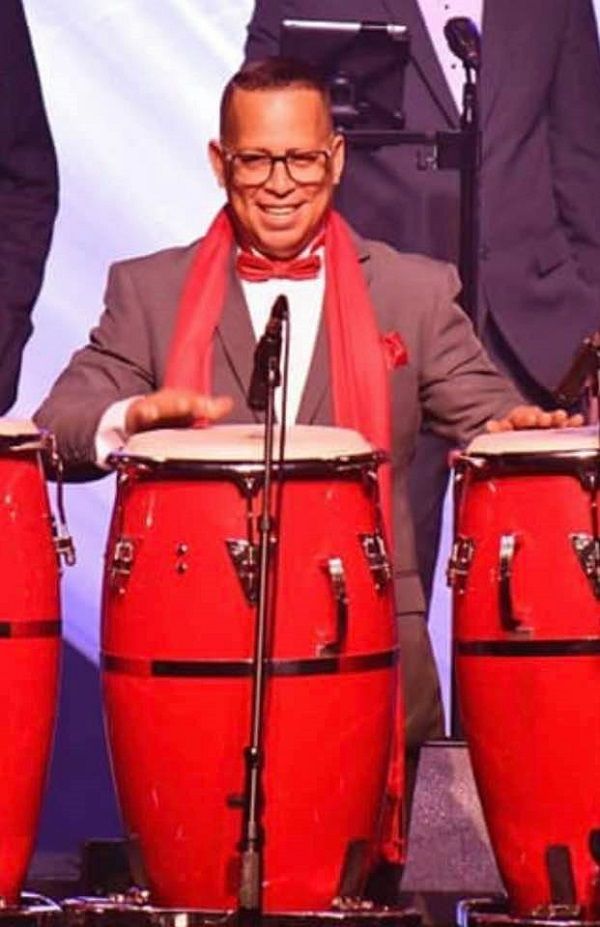
Willito playing the conga
Willito López playing the conga during a performance

In one of his last interviews, he talked a bit about maestro Ángel ”Maldonado” Maldonado, of whom he cherishes fond memories after his unfortunate death a few years ago. He mentioned that the sonero lent his support to him when he needed it most and was very grateful for that, while regretting that he was already no more in this world. 

Undoubtedly, he is a pride to his family and the artists who have had the opportunity to feature his talents for any project in the past. He has always left everything on stage with each of his works and we have no doubt that he will continue to do so as long as his arms allow him to delight the audience with his talent.   

Japhet Rodriguez  

Japhet Rodríguez is also a talented Puerto Rican-born percussionist who has a very interesting career behind him.  

The artist was initially invited by La Sonora Ponceña to participate in some projects in 1998, but after having shown what he was really made of, he continued working with the orchestra for years to come.   

Japhet with his timbales
Japhet Rodríguez with his timbales

It was in 2007 that he became an official member of the group and thanks to which he became popular all over the world while serving as the timbalero of La Sonora Ponceña.   

While it is true that he has reached a huge popularity worldwide thanks to the aforementioned Puerto Rican orchestra, Japhet has been part of many other important names in Latin music such as Sabor Ponceño, La Terrífica de Ponce, Costa Brava, Moncho Santana, Los Hermanos Moreno, Willie Crespo, Camilo Azuquita, Impacto CREA, Raphy Leavitt Y La Selecta, Manix Martínez, Rafy Class, Conjunto La Perla, La Tropicana de P.R., and Homenaje Matancero. 

Something very interesting about the musical career of this great artist is that all these groups to which he has belonged have not only been from Puerto Rico, but also from countries such as the United States, Panama and Colombia. This shows that his talent has not only shone in his native country, but also in other latitudes. 

In next editions, we will be talking a little more about other salsa exponents who have left our music in high, so you can not miss the section of Johnny Cruz in coming months. 

Read also: Remmberin g Domingo ”Tito” Gutiérrez’s career 

Johnny Cru ISM corresponde in New York City

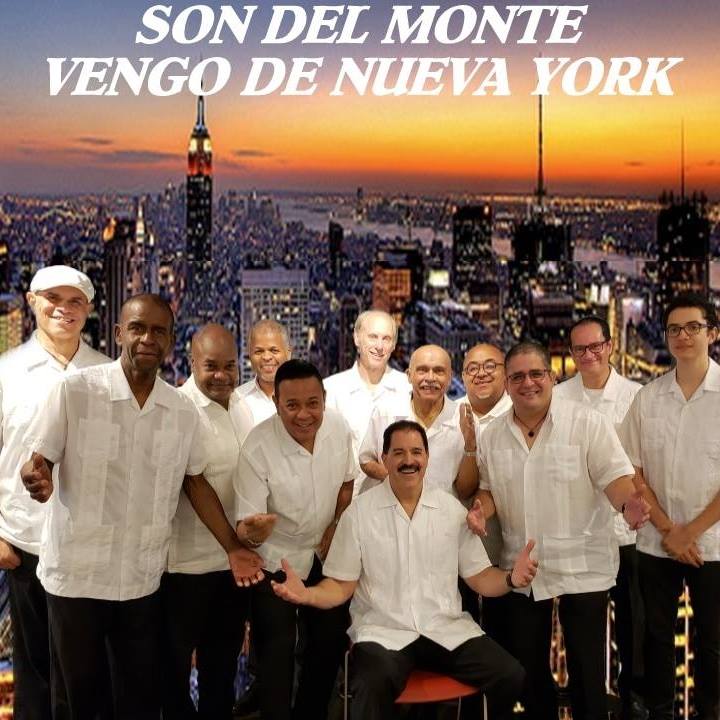
Son del Monte

North America / United Stated / New York

Son del Monte, Something more than a “Charanga”

It was one of those nights of meeting with friends, those friends with whom you share the same musical preferences among other things, you know, of those gatherings where only you and your friends can spend hours discussing the best songs of Héctor Lavoe or remembering the best hits of the Fania, and in which there is no other way to end the evening than with the deities that brings the good Salsa music from a live band to close the night with a flourish.

Son del Monte
Son del Monte from New York

And so that was, when with the hours passed we came across one of these charming Latin clubs that fill the streets  and every day prevail more in the city of New York, where, of course, they offered Live Salsa. Eureka! If you allow me to say it … It was the perfect place to “Echarnos un Pie” (colloquial term that we usually give in some Latin countries when we refer to dance).

Upon entering, the characteristic sound of the band wrapped up the entire venue, no doubt, captivated us. It was the harmony of an orchestra that played the typical Cuban music: “La Charanga“, which had its maximum exposure in the 20th century. We were all enthralled or if you want to say “delighted”, it was the mixture of wind instruments with percussion instruments but especially with the string instrument that most caught our attention, the Violin.

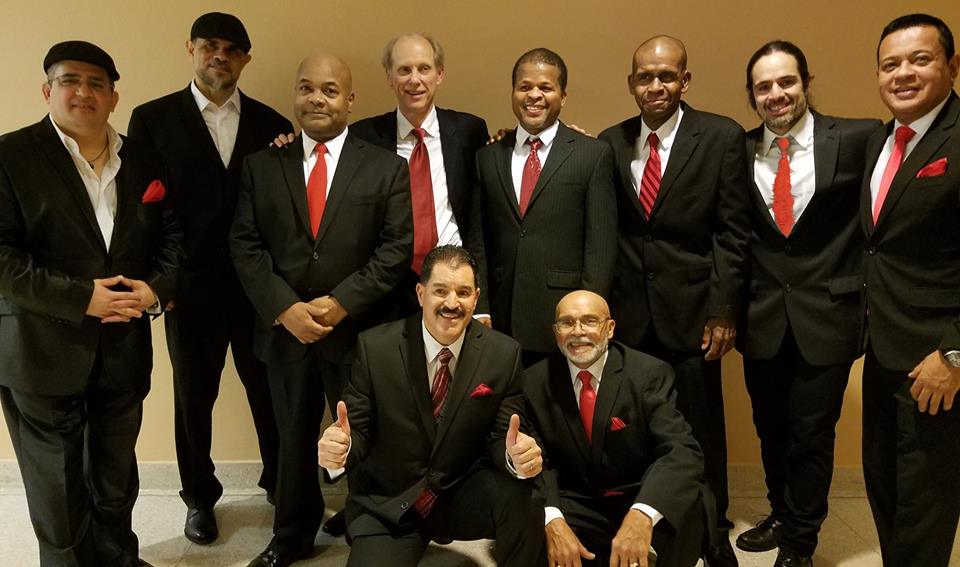
When we asked for the name of the orchestra, they told us: “Son del Monte”. It’s the ideal name for an orchestra of 12 Latin musicians who project their virtuosity before an audience eager for Caribbean Music that bathes the senses and awakens the joy of living.

Son del Monte
Son del Monte

Son Del Monte is a band based in New York City that presents unique tunes from various artists. This orchestra was born from the musical director and timbalero, Manny Rivera whose aspiration was to create a Charanga band with a hard New York sound that paid homage to the orchestras of the 60s, 70s and 80s. “Our music is captivating for the listeners and dancers. Fans from all over the world have come to love Son Del Monte: Una Charanga Con Algo Más and our incredible musical swing”, said Manny Rivera.

This band that combines the typical sound of Cuba with the mixture of flute, violins and trombones with three singers that create a distinctive harmony of three parts, have performed in so popular Salsa venues, such as: Maryland Live Casino, the Baltimore´s Latino Festival, the boardwalk of Coney Island, SOB’s, Empire City Casino in Yonkers, Gonzalez y Gonzalez, La Marqueta, the Latina Hats Society, Industry City, Harlem Mist, among other recognized Salsa venues.

The members of this Charanga orchestra with “Sabor” and electrifying sound are: Mauricio Smith Jr. (Flute), Eric Roberto Salazar and David Rimelis (Violins), Michael Pallas, Juanga Lakunza and Charlie Garcia (Trombones), Eli Rivera (Piano), Bert Castro (Bass), Joe Gonzalez (Conga), Manuel Rivera (Timbales / Musical Director / Leader) and Luis Ayala, Armando Jiménez Sonji and Luis Soto (Singers).

Since the beginning of this year (2019), Son del Monte has been working on their record proposal for the Latin market with unpublished themes, rhythmic and unique sound – contemporary. To date they already have two singles: “Rumba Omelenko” and “Vengo de Nueva York” availables in: CD Baby, Deezer, iTunes, Apple Music, and Spotify. Likewise, the song “Herman” is in the process of recording. So, get ready because this Charanga orchestra promises their CD ended with great compositions for the public later this year.

Undeniable, the acceptance of Son del Monte has been so extensive on the part of New Yorkers and all who are Salsa lovers that they were recently awarded with the TANAE Digital Media Award for Band of the Year 2018, giving recognition to an arduous musical performance, but above all of great cultural value that keeps alive our Latin idiosyncrasy.

Son del monte - Premios Tanae
Son del monte – Premios Tanae

Manuel Rivera (Musical Director / Manager/  Timbales):

Manuel Rivera, have been a professional musician for more than 40 years and now Son Del Monte’s Leader/ Musical Director.  His musical career started playing Bongo in a Latin Workshop band which eventually became Orchestra Yambu.  Yambu was known for its Latin Jazz style and Disco Hit “Sunny”, his first recording.  Subsequently, I joined the original Charanga Orchestra Sublime of New York City, doubling up on Bongo and Timbales. He recorded on Sublime’s first two albums in 1977 and 1979.

In 2001, he rejoined Orchestra Sublime now known as “Sonsublime”. Manuel recorded on Sonsublime’s Gran Reserva and Bailando Con Sonsublime, their latest CDs. He studied various folkloric rhythms, Bata drums and sight reading at the Harbor’s Conservatory of Music in El Barrio in New York City under the guidance of the Master Louie Bauzo.

Manuel Rivera has performed with the Bassist: William Millan, of the original Conjunto Saoco, singers: Henry Fiol, Ray Ramos, and Luis Ayala.  Also, he performed with Yerason and the MTG All Stars Orchestra under the direction of Hector Leguillow, Joe Quijano at Lincoln Center and other various artists throughout his musical career.


Next Shows:

Monday, Jult 15TH   

Venue: Cunanele Restaurant and Lounge. 1 Route 46 W, Totowa, NJ 07512

Saturday, August 17TH   

Venue: La Placita de la Marqueta.  North trains between 111th and 112th Streets in East Harlem, “El Barrio” and uptown Manhattan, NY.


For more information, please visit:

https://www.SONDELMONTE.com

Or Follow them for their Social Channel:

https://www.facebook.com/MRSONDELMONTE/

Roberto Quintero

North America / United Stated / New York

Roberto Quintero, The Master in the Congas, Bongo & Timbales NY

Roberto Quintero was born in Caracas, Venezuela, surrounded by Afro-Venezuelan and Afro-Cuban rhythms and music.

Roberto Quintero
Roberto Quintero – New York

His father, a respected composer, singer and percussionist, tutored and encouraged Roberto Quintero on percussion throughout his adolescent years.

Roberto Quintero comes from a long line of outstanding musicians, including his Uncle Carlos Nene Quintero and cousin Luisito Quintero.

Roberto Quintero and his congas

Roberto Quintero studied at the Conservatory of Music in Caracas, Venezuela and Sinfonica Orchestra Juvenil from Venezuela.

Besides his skillful Congas work, Roberto is also well known for his work on Bongos, Drum set, Djembe, Timbales and a wide variety of assorted percussion instruments.

He (Roberto Quintero) has played with Dave Samuels, Dave Weckl, Chicago, Gato Barbieri, David Sanchez, Roy Hargrove, David Sancious, Eddie Palmieri, Jack DeJohnette, Roy Haney, Marc Anthony, Timbalaye, Celia Cruz and countless other high-profile music acts in all genres, from symphonic to Jazz, Latin Jazz and Latin House.

Roberto Quintero
Roberto Quintero
  • « Go to Previous Page
  • Page 1
  • Interim pages omitted …
  • Page 12
  • Page 13
  • Page 14
  • Page 15
  • Page 16
  • Interim pages omitted …
  • Page 28
  • Go to Next Page »

International Salsa Magazine (ISM) is a monthly publication about Salsa activities around the world, that has been publishing since 2007. It is a world network of volunteers coordinated by ISM Magazine. We are working to strengthen all the events by working together.