• Skip to primary navigation
  • Skip to main content

International Salsa Magazine

  • HOME
  • Previous editions
    • 2026
      • ISM / April 2026
      • ISM / March 2026
      • ISM / February 2026
      • ISM / January 2026
    • 2025
      • ISM / December 2025
      • ISM / November 2025
      • ISM / October 2025
      • ISM / September 2025
      • ISM / August 2025
      • ISM / July 2025
      • ISM / June 2025
      • ISM / May2025
      • ISM / April 2025
      • ISM / March 2025
      • ISM / February 2025
      • ISM / January 2025
    • 2024
      • ISM / December 2024
      • ISM / November 2024
      • ISM / October 2024
      • ISM / September 2024
      • ISM / August 2024
      • ISM / July 2024
      • ISM / June 2024
      • ISM / May 2024
      • ISM / April 2024
      • ISM / March 2024
      • ISM / February 2024
      • ISM / January 2024
    • 2023
      • ISM / December 2023
      • ISM / November 2023
      • ISM / October 2023
      • ISM – September 2023
      • ISM – August 2023
      • ISM July 2023
      • ISM Edition June 2023
      • ISM – May 2023
      • ISM April 2023
      • ISM March 2023
      • ISM February 2023
      • ISM January 2023
    • 2022
      • ISM December 2022
      • ISM November 2022
      • ISM October 2022
      • ISM September 2022
      • ISM August 2022
      • ISM July 2022
      • ISM June 2022
      • ISM May 2022
      • ISM February 2022
      • ISM January 2022
    • 2021
      • ISM December 2021
      • ISM November 2021
      • ISM October – 2021
      • ISM September 2021
      • ISM August 2021
      • ISM July 2021
      • ISM May 2021
      • ISM April 2021
      • ISM June 2021
      • ISM March 2021
      • ISM February 2021
      • ISM January 2021
    • 2020
      • ISM December 2020
      • ISM November 2020
      • ISM October 2020
      • ISM September 2020
      • ISM August 2020
      • ISM July 2020
      • ISM June 2020
      • ISM May 2020
      • ISM April 2020
      • ISM March 2020
      • ISM February 2020
      • ISM January 2020
    • 2019
      • ISM December 2019
      • ISM November 2019
      • ISM October 2019
      • ISM Septembre 2019
      • ISM August 2019
      • ISM July 2019
      • ISM June 2019
  • Spanish
  • Download Salsa App
    • Android
    • Apple

Search Results for: Timbales

Momotombo SF with former members of Malo and Santana

There is no doubt that The Bay Area has many talents, so there are always groups and people to talk about. Today it was the turn of the talented American percussionist of Nicaraguan origin Leo Rosales, with whom we had the pleasure of chatting about his life and projects with both the group Malo and his current band Momotombo SF.   

This Latin rock legend has so much to tell and we are happy to hear him and make known his success and great struggles in the world of music.   

Leo was born in San Francisco
Percussionist Leo Rosales was born in San Francisco, but his family is Nicaraguan

Leo’s beginnings in music 

Leo’s interest in music began at home with his parents, who, as we have already said, come from Central America, which greatly the young man and the steps he would take a few years later.   

It turns out that his father was a radio host at the station Radio Mundial and his uncle was a musician in the 1940s in Nicaragua, where both developed their careers linked to music for a long time. However, they decided that the Central American country did not offer them the opportunities they were seeking and decided to move to San Francisco and build their families there. 

It was in San Francisco where Leo was born, his father decided to return to his job as a radio host at the station Coffee and his uncle met important musicians who helped him adapt to the musical environment in that place. All this coupled with the numerous family parties held at Leo’s house with Latin music aroused an enormous interest in the child for this world. 

Tradictional music, salsa and Latin jazz inspired him to listen to all kinds of genres and bands, but not only in Spanish. He also became a big fan of The Beatles, The Rolling Stones, James Brown, among others. 

He loved what he heard so much he even decided to learn to play the drums on his own by ear. Then, he started using cooking pots and sticks to rehearse at home in an improvised way until he had the opportunity to use professional instruments.  

Leo playing
Leo Rosales playing the drums

Leo’s start in music professionally 

Leo was so hell-bent on making a name for himself in music that he got yogether with some friends and colleagues with the same interests to create an improvised group with which he gradually managed to play at parties and small street festivals. 

They also began to perform in larger events and to meet more and more important people in the industry. Also Leo and the other young people began to make friends with other groups, which led to new job opportunities for several of them.   

Around the same time they met the world famous businessman and concert promoter Bill Graham, who stated taking musicians to all over to San Francisco. This gave Leo the opportunity to play at the Fillmore West as well as other famous bands such as Chicago, Cold Blood, The Doors, The Gratful Dead, among others.   

There was a night when a friend invited him to see a band play that would completely change the vision Leo Rosales had of music because they did not just play rock, but also conga, timbales and other Latino-oriented instruments. That group turned out to be Carlos Santana’s band in 1968. 

Leo was so impressed with the group that the way he conceived music changed completely and he decided that this was the same direction he wanted to pursue. That is how he started playing Santana’s songs in various nightclubs, which led him to meet his brother Jorge Santana. 

Grupo Malo 

By the time Leo met Jorge, he was leading the group Malo. It all happened when the young man was about 17 or 18 years old and the same friend who took him to see Carlos invited him to see Jorge play with his band. At the request of the friend’s brother, Leo was given the opportunity to play the timbales, which he learned to play in the rock genre thanks to having listened to Santana for so long. 

After having played in several places with the group Malo and thanks to his high level as a musician, he was invited by one of the founders of the group, Arcelio García, to rehearse with the rest of the members. After rehearsing with them for a while, Leo became a permanent member of Malo and, shortly thereafter, he began touring the United States with them.  

All these performances helped the artist to become much more professional in his trade and to meet many other prestigious musicians.  

Gabriel Manzo
Co-founder of Malo and guitarist Gabriel Manzo

Momotombo SF  

After being in the group Malo for a long time, the priorities of some of its members changed. While Arcelio and Jorge continued with the Malo project, Leo and one of the ex-guitarists, Gabriel Manzo wanted to continue playing the same music, but did not want to continue using the group’s name out of respect for those who were still there and in order to avoid legal problems.  

That is when Leo talked to Arcelio and Jorge to ask for their opinion about it and they agreed that there was no problem with the birth of a new group, but it needed its nae changed. For this reason, the percussionist and his bandmates used one of Malo’s songs called Momotombo to refer to the new band they created. 

`‘Momotombo” is a song written by composer Pablo Tellez that pays homage to the Nicaraguan volcano near the town of the same name. Then, they began to refer to themselves as ”Momotombo with former members of Malo & Santana” to make it clear where its members come from. This was more than five years ago. 

”What we want is to keep alive the essence of Malo and Santana’s music with the same love with which we did it years ago, while respecting the original founders and those who were still there. On the contrary, we want to honor them and make it clear where we come from” said Leo, who evidently has full respect to Malo and its founders, who gave him the opportunity of his lifetime. 

Read also: The Bolivian charango with Spanish roots 

Pedro Bermúdez released his new Salsa album “ARRASANDO”

North America /  USA / New York 

The Salsa pianist from Puerto Rico, Pedro Bermúdez, released his most recent record production “Arrasando” with the collaboration of the main Salsa legends and the New Salsera blood on June 5th. This was announced by Bermúdez through his official Facebook account.

Arrasando is a heavy and hard traditional Salsa project that brings together a dream team of musicians and salsa legends from Puerto Rico and New York City, such as: Bobby Valentin (Bass), Reynaldo Jorge (Trombone), Frankie Vazquez (vocals), Eddie Montalvo (Congas), Ralph Irizarry (Timbales) and Jose Mangual (Bongos), among many others.

The 11 tracks of this album are original arrangements and lyrics. Arrasando also includes two Latin jazz composition in big band style with a lot of solos and “descargas” in each single.

Other Musicians presents on this recording are:

Trumpets: David “Piro” Rodríguez, Julito Alvarado, Angie Machado, Carlos Coamito Martínez, Jesús Alonzo, Nelson Jaime Gazu and Angel Segarra.

Trombones: Eliut Cintron, Danny Fuentes and Gamalier González.

Saxophones: Ivan Renta.

Bass: Rubén Rodríguez and Pedro Pérez.

Percussion: Carlos Maldonado Kachiro Thompson, Charlie Sierra, Miguel Aponte, Roberto Quintero, Tony Rosa and José Che Vega.

Coros: Luisito Carrión, Henry Santiago, Héctor Pichie Pérez, Rafu Warner and Joe González.

Singers: Rico Walker, Pedro Brull, Osvaldo Noel Muñoz, Kayvan Vega, Joe González.

ARRASANDO is available NOW in all digital platforms!!!

Pedro Bermúdez released his new Salsa album “ARRASANDO”


Release: June 5th, 2018

Tracks:
  1. Hablador
6. Reunión (Feat. Reynaldo Jorge & Eddie Montalvo)
2.   Las Rabietas de Marcela (Feat. Frankie Vázquez, José Mangual Jr. & Eddie Montalvo) 7. Mentiras No Quiero (Feat. José Mangual Jr)
3.      Acere Guaribombó (Feat. José Mangual Jr. & Ralph Irrizary) 8. Ya No Soy Gente
4.     Repartiendo Fuete (Feat. Bobby Valentin, Ralph Irrizary & Frankie Vázquez) 9. Vete de Aquí (Feat. Eddie Montalvo)
5.     Te Lo Dije Casera (Feat. Reynaldo Jorge) 10. Mambo to My Friends (Feat. Reynaldo Jorge)

11. Groovin’

For more information, please like him on Facebook www.facebook.com/pedrobermudezpiano Or Download “Arrasando” HERE → https://store.cdbaby.com/cd/pedrobermudez1

Link de Video: https://www.facebook.com/pedrobermudezpiano/videos/1867607530205899/

Bonrinquen Orchestra “Pa’ Que Tú Lo Sepas”

West– California- Bay area

Borinquen Orchestra with more than 20 years of tradition in the salsa music market in the east part of the Bay area in California, launched their latest album “Pa’ Que Tú Lo Sepas” to the national and international level at the end of 2017.

This Album (Bonrinquen Orchestra) contains 10 tracks with seven unpublished singles, with which Borinquen shows the maturity in their sound. Likewise, the band has new members, invited artists and the best renowned arrangers of New York, Miami, the Bay Area of San Francisco and Puerto Rico.

Borinquen Orchestra - 2018
Borinquen Orchestra – 2018

Fans can now enjoy this CD, after 10 years of waiting, since the success of their debut album “Trombonist” in 2007. “Pa ‘Que Tú Lo Sepas” presents the most exquisite cocktail Salsero with the most varied styles of US and Latin American.

This recording with duration of 5 years of production and postproduction achieves the goal of telling through their songs, life experiences and stories that include a contribution to the culture of the national Salsa, thanks to its unique sound and the pen of the composers and members of the orchestra: Marco Montoya and Carlos Xavier Soto.

1- Borinquen Orchestra

The single “Cha Cha Borinquen 415” is a tale of two songs wrapped in one with an introduction of Cha Cha with a Hard Salsa explosion and the incorporation of percussion solos of the highest energy. The Cuban timba is present in “Carolina” and the Puerto Rican style of Salsa from the old school in “Yo Tengo Una”. In the seventh track you can enjoy the voice of the special guest, Willy Torres (leading vocalist of Spanish Harlem Orchestra) in “La Culebra”, a song with the purest New York style.

“Americano Latino” and “Nosotros” contribute to the album the characteristic sound of the timeless Salsa. The modern Salsa with a touch of pop element is represented by “Ay Negra”, which adds a touch of freshness to the record production. Finally, one of the most important covers in this CD is “Never Knew I Needed” (Salsa version), it is versioned with the mix of both languages: Spanish – English, which gives an inclusive, modern and versatile touch to the song original R&B written by the singer and composer Ne-Yo and is dedicated to the audience that also enjoys this tropical music in the Anglo-Saxon language.

Borinquen Orchestra - Pa' Que Tu Lo Sepas
Borinquen Orchestra – Pa’ Que Tu Lo Sepas

This orchestra of young musicians, and led in principle by Bill Ortega Sr (until 2016), is an entirely familiar musical project where each member had shared with each other previously in other groups, which made the perfect combination of talent and personality that characterizes it nowadays and turns it into “a very polished Salsa band”. Commented Marcos Montoya.

Orquesta Borinquen, named after the Puerto Rican mother of the group’s current leader, Bill Ortega Jr, continues to celebrate the success of “Pa ‘Que Tú Lo Sepas”, their second album and the beginning of many triumphs to come, thanks to their efforts, dedication and perseverance.

Currently, Borinquen keeps on promoting and booking shows throughout California, mainly in the San Francisco Bay area, San Jose, Santa Rosa and Los Angeles.

Borinquen Orchestra
Borinquen Orchestra

 “We still believe there is more growth to come as our musical skills continue to mature and our sound continuing to be defined, while we keep playing together as a group for many years to come”. Marcos Montoya

Members: Special Guests:
Bill Ortega Jr (24 years ancient) Band Leader- Trumpet- Percussion & Vocal Willy Torres–Vocalist (SHO)
Carlos Xavier Soto  (14 years ancient) Lead vocal & Songwriter Carlos Rivas-Guitar/requinto
Marco Montoya  (15 years ancient) Piano- Songwriter & Studio Engineer Ernesto Mazar- Bass (Charanga Habanera)
Gilbert Roman (10 years ancient) Bass Christian Pepin- Percussion
Aaron Routtenberg (10 years ancient) Timbales- Percussion & Vocal Julio Perez- Percussion
Sean Zuniga (4 years ancient) Congas Karl Perazzo- Percussion
Eric Mendez (15 years ancient) Congas Miguel Melgoza-Percussion
Ricky Gomez (15 years ancient) Bongos Jamie Dubberly-Trombone
Freddy Martinez (20 years ancient) Tenor Sax & Vocal Charly Aguilar-Trombone
Joe Camacho (13 years ancient) Tenor Sax- Bari Sax & Vocal Jimmy Flores-Guiro

Efrain “Junito” Davila-Keyboard player

Pa Que Tu lo Sepas - Borinquen Orchestra
Pa Que Tu lo Sepas – Borinquen Orchestra

Arrangers: Efraín “Junito” Dávila, Ramón Sánchez, Andy Guzmán, Willie Ruiz, Willy Torres and the West Coast arranger, Erick Peralta.

“Pa’ Que Tú lo sepas” can be downloaded NOW in all digital music platforms.

For more information, please visit www.orquestaborinquen.com

Or Listen to their playlist HERE → https://www.youtube.com/playlist?list=PL_YT648PIT3ysdVk7nN-CajuQRLvJZgYj

Tribute to Johnny “Dandy” Rodríguez Jr. His first recording was professionally with Tito Puente in 1964 and was titled “Exciting Rhythm of Tito Puente”

Johnny “Dandy” Rodriguez, (September 11, 1945, United States August 17, 2024) son of Johnny Rodriguez Sr. who was nicknamed “La Vaca”, remembered percussionist who was part of the orchestras of Tito Puente and Tito Rodriguez, among others; as we can deduce, music for Johnny Rodriguez is something clearly hereditary given that as a child he attended his father’s rehearsals and his mother was a dancer.

Johnny Dandy Rodriguez Foto By Miguel Martillo

To get an idea of ​​the musical family, let’s say that Johnny Rodriguez Sr. also took part in performances and recordings with musicians and singers of the stature of: Alfredito Levy, Joe Quijano, Jose Curbelo, Lou Perez Louie Ramirez, Machito, Miguelito Valdes, Noro Morales, Orlando Marin, Pete Terrace, Pupi Campo and Xavier Cugat.

The father’s enormous musical background was emulated in a great way with ample merits by the son.

Dandy Rodriguez grew up in Spanish Harlem in Manhattan, his home was very musical and when he was in high school he learned the details of percussion represented by the bongos, congas, timbales and drums. Influenced by his father he became interested in music and so in 1962 he joined the band of maestro Tito Puente.

His first professional recording was with Tito Puente and was titled Excitante Ritmo De Tito Puente; after this first album with Puente, “Dandy” Rodriguez began to deepen his musical studies listening and learning from leading musicians such as: José Mangual Senior bongosero from Machito, Rogelio “Yeyito” Iglesias bongosero from Cachao and Vitin Palacio bongosero from Johnny Segui.

He worked with the King of Timbales for more than three decades, initially in the sixties, more specifically from 1962 to 1972, then he rejoined Tito Puente’s band at the end of the seventies and was part of it practically until the death of the famous King of Timbales.

In the extensive career of our Johnny Rodriguez in music we must mention his internship with Joe Cuba’s orchestra, with whom “Dandy” Rodriguez himself says he participated in seven or eight albums since the mid-sixties; the first of them titled Joe Cuba Sextette – Comin’ At Yous; without forgetting to mention that in those albums the name of Johnny Rodriguez Jr. does not appear in the credits due to issues related to contracts with record companies.

His stay with Puente was not a limitation for him to be part of other musical groups, so he also worked for several years with another great of Latin music, the remembered Tito Rodríguez. He was also part of the band of the famous conguero Ray Barreto, replacing Tony Fuentes, and was one of the founders of the famous Típica 73 in 1972 and even took part in a couple of albums with Machito.

In the seventies, during the Salsa Boom, “Dandy” Rodriguez left his mark on recordings with: Jose “Cheo” Feliciano, Charlie Palmieri, Roberto Torres, Willie Rosario, Ismael Quintana, Celia Cruz & Johnny Pacheco, Louie Ramirez, Richie Ray & Bobby Cruz, Fania All Stars, Alfredo De La Fe, Conjunto Clásico, Henry Fiol and Tito Allen.

As we mentioned before, John Rodriguez returned to the band of maestro Tito Puente in 1978 and was part of the band until Ernesto Antonio Puente’s death in 2000 at the age of 77; he participated in this cycle in at least twenty musical works apart from a large number of concerts and performances on tours in different countries around the world.

During those two decades with Tito Puente he also worked with other musicians, singers and groups such as: Miguel Quintana, Roberto Torres, Charlie Rodriguez, Tito Allen, Alfredo De La Fe, Azuquita Y Su Melao, Charlie Palmieri, Celia Cruz & Johnny Pacheco, Paquito D’ Rivera, Raulin, The Bronx Horns and Angelo Vaillant.

Luisito Quintero, Johnny Rodriguez y George Delgado

During the first two decades of the new century, the musical work of maestro Johnny Rodriguez continued and his musical mark has remained in other publications with The Latin-Jazz Coalition, Frankie Morales, Eddie Palmieri, Gilberto Santa Rosa, George Delgado, Victor Manuelle, Rick Arroyo, Orestes Vilato, Mitch Frohman, Cita Rodriguez, Doug Beaver, Adalberto Santiago and Jeremy Bosch.

Also, special mention must be made of the participation of maestro Johnny Rodriguez with a group called The Latin Giants Of Jazz, in the best style of the classic Big Bands made up of great teachers, including some of the former members of maestro Tito Puente’s band; with this group they have published four albums; this project gave rise to another band called The Mambo Legends, who recorded the album entitled: Watch Out! Be careful!

John Rodriguez is without a doubt one of the most prolific percussionists in the world of Latin music called Salsa. The nickname “Dandy” dates back to his childhood when the car he was driven in was bought at a store or shop called “Dandy” and people said look how cute “Dandy” is and from there he stuck with that nickname. In music he is better known as Johnny instead of John.

In (the year 2022) the experienced Johnny Rodriguez had three or four groups with which he is playing, including Dandy Rodriguez and his Dream Team, while teaching percussion classes online.

He is one of the true legends of Latin music, not to mention that his talent has also been reflected in recordings for other musical genres such as: Electronic, Folk Rock, Folk, World & Country, Funk / Soul, Heavy Metal, Jazz, Stage & Screen, Jazz-Funk, Merengue and Pop.

Johnny Rodriguez y George Delgado

In his very extensive artistic career, maestro Johnny Rodríguez was part of historic and iconic recordings of our musical culture, some of these albums have been worthy of awards such as the Grammy Award, among which are:

Tribute to Beny Moré – Year 1978

On Broadway – Year 1983

El Rey: Tito Puente & His Latin Ensemble – Year 1984

Mambo Diablo – Year 1985

Goza Mi Timbal – Year 1990

Mambo Birdland – Year 1999

Masterpiece / Obra Maestra Tito Puente & Eddie Palmieri – Year 2000.

“In 2008, Johny entrusted LP’s Research and Development Department with the design of the John “Dandy” Rodriguez Jr. Legends Series bongos. John is proud that these drums, which bear his name, feature such outstanding sound and visual characteristics.”

Johnny Rodriguez’ “Dream Team”

Also Read: Jerry Ferrao says in salsa key: “My life is a drum”

Collaboration: Marino de Jesus (1588) from Salsa History from the Dominican Republic

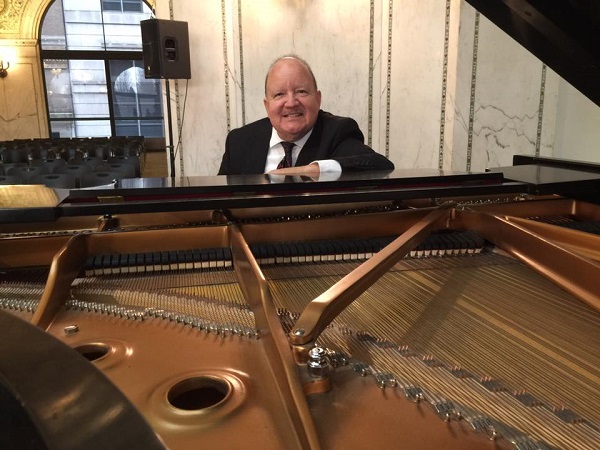
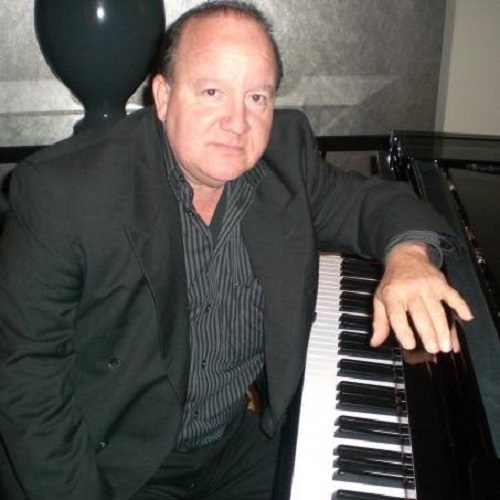
Samuel del Real was an excellent pianist, orchestra conductor, arranger and educator

Born on August 22, 1953 in Barranquilla, Colombia, he was a well-known pianist, orchestra conductor, arranger and educator.

Samuel del Real was an excellent pianist, conductor, arranger and educator.Samuel del Real was an excellent pianist, conductor, arranger and educator.
Samuel del Real was an excellent pianist, conductor, arranger and educator.

He was part of renowned orchestras such as Pacho Galán, La Dimensión Latina and El Trabuco Venezolano and participated in a series of record productions in Caracas, Venezuela.

In 1983 he recorded his first album with his own band. His first hit “Ella No Baila Sola” became the theme song in every night club in Colombia, Venezuela, Peru, Panama, USA among other countries.

In 1985, Samuel moved to Chicago, USA, where he quickly formed his orchestra with members of different nationalities resulting in a mixed sound for his music.

Since then Samuel del Real and his orchestra participated in many festivals, concerts, private events in cities such as Chicago, London, New York, Minneapolis, St. Paul, Detroit, Indianapolis, Miami and more. “Piano Caliente”, ‘Piano Jamboree’ and ‘Piano Navideño’ are the most recent albums that include selections from his extensive Latin jazz repertoire, as well as new interpretations of Afro-Cuban classics from his album entitled Piano Caliente.

Samuel In 1985, Samuel moved to Chicago, U.S.A.

Samuel has ventured not only into the salsa genre, but also into Latin jazz that surprises even those who don’t know him.

It doesn’t take much to realize that Samuel was “El Maestro del Buen Ritmo” and that his music is here to stay.

Samuel del Real: the artist from Barranquilla who triumphed in the United States.

He trained musically and academically, open to the idea of expanding his artistic horizons.

“I began my musical studies in Fine Arts, among my teachers I remember Günther Renz.

In Venezuela I attended the Juan José Landaeta Conservatory and the Caracas Philharmonic Conservatory with the pianist Paul Rosenbloo.

I studied harmony and counterpoint. With maestro Antonio Lauro, composer and guitarist, I completed my academic training”.

At the age of 15 he began his professional career as a pianist in the Pacho Galán Orchestra. There he learned the tricks of popular dance music of the Colombian Caribbean, and the possibilities of sharing with national musicians opened up for him.

DiegoDel Real, my first piano teacher, my advisor, my partner in producing, arranging and recording music.

With him I learned the routine of Caribbean music, he had a very positive attitude towards me. He would summon me before rehearsals to teach me how to play, he would take the score and sit with me at the piano: ‘Play like this’, he would tell me, and ‘play the acor-des this way, this is the tumbao, this is the phrasing’, all with a lot of patience”, he recounted.

“There was Pi¬chirilo on bass, Jorge Pérez on timbales and drums; and Joaquín Pérez on congas. Chicho Sarmiento, Clí¬maco Sarmiento’s son, played the alto saxophone; Pacho Aragón played the tenor saxophone. On trumpets Armando Galán, Raúl Lastra and Chino Acosta.

Rosendo on trombone. Maestro Pacho Galán would arrive to conduct the first set and then he would leave, Armando would be in charge of the orchestra. That’s when my interest in Caribbean folklore began.

I did not record with Pacho’s orchestra because he did not record in that period, but I played a lot of his music and I still play it in Latin jazz.

“For me it was a great school,” he said.

Although he has lived outside the country for many years, when he returns to Barranquilla it is as if he had never left.

It shows in his confidence to walk the streets, to visit places, to call friends, to exchange anecdotes with people he barely knows.

He is a man who lives for music, to which he has dedicated a contagious enthusiasm. That is why when he comes, it is a pleasure to review his career.

“I come to take a little hot temperature and to bring my latest albums for the local public to get to know them,” he said.

In 1975 he formed an orchestra in Venezuela with which he worked at the Hotel Tamana¬co Internacional, while at the same time he was a pianist, administrator and producer of various musical projects in the recording industry of that country.

In 1979 he joined Dimensión Latina, an aggregation with which he recorded Di¬mensión desconocida (1979), el número uno con la núme¬ro uno (1980), Para siempre (1980), Combinación latina Nº 4 (1980), and Cuerda para rato (1981).

“In Dimensión Latina I spent three years with Andy Montañez, Argenis Carruyo and Gustavo Carmona, then I started the orchestra project with my name.

I also recorded with Andy Montañez as a soloist, and made arrangements in recordings for Velvet de Venezuela”.

Samuel also participated in the extraordinary Trabuco Venezolano, led by drummer Alberto Naranjo.

“With Trabuco Venezolano I participated in many concerts in Venezuela.

With them I recorded Irakere and Trabuco, in a live performance at the Poliedro de Caracas. I also recorded Imágenes Latinas.

The Flor y Nata, themes: No me engañes, Rosa de la Noche, Brujería, Almas Blues, Desilusión, (there I do a piano solo that has been highly praised), a pesar de Usted, Orquesta de moda, No quiero Confusión. Retrospectiva del Trabuco Venezolano Vol. 2 (1977- 1984)”.

El Trabuco Venezolano – La Flor y Nata 1984

In 1983 he recorded his first album with his orchestra, the hit was the song Ella no baila sola, which became his letter of introduction.

In 1984 he recorded his second album, repeating his success with the song Cara de Domingo, by the niuyorrican flautist Lou Perez.

The third album with his orchestra was produced in 1987, when he was already living in Chicago.

“When I left Dimensión Latina, Gustavo Cardona, Oscar D’León’s bass player, encouraged me to start my own orchestra.

One of the numbers was Ella no baila so¬la, and when it was played, people stopped to dance. That is why we decided to record that song.

I brought Frankie Paz, a boy from Maracaibo who had auditioned with Dimensión Latina as a replacement for Argenis Carruyo, but César Monje didn’t like it.

I told the boy, I’m going to have my orchestra soon and I’m going to bring you with me”.

Referring to his piano influences, Samuel recalls Noro Morales, Eddie and Charlie Palmieri, Richie Ray and Lino Frias.

Others such as Bud Powell, Thelonious Monk and Oscar Peterson, shaped his vision.

“I liked Noro Morales a lot, I had only one record of his, ‘Maria Cervantes’, which caught my attention since I was a child. One day I decided to arrange it a little differently. I still play it in my Latin concerts.

Del Real took up residence in Chicago in 1985. There he has continued his work moving between Latin dance music and Latin jazz.

I’ve been living there for 32 years, I have my orchestra, I give Latin jazz concerts, and I’ve also worked for other organizations in other cities like Minneapolis and Cleveland.

We do salsa and different Latin American rhythms. The music business has changed, it’s a big investment to make a record, and you have to project it to the singer, limiting the possibility of moving.

That’s why I decided to make Caribbean Latin jazz instrumentals; with that I expose my music without the need to write ten arrangements for a singer with whom you run the risk of him leaving”.

His recent recordings include the Pianos del Caribe series, which includes the discs Piano caliente, Piano jamboree and Piano navideño.

“The first disc of the series, Piano Caliente, brings songs from the 50’s such as Mata Siguaraya, El que siembre su maíz, Besitos de coco…. I made the themes a little more progressive with jazz, but preserving their essence.

I subtly changed the harmonic structures, without distorting them. There the singer is the piano.

Then came Pia¬no Jamboree, with some of my own themes. I do more complex things, trying to penetrate Latin jazz, looking for a space for my musical identity.

It is an interesting work that I would like music lovers from Barranquilla to listen to.

The third album also in the same series is entitled Piano Navideño,

“The first album in the series, Piano Caliente, brings songs from the 50’s like Mata Siguaraya, El que siembre su maíz, Besitos de coco…. I made the themes a little more progressive with jazz, but preserving their essence.

I subtly changed the harmonic structures, without distorting them. There the singer is the piano.

Then came Pia¬no Jamboree, with some of my own themes. I do more complex things, trying to penetrate Latin jazz, looking for a space for my musical identity.

It is an interesting work that I would like music lovers from Barranquilla to listen to.

The third album also in the same series is entitled Piano Navideño, I took as a reference the themes of Christmas. Christmas is very important to me. I am a lover of that celebration.

I took several themes from the international Christmas repertoire and put them in Latin jazz”.

No one doubts that Barranqui jazz or the International Carnival of the Arts would be the perfect setting for his work. Plus, it would be a homecoming in style.

“I think it would be a great opportunity to showcase my music in my city. I am glad that in Barranquilla they are creating spaces like the Carnival of the Arts and the Caribbean Cultural Park, so that people have access to that part of the culture that is music”.

He passed away at the age of 67 on December 10, 2020.

Samuel del Real, who suffered from diabetes, died in Chicago, United States, where he had settled 35 years ago.

Also Read: Thank you Rafael for all you have done for Salsa. Without you many of us would not be salseros

Source and Collaboration By: Marino de Jesus (15889 of Historia Salsera
Republica Dominicana
  • « Go to Previous Page
  • Page 1
  • Interim pages omitted …
  • Page 6
  • Page 7
  • Page 8
  • Page 9
  • Page 10
  • Interim pages omitted …
  • Page 28
  • Go to Next Page »

International Salsa Magazine (ISM) is a monthly publication about Salsa activities around the world, that has been publishing since 2007. It is a world network of volunteers coordinated by ISM Magazine. We are working to strengthen all the events by working together.