• Skip to primary navigation
  • Skip to main content

International Salsa Magazine

  • HOME
  • Previous editions
    • 2026
      • ISM / April 2026
      • ISM / March 2026
      • ISM / February 2026
      • ISM / January 2026
    • 2025
      • ISM / December 2025
      • ISM / November 2025
      • ISM / October 2025
      • ISM / September 2025
      • ISM / August 2025
      • ISM / July 2025
      • ISM / June 2025
      • ISM / May2025
      • ISM / April 2025
      • ISM / March 2025
      • ISM / February 2025
      • ISM / January 2025
    • 2024
      • ISM / December 2024
      • ISM / November 2024
      • ISM / October 2024
      • ISM / September 2024
      • ISM / August 2024
      • ISM / July 2024
      • ISM / June 2024
      • ISM / May 2024
      • ISM / April 2024
      • ISM / March 2024
      • ISM / February 2024
      • ISM / January 2024
    • 2023
      • ISM / December 2023
      • ISM / November 2023
      • ISM / October 2023
      • ISM – September 2023
      • ISM – August 2023
      • ISM July 2023
      • ISM Edition June 2023
      • ISM – May 2023
      • ISM April 2023
      • ISM March 2023
      • ISM February 2023
      • ISM January 2023
    • 2022
      • ISM December 2022
      • ISM November 2022
      • ISM October 2022
      • ISM September 2022
      • ISM August 2022
      • ISM July 2022
      • ISM June 2022
      • ISM May 2022
      • ISM February 2022
      • ISM January 2022
    • 2021
      • ISM December 2021
      • ISM November 2021
      • ISM October – 2021
      • ISM September 2021
      • ISM August 2021
      • ISM July 2021
      • ISM May 2021
      • ISM April 2021
      • ISM June 2021
      • ISM March 2021
      • ISM February 2021
      • ISM January 2021
    • 2020
      • ISM December 2020
      • ISM November 2020
      • ISM October 2020
      • ISM September 2020
      • ISM August 2020
      • ISM July 2020
      • ISM June 2020
      • ISM May 2020
      • ISM April 2020
      • ISM March 2020
      • ISM February 2020
      • ISM January 2020
    • 2019
      • ISM December 2019
      • ISM November 2019
      • ISM October 2019
      • ISM Septembre 2019
      • ISM August 2019
      • ISM July 2019
      • ISM June 2019
  • Spanish
  • Download Salsa App
    • Android
    • Apple

Search Results for: Tony+Vega

Tito Puente Jr.: perpetuating a legacy with its own rhythm

In International Salsa Magazine, we cannot contain our joy for the conversation we had with the son of one of the greatest legends of Latin music, who is now writing his own story of grandeur thanks to the education he has received practically since birth. This is none other than New York producer, composer, and percussionist Tito Puente Jr., who shared about 40 minutes of his time to answer some questions exclusively for Augusto Felibertt and yours truly, Karina Garcia. 
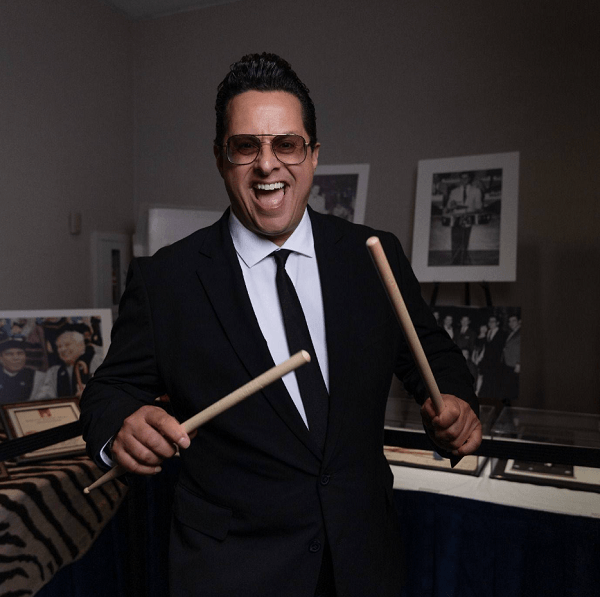
Tito puente jr. smiling
Producer, composer, and timbalero Tito Puente Jr. smiling for the camera

The burden of Tito Puente’s iconic legacy

Having a successful father is a great blessing, but sometimes, it can become a veritable martyrdom for a son who wants to follow his path, as comparisons between them will always be inevitable. Being able to share with Tito Puente Jr., son of the legendary King Of Timbales Tito Puente, gives us the opportunity to get his perspective on this interesting and important subject. 

Fortunately, the artist does not see this legacy as a burden, but quite the opposite. Although he admits that his father is one of the greatest masters and ambassadors Latin music and our culture in general have ever had, and that it is not easy to fill his shoes, he proudly bears his father’s surname and promotes his music.

Moreover, he sees the surname “Puente,” as well as the Spanish word implies, as a union among several generations because many young people this day do not know Tito Puente, Celia Cruz, and many other exponents of that salsa’s golden era. Tito Jr. wants to be part of that “bridge” between generations so that people of all ages can learn about these prodigies, including, of course, his father.

Childhood with Tito Puente as his father

Regarding his childhood and adolescence, Tito emphasized that he always saw his father play all types of instruments such as timbales, marimba, saxophone, percussion, and many others, which inspired him and made him want to imitate him from the beginning. Today, his career is largely influenced by everything he saw at home, and he plays his father’s arrangements and compositions, which are divided between a total of 186 albums. 

Everything learned within his family has taken him so far professionally, to the point that he now has seven Latin Grammys and 14 nominations, all thanks to the legacy he carries. 
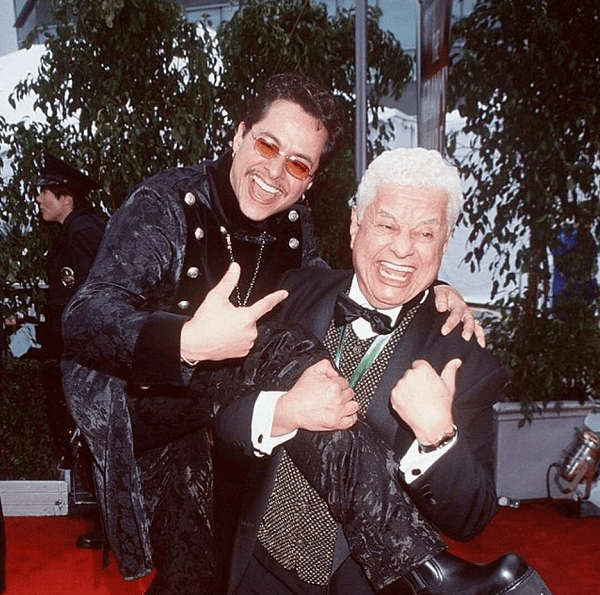
Tito Puente and Tito Puente Jr.
Tito Puente Jr. and his father Tito Puente on the 1998 Grammy Awards red carpet

The Puente family today

On the more personal side, Tito is the youngest of his brothers, among whom he is the only one who works on music as a profession. To some extent, this has made him take upon his shoulders Tito Puente’s legacy through his own art.

The musician currently resides in southern Florida, specifically in Miami, although he works with orchestras from different cities and countries. He is married and has two children who are Miranda, 18, and Tito Puente Jr. Jr., 17. Miranda studies marine biology at university, while her younger brother is in high school but travels constantly with his father and enjoys composing and playing the guitar.

He also told us a little about his wife, who loves salsa but is not in music. On the other hand, he spoke lovingly of “the boss,” his mother Margarita Puente, who is currently in charge of royalties, record labels, publicity, and the documentary on Tito Puente’s life.

He also has two siblings: Audrey Puente, 55, who is a television meteorologist, and Rony Puente, 77, who is also a musician like his father and younger brother. 

Other musical influences besides that of his father

In addition to salsa, mambo, and guaguancó, Tito really enjoys English rock and several bands such as Metallica, Slayer, Iron Maiden, Black Sabbath, and others into this style. These tastes of his have led him to the idea of, at some point, blending heavy metal with mambo to see which result he gets.

As well as he can really enjoy the music of Bon Jovi and Ozzy Osbourne, he is also fascinated by El Gran Combo de Puerto Rico, which he finds to be a very interesting mixture of genres that he would like to experiment with someday. 

He also said laughing that his father did not share his musical tastes and that the only rock band he liked was Santana, and that was because they did their own version of the hit “Oye Cómo Va” in psychedelic rock and Latin rock. 
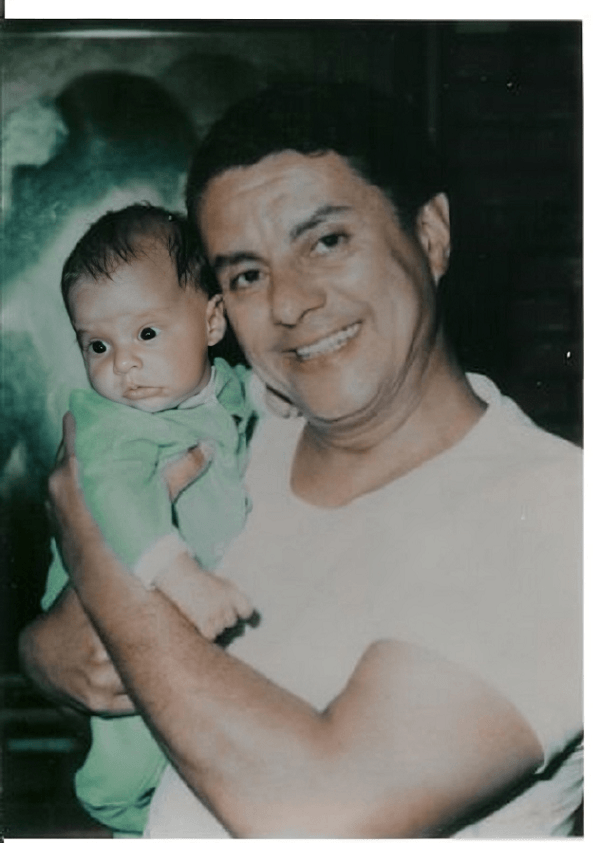
Tito Puente holding his son
Tito Puente carrying his son Tito Puente Jr.

Current singers

Today, Tito works with various singers, including Aymee Nuviola, Lucrecia, Yolanda Duque, and his great friend, “La Princesa de La Salsa” La India. His father worked with great vocalists such as Tony Vega, Michael Stuart, Oscar D’León, José Alberto “El Canario,” Miguel Ángel Barcasnegras Díaz “Meñique,” and many more. 

Tito’s latest album, “The King And I,” also features other big voices such as Domingo Quiñones, Frankie Negrón, José Alberto “El Canario,” Tony Vega, Sheila E., Pete Escovedo, and many other salsa superstars of today and yesterday. 

The timbalero has worked with many figures who also worked with his father in the past, so it is clear that they see him and respect him as the continuation of his musical legacy.

Tito’s views on academic training in music

On the important issue of academic training in music, Tito pointed out that there are not enough educational programs aimed at teaching Afro-Cuban music in schools and universities, which in his view needs to change as soon as possible.

In fact, he noted the importance of promoting programs in educational institutions around the world so that their students learn much more than just symphonic music and become more rounded professionals. Although he recognizes the importance of knowing Beethoven and Tchaikovsky, he also believes that aspiring musicians should know about Eddie Palmieri, Charlie Palmieri, Larry Harlow, Pupi Campo, and other artists in this style. 

The artist believes that the above mentioned artists and many others related to jazz and salsa are part of a very important era of music in the world, which is why he believes that teachers must take them into account during their classes. For him, it is a mission to promote both his father’s music and that of other exponents of his kind in the academic field.
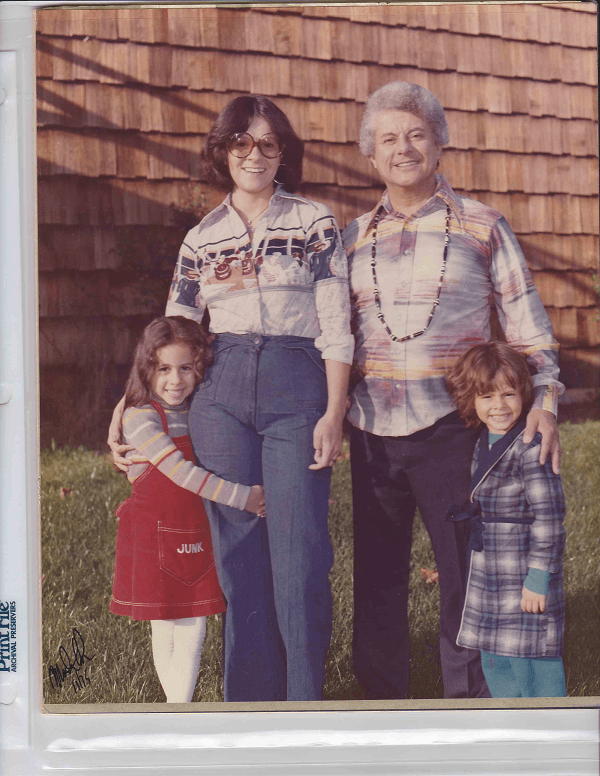
Tito Jr. and his family
Audrey, Margarita, Tito, and Tito Jr.

Upcoming tours

For our research, we could notice that Tito has several performances and tours scheduled for the rest of the year, more specifically for November. In this regard, he told us that in the first week of September, he went to play his father’s music on his weekly show Mambo Mondays, which is held to delight dancers eager to keep enjoying Tito Puente’s music.

About international tours, he plans to go to Germany in February next year and Spain next summer. He is also close to release a documentary in 2026 and a new album with the Los Angeles Symphony Orchestra, which has 77 musicians and instruments such as violins, violas, harps, bagpipes, flutes, French horns, among others.

Tito Puente Jr. and his son
Tito Puente III and his father Tito Puente Jr.

Final comment

We still cannot believe we had this great conversation with the talented Tito Puente Jr. and it has been a great pleasure to share this time with him. Those who wish to contact him can do so through his social media channels, which are as follows:


Facebook: https://www.facebook.com/TitoPuenteJr/

Instagram: https://www.instagram.com/titopuentejr/

X: https://twitter.com/titopuentejr

Tik Tok: https://www.tiktok.com/tag/titopuentejr 

Spotify: https://open.spotify.com/intl-es/artist/2ROkqvVDXj5JgmN6z2uFrM

Read also: Venezuela violinist and former musician in El Sistema Ali Bello has many interesting things to say

Albert Torres The Ambassador Of Salsa

North America / USA / New York
Albert Torres
Albert Torres

Albert Torres, a sympathetic boy with blushing cheeks who born in Brooklyn – New York – never suspected what his destiny had prepared him, to be the father of the Congresses of Salsa worldwide. His name would resound from North to South and from East to West, by the continents: American, European and Asian; in the different important scenes of the Latin music movement and would be the inspiration for many dancers of this branch.

His legacy would belong to the astonishment and shelter of the artists and the public that would applaud his talent, vigor and semblance to the rhythm of the phrase “Una Bulla”. This cheerful infant, without a doubt, was going to be a legend of Afro-Caribbean music. I’m talking about Albert Torres, The Ambassador of Salsa!

Photo by Albert Torres

Albert began to listen to the salsa genre from the age of 5, staring in astonishment at the whole scene, sitting, of his first dance lessons … At the famous Palladium in New York, where his mother danced and liked the music of Mongo Santamaría and Tito Puente.

This child, future congressman of Salsa, grew up when the history of Latin popular music (salsa) was being written in the South Bronx, where Puerto Rican communities were having a great explosion of creativity and musical activity.

At the age of 12 years old his family decides to move to Puerto Rico, “By that time I did not want to speak Spanish, I did not want to be Puerto Rican. I did not want to be part of that environment”, said Torres. He only danced disco and Hustle. However, at the age of 15 his life took a dizzying turn when he heard:

“Oye que lio que lio se va a formar

cuando mi gatito sepa

y es tan simple la razón

El que a su gata le cuenta que el que a

su gata le cuenta

no es nada más que un ratón

un ratón…

…Échale semilla a la maraca pa que

suenen

chacucha cuchu cucha cucha

échale semilla a las maracas pa que

suenen

échale semilla a esas maracas oye

chacucha cucha cucha cucha

y hace rato está sonando sonando

chacucha cucha cucha cucha…”


Albert Torres simply fell in love with the Salsa thanks to this theme: “El Ratón” of Cheo Feliciano together to Fania All Stars. “The legends of salsa changed my life. When I heard these legends, that August 26th of 1971, in the Cheetah, something happened inside me. The music entered by the feet and came to my heart”. Thus, declared his beginnings in the Salsa, Albert Torres.

In 1991 his passion for Salsa took him to impress the girls of the neighborhood by his incredible steps to a Hollywood celebrity when he, first time, participated in the movie Mambo Kings in which he was chosen as one of the main dancers.

Hollywood - Albert Torres
Hollywood – Albert Torres

There he not only helped Antonio Banderas with the dance steps, but also with the English by that time for Banderas was very hard. In addition, during the filming of the movie Albert had the opportunity to share with big of Salsa like Celia Cruz, José Alberto “El Canario” and his great idol Tito Puente.

That film was the hit that catapulted Torres to world fame being chosen by Debbie Allen as one of the 4 dancers (of more than 400 couples) to participate in the Academy Awards (1993) and to dance “My beautiful Maria” whose Singer was Plácido Domingo and where he stood out as the first Puerto Rican to dance in the history of the ceremony.

Then, he returns to the cinema being the choreographer and dancer of Salsa scenes in the romantic film “Dance with Me” with Vanessa Williams and Chayanne during 5 months.

Later he worked on the movie “Out to See” (1998) with Jack Lemmon and Walter Matteau and in the same year he also made a guest starring appearance on the Keenan Wayan’s Show where he performed with Jennifer Lopez. Everywhere there was Salsa, Torres seemed to be there. At the time and with all this like trajectory Albert Torres in 1991 also began his stage as a producer.

He started promoting Salsa clubs in Los Angeles, “I lost a lot of money. Nobody wanted to know about Salsa”, said Albert. Nonetheless, he began to handle Johnny Polanco y Su Conjunto Amistad, which were the best-known salsa group in the Western United States.

In 1992 he founded his own company, Albert Torres Productions Inc. (ATP) and began to organize salsa parties in several places in Los Angeles. The most important were the Boathouse in Santa Monica, St. Marks in Venice and Sportsmen’s Lodge in Studio City.

3- Albert Torres
3- Albert Torres

At that moment the genre of salsa was losing popularity. However, Albert Torres with his wit, insight and a lot of intelligence pulled him forward on his own. He revived it in such a way that he became the most influential salsa promoter in the United States. He was who brought to Los Angeles some of the most important names in the Latin music such as: Fania All-Stars, El Gran Combo, Oscar D ‘León, José Alberto “El Canario” and the Spanish Harlem Orchestra, among many others.

In the late 1990s, after the I administration of President Clinton relaxed the laws restricting presentations by Cuban artists in the USA, Albert Torres was the first promoter, who brought to the famous and the notorious Van Van group to Los Angeles in January, 1997.

The show, which took place in a night club in downtown LA, was a success. Since then, Los Van Van has received major media awareness with prestigious publications such as Los Angeles Times, New York Times, among others and including the most coveted music honor, a Grammy and Latin Grammy nomination. Torres’s passion and promotional skills have played a key role in the U.S.A Latin Entertainment explosion. Ricardo Lemvo, musician and singer living in Los Angeles, founder and leader of the salsa band Makina Loka said:

“Personally, I have a great deal of gratitude to Albert. In 1996 when I released my first album, Tata Masamba, he was the one who presented my music to the Latin audience in Los Angeles. He also placed my band at Sportsmen’s Lodge, Grand Park and many other venues. Albert was also who recommended me to film director Randa Haines and as a result, my band, Makina Loca came out in the movie “Dance with Me” with Chayanne and Vanessa Williams. I will be eternally grateful to Albert Torres for giving me a hand at the beginning of my career”.

4- Albert Torres
4- Albert Torres

1997 was crucial for Albert and the world of Salsa in Los Angeles because began the dream of Mr. Eli Irizarri of Puerto Rico, the concept of the Salsa Congresses in San Juan. “I was not the first year, but I heard a lot of nice things even though it was a financial failure. I attended the event in 1998 and was the master of ceremonies. Then, I started the same concept in Los Angeles beginning in 1999 and in the next 8 years following the Los Angeles Congress stood out as the largest in the world. There attend more than 6000 people daily arriving from more than 42 countries”, said Albert for an Argentine media.

In 1998, at the head of ATP, organized the first edition of Los Angeles Salsa Congress and in May 1999 was carried out, with the presentation of Tito Puente in the opening. In this first congress Albert transformed the event into an exciting music and dance venue that attracted 20,000 Latin Music enthusiasts from all over the world and USA and with such great success that he immediately became co-producer Salsa Congresses in over 32 countries.

“My most important desire to be a promoter of the Congresses would be that this can be used for dancers, can realize their dream of dancing on a stage and also find a way to respect the dancers as they deserve it. This is extremely important”. Albert Torres.

In LA Salsa Congress the stars are born, many of the world renowned dancers have their start at this event. The mission of LA Salsa Fest is to pass on to the next generation through educational seminars, dance workshops and being able to perform on stage.

Since then, Albert Torres Productions has created and produced the World’s Largest Salsa Music event. In addition to this, ATP is the co-producer of the World Salsa, broadcast from Las Vegas every year by the ESPN TV network being watched by more than 20 million homes worldwide, where more than 1000 competing dancers will be known on the planet. “On ESPN told me that if I wanted to see it on TV I had to do competitions.

I do not like it, but for the dancers to get to know each other worldwide, I decided to make the World Salsa Championship, the biggest and most important salsa tournament in the world. Now, since April (2012) I decided to do it alone, without partners, and now it’s called World Latin Dance Cup. I added other categories like cumbia, bachata, casino, children and people over 45 years. We have about 20 categories”. Torres Said in an interview with a Peruvian media.

5- Albert Torres
5- Albert Torres

In the World Latin Dance Cup No requirements. You have to take stock and follow the world rules. These are of time, originality of the dressing rooms, of musicality. If you drop the wig, the earring (while dancing), points are removed; if you do not wear stockings, too. A wig will not give points, but if it falls it will take the points. In this championship there is not a world champion, so there is a champion in each category.

According to his friends, Albert was a “workaholic”. He was always on the road promoting salsa music through all the congresses he organized around the world. Always in transit, he spent one night in Istanbul, the next in Paris and the following week in Tokyo. For example, at the beginning of 2007 he had 48 weeks of travel and in one year he could travel to 48 exotic countries such as Dubai, United Arab Emirates, Japan, Hong Kong, Brazil, Bulgaria, Romania, China, Colombia, Venezuela, Spain, Mexico, Peru, Holland, Hamburg, Italy, Switzerland, Sweden, France, Ecuador, New Zealand, Australia and Puerto Rico.

Therefore, it is not surprising to see on your Facebook wall, the immense and felt messages of thanks from dancers from all corners of the earth. His latest project called “The Legacy Project” is an initiative to combine our music culture with the latest technology tendencies in order to reach and unite more people so future generations can appreciate, preserve and be part of the history of Latin dance and music around the world.

In 2011 Albert Torres was honored to be accepted as a Member of the Council for Dance of UNESCO (United Nations Educational Scientific and Cultural Organization) and Elected Grand Marshall at the National New York Puerto Rican Day Parade in front of 2 million spectators lined up on 5th Ave that past June 12 of the same year. This past May, 25th the world of Salsa and entertainment received a huge impact, the news of the death of Albert Torres, victim of a Stroke.

Family, friends, national and international press as well as web portals lamented and reviewed this regrettable fact. Rudy Mangual, creator of the famous magazine Latin Beat Magazine commented to an international media that before this terrible fatal outcome, Albert was very delicate of health in the last months; he had diabetes and had an infection in the pancreas. He also said that he regretted his gone because he and his wife Yvette Mangual had a very special affection to Albert.

Albert Torres’s family wishes to thank all of our Salsa Family for your thoughts, prayers and well wishes during this difficult time. Albert passed away today May 25th, 2017, peacefully, surrounded by family and loved ones. We all find comfort knowing that he is now promoting and dancing alongside his Idols, Celia Cruz, Tito Puente, Cheo Feliciano, Tito Rodriguez and Ray Barreto. As well as his close friends Johnny Polanco, Rudy Regalado, Alicia Gomez and many others. We would love nothing more than for you to help us continue keeping his legacy and DREAM OF UNITY alive by supporting the great event that he started 19 years ago:

The LA SALSA FEST.

Thank you again and may you all be blessed. UNA BULLAAAA!

Rest In Peace ALBERT TORRES

6/14/1956 – 5/25/2017

On the other hand, different personalities of the artistic world expressed their deep pain:

“Salsa and I lost a good friend. Like everyone else in the music world, I was in shock: Albert was an exuberant, vibrant person. It seems unfair that he left the planet in the prime of his life at only 60 years old.

2- Albert Torres
2- Albert Torres

I remember in one of our many conversations, he expressed his great desire to bring the famous African salsa group Africando to the United States. Africando had a song, “Yay Boy,” that was all the rage not only in New York but also in Latin America, but not many people had seen the group live. It was a huge undertaking to organize a concert with Africando since the lead vocalists lived in Senegal, Togo, and other parts of Africa. When Albert finally managed to bring Africando to Los Angeles in 2004, he was over the moon. That was one of his greatest triumphs.

Albert, your passing is a huge blow to all of us in the salsa world. We will miss you terribly. Thank you for everything you’ve done to promote our music. Salsa. We will never forget you.

Rest in peace, brother.” Ricardo Lemvo

1- Albert Torres
1- Albert Torres

“Creating Unity through Salsa”, words from my brother Albert Torres. That’s exactly what we are trying to do, will keep this in my heart forever… Your legacy lives. Thank you Albert! Thank you Edwin and the #LASalsaFest team for this”. Tony Succa

Famed Salsa legend, dancer and Hollywood choreographer turned mega event planner Albert Torres is already part of our history. His continuous efforts to globalize Salsa have made a major impact on the preservation and accessibility of both Salsa Music and Salsa Dance around the world. To achieve this, he was constantly traveling around the world, encouraging conferences and festivals, discovering talents for dancing.

No doubt, Albert Torres brought the music it in the blood. He had his own vibration and constantly he was being a role model. He played that key role in the confluence of people and places that created an environment for the growth of Latin music in America and the world.

Photo1: Albert Torres

For that reason, on the Facebook wall of Albert thousands of emotions multiply. And the messages coincide in the gratefulness and the claim of “una bulla”, una bulla salsera para Albert. Today on some side of the Salsa´s Big, sure, you’re dancing and singing!

Albert Torres in solidarity with charitable causes

“Before I was an event producer, I handled 50 beds in a hospital helping people with drug, alcohol, and mental problems… I have been sober since December 14, 1985. For that, I can live and help others to live their Dreams”. Albert Torres

Great dancer and Champion fell ill last year after the WLDC. With the support of dancers worldwide he was able to beat leukimia and will be back this year. What an inspiration and great story. Let’s all appreciate each day that we are blessed with. Welcome back Jeremy.

ATP continues with the Albert’s legacy and offering top-notch quality events with world-class performers. His bands are legendary and his events feature some of the finest musicians and dancers the world has ever known.

“Para mí la salsa no es latina sino mundial. No tiene barreras de colores ni de país. Es increíble ver niños chiquitos bailar como los de los 80 que bailan… Para mí la salsa es como si fuera una paella, una comida increíble: tiene tantos condimentos y tantas cositas.

Albert Torres and his records

La salsa es así: con un poquito de rumba, jazz, tango, y si le pones swing, ballet y se mezclan todos con una bella canción de Óscar de León, algo sucede que nos afecta desde los tobillos hasta el corazón… Los problemas siempre van a estar esperándonos en casa, pero qué cosa bonita llegar a un lugar donde todo el mundo se lleva. Cuando empieza esa música todos tenemos algo en común. Ojalá el mundo aprendiera de eso”. Albert Torres (June 14, 1956 – May 25, 2017)

To learn more about Albert Torres and his events, please visit: www.worldlatindancecup.com, www.mysalsacongress.com and www.alberttorresproductions.com

To read more about Albert Torres’ work with Baile de Los Niños, providing cultural outreach programs to at-risk youth and low-income families, visit: www.alberttorresevents.com/bailedelo sninos/mission.asp

Tito Nieves’ concert “50 Años, La Historia” made it clear that ‘Salsa Lives

On Saturday, May 17, 2025, Tito Nieves celebrated half a century of a successful musical career at the Coliseo de Puerto Rico (El Choliseo) with a massive concert titled “50 Años, La Historia,” part of his “Mi Último Tour” (My Last Tour) tour.

Tito Nieves smiles in front of a packed coliseum

Music started powerfully around 9:00 p.m. with “Señora Ley” (Lady Law), followed by “Mañana es Domingo” (Tomorrow is Sunday). This led into a medley of songs Tito popularized before going solo: “El Pregonero” (The Town Crier), “El Piragüero” (The Shaved Ice Vendor), and “Panadero” (Baker), all penned by Ramón Rodríguez. In this first segment, the honoree was joined by Rodríguez and Norberto Vélez, setting the theme for the show, where Nieves was accompanied by various guests.

Tito Nieves bid good evening shortly before asking the audience to record the concert, asserting it would be the first and last time he would perform solo at the Coliseo de Puerto Rico for a historic concert that the singer declared was “sold out.”

The soloist demonstrated the evolution of his career, moving to the next stage of his journey, which included the songs “Quiero Perderme Contigo” (I Want to Get Lost with You) and “El Amor Más Bonito” (The Most Beautiful Love). Before starting “Perdido en la Oscuridad” (Lost in the Darkness), Tito stated that during one of the most difficult stages of his life, he asked José José for permission to record it. “Un Tipo Común” (An Ordinary Guy) preceded Tito’s spoken interlude, during which he requested “a big round of applause for Ismael Miranda ‘the eternal handsome boy,’ who is with us tonight.”

For the next segment, Gilberto Santa Rosa and Gerardo Rivas joined Tito Nieves for the song “Soy” (I Am). Gilberto explained that he and Tito Nieves have been musical brothers for over forty years, shortly before saying, “Tito and I are family,” a phrase that led into the performance of “La Familia” (The Family).

The next stage featured a medley of hits including “Sueño” (Dream) and “Lo Que Son Las Cosas” (What Things Are Like). From this same solo period, “Manías” (Obsessions) and “No Me Queda Más” (I Have Nothing Left) stood out. Tito Nieves’ voice was recorded on several of the few salsa lyrics in English. For the concert, Tito brought to life “I’ll Always Love You,” “Celebration,” and “I Like It Like That,” with which he later bid farewell.

Tito paused during the concert to dedicate the song “Gracias Madrecita” (Thanks, Little Mother) to his late mother, Victoria Nieves.

The next guest, Rey Ruiz, “the salsa heartthrob,” performed “Almohada” (Pillow) with Tito, then sang “Mi Media Mitad” (My Other Half) to a bolero rhythm before transitioning to the same song in its usual salsa tempo, which is how it became popular. The turn of also invited Carlos García brought him to the stage to sing “No Me Vuelvo a Enamorar” (I Won’t Fall in Love Again) as a duet with Tito.

Shortly after, Tito Nieves continued singing his most notable hits, including “Déjame Vivir” (Let Me Live) and “Tuyo” (Yours). When it was José Alberto “El Canario”‘s turn, he sang “Le Gusta Que La Vean” (She Likes to Be Seen) with Tito Nieves and “Baila Que Baila” (Dance, Dance) solo. For this particular performance, dancers and choreographers Flavia Tamara Livolsi and Tito Ortos Gutiérrez were in charge of the dance that connected with the guest’s music, who also performed his characteristic “flute” solo, without a flute.

The super orchestra accompanying El Pavarotti de la Salsa

For the song “Fabricando Fantasías” (Manufacturing Fantasies), Tito Nieves took the stage accompanied by 9 child choristers; both the singer and the choristers were dressed in white. Tito sang alongside a hologram of his deceased son, whose passing preceded the song’s release; for the concert, this led into “Un Amor Así” (A Love Like That) and “Soy Cantante” (I Am a Singer).

Continuing with the idea of being accompanied by his guests, Tito Nieves welcomed Tony Vega to the stage to perform their duet and give voice to “Tú Por Aquí, Yo Por Allá” (You Here, Me There), shortly before Tony performed “Aparentemente” (Apparently). Once Tony’s participation concluded, Tito returned to the stage dressed in blue to perform “Te Amo” (I Love You) and “Más Que Tu Amigo” (More Than Your Friend).

Tito Nieves y Daniela Darcourt

Immediately after, Tito Nieves commented: “In salsa, we’ve had Celia, La Lupe, Graciela, India…”, as he welcomed one of the new salsa promises: Daniela Darcourt. With her, he sang “Si Tú Te Atreves” (If You Dare) shortly before suggesting his “musical daughter” perform the soloist’s new single, titled “La Sinvergüenza” (The Shameless Woman).

The concert’s peak was reached during the performance of “De Mí Enamórate” (Fall in Love with Me) and “Sonámbulo” (Sleepwalker), songs with which the artist demonstrated that the voice that earned him the title of “The Pavarotti of Salsa” remains intact.

Next, Tito and his wife—Janette Figueroa, the self-proclaimed “toxic one”—showcased their influencer skills, leading into a theatrical interlude of their interaction with the public during the COVID-19 lockdown: “Conversa con Tito” (Talk with Tito). For this, the couple was accompanied by the new talents Daniela Darcourt and Christian Alicea. Once the micro-theater segment concluded, the production celebrated the sold-out status by presenting a plaque indicating the exclusive status, after congratulatory greetings to Nieves from Víctor Manuelle, Rubén Blades, and Marco Antonio Solís were projected.

It was at this moment of various congratulations that it was demonstrated that ‘Salsa Lives’in the key of fierce salsa. For this, Christian Alicea joined Tito Nieves’ vocal and stage mastery, contributing with his voice and an energetic conga solo.

At 12:40 a.m. on May 18, the concert hosted by “The Pavarotti of Salsa,” accompanied by his super orchestra, concluded with the same power it began, though in English and to the beat of “I Like It Like That.” For the closing, the dance corps, made up of Tito Ortos, Tamara Livolsi, Christina Reyes, and Yadiel Carrasco, complemented the interpretive energy with which Humberto “Tito” Nieves once again demonstrated the connection he has maintained with the salsa audience, regardless of the language he sings in.

Bella Martinez Puerto Rico

Photographs By: Francisco J. Rivera Rosado Photographs

Also Read: Oscar Rojas Oscar Rojas has 54 years of musical career full of passion, rhythm and flavor

Eddie Muñíz continues to head Swing Sabroso

From this space, every day we are much more aware of the unusual wealth of Latin talent that makes up the New York’s music scene, which continues to show many artists and orchestras that do not surrender to high competition and give their best to earn their place and stand out from the rest.

This is the case of Ray Rodríguez & Swing Sabroso, whose current leader, Eddie Muñiz, gives us a broader picture of the way any artist should go to keep his name alive in public taste and avoid getting lost in the large artistic catalog where there is a lot of content to choose from.

Swing Sabroso leader Eddie
This is current Swing Sabroso bandleader Eddie Muñiz

Talented musician Eddie Muñiz’s beginnings in the world of music

Eddie, who was born in Brooklyn, USA, but communicates in excellent Spanish, had his first approaches to music in elementary school at the age of 13, when he played in several classical music and jazz groups to keep improving in these arts and find his style until he had his big break.

This opportunity came when the young man turned 17 years old, at which point he had his professional career in music with a group of friends, with whom he stayed for two or three years. After that, his next group was called ”Herencia Latina” whose director was the talented Ray Rodriguez and would become the starting point of his current orchestra Swing Sabroso. 

After leaving Herencia Latina, he joined Ismael’s conjunto for four years and subsequently played with Conjunto Clasico, Ray de La Paz, La Sonora Matancera, Tony Vega and many more.

About eight years later, the group did not go ahead and Ray moved to New Jersey, but as it happens, Eddie had to do the same for work reasons. Back then, Ray started a group he called Ray Rodriguez y Swing Sabroso, which invited Eddie to join the orchestra in 2000. 24 years later, it is he himself who moved such an ambitious project forward after Ray’s sad loss from the cancer on April 17, 2016.

Swing Sabroso singer
Singer Angel Rios, who is Swing Sabroso vocalist

Swing Sabroso

By the time Ray was in good health, the orchestra released two albums, one in 2005 and another in 2015. When the bandleader began to sicken, he knew he could not give the group the attention it required, so he asked Eddie to take the helm of the ship in his place as long as the group was only called Swing Sabroso, nothing else. 

At that time, the group only had two trumpets and a trombone, but Eddie was gradually enlarging it and adding more instruments to make the sound fuller. Being in total control of the orchestra, the artist released the album ”Swing Sabroso, Mejor Que Nunca” in the year 2022, when they played everything that the three albums included.

Swing Sabroso, Mejor Que Nunca
Cover of the album ”Swing Sabroso, Mejor Que Nunca”

Currently, Eddie is the oldest of all the Swing Sabrso members, but not for that things are always done his way. In fact, the artist assures that the younger musicians are frequently those who teach him what to do in certain cases.

Far more than a salsa orchestra, Eddie considers that ”Swing Sabroso” is also a family of musicians in which they support each other, despite the regrettable absence of its main founder, the great Ray Rodriguez. Even so many years later, Rodriguez remains the biggest influence on everyone working with Swing Sabroso. 

Read also: Dominican trumpeter Wilson Portuondo talks about La Sonora Nuyorkina

Renzo Padilla “El Borincaico”

Latin America / Peru / Lima

Renzo Padilla (Renzo Antonio Padilla Reyes) was born in Barrios Altos in Lima, Peru, on July 12, 1979. In search of a better future, in 1993 his parents decided to travel to the city of Buenos Aires.

Renzo Padilla. At the age of 15, Renzo began his career as a backing singer with the “New Band Salsa” Orchestra. His time with this group was brief, because later he would join the Orquesta La Original, made up of Peruvian musicians based in Buenos Aires.

Renzo Padilla
Renzo Padilla
Photo of Renzo Padilla in concert

In the year 2000 he moved to New York City, fulfilling a dream that he thought was impossible. That same year he signed a contract with the Grupo Fuerza Juvenil, he participated for two years in this group that was nominated for the Billboard awards in 2002.

He meets the timbalero Jimmy Delgado and he offered him a project to record, so Renzo resigns from Fuerza Juvenil and decides to record with Delgado, his first single titled Salsa con Dulzura. After this recording he was invited to accompany the most renowned artists in the world of salsa, such as: Frankie Hernández, Cheo Feliciano, Ismael Miranda, Cano Estremera, Ismael Quintana, David Pabón, Roberto Roena, Marvin Santiago, Meñique, Ray Barreto. , Adalberto Santiago, Cuco Valoy, Junior González, Paquito Guzmán, Yolanda Rivera, Luigi Texidor, José Bello, Pedro Conga, Cheo Andujar, Anthony Cruz, Luisito Carrion, Maelo Ruiz, Tito Nieves.

Renzo Padilla in concert
Renzo Padilla
Renzo Padilla

Another of his dreams came true when he met the master Willie Colon, he was invited by him to perform a song by Hector Lavoe, in a New York nightclub. He was also invited by El Gran Combo de Puerto Rico on several occasions.

In 2003, Ray Barreto and Adalberto Santiago met again, in which he participated as a chorister at the prestigious Carnegie Hall in New York.

Renzo Padilla in concert 2
Renzo Padilla on stage

In 2006 with bassist Ray Martínez he recorded his second album Alto Nivel, and recorded two songs with the Narváez Orchestra. In 2008 he sang with Jimmy Delgado at the Leyendas de la Salsa Concert, along with a lineup of artists such as Luis Perico Ortiz, Richie Ray, Bobby Cruz, Lalo Rodríguez and Adalberto Santiago.

Renzo also sang in the second part of the Legends of Salsa Concert in tribute to Ismael Quintana, where Tony Vega, Luis Perico Ortiz, Lalo Rodríguez, Héctor Tricoche performed, among others.

In 2009 he was a soloist with the Lavoe All Stars Orchestra, made up of musicians from Willie Colon and Hector Lavoe, such as Professor Joe Torre, José Mangual, Jimmy Delgado, Eddie Montalvo, Reynaldo Jorge, Milton Cardona.

Renzo Padilla and the orchestra

In 2010 he was called by the New York group “Our Latin Thing”, to share the stage with Victor Manuel.

On the other hand, Renzo began to develop his talent as a composer. One of his compositions Donde Esta Tu Amor was recorded by Puerto Rican singer Maelo Ruiz.

In 2014 he got together with Jacob Plasse to form the Melaza Group, in which all the songs are his. In that same year, he participated in the largest salsa group, the “Fania All Stars”, and also sang for the recording of the Narváez Orchestra’s album 65 Infantería.

In 2015 he participated as a backing vocalist and as a singer in the concerts of the piano emperor Eddie Palmieri.

Renzo Padilla singing in concert

In October 2016 he was part of the Eddie Palmieri Orchestra that traveled to Lima to perform a concert at the National Stadium. He has been a vocalist for Los Hermanos Lebrón.

In 2017 he had a successful tour of different cities in Japan. Currently he continues to sing in Lima and on tour around the world.

Renzo Padilla singing

This talented Peruvian singer is considered one of the promises of salsa. He will continue in his rising career of success and international recognition.

  • « Go to Previous Page
  • Page 1
  • Page 2
  • Page 3
  • Page 4
  • Page 5
  • Interim pages omitted …
  • Page 13
  • Go to Next Page »

International Salsa Magazine (ISM) is a monthly publication about Salsa activities around the world, that has been publishing since 2007. It is a world network of volunteers coordinated by ISM Magazine. We are working to strengthen all the events by working together.
