• Skip to primary navigation
  • Skip to main content

International Salsa Magazine

  • HOME
  • Previous editions
    • 2026
      • ISM / April 2026
      • ISM / March 2026
      • ISM / February 2026
      • ISM / January 2026
    • 2025
      • ISM / December 2025
      • ISM / November 2025
      • ISM / October 2025
      • ISM / September 2025
      • ISM / August 2025
      • ISM / July 2025
      • ISM / June 2025
      • ISM / May2025
      • ISM / April 2025
      • ISM / March 2025
      • ISM / February 2025
      • ISM / January 2025
    • 2024
      • ISM / December 2024
      • ISM / November 2024
      • ISM / October 2024
      • ISM / September 2024
      • ISM / August 2024
      • ISM / July 2024
      • ISM / June 2024
      • ISM / May 2024
      • ISM / April 2024
      • ISM / March 2024
      • ISM / February 2024
      • ISM / January 2024
    • 2023
      • ISM / December 2023
      • ISM / November 2023
      • ISM / October 2023
      • ISM – September 2023
      • ISM – August 2023
      • ISM July 2023
      • ISM Edition June 2023
      • ISM – May 2023
      • ISM April 2023
      • ISM March 2023
      • ISM February 2023
      • ISM January 2023
    • 2022
      • ISM December 2022
      • ISM November 2022
      • ISM October 2022
      • ISM September 2022
      • ISM August 2022
      • ISM July 2022
      • ISM June 2022
      • ISM May 2022
      • ISM February 2022
      • ISM January 2022
    • 2021
      • ISM December 2021
      • ISM November 2021
      • ISM October – 2021
      • ISM September 2021
      • ISM August 2021
      • ISM July 2021
      • ISM May 2021
      • ISM April 2021
      • ISM June 2021
      • ISM March 2021
      • ISM February 2021
      • ISM January 2021
    • 2020
      • ISM December 2020
      • ISM November 2020
      • ISM October 2020
      • ISM September 2020
      • ISM August 2020
      • ISM July 2020
      • ISM June 2020
      • ISM May 2020
      • ISM April 2020
      • ISM March 2020
      • ISM February 2020
      • ISM January 2020
    • 2019
      • ISM December 2019
      • ISM November 2019
      • ISM October 2019
      • ISM Septembre 2019
      • ISM August 2019
      • ISM July 2019
      • ISM June 2019
  • Spanish
  • Download Salsa App
    • Android
    • Apple

Search Results for: Tony+Vega

A party of dancers at the concert to celebrate Willie Rosario’s 100th birthday

The now Doctor of Music Willie Rosario managed to fill a Puerto Rico Coliseum, with a capacity of 18,000 people, for the celebration of his 100th birthday. The production of the concert ensured that the musical proposal kept the audience dancing and singing along.  It was no surprise that the “Choliseo” turned into a gigantic dance floor.
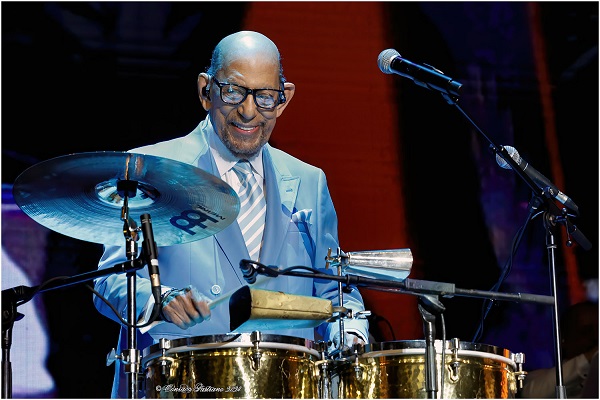
Fiesta de bailadores el concierto para celebrar los 100 años de Willie Rosario

Vocalist “Chamaco” Rivera was in charge of the performance of Willie Rosario’s orchestra’s first hit.  Chamaco”‘s announcements alluded to the parallel of the Barrio Obrero, between our “santurcino” neighborhood of Borinquen and its namesake, located in Cali, Colombia.

Then came the current front of “the band that delights” to perform a selection of the group’s countless hits.  The first turn went to José Luis De Jesús “Papa Chú” with the impeccable interpretation of ‘Ojalá que te vaya bonito’. At one point, when the song called for a duet performance, José “Machete” Díaz was the accompanist.

Smiling and with his voice cracking with emotion, Rosario greeted the audience, shortly before saying: “Thank you very much for coming this far” and giving entrance to “Manolito” Rodriguez, handing him the timbal. “Manolito” took the helm of Willie Rosario’s orchestra during several songs to which the young timbalero and musical director imparted his own tempo.

‘Anuncio Clasificado’ and ‘Cha-cha-ri-chá’ were heard in the voice of “Machete”, ‘Échame la culpa a mí’ and ‘El callejero’ in Erick Robles’ interpretation, and ‘Preparen candela’ with “Papa Chú” leading on vocals.  Juventud del presente’ was heard in the voice of Rodriguez himself, who showed off his skills as a timbalero, director and singer, while dancing in choreography with the members of the vocal front.

During the segment in which “Manolito” led, the child Gerardo Gabriel Rivas entered into an explosive duel of timbales, corresponding with who, at the time, was acting as director. Humberto Ramírez interpreted the song ‘Míster Afinque’, which he composed and arranged in 2023 in honor of Rosario and which is part of the production Better Days.
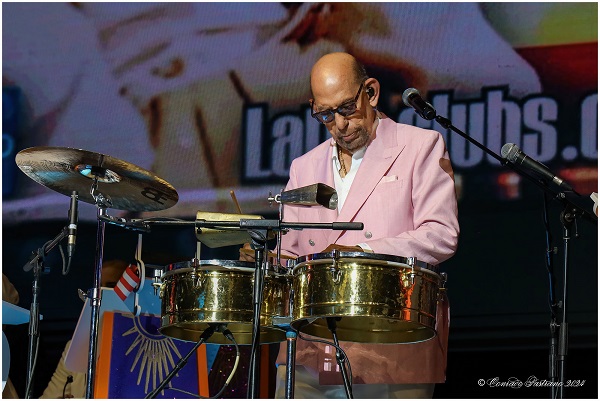
The 100 years of Willie Rosario

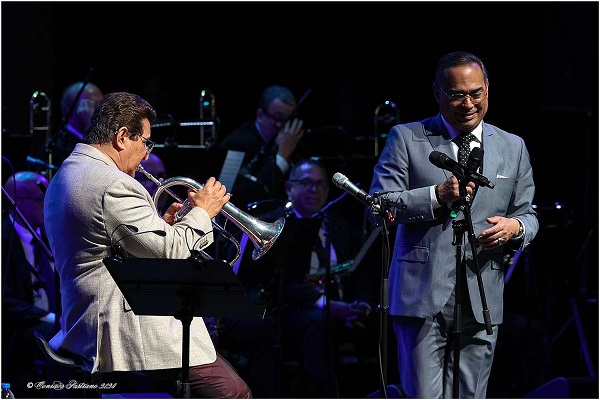
At about ten o’clock at night, the birthday boy took over the orchestra to “continue in afinque”. With the “afinque”, came the main course of the concert, for which “El Rey del ritmo” arrived on stage this time accompanied by the duo composed by Gilberto Santa Rosa and Tony Vega.

Gilberto looked impeccable both in his vocal role and in his staging as he performed ‘Babarabatiri’, ‘Obra sellada’, ‘La mitad’, ‘Me tendrán que aceptar’, ‘Botaron la pelota’ and ‘Changó ta’ bení’. During the delivery of this last song, Santa Rosa was accompanied by a corps of veteran dancers, among them the always remembered “Mike” Ramos, known within the Palladium Mambo Legends and within the Mambo Aces as “Mambo Mike”.

Tony Vega was in charge of the interpretation of ‘Mi amigo el payaso’, ‘Busca el ritmo’, ‘A toda Cuba le gusta’, ‘Arrepentíos pecadores’, ‘El flamboyán’ and ‘El timbal de Carlitos’. Gilberto and Tony were able to transport the audience back to the days when they shared the hits of maestro Rosario’s orchestra, singing ‘Gracias mundo’ and ‘Lluvia’ as a duet. The team that shaped the centennial celebration of the successful bandleader paid attention to every detail of the presentation to make it a historic, unforgettable and unrepeatable one.

Willie Rosario, Tony Vega y Gilberto Santarosa

The detail that “El Caballero de la salsa” imparts to each of his concerts, highlighting each of the artists in the audience also took place in this event. The list of colleagues invited to the concert included Choco Orta, Luisito Carrión, Domingo Quiñones, Moncho Rivera, Ismael Miranda, Bobby Valentín, Jerry Rivas and Chucho Avellanet.

Although it is known that it is impossible to include all the hits of such a great career in three hours of concert, the selection of the repertoire was accurate and forceful. At almost 100 years old, bandleader Willie Rosario proved once again that, with his usual affinque, he continues to lead the salsa dancer’s favorite orchestra.

Bella Martinez Puerto Rico

Also Read: Déjalo, the latest track by Pedro Conga y su Orquesta Internacional

Wilmer Lozano from a very young age his mother saw in him the desire to be a musician

Wilmer Lozano is a Venezuelan singer and composer. He was born in Caracas, Venezuela, on October 7.

Wilmer Lozano Yenyere

When talking about successful Latin singers and good salsa, one has to talk about Wilmer Lozano, one of the greatest exponents of Latin music in the world, who has made millions of people around the world dance.

Among his musical hits are: “Me marcharé”, “Aún estoy de pie”, “Si acaba bien”, “Descarga pa ti”, “Se me pasó la mano” and “Igual que yo”.

Childhood, Youth and Family Life.

Wilmar Lozano’s mother saw in him the desire to be a musician since he was a child.

Every night before going to sleep and saying his prayers, he would dedicate himself with his grandfather Lino Lozano to practicing décimas, which would be very useful in his career as a sonero.

Wilmer Lozano’s Beginnings in Music.

Wilmer Lozano’s career began when he was in school, participating in all the events that took place there.

He got his first singing lessons at the Casa de la Cultura Germán Lira and that’s how he arrived at a very popular radio program for the time, rumbos, coplas y canciones directed by the great Venezuelan Simón Díaz.

Jose Hidalgo y Wilmer Lozano

Wilmer Lozano and his union with different groups.

Soon after, he belonged to an orchestra in the block where he lived and shared his studies with music. Little by little he belonged to orchestras based in Caracas, such as: Grupo Autana, Grupo Rayta, La Quinta Galaxia, Quinteto Visa, Conjunto Sensación, Sonora Habanera, Hildemaro y su Orquesta, Orquesta Selecto, Marianela y su Orquesta, Orquesta Vía de Escape and Orquesta La Júnior.

He later joined the ranks of the Dimensión Latina Orchestra. With this orchestra he has the privilege of sharing with the excellent bolerista Wladimir Lozano and the sonero Rodrigo Mendoza, both recognized nationally and internationally, with whom he further nurtured his knowledge as an interpreter and sonero.

He also formed part of the youth orchestra called Los Adolescentes, where he is a key piece of it, standing out as a leading artist.

With this project he recorded two productions where he performed several hits, with which he became known worldwide.

Musical genre.

Wilmer Lozano is a performer who is considered one of the best salsa singers due to his graceful voice register.

Career and Legacy

Wilmer Lozano has managed to place eleven songs in the first place of the Hit Parade. According to information provided by the company Record Report, besides being the only Venezuelan singer, who in two opportunities being in the first place, is incorporated again to the same place of honor with the same interpretations.

Wilmer Lozano, Tuky Torres, Dj. Augusto Felibertt y Rey Torcatt

Then his artistic life assumes another challenge, which he achieves with great professionalism, since his talent exceeds many expectations. Proof of this was his record production “Wilmer Lozano Original”, where he took the opportunity to launch himself as a soloist.

In this work he shows all the experience he has acquired during his artistic career, with the help of producer Thomas Bernal.

He achieves an excellent production, with very varied Latin rhythms and social themes. This album has the participation of the composers: Thomas Bernal, Ruby Pérez, José Luis Perales, Amaury Gutiérrez, Ángel Flores and Pedro Vargas, among others.

Among the hits of his debut are: “Me han contando que existe un paraíso”, “Me marcharé”, “Se me pasó la mano”, “Completamente” and “Sueño guaireño”, this last one was dedicated to the people who had something to do with the tragedy of La Guaira, Vargas, Venezuela.

In many of his songs he also talks about the social content, as well as the concern of many people to move forward beyond their borders.

He has also collaborated with renowned interpreters of the salsa genre, such as: Tito Puente, Tito Rojas, Rey Ruiz, Victor Manuel, Cheo Feliciano, Gilberto Santa Rosa, Tony Vega, Celia Cruz and Oscar D’León.

Wilmer Lozano is a salsa performer who has achieved musical success. His career has excelled nationally and internationally, with his arduous talent that has characterized him.

His tours have taken him to Latin America, the United States, Asia and Europe.

Theme: Se me paso la mano

Album: Wilmer Lozano “Original”.

Composition and Arrangement: Tomas “Monchy” Bernal (RIP)

Year: 2001

Label: Plátano Record

“I don’t know what I’m going to do with me, today I’m destroying myself little by little, I was wrong I lost my way because of her my destiny is transformed, because I don’t know what to do with this love that makes me run amok, she makes me see everything differently”.

Sources: Buena Música

Also Read: If you want to listen to Tasty Salsa tune in to Ritmo Sabor y Salsa with Nesmary J. Gómez

The Conga Room closes its doors, but says goodbye in style

People dancing at The Conga Room

Recently, we learned some unfortunate news for the Latin music scene and the community in general and it is that The Conga Room, one of the most important nightclubs in Los Angeles, will close its doors this March, which has shocked those who used to frequent the cheerful and colorful place to forget their everyday problems for a few hours of dancing.   

This great place was opened in 1999 by businessman Brad Gluckstein thanks to the support of leading figures in the entertainment industry such as businesswoman, actress and singer Jennifer Lopez, actor Jimmy Smits, actor Paul Rodriguez and actress Sheila E. 

Although it first opened its doors on Wilshire Boulevard in 1999, it was moved to L.A.A. LIVE about nine years later. After the change of venue, there were personalities interested in investing in The Conga Room due to the great project it represented at the time, such as rapper and member of the Black Eyed Peas William Adams (better known as will.i.am), actor of Puerto Rican descent Amaury Nolasco, former basketball player Baron Davis and former basketball player Trevor Ariza. 

It was these great figures in music, acting and sports who made The Conga Room one of the most recognized meeting places for Latin music fans and its greatest exponents. 

Jimmy Smits and Paul Rodriguez at The Conga Roo
Jimmy Smits and Paul Rodriguez celebrating The Conga Room’s 20th anniversary some years ago

The achievements of The Conga Room all these years  

During the years following as of its reopening, The Conga Room became an iconic place for music lovers and contributed greatly to the development of the Latin music and cultural scene in Los Angeles. 

During 25 years of operation, it has not only brought the best singers and DJs from California and the United States in general, but also managed to create a lively environment composed of all kinds of cultures that transcended musical genres, to the point that there were people of all nationalities dancing to the same rhythms without any problem, proving once again that music is a universal language we can all understand perfectly.  

And speaking of music, its little stage witnessed more than 500 live shows that included big stars such as Celia, Cruz, Johnny Pacheco, Willie Colón, Tito Puente, Ocar D’ León, Tito Nieves, Gilberto Santa Rosa, Carlos Santana, Elvis Crespo, Los Van Van, Buena Vista Social Club, Alejandro Sanz, Juanes, Fito Paez, Jerry Rivera, Eddie Santiago, Tony Vega, Zacarias Ferreira, Invasión Latina, Andy Montañez, Atercipelados, Aleks Syntek, Beto Cuevas, among many others. As for newer idols, The Conga Room has also received Ivy Queen, J Balvin, Maluma, Bad Bunny, Luis Fonsi and many more.   

It should also be mentioned that; while The Conga Room’s approach is to promote salsa, merengue and bachata; the nightclub is not limited to Latin genres. In fact, there have been great performances by rock, hip hop and R&B artists such as Prince, Stevie Wonder, Lenny Kravitz, Justin Timberlake, Avicci, Snoop Dog, Ed Sheeran, Andy Grammer, Jamie Foxx and on and on.  

This shows that The Conga Room was not limited to the original concept of its founders, but sought to go above and beyond to increase its assistance every day. Its management knew how to reinvent itself in spite of trends and circumstances, which is why it managed to survive so long.   

Oscar D’ Leon at The Conga Room
Oscar D’ Leon performing at The Conga Room

The Conga Room’s definitive closure and farewell show 

The Conga Room was inaugurated with music, so it must also say goodbye with music, so it will offer a private concert this March 27th featuring famous personalities who will meet at the club that day to say goodbye in style.   

The main star of the event will be the renowned Puerto Rican singer Gilberto Santa Rosa, who will be one of those responsible for livening up the night for the show attendees with his greatest hits. Likewise, the host will be Jimmy Smits and he will be accompanied by Paul Rodriguez in the hosting of the show, who were bot very important in club maintenance for so long.  

As for the reasons for the closure, founder Brad Gluckstein has issued statements saying that the ravages of the pandemic, the few events at the convention center and the difficulties in booking national artists with AEG Live (a company focused on the production and promotion of musical events) have made the business model of The Conga Room no longer viable in today’s economy. Not to mention that cost of living, inflation and high interest rates have changed the priorities of potential consumers. 

However, despite the sadness that Gluckstein and the rest of those involved in the Conga Room project have, the businessman pointed out that not everything related to this mythical place will be forgotten, since Conga Kids, a non-profit organization aimed at promoting the social-emotional well-being of children through dancing, will continue to operate as before. This beautiful sister project of The Conga Room will keep its doors open despite the setbacks for the sake of the kids. 

Read also: ”Alma Del Barrio” celebrates 50 years of operation 

Phil Robinson Sonero, composer and performer bandleader

North America / USA / New York

Phil Robinson born in S. Bronx, New York, of Dominican and Puerto Rican parents, lived his early years up-bringing in the Dominican Republic, surrounded by music and close family members that sang, recited poetry and performed.

At the age of five, Phil Robinson already sang songs from well known Spaniel child, singer, ‘Joselito’ and was singing and reciting poetry in school recitals and shows, literately, showing his natural talent as a singer and performer.

Phil Robinson
Phil Robinson

Phil Robinson began his professional career in 1973, when he began his musical journey as a lead singer for Orquesta Yare, in Vineland New Jersey.

Phil Robinson relocated to Los Angeles where he was noticed for his charisma, voice range and singing style often compared with Puerto Rican salsa singer Tito Allen, as he evolved, he became lead for Henry Mora and the LA Salsa All Star Salsa Orquestra, he collaborated with many of the local groups, from there on he became lead vocals  for Eric Matos and Orquesta La Caliente, Papo Rodriguez and La Sorpresa, recording two original songs composed by Nelson Montalvo title Fantasia and Mi Regalo, included in his 2005 CD, ‘Oye Salsa Sabor y Clave’.

During the time Phil Robinson was with Papo Rodriguez, Panamanian singer Camilo Azuquita, strolled into town and La Sorpresa became ‘Azuquita y su Melao’, Phil became Azuquita’s back up lead for a number of years, performing in many well-known venues such as Hollywood Palladium and with many renowned artists such as the late Celia Cruz.

Phil Robinson
Phil Robinson

In 1993 he joined Orlando Lopez Mazacote recording his first published cd project under the Fonovisa Record label Salsa Para El Mundo Entero, as the band lead vocals he performed many corporate events, concerts as LA Cinco De Mayo Festival, traveling to Ensenada Mexico, sharing stage with Willie Chirino and Andy Montañez to name a few. He also recorded it additional songs under OLM records Salsa Bravisima.

Phil Robinson paused his career for a bit and continue to collaborate with different local bands and returned to the stage with his band performing well-known places such as San Manuel Indian Bingo and Casino, Oxnard Festival, Fiesta Alegre Festival, private events and LA salsa venues, Conga Room, Rumba Room, Mama Juana, El Floridita, Santa Monica Monsoons and many other popular LA Salsa Venues

Phil Robinson has shared the stage with Adalberto Santiago, Tony Vega, Herman Olivera, Yolanda Rivera, Menique, Luigi Texidor, Wichy Camacho, Cuban singer Franco, Willie Chirino, Celia Cruz, and the list goes on.

After seven years Phil Robinson completed and published his new musical project, produced by Arturo Solar “Between Two Worlds ” a project that encompasses classical compositions from Armando Manzanero, Ted Koehler / Harold Arlen, Virgilio and Homero Exposito, Enrique Benitez, Vicente Garrido Calderon, Jesus Alejandro and originals composed by Phil.

Throughout 2017 Phil Robinson has continued to perform frequently in San Manuel Casino, Granda LA, the new Rumba Room, Granada LA, Cafe Sevilla, Granada LA, Oxnard Festival and Fiestalegre Fundraiser for Puerto Rico Huracane Maria.

Phil Robinson
Phil Robinson

2018 continues to be a year of success as we see it for Phil, many surprises will arise, follow the man with a unique stage presence, charisma y mucho sabor.

Phil Robinson thank you for your continued support and may God bless you all.

Luis “Perico” Ortiz: six decades of impeccable musical trajectory

The lobby of the Centro de Bellas Artes in Caguas served as a prelude to the concert, entitled Tocando y contando historias (Playing and telling stories), for which we came to enjoy “Perico” and his guests. Mario Ortiz, Jr. brought together a dozen trumpet players (Luis Figueroa, Richie Segarra, Roby Texeira, Rafael Lebrón, Kevin Ibáñez, Ricardo Marrero, Kenneth Torres, Rubén Días, Ricky Zayas and Simón Rivera) to pay tribute to Luis “Perico” Ortiz by performing his most emblematic solo: ‘Coro Miyare’.

Luis "Perico" Ortiz and his Orchestra
Luis “Perico” Ortiz and his Orchestra

Once in the concert hall, the child trumpeter Daniel Torres (whom Perico predicted would be his successor) and Luis “Perico” Ortiz kicked off the concert with a fun trumpet correspondence. The musicians, turned into actors, shared with us the scene in which we saw Luis “Luisín” Ortiz as a child, playing ‘Quítate de la vía Perico’ with his trumpet; introduction that gave way to the custodian of Ismael Rivera’s legacy (“Moncho” Rivera) to sing the emblematic theme to which “Perico” owes his nickname, while the audience enjoyed images of “Maelo” on a giant screen. The short film defined how “El Sonero Mayor”, personified by “Moncho” told “Luisín”, that from that moment on he would be called “Perico”.

Moncho also interpreted ‘Bilongo’, a song in which Richard Carrasco stood out on the bongo after the saxophones made themselves felt with forcefulness. “Perico” also claimed his turn with the trumpet solo that preceded a resounding “Buenas noches” in the voice of the virtuoso trumpet player.

The orchestra was integrated by: Luis “Perico” Ortiz on musical direction; Yturvides Vilchez, Jan Duclerc and Rolando Alejandro Lora on trumpets; Rafy Torres, Jorge Díaz, Randy A. Román, Mario Alonso Ángel Marulanda on trombones; Roberto Calderón on baritone saxophone, Luis Daniel Valentín Muñiz on tenor saxophone; Antonio Luis Orta and Luis Fernando Hernández on alto saxophones; David Marcano on timbales; Gadwin Vargas Vélez on congas; Richard Carrasco Ayala on bongo; Juan Manuel Rivera Colón on piano; Carlos Luis Martínez Peña on bass; Henry Santiago and David Carrero on backing vocals.

Luis “Perico” Ortiz
Luis “Perico” Ortiz

Then, Henry Santiago received the microphone to sing ‘Tres grandes amigos’. For the song, which refers to Tito Rodríguez, Tito Puente, and Machito; “Perico” introduced “Manolito” Rodríguez and Arianelys Ortiz Cruz, a blind autistic timbalera player.

He was followed by Norberto Vélez, who performed ‘Julián Del Valle’ (1978, Súper salsa) and ‘De patitas’ (1979, Luis “Perico” Ortiz, One of a kind) – songs of great vocal and interpretative difficulty, popularized by the unmistakable voice of Rafael De Jesús – with his usual sympathy. Nor-Bert once again demonstrated his powerful voice, and was matched by the saxophones, whose forcefulness did not diminish the power of Vélez’s voice.

“La India” arrived with her usual energy to interpret ‘Químbara’ and “Manolito” did his part singing ‘La Reina es la rumba’, in company of “La India”, alternating on the soneos.

Coro Miyare” made use of Richard Carrasco’s unbeatable performance in the bongo solo with drumsticks -which had been popularized by Roberto Roena-, followed by the crushing solo by “Perico”, the piano solo by Juan Rivera, the conga solo by Gadwin Vargas and the timbales solo by David Marcano.

Richard Carrasco Ayala en el bongó y Luis “Perico” Ortiz

The highlight of the concert was Gilberto Santa Rosa’s brilliant renditions of ‘Atrevida’ and ‘Planté bandera’; recorded and immortalized by Tommy Olivencia’s La Primerísima, to which Santa Rosa briefly belonged.

After the intermission, as a tribute to the “Niño bonito de la salsa”, “Perico” invited Tony Vega to the stage to perform ‘Así se compone un son’ and ‘Borinquen tiene montuno’, the latter adorned with an elaborate trumpet solo by “Perico”.

“Perico” brought Gerardo Rivas to the stage to perform ‘Río abajo va’ (1985, La vida en broma), popularized in the voice of Domingo Quiñones. Gerardo explained that he had accepted the invitation to participate in the concert without knowing which song he was going to sing, in a clear allusion to the vocal difficulty of reaching Domingo’s vocal register. Gadwin Vargas sprinkled the theme with a conga solo with a mozambique beat, very well achieved. Gerardo’s second song, ‘Perico lo tiene’, brought to the stage the cacique of the Rivas dynasty (“Jerry” Rivas, singer of El Gran Combo de Puerto Rico) on the tres and Richie Bastar (bongos player of La Universidad de la Salsa). While Bastar took over on the bongo and the bell, Richard Carrasco took over the güiro. At the end of the intervention, “Jerry” asked for a round of applause for the mulato mayor, Don Rafael Ithier, who was enjoying the concert with all of us who were there.

Then, “Perico” dedicated ‘Perfume de gardenias’ to his mother; a speech that was enjoyed with an instrumental prelude performed by “Perico” and a great vocalization by “El Caballero de la Salsa”.

Next up was Rubén “Panamá” Blades, who received a standing ovation from the audience. This made visibility difficult, although it did not affect our enjoyment of the audio. Blades was in charge of the big hits ‘Plástico’ and ‘Pedro Navaja’ (1978, Siembra). During ‘Pedro Navaja’ Gadwin Vargas replicated the conga sound that Eddie Montalvo immortalized on the recording.

The stage was full when all the guests arrived to perform ‘Como vivo yo’, after Perico announced with a trumpet solo the song that would end the show.

As Luis “Perico” Ortiz said, the vote of love and confidence that we witnessed there will be remembered as an unrepeatable evening, which detailed what has been six decades of impeccable career that the trumpeter, composer, arranger and music producer has achieved.

Luis “Perico” Ortiz y Gilberto SantaRosa
Bella Martinez Puerto Rico 


Also Read: ¡Attack Sergio! Unbreakable: A fun read because of the contradictory content

  • « Go to Previous Page
  • Page 1
  • Interim pages omitted …
  • Page 3
  • Page 4
  • Page 5
  • Page 6
  • Page 7
  • Interim pages omitted …
  • Page 13
  • Go to Next Page »

International Salsa Magazine (ISM) is a monthly publication about Salsa activities around the world, that has been publishing since 2007. It is a world network of volunteers coordinated by ISM Magazine. We are working to strengthen all the events by working together.