• Skip to primary navigation
  • Skip to main content

International Salsa Magazine

  • HOME
  • Previous editions
    • 2026
      • ISM / April 2026
      • ISM / March 2026
      • ISM / February 2026
      • ISM / January 2026
    • 2025
      • ISM / December 2025
      • ISM / November 2025
      • ISM / October 2025
      • ISM / September 2025
      • ISM / August 2025
      • ISM / July 2025
      • ISM / June 2025
      • ISM / May2025
      • ISM / April 2025
      • ISM / March 2025
      • ISM / February 2025
      • ISM / January 2025
    • 2024
      • ISM / December 2024
      • ISM / November 2024
      • ISM / October 2024
      • ISM / September 2024
      • ISM / August 2024
      • ISM / July 2024
      • ISM / June 2024
      • ISM / May 2024
      • ISM / April 2024
      • ISM / March 2024
      • ISM / February 2024
      • ISM / January 2024
    • 2023
      • ISM / December 2023
      • ISM / November 2023
      • ISM / October 2023
      • ISM – September 2023
      • ISM – August 2023
      • ISM July 2023
      • ISM Edition June 2023
      • ISM – May 2023
      • ISM April 2023
      • ISM March 2023
      • ISM February 2023
      • ISM January 2023
    • 2022
      • ISM December 2022
      • ISM November 2022
      • ISM October 2022
      • ISM September 2022
      • ISM August 2022
      • ISM July 2022
      • ISM June 2022
      • ISM May 2022
      • ISM February 2022
      • ISM January 2022
    • 2021
      • ISM December 2021
      • ISM November 2021
      • ISM October – 2021
      • ISM September 2021
      • ISM August 2021
      • ISM July 2021
      • ISM May 2021
      • ISM April 2021
      • ISM June 2021
      • ISM March 2021
      • ISM February 2021
      • ISM January 2021
    • 2020
      • ISM December 2020
      • ISM November 2020
      • ISM October 2020
      • ISM September 2020
      • ISM August 2020
      • ISM July 2020
      • ISM June 2020
      • ISM May 2020
      • ISM April 2020
      • ISM March 2020
      • ISM February 2020
      • ISM January 2020
    • 2019
      • ISM December 2019
      • ISM November 2019
      • ISM October 2019
      • ISM Septembre 2019
      • ISM August 2019
      • ISM July 2019
      • ISM June 2019
  • Spanish
  • Download Salsa App
    • Android
    • Apple

Search Results for: Tony+Vega

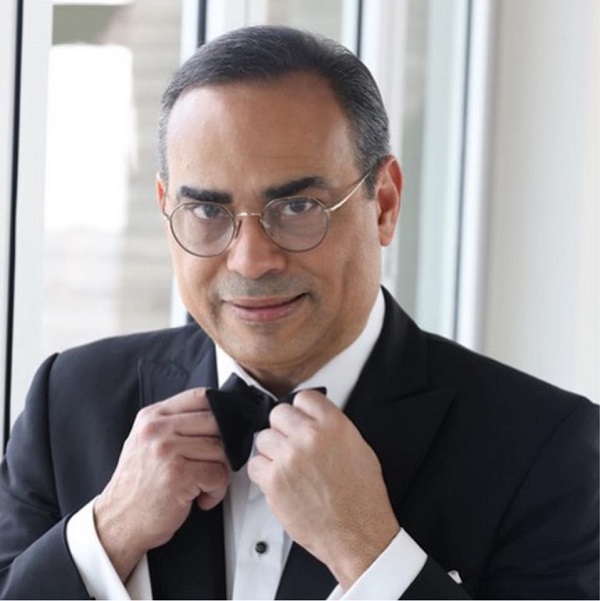
Gilberto Santa Rosa is a Puerto Rican singer, songwriter and sonero better known as “El Caballero de la Salsa” (The Gentleman of Salsa)

Gilberto Santa Rosa (born August 21, 1962) is a Puerto Rican singer, songwriter and also known as “El Caballero de la Salsa” from Carolina, Puerto Rico.

Growing up on the salsa music of the 50’s and 60’s, Rosa became interested in pursuing music during school, participating in her first concert in 1976 while still a tender teenager. After performing with the Mario Ortiz Orchestra.

Gilberto Santa Rosa ex-superior singer and sonero better known as "El Caballero de la Salsa" (The Gentleman of Salsa).
Gilberto Santa Rosa ex-superior singer and sonero better known as “El Caballero de la Salsa” (The Gentleman of Salsa).

Santa Rosa was recruited by La Grande Orchestra where she stayed for two years and met Elías López.

The 1980s brought a series of recordings for the singer with Orquesta Tommy Olivencia, El Gran Combo and the tribute album “Homenaje a Eddie Palmieri” with the Puerto Rican All Stars.

Gilberto Santa Rosa became a unique salsa improviser, walking the line between tropical and romantic styles of music, which contributed to his appreciation and popularity.

In 1986 Rosa signed with Combo Records and among others released the successful albums “Good Vibrations” featuring arrangements by Mario Ortiz, Ramon Sanchez and Tommy Villariny, “Keeping Cool! “and “De Amor y Salso”.

Due to the success of her fourth album entitled “Sala en Movimiento” released in 1989, Rosa signed with CBS Discos who could distribute her music internationally.

Teaming up with the young composer Omar Alfanno on the album “Punto de Vista” Rosa achieved consistent success with a series of hits including “Vivr sin Ella”, Perdoname” and De Cualquier”. The successor album “Perspectiva” released in 1991 was the Salsero’s biggest hit to date and included many of the same collaborators as its predecessor.

In 1990 Rosa was awarded the Billboard Lo Nuestro Award for Best Male Singer, recorded a live album at Carnegie Hall Theatre in New York, USA, the first tropical salsa artist to do so, and acted as Puerto Rican goodwill ambassador to Japan where he sang “De Cara al Viento” in Japanese.
Santa Rosa was recruited by La Grande Orchestra where she stayed for two years and met Elías López.

The singer generated a string of hits throughout the 1990s, always altering his particular sound and diversifying his music. From the orchestral “De Cara al Viento” (1994) and the energized “Esencia” (1996) to “De Corazón (1997) and “Expresión (1999).

At this point Rosa’s popularity and success had increased and the singer seemingly could do no wrong, with Rosa’s subsequent albums achieving both critical and commercial success, including 2002’s “Viceversa” which produced the hits “Por Más Que Intento” and “Un Montón de Estrellas”.

Santa Rosa ha sido honrada por Union City, New Jersey, USA con una llave de la ciudad y una estrella en su Paseo de la Fama, tiene el record de la mayor cantidad de álbumes número uno en la lista Billboard Tropical Albums, así como la mayor cantidad de nominaciones al Grammy por Mejor Salsa.

Canto y grabo varias producciones con el Maestro Mister “AFINQUE” Don Willie Rosario y ese fue el puente para grabar como solista.

En 1981, Gilberto Santa Rosa se unió a la banda Willie Rosario y su Orquesta, con la que grabó seis discos de larga duración. Su primera grabación se presentó en el álbum The Portrait Of a Salsa Man, en el sello Top Hits.

Canciones como “El Antifaz”, “La Mitad” y “El Condenado” se escuchan en la voz de Gilberto Santa Rosa, quien compartió la parte vocal con Tony Vega y Bobby Concepción en dicho álbum.

1982: Willie Rosario y su Orquesta graban el álbum Atízame el fogón para el sello Top Hits. Bobby Concepción, Tony Vega y Gilberto Santa Rosa participan como cantantes en este LP.

1983: El cantante santurcino participa en el álbum de Willie Rosario y su Orquesta, The Salsa Machine, en el sello Top Hits, de este álbum, canciones como “Amigo” y “Cuando Se Canta Bonito” son vocalizadas por Gilberto Santa Rosa.

Gilberto Santa Rosa (born August 21, 1962)

1984: Gilberto Santa Rosa comparte voz con Tony Vega en el álbum de Willie Rosario y su Orquesta llamado Nuevos Horizontes, publicado por Bronco Records, en ese álbum se grabó el tema “Lluvia”, uno de los primeros éxitos de nuestro caballero de la salsa. .

Willie Rosario celebrará 100 años de vida con un gran concierto en el Coliseo de Puerto Rico.

Para la celebración musical estará acompañado por sus amigos y colegas, Gilberto Santarosa y Tony Vega,

El legendario músico puertorriqueño Willie Rosario celebrará sus 100 años de vida en 2024 con un gran concierto en su tierra natal el próximo 27 de abril, junto a dos de los ilustres intérpretes que integraron su orquesta, Gilberto Santa Rosa y Tony Vega.

Willie Rosario celebrará 100 años de vida con un gran concierto en el Coliseo de Puerto Rico.

Source:

El Nuevo Dia

Also Read: The Royalty of our Latin Music Pete “El Conde” Rodríguez first singer signed by Fania Records label

José Hildemaro Hugas Amarista “El Sonero del Amor” from Venezuela to the world

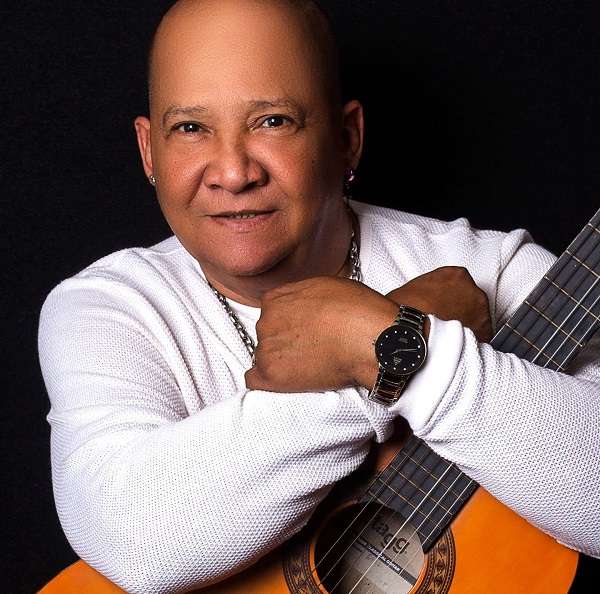
José Hildemaro Hugas Amarista, better known artistically as “Hildemaro, El Sonero Del Amor”, was born on November 10, 1957 in Caripito, a city in the eastern Venezuelan state of Monagas.

He is a Venezuelan singer-songwriter whose interest in music began at a very young age, participating in various children’s programs on the radio station in his hometown and in Maturin, the capital of the state of Monagas.

In 1970 he won the first “Festival De La Canción Inédita” held in Caripito.

Then he moved to Carúpano, where he began to sing with different musical groups of that city, such as “Los Bravos” and “Soles De Media Noche”.

"El Sonero del Amor" from Venezuela
“El Sonero del Amor” from Venezuela

Later he was called by the “Combo Melorítmico” of Maturín, where he stayed for a year. He always wanted to sing in the capital.

In 1976 his dream came true when he was called to be a part of the Front Train Orchestra “Los Satélites”, for seven (7) months, the proposed goals began to be different and began to work to achieve them. In 1979 he joined the “Orquesta Ideal”, with which the song “Contigo Besos Salvajes” was played all over the country and was successively imposed among the first places.

In 1981 he joined the “Supercombo Los Tropicales” of Maracaibo, then the “Noche Caliente” orchestra and later the “Porfi Jimenez” orchestra.

In 1985 he joined the orchestra of Renato Capriles: “Los Melódicos”, which gave him the greatest and best experience, given the popularity, prestige and discipline imposed by its director.

In 1986, as a soloist, he recorded his first LP of tropical music under the name “El Jr. de la música tropical” for the record label “Sur Americana del Disco”, , with the name “El Jr. de la música tropical.”

In December 1987 he received a wonderful offer from the record label “Top Hit (T.H.. ) and in 1988 he records his first LP, as a “sensual salsero” for Venezuela, titled “Amanecí Contigo” under the pen of José “El Flaco” Bermúdez, who is also the creator of the style that pushes him towards the international market, where all his songs hit with great acceptance and have his greatest impact in Peru (his second home as he usually calls it), starting his successful career as “Hildemaro, El Sonero Del Amor”.

José Hildemaro Hugas Amarista "El Sonero del Amor" from Venezuela to the World
José Hildemaro Hugas Amarista “El Sonero del Amor” from Venezuela to the World

In 1989 he recorded his second LP entitled “Sin Tabú”, which went gold a few weeks after its release, and this album took him back to Peru, where he is considered one of the main idols of Salsa Sensual. Panama, Mexico, Colombia, Ecuador, Argentina, Chile, Dominican Republic, Puerto Rico, Costa Rica, United States, Europe (Spain, Italy, France, Holland, Switzerland, among others), Asia (Japan), among many other countries, have joined his successful career.

In 1990 he recorded his third album called “Romantic and Sensual”, consolidating himself as one of the best voices of Latin American and Caribbean Salsa, qualities that were also reflected in his fourth production entitled “Lo Mejor De Mí” in 1991.

In 1993 he recorded his fifth album under the name “Al Natural”.

In 1994 he was invited to participate in the recording of the album “Con Ganas” by the Cuban Issac Delgado, where he performed a duet of a song composed by José L. Cortes called “Que Pasa Loco”, which quickly became an international success and took him to other latitudes.

In 1995 he released his sixth production with the title “Lo Que Siento”. One year later he signed a contract with the Mexican label “Balboa Records”, where he recorded the album “La Mejor Salsa Con Hildemaro”.

"El Sonero del Amor" from Venezuela and Viti Ruiz
“El Sonero del Amor” from Venezuela and Viti Ruiz

In 1999, he was invited by the Venezuelan group “Melody Gaita”, along with other artists, to record a tribute song to his friend and colleague Oscar D’ León.

In 2001, “Orquesta La Constelación” decided to record an album with several artists, in which he participated with two (2) songs (Peruvian waltzes), “Cuando Llora Mi Guitarra”, in duet with Andy Montañez, and “Jamás Impedirás”, which allowed him to sound nationally and internationally.

In 2002, he is called by another Venezuelan group “Pajarito Vola Show”, along with other artists, this time to participate in a well-deserved tribute to Betulio Medina. In 2002 and 2003 he burst in the national and international radio stations with two (2) singles “Corazón Loco” and “El Celular”.

In 2016, he begins to sound again in the radio stations with the song “Que Voy a Hacer Sin su Amor”.

In addition to his talent to sing Salsa Romántica, he is recognized for his interpretation of the Bolero. And on stage he has shared the stage with artists of the stature of: Oscar De León, Tito Rojas, Tito Gómez, Paquito Guzmán, Andy Montañez, Maelo Ruiz, Viti Ruiz, Gilberto Santa Rosa, David Pavón, Ismael Miranda, El Gran Combo de Puerto Rico, Tony Vega, Nino Segarra, José Alberto “El Canario”, among many others.

"El Sonero del Amor" from Venezuela and El Canario
“El Sonero del Amor” from Venezuela and El Canario

Among his many facets is his love for sports, especially volleyball, which he has practiced since he was very young. He is an honorary member of the FUCUFOCA Foundation, which has been responsible for the organization of the Festival de la Canción Inédita de Caripito for fifty-one (51) years. Faithful collaborator of the Friends of Palencia Foundation and sponsor of several institutions.

Through his foundation HH Productions, he has carried out social actions such as Collaboration in the construction of the Virgen del Rosario Church in Caripito;

Donations of medicines and food to the needy, assistance to sports teams with equipment and clothing, organization of charity concerts and support of the “Amigos de la Palencia” Foundation.

Through his foundation HH Productions, he has carried out social actions such as Collaboration in the construction of the church “Virgen del Rosario” in Caripito;

Donations of medicine and food to people in need, help to sports teams with equipment and clothing; Realization of benefit concerts and concerts of popular attraction in collaboration with the end of year festivities of his hometown.

He has always given value to new talents, helping them in their first steps with his advice and teachings, such as Angel “Tu Angel”, Hildemaro Jr. “La Continuación”, Gilberto Hugas, among others.

Between the years 2022 and 2023 he will celebrate his forty (40) uninterrupted years of artistic life, with a long international tour in countries such as: Colombia, Bolivia,

Peru, Panama, United States, Canada and Europe. He is now promoting the songs “Si Tú Te Vas” and “Amigos Especiales” from his new production, which he is preparing with his inseparable director and producer, José “El Flaco” Bermúdez.


Also Read: Carlos “Nene” Quintero comes from a family of musical prodigies

Metamorphosis: from music to photojournalism, a reinvention without limits

In the salsa scene, we are privileged to have the presence and companionship of Felix “Guayciba” Ayala.Guayciba is one of the greatest photojournalists Puerto Rico has ever produced.

He has moved from the musical notes that embrace our ears to now capturing visuals that awaken our five senses of unrepeatable moments.

I appreciate and share first hand the reference of how this idea begins, how the seed of wanting to be a photojournalist is planted, after having directed the Guayciba Group for 12 years.

“In the mid-’80s, a group of friends and I got together. We started playing and put together a Christmas repertoire. People liked it, and they told me, ‘Hey Felix, you should form a group, you sound great.'”

Félix “Guayciba” Ayala y Chucho Valdes

Encouraged by the public’s reception, they set about the task of banding together and formalizing a repertoire of Christmas music, which they later expanded to include popular music. In 1987, the group did not yet have a name, but the musicians were already rehearsing and playing in a bar in Santa Rosa (Bayamón, Puerto Rico).

In 1988 they started calling themselves Murciélago Sound Machine and got their first professional contract, for which they charged $200.00. During one of the rehearsals, Felix’s neighbor, who owned a movie and video rental store, offered to give him the name of his store: Guayciba; which he had already registered with the State Department.

The rest is history.

Felix liked the name, even though he still didn’t know what it meant. Guay-ciba means to take care of the stone.  It turns out that our Taino Indians communicated by carving messages on stones, which we now know as petroglyphs.

This form of communication of our Indians, the Tainos, was engraved on the stones that are part of our heritage.

Since 1989, Guayciba claims to have lost his last name – Ayala – to replace it with the name he is known by in the media, Guayciba.

On the salsa stage we have the privilege of having the presence of Felix "Guayciba"
On the salsa stage we have the privilege of having the presence of Felix “Guayciba”

This was the name of the musical group of which Félix Guayciba was the director, composer and singer.  As the main member and founder, he took on the task with commitment and in 1989 they released their first record production, entitled Nuestra música primero en LP, because CDs were not yet widespread in the market.

Felix remembers that the first singer of Grupo Guayciba was Gisela Ortiz.  Some time later, Gisela got thyroid cancer and when she lost her voice, she had to be replaced by Aidita Encarnación.

Guayciba recalls that Aidita made her debut with the group during the “Coffee Festival” in Maricao and remained with the group until it disbanded in 2000.

In 1991 they produced Echemos pa’lante, which opened the door to radio stations on the island. In 1992 they produced Por ti doblaré rodillas, and in 1993 they released what Felix considers their masterpiece under the title Borinquen, nido de amores.

Félix affirms that this production became the classic album that consolidated them in Salsoul, Z-93 and Estereotempo.  Later they released La revolución apoya lo nuestro. In 1999 they released their last album, Contra viento y marea.

In this last Guayciba production, Maestro Luis ‘Perico’ Ortiz made two arrangements: “Déjame Soñar” by Perín Vázquez, which Tito Puente had already recorded on the 100th album, backing the voice of Tony Vega (Antonio Vega Ayala), the cousin of Félix Guayciba Ayala. The six albums of the Grupo Guayciba were recorded in the studio of Maestro Pedro Rivera Toledo, and in Contra viento y marea Maestro Rivera Toledo recorded the saxophone.

Félix “Guayciba” Ayala

In his last album, the song “Por nada la cambiaré” was composed by Guayciba and dedicated to his homeland, Puerto Rico.

They never recorded Christmas music because their mission was to defend our music, the seis, the bomba, the plena and the guaracha, among other indigenous rhythms. The time came for the group to disband, but as Guayciba affirms: “We left a legacy for the musical history of our nation (…) Guayciba was, is and will be one of the best musical groups in the history of typical Puerto Rican music. I have retired, but at least we have left a legacy for history, we have left a mark”.

With the arrival of the new millennium, Guayciba’s musical stage ended to give way to the visual arts, making it clear that he had not retired from the humanistic arts, but had reinvented himself and now stood out in the visual arts.

The images captured by Guayciba’s photographic lens are full of life and movement. The viewer sees as if the artist, athlete or object in the photo comes to life.

Guayciba reflects while explaining how the image speaks or remains silent, depending on the adjustment made, the movement given, the position and the light.

He hastens to clarify: “I have used my musical career to distinguish myself in photography. I photograph artists the way I want them to photograph me.

I try to make the image I take of an artist or a show speak. In photojournalism, the photo has to speak.”

Guayciba made the decision to move from music to photojournalism as a result of a deep depression that he faced and fought with professional help.  Once the decision was made, he began training at the University of Puerto Rico.

He never forgot what one of the specialists who was part of the medical team that helped him recover told him: “I have faith in you.  If you are going to be a photojournalist, I want you to be the best photojournalist”.

Felix attended classes every Wednesday for three hours. He remembers his first photographic experiments.  One that comes to mind is Ricardo Arjona, who performed for an entire season at the Centro de Bellas Artes. Felix would leave his weekly class to go to the CBA, where he would stay until late.

On the salsa stage we have the privilege of having the presence of Felix "Guayciba"
On the salsa stage we have the privilege of having the presence of Felix “Guayciba”

The next day he would go to a megastore to develop the photos from the night before and bring them to the professor to evaluate the shots.  The professor would give him advice on what to do to improve the photos he had in hand.

Another moment he remembers with emotion was in 2002, when Fania played a concert at the Juan Ramón Loubriel stadium in Bayamón.

Guayciba already had a digital camera, and during that concert, he says he used 25 rolls of film with 36 exposures each.

He says this was his first international assignment. The first time he photographed an international artist was when he was still a photography student, practicing with Ricardo Arjona in the Fine Arts Department.

As a result of that coverage, he got in touch with the Guatemalan artist, who was thrilled with the photos Felix took, saying at the time that they were the best photos he had ever taken, adding that the Puerto Rican had captured his best side.

Felix has continued to evolve and has had the opportunity to cover concerts by Elton John, the Rolling Stones and Paul McCartney, among others.  He says: “The only thing I don’t do is pornography, weddings or quinceañeras”. His specialty is artistic shows and sporting events.

Guayciba is the longest serving photographer to cover the Coliseo de Puerto Rico since its inauguration in 2004, when Sonora Ponceña, Richie Ray & Bobby Cruz and Roberto Roena’s Apollo Sound performed in that memorable concert produced by Pepe Dueño.

One of the highlights of his career was a trip to Cuba in 2009, where Guayciba was the official photographer for the Puerto Rican delegation that went to the Cuba Disco Festival, which was dedicated to Puerto Rico in that edition.

He has taken more than 24,000 pictures of Cuba. The most memorable experience of his trips to Cuba was visiting the resting place of Che Guevara.

He continues to learn from all the images he has taken and published.  “At one point, during the performance of the 2013 musical Pedro Navaja, the Caballero de la Salsa, Gilberto Santa Rosa told me, “You have to let yourself be criticized and you have to accept criticism as long as it is constructive criticism.”

Felix added and still maintains: “It depends on who is criticizing you, because there are people who criticize you just to make fun of you; yes, you know, out of envy”. In fact, Felix understood that he had the best photos of Gilberto.

When he went to see him to show him, Santa Rosa told him: “They’re good, but these photos where I’m alone don’t say anything because it could be at the Fine Arts Center or it could be in some theater.  This concert is symphonic, where is the symphony orchestra?” Santa Rosa was right. “From that ear flattery I learned that you have to take the picture of the artist and the complements like stage, orchestra, etc..  It’s like writing a story.  You have to include the day, the historical setting, the characters, and make sure that the viewer can get a picture of what happened there in the moment. It’s more of a frozen in time effect.

Guayciba considers Conrado Pastrano her teacher and mentor. She expresses gratitude for all that she has learned in photography and acknowledges that there is still more to learn.

Conrado is an exceptional colleague who takes the time to explain ways to correct unwanted effects in images. Guayciba has developed her own unique style by studying the works of other colleagues and drawing inspiration from each of the photojournalists whom she admires.

Guayciba is highly regarded as one of the top photojournalists in Puerto Rico, although he is humble and has never claimed the title for himself.  He recognizes that there are others who may be more talented than him.  His motto is: “I may not be the best, but I am proficient in my craft and the photos I take convey a narrative.”

When he is at the ball park, he adeptly adjusts his lighting, shutter speed, and lens to capture the intricate details on a ball despite its velocity exceeding 100 miles per hour. When artists perform on stage, Guayciba faces the task of restoring their natural appearance despite the color filters and stage lighting often making them look unnatural or cartoonish.  Overcoming these challenges and bringing the images to life, imbues these artists with renewed enthusiasm for their craft, a pursuit they have devoted over two decades to.

At 68 years of age, he prays daily for longevity. He abstains from drugs and alcohol, including wine, champagne, and cider. His sole indulgence is tobacco and photography.

To view Félix Guayciba’s artistic works and keep in touch with this vital advocate of Puerto Rican culture, please visit the publication at www.guayciba.com. To email him, please use [email protected], or follow his IG account at https://www.instagram.com/guay54/.

To reach him by phone, please dial 787-637-8617. He is always available and eager to assist with his usual helpful demeanor.

Bella Martinez Puerto Rico

Also Read: Bella Martínez presents “Las memorias de Jimmie Morales: un conguero para la historia” [Read more…] about Metamorphosis: from music to photojournalism, a reinvention without limits

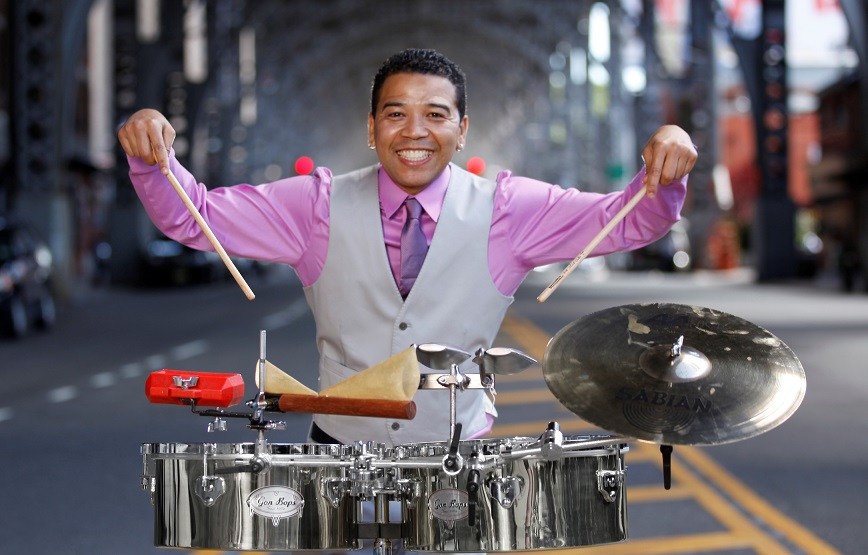
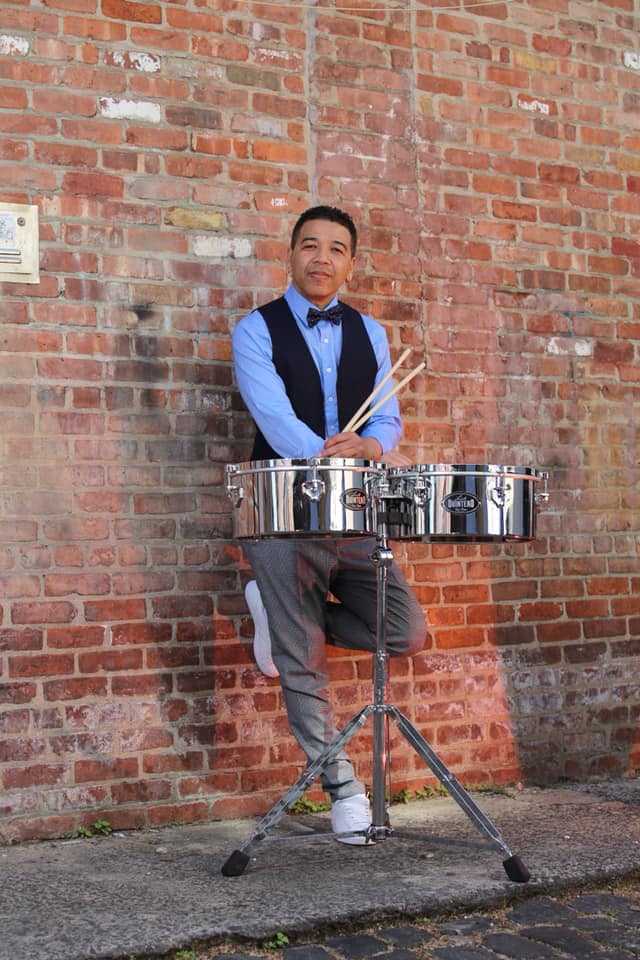
Master Timbalero Luisito Quintero

North America / United States / New Jersey

Master Timbalero Luisito Quintero hails from Caracas, Venezuela.

Where his father, a respected percussionist in his own right, tutored and encouraged his son to become one of music’s best percussionists.

Luisito comes from a long line of outstanding musicians including his uncle, Carlos Nene Quintero and cousin Robert Quintero.

He studied at the respected Orquesta Sinfonica de Venezuela (The Symphonic Orchestra of Venezuela) and his percussion technique soon garnered attention from his colleagues.

Master Timbalero Luisito Quintero
Master Timbalero Luisito Quintero – Photo

Luisito joined the popular music ensembles Grupo Guaco and Oscar D’Leon, where he enjoyed worldwide acclaim.

Luisito Quintero has worked and recorded with many of music’s legends including The Rolling Stones, Vanessa Williams, Paul Simon, Santana, Jack De Johnette, David Sanborn, George Benson, Joe Sample, Bill Cosby, the late Celia Cruz and Tito Puente, Cachao, Eddie Palmieri, Marc Anthony, Gloria Estefan, Richard Bona, Ravi Coltrane, Nathalie Cole, Diana Krall, Giovanni Hidalgo, Toshiko Akiyoshi, Spanish Harlem, Willie Colon and countless others.  One of his recent projects finds him as musical director for Louie Vega and the Elements of Life Band, as well as extensive work with Jack DeJohnette’s Latin Project.  He has also had the privilege to tour and record with the Tony & Grammy award winning Jazz artist, Dee Dee Bridgewater.

Quintero himself has earned more than thirteen Grammy certificate awards for his participation in numerous recordings.

Luisito Quintero has two solo projects under Vega Records/BBE, entitled “Percussion Maddness” and “Percussion Maddness Revisited”.

Timbalero - Luisito Quintero
Master Timbalero Luisito Quintero – Photo

Scheduled for release in the spring of 2013, his upcoming production entitled “3rd Element”, features guest artists Gato Barbieri, Oscar Hernandez, Doug Beavers, Richie Flores, Steve Khan, Reynaldo Jorge and his cousin Roberto Quintero.  Currently, Luisito is the touring & recording percussionist for the legendary jazz pianist Chick Corea and for Spanish Harlem.

Carlos “Nene” Quintero comes from a family of musical prodigies

Carlos Vicente Quintero De Jesús, better known as Nene Quintero, was born on October 21, 1946 in the Caracas neighborhood of Marín (a neighborhood of percussionists par excellence), in San Agustín del Sur.

In a family that has produced several musicians, among them his brothers the former “Madera”, Ricardo and Jesús “Chu” Quintero, who died in the Orinoco tragedy; Rafael who lives in Marseille or his nephews Luisito (the “chamo Candela” of Daiquirí), Robert and Chuíto, who live in New York.

During his adolescence he was in several groups and then he played with Los Dementes, the Venezuelan group Pan suerte de Santana with César Monge (Dimensión Latina) and Alfredo Padilla (La Salsa Mayor), Porfi Jiménez, Frank Quintero and Los Balzehaguaos, Yordano and many others.

Carlos "Nene" Quintero comes from a family of musical prodigies
Carlos “Nene” Quintero comes from a family of musical prodigies

-What would be the five main moments of his career?

Nené lists them:

1- Having worked with people I went to see at a radio station and then I got to play with them. That was in the 70’s, in a place called Playboy in Altamira, with their bunnies and everything.

I worked with Lewis Vargas and Rafael “Gallo” Velásquez on trumpets; Moscatt was the saxophonist; Willy Pérez, pianist; Jorge Romero, bassist of Aldemaro Romero’s Onda Nueva; and Marcelo Planchart on drums.

2- When I heard on the radio a song I recorded with Los Dementes: “Rómpelo”, which was very popular. I saw myself as a very famous person, I was heard on the radio for the first time.

3- When Eumir Deodato came and proposed me to go with him to the United States.

I was not in conditions to go because I was working very well, I was doing a lot of jingles, I had two children who were starting to study.

I was sacrificing something that was taking shape: my family. I told him I could go, work and come back. The surprise was when a letter arrived for a tour of Mexico and the United States.

Deodato is a very kind person, he gives you freedom to work, we communicated in “Spanglish” and “portuñol” and he loved beer.

Carlos Nene Quintero

4- Seeing Celia Cruz when I was a kid in Marin, going to visit friends like Johnny Perez, from Sonora Caracas, and some time later working with her, even in her last shows, in Montreal.

Celia’s birthday was the same day as mine, and she looked older, but as soon as she started the music and said “sugar!” she was different, she was transformed.

5- Working lately with my nephews Robert and Luisito gave me a lot of emotion: The three of us on the same stage in New York with Celia Cruz.

But there are more experiences. Eros Ramazzotti, for example. “I chose to go to New York and Miami when things got tough here. I worked with Gato Barbieri and with salsa people.

I would go back and forth, two months out and back. I was recording with a saxophonist who worked with Eros and, the following year while I was in Miami he called me for a six-month tour.

I said yes, they called me the following year again and I spent three years with Ramazzotti touring all over Europe, Brazil, Puerto Rico, Central America, Mexico and Miami.

-Any anecdotes with Ramazzotti? –

Once on his birthday he rented a track where they raced cars. We were drinking, driving, talking, talking, listening to music and they brought a cream cake for Eros.

At one point when he was very close to me with the cake in his hand, I put it in his face. It was a mess with everyone throwing things and pieces of cake at each other.

But I got the impression that he was upset and I went over to apologize and explain to him that it was something that could happen on any South American birthday, especially with a cream cake. He told me not to worry, that it was fine.

Other jobs came through Ramazzotti, such as with Jovanotti and Lucio Dalla.

-And how was it with Little Louie Vega, one of the producers and DJs of the moment?

-I met him through Luisito. We have been touring Europe, the United States and Japan for the last three years, and we recorded with Pushim, a Japanese woman, a song that was in the Japanese top ten.

Meanwhile, “Nené’s” routine continues to be more international than ever between the United States, Europe and especially France, where he has been working with a group that bears his name: Nequin Group, with whom he recorded an upcoming album.

“Working abroad is like working here, but in another language”, he reflects on the matter and says that he is preparing a method for percussionists to work with their feet as well as with their hands.

Carlos Nené Quintero con mi Signature congas (Roberto Quintero)

-What has seemed new to you lately in Europe or in these parts?

-Those jazz works in which there is no conventional group with drums or bass, like what I did with Gerry Weil and Pablo Gil at the Corp Group Cultural Center.

THE BATICONGA AND THE “MCGIVER SET”.

The baticonga is a hybrid: drums with conga. I use bass drum, hi-hat, cimbals, toms, snare and cymbals of various thicknesses.

It has a special redoblante with a rim that does not protrude from the leather so that it does not bother when hitting it like a tumbadora.

It is an idea that I have been maturing. It was born because of Yordano’s album that made him famous, Manantial de corazón, there I recorded all the percussion and when it was time to play it live we needed a drummer and two percussionists. We got the drummer, but things were missing and I started to add electronic pedals, electronic drums, octapads and to use feet and hands.

Then we did an unplugged set and it had to be acoustic with congas, bass drum, snare drum, hi-hat, cymbals.

The McGiver set is a djembe with brushes, cymbals with rivets, a conga that is just like a lid, like a tambourine, and I mount it on top of a snare drum stand and a cowbell. A set that does it all.

SIX INFLUENTIAL PERCUSSIONISTS

Alejandro Blanco Uribe and Airto Moreira: “I saw a lot of Gerry Weil with La Banda Municipal in the 70s and Alejandro as a multi-percussionist with effects and accessories.

That led me to look at Airto’s proposal and to fall in love with percussion at a time when I was playing guitar”.

Trilok Gurtu: “For his fusion of oriental music with rock and jazz. I’ve been hearing him since Oregon, and when I heard him with John McLaughlin on the live album in London my jaw dropped.”

Jack DeJohnette: “As a drummer he has a very floaty groove, he can do with the beats what he wants and the rhythm is always there.”

Tony Williams: “Another drummer. I saw a video that aroused my interest because his technique is like the one I use with the baticonga”.

Carlos Nené Quintero con mi Signature congas (Roberto Quintero).

Giovanni “Mañenguito” Hidalgo: “Since he came out the thing changed, he gave another level to the congas or tumbadoras, with him there has been a ‘before and after'”. – with Roberto Quintero and Luisito Quintero.

Also read: Argenis Carruyo is known in the music scene as “El Volcán de América” (The Volcano of America) due to the power of his voice

  • « Go to Previous Page
  • Page 1
  • Interim pages omitted …
  • Page 4
  • Page 5
  • Page 6
  • Page 7
  • Page 8
  • Interim pages omitted …
  • Page 13
  • Go to Next Page »

International Salsa Magazine (ISM) is a monthly publication about Salsa activities around the world, that has been publishing since 2007. It is a world network of volunteers coordinated by ISM Magazine. We are working to strengthen all the events by working together.