• Skip to primary navigation
  • Skip to main content

International Salsa Magazine

  • Home
  • Previous editions
    • 2025
      • ISM / November 2025
      • ISM / October 2025
      • ISM / September 2025
      • ISM / August 2025
      • ISM / July 2025
      • ISM / June 2025
      • ISM / May2025
      • ISM / April 2025
      • ISM / March 2025
      • ISM / February 2025
      • ISM / January 2025
    • 2024
      • ISM / December 2024
      • ISM / November 2024
      • ISM / October 2024
      • ISM / September 2024
      • ISM / August 2024
      • ISM / July 2024
      • ISM / June 2024
      • ISM / May 2024
      • ISM / April 2024
      • ISM / March 2024
      • ISM / February 2024
      • ISM / January 2024
    • 2023
      • ISM / December 2023
      • ISM / November 2023
      • ISM / October 2023
      • ISM – September 2023
      • ISM – August 2023
      • ISM July 2023
      • ISM Edition June 2023
      • ISM – May 2023
      • ISM April 2023
      • ISM March 2023
      • ISM February 2023
      • ISM January 2023
    • 2022
      • ISM December 2022
      • ISM November 2022
      • ISM October 2022
      • ISM September 2022
      • ISM August 2022
      • ISM July 2022
      • ISM June 2022
      • ISM May 2022
      • ISM February 2022
      • ISM January 2022
    • 2021
      • ISM December 2021
      • ISM November 2021
      • ISM October – 2021
      • ISM September 2021
      • ISM August 2021
      • ISM July 2021
      • ISM May 2021
      • ISM April 2021
      • ISM June 2021
      • ISM March 2021
      • ISM February 2021
      • ISM January 2021
    • 2020
      • ISM December 2020
      • ISM November 2020
      • ISM October 2020
      • ISM September 2020
      • ISM August 2020
      • ISM July 2020
      • ISM June 2020
      • ISM May 2020
      • ISM April 2020
      • ISM March 2020
      • ISM February 2020
      • ISM January 2020
    • 2019
      • ISM December 2019
      • ISM November 2019
      • ISM October 2019
      • ISM Septembre 2019
      • ISM August 2019
      • ISM July 2019
      • ISM June 2019
      • ISM May 2019
      • ISM April 2019
      • ISM March 2019
      • ISM February 2019
      • ISM January 2019
    • 2018
      • ISM December 2018
      • ISM November 2018
      • ISM October 2018
      • ISM September 2018
      • ISM August 2018
      • ISM July 2018
      • ISM June 2018
      • ISM May 2018
      • ISM April 2018
      • ISM March 2018
      • ISM February 2018
      • ISM January 2018
    • 2017
      • ISM December 2017
      • ISM November 2017
      • ISM October 2017
      • ISM September 2017
      • ISM August 2017
      • ISM July 2017
      • ISM June 2017
      • ISM May 2017
      • ISM April 2017
  • Download Salsa App
    • Android
    • Apple
  • Spanish

Search Results for: Trumpet

Déjalo, the latest track by Pedro Conga y su Orquesta Internacional

The song -composed by Pablito Ruiz- is catchy and brings us the essential style of the orchestra with the renewed touch added by singer Pedro Blasini.

Pedro Conga y su Orquesta Internacional

Within the first 16 seconds, Rafael ‘Bodo’ Torres on piano and Pedro Perez on bass create a lively and energetic musical introduction, perfectly arranged by Roberto Perez.

Pedro Conga y su Orquesta Internacional photos by Adriana Vega

Twenty seconds after the melody starts, Pedro Blasini’s voice enters accompanied by the timbales in a hushed tone.

Through this recording, Pedro Blasini establishes himself as the lead vocalist of the International Orchestra of his uncle, the notable percussionist: Pedro Conga.

The arrangement combines musical intricacy with the required flexibility to captivate listeners searching for love dramas in the salsa de golpe scene.  And when it comes to beats and cuts, within the first ten seconds of the opening minute, Jan Duclerc’s unique trumpet cut fuses seamlessly with Pedro Conga’s tumbadora, creating the perfect harmony to complement the lead vocal.

At the 1:30 mark, José Joel Díaz introduces his timbal cymbal with subtlety, underlining the prominence of the conga.  Raúl Díaz’s bongó delivers consistent accompaniment, providing a masterclass in both rhythm section perfection and percussion timing.

Pedro Conga y su Orquesta Internacional

From the 1:40 mark onwards, the harmonies of Charlie Cruz, Nino Segarra, Alejandro Villegas, and Blasini himself shine.

At minute 2:34, “Bodo’s” piano collaborates with Pedro Perez’s bass to demonstrate their musical partnership, resulting in exceptional musical performances.

The vocalist harmonizes well with the tumbadora, as the drumbeat establishes its presence from the very first minute and gradually intensifies until, during the lead-up to the third minute of the song, the coordination between the lead’s tumbadora and Héctor Morales’s trombone unequivocally proves that (as they say in Puerto Rico) “there is no one for anyone.”

It is clear that there are no bounds to the experience and innovation behind the musical production led by Julio “Gunda” Merced, Rafael “Bodo” Torres, and Santo Santiago.

Pedro Conga, a Puerto Rican musician, displays his exceptional talent through his music.

Pedro Conga
Pedro Conga

He was born in Humacao, Puerto Rico. He explains that he received the pseudonym “Conga” during the years he spent accompanying Justo Betancour. Betancour bestowed the name upon him due to his prodigious talent on the congas. Pedro “Conga” subsequently established himself as a master, doing invaluable work in fostering the growth of SALSA. His orchestra was privileged to welcome vocalists of the highest caliber, including:

He carried out this mission with unmatched finesse and superior quality.

Anthony Cruz, Tito Rojas (“El Gallo de la Salsa”), Ismael Ruiz (“Maelo”), Rafy Cruz, and Edgardo Diaz.

Among his songs are “Pienso en ti,” “Tú me niegas tanto amor,” “No te quites la ropa,” “Quiero volver,” “Te quiero amor,” and “Si supiras,” among others that have become salsa classics.

The productions he created with his orchestra achieved great success not just in Puerto Rico, but also in the United States, Europe, Colombia, Venezuela, Panama, and Peru.

Furthermore, he has received international acclaim for his productions due to the versatility and freshness showcased in each album.

Pedro Conga is renowned in the music industry for his ability to blend rhythm, flavor, and emotion into a single composition.

Bella Martinez Puerto Rico

Also Read: Ray Barretto Giant Force y A Conguero’s Conguero

[Read more…] about Déjalo, the latest track by Pedro Conga y su Orquesta Internacional
Mario Bauza

North America / United States / New York

Mario Bauza, Pioneer of Afro-Cuban jazz in New York, Clarinetist, saxophonist, trumpeter and arranger

Mario Bauzá (Havana, April 28, 1911 – Manhattan, July 11, 1993) was a Cuban saxophonist, clarinetist, trumpeter, arranger and composer.

Known above all for having been the musical director of the Machito orchestra (of whom he was also a brother-in-law), he was a pioneer of what is now known as Afro-Cuban jazz.

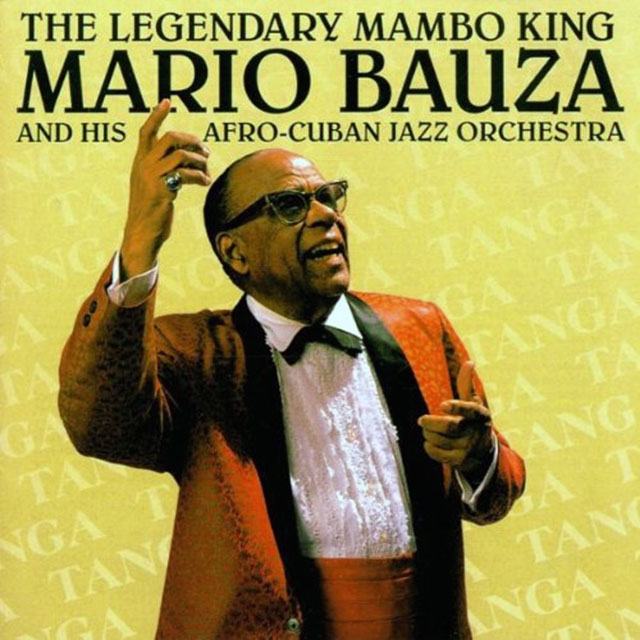
Mario Bauza The Legendary Mambo King
Mario Bauza Pioneer of Afro-Cuban jazz in New York

Bauzá played the clarinet in the Havana Philharmonic Orchestra. However, after traveling to New York in 1927 with the Antonio María Romeu orchestra, he was so impressed by the Big Bands of Paul Whiteman, Fletcher Henderson and Tommy Dorsey, and by the Harlem music revues, that in 1930 he decided to emigrate definitively to USA.

During the trip, he became friends with Antonio Machín. Mario Bauzá would return on the same boat in which Don Aspiazu’s orchestra was travelling, who immediately began the arrangements to record El manisero.

Upon arriving in New York, Bauzá went to live in Harlem with his cousin, the trumpeter René Endreira. Bauzá began playing the saxophone at house parties with pianist Lucky Roberts and began to absorb African-American culture.

Mario Bauza
Pioneer of Afro-Cuban jazz in New York

Between 1930 and 1931, he was a trumpeter in the Antonio Machín quartet and made important recordings with this group in New York City. Anecdotally, it is said that he had learned to play the trumpet in just two weeks.

His first jobs were with the orchestras of Cass Carr, Noble Sissle and Sam Wooding.

In 1933 he entered Chick Webb’s orchestra as first trumpet, where he ended up as music director. He then worked with Don Redman and Fletcher Henderson, eventually landing Cab Calloway.

Being in that band, Mario brought the young trumpeter Dizzy Gillespie to the orchestra.

Bauzá married Estela Gutiérrez, sister of Francisco Raúl Gutiérrez Grillo, known as Machito.

On December 3, 1940, he debuted with Machito at the Park Plaza, a dance hall, with the Afro-Cubans, later working for almost four years at the La Conga club.

Bauzá works for Machito as artistic director, taking care of the arrangements and hiring the musicians.

The style of the Afro-Cubans mixes the son montuno of Cuba with features of swing bands.

Mario Bauzá Pioneer of Afro-Cuban jazz in New York

Thanks to this, musicians like Dizzy Gillespie or James Moody introduced Afro-Cuban rhythms into jazz, starting in 1947.

He became interested in jazz when he heard Frankie Trumbauer play the saxophone performing Rhapsody in blue with the Paul Whiteman orchestra.

In the forties, Mario will develop the sound of Afro-Cuban jazz. His work as a clarinetist, trumpeter, saxophonist and arranger in the Machito orchestra constitutes one of the main pillars in the emergence and development of that Cuban genre.

Carlos “Nene” Quintero comes from a family of musical prodigies

Carlos Vicente Quintero De Jesús, better known as Nene Quintero, was born on October 21, 1946 in the Caracas neighborhood of Marín (a neighborhood of percussionists par excellence), in San Agustín del Sur.

In a family that has produced several musicians, among them his brothers the former “Madera”, Ricardo and Jesús “Chu” Quintero, who died in the Orinoco tragedy; Rafael who lives in Marseille or his nephews Luisito (the “chamo Candela” of Daiquirí), Robert and Chuíto, who live in New York.

During his adolescence he was in several groups and then he played with Los Dementes, the Venezuelan group Pan suerte de Santana with César Monge (Dimensión Latina) and Alfredo Padilla (La Salsa Mayor), Porfi Jiménez, Frank Quintero and Los Balzehaguaos, Yordano and many others.

Carlos "Nene" Quintero comes from a family of musical prodigies
Carlos “Nene” Quintero comes from a family of musical prodigies

-What would be the five main moments of his career?

Nené lists them:

1- Having worked with people I went to see at a radio station and then I got to play with them. That was in the 70’s, in a place called Playboy in Altamira, with their bunnies and everything.

I worked with Lewis Vargas and Rafael “Gallo” Velásquez on trumpets; Moscatt was the saxophonist; Willy Pérez, pianist; Jorge Romero, bassist of Aldemaro Romero’s Onda Nueva; and Marcelo Planchart on drums.

2- When I heard on the radio a song I recorded with Los Dementes: “Rómpelo”, which was very popular. I saw myself as a very famous person, I was heard on the radio for the first time.

3- When Eumir Deodato came and proposed me to go with him to the United States.

I was not in conditions to go because I was working very well, I was doing a lot of jingles, I had two children who were starting to study.

I was sacrificing something that was taking shape: my family. I told him I could go, work and come back. The surprise was when a letter arrived for a tour of Mexico and the United States.

Deodato is a very kind person, he gives you freedom to work, we communicated in “Spanglish” and “portuñol” and he loved beer.

Carlos Nene Quintero

4- Seeing Celia Cruz when I was a kid in Marin, going to visit friends like Johnny Perez, from Sonora Caracas, and some time later working with her, even in her last shows, in Montreal.

Celia’s birthday was the same day as mine, and she looked older, but as soon as she started the music and said “sugar!” she was different, she was transformed.

5- Working lately with my nephews Robert and Luisito gave me a lot of emotion: The three of us on the same stage in New York with Celia Cruz.

But there are more experiences. Eros Ramazzotti, for example. “I chose to go to New York and Miami when things got tough here. I worked with Gato Barbieri and with salsa people.

I would go back and forth, two months out and back. I was recording with a saxophonist who worked with Eros and, the following year while I was in Miami he called me for a six-month tour.

I said yes, they called me the following year again and I spent three years with Ramazzotti touring all over Europe, Brazil, Puerto Rico, Central America, Mexico and Miami.

-Any anecdotes with Ramazzotti? –

Once on his birthday he rented a track where they raced cars. We were drinking, driving, talking, talking, listening to music and they brought a cream cake for Eros.

At one point when he was very close to me with the cake in his hand, I put it in his face. It was a mess with everyone throwing things and pieces of cake at each other.

But I got the impression that he was upset and I went over to apologize and explain to him that it was something that could happen on any South American birthday, especially with a cream cake. He told me not to worry, that it was fine.

Other jobs came through Ramazzotti, such as with Jovanotti and Lucio Dalla.

-And how was it with Little Louie Vega, one of the producers and DJs of the moment?

-I met him through Luisito. We have been touring Europe, the United States and Japan for the last three years, and we recorded with Pushim, a Japanese woman, a song that was in the Japanese top ten.

Meanwhile, “Nené’s” routine continues to be more international than ever between the United States, Europe and especially France, where he has been working with a group that bears his name: Nequin Group, with whom he recorded an upcoming album.

“Working abroad is like working here, but in another language”, he reflects on the matter and says that he is preparing a method for percussionists to work with their feet as well as with their hands.

Carlos Nené Quintero con mi Signature congas (Roberto Quintero)

-What has seemed new to you lately in Europe or in these parts?

-Those jazz works in which there is no conventional group with drums or bass, like what I did with Gerry Weil and Pablo Gil at the Corp Group Cultural Center.

THE BATICONGA AND THE “MCGIVER SET”.

The baticonga is a hybrid: drums with conga. I use bass drum, hi-hat, cimbals, toms, snare and cymbals of various thicknesses.

It has a special redoblante with a rim that does not protrude from the leather so that it does not bother when hitting it like a tumbadora.

It is an idea that I have been maturing. It was born because of Yordano’s album that made him famous, Manantial de corazón, there I recorded all the percussion and when it was time to play it live we needed a drummer and two percussionists. We got the drummer, but things were missing and I started to add electronic pedals, electronic drums, octapads and to use feet and hands.

Then we did an unplugged set and it had to be acoustic with congas, bass drum, snare drum, hi-hat, cymbals.

The McGiver set is a djembe with brushes, cymbals with rivets, a conga that is just like a lid, like a tambourine, and I mount it on top of a snare drum stand and a cowbell. A set that does it all.

SIX INFLUENTIAL PERCUSSIONISTS

Alejandro Blanco Uribe and Airto Moreira: “I saw a lot of Gerry Weil with La Banda Municipal in the 70s and Alejandro as a multi-percussionist with effects and accessories.

That led me to look at Airto’s proposal and to fall in love with percussion at a time when I was playing guitar”.

Trilok Gurtu: “For his fusion of oriental music with rock and jazz. I’ve been hearing him since Oregon, and when I heard him with John McLaughlin on the live album in London my jaw dropped.”

Jack DeJohnette: “As a drummer he has a very floaty groove, he can do with the beats what he wants and the rhythm is always there.”

Tony Williams: “Another drummer. I saw a video that aroused my interest because his technique is like the one I use with the baticonga”.

Carlos Nené Quintero con mi Signature congas (Roberto Quintero).

Giovanni “Mañenguito” Hidalgo: “Since he came out the thing changed, he gave another level to the congas or tumbadoras, with him there has been a ‘before and after'”. – with Roberto Quintero and Luisito Quintero.

Also read: Argenis Carruyo is known in the music scene as “El Volcán de América” (The Volcano of America) due to the power of his voice

Orchestra “Real Expression”

Latin America / Venezuela / Caracas

Orchestra “Real Expression”. Relay youth in Afro-Caribbean music

The “Real Expression” Orchestra was born under the initiative of a group of friends who converged during the 90’s as part of their free time and to liven up their family parties.

Empirical musicians moved by the passion for the salsa genre and their musical preferences chose a series of songs to inspire their repertoire of “hard sauce” paying homage to orchestras such as: Los Satélites, Fruko y sus Tesos, Dimensión Latina, Roberto Blades, among others.

Real Expression" Orchestra
Real Expression” Orchestra

Relaunching

The “Real Expression” Orchestra in 2016 had an unexpected loss. Its founder Oswaldo García and pianist of the group, exercising his role as a GNB official, lost his life in a confrontation.

This moment marked a silence in the Royal Expression Orchestra, which after the physical disappearance of Oswaldo, could not find a path to musical growth and there was no longer reason to celebrate.

After a year, his son Wladimir A. García, who learned the magic of the piano from his father, decides again to summon these friends of his father to continue the legacy that was Oswaldo’s passion in life.

During the year 2018, the “homemade” rehearsals and the desire to consolidate the group continued and in December of that year Wladimir Alexander formally decided to start piano lessons with the teacher Alberto Crespo, a Venezuelan pianist recognized in the salsa scene for his participation. in Bands such as Bailatino, and professionalize their innate skills in order to take on the challenge of Musical Direction of the Orchestra, under a concept of varied salsa repertoire and coupling talents of different ages in order to capture audiences of all ages.

With this impetus and desire, “Orquesta Real Expression” was born with a group of musicians of all ages and periods, a fresh and original repertoire with a “street tumbao”, extolling what is born at night in the Caracas parish “23 de January” cradle of salsa par excellence and in homage to all “street and guataca” dancers.

Real Expression" Orchestra
Real Expression” Orchestra

Musicians

After the call, many musicians were encouraged to participate, including Gilberto Gil (tumbadoras) who has been supporting Wladimir Alexander since he took over the orchestra, we consider him “the brother of the house”.

There is also Gonzalo Ribas (singer) of the old school with an original soneo and a musician by vocation formally dedicated to the business of selling spare parts. In the voice is also part of this project Jeanmicet Canónico, singer with a career in traditional Venezuelan music.

Jeanmicet is currently part of the “Francisco Pacheco y su Pueblo” Project and his son, also renowned percussionist Roland Orozco, decided to join the percussion base for “Real Expression” with Luis Urbina.

On bass we are accompanied by “Yimmito León” from the family of the great Oscar D’ León, son of Yimmy Leon. The sax is represented by Javier José Torres Perez (saxophonist and flutist).

Following the line of brass Meyderson Rada (trumpet) who also belongs to the project of Francisco Pacheco y su Pueblo, and as arranger and bass Premmlim Villamizar of the new generation of, under the direction of Wladimir Alexander singer and piano.

Repertoire

The repertoire includes songs covered by orchestras such as Los Satélites, Grupo Canela de Colombia, Spanish Harlem, Hildemaro, Eddy Santiago, Eddie Palmieri, Oscar D’ León, among others.

Real Expression Orchestra. Musical Direction: Wladimir Alexander Garcia. Phone (0414)3175583. email: [email protected] Instagram: orchestrarealexpression / twitter: @ExpressionReal / Facebook: Real Expression Orchestra.

Under the production of: La Negrix Salsera

Email: [email protected]. Instagram: Yohelia Acosta / Facebook: Yohelia Acosta.

Eddie Ortiz & Son Caribe here in ISM

Eddie and his story 

Latin talent has expanded all over the world to the point that there is a significant presence of these groups in Hawaii. Today we have talked to Eddie Ortiz, one of its leaders, who tells us his interesting story. 

Eddie Ortiz, a New Yorker of Puerto Rican descent, began his journey through music when still a child, which led him to become the musical director of one of the main Latin orchestras in Honolulu.  

The following are the most salient aspects of his life and musical career.   

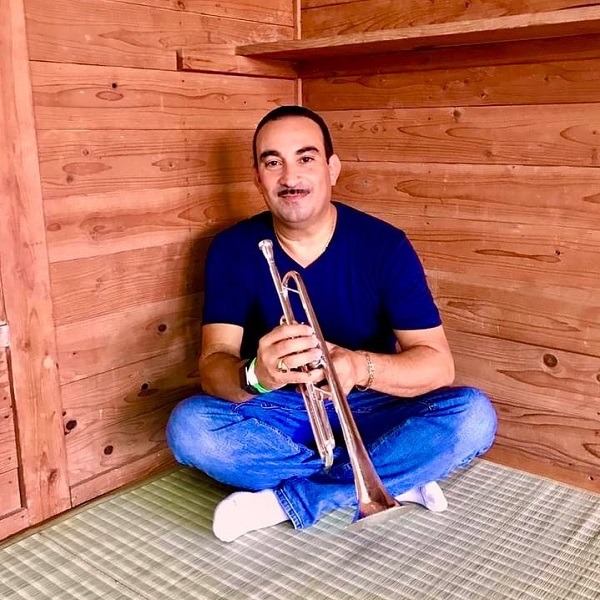
Eddie and his trumpet
Eddie Ortiz with his trumpet

The Armed Forces and moving to Hawaii   

Eddie’s first contact with music was in school, when he began taking trumpet lessons for a few years until he moved with his family to Tampa, Florida, where his life would change radically.   

While there, he joined the Navy and served for more than 20 years, time in which the artist took the opportunity to join the Marine band and hone his skills as a musician. 

It was in those years he served as a trumpet player and played for several military bands being in the armed forces.   

During his military career, he was forced to visit many countries and Hawaii was his last stop. About three years before retiring, he decided to create Eddie Ortiz & Son Caribe, a group he still plays with today.    

As for Hawaii, he liked the place, the weather and the people so much that he did not want to return to the United States. That was over 27 years in total. He still thinks it was the best decision he could have made personally and professionally.    

Eddie Ortiz & Son Caribe 

Something very interesting about Eddie Ortiz & Son Caribe is that they play Latin music, but most of the members are not Latino. The group has people from Japan, China, Portugal and Hawaii. In fact, some of them were with Eddie in the navy and, today, support him in this great project.   

A very particular case is that of Cynthia Romero, the band’s vocalist, who was born in Manila, Philippines, and speaks six languages, but Spanish is not one of them. However, she is perfectly capable of singing in that language without any problem, since she practices a lot the songs at the phonic level to avoid mistakes.   

Whenever there are original songs, Cynthia usually asks Eddie what a song is about and he explains it to her in detail so she can perform it and live out it properly. She also takes the trouble to translate all the content and learn it to avoid any failure in the studio or on stage.    

In the case of the genres, a different level of preparation for each one is always required, so Eddie and Cynthia always rehearse alone at first, while the musicians prepare themselves separately. It is then that they all join together to see how the band sounds as a whole.    

Eddie in a studio
Eddie Ortiz playing his trumpet in a studio

Learning from other artists on stage 

The members of Eddie Ortiz & Son Caribe have had the opportunity to share the stage with Ismael Miranda, Celia Cruz, Johnny Polanco, Tito Puente Jr, Luisito Rosario, and many more. When asked what he and his musicians have learned from these great artists, Eddie replied that the opportunity to accompany these personalities and open their shows have been a blessing and an immense honor.   

”Each one of these artists has a very unique style and, whenever we accompany one of them, there are always new things to learn in order to be able to interpret those styles in the future. All of these things that we see in others are incorporated into our own music as we see fit” said Eddie.   

The media’s role in his career   

With respect to the media, Eddie Ortiz & Son Caribe has had a presence in various magazines and channels such as Honolulu Magazine, KS TV, 88 Tee, University of Hawaii Sports Television, among others.    

Eddie said they did not expect this media exposure, but it has been very well received. They have been asked to make music for one or two radio stations or channels, which has given them the opportunity to demonstrate their talent and be known among a wider audience.   

The best thing is that this gave them the opportunity to explore other genres, as the aforementioned media have asked for pop, traditional Hawaiian music and other genres requested at that time.    

Original music and covers 

Eddie also told us that his band usually performs live on various entertainment places about four times a week, so they should try to have a repertoire as different as possible every night so as not to bore the audience. 

Regarding covers, there are always certain songs that people usually ask for, so the band always takes them into account to satisfy those attending. 

They also try to make a balance of all the genres they play such as salsa, bachata, merengue, cha cha chá, cumbia, Latin pop and many more.   

Eddie and his band
This is Eddie Ortiz & Son Caribe, the whole band

Tours 

Although the band’s strength is in Hawaii, their audience is not centred on the island and they have also managed to tour Asian countries such as Japan, Korea and the Philippines. In those places, the reception of the public towards Eddie Ortiz & Son Caribe has been phenomenal because there are many lovers of Latin music and culture in general there.   

Because of this, these countries usually have relatively large salsa events and festivals where they always take this band and other groups of this kind into account. Of course, they are also supported by dancers and DJs in order to liven up the atmosphere even more.   

Eddie remembers attending an event called ”Isla De Salsa”, which featured El Gran Combo De Puerto Rico, Juan Luis Guerra, Havana De Cuba and many others. This shows how much Latin music is valued in those places and the large number of followers it gathered. 

To end the conversation, Eddie pointed out that they have a large audience in Colombia, Ecuador and Mexico, so they also have plans and are making the appropriate arrangements to go there soon and meet their fans. They will also perform an anniversary concert to celebrate the 25th anniversary of the foundation of the orchestra and will have Luisito Rosario as a guest. 

Read also: Jimmy Rodríguez ”El Salsero Mexicano” talked to ISM about his career 

  • « Go to Previous Page
  • Page 1
  • Interim pages omitted …
  • Page 23
  • Page 24
  • Page 25
  • Page 26
  • Page 27
  • Interim pages omitted …
  • Page 55
  • Go to Next Page »

International Salsa Magazine (ISM) is a monthly publication about Salsa activities around the world, that has been publishing since 2007. It is a world network of volunteers coordinated by ISM Magazine. We are working to strengthen all the events by working together.