• Skip to primary navigation
  • Skip to main content

International Salsa Magazine

  • HOME
  • Previous editions
    • 2026
      • ISM / June 2026
      • ISM / May 2026
      • ISM / April 2026
      • ISM / March 2026
      • ISM / February 2026
      • ISM / January 2026
    • 2025
      • ISM / December 2025
      • ISM / November 2025
      • ISM / October 2025
      • ISM / September 2025
      • ISM / August 2025
      • ISM / July 2025
      • ISM / June 2025
      • ISM / May2025
      • ISM / April 2025
      • ISM / March 2025
      • ISM / February 2025
      • ISM / January 2025
    • 2024
      • ISM / December 2024
      • ISM / November 2024
      • ISM / October 2024
      • ISM / September 2024
      • ISM / August 2024
      • ISM / July 2024
      • ISM / June 2024
      • ISM / May 2024
      • ISM / April 2024
      • ISM / March 2024
      • ISM / February 2024
      • ISM / January 2024
    • 2023
      • ISM / December 2023
      • ISM / November 2023
      • ISM / October 2023
      • ISM – September 2023
      • ISM – August 2023
      • ISM July 2023
      • ISM Edition June 2023
      • ISM – May 2023
      • ISM April 2023
      • ISM March 2023
      • ISM February 2023
      • ISM January 2023
    • 2022
      • ISM December 2022
      • ISM November 2022
      • ISM October 2022
      • ISM September 2022
      • ISM August 2022
      • ISM July 2022
      • ISM June 2022
      • ISM May 2022
      • ISM February 2022
      • ISM January 2022
    • 2021
      • ISM December 2021
      • ISM November 2021
      • ISM October – 2021
      • ISM September 2021
      • ISM August 2021
      • ISM July 2021
      • ISM May 2021
      • ISM April 2021
      • ISM June 2021
      • ISM March 2021
      • ISM February 2021
      • ISM January 2021
    • 2020
      • ISM December 2020
      • ISM November 2020
      • ISM October 2020
      • ISM September 2020
      • ISM August 2020
      • ISM July 2020
      • ISM June 2020
      • ISM May 2020
      • ISM April 2020
      • ISM March 2020
      • ISM February 2020
      • ISM January 2020
    • 2019
      • ISM December 2019
      • ISM November 2019
      • ISM October 2019
      • ISM Septembre 2019
      • ISM August 2019
      • ISM July 2019
      • ISM June 2019
    • 2016
      • ISM December 2016
      • ISM November 2016
      • ISM October 2016
  • Spanish
  • Download Salsa App
    • Android
    • Apple

Search Results for: Trumpet

Unstoppable Hollywood Salsa Fest focuses on the importance of Salsa

In the midst of the release of the single in which she collaborated with Edwin “El Calvito” Reyes ‘Dos pa’ lante’, on April 13, 2024; Melina Almodovar performed at the most important salsa festival in South Florida in the U.S. Melina also serves as an entrepreneur, along with her partner Cristina Moinelo, for the past nine years.

“La muñeca de la salsa”, Melina Almodóvar

Each year, the Hollywood Salsa Fest focuses on the importance of salsa music, recognizing that Afro-Latin music fuses us into a culture that draws from diverse roots. This year’s festival – sponsored by the city in a public-private partnership with various businesses – was held at the Artspark at Young Circle.

As masters of ceremony, the festival featured the winning team of “Meca” from Salseo Radio and “El Cacique” from Zeta 93 FM, Puerto Rico’s leading salsa radio station.  On the decks was DJ “Boricua loco” with a tremendous selection of salsa, in addition to coordinating from his musical corner the dance exhibitions by the salsa dancers of YC Dance Studios.

The first orchestra in charge of starting the concert, Latin All Stars, counted with the vocal and scenic mastery of Marlon Mendioroz, Yorman Clay, Adrián Marchant, Yomil Rivas and Frank Cróquer, backed by a musical team that did not fall short of the expectations of those who waited patiently for the stage to light up with good salsa. Latin All Stars was followed by “Juano, tu cantante” from Cali, Colombia. The team of musicians of the orchestra with the second shift shined accompanying who for 16 years was part of Orquesta Guayacán.

The trumpet player also performed in the mid-afternoon block, preceding the arrival of the Hollywood Salsa Fest Orchestra in a segment in which they accompanied Hilda Naranjo from Cuba, Fabián Rosales from Chile and Joey Hernández from Puerto Rico.
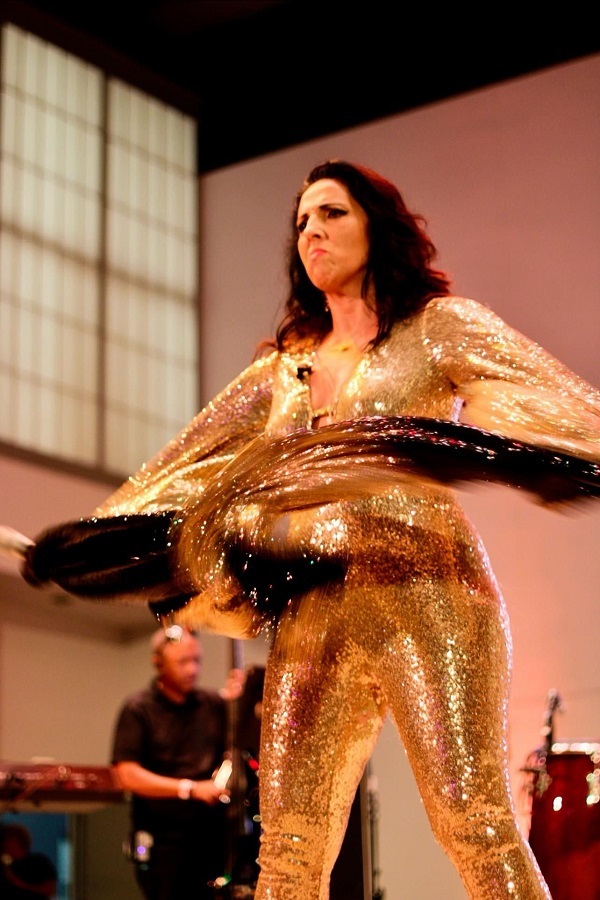
“La muñeca de la salsa”, Melina Almodóvar

At around 6:00 p.m., it was the turn of the Cuban sound known as timba, with the Julio Montalvo Orchestra and Miami’s Huracán. Once the hurricane winds that accompanied Julio Montalvo ceased, tribute was paid to the late Venezuelan percussionist Robert Vilera thanks to the staging of Vilera Son. The tribute to Vilera’s legacy featured the talents of Los Gaitanes from Panama, Avelino Romero from Venezuela, El Mola and Braidsman from Cuba, as well as Robert Vilera’s first singer, Felix Argenis.

“La muñeca de la salsa”, Melina Almodovar, was backed by Luigi Flores from Costa Rica on piano and musical direction, Johnny Fortunato from Dominican Republic on bass, Pablo Molina from Venezuela on timbales, Juan Pablo Camacho from Venezuela on tumbadoras, Carlos Molina from Venezuela on bongo, Carlos Perez from Cuba on first trombone, Ramon Benitez from Colombia on second trombone, Carlos Frank from Cuba on first trumpet and Julian Cifuentes from Colombia on second trumpet.

On backing vocals, Melina was backed by: Joe Arroyo from Puerto Rico and Freddy Lugo from Cuba. Melina gave us a first class show. As part of Melina’s performance, “El Calvito Reyes” joined her for the first time to perform the recently released single ‘Dos pa`lante’ as a live duet.

During the afternoon, the festival took place under a beautiful blue sky that kept the crowd’s enthusiasm positive. During the night, the clear Floridian skies kept the attendees dancing at full steam. Of course, to that end, the aforementioned talents kept the stage in salsa.

The festival closed with the always remembered for the classic ‘De barrio obrero a la 15’, Chamaco Rivera, who with a stellar salsa career to his credit, not only kept the audience engrossed in his impeccable staging, but also introduced us to his guest artist, his son: Christian Ray.

Melina contó con el respaldo vocal de Joe Arroyo de Puerto Rico y Freddy Lugo de Cuba

Christian delighted us with his repertoire shortly before inviting us to listen to his recently released CD entitled El legado continúa. To bid farewell to the musical day, which lasted nearly ten hours, the grand finale invited the group of singers who had paraded on stage during the day and part of the night to come in and jam with the “papa de los pollitos” (father of the chicks).

We are waiting to enjoy the next ‘Hollywood Salsa Fest’, for which the businesswomen in charge promise to throw the house out of the window. Melina and Cristina have delivered nine festivals in a row. So see you in April 2025 to dance in the tenth edition of the same.


Bella y Melina
Bella y Melina

Bella Martinez Puerto Rico

Also Read: A party of dancers at the concert to celebrate Willie Rosario’s 100th birthday
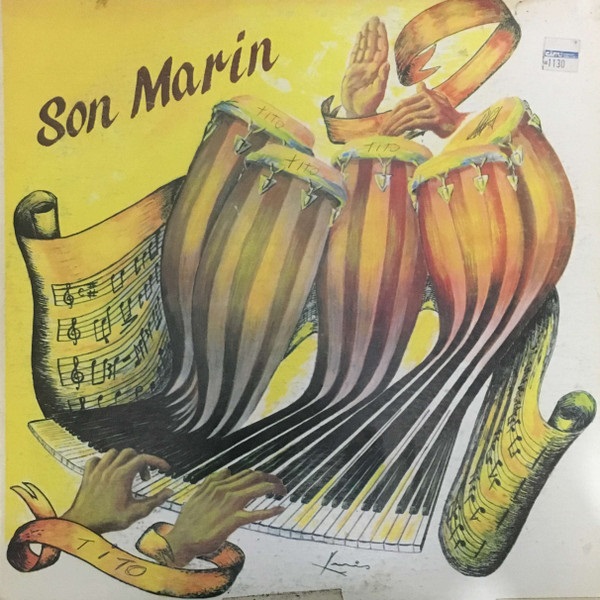
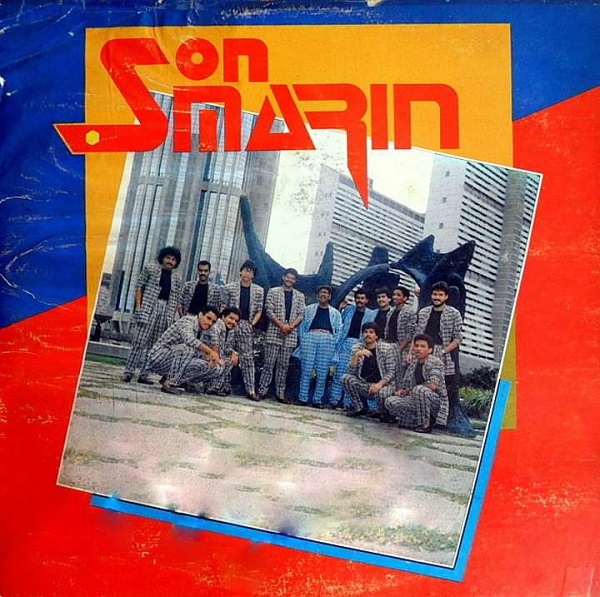
From Parroquia San Agustín del Sur is Son Marín ¡Aquí Empezó la Cosa…!

In order to delve a little into what the group Son Marín was, we must necessarily refer to the late musician Jesús Blanco or “El Pure” as everyone called him.

Jesús Giselo Blanco was his first name, born in Mirandino, but settled in Caracas when he was still a child.

To talk about his musical beginnings is to evoke part of the history of the Son in our country, since “El Pure” before arriving to the San Agustin Parish had already participated with old groups such as Conjunto Rex and the well remembered Sonora Caracas.

Son Marín ¡Aquí Empezó la Cosa...!!
Son Marín ¡Aquí Empezó la Cosa…!!

El Pure Blanco was recognized in San Agustin Marin as a true builder of musicians since, with his work as a musical artisan, besides having created the first music school in Marin, many young people were nurtured and formed with his teachings.

Jesús “el Pure” Blanco was a key character in the formation and integration of several groups in Barrio Marín, among them we remember the aguinaldo group Los Juveniles, Los Gaitetricos, Los Super Cremas, La Nueva Generación and of course his biggest dream, the “Son Marín”.

The group Son Marín had several stages, starting in 1981 when in Barrio Marín an improvised musical group was organized to receive at the International Airport of Maiquetía the Grupo Madera that was arriving from an important presentation in an International Festival in the city of Avignon, France.

That small group was formed by: Eliel Rivero (trombone), Jorge Rondón(flute), Enrique Palacio (Bass), Arnaldo Blanco(tres), Renny Mendoza (Bongó), José Luis Mendoza (Tumbadora) Luciano Reyes (singer), Pablo” Pabloco” Martínez (singer) and Jesús “Pure” Blanco was the director.

As fate would have it, that group, which was only a provisional “vente tú” organized by Pure, later became another of the emblematic groups of San Agustín, SON MARÍN.

In particular we remember pleasantly the participation of Son Marin as a representation of the San Agustin del Sur Parish, in the Afro-Caribbean Music Festival “La 5ta Esencia de la Salsa” held on June 17, 1983 at the Nuevo Circo de Caracas, by then the group had not yet recorded their first album, but we had already had the opportunity to listen to a demo with a couple of numbers that came to promote the announcer Hector Castillo in his radio program on the now defunct Radio Aeropuerto.

Son Marin
Son Marin

Over time the group grew and new instruments were added; and of course the inclusion of other musicians, such is the case of Jesus Guzman the popular “Paicosa” who enters as guitarist to later become the bassist and musical director of the group, it was the idea of “Paicosa” with the support of “Pabloco“, to expand the group’s equipment incorporating Hugo Olivero’s sax, Josue Silva’s trumpet, Randal Monasterio’s piano, while the percussion was reinforced with Juber Ramirez.

Already with a more solid group and with a view to a greater projection within the Venezuelan salsa music scene, the only thing missing was the recording of the album, which began in September 1986, with the collaboration of Mauricio Silva in the arrangements and the inclusion of several guest musicians.

Unfortunately, a month after the recording began and without being finalized, Jesús “el Pure” Blanco died, however his voice and feeling were reflected in this album that was finally released in 1987, quickly gaining strength and penetrating the taste of the music lover public after the composition of Pablo Martínez, AQUÍ EMPEZO LA COSA, a tribute to this neighborhood that has given so many important musicians, a cradle of soneros as Gonzalo Martínez says in the song.

The voice of Pure Blanco was recorded in the song LA CAÑA; all the numbers were original pieces except for the song “Sin Compromiso” by the Brazilian Chico Buarque, but with an excellent adaptation of the lyrics by Pablo Martínez and Joseito Romero.

To end this biographical sketch, I leave here part of the thanks contained in the back cover of the album from Son Marín.

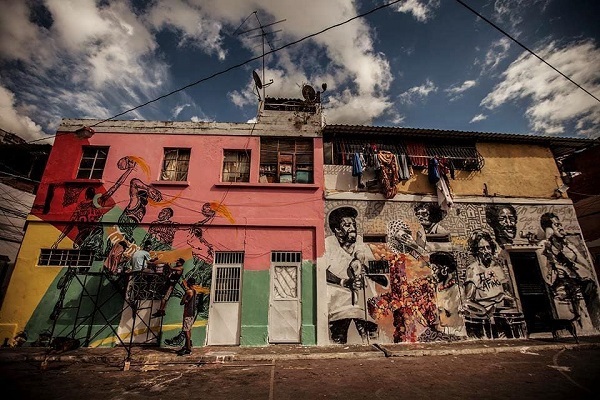
San Agustin del Sur
San Agustin del Sur

JESUS BLANCO “Pure” every joy lived with this work, makes us feel you more.

SON MARIN… This is where it all began!!! (1987) Mucer International DL-7140

SIDE A

1.- HERE I STARTED THE THING (Pablo Martínez)

2.- SIN COMPROMISO (Chico Buarque) Lyrics Adaptation: Pablo Martínez/Joseito Romero

3.- YOUR HOLY BLESSING (Pablo Martínez)

4.- EL BUHONERO (Pablo Martínez)

SIDE B

1.- LA CAÑA (Rafael Quintero/Pablo Martínez)

2.- RECUERDOS (Rafael Quintero/Pablo Martínez)

3.- VOLVAMOS A EMPEZAR (Rafael Quintero/Pablo Martínez)

4.- BENITO EL CHICHERO (Jorge Rondón)

Members:

Randal Monasterio (Piano)

Arnaldo Blanco (Tres)

Jesús Guzmán (Bass, Conductor)

Josue Silva (Trumpet)

Hugo Salinas (Trombone)

Hugo Olivero (Saxophone)

Jorge Rondón (Flute)

Jimmy Fariñas (Congas)

Fidel Martínez (Bongo/Campana)

Juber Luis Ramírez (Timbales, bongo, bell)

Gonzalo Martínez (Vocal)

Pablo Martínez (Vocal)

Jesús Blanco (Vocal)

Pablo Martínez/Gonzalo Martínez/Arnaldo Blanco/Mauricio Silva/Daniel Silva (Backing Vocals).

Guest Musicians:

José Pepe Vera (Saxophone)

Raúl Agras (Trumpet)

Mauricio Silva (Piano/Trombone)

Felipe Blanco (Conga/Güiro)

José “Cheo” Escobar (Conga)

Douglas Guevara (Tumbadora)

Daniel Silva (Bass)

Other Credits:

Arrangements and Musical Direction: Mauricio Silva

Recording Technician: Fernando Hernández

Sound Engineer: Fernando Hernández and Mauricio Silva

Executive Production: Wolfgang Roldan

General Direction: Mauricio Silva (Cortesía Sonográfica)/Son Marín (Mucer Internacional)

Recording Studio: Sonomatrix

Photos: Pedro Hernández.

Also Read: If you want to listen to Tasty Salsa tune in to Ritmo Sabor y Salsa with Nesmary J. Gómez

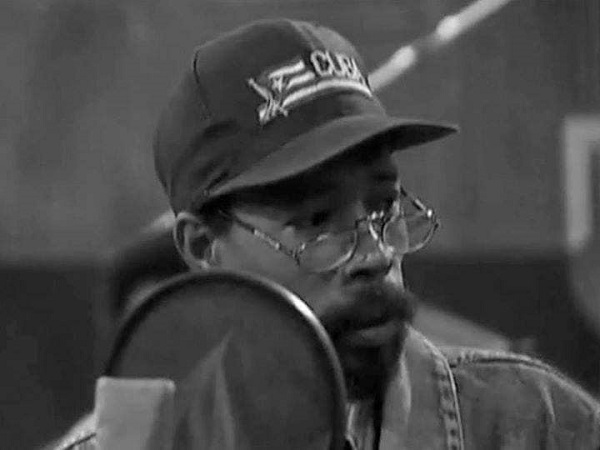
José Antonio “Maceo” Rodríguez was a faithful cultivator of Son Cubano and participated in the Afro Cuban All Stars project

José Antonio “Maceo” Rodríguez was born on April 17, 1950 in Holguín, Cuba.

Famous sonero voice leader of the group Sierra Maestra, he began his career at the beginning of the eighties of the last century with the group Sierra Maestra, integrated by former students of the Polytechnic University José Antonio Echeverría, of Havana, with which he won a televised contest of new musicians.

José Antonio Maceo Rodríguez was a faithful cultivator of Son Cubano and participated in the Afro Cuban All Stars project.

He died at the age of 55 on November 6, 2005 in Copenhagen, Denmark, of a heart attack, after giving a concert with his group at the end of a tour of Europe.

He was born on April 17, 1950 in a modest country house in the vicinity of the Antonio Maceo Sugar Mill, in Cacocun, in the eastern province of Holguin.

Relatives and neighbors say that since he was a child he loved art, music, pirouettes and attracting attention.

October 20, 1976 in Havana, together with his classmates at the José Antonio Echevarría University Center, he founded the musical group Sierra Maestra, called at that time Grupo de Sones de la Facultad de Ingeniería Eléctrica.

Those young dreamers performed in the popular contest “Todo el Mundo Canta”, where they took off on a spiral of success in Cuba and the world.

They traveled to many countries promoting Cuban music. They participated in Festivals of international relevance in Australia, Bosnia, Canada, Croatia, Cyprus, United Kingdom, Greece, Ireland, Israel, Italy, Macedonia, Mexico, Portugal, Puerto Rico, Singapore, Slovenia, Turkey, Yugoslavia and the United States.

A faithful cultivator of Son, Rodríguez participated in the Afro Cuban All Stars project, nominated for a Grammy in 1998 and parallel to the Buena Vista Social Club.

José Antonio Maceo Rodríguez

His excellent voice, comparable according to critics to that of the great cultivators of the genre, was one of the emblematic of the current Cuban dance music scene.

She began recording in 1981 her first album, “Sierra Maestra Llegó con El Guanajo Relleno”, was a silver disc and received excellent reviews. He participated in the Afro Cuban All Stars project, and parallel to the Buena Vista Social Club.

The trumpet player José Alemañy, Cubanisimo, and Juan de Marcos González, founder of the Buena Vista Social Club, were his partners in the group for years, and together they undertook the task of recovering the tradition of famous sones and soneros, revitalizing the genre at a time when other musicians were opting for salsa and more commercial rhythms.

According to the Cuban composer, José Antonio Rodríguez not only possessed a very special voice, “he also had the courage and human qualities to remain faithful to that style, the son style, which is the mother of Cuban music”.

The repertoire of Rodriguez, known as Maceo among his friends and admirers, included, in addition to the great classics of traditional son, pieces that became very popular in his voice, such as Dame un traguito ahora or Esa mujer lo que quiere es que la miren.

Maceo, although small in stature, was an immense man, someone who could not conceive where to keep the torrent of voice he displayed without ostentation, so much musicality, intonation and love for Cuban music.

José Antonio was not only a great musician, he was a great person, very loved by his closest friends and in general by the people whose affection and admiration he won since the participation of Sierra Maestra in the Adolfo Guzmán contest and that thanks to his special way of interpreting the Cuban son, great musicians such as Ignacio Piñeiro’s Septeto were born again in the popular taste.

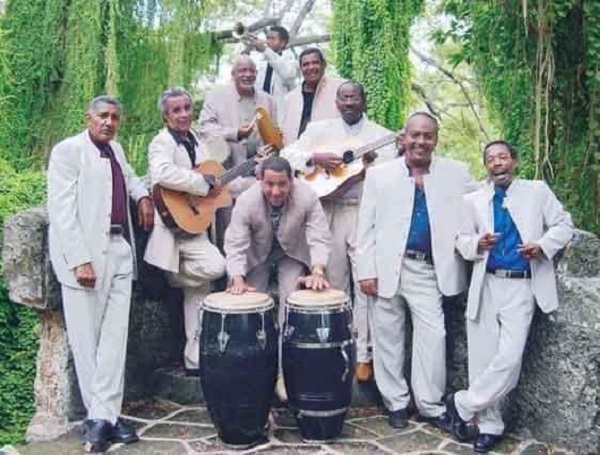
José Antonio Maceo Rodríguez y su Grupo

The singer died on November 6, 2005, just a few hours after finishing the European tour of Sierra Maestra with a concert at the Amager concert hall in Copenhagen.

With this presentation, the popular band put an end to the performance of all the Cuban artists who participated in the First International Latin Music Festival of that capital. The sonero’s remains were repatriated to Cuba, where he was buried.

Also Read: Bamboleo de Lázaro Valdés is another of those exquisite Cuban products, as well as sweet rum and mild cigars

Rey Ruiz’s ‘Contigo’ concert at the Coca Cola Music Hall in Puerto Rico was Phenomenal.

As part of his Contigo tour, Rey Ruiz returned to what he considers his musical homeland: Puerto Rico. Since August 1992, when his first album (Rey Ruiz) was released, he has not stopped singing. He affirms that from the beginning he longed for a concert on Puerto Rican soil like the one he finally achieved on March 23, 2024 at the Coca Cola Music Hall.

Rey Ruiz's 'Contigo' concert at Coca Cola Music Hall in Puerto Rico phenomenal
Rey Ruiz’s ‘Contigo’ concert at Coca Cola Music Hall in Puerto Rico phenomenal

Before the concert, we were counting on hearing the songs that the salsero’s fans turned into hits. Certainly, the Coca Cola Music Hall witnessed how the euphoria with which Rey Ruiz catapulted in the early 90’s was revived. We knew we would hear the usual hits, such as ‘No me acostumbro’, ‘Si me das un beso’, ‘Amiga’, ‘Si te preguntan’, ‘Mi media mitad’, ‘Luna negra’ and ‘Creo en el amor’. To these were added ‘El Rey del mundo’, ‘Mal momento’, ‘El hombre de tu vida’, ‘Así se compone un son’, ‘Es difícil de explicar’ and a medley that included ‘Miénteme’, ‘Estamos solos’ and ‘Eso digo yo’.

An emotional Rey Ruiz sang ‘Cuba y Puerto Rico’, a song of his own authorship, arranged by Papo Lucca, which was included in his 4th album (Destino, 1996). For this special performance he was accompanied by the Puerto Rican cuatro player Prodigio Claudio. The concert was brought to a close with a tasty rendition of ‘Mañana por la mañana’.

Rey Ruiz, whose battle cry also gave the title to one of his musical productions: Fenomenal (2000), clarifies that he is a composer by muse, and that he does not consider himself a composer by trade. However, he is a singer-songwriter by definition, and the composition that best defines him is ‘Si me das un beso’, a song that highlights the Caribbean spark that characterizes his lyrics and interpretations.

Rey Ruiz was one of the soloists who firmly established himself in the salsa scene when salsa romántica was taking over the changing spaces of Latin music. Salsa dura was evolving to give way to the new trend we know today as salsa romántica.  With the repertoire with which Tommy Villariny’s production and Jorge Luis Piloto’s pen were shaping the salsa artist’s career, the success was epic. That great takeoff in the career of the icon of salsa romántica was given with the impulse of the person Rey Ruiz calls “the daddy of the chicks”, his promoter: Edgardo Barreras.  During the concert, Rey Ruiz made a stop to thank Edgardo and the late Tommy Villariny, who was represented by his son Oscar, for the success of his career.

Rey Ruiz
Rey Ruiz

The performance at the Coca Cola Music Hall of the production by Rosalis Torres exceeded all expectations.  It had been anticipated that there would be “a unique experience, a magical night with Rey Ruiz as part of his Contigo tour.  The promise of an evening with the incomparable energy of Rey Ruiz on stage was fulfilled.  Indeed, Rey Ruiz is a legend.  His voice is unique, soft and romantic. However, that “softness” does not detract from his vocal strength, which he managed to show off accompanied by a large orchestra and symphonic sound.

The super orchestra that accompanied Rey Ruiz included Erick Castañeda on congas and musical direction, Elías Lopés, Jr. on timbales, Idelfonso Correa on bongo, Sergio Munera on bass, Héctor Ortiz on piano; Iván Odio, Mario Ortiz and Alfredo Pérez on trumpets; Alexander Zapata and Ramón Benítez on trombones; as well as Alain García, Laura Ruiz and Juan Carlos Gonzales on backing vocals. For the symphonic sound, the chamber orchestra featured Sarli Delgado on double bass and conducting the string ensemble; Leticia Medina, Olga Juliá, Stephanie Berríos Carla Berríos, Mariel Pagán and Emily Reyes on violins; Chrystal Villalongo and Gina Flaz on violas; and Keren Torres and Ruth Brin on cellos.

Rey Ruiz’s more than 30-year musical career confirms that Cuba and Puerto Rico are one bird with two wings. Rey Ruiz is the pride of Cuba and is also the pride of Puerto Rico, his home of always.

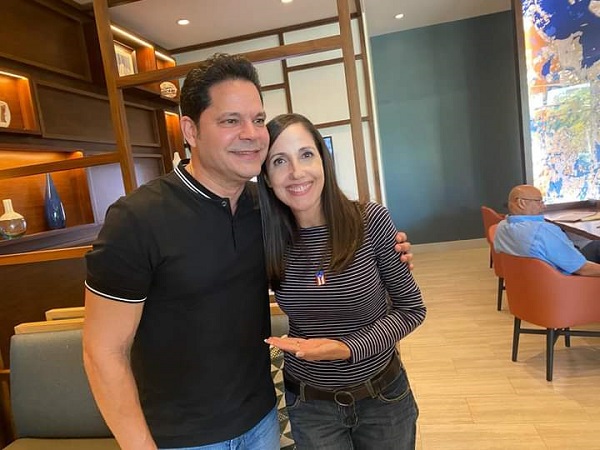
Rey Ruiz y Bella Martinez

Bella Martinez Puerto Rico


Also Read: Jerry Ferrao says in salsa key: “My life is a drum”.

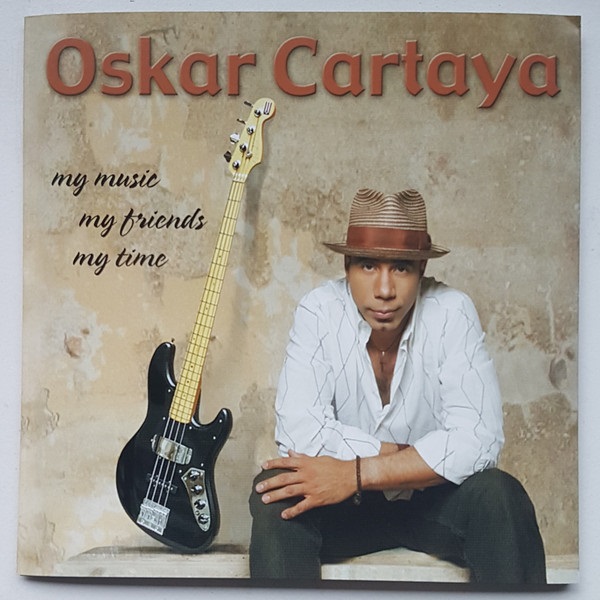
Oskar Cartaya “My Music, My Friends, My Time” He counted with the collaboration of illustrious friends such as Eddie Palmieri, Giovanni Hidalgo, Dave Valentín and Justo Almario.

Friendship and personal relationships seem to have always played a key role in Oskar Cartaya‘s recording career.

This was demonstrated Cartaya in his first recording, “My Music, My Friends, My Time” (2004) in which he had the collaboration of illustrious friends such as Eddie Palmieri, Giovanni Hidalgo, Dave Valentín and Justo Almario.

Bajista, arreglista, compositor y productor neoyorquino de nacimiento y bayamonés

This is also demonstrated by the second one, “Lifetime Friends”, which he co-led with trumpeter Humberto Ramírez and which was chosen as one of the best Puerto Rican productions of 2015.

For the bassist, arranger, composer and producer – born in New York and raised in Bayamon – connections with other people are a vital element for the development of any musician.

Those connections coupled with the tenacity Cartaya has always shown to continually improve himself as a musician allowed him to be part of the legendary progressive jazz-rock group Spyro Gyra for five years, produce albums for Willie Colón or Herb Alpert, and play with a long list of stars including Jennifer López, Christina Aguilera, Rubén Blades, Héctor Lavoe, Tito Nieves, Tania María, Arturo Sandoval, Steve Winwood and Randy Brecker, among others.

To all of them he has lent the sound of his electric bass, able to insert itself with total naturalness in modern jazz, Cuban rumba, Spanish flamenco or Brazilian cadences, but without ever losing its funky essence, which gives rhythmic impulse to the musical genre before him. For Cartaya, music is not a profession, but a passion of life.

That passion manifested itself at a very early age, when he told his Cuban-born father that he wanted to be a musician when he was just 10 years old. He completed his initial studies at the Escuela Libre de Música de San Juan, which he remembers with pride and affection.

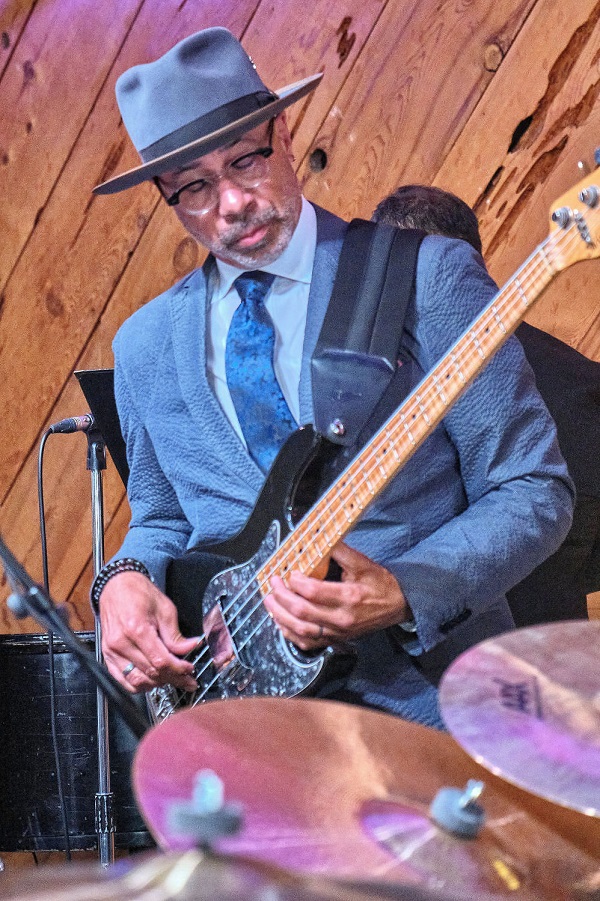
Oskar Cartaya
Oskar Cartaya

However, he has affirmed that his first real musical school were the records of Willie Colón and Héctor Lavoe, which he listened to at full volume in his room.

At the Escuela Libre de Música he was able to meet teachers and classmates who today are great masters of Latin music and colleagues of his, such as Humberto Ramírez himself. He also studied at the Conservatorio de Música de Puerto Rico.

Cartaya recalls that, although he studied chamber music in school, his real passion was Latin music…until he discovered jazz, thanks to an album by the great bassist Stanley Clarke. A new world opened up to his ears.

“I found a freedom in jazz that I didn’t find in Latin styles,” the musician said in an interview. “In salsa, for example, the maximum is when you are playing as part of a unit. Unlike jazz, whose pinnacle is when all the musicians improvise and go crazy playing, but everyone knows what they are doing.”

At 18, Cartaya moved to Los Angeles, where he began studying at the Musicians Institute of Technology. There he practiced for 15 hours a day, a devotion that brought him his first recognition: being accepted as a professor at the prestigious institution, two years after graduating from it.

However, his restless spirit and continuous desire to improve led him to make what he has described as the best decision of his life, moving to New York City. In the Big Apple – the place many consider the jazz capital of the world – he had the privilege of playing and recording with the late Argentine pianist Jorge Dalto; with Willie Colón and Rubén Blades; Celia Cruz, Tito Puente and Dave Valentín.

“I learned a lot, matured and saw firsthand what it was like to be on my own,” the bassist said in an interview about this period of his life. “If the opportunity was going to be given to me, it wasn’t going to come to my house. I would have to look for it.” And so he did.

At that time he also had the opportunity to meet the late rock icon Prince, at his Paisley Park, Minneapolis studios, and to become a member of Spyro Gyra. By being accepted into that group over 10 other bass players auditioning for the position, Cartaya realized that success belongs to those who work hard and have faith in themselves.

“I was able to show a lot of people that there’s nothing worse than feeling bad about yourself if you don’t try,” he said in an interview. “All the nights I played for free or for five bucks to earn a chance were well worth it.”

In 1997, the bassist produced the “Passion Dance” recording project for veteran trumpeter Herb Alpert, an experience he has described as a new learning experience in his career, as well as a chance to expose himself to a wider audience.

“My Music, My Friends, My Time,” released in 2004, is a fusion of Latin, Brazilian, American and Flamenco rhythms that was very well received by critics.

“My Music, My Friends, My Time”

“I wanted to do a project that would fill that gap that exists between Latin music and the world. I truly believe that the world needs to know that Latin musicians can do countless things within music, without throwing away their roots,” Cartaya said of the recording.

“Lifetime Friends,” produced alongside Ramirez, was described upon its release in 2015 as “an album of a cohesive and jubilant band,” in which all participating musicians – representatives of the new jazz generation in Puerto Rico – have a chance to stand out. “It’s the album we always wanted to make… to describe almost 40 years of friendship,” Cartaya and Ramírez indicated.

Cartaya
Cartaya

In 2017, Oskar presented the production “Bajo mundo” in tribute to the great Cuban bassist Israel “Cachao” López. This intense, exuberant album, with a multiplicity of rhythms, colors and guest musicians was distinguished as one of the most outstanding productions of the year by the National Foundation for Popular Culture.

It also won a Latin Grammy Award nomination in the category of Best Latin Jazz Album.

Source: Rafae Vega Curry

National Foundation for Popular Culture

“This biography is part of the archives of the National Foundation for Popular Culture. In our interest to disseminate knowledge about our great figures, it may be cited as a basis for research studies or as an assignment for pedagogical purposes, as long as credit is given to the Foundation and its author, if indicated. All rights reserved. The reproduction of the same in any printed, technical or mass media, with or without commercial purposes, is not authorized without prior written request to the Foundation and its consequent approval”.

Also Read: “The Sun of Latin Music” the first Grammy Award for Salsa Eddie Palmieri’s historic album

  • « Go to Previous Page
  • Page 1
  • Interim pages omitted …
  • Page 24
  • Page 25
  • Page 26
  • Page 27
  • Page 28
  • Interim pages omitted …
  • Page 61
  • Go to Next Page »

International Salsa Magazine (ISM) is a monthly publication covering salsa activities around the world and has been publishing since 2007. It is a worldwide network of volunteers coordinated by ISM Magazine. Together, we work to strengthen salsa events around the world.