• Skip to primary navigation
  • Skip to main content

International Salsa Magazine

  • HOME
  • Previous editions
    • 2026
      • ISM / April 2026
      • ISM / March 2026
      • ISM / February 2026
      • ISM / January 2026
    • 2025
      • ISM / December 2025
      • ISM / November 2025
      • ISM / October 2025
      • ISM / September 2025
      • ISM / August 2025
      • ISM / July 2025
      • ISM / June 2025
      • ISM / May2025
      • ISM / April 2025
      • ISM / March 2025
      • ISM / February 2025
      • ISM / January 2025
    • 2024
      • ISM / December 2024
      • ISM / November 2024
      • ISM / October 2024
      • ISM / September 2024
      • ISM / August 2024
      • ISM / July 2024
      • ISM / June 2024
      • ISM / May 2024
      • ISM / April 2024
      • ISM / March 2024
      • ISM / February 2024
      • ISM / January 2024
    • 2023
      • ISM / December 2023
      • ISM / November 2023
      • ISM / October 2023
      • ISM – September 2023
      • ISM – August 2023
      • ISM July 2023
      • ISM Edition June 2023
      • ISM – May 2023
      • ISM April 2023
      • ISM March 2023
      • ISM February 2023
      • ISM January 2023
    • 2022
      • ISM December 2022
      • ISM November 2022
      • ISM October 2022
      • ISM September 2022
      • ISM August 2022
      • ISM July 2022
      • ISM June 2022
      • ISM May 2022
      • ISM February 2022
      • ISM January 2022
    • 2021
      • ISM December 2021
      • ISM November 2021
      • ISM October – 2021
      • ISM September 2021
      • ISM August 2021
      • ISM July 2021
      • ISM May 2021
      • ISM April 2021
      • ISM June 2021
      • ISM March 2021
      • ISM February 2021
      • ISM January 2021
    • 2020
      • ISM December 2020
      • ISM November 2020
      • ISM October 2020
      • ISM September 2020
      • ISM August 2020
      • ISM July 2020
      • ISM June 2020
      • ISM May 2020
      • ISM April 2020
      • ISM March 2020
      • ISM February 2020
      • ISM January 2020
    • 2019
      • ISM December 2019
      • ISM November 2019
      • ISM October 2019
      • ISM Septembre 2019
      • ISM August 2019
      • ISM July 2019
      • ISM June 2019
    • 2016
      • ISM December 2016
  • Spanish
  • Download Salsa App
    • Android
    • Apple

Search Results for: Trumpet

Lengaïa Salsa Brava is killing it in Montréal

Latin talent can be found where you might least expect it and, this time we found it in the city of Montreal, Canada, a place that is cultivating an increasingly large and vigorous Latin music scene. On this occasion, we were thrilled to be able to talk to Giany-Frantz Huyghues-Despointes, who is the leader and founder of the orchestra Lengaïa Salsa Brava.

Lengaïa Salsa Brava is a 12-member salsa orchestra that was created in 2012 by Giany, who was also a trombonist and had some experience in the world of music before daring to create his own group. 

The effort of all its members has enabled them to collaborate with great performers of the genre and win important awards such as the Canada Latin Awards in the category of ”Salsa Group of the Year” in a row in 2017 and 2018 respectively. 

Lengaïa Salsa Brava has also performed approximately 30 concerts a year since its foundation and has participated in important festivals such as Toronto Salsa Festival, Festival Nuit Blanche de Montreal, Nuits d’Afrique, among others. The group was greatly helped by the fact that its members come from different countries such as French Guyana, Cuba, Colombia, Peru, Quebec, Spain and Venezuela. 

This interesting journey shows us how hard this group has worked to achieve a place within the industry and all the potential they have to achieve much more than what was obtained. Today, Giany, its founder, shares a little more about himself and his orchestra Lengaïa Salsa Brava.

Giany, founder of Lengaïa Salsa Brava
Giany Huyghues Despointes, director and founder of Lengaïa Salsa Brava

Giany’s beginnings as a musician

Although the trombone is the instrument for which Giany is known, he started playing the trumpet from 10 years of age, which is when he began his interest in this branch of the art.

An important point is that in French Guyana, the country where Giany was born, salsa is not a predominant genre, since the most played by the French Guyanese is the mazurka, which is very similar to the Haitian compas. In the case of Giany’s family, they listened to a bit of everything, including salsa.

A turning point for the artist was watching Celia Cruz singing on tv one day. The musician had never heard the Cuban singer before and it was an incredible experience for him, as her deep voice, colorful outfit and wig caught his attention at the time. 

Because of her deep voice, he thought she was a man, but his mother explained to him who Celia was and, months later, took him to a concert to see her live. That performance of ”La Guarachera de Cuba” marked him so much that he would begin to lean towards music in the future. Today, he says that Celia is a spiritual mother to him, as she was his great inspiration. 

Along with being a fan of the Cuban singer, he wanted to learn to play instruments and initially opted for the piano and the guitar, but that changed when his Spanish teacher at school gave him a trumpet and he discovered that he really liked to play it.

Some time later, he graduated from the national school of music in his country and, by the time he turned 18, Giany noticed that his musical skills excelled more with the trombone than the trumpet. This is how he decided to choose the trombone as his main instrument and so it has been to the present time.

He started playing classical music with that instrument but soon discovered that he wanted to return to the genre that captivated him when he was just a child, so he dared to create a group in France, where he studied aviation. The thing is that he went to live in Canada six months later and had to abandon the plans he had at that time.

Lengaïa Salsa Brava
The whole orchestra Lengaïa Salsa Brava

Founding of Lengaïa Salsa Brava

Giany arrived in Canada with the vision to create another group in his new country of residence, but he did not know any musicians yet, so he moved into action and started placing ads on social networks and other virtual means to communicate with artists who were interested in joining his project. 

The results were amazing and there were many musicians who contacted Giany because of their interest in the concept proposed by him. With this group, he started assembling the orchestra in order to give form to what Lengaïa Salsa Brava is today. The orchestra has six years with the same staff and format it presents to the public today.

Huge number of nationalities in Lengaïa Salsa Brava 

As for the large number of nationalities living in the orchestra, Giany has said that all ”are part of a big family” hinting that national origins have not been a problem for the smooth development of the group. In addition to that, the salsa brava is a genre widely known worldwide, so the members of the orchestra knew in advance what they were getting into.

To what we must add that these guys work or have worked in other salsa brava orchestras, so they were pretty much steeped in everything related to this beautiful music. 

Giany says it is very easy to work with his musicians because they always know how to perfectly interpret what he wants.

Lengaïa at one of its concerts
Lengaïa Salsa Brava at one of its concerts

Origin of the name Lengaïa Salsa Brava

When Giany was looking for a name for the group, he wanted something different and not very Latin sounding. He also wanted people to ask what the name meant, so we have fallen into the trap. 

The musician explained that he wanted something that refers to how explosive, energetic and aggressive his music is, so he chose the name inspired by a Tanzanian volcano called Ol Doinyo Lengaï that spews black lava. ”When you see a volcano exploding, you imagine something explosive and aggressive at the time. That’s what we want to reflect with our music”. Also, the fact that its lava is black is something different from other volcanoes, as is the group’s orchestration and technique,

Activities outside Lengaïa Salsa Brava

Giany wanted to emphasize that all the members of Lengaïa Salsa Brava have other jobs and work activities outside the orchestra. In his particular case, he works as a commercial pilot, but in his spare time, he devotes himself as much as he can to his great passion which is music. 

So far, Giany and the other members of the orchestra are unable to live solely on music, but they do their best to keep the group together and are there to fulfill Lengaïa Salsa Brava whenever necessary.

Although the orchestra has been a second employment option, it is undeniable that this is their great vocation and the engine that moves his life, so there will always be space for it.

Read also: John Narváez and Elizabeth Rojas from Salsamania

“The Sun of Latin Music” the first Grammy Award for Salsa Eddie Palmieri’s historic album

It has been 49 years since “The Sun of Latin Music”, Eddie Palmieri’s historic album, which marked a fundamental milestone in the history of Latin music by becoming the first production to win a Grammy Award in the category of Best Latin Recording, awarded on February 28, 1976.

"The Sun of Latin Music" the first Grammy of Salsa Eddie Palmieri's historic album
“The Sun of Latin Music” the first Grammy of Salsa Eddie Palmieri’s historic album

Recorded in New York at Electric Lady Studios, the album was released by Coco Records on Wednesday, September 18, 1974.

The album featured vocals by Lalo Rodríguez, who was only 16 years old at the time.

It includes: ‘Nada De Ti’, ‘Deseo Salvaje’, ‘Una Rosa Española’, ‘Nunca Contigo’, ‘Un Día Bonito’, ‘Mi Cumbia’.

“The Sun of Latin Music” proved to the world that Latin music, especially Salsa, was an honorable art form and opened the doors for many other Latin artists to receive solid recognition for their talent and work.

Eddie Palmieri

The sun of Latin music

MP, 1990. MP-3109 CD

Recorded in 1975

The Sun of Latin Music was a controversial album. It was too far from the easy formula of the middle salsa boom – what César Miguel Rondón calls the “mtancerization of salsa”.

“Ahead of its time” was one of the comments; “a piece like Un día bonito, had to be mutilated” with a 6-minute piano intro just to be able to play it on the radio; a danzón (Una rosa española) with lyrics by the Beatles; a cumbia that is not very Colombian, despite the name (Mi cumbia) and the chorus that says “very Colombian…”.

Nevertheless, this album represents the strength of the spirit of salsa: the encounter between the harshness of the street and the majesty of the most sophisticated musical sound.

One of the best albums of Caribbean music ever released.

Palmieri was always in search of something new. The Sun Of Latin Music is the culmination of a phase that began with an earlier album, Sentido (1974).

This time he chose the Panamanian Vitín Paz for the trumpet solo, Barry Rogers for his trombone and an unusual tuba, which formed a kind of basso continuo, and besides Barry, José Rodrigues, who for a long time was, and despite his absence still is, his most emblematic trombonist.

Cover of issue 36 of Latin New York magazine (April 1976) where Eddie Palmieri appears.

Ronnie Cuber and Mario Rivera were chosen as the first saxophonists in a Palmieri orchestra.

For many it is Palmieri’s best album, the most experimental and universal. One that borders on academic music, but without forgetting the dancer.

With spices like the violin of Alfredo de la Fe, who contributes his creativity everywhere, the tuba, the penetrating power of the brass, the overwhelming percussion.

Thus, Una rosa española is a modern danzón that later becomes a montuno that revives the joyful Palmerian game with the dignified uproar of trumpets, saxophones and trombones.

A young man of only 17 years, Lalo Rodríguez, who years later would become the standard-bearer of what was called salsa erotica, was chosen as the singer. Another novelty: the timbre of his voice, with a very high register, and the way he faced the montuno, which did not correspond to his age, caused different reactions.

But the most amazing thing about this 1974 album is the 14:20-minute track Un día bonito, arranged by Barry Rogers, which would keep even the most trained dancers busy. But Palmieri wasn’t just thinking about leg sets or dance floors.

The piece begins with a long piano interlude, the same structure he used in the track Adoración from the album Sentido, which would mark a new musical phase in his career.

It was more than experimental, it had some electro-acoustic music; no one had ever had the audacity to do that on a salsa album. Palmieri made the leap, he could do it, it sounded more like Stravinsky or Milhaud than Puente or Fania.

Suddenly, back in the piece, the orchestra bursts in, harder and heavier than ever, wishing the city of Los Angeles a beautiful day and San Francisco a “warm greeting,” and it is certain that Keruack and Borrough heard the call.

First Eddie Palmieri Grammy

Then Eddie Palmieri was consecrated by the intellectuals and the educated and also by the Grammy.

Eddie Palmieri

The sun of Latin music

Produced by Harvey Averne

Eddie Palmieri: piano

Lalo Rodríguez: vocals

Vitín Paz: trumpet

Virgil Jones: trumpet

Barry Rogers: trombone, tenor tuba

José Rodrigues: trombone

Ronnie Cuber: Baritone Saxophone, Flute

Mario Rivera: Baritone Saxophone, Flute

Alfredo de la Fe: Violin

Eddie Guagua Rivera: Bass

Tommy Chuckie Lopez, Jr.: Bongo

Eladio Pérez: conga

Nicky Marrero: timbales, percussion

Peter Gordon: French Horn

Tony Price: Tuba

Jimmy Sabater: Chorus

Willie Torres: Chorus

Tommy López Sr.: conga

Tracks: Nada de ti; Deseo salvaje; Una rosa española; Nunca contigo; Un día bonito; Mi cumbia

Arrangements by René Hernández and Barry Rogers

One of the most valuable pieces in the exhibition “Rhythm and Power: Salsa in New York”, which will be presented until next November at the Museum of the City of the Big Apple, is the first Grammy in the history of Latin music, awarded in 1976 to Eddie Palmieri for his album “Sun of Latin Music”.

“The Sun of Latin Music”

Sources:

Anapapaya

Salsero Radio

D j. Augusto Felibertt

Also Read: Salsa and its detractors “Caiga quien Caiga”

Déjalo, the latest track by Pedro Conga y su Orquesta Internacional

The song -composed by Pablito Ruiz- is catchy and brings us the essential style of the orchestra with the renewed touch added by singer Pedro Blasini.

Pedro Conga y su Orquesta Internacional

Within the first 16 seconds, Rafael ‘Bodo’ Torres on piano and Pedro Perez on bass create a lively and energetic musical introduction, perfectly arranged by Roberto Perez.

Pedro Conga y su Orquesta Internacional photos by Adriana Vega

Twenty seconds after the melody starts, Pedro Blasini’s voice enters accompanied by the timbales in a hushed tone.

Through this recording, Pedro Blasini establishes himself as the lead vocalist of the International Orchestra of his uncle, the notable percussionist: Pedro Conga.

The arrangement combines musical intricacy with the required flexibility to captivate listeners searching for love dramas in the salsa de golpe scene.  And when it comes to beats and cuts, within the first ten seconds of the opening minute, Jan Duclerc’s unique trumpet cut fuses seamlessly with Pedro Conga’s tumbadora, creating the perfect harmony to complement the lead vocal.

At the 1:30 mark, José Joel Díaz introduces his timbal cymbal with subtlety, underlining the prominence of the conga.  Raúl Díaz’s bongó delivers consistent accompaniment, providing a masterclass in both rhythm section perfection and percussion timing.

Pedro Conga y su Orquesta Internacional

From the 1:40 mark onwards, the harmonies of Charlie Cruz, Nino Segarra, Alejandro Villegas, and Blasini himself shine.

At minute 2:34, “Bodo’s” piano collaborates with Pedro Perez’s bass to demonstrate their musical partnership, resulting in exceptional musical performances.

The vocalist harmonizes well with the tumbadora, as the drumbeat establishes its presence from the very first minute and gradually intensifies until, during the lead-up to the third minute of the song, the coordination between the lead’s tumbadora and Héctor Morales’s trombone unequivocally proves that (as they say in Puerto Rico) “there is no one for anyone.”

It is clear that there are no bounds to the experience and innovation behind the musical production led by Julio “Gunda” Merced, Rafael “Bodo” Torres, and Santo Santiago.

Pedro Conga, a Puerto Rican musician, displays his exceptional talent through his music.

Pedro Conga
Pedro Conga

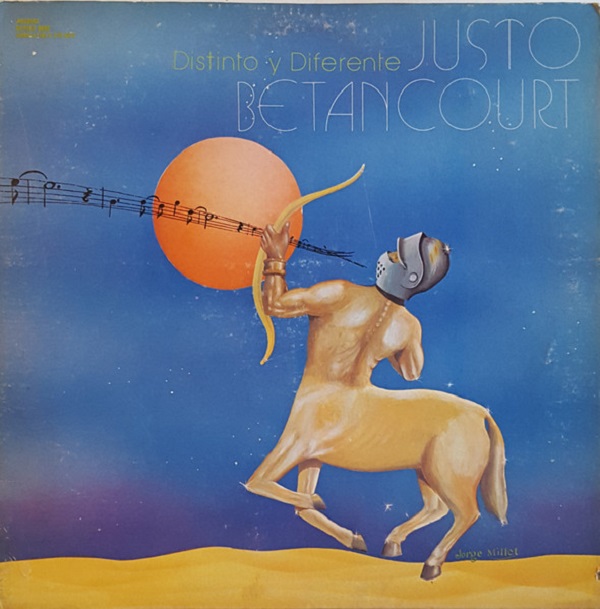
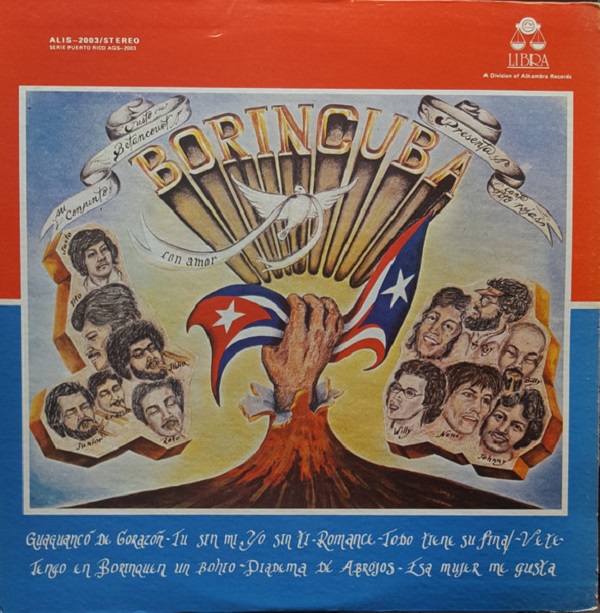
He was born in Humacao, Puerto Rico. He explains that he received the pseudonym “Conga” during the years he spent accompanying Justo Betancour. Betancour bestowed the name upon him due to his prodigious talent on the congas. Pedro “Conga” subsequently established himself as a master, doing invaluable work in fostering the growth of SALSA. His orchestra was privileged to welcome vocalists of the highest caliber, including:

He carried out this mission with unmatched finesse and superior quality.

Anthony Cruz, Tito Rojas (“El Gallo de la Salsa”), Ismael Ruiz (“Maelo”), Rafy Cruz, and Edgardo Diaz.

Among his songs are “Pienso en ti,” “Tú me niegas tanto amor,” “No te quites la ropa,” “Quiero volver,” “Te quiero amor,” and “Si supiras,” among others that have become salsa classics.

The productions he created with his orchestra achieved great success not just in Puerto Rico, but also in the United States, Europe, Colombia, Venezuela, Panama, and Peru.

Furthermore, he has received international acclaim for his productions due to the versatility and freshness showcased in each album.

Pedro Conga is renowned in the music industry for his ability to blend rhythm, flavor, and emotion into a single composition.

Bella Martinez Puerto Rico

Also Read: Ray Barretto Giant Force y A Conguero’s Conguero

[Read more…] about Déjalo, the latest track by Pedro Conga y su Orquesta Internacional

Mario Bauza

North America / United States / New York

Mario Bauza, Pioneer of Afro-Cuban jazz in New York, Clarinetist, saxophonist, trumpeter and arranger

Mario Bauzá (Havana, April 28, 1911 – Manhattan, July 11, 1993) was a Cuban saxophonist, clarinetist, trumpeter, arranger and composer.

Known above all for having been the musical director of the Machito orchestra (of whom he was also a brother-in-law), he was a pioneer of what is now known as Afro-Cuban jazz.

Mario Bauza The Legendary Mambo King
Mario Bauza Pioneer of Afro-Cuban jazz in New York

Bauzá played the clarinet in the Havana Philharmonic Orchestra. However, after traveling to New York in 1927 with the Antonio María Romeu orchestra, he was so impressed by the Big Bands of Paul Whiteman, Fletcher Henderson and Tommy Dorsey, and by the Harlem music revues, that in 1930 he decided to emigrate definitively to USA.

During the trip, he became friends with Antonio Machín. Mario Bauzá would return on the same boat in which Don Aspiazu’s orchestra was travelling, who immediately began the arrangements to record El manisero.

Upon arriving in New York, Bauzá went to live in Harlem with his cousin, the trumpeter René Endreira. Bauzá began playing the saxophone at house parties with pianist Lucky Roberts and began to absorb African-American culture.

Mario Bauza
Pioneer of Afro-Cuban jazz in New York

Between 1930 and 1931, he was a trumpeter in the Antonio Machín quartet and made important recordings with this group in New York City. Anecdotally, it is said that he had learned to play the trumpet in just two weeks.

His first jobs were with the orchestras of Cass Carr, Noble Sissle and Sam Wooding.

In 1933 he entered Chick Webb’s orchestra as first trumpet, where he ended up as music director. He then worked with Don Redman and Fletcher Henderson, eventually landing Cab Calloway.

Being in that band, Mario brought the young trumpeter Dizzy Gillespie to the orchestra.

Bauzá married Estela Gutiérrez, sister of Francisco Raúl Gutiérrez Grillo, known as Machito.

On December 3, 1940, he debuted with Machito at the Park Plaza, a dance hall, with the Afro-Cubans, later working for almost four years at the La Conga club.

Bauzá works for Machito as artistic director, taking care of the arrangements and hiring the musicians.

The style of the Afro-Cubans mixes the son montuno of Cuba with features of swing bands.

Mario Bauzá Pioneer of Afro-Cuban jazz in New York

Thanks to this, musicians like Dizzy Gillespie or James Moody introduced Afro-Cuban rhythms into jazz, starting in 1947.

He became interested in jazz when he heard Frankie Trumbauer play the saxophone performing Rhapsody in blue with the Paul Whiteman orchestra.

In the forties, Mario will develop the sound of Afro-Cuban jazz. His work as a clarinetist, trumpeter, saxophonist and arranger in the Machito orchestra constitutes one of the main pillars in the emergence and development of that Cuban genre.

Carlos “Nene” Quintero comes from a family of musical prodigies

Carlos Vicente Quintero De Jesús, better known as Nene Quintero, was born on October 21, 1946 in the Caracas neighborhood of Marín (a neighborhood of percussionists par excellence), in San Agustín del Sur.

In a family that has produced several musicians, among them his brothers the former “Madera”, Ricardo and Jesús “Chu” Quintero, who died in the Orinoco tragedy; Rafael who lives in Marseille or his nephews Luisito (the “chamo Candela” of Daiquirí), Robert and Chuíto, who live in New York.

During his adolescence he was in several groups and then he played with Los Dementes, the Venezuelan group Pan suerte de Santana with César Monge (Dimensión Latina) and Alfredo Padilla (La Salsa Mayor), Porfi Jiménez, Frank Quintero and Los Balzehaguaos, Yordano and many others.

Carlos "Nene" Quintero comes from a family of musical prodigies
Carlos “Nene” Quintero comes from a family of musical prodigies

-What would be the five main moments of his career?

Nené lists them:

1- Having worked with people I went to see at a radio station and then I got to play with them. That was in the 70’s, in a place called Playboy in Altamira, with their bunnies and everything.

I worked with Lewis Vargas and Rafael “Gallo” Velásquez on trumpets; Moscatt was the saxophonist; Willy Pérez, pianist; Jorge Romero, bassist of Aldemaro Romero’s Onda Nueva; and Marcelo Planchart on drums.

2- When I heard on the radio a song I recorded with Los Dementes: “Rómpelo”, which was very popular. I saw myself as a very famous person, I was heard on the radio for the first time.

3- When Eumir Deodato came and proposed me to go with him to the United States.

I was not in conditions to go because I was working very well, I was doing a lot of jingles, I had two children who were starting to study.

I was sacrificing something that was taking shape: my family. I told him I could go, work and come back. The surprise was when a letter arrived for a tour of Mexico and the United States.

Deodato is a very kind person, he gives you freedom to work, we communicated in “Spanglish” and “portuñol” and he loved beer.

Carlos Nene Quintero

4- Seeing Celia Cruz when I was a kid in Marin, going to visit friends like Johnny Perez, from Sonora Caracas, and some time later working with her, even in her last shows, in Montreal.

Celia’s birthday was the same day as mine, and she looked older, but as soon as she started the music and said “sugar!” she was different, she was transformed.

5- Working lately with my nephews Robert and Luisito gave me a lot of emotion: The three of us on the same stage in New York with Celia Cruz.

But there are more experiences. Eros Ramazzotti, for example. “I chose to go to New York and Miami when things got tough here. I worked with Gato Barbieri and with salsa people.

I would go back and forth, two months out and back. I was recording with a saxophonist who worked with Eros and, the following year while I was in Miami he called me for a six-month tour.

I said yes, they called me the following year again and I spent three years with Ramazzotti touring all over Europe, Brazil, Puerto Rico, Central America, Mexico and Miami.

-Any anecdotes with Ramazzotti? –

Once on his birthday he rented a track where they raced cars. We were drinking, driving, talking, talking, listening to music and they brought a cream cake for Eros.

At one point when he was very close to me with the cake in his hand, I put it in his face. It was a mess with everyone throwing things and pieces of cake at each other.

But I got the impression that he was upset and I went over to apologize and explain to him that it was something that could happen on any South American birthday, especially with a cream cake. He told me not to worry, that it was fine.

Other jobs came through Ramazzotti, such as with Jovanotti and Lucio Dalla.

-And how was it with Little Louie Vega, one of the producers and DJs of the moment?

-I met him through Luisito. We have been touring Europe, the United States and Japan for the last three years, and we recorded with Pushim, a Japanese woman, a song that was in the Japanese top ten.

Meanwhile, “Nené’s” routine continues to be more international than ever between the United States, Europe and especially France, where he has been working with a group that bears his name: Nequin Group, with whom he recorded an upcoming album.

“Working abroad is like working here, but in another language”, he reflects on the matter and says that he is preparing a method for percussionists to work with their feet as well as with their hands.

Carlos Nené Quintero con mi Signature congas (Roberto Quintero)

-What has seemed new to you lately in Europe or in these parts?

-Those jazz works in which there is no conventional group with drums or bass, like what I did with Gerry Weil and Pablo Gil at the Corp Group Cultural Center.

THE BATICONGA AND THE “MCGIVER SET”.

The baticonga is a hybrid: drums with conga. I use bass drum, hi-hat, cimbals, toms, snare and cymbals of various thicknesses.

It has a special redoblante with a rim that does not protrude from the leather so that it does not bother when hitting it like a tumbadora.

It is an idea that I have been maturing. It was born because of Yordano’s album that made him famous, Manantial de corazón, there I recorded all the percussion and when it was time to play it live we needed a drummer and two percussionists. We got the drummer, but things were missing and I started to add electronic pedals, electronic drums, octapads and to use feet and hands.

Then we did an unplugged set and it had to be acoustic with congas, bass drum, snare drum, hi-hat, cymbals.

The McGiver set is a djembe with brushes, cymbals with rivets, a conga that is just like a lid, like a tambourine, and I mount it on top of a snare drum stand and a cowbell. A set that does it all.

SIX INFLUENTIAL PERCUSSIONISTS

Alejandro Blanco Uribe and Airto Moreira: “I saw a lot of Gerry Weil with La Banda Municipal in the 70s and Alejandro as a multi-percussionist with effects and accessories.

That led me to look at Airto’s proposal and to fall in love with percussion at a time when I was playing guitar”.

Trilok Gurtu: “For his fusion of oriental music with rock and jazz. I’ve been hearing him since Oregon, and when I heard him with John McLaughlin on the live album in London my jaw dropped.”

Jack DeJohnette: “As a drummer he has a very floaty groove, he can do with the beats what he wants and the rhythm is always there.”

Tony Williams: “Another drummer. I saw a video that aroused my interest because his technique is like the one I use with the baticonga”.

Carlos Nené Quintero con mi Signature congas (Roberto Quintero).

Giovanni “Mañenguito” Hidalgo: “Since he came out the thing changed, he gave another level to the congas or tumbadoras, with him there has been a ‘before and after'”. – with Roberto Quintero and Luisito Quintero.

Also read: Argenis Carruyo is known in the music scene as “El Volcán de América” (The Volcano of America) due to the power of his voice

  • « Go to Previous Page
  • Page 1
  • Interim pages omitted …
  • Page 26
  • Page 27
  • Page 28
  • Page 29
  • Page 30
  • Interim pages omitted …
  • Page 59
  • Go to Next Page »

International Salsa Magazine (ISM) is a monthly publication about Salsa activities around the world, that has been publishing since 2007. It is a world network of volunteers coordinated by ISM Magazine. We are working to strengthen all the events by working together.