• Skip to primary navigation
  • Skip to main content

International Salsa Magazine

  • Home
  • Previous editions
    • 2025
      • ISM / November 2025
      • ISM / October 2025
      • ISM / September 2025
      • ISM / August 2025
      • ISM / July 2025
      • ISM / June 2025
      • ISM / May2025
      • ISM / April 2025
      • ISM / March 2025
      • ISM / February 2025
      • ISM / January 2025
    • 2024
      • ISM / December 2024
      • ISM / November 2024
      • ISM / October 2024
      • ISM / September 2024
      • ISM / August 2024
      • ISM / July 2024
      • ISM / June 2024
      • ISM / May 2024
      • ISM / April 2024
      • ISM / March 2024
      • ISM / February 2024
      • ISM / January 2024
    • 2023
      • ISM / December 2023
      • ISM / November 2023
      • ISM / October 2023
      • ISM – September 2023
      • ISM – August 2023
      • ISM July 2023
      • ISM Edition June 2023
      • ISM – May 2023
      • ISM April 2023
      • ISM March 2023
      • ISM February 2023
      • ISM January 2023
    • 2022
      • ISM December 2022
      • ISM November 2022
      • ISM October 2022
      • ISM September 2022
      • ISM August 2022
      • ISM July 2022
      • ISM June 2022
      • ISM May 2022
      • ISM February 2022
      • ISM January 2022
    • 2021
      • ISM December 2021
      • ISM November 2021
      • ISM October – 2021
      • ISM September 2021
      • ISM August 2021
      • ISM July 2021
      • ISM May 2021
      • ISM April 2021
      • ISM June 2021
      • ISM March 2021
      • ISM February 2021
      • ISM January 2021
    • 2020
      • ISM December 2020
      • ISM November 2020
      • ISM October 2020
      • ISM September 2020
      • ISM August 2020
      • ISM July 2020
      • ISM June 2020
      • ISM May 2020
      • ISM April 2020
      • ISM March 2020
      • ISM February 2020
      • ISM January 2020
    • 2019
      • ISM December 2019
      • ISM November 2019
      • ISM October 2019
      • ISM Septembre 2019
      • ISM August 2019
      • ISM July 2019
      • ISM June 2019
      • ISM May 2019
      • ISM April 2019
      • ISM March 2019
      • ISM February 2019
      • ISM January 2019
    • 2018
      • ISM December 2018
      • ISM November 2018
      • ISM October 2018
      • ISM September 2018
      • ISM August 2018
      • ISM July 2018
      • ISM June 2018
      • ISM May 2018
      • ISM April 2018
      • ISM March 2018
      • ISM February 2018
      • ISM January 2018
    • 2017
      • ISM December 2017
      • ISM November 2017
      • ISM October 2017
      • ISM September 2017
      • ISM August 2017
      • ISM July 2017
      • ISM June 2017
      • ISM May 2017
      • ISM April 2017
  • Download Salsa App
    • Android
    • Apple
  • Spanish

Search Results for: Trumpet

Oscar D’León’s La Crítica was founded in Caracas in 1978

La Critica by Oscar D’León

We had just returned from New York when “Chiquitín,” Oscar D’León’s longtime secretary, called us at the office to let us know there was a commotion in the “Faraón de la Salsa’s” office.

Oscar D'León's La Crítica was founded in Caracas in 1978
Oscar D’León’s La Crítica was founded in Caracas in 1978

It was about the defection of some musicians from the Orquesta La Salsa Mayor. Indeed, Leo Pacheco, Felipe Blanco, and other musicians had decided to leave for financial reasons.

The news caused a stir; Oscar had already achieved a very special sound. He had moved away from the trombones that characterized his style and had incorporated a brass section with trumpets that made a difference. Suddenly, he was without his powerful machinery. Leo and his group formed what was called Nuestra Orquesta La Salsa Mayor, and Oscar, without a second thought, reassembled his group alongside Enrique “Culebra” Iriarte.

La Crítica

No one should doubt that Oscar had a tough time, but the prestige he had gained and the popularity of the sonero allowed him to come out on top.

Paul González, the son of “El Guajiro” González, a veteran guarachero and who at the time served as manager for the now-called “Sonero del Mundo,” devised the orchestra known today as La Crítica to avoid future setbacks and to have an orchestra on hand to alternate in scheduled dances.


La Critica de Oscar D’ León

The project’s formation brought together pianist and arranger Mauricio Silva, percussionist Radamés Pimentel, and Teo Hernández, who would serve as vocalist.

Since 1978, La Crítica emerged as an exceptional group. The jazz influences infused by Mauricio Silva from the very beginning were crucial for the public to accept the band as a favorite. In that “beginning,” other significant names included “Cheo” Navarro and Gustavo Quinto, who were already known from their time with Grupo Mango.

It could be said that Teo Hernández was the newest to the scene, as he had only been “toiling” in the world of salsa for five years, although he already had a “summa cum laude” after recording with maestro Ray Pérez and his Dementes. A female voice would debut with the orchestra: Gladys Torres.

40 Years of La Crítica

There have been many setbacks and successes over 40 years.

The musicality of this successful group is to be celebrated this Saturday, June 16, at the BOD Cultural Center. The event is at 5:00 in the afternoon, when the salsa public will gather en masse.

La musicalidad de esta exitosa agrupación ha de ser celebrada este sábado 16 de junio en las instalaciones del Centro Cultural BOD.

Jorge Collazo, who was Oscar D’León’s press chief and now is La Crítica’s on their return, tells us that a spectacular night is being prepared, “an evening to remember, a show that no salsero should miss.

The original singers will be there: the sonero Teo Hernández and Gladys Torres, who will take the stage accompanied by top-tier musicians and luxury guests to celebrate, dance, and sing the well-known hits of the moment, we are talking about ‘Se necesita rumbero,’ ‘Amada ven,’ ‘La merenguita,’ ‘Madre,’ ‘Rumba rumbero,’ ‘No lloraré,’ ‘A él,’ and ‘Cruel desilusión,’ among others.”

La musicalidad de esta exitosa agrupación ha de ser celebrada este sábado 16 de junio en las instalaciones del Centro Cultural BOD.

The prestige gained by La Crítica allowed it to accompany great international soneros such as Justo Betancourt, Héctor Lavoe, Ismael Miranda, Ray de la Paz, Daniel Santos, and the legendary Celia Cruz.

This is part of La Crítica.

Also Read: Cheo Linares is a Singer, Composer, Sonero, Poet and Caraqueño

Tribute to Alberto Naranjo and his musicians

Latin America / Venezuela / Caracas

40 years of El Trabuco Venezolano A Deserved Tribute to Alberto Naranjo and his musicians

Teresa Carreno Theater. Caracas, Venezuela August 21 to 25, 2017
Collaboration and Photographs by Lysbeth Weffe

From August 21 to 25, at the Teresa Carreño Theater (TTC), in Caracas, the Tribute to maestro Alberto Naranjo was held for his 57 years of artistic life, and to the group of his creation El Trabuco Venezolano for its 40 years of founding . With a long time of preparation and a lot of love involved, as it said in the hand program and was perceived in the environment, the event had the general production of Franklin Rojas, the Grupo Madera Foundation and the Teresa Carreño Theater Foundation.
Alberto Naranjo and Noel Mijares


More than an orchestra, El Trabuco Venezolano has been an authentic Venezuelan salsa movement born from the initiative of Alberto Naranjo, a veteran drummer and arranger who has walked the trade through the most diverse tendencies and schools of popular music in the Caribbean, always counting with the direct support of the musical producer, Orlando Montiel(I).

It was at a recital conference given by César Miguel Rondón and Domingo “El Flaco” Álvarez at the Museum of Contemporary Art in Caracas, in August 1977, that El TrabucoVenezolano(2) made its public debut.It immediately became the most finished and interesting musical project known to the city of Caracas up to that time. Alberto Naranjo organized it under the concept of a big band with the idea of ​​developing a particular proposal that would differ from its similar ones in the rest of the Caribbean, with a sound that bridges salsa, jazz, funk and Venezuelan.

With seven albums released, two of them live with the group Irakere from Cuba, and having passed more than a hundred performers through its ranks, El Trabuco, more than a group in conventional terms, has been a download and meeting space for local musicians, as well as the best of schools for many of them.

Alberto Naranjo
Alberto Naranjo

He also counts among his achievements, having motivated the Caracas salsa environment of the moment, imposing a high standard that influenced the formation of the best salsa orchestras, apart from creating, in short, his own Caracas sound brand(3).

The activities of this large tribute began on Monday 21 with the talks in the Protocol Plate of the TTC: “History in Venezuelan salsa” with Franklin Rojas and “Hera & Pablo, the Venezuelan salsa dance”; on Tuesday 22, Cheo Guevara’s discussion on “Alberto Naranjo, and his historical mark” and the forum “The production of salsa content in alternative radio” moderated by Zulay Millán. They continued like this throughout the week.

Several workshops were held, among them, “Percussion Tuning” dictated by Nicolás Monterola and “Latin Percussion” by Professor Frank Márquez. Also in the lobby on the ground floor of the TTC, the following concerts were presented: Caracas Legends Ensemble, with its tribute to Eddie Palmieri, the Salsarría Orchestra, Grupo Madera, Mundito and his Orchestra La Celestial, The Big Band of San Agustín and the Orquesta Carlin.

Grupo Madera
Grupo Madera

The highlight of this week of well-deserved recognition was the Trabuco Venezolano concerts at the Ríos Reyna venue on August 24 and 25, presented by Zulay Millán and José Gregorio Acero.

Although with a room not completely full and recalling other times of splendor of a TTC that received the stars of the show from all over the world, we enjoyed two nights of memorable, tasty, lively and educational concerts, with a stage full of great musicians. and a full Alberto Naranjo, going through it and playing around more than directing the members of the big band. With the best of the best-known musicians and singers of Venezuela in the genre, with some of the original members of this group and new talents, we were able to delight ourselves in an exquisite waste of salsa, jazz and funk, lasting three hours each day.

“The teacher was narrating the stories of the different themes that they interpreted…”

Alberto Naranjo at the Teresa Careño with his orchestra "Trabuco Venezolano"
Alberto Naranjo at the Teresa Careño with his orchestra “Trabuco Venezolano”

The member musicians of El Trabuco Venezolano 2017, present at the concerts on August 24 and 25, were: Alberto Lazo (piano), José “Mortadelo” Soto (bass), William Vásquez (three), William Mora (tumbadoras), Frank Márquez (timbale), Franklin Rojas (bongo), Hugo Olivero (sax), Eduardo “Mondy” Dávila (sax), Manuel Barrios (sax), Irvin Blanco (sax), Edwin Ruiz (sax), Adrián Suárez (trombone), Eliel Rivero (trombone), Pedro Carrero (trombone), Franklin Moreno (trombone), Oscar Mendoza (trombone), Vicente Freijeiro (trumpet), Rafael Rey (trumpet), Gustavo Aranguren (trumpet), José “Cheo” Rodríguez (trumpet) , Noel Mijares (trumpet), Edgar “Dolor” Quijada (voice), Troy Purroy (voice), José Luis Peña (voice), Yeci Ramos (voice), Arturo Guaramato (voice).

The teacher was narrating the stories of the different songs they performed, referring to the fact that his musicians were chosen by meritocracy, sharing with the audience and ordering someone to shut up on more than one occasion, in a humorous tone, yes. He reminded us that they are not only dedicated to salsa and in some pieces where they did not sing, he emphasized that they were instrumental and that they could help us soar our imagination and dream.

Yeci Ramos, Juan Jose Conde, Edgar "Dolor" Quijada, Jose Luis Peña, Troy Purroy
Yeci Ramos, Juan Jose Conde, Edgar “Dolor” Quijada, Jose Luis Peña, Troy Purroy

The great experience of this meeting of musicians that has been El Trabuco Venezolano was reflected in a repertoire of 13 songs, including originals, emblematic and premieres, which they gave us.

They began with the songs “Yo Soy La Rumba” (Marcelino Guerra) with the solo voice of Troy Purroy and a timpani solo by Frank Márquez, “Bravo Rumbero” (José “Cheo” Navarro) sung by Edgar “Dolor” Quijada, “ La Negra Tomasa” (Guillermo Rodríguez Fiffe) in the voice of Arturo Guaramato, “Tres Días”, an original theme by Chucho Valdés and ceded to El Trabuco, sung by José Luís Peña, with the participation of the dancers Hera and Pablo. At this point, the entire audience had warmed up, and there was even a couple from the public who danced in the hall from the beginning of the concert until the end, both days.

The night continued with the emblematic “Almendra” (Alberto Barroso). This theme arranged by Naranjo for Arturo Sandoval 46 years ago, featured the masterful participation of Noel Mijares -Venezuela Big Band Jazz, Desorden Público- on trumpet, interacting with great complicity with the maestro. It followed with a premiere, “Alna’s Mambo” an instrumental composition, subliminal as Naranjo described it.

Yeci Ramos, Juan Jose Conde, Edgar "Dolor" Quijada, Jose Luis Peña, Troy Purroy - Photo
Yeci Ramos, Juan Jose Conde, Edgar “Dolor” Quijada, Jose Luis Peña, Troy Purroy – Photo

The concert continued with “Gongo Blues” (Eduardo Cabrera), a theme in which the extraordinary solos of Eliel Rivero on the trombone, Gustavo Aranguren on the trumpet, Manuel Barrios on the saxophone and Alberto Naranjo pleased us playing the kettledrum. . He followed up with the instrumental “El Ojo del Huracán,” a Latin jazz combo, which was written in the early ’70s and still sounds weird, Maestro Naranjo said.

Then with the song “Oye como va” (Tito Puente) the rumba was lit up, the lights in the room were turned on and hardly anyone could keep up without stopping and dancing. In the song “El Hijo del Sonero” (Ricardo Quintero) Yeci Ramos sang, in “El Cumaco de San Juan” (Francisco Delfin Pacheco), Arturo Guaramato and in “Compañeros” (Ricardo Quintero), Juan José Conde, these three songs they were accompanied by the drums of Grupo Madera.

“Imágenes Latinas” (Bernardo Palombo – Andy González), was the theme chosen as the finale, a piece that has become a cult object among music lovers, the salsa audience and lovers of Latin jazz, according to the words of connoisseur José Orellán .

It featured the extraordinary participation of Adrián Suárez in the trombone and bodyguard solo, and the interpretation of the son player Edgar “Dolor” Quijada.

Alberto Naranjo in his tribute

At the concert on Friday 25, El Trabuco Venezolano and its creator were declared CULTURAL HERITAGE OF THE NATION by the Institute of Cultural Heritage (IPC) and the Ministry of People’s Power of Culture of Venezuela.

With the hope that this experience can be repeated in other theaters in the country and the world, we congratulate the organizers, Alberto Naranjo and the musicians of El Trabuco Venezolano for having received such well-deserved recognition as Cultural Heritage of the Nation.

Notes: (1) and (2) The salsa book. Chronicle of urban Caribbean music. Cesar Miguel Rondon. Ediciones B Venezuela SA., 2007. (3) Taken from the Caracas Exhibition. Ciudad del Son, montage and texts by Alejandro Calzadilla, at the La Estancia Cultural Center, belonging to the company Petróleos de Venezuela (PDVSA La Estancia), September 2017.

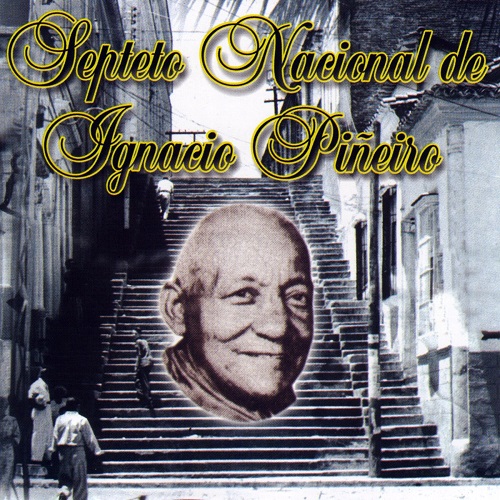
Ignacio Piñero Septeto Nacional has played an important role in Cuba’s music for more than seven decades

Founded by Havana-born bassist and vocalist Ignacio Piñero in 1927, the Septeto Nacional De Ignacio Piñero has played an important role in Cuba’s music for more than seven decades.

Fundado por el bajista y vocalista nacido en La Habana Ignacio Piñero en 1927

Pioneers of son, a rhythmic blend of African and Cuban music that evolved into salsa, mambo and Latin jazz, the group was the first son band to incorporate the trumpet as the main instrument.

Ignacio Piñero’s Septeto Nacional gained worldwide recognition with its performance at the 1928 Universal Exposition in Seville, and was reportedly the first group to mention “Salsa” in a song “Echale Salsita” recorded in 1933. The song composed by Piñero, was adapted by George Gershwin for the opening theme of his “Cuban Overture”.

Since Piñero’s death in 1968, after 41 years at the helm of the band, the Septeto Nacional De Ignacio Piñero has been led by a series of leaders.

Guitarist and composer Rafael Ortiz, who took over after Piñero’s death, bequeathed the position to vocalist Carlos Embale in 1982.

After leaving the group due to illness in 1998 Embale’s leadership was inherited by guitarist Richard Aymee Castro. True to their original musical roots, Ignacio Piñero’s Septeto Nacional continues to offer a danceable blend of montano, merengue, bolero, rumba and cha cha cha. Craig Harris.

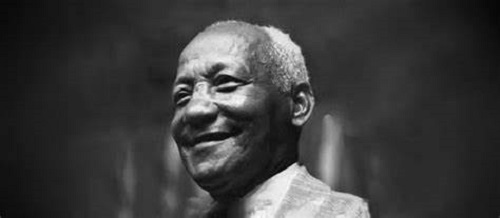
Ignacio Pineiro
Ignacio Pineiro

Ignacio Piñero was one of the Pioneers of Son Cubano

In 1906 he already knew and had assimilated the different toques of the African cabildos that existed in the neighborhood of Pueblo Nuevo, which he later incorporated into some of his creations.

He began his artistic career with the group claves and guaguancó El Timbre de Oro, later he directed Los Roncos de Pueblo Nuevo, in which he developed as a decimist and director, at the same time he took his first steps as a composer.

From this stage are: Cuando tú, tu desengaño veas, Dónde estabas anoche, El Edén de Los Roncos, Mañana te espero, niña. Later he joined the group Renacimiento de Pueblo Nuevo.

To the folkloric values that Piñeiro cultivated in these groups, he contributed a wider melodic-harmonic development and a greater depth and poetic flight.

In 1926 he was one of the founders, together with María Teresa Vera, of the Sexteto Occidente, with which he made his first tour to the United States in order to record an album with this group.

In 1927 he founded the Sexteto Nacional, formed by Ignacio Piñeiro, director and double bass; Alberto Villalón, guitar; Francisco González Solares, tres; Abelardo Barroso, lead vocals; Juan de la Cruz, tenor; Bienvenido León, baritone and maracas, and José Manuel Carrera Incharte (El Chino), bongo; that same year trumpeter Lázaro Herrera joined the group. With this septet he traveled to New York, where he recorded his first works.

In 1929 he participated with the Septeto Nacional in the Fair-Exposition of Seville, Spain; in that country they were hired as exclusive artists by the company SEDECA, and toured other cities of that country: Vigo, La Coruña, Santander, Madrid and Valladolid; in addition, they performed in the theaters Torero, Jovellanos, the Cine-Teatro Grado, and the cabaret Maicú, all in Madrid. In 1930 he was one of the founders of the National Association of Cuban Soneros.

Pioneros del son, una mezcla rítmica de música africana y cubana

They performed at the Sans-Souci cabaret (1930); in 1931 they performed at the Lavín and CMCG radio stations; in 1932, at the Dos Hermanos Hotel, he premiered Buey viejo; that same year the American composer George Gershwin came to Havana, at the CMCJ radio station he listened to Piñeiro’s son Échale salsita, from which he later used the theme played on the trumpet in his Cuban Overture.

In 1933 he performed at the Fair-Exhibition A Century of Progress, held in Chicago, United States.

In 1934 Piñeiro retired from the septet, which from 1935 was directed by trumpeter Lázaro Herrera. In 1954, Piñeiro reappeared as leader of the septet, with which he appeared on the television program Música de Ayer y de Hoy.

As a composer, Ignacio Piñeiro broke, although he took elements from the form of the oriental son, in which its creators used the quatrain and the tenth; an example of this break is his son Buey viejo, from 1932:

Carretero no maltrates a ese pobre buey tan viejo, que ya doblbla la cabeza por el peso de los tarros, y por senda de guijarros va tirando la carreta, y nunca llega a la meta, término de su dolor.

Piñeiro was one of those synthesis cases that managed to capture, develop and express the full richness of the son.

The structural modifications, the cadence, the rhythm and the use of refined melodies and lyrics, achieved by this creator and interpreted by the Septeto Nacional, make it possible to say that the work of this singular artist, although he did not mark the boundaries of son (which corresponded to the Sexteto Habanero), he did turn it into a son that today we can call classic, which became a model for its further development.

When Ignacio Piñeiro founded the Septeto Nacional, his purpose was to be a high exponent of the Cuban son and its various variants, he himself made use of those variants, composing guajira-son, canción-son, afro-son, so he worked with the elements offered by the oriental son, to which he gave a broader treatment, both musically and literary.

According to Miriam Villa: “If we analyze the organization of the literary text, we observe in his work the formal use of metrically heterogeneous links subjected to rhythm, characterized by the presence of accented and unaccented elements within the system of units that are repeated at intervals between them.

Piñeiro must not have been concerned about the meter in the text as a pattern, since through the rhythm of the composition he achieves the contrast relations, making the change of meter express a change in the thematic movement, either from intermittences or accentuations or sometimes both, which give it different semantic nuances and alternations of tensions and distensions.

And elsewhere Villa states: “Another aspect that in relation to the literary text is reflected in Piñeiro’s creative work is that of the thematic contents; these are shown from a diversification with greater scope in relation to his contemporaries.

His work can be divided into multiple themes among which are love, homeland, philosophical reflection, politics, the bucolic, the infantile, expressed in a variety of forms: satirical, apologetic, humorous and with greater depth than in the sonorous production that preceded him and even with which he shared.

With the Septeto Nacional, Piñeiro appears in the musical short El frutero, and in the film Nosotros la música, by director Rogelio París.

Ignacio Piñeiro Septeto Nacional

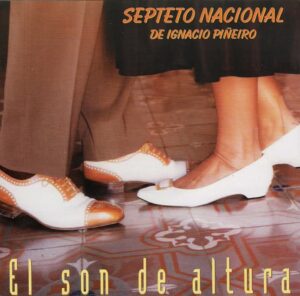
Septeto Nacional de Ignacio Piñero El Son de Altura

El Son de Altura (1998)

Tracks:

  1. Mayeya – No Juegues Con Los Santos (Son) (I. Piñeiro)
  2. Bardo (Bolero-son) (I. Piñeiro)
  3. Lejana Campiña (Guajira-son) (I. Piñeiro)
  4. Canta La Vueltabajera (Guajira-son) (I. Piñeiro)
  5. Guanajo Relleno (Guaracha-son) (I. Piñeiro)
  6. Esas No Son Cubanas (Son) (I. Piñeiro)
  7. Suavecito (Son) (I. Piñeiro)
  8. Alma Guajira (Guajira-son) (I. Piñeiro)
  9. Castigador (Son) (I. Piñeiro)
  10. Échale Salsita (Son-pregón) (I. Piñeiro)
  11. EI Viandero (Son-pregón) (Ernesto Muñoz)
  12. Son De La Loma (Son) (Miguel MGllamoros)
  13. Trompeta Querida (Boleró-son) (Lózoro Herrera)
  14. La Mujer De Antonio (Son) (Miguel Matamoros)
  15. La Cachimba De San Juan (Son) (l. Plñeiro)
  16. EI Alfiler (Son) (l. Plñeiro)
  17. Noche De Conga (Son) (l. Plñeiro)
  18. EI Paralitico (Son) (Miguel Matamoros)

By:

EcuRed

Dj. Augusto Felibertt

L’Òstia Latin Jazz

Also Read: From Cuba El Septeto Son de Nipe vienen Abriendo Caminos

North America / May 2025

EG interview May 2025Thumbnail Eduardo Ron Fondo BlancoThumbnail Rudy Furlan from Los Boleros Latin BandThumbnail John y Liz San Francisco Salsa FestivalThumbnail David HardimanPBS

Thumbnail about the salsa museum

Las Maracas promo

Martinez attorney

Directory of North American nightclubs

Canada flag
CANADA

Ontario, Canada
ONTARIO

Canada, Vancouver
VANCOUVER

United States flag
UNITED STATES
California US circular flag

CALIFORNIA

Florida circle flag
FLORIDA
Illinois circle flag

ILLINOIS

Michigan Circle flag

MICHIGAN

NJ circle flag

NEW JERSEY

New York Cicle flaga

NEW YORK

Ohio State
OHIO

Pennsylvania Circle Flag
PENNSYLVANIA

tEXAS CIRCULAR FLAG
TEXAS

Virginia Cirular Flag
VIRGINIA

Washington DC circle flag
WASHINGTON DC


The multifaceted Aymée Nuviola delivers her ‘Corazón Sonero’ to Puerto Rico, at the historic Tapia Theater in Old San Juan

Pete Perignon’s orchestra kicked off Aymée Nuviola’s concert, entitled Corazón Sonero, with a powerful Latin jazz introduction. During the first minute, the instrumental melody settled into a salsa key, giving way to the voices of Lorna Marcano and Ricely Colón, who chanted: “Yo te invito a bailar y a gozar con Aymée, la sonera del mundo” (I invite you to dance and enjoy with Aymée, the sonera of the world). The chorus duo of Marcano and Colón prepared the theater for the triumphant entrance of the voice of La Sonera del Mundo.

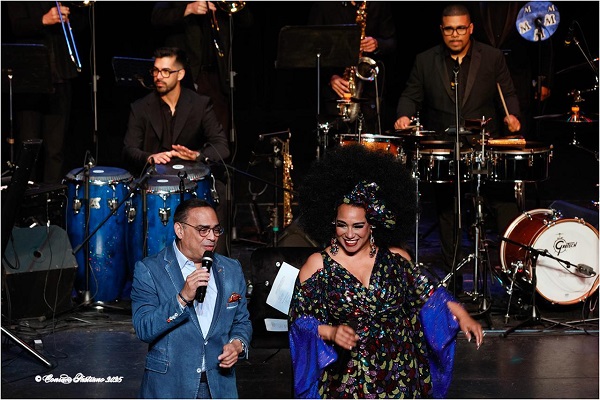
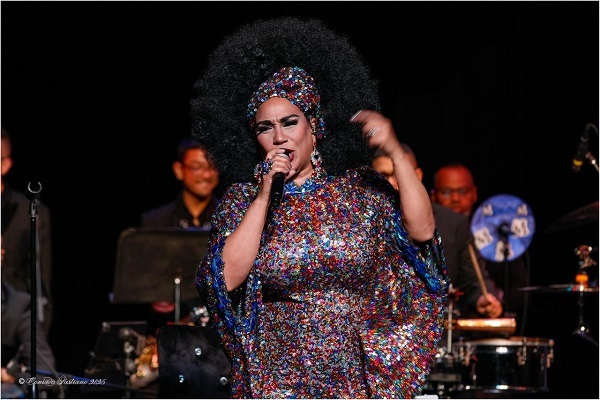
La multifacética Aymée Nuviola Imágenes Conrado Pastrano

As the curtain rose at the historic Alejandro Tapia y Rivera Theater in Old San Juan, the stage design by José “Quenepo” Ramos Vega, which revealed two transparent fabric borders held in the middle by an imposing white star, caught the attention of the audience. The red of the triangle of the Cuban flag was represented by the pendant unfurled to the left of the star, while the cloth representing the Puerto Rican flag was held on the right hand side of the same star. The inspiration of the design demonstrates that the Cuban and Puerto Rican flags are fraternal twins.

The opening lyric that resounded in the theater, which was filled to capacity, with the vocal power of Aymée Nuviola read: “A little bit of good salsa, a little bit of pure salsa, so that new people, get to know our culture”. From then on, the music obeyed Nuviola’s command, singing: “Let the clave get into your body, let the conga and the bongo move the floor”. Sure enough, three hours later we were still letting the stage delivery of the musical team continue to move the floor. Pete masterfully directed: Jean Carlos Camuñas on tumbadoras, Carlos Pagán on bongó, campana, güiro and maracas, Miguel Camilo on piano, Jorge Rivera on bass, Pedro Marcano and Víctor Ambert on trumpets, César Ayala and Léster Pérez on trombones and Saviel Cartagena on tenor and soprano saxophones.

Ten minutes into the music under the direction of the leader of the generation of the present, as timbalero Pete Perignon is known on Puerto Rican soil, Aymée greeted the audience with a heartfelt, “¡Buenas noches, Puerto Rico!” She thanked the attendees in a candid manner for joining her, while making jokes about how heavy her dress was as she elegantly adjusted the flounce and wings of her sleeves. She also commented on the design of the theater, inaugurated in 1832.

Gilberto SantaRosa y Aymée Nuviola Imágenes Conrado Pastrano

That first conversation with the audience served to connect with a: “we are survivors”, in clear reference to the COVID-19 pandemic, shortly before quoting Celia Cruz saying: “As Celia said so well: ‘Thank you Puerto Rico, for lending me your flag’. She also recognized actor Willy Denton, who played Pedro Knight when Aymée impersonated Celia Cruz in the soap opera Celia and who was among those present.

Nuviola boasted of having reached the fifth floor, as she recounted that she was going to record her version of ‘El ratón’ with Cheo Feliciano, whose unexpected death thwarted the long-awaited collaboration. However, Aymée decided to record it anyway, in order to pay tribute to Señor Sentimiento. The evening’s repertoire included: ‘Un poco de salsa’, ‘Salsa con timba’, ‘Yo sé que es mentira’, ‘El ratón’, ‘La tierra del olvido’ and ‘La gota fría’.

Many remember Aymée for her character of Celia Cruz in an acting performance that marked “a before and after” in the singer’s career. This was acknowledged by the actress, shortly before paying tribute to Celia, with her versions of ‘Cúcala’ and ‘Quimbara’, in addition to performing a medley of some of the songs with which Celia was crowned the Queen of Salsa. The medley included ‘Toro mata’ and ‘Bemba colorá’, among others.

The concert included a bohemian part during which Aymée accompanied herself on the classical piano to share with us her passion for the filin. The selected repertoire was: ‘Obsesión’, ‘Bésame mucho’, ‘Me faltabas tú’, ‘Perfidia’ and ‘Lágrimas negras’.

Before performing ‘El espacio’, of her own composition, and accompanied by Miguel Camilo on piano, Aymée said that the song was inspired by “someone else’s skeleton”, as the composer described it. Aymée emphasized that ‘El espacio’ is not dedicated to her husband. Between jokes and laughter, the sonera shared with those present her love story with Paulo Simeón, while acknowledging the presence of Fabio Díaz Vilela, who was the owner of the place where the couple met more than 14 years ago. Aymée expressed her gratitude to Fabio, for also having been a great support for the career of the producer, “from day one”.

Aymée Nuviola Imágenes Conrado Pastrano

The climax of the concert came as the sonera took off ‘El cuarto de Tula’, Gilberto Santa Rosa -who was among the attendees- went up on stage to duet with Aymée, between each soneo to describe the scope of the talent of the Cuban who gave her sonero heart to Puerto Rico. El Caballero de la Salsa was also able to tell La Sonera del Mundo the fascination that the Puerto Rican public has for her. For their part, Aymée’s soneos expressed to Gilberto the admiration she has for him for being “a great maestro”.

The repertoire of this last section included the songs ‘Fiesta’ and ‘El manisero’, which incorporated correspondences between the singer and the pianist. The coda of ‘El manisero’ coincided with the closing of the curtain, while the audience shouted “another, another, another”. The ñapa corresponded to ‘Chan chan’, a song included in the album that won Nuviola a Grammy for his production A Journey through Cuban Music. The interpretation was sprinkled with the strength brought by the trumpets of Pedro Marcano and Víctor Ambert, along with the trombones of César Javier Ayala and Léster Pérez. Chan Chan’ announced the farewell with which Aymée Nuviola’s energetic “God bless Puerto Rico” resounded as the curtain came down on her first solo concert on Puerto Rican soil. For my part, I reciprocate: “God bless Aymée Nuviola and her team (including Paulo Simeón and Luis Solís)”.

Here in the Island of Enchantment we are pleased to know that Corazón Sonero has consolidated this high-end artist, whom we already consider our own.

Bella Martinez Puerto Rico

Images: Conrado Pastrano

Also Read: Mel Martinez I come from Puerto Rico and Puerto Rico is Salsero

  • « Go to Previous Page
  • Page 1
  • Interim pages omitted …
  • Page 6
  • Page 7
  • Page 8
  • Page 9
  • Page 10
  • Interim pages omitted …
  • Page 55
  • Go to Next Page »

International Salsa Magazine (ISM) is a monthly publication about Salsa activities around the world, that has been publishing since 2007. It is a world network of volunteers coordinated by ISM Magazine. We are working to strengthen all the events by working together.