
Search Results for: Van+Van
Europe / December 2025
North America / December 2025
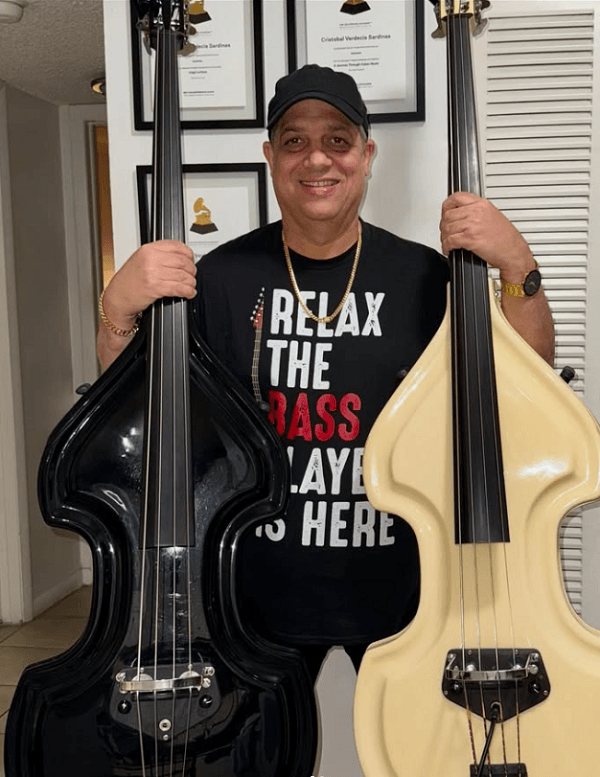
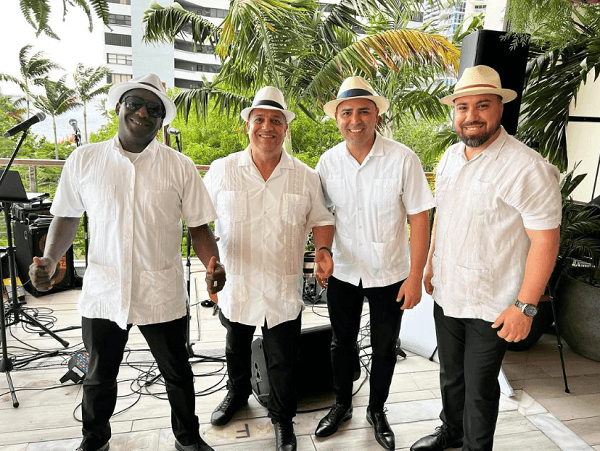
Cristobal Verdecia and his quartet Son Qba in Miami
As we all know, Cuba is an endless source of talent and never tires of proving it. Today, we are really honored to be able to talk to one of its greatest exponents in the city of Miami and it is arranger, producer, bandleader, and bassist Cristóbal Verdecia, who very kindly agreed to talk to us for a few minutes about his life and career both in Cuba and in the United States, his home for more than 10 years.

Cristóbal’s beginnings and inspirations for entering the world of music
The first reference that Cristobal had at a musical level was his uncle Israel “Kantor” Sardiñas, who was the vocalist, bassist, and pianist for the legendary band Los Van Van. The artist always wanted his nephew to learn to play instruments, more specifically the piano, but Cristóbal had other hobbies at the time and did not pay much attention to him. Then, in 1982, Sardiñas packed suitcases and left Cuba in search of better opportunities, but not before leaving his piano, bass, and guitar to the young Cristóbal to use them in his place.
It was then that he finally became truly interested in music, and the instrument that most caught his attention at the time was the bass. Seeing this sudden love for the instrument, Cristóbal’s father decided to enroll him in the Guillermo Tomás Music Conservatory when he was about 10 years old. He greatly improved his skills with the bass and began playing with local jazz bands, but his academic training was not yet complete.
Some time later, he enrolled at the Ignacio Cervantes Conservatory, where his teachers, in his own words, were two of the best bassists to come from Cuba: Silvio Vergara, now deceased, and Carlos Del Puerto. At this institution, he studied electric bass and double bass.
From there, Cristóbal began playing with increasingly prestigious bands such as Pachito Alonso y Su Kini Kini, Paulo FG y Su Élite, Adalberto Álvarez y Su Son, Havana D’Primera, among many others. Being with Pachito, he had the opportunity to share with artists of the stature of Roberto Hernández “Robertón” (current Los Van Van singer), “El Lele,” the Mengual twins, among others. It was Robertón who gave him some advice about how to improve the quality and raise the level of his work.

In the case of Paulo G Y Su Élite, he had the opportunity to serve as musical director for about five years in the band, which provided great learning for the future.
Subsequently, Alexander Abreu, director of Havana D’Primera, had the idea of forming his own band with the best musicians in Cuba and that each musician had a substitute. That was where Cristóbal joined and became part of the first album, “Haciendo Historias.”
Move to the United States
When Cristóbal made the decision to leave Cuba, the first country he visited was Mexico, where he spent about four years and also played with many other bands. However, the idea of forming his own project was already on his mind for some time.
When he finally turned this idea into reality, the artist and his band accompanied singers who arrived alone, which provided him the expertise to face the future professional challenges that awaited him.

Once his cycle in Mexico concluded, he moved to Miami in 2012 to continue growing in music, as he believed that the city offered him an opportunity that his previous country of residence did not. One of the first things he wanted to do was to revive his quartet Son Qba, which he had started in Mexico, but he was advised to take the time to learn how everything worked there first and then follow the path he wished.
This is how Cristóbal also managed to play with several local artists and bands to understand the dynamics of the place, such as Tony Succar, Issac Delgado, Timbalive, Aymée Nuviola, Grupo Niche, Gonzalo Rubalcaba, Albita Rodríguez, Buena Vista All Stars, among others. All this path traveled finally led him to be able to resume Son Qba with the full works in 2019.
Today, Son Qba consists of our guest Cristóbal Verdecia, tresero Franklin Reytor, percussionist Marciano Hernández, singer and guitarist Julio César Rodríguez, and singer José “Pepito” Gómez.
Read also: Gabrielito Y La Verdad giving everything in Los Angeles and beyond
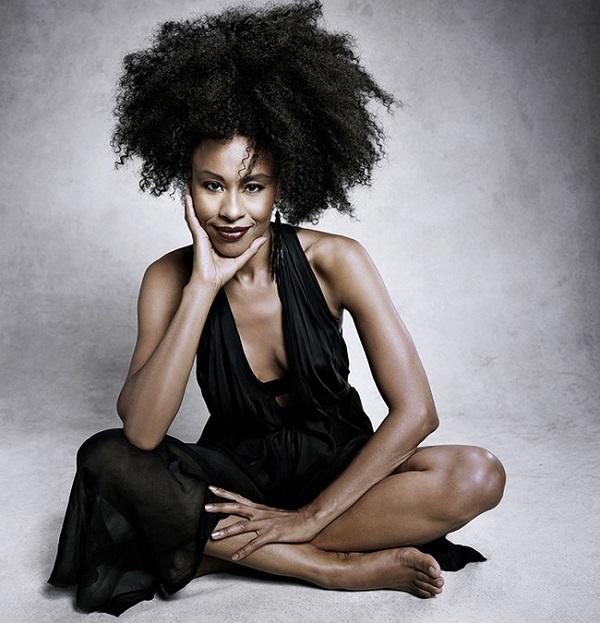
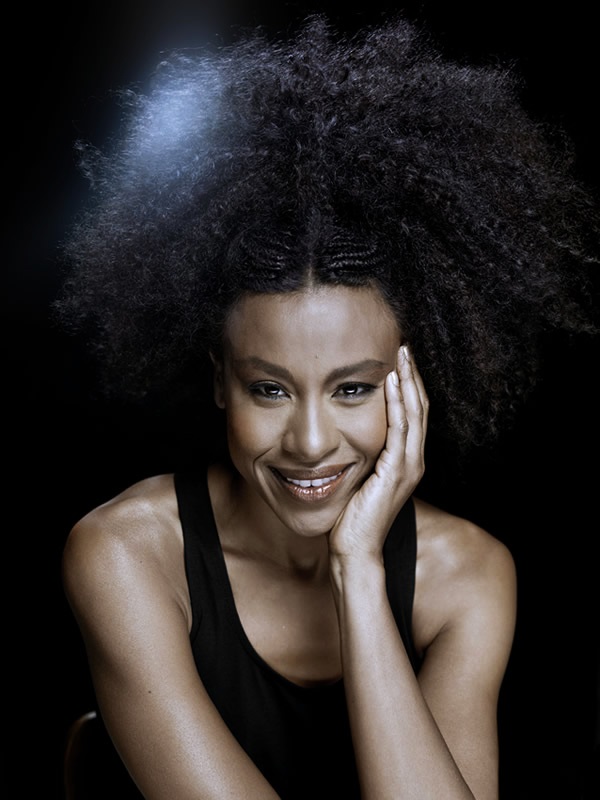
Malia The Energy That Allows The Blues To Have A Soul, A Voice
Malia (born in 1978) is a singer from Malawi. She has released seven studio albums. Her mother is Malawian and her father is from the United Kingdom. She moved to London in her teens.
After finishing school, Malia dedicated herself to music. She worked as a waitress while organizing a backing band, singing ballads and classic jazz in London bars and clubs.
During a visit to New York, she heard a pop-jazz track sung in French by vocalist Liane Foly, produced by André Manoukian. She contacted Manoukian to ask for his help, and they began working on her 2002 debut album, Yellow Daffodils. Although the release included English lyrics, it achieved recognition in France and Germany.

Her subsequent releases, Echoes of Dreams (2004) and Young Bones (2007), were highly acclaimed among jazz fans across Europe. Malia is known for her expressive voice. From the beginning, she found her way to the stage and her singing style flirted with sounds from the 1960s and 1970s.
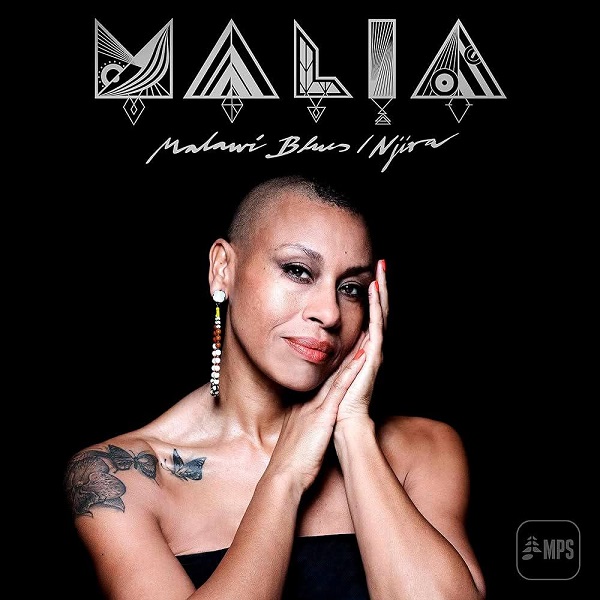
Her role models include Billie Holiday, Sarah Vaughan, and Nina Simone. In 2013, she received the Echo Jazz Award for “International Female Vocalist of the Year.” She explored her African roots in the album Malawi Blues/Njira, released on MPS in 2016. In her 2018 release, Ripples (Echoes of Dreams), Malia offers another perspective on her previous album, Echoes of Dreams. Her latest release, The Garden of Eve, is dedicated to the blues.

“My heart beats for many things. I think that is because I come from a marriage of mixed heritage. I have never felt like I am one thing or the other; I am more of a fusion of both, and my music reflects that. I feel I am evolving as a human being, and although music is simply a medium for expression, I like the idea of resonating with it, if its rhythm suits me.
The blues has always been dear to my heart: it is a cathartic, precious, and profound experience, whether playing it or hearing it on the radio. When I first heard Billie Holiday sing ‘Blue Moon,’ I could feel it in every cell of my body.
She had a very powerful effect on me. Sentimental blues, originating in tragic situations, sometimes even reflecting my own experiences… No matter how bad family, friends, politics, lovers, governments, or society may be, they can never destroy the forces of good in this world.
And as time passes, I find more and more of the truth that is rooted in my soul. And I finally feel mature enough to understand this wonderful musical tradition, because the blues means life.”
And if the blues means life, Malia is the energy that allows the blues to have a soul, a voice. It has been a long time since a contemporary artist paid such a beautiful homage to the blues—a style that, in the year 2020, deserves to have the dust shaken off.
Marshall McLuhan’s once-futuristic idea of the “global village” became a reality long ago. Only now, in pop music, are we learning and experiencing, in many ways, what the legendary media theorist formulated in the early 60s. Thanks to digital technological advancements, most pop genres have acquired a global dimension.

Hip-hop, blues, and jazz are evolving into hundreds of regional variants, far from their original roots. Malia’s music can undoubtedly be considered an impressive testament to this worldwide fusion.
After moving from the southern African republic of Malawi to London at age fourteen, the singer spent her adolescence in the UK capital (Note: the “Big Apple” is the nickname for New York, which contradicts having spent her adolescence in London. The original text was left, but the inconsistent use of the term is corrected).
Malia recorded three albums in France with André Manoukian: Yellow Daffodils (2002), Echoes of Dreams (2004), and Young Bones (2007), all created in Manoukian’s Parisian studio.
In 2010, she met Swiss producer Boris Blank, who, since the 80s as part of the avant-garde duo Yello (The Race, Bostich) with Dieter Meyer, has garnered great success. In 2012, Malia released a tribute to Nina Simone, Black Orchid, which won that year’s ECHO Jazz Award. In 2014, Boris Blank produced the eleven electronic-style songs for her album Convergence.
Malia’s sixth studio album, Malawi Blues/Njira, sees her clear, incisive voice amplified again in a soul-jazz context. “An album I’ve always wanted to make… I feel like the time is right now… I wanted songs that reflected my consciousness and my ancestry,” she summarizes the essence of the ten tracks on Malawi Blues/Njira.
The album features thoughtful, mostly slow-tempo original tracks, with sparsely orchestrated piano, accompanied by guitar and percussion, including an almost minimalist version of the classic ‘Moon River.’ From the outset, with Malawi Blues/Njira, Malia recalls the sound of her childhood.
The local vibes of the Kwela and Kwasa-Kwasa traditions are felt not only in the moving “Love Is Holding Both Our Hands.” “I humbly consider it my duty to pass on the rich traditions and stories, just as my ancestors did, as my grandparents and parents did when we would sit around the fire in the evenings in Malawi, eating nsima with pumpkin leaves and peanut sauce.” Of course, that is only one aspect of her rich work.
Her songs are characterized by artistic experiences and experiments, an amalgam that has shaped Malia’s life and a lasting effect of her time in the London club scene, where she was able to sharpen her sense of rhythm in small bars in front of reduced audiences. Here, she could always adjust her sets live, night after night.
This musical diversity now benefits her, when, in Chipadzuwa (a southern African colloquial term for a beautiful woman), she alternates between the regional language, Chichewa, and the universal language, English, with a mellifluous ease.
With the support of the virtuoso pianist Alex Wilson, a sound that is both fresh and warm emerges. Malia has arrived in a global musical world for which she works and fights. “To all the silent warriors in this world,” Malia concludes, “Malawi Blues/Njira is for you!” (mps-music)
Malia – Malawi Blues / Njira (2016)

Tracks:
- Malawi Blues / Njira
- Love Is Holding Both Our Hands
- Chipadzuwa
- Let Me Breathe
- Disgrace
- The Seed
- Black Widow
- Moon River
- Friendship
- Wonder Of The World
- Let Me Breathe (bonus track)
Musicians:
- Malia (Vocals)
- Alex Wilson (Piano, Programming)
- Dimitris Christopoulos (Double Bass)
- Edwin Sanz (Drums, Percussion)
- Ahmed Fofana (Guitar on track #2, Instruments on track #9)
About Malawi, The Warm Heart of Africa
Malawi, known as the “Warm Heart of Africa” for the kindness of its people, is a landlocked country located in southeastern Africa. It is famous for its stunning natural landscapes, highlands, and, above all, the vast Lake Malawi, which covers approximately 20% of its territory.
Culture and History
- Culture: Malawi’s culture is rich and diverse, with various tribes such as the Maravi, Nyanja, and Tumbuka. Each contributes particular aspects to the traditional masks, dances, music, and clothing. The people are known for their friendly nature and relaxed pace of life.
- History: The territory was a British protectorate called Nyasaland until its independence on July 6, 1964. Subsequently, it became a one-party state under the authoritarian rule of Dr. Hastings Kamuzu Banda for decades, until the transition to a multiparty democracy in the 1990s.
Tourism and Nature The main tourist attraction is Lake Malawi, the third-largest lake in Africa, known for harboring more fish species than any other lake in the world, including about 1,000 species of cichlids. The country offers an authentic travel experience and is considered one of the safest countries in Africa for visitors.
🎤 Personal Data on Malia
- Birth Name: Not commonly used publicly; she is known simply as Malia.
- Year of Birth: 1978.
- Place of Birth: Malawi, East Africa.
- Nationality: Malawian and British (United Kingdom).
- Family Origin: Her mother is Malawian, and her father is from the United Kingdom.
- Musical Career: She was exiled with her family to London when she was a teenager (around age 14) due to political reasons. It was there that she discovered jazz and was inspired by singers like Billie Holiday, Sarah Vaughan, and Nina Simone.
- Genres: Jazz, Soul, Blues, Pop, with African influences.
- Recognition: She won the Echo Jazz Award for “International Female Vocalist of the Year” in 2013 in Germany.
- Notable Discography:
- Yellow Daffodils (2002) – Her debut album.
- Black Orchid (2012) – A tribute to Nina Simone.
- Malawi Blues/Njira (2016) – An album where she explores her African roots.
Collaboration: