• Skip to primary navigation
  • Skip to main content

International Salsa Magazine

  • HOME
  • Previous editions
    • 2026
      • ISM / May 2026
      • ISM / April 2026
      • ISM / March 2026
      • ISM / February 2026
      • ISM / January 2026
    • 2025
      • ISM / December 2025
      • ISM / November 2025
      • ISM / October 2025
      • ISM / September 2025
      • ISM / August 2025
      • ISM / July 2025
      • ISM / June 2025
      • ISM / May2025
      • ISM / April 2025
      • ISM / March 2025
      • ISM / February 2025
      • ISM / January 2025
    • 2024
      • ISM / December 2024
      • ISM / November 2024
      • ISM / October 2024
      • ISM / September 2024
      • ISM / August 2024
      • ISM / July 2024
      • ISM / June 2024
      • ISM / May 2024
      • ISM / April 2024
      • ISM / March 2024
      • ISM / February 2024
      • ISM / January 2024
    • 2023
      • ISM / December 2023
      • ISM / November 2023
      • ISM / October 2023
      • ISM – September 2023
      • ISM – August 2023
      • ISM July 2023
      • ISM Edition June 2023
      • ISM – May 2023
      • ISM April 2023
      • ISM March 2023
      • ISM February 2023
      • ISM January 2023
    • 2022
      • ISM December 2022
      • ISM November 2022
      • ISM October 2022
      • ISM September 2022
      • ISM August 2022
      • ISM July 2022
      • ISM June 2022
      • ISM May 2022
      • ISM February 2022
      • ISM January 2022
    • 2021
      • ISM December 2021
      • ISM November 2021
      • ISM October – 2021
      • ISM September 2021
      • ISM August 2021
      • ISM July 2021
      • ISM May 2021
      • ISM April 2021
      • ISM June 2021
      • ISM March 2021
      • ISM February 2021
      • ISM January 2021
    • 2020
      • ISM December 2020
      • ISM November 2020
      • ISM October 2020
      • ISM September 2020
      • ISM August 2020
      • ISM July 2020
      • ISM June 2020
      • ISM May 2020
      • ISM April 2020
      • ISM March 2020
      • ISM February 2020
      • ISM January 2020
    • 2019
      • ISM December 2019
      • ISM November 2019
      • ISM October 2019
      • ISM Septembre 2019
      • ISM August 2019
      • ISM July 2019
      • ISM June 2019
    • 2016
      • ISM December 2016
  • Spanish
  • Download Salsa App
    • Android
    • Apple

Search Results for: Van Van

Angel Bonne He was part of Juan Formell’s Los Van Van Orchestra, and collaborated with the impressive Irakere band of maestro Chucho Valdés

Latin America /Dominican Republic

Angel Bonne born in Santiago in 1961

Angel Bonne began his musical studies at an early age, developing his skills on the clarinet.

The artist confesses that genetically his father, Enrique Bonne, “has a lot to do with his musical taste”; he grew up watching him play the piano, and the drums played in the patio of his house, where musical meetings were held with greats such as Pacho Alonso and Omara Portuondo among others.

Born in Santiago in 1961, Angel Bonne began his musical studies at an early age, developing his skills on the clarinet
Angel Bonne
He was part of Juan Formell’s Los Van Van Orchestra

After graduating from the National School of Art, he worked as a saxophonist in groups such as: Galaxia, Santiago Feliú, Beatriz Márquez (where he also acted as director), Granma (Santiago de Cuba) and Cuban Orchestra of Modern Music (Santiago de Cuba).

He also participated as a saxophonist, in albums of renowned singer-songwriters such as Amaury Pérez Vidal and Evelyn García Márquez.

He also collaborated with other groups such as the Grupo Síntesis and the Irakere by maestro Chucho Valdés.

His interpretative quality and musical talent led him to form part of one of the most important orchestras of Cuban music, Juan Formell’s Orchestra, Los Van Van, where, in addition to playing the saxophone, he performed as an arranger and singer.

During this period, he interpreted everlasting successes in the history of Cuban popular dance music, as is the case of the song Azúcar, still very much in demand despite having been recorded for more than 25 years.

After graduating from the National School of Art, he worked as a saxophonist in groups
Angel Bonne He also participated as a saxophonist, in albums of renowned singer-songwriters such as Amaury Pérez Vidal and Evelyn García Márquez

His passage by this musical group, is qualified by the own Angel Bonne, like one of the most important moments of his artistic career, in fact has continued collaborating with this transcendental orchestra in the record productions due to the mark left by its vocal timbre in the chorus.

At the age of 33, he decided to make his career as a soloist without abandoning his role as an instrumentalist and his qualities as a composer, and he formed several groups.

His versatility allows him to venture into several musical genres, among which jazz, Nueva Trova and popular music stand out.
Angel Bonne He also shows his skills as a composer, arranger, performer, conductor and record producer.

Since then, he has starred in several record productions: “Pa’ decir lo que yo siento”, “Circunstancias”, “Esta es mi música”, “Por favor escuchame” and “Bonne and Bonne Co. He has also made three albums in which his facet as a singer-songwriter is evident; these are these are: “De otra manera”, “Buscándome”, and “El guardián”. He has participated in more than 60 albums recorded with well-known Cuban figures.

He made the original music and soundtrack of the Cuban soap opera EN FIN EL MAR, from which hits like ESE soy yo, Sueños en la inmensidad and Cada uno por su lado were released.

His versatility allows him to venture into several musical genres, among which jazz, Nueva Trova and popular music stand out.

From Bonne’s discography, you will always remember songs like: ¨Usted will return to passer¨, ¨No I know why he wants me to mi¨, ¨Pura vestment¨, ¨Ya I went from the 20¨, Amigos, which was also nominated in the category of best video of the year at the PREMIOS LUCAS, (an important Cuban audiovisual competition) to others, which also showcase his skills as a composer, arranger, performer, bandleader and record producer.


By: Diana Marie

Home

Ray Pérez The Genius and Vanguard of Venezuelan Salsa

The Journey of a Pioneer Between Piano, Vinyl, and Musical “Madness”

Ray Pérez is, indisputably, one of the primary architects of Salsa in Venezuela. Born in Barcelona, Anzoátegui, on April 7, 1937, Ray stands as one of the most disruptive and essential figures in the genre’s history.

Ray Pérez: The Genius and the Vanguard of Venezuelan Salsa

His nickname, “El Genio” (The Genius), isn’t just hyperbole; he earned it through his multifaceted mastery as a pianist, arranger, and composer. Above all, he was a visionary who possessed the rare ability to capture the raw “sound of the streets.”

Historical Note: While his official records cite 1937, a fire that destroyed original birth registries has led to speculation that his true birth date may be December 25, 1938.

Music was in his DNA. Ray inherited a deep artistic vein from his father a singer, trumpeter, pianist, and musical director. Ray’s journey began at age twelve playing the tuba in the San Juan Bosco youth band under his father’s tutelage.

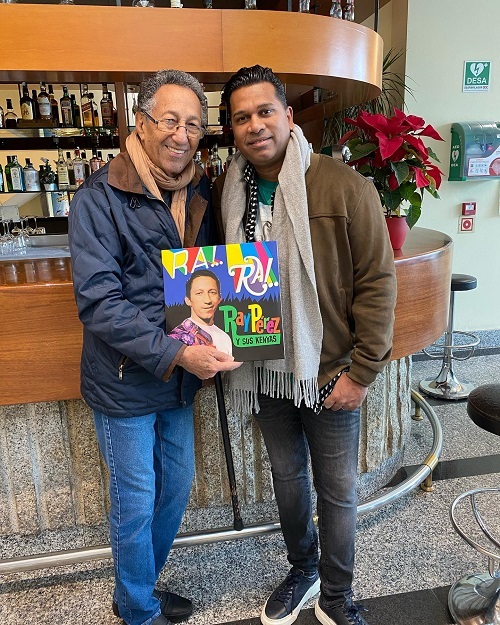
Ray Perez y Dustin Hogg

By seventeen, he had mastered the guitar, the cuatro, and the piano. Following his father’s passing, he balanced work and academics before ultimately deciding to commit his life entirely to his musical passion.

Formative Years and First Steps

Between 1962 and 1965, Ray studied at the Maracaibo Conservatory. His recording debut came via RCA Víctor under the artistic direction of Aldemaro Romero, recording the track “Marcianita” with the Trío Cristal.

After stints with the Trio Hambay and the group Los Bobos del Twist, he officially dove into Caribbean rhythms in 1965 with the creation of Ray Pérez y Su Charanga in the Zulian capital.

The Golden Era: Los Dementes, Los Kenya, and Los Calvos

Throughout his vast career, Ray launched three pivotal projects that secured his place in the Hall of Fame:

  1. Los Dementes (1965): Their debut, Alerta Mundo, Llegaron Los Locos / The Crazy Men (1966), signaled the start of a new era. Under this moniker, he recorded nearly 25 albums for labels like Velvet, Fania, and his own imprint, Pyraphon Records, founded in 1967.
  2. Los Kenya: Alongside the legendary voices of Carlos Yanes “Calavén” and Carlín Rodríguez, Ray innovated the sound by replacing traditional timbales with a full drum set. This project produced iconic albums like Ronda del Guaguancó, Rai Rai, and Nuevo Día.
  3. Los Calvos: A bold experiment, again featuring “Calavén,” which resulted in two essential productions for RCA Víctor: Estos son los Calvos and Los Calvos… y qué Calvos.
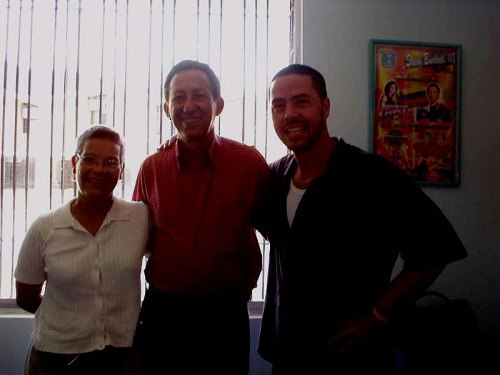
  4. La periodista y crítica musical venezolana Lili Rodríguez, el músico Ray Pérez y Roberto Ernesto Gyemant
    La periodista y crítica musical venezolana Lili Rodríguez, el músico Ray Pérez y Roberto Ernesto Gyemant

The New York Chapters and The Return

In 1969, Ray moved to New York City. There, he played piano for Francisco Ángel Bastar “Kako,” collaborated with Rafael Cortijo and Pedro “Rudy” Calzado’s Charanga, and arranged for the “King of Boogaloo,” Pete Rodríguez, composing hits like “Bossa Triste” and “Dame Felicidad.”

Upon returning to Venezuela in 1971, he founded Ray Pérez y su Orquesta, releasing a string of hits such as Aquí estoy de nuevo, Perucho y el loco Ray, and Yo soy el Rey de la Salsa. In 1974, he struck gold again with Grupo Casabe, recording three albums under the CBS label.

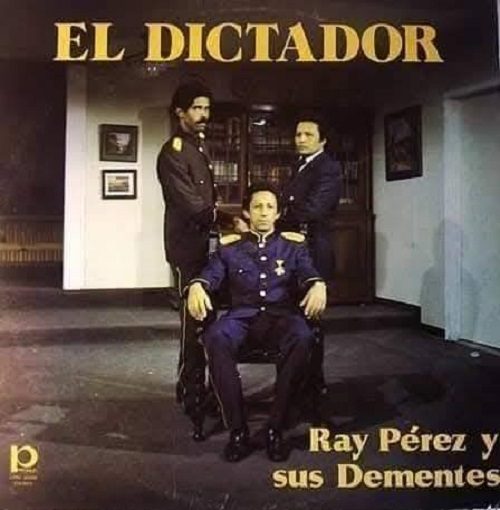
Ray Pérez Y Sus Dementes El Dictador 1981

An Everlasting Legacy

Ray’s prolific career includes collaborations with immortal voices like Perucho Torcat, Nano Grant, Teo Hernández, and Nelson Navas. He has shared the stage with titans such as “El Pavo” Frank Hernández, Alfredo Padilla, Alberto Naranjo, and César Monge.

From his massive repertoire, we remember the anthems of the barrios:

  • “No salgas de tu barrio”
  • “Emae Mae”
  • “Pa’ l 23”
  • “Así mueren los valientes”
  • “Guaguancó en New York”
  • “La montaña”


Colaboración: Fotografías de ©Roberto Ernesto Gyemant

 Read Also: The Conjunto Bailatino “La Resistencia Salsera” again “Antes los ojos del Mundo” and here, “No hay quinto malo”

Advanced Salsa Dancers With Superpower

North America / USA /

If you identify as an Advanced Salsa Dancer (ASD), remember that with great power comes great responsibility. When you become an ASD, the superpower than you gain is your awesome dance skills. You can use those skills to further your own pleasure and gain by holding them back from the newer dancers below you. Or, you also can give those skills freely to the new dancers waiting to be inspired.

Photo 1: Advanced Salsa Dancers With Superpower

“Waiting” To Be Inspired

The main reason to be inspired is than most new dancers aren’t actually “inspired” by the dance in a deep and meaningful way. They may love it on first sight the same way you like a thing in a store or a person you are attracted to.

Photo 2: Advanced Salsa Dancers With Superpower

But, just like you don’t know that person, they don’t know the dance yet. You don’t know yet if you want to put in the work to have a relationship. You don’t know if there’s enough to get in return until that attractive person shows you their personality. Yes, there are a few new dancers who ‘get the bug’ and dive deep right away.

But, most new dancers need time and inspiration to really fall in love. It can take you a year or maybe more. You can dance some Latin music before or get caught “Salsa” properly. It must be a combination of community, opportunity, and self-confidence that get you to that point. You need be inspired.

Photo 3: Advanced Salsa Dancers With Superpower

An Artist can make someone at their first congress feel amazing, or feel horrible.

The Superpower

The people who have put in the work to become great Salsa dancers are the people in the best position to inspire others. Their superpower is the ability to make people fall in love with the dance. It’s the reason that international artists can inspire so many.

Photo 4: Advanced Salsa Dancers With Superpower

They’ve put in the work that lets us see the best of the Salsa dance. We are attracted to their dancing, which is the first step, the first movement. An Artist can make someone at their first congress feel amazing, or feel horrible.

If the artist has a disengaged pity dance, their partner may not feel the desire to continue learning the dance. If the artist gives their all, their partner may find a renewed appreciation and desire for more.

Photo 5: Advanced Salsa Dancers With Superpower

ASD do the same thing, but on a local level. They’re generally more accessible than the international travelling pros that put them in a position to immediately influence their local community. An advanced salsa dancer who gives of themselves freely will often find many newcomers who are working to be better.

They inspire a growth mindset in their newcomers. There are many examples of this in their own community. One driven earlyintermediate dancer can pinpoint the exact moment that he/she decided to really give all enthusiasm to Salsa dance. It simply took one motivational sentence and dance from a local teacher.

Passion For Community And Dance

Photo 6: Advanced Salsa Dancers With Superpower

Many hardcore dancers feel passionate about the Salsa dancing style. So, many times they forget that newcomers often don’t know enough about the dance to be passionate about it. Mainly, newcomers become passionate about the community, energy, music, and vibe. They may like the dance, but they simply don’t know enough about it to be in love. ASD, remember that how you make beginners feel will determine how they feel about the Salsa dance.

It’s you who will show them the possibilities they have to grow. Use your superpower for all good; share it with those who need you to be inspired. Sure, in a few years you’ll have the benefits when those newcomers turn into your fellow Advanced Salsa Dancers Thanks to their instructor who you are, their best dancer of inspiration.

Photo 7: Advanced Salsa Dancers With Superpower

Isadora Duncan, destined for a life of freedom and the avant-garde, of beauty and tragedy

Isadora Duncan was born in San Francisco in 1877. Her father, Joseph, abandoned the family shortly after her birth. Left in extreme poverty, her mother, Mary Isadora Gray, worked tirelessly to support her four children.

Isadora Duncan, destined for a life of freedom and the avant-garde, of beauty and tragedy

Nevertheless, she always told them, “We can do without bread, but never without Art,” and consistently encouraged her children’s artistic vocations.

From a very young age, her mother introduced her to the works of Beethoven, Schubert, Schumann, Mozart, and Chopin, and to the writings of Shakespeare, Shelley, Keats, and Whitman. She also taught her about classical Greek culture, paganism, and feminism.

The family lived like a small artistic troupe. Mary gave piano lessons, and Isadora taught dance while her mother played Mendelssohn on the piano.

Then her sister Elizabeth would recite poems by Theocritus, and their brother Raymond would conclude with a short talk about the Greeks or about dance and its effects on the society of the future.

Although she auditioned as a dancer in various theaters, she found no success. Isadora perceived dance very differently. She believed in improvisation, with movement like waves of a sea reflecting the very Soul, a concept almost mystical and spiritual, far removed from the formal technique of Classical Ballet.

As she recounted in her autobiography:

“I was born by the sea. My first idea of movement and dance surely came from the rhythm of the waves and also from nature; clouds carried by the wind, trembling trees, flying birds, whirling leaves…” This living nature is what she sought to express through dance.

Isadora Duncan was born in San Francisco in 1877.Her father, Joseph, soon after left the family.
Isadora Duncan was born in San Francisco in 1877.
Her father, Joseph, soon after left the family.

Early Struggles and European Dreams

Shortly after, a fire destroyed their home, leaving the family destitute again. Isadora secured a small role in a pantomime in New York: Madame Pygmalion. She had to borrow money for the train ticket and rehearsed unpaid for over a month. During lunchtime breaks, Isadora had no money for food and would hide in the facilities to sleep before continuing to rehearse.

Eventually, her family moved to New York, where in 1896, Isadora joined the company of playwright John Augustine Daly, taking ballet lessons with Marie Bonfanti. Due to her rejection of an academicism she considered limiting and unnatural, she managed to travel to Europe in 1898.

She arrived in England, where, always self-taught, she studied arts at the British Museum. There, she found great inspiration for her dances, which evoked ancient Greek movements and attire. She observed the movements of dancers on Greek vases, and from there adopted one of her characteristic postures: tilting her head back like the maenads. She then went to France, where she met Löis Fuller, who shared her ideas. Löis, like Isadora, was an alternative dancer whose performances incorporated elements of circus acts and variety shows.

Breakthrough and Artistic Vision

Together, they embarked on a tour of Munich and Vienna, creating new performances: “Dance Serpentine,” “Dance of Fire,” and “The Divine Shoe,” all embodying an absolutely modern concept. Finally, in Budapest, Isadora signed her first contract to dance solo on a large stage. She achieved great success, establishing herself on all European stages.

“Dance of Fire”, and ‘The Divine Shoe’, of an absolutely modern concept Isadora finally in Budapest.

After one of her shows, a great admirer came to greet hernone other than Konstantin Stanislavski, the creator of the famous acting method and one of the founders of Russian Theater. When he asked who had taught her to dance, Isadora replied, “Terpsichore.”

Nevertheless, her dance remained transgressive. She wanted to free dancers from pointe ballets, tutus, and corseted figures, to give expression to the soul through Art. The “costume” for her choreographies consisted of loose, transparent tunics, and bare feet to maintain direct contact with the earth.

A great admirer of Hellenic culture, she began constructing a Dance school in Greece, on the hill of Kopanos. Others followed in Germany and Paris. These schools often accepted girls from very humble backgrounds, charging them no fees. Over time, expenses became almost unsustainable, but Paris Singer, heir to the sewing machine empire, appeared offering financial assistance to allow them to continue.

Teaching, Tragedy, and Legacy

She embarked on tours across Europe, Russia (where she was invited by Lenin), and America, though what she loved most was teaching. She used to say, “First, we teach the children to breathe, to vibrate, to feel, and to become one with the general harmony and movement of nature. First, we are going to create a beautiful Human Being, a dancing child!”

After two marital breakups, in 1913, in a tragic accident, her children, Deirdre and Patrick, drowned in the Seine. The following year, a third child died shortly after birth. From then on, in all her choreographies, a long red scarf would appear over her white tunic, like a permanent, unclosed wound. In 1917, she adopted six of her students, “The Duncan Dancers.”

On International Dance Day, we remember the creator of the Isadora Duncan Contemporary Ballet.

While Isadora had many romantic liaisons, her most stable relationships were with Oscar Beregi, Gordon Craig, Paris Singer, and Sergei Esenin. But to maintain her Freedom, she never wanted to marry.

At the peak of her fame, on September 14, 1927, as she was about to give a concert in Nice, she greeted the public from her car: “Goodbye friends! I’m off to glory!” Shortly after, the very red scarf that never left her became entangled in the rear wheel, causing her death. Her legend began.

Ana and Irma, two of her adopted daughters, continued to disseminate the Duncan technique, which is still taught and danced today. A diva ante litteram, a rebel and pioneer of the dance revolution that erupted during the 20th century, an ultimate symbol of independence and purity: Isadora Duncan, in addition to being the mother of modern dance, is an anticipation of the free, ideal, nonconformist, and independent woman who would still have to wait decades to appear.

International Dance Day (April 29)

This date, proclaimed by UNESCO in 1982, commemorates the birth of Jean-Georges Noverre, an innovator and dance master considered the creator of modern ballet. On International Dance Day, we remember the creator of Contemporary Ballet.

Fania All Stars

Album: Crossover

Song: Isadora

Arranged By: Louie Ramirez

Arranged By: (All Strings) Vincent Montana, Jr.

Producer: Jerry Masucci

Written-By: C. Curet Alonso.


Fania All Stars Crossover 1979

By:

Angel A. Padron Hernandez

Dj. Augusto Felibertt

Also Read: Yolanda Moreno “the People’s Dancer”

Canada / Vancouver

Mangos Kitchen Bar
Mangos Kitchen Bar
1180 Howe Street
Vancouver, BC, Canada V6Z 1R2
+1 604 559-5533

Baza
Baza Dance Studios
1304 Seymour Street
Vancouver, BC, Canada V6Z 1R2
+1 778-379-2292

Studio Nightclub
Studio Nightclub
919 Granville street
Vancouver, BC, Canada V6Z 1L3
+1 604 620-6604
  • « Go to Previous Page
  • Page 1
  • Page 2
  • Page 3
  • Page 4
  • Interim pages omitted …
  • Page 137
  • Go to Next Page »

International Salsa Magazine (ISM) is a monthly publication about Salsa activities around the world, that has been publishing since 2007. It is a world network of volunteers coordinated by ISM Magazine. We are working to strengthen all the events by working together.