
Directory of North American nightclubs |
||
|
|
||
|
|
|
|
|
|
||

CALIFORNIA |
|

ILLINOIS |

MICHIGAN |

NEW JERSEY |

NEW YORK |
|
|
|
|
|
|
|
|


Directory of North American nightclubs |
||
|
|
||
|
|
|
|
|
|
||
|
CALIFORNIA |
|
ILLINOIS |
|
MICHIGAN |
NEW JERSEY |
NEW YORK |
|
|
|
|
|
|
|
|
We are very pleased to be able to talk to the leader of K’ndela Salsa Band, a salsa group which has been gaining ground in New Jersey despite the great competition it faces.
Eric Cabanilla is a talented musician who, in addition to founding a successful band, has also managed to build an entertainment company with a solid team that has put its talents at the service of large audiences eager to enjoy a quality show. The artist has told us some of the most important details of his career, and we bring them here for all of you.
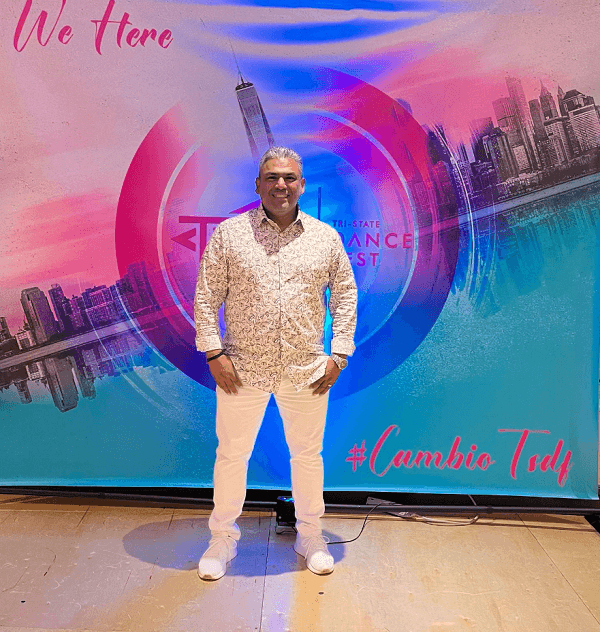
Eric started his story saying that he and his siblings listened to the music their mother played as she cleaned the house and her children helped her with household duties. Back then, there were many romantic artists and groups such as Los Iracundos and La Sonora Matancera. These melodies helped him understand his love for salsa today.
One important thing to mention is that there were no musicians in his family to teach him about the professional part of this craft, so it can be said that he was the first to make this his way of life till today. His first impulse in this regard was to start writing poems at school, and he even won some poetry contests, which awoke in him the taste for putting words together to create pleasant sounds for others.
It was his great friend and musician Mike Pérez who encouraged him to put these compositions to songs, so he took those poems and rhymes he had created and added music to them. He worked alongside Mike for about seven years singing backup for the Orquesta Swing Combo until his sudden passing, which led to the dissolution of the group. Fortunately, the musicians were not left unprotected and could get a job in a new orchestra with new sound.
During this time, he had the opportunity to learn a lot about how the music biz works, as his responsibilities included institutionalizing the orchestra and formalizing its schedule through emails, business cards, written contracts, and that sort of thing.

Thanks to all this acquired knowledge, once Swing Combo broke up, Eric already had an accurate idea of what to do when creating his own orchestra and how to manage it, so he jumped into action from there.
After all the experience he had gained, Eric finally decided to build something of his own, as he felt ready to take on such a challenge.
One of the first people he counted on was maestro Jimmy Bosch, “El Trombón Criollo,” who has a 50-year career and his own orchestra, Salsa Masters. He is always traveling the world with his orchestra, but whenever he is required to play with Eric and K’ndela Salsa Band, he makes an appearance without hesitation. He describes Bosch as a very professional man, to the point that he is the first to arrive and the last to leave at any rehearsal.
Together with Eric and Bosch, K’ndela also leverages the talent of other great musicians like bassist Edgar “Danny” Rosado, pianist Ray “El Loco” Cabrera, Xabi “El Chamo” Estrada, Eric Pizza, Brian ‘Tibiri’ Pozo, Jimmy “El Nene” Feliciano, and Daniel “El Gato” Arboleda.
This orchestra project was his first professional goal, but once he made it, he did not want to be confined to that. He also wanted to offer a complete package that offers more comprehensive entertainment than just playing and singing. That is when he took advantage of their closeness to a dance school where he sometimes performed to be in touch with dancers who wanted to join their shows.
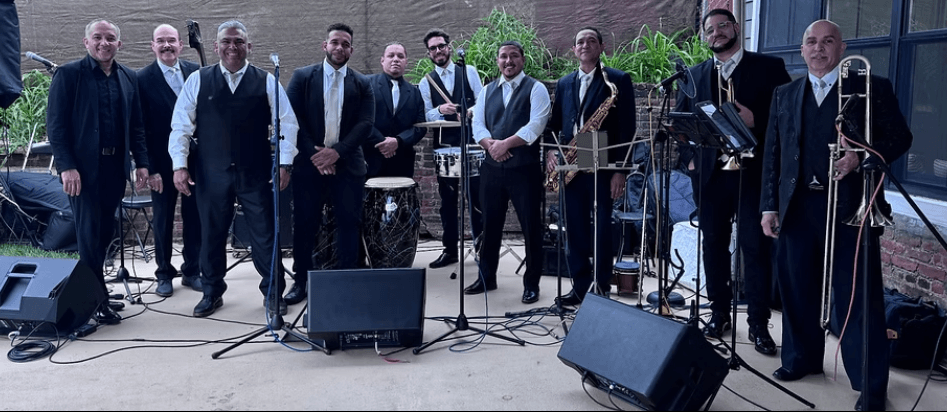
Additionally, he hired a relative who worked as a mariachi, who in turn introduced him to other artists who did the same thing so he could hire them. Over time, he also included DJs who would liven up all kinds of events with their diverse mixes.
Something Eric wanted to clear up is that all these professionals are permanent workers in his company. He has a very good relationship with many dance schools in New Jersey, to which he offers his packages, and there is always a very generous group of its dancers that accepts the proposal. Whenever Eric is involved in a festival or private event, he never has any problem finding talent in the field of dance to accompany him thanks to his reliability, professionalism, and great respect for the work of others.
Read also: The Cajón throughout history
American multi-instrumentalist and entrepreneur of Puerto Rican descent Jorge Torres had a conversation recently with us about his musical origins, his company Jimmy Jorge Entertainment, his band, and his work with music today. In International Salsa Magazine, we are more than happy to interview him and learn what he has to tell us.
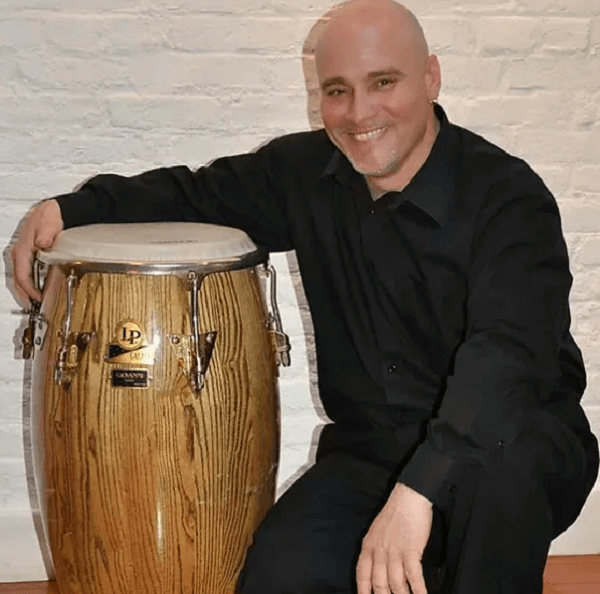
Jorge said that when he was very young, his mother got a large stereo system that included a record player and radio where she listened to all kinds of music. His brother had a copy album “Che Che Cole” by Willie Colon and a cowbell he used to play constantly, making it the first instrument he heard in his childhood.
In the fifth grade in Philadelphia, he became interested in learning to play the guitar, but at that time his school did not offer guitar programs, but violin. So he decided to try the violin, but only played it during that year. In the eighth grade, he returned to Chicago to live with his father following the death of his mother, and his interest turned to steel drums, which he also referred to as Caribbean drums.
He spent another year playing this instrument until he reached high school and moved back to Philadelphia to live with his brother, which is when he changed his mind again and started loving the trumpet and the conga. He was so passionate about the latter that he bought his own conga, which he still has to this day. Then, other musician friends taught him how to play it, and the rest is history.

His learning to play the conga was the beginning of his life as a professional musician, and he played for various groups such as La Orquesta Cupey, Orquesta La Precaución, and Orquesta La Opinión, among others. During this time, Jorge learned to play many other instruments such as bongos and timbales. His teacher was Mikie Rivera, renowned Puerto Rican singer-songwriter and trova and jazz guitarist, who met with the young man and other musicians in the cellar of a friend’s house to mentor them and work with them.
These meetings aroused in him the idea of creating his own band in the future because of all that Rivera taught him about the music biz, and he wanted to put that knowledge into practice as soon as possible.
Jorge’s band started as a small jazz group, but he did not want to settle for that. At some point, he was interested in having an orchestra with four wind instruments, three singers, piano, bass, bongos, timbales, and congas. That is how Jimmy Jorge and The Latin Jazz Express project arose.
This project started as a six-member Latin jazz band in 1995, but has managed to grow to the point that it has about 12 members and plays many other musical genres, although salsa is still very present in its repertoire.

Through hard work, Jimmy Jorge and The Latin Jazz Express have managed to position itself in the industry until they became the house band on the radio station called “La Mega 1310 AM” for some time and have played at all kinds of events such as The Puerto Rican Parade, La Feria del Barrio, Penn’s Landing’s Hispanic Fest, among others.
Some of the current members of the band are Peruvian singer Joseito Rivera, Puerto Rican singer Lia Montalvo, Dominican singer Hugo Tavares, conguero Edwin “Papo Buda,” percussionist Orlando Santana, and trombonist Edgar Salias.
When Jorge began performing with American orchestras, he noticed that some of them, in addition to their musicians, also had dancers and DJs who were part of the orchestra and the show. The inclusion of these professionals in concerts seemed like a phenomenal idea to him and wanted to put it into practice for his own project, so he took advantage of the contact he had made with singers, DJs, photographers, dancers, and dance teachers to recruit them for his own shows in the future.
So, he began asking for phone numbers in order to build a network of artists he could count on in case he needed their services. Today, he has a large catalog of options for every type of show, making Jimmy Jorge Entertainment one of the most important Latin entertainment companies in Philadelphia today.
Read also: Raúl Eliza: from the army barracks to the stage and recording studios
Latinoamerica / Venezuela / Caracas

Part 1
This book narrates the story of the famous singer Oscar D’ León from his birth and his life’s progress to who he is today; it also mentions how the era evolved, not only at a musical level but also regarding the situation of the country, both in Venezuela and other nations.
Before beginning to comment on the biography written by his manager, Oswaldo Ponte: biographies do not only try to remember great men who extend beyond their era. In this way, through this biography, the goal is to spread an idea about the work of the well-known artist “Oscar D’ León,” who has brought greatness to the country, crossing the line of his horizon and extending it toward other latitudes. One could say it is like a novel that not only speaks of successes or already known events, but also tells us about the reality of his life and not just what acquaintances or representatives of the artist think.

The biography begins with the birth of Oscar Emilio León Simosa on July 11, 1943, in Caracas, Venezuela; where not only his family but other friends were present, one of whom ironically mentioned that in the future “he would be a great singer” since his crying was like a symphony. According to his mother, “Carmen Dionisia,” the midwife told her that he was born “enmantillado” (born with a caul), which meant the baby could have a multitude of gifts that he could take advantage of in the future.
It is worth mentioning that at an early age, he had more passion for music than for his studies, and he came to the conclusion that studies were not the best thing for his future; therefore, he dedicated himself to helping at his parents’ business to contribute to the household.
Since he was very young, he enjoyed listening to “Sonora Matancera” in a corner at night, which was the musical group of the era, and he would follow the percussion with his throat. He also listened to jazz orchestras, which led him to the conclusion that music would be his vocation; he was fascinated by listening to his mother hum the hits of 1953 by the Orquesta Aragón and Dámaso Pérez Prado.

Fortunately for the future singer, his family was passionate about music and had close relationships with musicians, singers, and players of all types of instruments even if they were not professionals. This warm, joyful, and above all, musical atmosphere embraced Oscar from the moment he was born. It was even shown that at an early age he had a certain interest in any object that emitted a musical sound, and he longed to learn how to use musical instruments. Despite having a humble family, Oscar himself managed to use various objects to create something that generated a musical sound and to discover his own rhythm, which he enjoyed at that time.

Simosa, which was on July 11, 1943, in Caracas, Venezuela; where not only his family but other friends were present, and ironically one of them mentioned that in the future “he would be a great singer” because his crying was like a symphony. According to his mother, “Carmen Dionisia,” the midwife told her that at birth he was “born with a veil” (enmantillado), which meant the baby could have a multitude of gifts that he could take advantage of in the future.
During his adolescence in Venezuela, many significant political changes were occurring for the population; however, they did not stop celebrating festive seasons with his family even in difficult times. Many “parrandas” (parties) were held, something that Oscar enjoyed very much.
In 1958, he mentions that a phenomenon was occurring with the musical style of “Dámaso Pérez Prado’s Mambo”; also, at the Club Las Fuentes, the Sonora Matancera resonated with “Celia Cruz” alternating with the “Caracas Swing Boys”. A movement of orchestras influenced by foreign rhythms that thrilled Venezuelans began to be observed on a national level, such as Billo’s, which won the precious title of the most popular orchestra in Venezuela. Oscar was not interested in societal events, except for events in Cuba, since Cuban music was what fascinated him.

Starting in 1962, he became a father, and marveled by his new life and his firstborn, he dedicated himself to his role as a father, keeping his family supported by working; this caused him to step away from music, and his maturity can be witnessed despite his age.
By the age of 23, he already knew how to sing and play the bass; over time, he met friends who would influence great changes in his future life. In 1966, he met Kiko Pacheco, who invited him to the group “Los Junior,” where he would begin his professional career. During that same year, salsa was taking off in Venezuela, as it was heard on all the country’s radio stations.
During that era, life was expensive, so he worked hard both in clubs and discotheques or as a taxi driver. On one occasion, Kiko Pacheco asked Oscar to sing in the “Quinteto Los Junior” because their vocalist had to leave; this allowed Oscar to demonstrate his talent, and from that moment on, everyone was enchanted upon hearing him, and his musical profession began. Later, “La Dimensión Latina” was created, which at that time was known as “Dimensión Seis,” founded by Oscar D’ León and Cesar Monge.
The members who formed “La Dimensión Latina” were Oscar de León, Cesar Monge “Albóndiga,” and José Rojas “Rojita” on trombones; José Rodríguez “Joseíto” and Elio Pacheco on percussion; and Enrique “Culebra” Iriarte on piano. A significant event for Oscar was that, during their first rehearsals, he had a premonition of his success when they found the rhythm he wanted to hear and share with the rest of the musical world. This was proven during their first performance, which was a total success, leaving everyone who heard them stunned.

From that moment on, with the debut of La Dimensión Latina, a new concept emerged that would change the landscape of popular Venezuelan music and make history both nationally and internationally with the rise of the legend Oscar D’ León. They began playing for five months at “La Distinción” from Friday to Saturday. On Sundays, after finishing there, they would go to El Junquito to continue the party, gaining so much popularity that some felt they should launch an international career. During that time, singer-songwriter Mireya Delgado hired them after being impressed by seeing them perform on stage.
They played on a cruise ship during a one-week tour through different Caribbean islands and achieved great success despite the inconveniences they faced. They paid these no mind, as they dedicated themselves wholeheartedly to playing for their audience. This caused venues to become packed, captivating their fans who idolized them. From that point forward, many people began wanting to hire them for various events.
Here is the translation of the text into American English:
In that same year, 1972, a dizzying and unstoppable recording career began. This was based on the fact that executive representatives from the TH label heard two tracks: one was “Oye mi canto,” which was a hit for Gran Combo de Puerto Rico, and the other was “Te voy a cortar las patas” by Oscar D’ León. Because this made a great impact and created absolute conviction among the executives that they were witnessing a success, the promoter Mesone, upon hearing them, agreed to carry out a recording. This recording was shared with the Víctor Mendoza Orchestra, one of the TH producers in Venezuela: El Clan de Víctor.

The album featured three tracks by Oscar; he recorded two of them with Dimensión Latina and the other with El Clan de Víctor. However, he does not appear as the author in the credits. The same thing happened with an album in 1991 when recording the album Auténtico. Among the 80 tracks that Oscar wrote, two of them are his immortal classics and of his authorship: “Llorarás” and “Detalles”.
For the first time in Venezuela, Salsa festivals were held that moved everyone. From that moment on, a true proliferation of salsa was witnessed in the country, all thanks to “Pensando en ti,” which had a major impact on the history of Venezuelan popular music.
After the success of his new discography—which contains “La comprita,” “Barranquilla,” and “Barranquilla y Quiéreme,” among others—three important international contracts were signed. Oscar and Dimensión Latina would go to Curaçao, Aruba, and Bonaire; that same year, they would also go to Colombia and Santo Domingo. However, it is worth noting that the period from “Pensando en ti” to “Que bailen to’s” covered the stage that catapulted him internationally.
Here is the translation of the text into American English:
The production of Dimensión Latina’s 1975 discography was the one that left an eternal mark, whose immortality was glimpsed from the very moment of its appearance. Its tracks focused on themes of romantic heartbreak. However, the rhythmic conception of “Llorarás” was the most important conception and structure of Oscar D’ León and Dimensión Latina; in fact, the song “Llorarás” marked the rupture of the old dance empire represented by Billo’s, and Dimensión came to be considered the “Billo’s of Salsa”.
An important subject in the world of music tells us in this book that: “salsa singers used phrases worn out by the use of previous generations who popularized them; in contrast, Oscar projected original modifications created by him”.
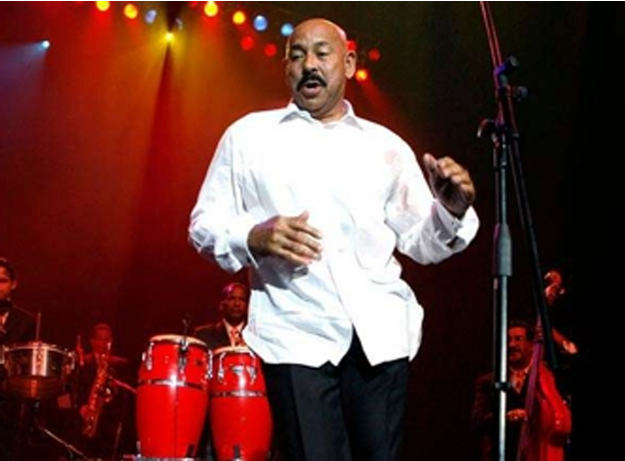
When they traveled to New York, Oscar was very excited by the different stories he had experienced in the music world, and they were even happier to perform for the first time in the impressive metropolis. It was there where that musical genre that transformed them into idols, “Salsa,” was projected.
As time passes, Oscar manages to establish his own style and never changed it while climbing the steps of popularity and fame; the same happened with Dimensión Latina, though without achieving the countless triumphs Oscar D’ León obtained until his departure.
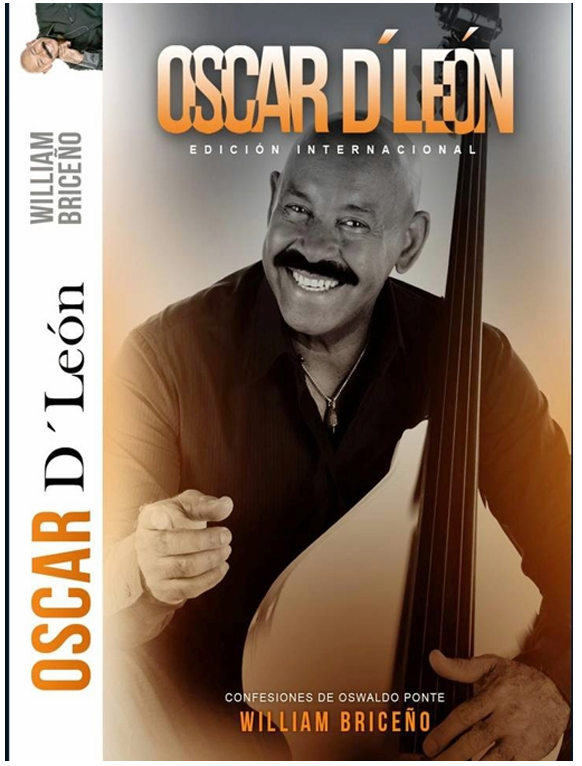
If you wish to know more about the history of Oscar D’ León, we recommend reading “Oscar D’ León: Confessions of Oswaldo Ponte by William Briceño, Editorial Fundación Simón Bolívar” to learn about the continuation, as it is a very broad topic to describe in this first part; likewise, in our next edition, we will conclude our final thoughts on this interesting and extensive biography.



Directory of Asian nightclubs |
||
 HONG KONG |
||
 Graffiti LKF Graffiti LKFG/F, 17-18 Lan Kwai Fong, Central Central, Hong Kong |
 SOLAR LKF SOLAR LKFCentral 2nd Floor, Ho Lee Commercial Building, 38-44 D’Aguilqr Street, Lang Kwai Fong Central HKI Hong Kong |
 Sole Mio Sole MioUpper Ground Floor, 51 Elgin Street, Soho Central Hong Kong, Hong Kong |
|
|
||
|
|
||
|
|
||
|
|
 Bar Mirage Bar Mirage5F VORT Roppongi Briller, 3-14-14 Roppongi, Minato-ku Tokyo 106-0032, Japan +03-5860-6946 |
 Fiesta Latin Spot Bar Fiesta Latin Spot Bar3F, 1 Chome-14-6 Kabukicho, Shinjuku City Tokyo 160-0021, Japan +81 90-1086-2878 |
 El Cafe Latino El Cafe Latino3 Chome-15-24 Roppongi, Minato City |
|
|
|
|
||
|
|
|
|
|
|
||
 2F Thi Sach Ho Chi Minh City, Vietnam 70000 +84 799 741 261
|
|
|