• Skip to primary navigation
  • Skip to main content

International Salsa Magazine

  • HOME
  • Previous editions
    • 2026
      • ISM / March 2026
      • ISM / February 2026
      • ISM / January 2026
    • 2025
      • ISM / December 2025
      • ISM / November 2025
      • ISM / October 2025
      • ISM / September 2025
      • ISM / August 2025
      • ISM / July 2025
      • ISM / June 2025
      • ISM / May2025
      • ISM / April 2025
      • ISM / March 2025
      • ISM / February 2025
      • ISM / January 2025
    • 2024
      • ISM / December 2024
      • ISM / November 2024
      • ISM / October 2024
      • ISM / September 2024
      • ISM / August 2024
      • ISM / July 2024
      • ISM / June 2024
      • ISM / May 2024
      • ISM / April 2024
      • ISM / March 2024
      • ISM / February 2024
      • ISM / January 2024
    • 2023
      • ISM / December 2023
      • ISM / November 2023
      • ISM / October 2023
      • ISM – September 2023
      • ISM – August 2023
      • ISM July 2023
      • ISM Edition June 2023
      • ISM – May 2023
      • ISM April 2023
      • ISM March 2023
      • ISM February 2023
      • ISM January 2023
    • 2022
      • ISM December 2022
      • ISM November 2022
      • ISM October 2022
      • ISM September 2022
      • ISM August 2022
      • ISM July 2022
      • ISM June 2022
      • ISM May 2022
      • ISM February 2022
      • ISM January 2022
    • 2021
      • ISM December 2021
      • ISM November 2021
      • ISM October – 2021
      • ISM September 2021
      • ISM August 2021
      • ISM July 2021
      • ISM May 2021
      • ISM April 2021
      • ISM June 2021
      • ISM March 2021
      • ISM February 2021
      • ISM January 2021
    • 2020
      • ISM December 2020
      • ISM November 2020
      • ISM October 2020
      • ISM September 2020
      • ISM August 2020
      • ISM July 2020
      • ISM June 2020
      • ISM May 2020
      • ISM April 2020
      • ISM March 2020
      • ISM February 2020
      • ISM January 2020
    • 2019
      • ISM December 2019
      • ISM November 2019
      • ISM October 2019
      • ISM Septembre 2019
      • ISM August 2019
      • ISM July 2019
      • ISM June 2019
  • Download Salsa App
    • Android
    • Apple
  • Spanish

Search Results for: Van Van

Cuban singer-songwriter Osmay Calvo shows his versatility in the New Jersey music scene

Osmay Calvo is just one of many examples of why Cubans have triumphed so many times in the United States, which is why his story and that of many of his compatriots always serve as inspiration for those seeking a career in the music industry but who do not dare to do it because of the misfortune of being born in a place that did not offer them the necessary opportunities for this.

Calvo was kind enough to take a few minutes of his time to talk about all that had happened to his career to date, so it is an honor for us to describe what was discussed in the following lines.
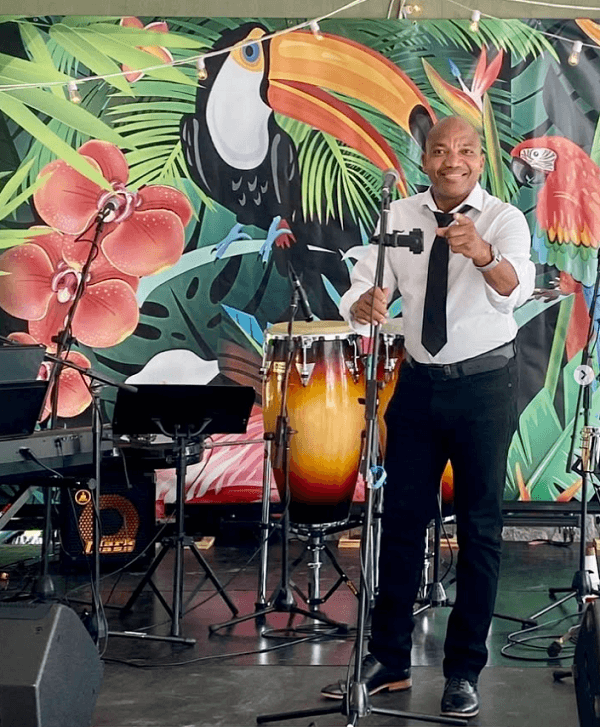
Osmay performing
Singer Osmay Calvo performing during a birthday

How Osmay became interested in music

Osmay tells us that, from an early age, he loved popular music, so he began to participate in school music events when he was just six years old in Tarará, east of the city of Havana. At the same time, his mother enrolled him in singing lessons and he spent much time with his family musicians, including his uncle, singer Pedrito Calvo, who was a member of Los Van Van.

A few years later, he began to attend various types of contests and joined the Mariana de Gonitch Singing Academy, directed at the time by maestro Hugo Oslé, thanks to which he met Pacho Alonso, Ela Calvo, Mundito González, and many other important figures of Cuban popular music.

Official beginning of his professional life

Osmay’s professional start was in Cuba when he joined the Adolfo Guzmán company in 1995, which is when he had his first paid job in music. Although it is true that the Cuban government got a huge percentage of the money earned by the artists, Osmay appreciates the experience and the chance to know other countries through his activities with the company.

Some time later, he had the opportunity to travel to Spain and then to Mexico, where he participated in a music competition and won first prize with the song “La Bamba.” He then spent another month in Spain for an event until returning to Havana and winning the Mariana de Gonitch Singing Contest, obtaining the prize for the great popular generation of national music award, which led him to travel through the 14 provinces of Cuba to offer his services and make himself better known.
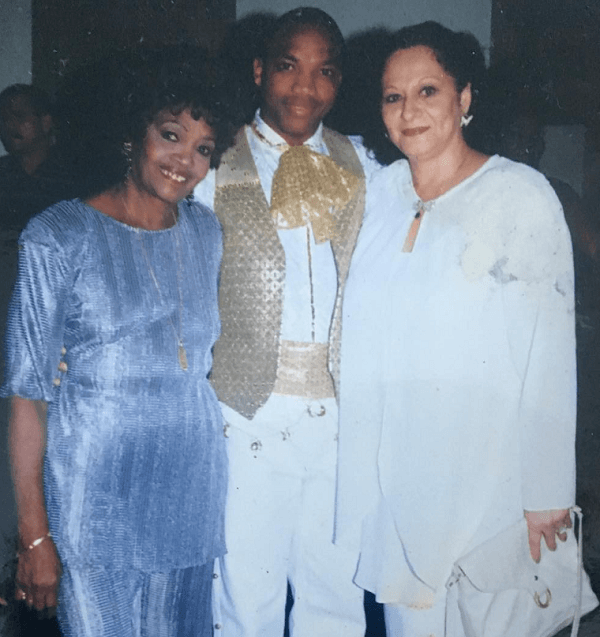
Osmay, Ela, and Beatriz
Singer Ela Calvo, Osmay Calvo, and ”La Musicalísima” Beatriz Marquez

Moving to the United States

It was in 2002 that Osmay finally decided it was time to look for other roads and leave Cuba to no longer return. He was going to sign a contract with Mambo Records in Miami, but things did not go according to plan, so he started recording his own music and went to New Jersey, where he began to organise his own orchestra with which he has 16 original songs written by himself, but also numerous covers of hits by other artists.

He has not been back to his native country for about 24 or 25 years. In fact, most of his family also lives in the United States and Canada, except for his uncle Pedro Calvo, some cousins, friends, and his music teachers.

However, after all the time he has been gone, things have not been entirely easy for Osmay, especially in the beginning. The hardest thing for him was language learning and how little he knew about his new place of residence, but the artist quickly learned and was gradually integrated into this new music scene, thanks to which he was able to play with many orchestras and meet great figures such as Oscar D’León at the Coco Bongo Club in Elizabeth, New Jersey, and Fernandito Villalona, for whom he opened one of his shows.

In New York, he played with many bands and learned a lot of music that was played locally. Osmay brought an academic background in lyrical and symphonic singing from Cuba, but New York has mostly restaurants, nightclubs, and fairs, so he had to adapt to a completely new format and audience. 
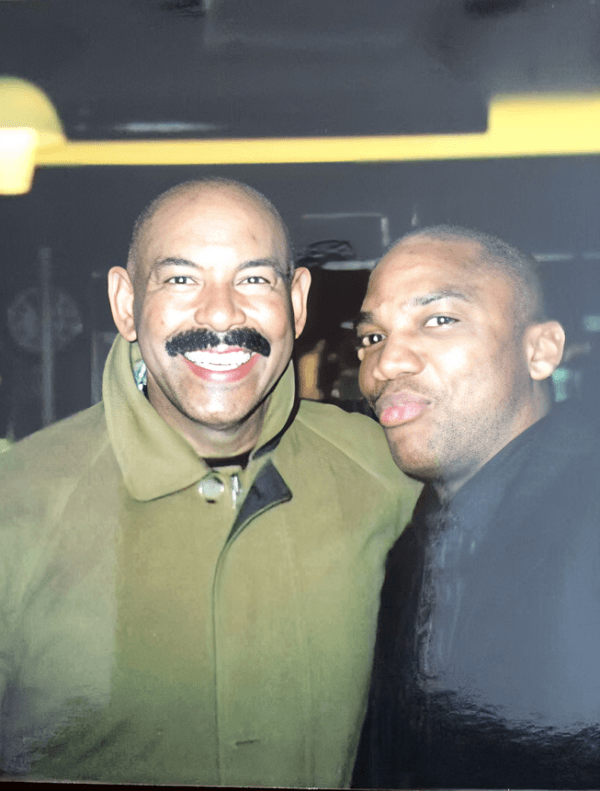
Osmay, and Oscar
”El Sonero del Mundo” Oscar D’ León and Osmay Calvo

Fortunately, he got it and was recommended by other musicians to play in many places until one night he was asked to play at Don Coqui and was told that Tito Nieves would be there. Then, when it was time for Osmay and nine other musicians to perform on stage, Jimmy Rodríguez, the owner of Don Coqui, approached them to say that Nieves might come and play with them later. A little while later, the Puerto Rican actually did approach with a microphone in his hand, and both he and Osmay began to improvise, and the show lasted until two o’clock in the morning. For the Cuban, it was an exceptional experience and an unforgettable moment in his career.

Haberte Conocido

After all the progress made, in 2021, Osmay felt ready to release his first independent album, which he titled “Haberte Conocido”. This was a goal to fulfill since Hugo Oslé, who was also his singing teacher, told him and the rest of his students that it was very important to be an independent artist who wrote and recorded his own songs. 

In addition to that, he remembers that everyone in the class was a bolero singer, so he wanted to do something that would set him apart from the rest, and that is how he began to turn to salsa and other genres. This made him a much more versatile artist who could sing almost any genre coming his way. From then on, he stopped learning the original soneos of the songs and started to improvise on many occasions, which eventually led him to compose. Finally, in 2021, he wrote “Haberte Conocido,” which he put together from ideas that came to his mind and that he saved on his mobile phone during rehearsals. Then, stanza by stanza, he created the first song of his own. 

Osmay and Tito
Osmay Calvo singing with Tito Nieves at Don Coqui

Read also: Multi-instrumentalist Ian Dobson talks about his trips and academic background
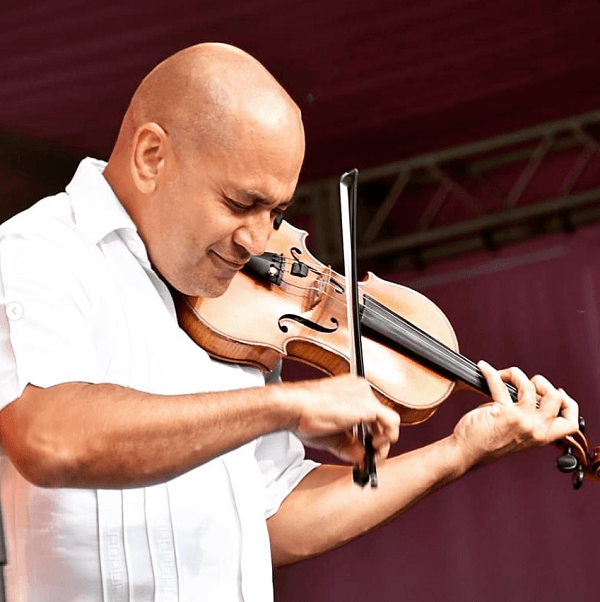
Venezuela violinist and former musician in El Sistema Ali Bello has many interesting things to say

Venezuelan musician Alí Bello has become one of the best Latin music violinists in New York, so we could not miss the opportunity to talk to him and learn as much as we could about his fascinating story. The young man has given his best to become a true icon of Latin Jazz in his current city of residence, so do not miss this great conversation.

Ali playing the violin
Venezuelan musician Ali Bello playing the violin live

Alí’s beginnings in the world of music thanks to El Sistema

From a young age, Alí became interested in music, which led him to join the National System of Youth and Children’s Orchestras and Choirs of Venezuela, where he studied classical music as an extracurricular activity. This in order for Alí and his classmates to be busy in any activity until their parents came to pick them up after work.

This was when an orchestra or school of music was formed clase to his father’s work, so Bello was enrolled in these classes from 2 to 5 p.m. after school. So it went for him since he was in kindergarten, and he learned to play the xylophone and the recorder. When the boy was seven years old, the school orchestra located in La Rinconada, Caracas, was officially created, but due to how small Ali was, the only instrument the school could assign him according to his size was the violin, which he keeps playing diligently to this day.

After many years of being part of the National Youth Orchestra, he got ahead with his musical career and decided to go to the United States to continue his university studies and train as a professional musician.

Other instruments besides the violin

In addition to the violin, Alí also plays a lot of percussion, since he considers it very important. He thinks every folk and Latin musician must handle percussion as efficient as possible and each of its rhythms in order to internalize the style they want to play on any instrument.

“Percussion and singing have always fascinated me, so I try to devote myself to both even a little bit, but it is undeniable that the violin has always been my main instrument. I’ve tried to focus all styles and everything I work on towards the violin to turn it into the main element,” the musician added on this subject.

Ali and Gustavo
Ali Bello, his son and maestro Gustavo Dudamel

How the opportunity to study in the United States came about

Initially, Alí was supported by his violin teacher Margaret Pardee, who taught at the Juilliard School and went to Venezuela to give master classes. It was Pardee who encouraged Alí to continue his education in New York, which he finally achieved thanks to the Gran Mariscal de Ayacucho scholarship fund and the Simón Bolívar Musical Foundation.

This is how the Venezuelan artist obtained his bachelor’s degree, master’s degree, and PHD.

At college, he met Johnny Almendra, thanks to whom he discovered genres other than classical music, in which he was not only the performer of melodies but could also create his own music. He then discovered styles of Venezuelan and Latin music that inspired him to explore more varied rhythms different from what he had known before.

He played regularly with Johnny Almendra and his modern charanga group Los Jovenes del Barrio for a time and subsequently played for La Típica Novel and other orchestras. As Alí gained experience in the world of charanga and Latin music in general, he started having opportunities to learn and explore other genres such as Brazilian music, Afro-Cuban music, Latin jazz, and many more. 

Collaborations with major artists in the industry

All this hard-won ground gave Alí the opportunity and the honor to collaborate with great artists in the industry such as Tito Puente, Eddie Palmieri, Johnny Pacheco, Rudy Calzado, Pedro Cortés, José Fajardo senior, Pupi Legarreta, and many more. All these figures helped him not only to have a better understanding of the Afro-Cuban style and tradition, but also of the influence of New York on music.

Ali and Pupy
Maestro Pupy Legarreta and Ali Bello

Thanks to this knowledge base, he had the courage to release a record album, La Charanga Syndicate, in which, as the name suggests, he uses charanga and all the influences coming from the musicians he has known and continues to know. For this reason, he feels he now has something to say and bring to the style. 

Another important thing for his career was his participation in Jay-Z’s concert to celebrate the anniversary of the release of his first album. The rapper wanted to mark the occasion by playing with a symphony orchestra, so hired many musicians of all kinds to make a great show at Radio City Music Hall in New York. Fortunately for Ali, he was well-known in the music scene at the time, so he was contacted to participate in the event.

In that sense, the violinist is very happy to be in New York, as the world’s greatest artists always take this city into account for their concerts, which gives musicians like him the opportunity to have access to these great figures in the industry.

Ali as an arranger

In addition to being a percussionist and violinist, Ali has also ventured into musical arrangements quite successfully thanks to all the academic training he had received up until then. However, as he became a more experienced professional, he began to notice that his own ideas and thoughts came to life in his work. So, having the theory in his head, he could take those ideas he had had and develop them within the rhythmic and stylistic elements which are willing to use on each occasion.

In addition to that, the artist also works on production and mixing a bit to achieve the necessary sound. He even has his own studio where he plays for his own productions and other artists’ records as a freelancer.

Ali and Juan
Ali Bello and Juan Carlos Formell from Los Van Van in Poland

Read also: Omar Ledezma Jr. shares with us the new from his project with Azesu

Albert Torres The Ambassador Of Salsa

North America / USA / New York
Albert Torres
Albert Torres

Albert Torres, a sympathetic boy with blushing cheeks who born in Brooklyn – New York – never suspected what his destiny had prepared him, to be the father of the Congresses of Salsa worldwide. His name would resound from North to South and from East to West, by the continents: American, European and Asian; in the different important scenes of the Latin music movement and would be the inspiration for many dancers of this branch.

His legacy would belong to the astonishment and shelter of the artists and the public that would applaud his talent, vigor and semblance to the rhythm of the phrase “Una Bulla”. This cheerful infant, without a doubt, was going to be a legend of Afro-Caribbean music. I’m talking about Albert Torres, The Ambassador of Salsa!

Photo by Albert Torres

Albert began to listen to the salsa genre from the age of 5, staring in astonishment at the whole scene, sitting, of his first dance lessons … At the famous Palladium in New York, where his mother danced and liked the music of Mongo Santamaría and Tito Puente.

This child, future congressman of Salsa, grew up when the history of Latin popular music (salsa) was being written in the South Bronx, where Puerto Rican communities were having a great explosion of creativity and musical activity.

At the age of 12 years old his family decides to move to Puerto Rico, “By that time I did not want to speak Spanish, I did not want to be Puerto Rican. I did not want to be part of that environment”, said Torres. He only danced disco and Hustle. However, at the age of 15 his life took a dizzying turn when he heard:

“Oye que lio que lio se va a formar

cuando mi gatito sepa

y es tan simple la razón

El que a su gata le cuenta que el que a

su gata le cuenta

no es nada más que un ratón

un ratón…

…Échale semilla a la maraca pa que

suenen

chacucha cuchu cucha cucha

échale semilla a las maracas pa que

suenen

échale semilla a esas maracas oye

chacucha cucha cucha cucha

y hace rato está sonando sonando

chacucha cucha cucha cucha…”


Albert Torres simply fell in love with the Salsa thanks to this theme: “El Ratón” of Cheo Feliciano together to Fania All Stars. “The legends of salsa changed my life. When I heard these legends, that August 26th of 1971, in the Cheetah, something happened inside me. The music entered by the feet and came to my heart”. Thus, declared his beginnings in the Salsa, Albert Torres.

In 1991 his passion for Salsa took him to impress the girls of the neighborhood by his incredible steps to a Hollywood celebrity when he, first time, participated in the movie Mambo Kings in which he was chosen as one of the main dancers.

Hollywood - Albert Torres
Hollywood – Albert Torres

There he not only helped Antonio Banderas with the dance steps, but also with the English by that time for Banderas was very hard. In addition, during the filming of the movie Albert had the opportunity to share with big of Salsa like Celia Cruz, José Alberto “El Canario” and his great idol Tito Puente.

That film was the hit that catapulted Torres to world fame being chosen by Debbie Allen as one of the 4 dancers (of more than 400 couples) to participate in the Academy Awards (1993) and to dance “My beautiful Maria” whose Singer was Plácido Domingo and where he stood out as the first Puerto Rican to dance in the history of the ceremony.

Then, he returns to the cinema being the choreographer and dancer of Salsa scenes in the romantic film “Dance with Me” with Vanessa Williams and Chayanne during 5 months.

Later he worked on the movie “Out to See” (1998) with Jack Lemmon and Walter Matteau and in the same year he also made a guest starring appearance on the Keenan Wayan’s Show where he performed with Jennifer Lopez. Everywhere there was Salsa, Torres seemed to be there. At the time and with all this like trajectory Albert Torres in 1991 also began his stage as a producer.

He started promoting Salsa clubs in Los Angeles, “I lost a lot of money. Nobody wanted to know about Salsa”, said Albert. Nonetheless, he began to handle Johnny Polanco y Su Conjunto Amistad, which were the best-known salsa group in the Western United States.

In 1992 he founded his own company, Albert Torres Productions Inc. (ATP) and began to organize salsa parties in several places in Los Angeles. The most important were the Boathouse in Santa Monica, St. Marks in Venice and Sportsmen’s Lodge in Studio City.

3- Albert Torres
3- Albert Torres

At that moment the genre of salsa was losing popularity. However, Albert Torres with his wit, insight and a lot of intelligence pulled him forward on his own. He revived it in such a way that he became the most influential salsa promoter in the United States. He was who brought to Los Angeles some of the most important names in the Latin music such as: Fania All-Stars, El Gran Combo, Oscar D ‘León, José Alberto “El Canario” and the Spanish Harlem Orchestra, among many others.

In the late 1990s, after the I administration of President Clinton relaxed the laws restricting presentations by Cuban artists in the USA, Albert Torres was the first promoter, who brought to the famous and the notorious Van Van group to Los Angeles in January, 1997.

The show, which took place in a night club in downtown LA, was a success. Since then, Los Van Van has received major media awareness with prestigious publications such as Los Angeles Times, New York Times, among others and including the most coveted music honor, a Grammy and Latin Grammy nomination. Torres’s passion and promotional skills have played a key role in the U.S.A Latin Entertainment explosion. Ricardo Lemvo, musician and singer living in Los Angeles, founder and leader of the salsa band Makina Loka said:

“Personally, I have a great deal of gratitude to Albert. In 1996 when I released my first album, Tata Masamba, he was the one who presented my music to the Latin audience in Los Angeles. He also placed my band at Sportsmen’s Lodge, Grand Park and many other venues. Albert was also who recommended me to film director Randa Haines and as a result, my band, Makina Loca came out in the movie “Dance with Me” with Chayanne and Vanessa Williams. I will be eternally grateful to Albert Torres for giving me a hand at the beginning of my career”.

4- Albert Torres
4- Albert Torres

1997 was crucial for Albert and the world of Salsa in Los Angeles because began the dream of Mr. Eli Irizarri of Puerto Rico, the concept of the Salsa Congresses in San Juan. “I was not the first year, but I heard a lot of nice things even though it was a financial failure. I attended the event in 1998 and was the master of ceremonies. Then, I started the same concept in Los Angeles beginning in 1999 and in the next 8 years following the Los Angeles Congress stood out as the largest in the world. There attend more than 6000 people daily arriving from more than 42 countries”, said Albert for an Argentine media.

In 1998, at the head of ATP, organized the first edition of Los Angeles Salsa Congress and in May 1999 was carried out, with the presentation of Tito Puente in the opening. In this first congress Albert transformed the event into an exciting music and dance venue that attracted 20,000 Latin Music enthusiasts from all over the world and USA and with such great success that he immediately became co-producer Salsa Congresses in over 32 countries.

“My most important desire to be a promoter of the Congresses would be that this can be used for dancers, can realize their dream of dancing on a stage and also find a way to respect the dancers as they deserve it. This is extremely important”. Albert Torres.

In LA Salsa Congress the stars are born, many of the world renowned dancers have their start at this event. The mission of LA Salsa Fest is to pass on to the next generation through educational seminars, dance workshops and being able to perform on stage.

Since then, Albert Torres Productions has created and produced the World’s Largest Salsa Music event. In addition to this, ATP is the co-producer of the World Salsa, broadcast from Las Vegas every year by the ESPN TV network being watched by more than 20 million homes worldwide, where more than 1000 competing dancers will be known on the planet. “On ESPN told me that if I wanted to see it on TV I had to do competitions.

I do not like it, but for the dancers to get to know each other worldwide, I decided to make the World Salsa Championship, the biggest and most important salsa tournament in the world. Now, since April (2012) I decided to do it alone, without partners, and now it’s called World Latin Dance Cup. I added other categories like cumbia, bachata, casino, children and people over 45 years. We have about 20 categories”. Torres Said in an interview with a Peruvian media.

5- Albert Torres
5- Albert Torres

In the World Latin Dance Cup No requirements. You have to take stock and follow the world rules. These are of time, originality of the dressing rooms, of musicality. If you drop the wig, the earring (while dancing), points are removed; if you do not wear stockings, too. A wig will not give points, but if it falls it will take the points. In this championship there is not a world champion, so there is a champion in each category.

According to his friends, Albert was a “workaholic”. He was always on the road promoting salsa music through all the congresses he organized around the world. Always in transit, he spent one night in Istanbul, the next in Paris and the following week in Tokyo. For example, at the beginning of 2007 he had 48 weeks of travel and in one year he could travel to 48 exotic countries such as Dubai, United Arab Emirates, Japan, Hong Kong, Brazil, Bulgaria, Romania, China, Colombia, Venezuela, Spain, Mexico, Peru, Holland, Hamburg, Italy, Switzerland, Sweden, France, Ecuador, New Zealand, Australia and Puerto Rico.

Therefore, it is not surprising to see on your Facebook wall, the immense and felt messages of thanks from dancers from all corners of the earth. His latest project called “The Legacy Project” is an initiative to combine our music culture with the latest technology tendencies in order to reach and unite more people so future generations can appreciate, preserve and be part of the history of Latin dance and music around the world.

In 2011 Albert Torres was honored to be accepted as a Member of the Council for Dance of UNESCO (United Nations Educational Scientific and Cultural Organization) and Elected Grand Marshall at the National New York Puerto Rican Day Parade in front of 2 million spectators lined up on 5th Ave that past June 12 of the same year. This past May, 25th the world of Salsa and entertainment received a huge impact, the news of the death of Albert Torres, victim of a Stroke.

Family, friends, national and international press as well as web portals lamented and reviewed this regrettable fact. Rudy Mangual, creator of the famous magazine Latin Beat Magazine commented to an international media that before this terrible fatal outcome, Albert was very delicate of health in the last months; he had diabetes and had an infection in the pancreas. He also said that he regretted his gone because he and his wife Yvette Mangual had a very special affection to Albert.

Albert Torres’s family wishes to thank all of our Salsa Family for your thoughts, prayers and well wishes during this difficult time. Albert passed away today May 25th, 2017, peacefully, surrounded by family and loved ones. We all find comfort knowing that he is now promoting and dancing alongside his Idols, Celia Cruz, Tito Puente, Cheo Feliciano, Tito Rodriguez and Ray Barreto. As well as his close friends Johnny Polanco, Rudy Regalado, Alicia Gomez and many others. We would love nothing more than for you to help us continue keeping his legacy and DREAM OF UNITY alive by supporting the great event that he started 19 years ago:

The LA SALSA FEST.

Thank you again and may you all be blessed. UNA BULLAAAA!

Rest In Peace ALBERT TORRES

6/14/1956 – 5/25/2017

On the other hand, different personalities of the artistic world expressed their deep pain:

“Salsa and I lost a good friend. Like everyone else in the music world, I was in shock: Albert was an exuberant, vibrant person. It seems unfair that he left the planet in the prime of his life at only 60 years old.

2- Albert Torres
2- Albert Torres

I remember in one of our many conversations, he expressed his great desire to bring the famous African salsa group Africando to the United States. Africando had a song, “Yay Boy,” that was all the rage not only in New York but also in Latin America, but not many people had seen the group live. It was a huge undertaking to organize a concert with Africando since the lead vocalists lived in Senegal, Togo, and other parts of Africa. When Albert finally managed to bring Africando to Los Angeles in 2004, he was over the moon. That was one of his greatest triumphs.

Albert, your passing is a huge blow to all of us in the salsa world. We will miss you terribly. Thank you for everything you’ve done to promote our music. Salsa. We will never forget you.

Rest in peace, brother.” Ricardo Lemvo

1- Albert Torres
1- Albert Torres

“Creating Unity through Salsa”, words from my brother Albert Torres. That’s exactly what we are trying to do, will keep this in my heart forever… Your legacy lives. Thank you Albert! Thank you Edwin and the #LASalsaFest team for this”. Tony Succa

Famed Salsa legend, dancer and Hollywood choreographer turned mega event planner Albert Torres is already part of our history. His continuous efforts to globalize Salsa have made a major impact on the preservation and accessibility of both Salsa Music and Salsa Dance around the world. To achieve this, he was constantly traveling around the world, encouraging conferences and festivals, discovering talents for dancing.

No doubt, Albert Torres brought the music it in the blood. He had his own vibration and constantly he was being a role model. He played that key role in the confluence of people and places that created an environment for the growth of Latin music in America and the world.

Photo1: Albert Torres

For that reason, on the Facebook wall of Albert thousands of emotions multiply. And the messages coincide in the gratefulness and the claim of “una bulla”, una bulla salsera para Albert. Today on some side of the Salsa´s Big, sure, you’re dancing and singing!

Albert Torres in solidarity with charitable causes

“Before I was an event producer, I handled 50 beds in a hospital helping people with drug, alcohol, and mental problems… I have been sober since December 14, 1985. For that, I can live and help others to live their Dreams”. Albert Torres

Great dancer and Champion fell ill last year after the WLDC. With the support of dancers worldwide he was able to beat leukimia and will be back this year. What an inspiration and great story. Let’s all appreciate each day that we are blessed with. Welcome back Jeremy.

ATP continues with the Albert’s legacy and offering top-notch quality events with world-class performers. His bands are legendary and his events feature some of the finest musicians and dancers the world has ever known.

“Para mí la salsa no es latina sino mundial. No tiene barreras de colores ni de país. Es increíble ver niños chiquitos bailar como los de los 80 que bailan… Para mí la salsa es como si fuera una paella, una comida increíble: tiene tantos condimentos y tantas cositas.

Albert Torres and his records

La salsa es así: con un poquito de rumba, jazz, tango, y si le pones swing, ballet y se mezclan todos con una bella canción de Óscar de León, algo sucede que nos afecta desde los tobillos hasta el corazón… Los problemas siempre van a estar esperándonos en casa, pero qué cosa bonita llegar a un lugar donde todo el mundo se lleva. Cuando empieza esa música todos tenemos algo en común. Ojalá el mundo aprendiera de eso”. Albert Torres (June 14, 1956 – May 25, 2017)

To learn more about Albert Torres and his events, please visit: www.worldlatindancecup.com, www.mysalsacongress.com and www.alberttorresproductions.com

To read more about Albert Torres’ work with Baile de Los Niños, providing cultural outreach programs to at-risk youth and low-income families, visit: www.alberttorresevents.com/bailedelo sninos/mission.asp

The best of Cuban music in Tampa with Cuband Son Band

We are very happy to be able to talk with Lizandro Muñoz, Liaudriz Fuentes, and Alfredo Sotolongo, who are part of the Cuban music group Cuban Son Band. We will know a little about each of them and the orchestra as such so that the public can get to know them and identify them.

Although all the musicians are coming from Cuba such as the genres they play, they met in Tampa, Florida, where they currently reside and have developed their respective musical careers.

Lizandro playing
Lizandro Muñoz playing at Water Street Tampa in April

How Lizandro, Liaudriz, and Alfredo became interested in music

Lizandro was the first who talked a little about himself and started by describing how his father played the guitar and began teaching his son to do the same. After attending the pre-university studies and playing guitar along with a group for about four years, he did his military service and moved to Spain to work with a number of groups at many Latin music events, especially Cuban music, which was what he played most.

Itis at this point in the conversation that Liaudriz, the group’s keyboardist, joined the meeting. After saying hello and introducing himself, he began to explain that he started in music at a very young age in Cuba, more specifically on the Isle of Youth or the Isle of Pines, as it was known before. As a child, he already had a lot of affinity for the guitar just like Lizandro, but also for everything related to percussion, which led him to take the respective tests to enter a music school.

That was when he went through the elementary, middle, and part of the upper levels. He did not complete the latter, as he got the opportunity to move to the United States. 

When Alfredo, Cuban Son’s violinist, slipped into the conversation, he and the boys joked about whether he remembered how he started in music due to his age. He then relates starting in music at about 10 and is now 66, so much water has flowed under the bridge since then. He studied at the National School of Art up to the fifth level for five years, where he trained as a percussionist, singer, and violinist, but had to withdraw due to family problems. However, his great strength helped him keep the lights on.

By not being enrolled in any institution, he began his training at home. Several members of his family were helping him to continue his dream and one of whom was his uncle, a flutist who played in Los Van Van, who inspired him to follow his path in the world of music. This is how he resumed his academic training and received an A grade in singing and an A grade in violin lessons. 

Liaudriz playing
Liaudriz Fuentes playing the keyboard live

He was in the Cuban Institute of Radio and Television Orchestra, better known as ICRT for its acronym in Spanish, and made some recordings with Los Van Van as a violinist. In 1998, he emigrated to Israel, where he worked as a musician for 10 years and even played in an orchestra known as Jerusalem Salsa Band, in which he alternated with several great artists such as Alfredo de La Fe, Buena Vista Social Club, and many others.

After those 10 years, he moved to the United States in search of new opportunities, which led him to make contact with Lizandro and Liaudriz from Cuban Son, which he joined about two years ago.

Alfredo added that one of the things that brought them together was that his now bandmates were following the way of son, the same path as their ancestors, who were soneros. It is in their blood and they had that in common.

How Cuban Son Band got started

Liaudriz again takes the floor and assures that the affinity between them was also due to the need Cubans feel to continue making music from their native land despite the distance and the way many of them come together to do this work. This is something that has mushroomed in Tampa in recent years due to the large number of Cubans who have arrived there.

“Cuban Son Band emerged from our need to share the music of our country not only here in Tampa, but also in other cities in Florida,” said the young keyboardist on this subject.

Lizandro added that several members of the group came from a much larger orchestra, but for economic and practical reasons, they left it and opted for a smaller, more compact format. This also gave them the freedom to make the music they wanted without consulting many people. 

Alfredo playing
Alfredo Sotolongo playing the violin during a concert

The biggest challenges Cuban Son faced at first

Regarding the receptivity of the people to Cuban Son Band’s work, Alfredo pointed out that they always try to make their music as traditional as possible so that the audience may know it. What has made things easier for them was his senior audience that misses these genres and enjoys listening to them, even if they are not what is trendy right now. There are many new genres in Cuba, such as reggaeton and cubatón, but the audience between 30 and 40 years old are not fans of that kind of music, but of more traditional genres such as bolero, bachata, changuí, and others.

Lizandro also added that as long as they offer something traditional, original, and authentic, language barriers should not be a problem, even though most of their fans are American. One of the biggest challenges for the group has been communication, precisely because of the language of their lyrics, but that has not prevented them from being listened to and fervently supported. 

In addition to that, they rely on covers of well-known English songs to connect even more with their non-Latin listeners, which has made them accept their work even more willingly. Their traditional foundation and open mind to new things have been the key to their progress.

Lizandro, Liaudriz, Alfredo, and Raysel
Trumpet player Raysel Reyes, keyboardist Liaudriz Fuentes, Violinist Alfredo Sotolongo, and guitarist Lizandro Muñoz

Current members of Cuban Son Band

Alfredo pointed out that they always try to be as loyal as possible to their main project, which is Cuban Son Band, but they are also aware that it will not always be possible for them to play only with their main orchestra, as they will have to work on other projects due to their economic situation.

Liaudriz also said that something that benefits them is that Tampa is a city that is growing a lot as for the Latin music scene, resulting in more and more work for them and groups with the same characteristics. This allows them to call each other and help each other without egos or pettiness.

Inspirations for each one

Alfredo was inspired as a singer by artists such as Ibrahim Ferrer, Pacho Alonso, Felix Chappottín, Pedrito Calvo, Oscar D’ León, Gilberto Santa Rosa, among others. in one way or another, all of them have honored Cuban music and that makes them bastions of what Cuban Son wants to achieve.

For his part, Lizandro mentioned Buena Vista Social Club, Omara Portuondo, Compay Segundo, Adalberto Álvarez, Chucho Valdez, Juan Formell, Bebo Valdéz, and Benny Moré.

Read also: Tito Planas talked to us about his Orquesta Afinke and its members

El Cerrito Studio

North America / San Francisco / California

The Cuban sound, mixing and mastering engineer, winner and multiple times nominated for the Latin Grammy Award, Oscar Autie together with his wife, producer and composer, Kenya Autie gave life to the most ambitious project of their lives, they established in the area of San Francisco bay, CA, one of the best and most recognized recording studio, mixing, mastering and production, El Cerrito Studio.

A recording studio equipped with the most advanced technology and equipment, three rooms of recording and a control room completely isolated acoustically treated to achieve a quality work for all styles and musical genres.

El Cerrito Studio
El Cerrito Studio

Oscar Autie was born in La Habana, Cuba. Since 6 years old he played the acoustic guitar and his formal musical training began at 9 years old through private classes.

Oscar studied musical composition, arrangements and production at the National School of Arts of Cuba (ENA) where he graduated with a Degree in Guitar Interpretation. He also trained in drums and piano, and holds a degree in Electronics and Acoustics in a Technical School in La Habana.

When he was 20 years old and while living in Cuba, Oscar worked as a Recording Engineer at EGREM (main recording studio and music distributor in the capital at that time). He was also the Sound Engineer during the Tour of prestigious Cuban bands, such as: Isaac Delgado, Síntesis and Arte Vivo, and at the National Theater of Havana. He provided sound engineering for live shows by world-renowned artists such as: Oscar De Leon, Astor Piazzolla, Sierra Maestra and Silvio Rodriguez, among many others. In addition to all this, this wonderful musician recorded many albums during his stay in this AfroCaribbean country.

This voting member, engineer from the National Academy of Recording Arts and Sciences (Grammy) and the Latin Academy of Recording Arts and Sciences (Grammy Latino), a voting member of the P & E (Wing of Producers and Engineers), and member of the Audio Engineering Society moved to the US in 1992 in search of more advancement opportunities. Once installed in California, the talented Oscar Autie has been working on live performances, recording the mixes and mastering albums of a large number of industry musicians such as the nominees and winners of the Latin Grammy: Yalil Guerra, Mister G, Yosvany Terry, Diego El Cigala, Paco De Lucia, Fito Paez, and Mayito Rivera (Van Van) among other personalities of the artistic guild.

Integrants El Cerrito Studio - Photo
Integrants El Cerrito Studio – Photo

Also, he has been Technical Director and Sound Engineer for the prestigious Flamenco Festival of Bay Area since its inception in 2005. Oscar is currently recording and producing other albums for other artists.

In the other hand, the Cuban producer, Kenya Auntie studied guitar at the Conservatorio of Guanabacoa in La Habana and she was the first woman to play the guitar in a rock band on the island, being an inspiration figure for other women with the same musical interest. Kenya has participated in the production of projects such as: Arise Above Abuse, Clave:

Chamber Music, Vol. VI, Stand Before The Systems and Presidential Suite. Currently, this composer and co-owner of El Cerrito Studio continues to contribute her skills in projects with upcoming releases.

El Cerrito Studio operates under the label of El Cerrito Productions, a record company of licenses, promotions and publications. They make reservations to Artists from all over the world and from all styles of music.

They perform recording, mixing, mastering, production, composition, arrangement, transcripts, and promotion.

Integrants El Cerrito Studio

This studio represents the experience, creativity and professionalism that have made it stand out as one of the best recording studios in the San Francisco area. Prominent companies such as: Leap Frog, The Warner Brothers, Beyond Translations and Playsongs have made their recordings there. In addition, Deepak Chopra recorded and mixed his most recent album and book “Home” in this studio.

“I have been working as an engineer since my first 20 years. Engineering is a passion for me. I love music and being an engineer allows me to be part of many interesting and meaningful musical projects …” Oscar Auntie.

To more information, please visit http://www.elcerritostudio.com/ or like them on Facebook https://www.facebook.com/elcerritorecords/

  • « Go to Previous Page
  • Page 1
  • Interim pages omitted …
  • Page 5
  • Page 6
  • Page 7
  • Page 8
  • Page 9
  • Interim pages omitted …
  • Page 135
  • Go to Next Page »

International Salsa Magazine (ISM) is a monthly publication about Salsa activities around the world, that has been publishing since 2007. It is a world network of volunteers coordinated by ISM Magazine. We are working to strengthen all the events by working together.