• Skip to primary navigation
  • Skip to main content

International Salsa Magazine

  • HOME
  • Previous editions
    • 2026
      • ISM / May 2026
      • ISM / April 2026
      • ISM / March 2026
      • ISM / February 2026
      • ISM / January 2026
    • 2025
      • ISM / December 2025
      • ISM / November 2025
      • ISM / October 2025
      • ISM / September 2025
      • ISM / August 2025
      • ISM / July 2025
      • ISM / June 2025
      • ISM / May2025
      • ISM / April 2025
      • ISM / March 2025
      • ISM / February 2025
      • ISM / January 2025
    • 2024
      • ISM / December 2024
      • ISM / November 2024
      • ISM / October 2024
      • ISM / September 2024
      • ISM / August 2024
      • ISM / July 2024
      • ISM / June 2024
      • ISM / May 2024
      • ISM / April 2024
      • ISM / March 2024
      • ISM / February 2024
      • ISM / January 2024
    • 2023
      • ISM / December 2023
      • ISM / November 2023
      • ISM / October 2023
      • ISM – September 2023
      • ISM – August 2023
      • ISM July 2023
      • ISM Edition June 2023
      • ISM – May 2023
      • ISM April 2023
      • ISM March 2023
      • ISM February 2023
      • ISM January 2023
    • 2022
      • ISM December 2022
      • ISM November 2022
      • ISM October 2022
      • ISM September 2022
      • ISM August 2022
      • ISM July 2022
      • ISM June 2022
      • ISM May 2022
      • ISM February 2022
      • ISM January 2022
    • 2021
      • ISM December 2021
      • ISM November 2021
      • ISM October – 2021
      • ISM September 2021
      • ISM August 2021
      • ISM July 2021
      • ISM May 2021
      • ISM April 2021
      • ISM June 2021
      • ISM March 2021
      • ISM February 2021
      • ISM January 2021
    • 2020
      • ISM December 2020
      • ISM November 2020
      • ISM October 2020
      • ISM September 2020
      • ISM August 2020
      • ISM July 2020
      • ISM June 2020
      • ISM May 2020
      • ISM April 2020
      • ISM March 2020
      • ISM February 2020
      • ISM January 2020
    • 2019
      • ISM December 2019
      • ISM November 2019
      • ISM October 2019
      • ISM Septembre 2019
      • ISM August 2019
      • ISM July 2019
      • ISM June 2019
    • 2016
      • ISM December 2016
  • Spanish
  • Download Salsa App
    • Android
    • Apple

Search Results for: Van Van

Founder of Yambu Productions and host of ”Alma Del Barrio” Guido Herrera-Yance

Singers, dancers, musicians and artists in general are usually the first thing the public sees during any type of event, but very little is spoken about the companies, producers and promoters that are in charge of managing all the logistics behind these shows, so we wanted to talk to Guido Herrera-Yence, founder of Yambu Productions, which is an important music production company based in Los Angeles, so he could tell us a little about all these subjects.   
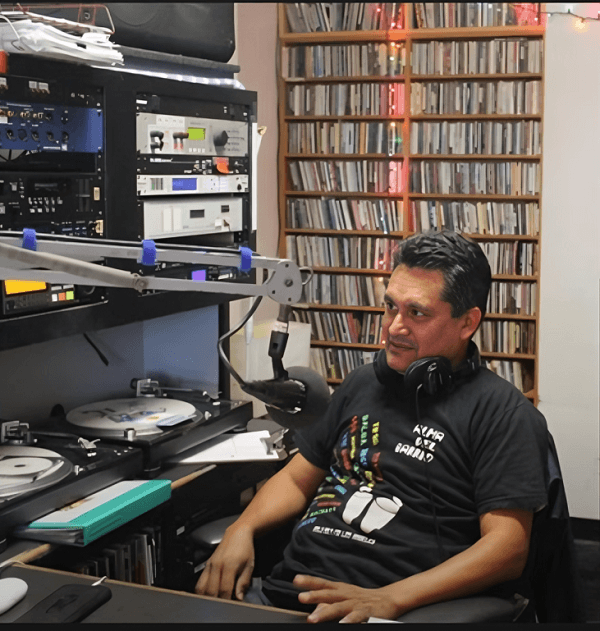
Guido working at KXLU 88.9 FM
”Alma Del Barrio” host Guido Herrera-Yance working at KXLU 88.9 FM

How Guido Herrera-Yance started in the world of music as a radio host 

Many years before Guido even thought about the idea of forming a company, he began to establish himself as a radio host on the popular public radio station KXLU 88.9 FM, specifically on the show ”Alma Del Barrio”, which is about to turn 51 years on the air in October. In Guido’s case, he has been hosting the show for more than 30 years, bringing the best Latin music and artistic news to all his listeners.   

The also producer confesses that he did not really like locution and that he was simply in the right place at the right time, resulting in the career he has built in this type of media. What it does say is that he was a frequent listener of several radio shows and a voracious music collector, which led him to meet certain personalities who saw potential in him to belong to ”Alma Del Barrio”. When a show was opened, he was the leading candidate for the job and accepted immediately. 

Guido did not have any kind of experience in radio, but his employers trained him and taught him everything he needed to know to carry out his tasks properly. 30 years later, Guido is still one of the main hosts of the show and a reference in terms of Latin music radio.    

From radio to event production   

In 1995, one year after having joined ”Alma Del Barrio”, a friend told him that Chucho Valdés was going to the United States after many years and proposed him to make a show together with the artist as the main attraction. When Guido accepted, they began to look for artists to accompany the Cuban that night and some of them were Alex Acuña, Justo Almario, Luis Conte, among others.   

The results were so good that Guido was left with the desire to keep experimenting with this field of the industry, so he continued to produce events of all kinds on a small and large scale since that year. 

As the years went on, he realized that he would need a bigger and more elaborate structure if he wanted to continue to work on this, so the idea of founding a music production company began to take shape in his mind.    
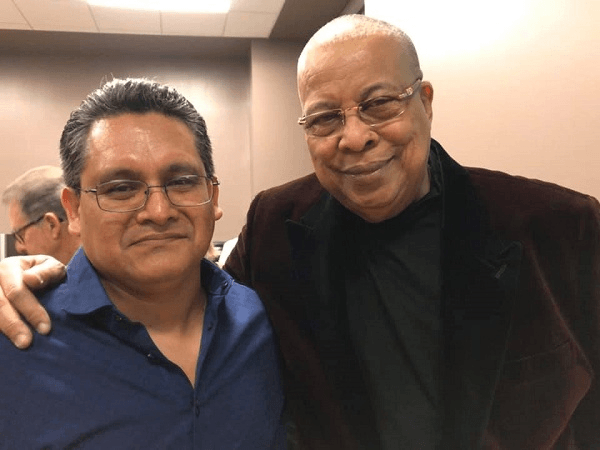
Guido and Chucho Valdés
Guido Herrera-Yance next to Cuban bandleader and pianist Chucho Valdés

How Guido created Yambu Productions   

On the creation of Yambu Productions, something that Guido highlighted is that, in the United States, ”everything must be done very formally”. In light of the obligation to declare the income from his musical activities, Guido saw the need to create a company that would facilitate the procedures related to taxes and issues of this sort in order to cover his back.   

Regarding the name ”yambu”, the businessman was inspired by a song by the Cuban popular music singer Carlos Embale, who was one of his favorite artists, so he wanted to honor him in that way. Taking this detail into account, it is not surprising that Cuban music and its exponents play a fundamental role in the events and groups that Yambu Productions seeks to promote, but it is not limited to nationalities or genres.   

The company has set up events for Los Papines, El Conjunto Folklórico Nacional de Cuba, Chucho Valdés, Los Van Van, El Gran Combo de Puerto Rico, Tito Nieves, José Alberto ”El Canario” and the list goes on. Guido is very proud that Yambu Productions was the one that produced the only concert given by Los Van Van Van and El Gran Combo in the United States, which was in the year 2029. He says he is a fan of both groups, so this was a dream come true for him.   

Upcoming Yambu Productions Events    

This year, Yambu Productions was about to hold the Cuban American Music Festival on 2 June this year, but it has been suspended due to multiple factors, but the main one is that Guido feels that many things have changed in the entertainment industry after the pandemic such as demographics and the public tastes. This has caused the producer to rethink many things, as he is not quite clear  what will be the path to follow by the company, so he prefers to wait. 

In addition to the above, Guido is focused on his own restaurant that opened just six months ago and needs to dedicate all his time and effort to this new project, so it is very possible that the previously festival will be back better than ever for the year 2025, when he will be clearer about what he wants to do with this event.   

However, he said he does not want to be away from live music, to which he attaches a great deal of importance in his work, so with the support of one of the most important jazz clubs in California, Catalina Jazz Club, he rolled up his sleeves and organized the Salsa Meets Jazz Concert Series for 26 April this year (at the time of publishing this article, the concert must have taken place). In this way, Guido wants to recreate that golden era of Latin jazz and salsa in New York, but in his own way. 

The Salsa Meets Jazz Concert Series is expected to pay tribute to a different artist who has contributed to these genres each edition and this year it was the torn for Tito Puente. In addition, Catalina Jazz Club proposed Guido to hold events of this type several times a year, so tribute concerts to Ray Barreto and Andy Gonzalez are also scheduled before 2024 is up. He maintained a close friendship with both musicians, especially with Gonzalez.  
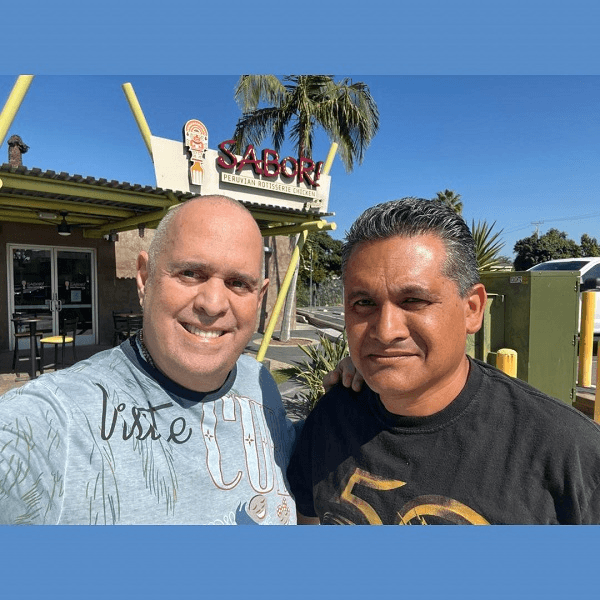
Guido and Alfredo de La Fe
Cuban violinist Alfredo de La Fé next to Guido Harrera-Yance in front of Sabor! Peruvian Rotisserie Chicken, a venue in which Alfredo would perform some hours later

How are the logistics behind a Yambu Productions event? 

When Guido plans to hold an event, the first thing he should do is to find a venue that complies with the requirements for the type of show he plans, analyze the costs involved, find the best talent for the show, hire sound engineers, recruit the people who will be in charge of the logistics part, among other things. It is an arduous work of at least six months before the event takes place.   

An example of the above is the Cuban American Music Festival, which has always been held in May, so he should start organizing and planning for it since November or December of the previous year. This in order to have every detail ready on the day of the festival and to avoid any unforeseen problems that could put those involved down.  

On this subject, Guido said he feels lucky to be able to have so many friends in the world of music, to stay on ”Alma Del Barrio” for so many years and to know people like Nelson González, Johnny ”Dandy” Rodríguez, Genaro Rivera and many others who are always ready to come to Yambu Productions events without even asking about payment, since they know that Guido and his company are very responsible about these issues.  

How talent is selected for events 

”Everything falls on me. I believe that I have the capacity, knowledge and experience to know what the public wants. It is for the very reason that we will not be making the Cuban American Music Festival this year, since the pandemic changed everything in the industry and I have to accept that what sold yesterday is not the same as what sells today” said Guido when asked how he chooses the talent he wants for his shows. He also added that ”I’m still debating with myself on which way to go with the company after quarantine”. 

What Guido will never do is let go of live music because, in his words, ”it feeds his spirit”. As long as he is dedicated to music production and Yambu Productions is still operating, live events will always have a highly important place in the activities carried out by the company. 
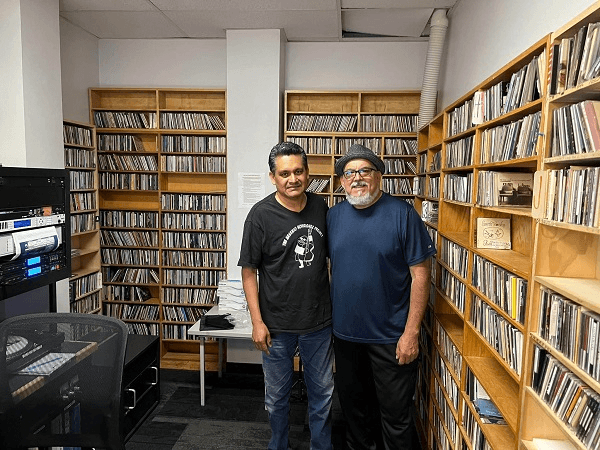
Guido and Poncho Sánchez
Guido Herrera-Yance next to conguero, Latin jazz band leader, and salsa singer Poncho Sánchez

Read also: What The Namm Show is and how it works 

The Conga Room closes its doors, but says goodbye in style

People dancing at The Conga Room

Recently, we learned some unfortunate news for the Latin music scene and the community in general and it is that The Conga Room, one of the most important nightclubs in Los Angeles, will close its doors this March, which has shocked those who used to frequent the cheerful and colorful place to forget their everyday problems for a few hours of dancing.   

This great place was opened in 1999 by businessman Brad Gluckstein thanks to the support of leading figures in the entertainment industry such as businesswoman, actress and singer Jennifer Lopez, actor Jimmy Smits, actor Paul Rodriguez and actress Sheila E. 

Although it first opened its doors on Wilshire Boulevard in 1999, it was moved to L.A.A. LIVE about nine years later. After the change of venue, there were personalities interested in investing in The Conga Room due to the great project it represented at the time, such as rapper and member of the Black Eyed Peas William Adams (better known as will.i.am), actor of Puerto Rican descent Amaury Nolasco, former basketball player Baron Davis and former basketball player Trevor Ariza. 

It was these great figures in music, acting and sports who made The Conga Room one of the most recognized meeting places for Latin music fans and its greatest exponents. 

Jimmy Smits and Paul Rodriguez at The Conga Roo
Jimmy Smits and Paul Rodriguez celebrating The Conga Room’s 20th anniversary some years ago

The achievements of The Conga Room all these years  

During the years following as of its reopening, The Conga Room became an iconic place for music lovers and contributed greatly to the development of the Latin music and cultural scene in Los Angeles. 

During 25 years of operation, it has not only brought the best singers and DJs from California and the United States in general, but also managed to create a lively environment composed of all kinds of cultures that transcended musical genres, to the point that there were people of all nationalities dancing to the same rhythms without any problem, proving once again that music is a universal language we can all understand perfectly.  

And speaking of music, its little stage witnessed more than 500 live shows that included big stars such as Celia, Cruz, Johnny Pacheco, Willie Colón, Tito Puente, Ocar D’ León, Tito Nieves, Gilberto Santa Rosa, Carlos Santana, Elvis Crespo, Los Van Van, Buena Vista Social Club, Alejandro Sanz, Juanes, Fito Paez, Jerry Rivera, Eddie Santiago, Tony Vega, Zacarias Ferreira, Invasión Latina, Andy Montañez, Atercipelados, Aleks Syntek, Beto Cuevas, among many others. As for newer idols, The Conga Room has also received Ivy Queen, J Balvin, Maluma, Bad Bunny, Luis Fonsi and many more.   

It should also be mentioned that; while The Conga Room’s approach is to promote salsa, merengue and bachata; the nightclub is not limited to Latin genres. In fact, there have been great performances by rock, hip hop and R&B artists such as Prince, Stevie Wonder, Lenny Kravitz, Justin Timberlake, Avicci, Snoop Dog, Ed Sheeran, Andy Grammer, Jamie Foxx and on and on.  

This shows that The Conga Room was not limited to the original concept of its founders, but sought to go above and beyond to increase its assistance every day. Its management knew how to reinvent itself in spite of trends and circumstances, which is why it managed to survive so long.   

Oscar D’ Leon at The Conga Room
Oscar D’ Leon performing at The Conga Room

The Conga Room’s definitive closure and farewell show 

The Conga Room was inaugurated with music, so it must also say goodbye with music, so it will offer a private concert this March 27th featuring famous personalities who will meet at the club that day to say goodbye in style.   

The main star of the event will be the renowned Puerto Rican singer Gilberto Santa Rosa, who will be one of those responsible for livening up the night for the show attendees with his greatest hits. Likewise, the host will be Jimmy Smits and he will be accompanied by Paul Rodriguez in the hosting of the show, who were bot very important in club maintenance for so long.  

As for the reasons for the closure, founder Brad Gluckstein has issued statements saying that the ravages of the pandemic, the few events at the convention center and the difficulties in booking national artists with AEG Live (a company focused on the production and promotion of musical events) have made the business model of The Conga Room no longer viable in today’s economy. Not to mention that cost of living, inflation and high interest rates have changed the priorities of potential consumers. 

However, despite the sadness that Gluckstein and the rest of those involved in the Conga Room project have, the businessman pointed out that not everything related to this mythical place will be forgotten, since Conga Kids, a non-profit organization aimed at promoting the social-emotional well-being of children through dancing, will continue to operate as before. This beautiful sister project of The Conga Room will keep its doors open despite the setbacks for the sake of the kids. 

Read also: ”Alma Del Barrio” celebrates 50 years of operation 

Pupy Pedroso An Ambassador of Cuban Music in the World

Latin America / Cuba / La Habana

When we talk about the beautiful island of Cuba, it is impossible not to automatically think of its rich and ancient musical culture. We are talking about a small piece of land in the world, of that long Caribbean, but it is full of the most successful musicians of Cuba. the history of Latin rhythms.

It all lies in the Spanish and African influences that came to the Island hundreds of years ago, that race that was created from the strings and the drum, from the white and the black, from singing and dancing.

On this occasion I feel very proud to be able to speak directly with a cultural ambassador, recently appointed by the Latin Institute of Music, the leader of those who are are and one of the founders of the very famous Van Van orchestra, the great Cesar Pupy Pedroso, teacher of teachers, as we have called him for this occasion.

Good morning maestro, thank you in advance for the time you give us to all the readers of the International Salsa Magazzine and the portal www. salsamundi.com.

“Well, here I am very happy to be able to talk a little with you and grateful that you want to talk about this server”

Maestro with 19 years of foundation with Pupy and those who are maestro, tell us how the idea of ​​founding this great orchestra was born after making the whole world dance with the Van Van.

“The idea for the project ‘’Los que Son Son’’ arose from a recording I made (while in Los Van Van) with songs of my authorship performed by an internationally renowned performer. (Omara Portuondo, Rolo Martínez, Xiomara Laugart, Raúl Planas, Caridad Cuervo, Pedro Calvo, Raúl Planas etc…etc..) From that moment on I got the idea of ​​making another album with other performers, with a German publisher, and The album was called César Pedroso y Los que Son.

There came a time when I was on tour with Van Van and the dancers came with the records, so I could sign them, and it was then that the idea came to me of forming an orchestra and leaving Van Van and calling it ‘Los que Son Son’. . ”

Why Pianist?

“In my house when I was born there was already a piano, my father was a pianist, and children always want to be like their parents, and I was not going to be the exception, regardless of the fact that I liked the piano since I was little.”

What theme do you consider the flag of Pupy Pedroso’s new journey? When your orchestra opens

“Themes of the new transit: themes like ”What are the things in life” ””A crazy man with a motorcycle” ”Mommy behave well”, ”They’re calling me” and of course ”Six weeks “”

Pupy Pedroso
Pupy Pedroso

Tell us the story of the musical piece “De la timba a Pogolotti” does it tell us about a change in your life?

“From Timba to Pogolotti: It arises from a piano solo that I did in ”Sandunguera” and Pedrito Calvo identified me, as ”Pupy the sandunguero of Pogolotti” and the neighbors of La Timba (neighborhood where I I was born) they asked my older relatives why they said about Pogolotti, if I was born in La Timba, then I wanted to be okay with the two neighborhoods, when I made ”Los que Son…”

Well, I made that song in honor of the two neighborhoods, because I was born in La Timba, but I grew up in Pogolotti, and all my childhood friends are from Pogolotti, I don’t have friends in La Timba, and I consider that one is from where one is from. upbringing, not where he was born, because all the customs, friendships, first ”girlfriend” were Pogolotti’s.”

Which song is your favorite from Van Van’s golden era?

“If you talk to me about the songs from Van Van’s golden age, there are several, of mine the authorship of Maestro Formell and others of mine, for example of the maestro, there are several, “My doubts” ”Marilu”” The Painful” ”There are women” ”I’m everything” and one of mine: ”Six weeks “Sugar” ”The Negro is cooking” ”It must be over” ”That’s good ”, among many others, we live in a wonderful time”

Since August 2018, he was named Cultural Ambassador by the Latin Music Institute. Do you consider it an achievement or a new commitment?

“I consider both things, an achievement because it is not easy in a country with so much talent and so many performers to take me into account for said recognition, and at the same time a commitment, because I am obliged not to let my musical guard down in any way.” sense.”

Maestro comes from a family of great musicians, his grandfather a director, his father a pianist, both from great Cuban orchestras. Can we say that being a musician in your family comes in your blood? Is it inherited in the genes?

“Yes, sir, I am grateful for having been born in this family where there was so much musical talent, where only music was breathed, my autistic grandfather, director of an orchestra called ”Cuba”, my uncle a percussionist in an orchestra very famous for that ”Arcaño y sus Maravillas” era, and I believe a lot in the musical heritage because I consider myself a product of it.

As a pianist, it is because my fundamental patron was my father, from whom I copied and learned a lot from what I could discreetly practice and as a conductor, because I had the joy of having worked with different directors, Rolando Valdés, Enrrique Pérez, I assisted in substituting for my father and the ones I spent the longest time with, Elio Revé and Juan Formell, I spent 6 years with Revé and 32 with Formell and I learned a lot with both directors, I was lucky.”

To what do you owe your great success as a pianist and conductor?

“I think that to be good at any career, the fundamental thing is that you like it and have the aptitude for it, I think that music does not escape from that rule, because you can like it, but if you don’t have the aptitude, don’t waste your time, and Maybe if you have aptitude and you don’t like it, over time you may like it and fall in love with it, so aptitude is the fundamental thing.”

What is your greatest reference or influence in music?

“My greatest influence is Son, I love Son, rumba, guaguancó, Cuban music and Brazilian music, jazz, but my greatest influence is Son.”

Currently, how do you see timba within the island of Cuba? Minimized by Cubaton or leader of local rhythms?

“I believe that at all times, there have been different musical genres, which have been in the preference of the dancer, in the era of Rock and Roll they danced with Elvis Presly, with Bill Halle and his comets, with Little Richard, but also they danced with Aragón, Benny Moré, Sonora Matancera, among others,…

but today the balance leans more towards these foreign movements, good and bad, and that is happening all over the world, in the dance area, but I do not consider our dance music critical or dead, because there is taste for everything and every time “A convening orchestra performs on an open-air stage, it overflows with audiences, that means we are in battle, and the country that has the most musicians making a living from music is Cuba.”

Tell us about the 2019 projects? New CD? Tours?

“Fundamentally starting the next album, the release of a documentary of a tour we are doing in Cuba and some presentations abroad, to reappear again at the end of the year in Europe, with one of the dance hits from France:

”Having a good time”, I make a parenthesis, clarify that there are countries where our music prevails (El Son, La Timba, La Salsa) like Peru and Colombia, Cuban rhythms are still in fashion, thanks to many musicians and orchestras that make a great job for the dissemination, to the printed media and now the digital wave that quite develops our work, look, you are an example of this, we hope to continue giving our audience reasons to dance.

In August we return to South America, it is the tour we are most looking forward to, the Latin public is one of the best, we think about stopping in August in Colombia, Ecuador and Peru, in the same way we are now planning to organize the calendar, for businessmen or producers who wish to have us in their cities, must contact our direct representatives, talking to them is like talking to Pupy”

What should a producer do to have them in their Latin American projects?

“No compadre, very simple, contact them at these numbers +573022582306 and +51992630351, they are the only ones authorized to market our tour, we want to be in all the cities of Latin America.”

Grateful teacher for your time and for letting us get to know you a little, may the successes continue for what they are.

“Grateful to you, thank you for the dissemination you make of the popular dance music of my island.

It remains to leave you the social media links of such an important orchestra so that you can follow in its footsteps and find out about the development of the successes of this great band, on Facebook:

@pupypedroso and the numbers

+573022582306 and +51992630351.

El Tresero Moderno San Miguel Perez

Cuba is and will continue to be one of the main cradles of the best artists in Latin America and San Miguel Perez is one of those cases. The producer, composer and singer gave us an exclusive interview to talk about his musical beginnings, his history and what he is currently working on. Don’t miss it!  

Tresero San Miguel
This is San Miguel Perez, ”El Tresero Moderno”

San Miguel, El Tresero Moderno 

San Miguel is known in his country as ”El Tresero Moderno” (the modern tres player in English) due to the styles he uses when playing. He chose the Cuban tres as his main instrument because it is a very important icon in the music of his country and the one that most represents Cuba internationally, 

His first contact with music occurred at the age of 10, when he began studying classical music, but adding the Cuban tres. He followed this same path throughout high school and university until he became part of some Cuban popular music groups such as Los Jóvenes Clásicos del Son and Adalberto Álvarez y Su Son.   

Together with the latter group, he released the album ”Respeto Para Los Mayores”, which was very popular at the time. This success led them to collaborate with great orchestras such as Los Van Van, with whom they shared the stage sometimes.  

On one occasion, one of the members of Los Van Van took the stage to jam with the guys of Adalberto Alvarez y Su Son, including San Miguel. Seeing the Cuban’s talent and style with the tres, he baptized him with the nickname ”El Tresero Moderno”. This nickname had to do with his playing and the influences that the artist brings to the instrument when making a solo.   

San Miguel playing
San Miguel Perez playing the Cuban tres live

Cubadisco 

San Miguel was twice awarded with the Cubadisco Award, one in 2011 in the category of Best Tresero and the other in 2013 in the category of Best Traditional Cuban Music. These recognitions were very important for the musician, as the award was the result of a previous contest, which was focused on the work of treseros, singers and pianists from all over Cuba.  

The primary objective of this contest was to rescue Cuban music and give new talents a chance to make their art known. Adalberto Álvarez, Frank Fernández, and Mayito de Rivera were part of the contest’s presidency. 

Given that San Miguel was one of the winning treseros, the Bis Music label released an album called ”Treseros de Cuba”, material in which the young man was included. This was the album which won the Cubadisco award in 2014.  

After receiving both awards, Adalberto Álvarez met up with San Miguel to invite the Cubadisco winner to join his group. He took advantage of the departure of the former tresero in the group to invite him.   

Los Angeles 

San Miguel’s move to Los Angeles was due to a purely professional issue at first. He went to play with Adalberto Alvarez, Peruvian-American singer Cecilia Noël, her husband Colin Hay from Men At Work and other artists living in the United States. Due to this and other work proposals, he decided to stay in Tampa and, time later, to move to the city of Los Angeles and make it his permanent residence.   

It should also be mentioned that many other artists have had to work other jobs outside of music in order to make ends meet, but fortunately this was not the case of San Miguel, who had the opportunity to work only in music and did not need to resort to other activities out of his passion. He has dedicated himself fully to playing, recording and producing music for the past 10 years.  

San Miguel won the Cubadisco Award
San Miguel twice won the Cubadisco Award in his native country

Composition, production and singing 

Regarding the areas of music in which he has specialized, San Miguel began by explaining that he made a good improvement in composition during the time he played with Los Jóvenes Clásicos del Son. He also learned to make arrangements based on traditional music, something in which the director of the group, Ernesto Reyes Palma, played a very important role. 

Regarding production, the artist did not participate much in that area, but he eventually did in the United States. It is in this country that he officially started his career as a soloist, tresero and artist. Three years after arriving in Los Angeles, he produced a first album called ”Un Poquito de Amor” in collaboration with Cecilia Noël and Colin Hay in 2017, which was a great learning experience for him, as he was able to experiment and mix many seemingly disparate rhythms.   

Other areas in which San Miguel would like to specialize are sound engineering and remastering, but he is working hard to do so.   

Current projects  

As for the current projects, he is currently promoting his single ”Besito Bon Bon”, which is the main song of his new album. In fact, San Miguel and his team are planning to give this same name to the whole album. On this occasion, he mixed electronic sounds with traditional Cuban music to give a much more modern rhythm to the traditional genres coming from the island. The album has nine songs, is produced by Jay Carona and contains some collaborations with Cecilia Noël. 

Read also: Musical history of Roosevelt Cordova ”El Presidente de La Salsa” 

Tempo Latino 2023

Tempo Latino 2023
Tempo Latino 2023

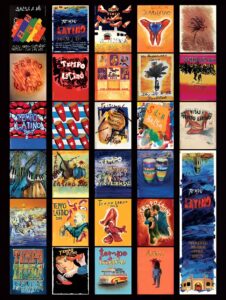
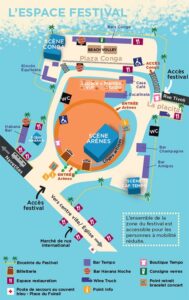
Tempo Latino is a music festival held in Vic-Fezensac, France, in the region of Gers in Gascony it is the first and the greatest Latin American and Afro-Cuban music festival of the summer in Europe. The festival was founded in 1994 and has been held annually since then.

“In 2020 and 2021, the festival was only interrupted for two consecutive years due to the containment of the new crown pneumonia (COVID-19) epidemic.”

With around 600 volunteers from all over the city for four days of intense activities and an audience of around 60,000 people from all over the world.

Tempo Latino offers a variety of Latin American and Afro-Cuban music, including Salsa, Bachata, Kizomba, Cumbia, Merengue, Rumba, Latin-jazz, Reggaeton and more. The festival also features dance workshops, food stalls and other cultural events.

International performers and instructors from Cuba, Puerto Rico, Colombia, Venezuela, Panama, Africa, the United States (primarily New York, Miami, and California), and Europe have participated in a number of concerts and workshops

Tempo Latino has grown from a small festival to one of the most important Latin American music festivals in Europe. The festival hosts some of the biggest names in Latin music, including Celia Cruz, Ruben Blades,  Eddie Palmieri, Oscar D’ León, Johnny Pacheco, Adalberto Álvarez, El Gran Combo de Puerto Rico, Kassav, Totó la Momposina,  and Los Van Van. Tempo Latino has also helped advance the careers of many new artists.

Here’s more information on Tempo Latino:

  • The festival takes place in a beautiful setting in the heart of the French countryside.
  • The festival is family friendly and has activities for all ages.
  • The festival is a great opportunity to experience a different culture and learn about Latin American and Afro-Cuban music.

A festival of concerts takes place in the square and, at the same time, many free outdoor events for those who want to discover music in the city’s dance halls in the afternoon and evening. In the second edition, they have integrated dance, music, and percussion lessons.

The 28th edition of Tempo Latino will take place from July 27-30, 2023.

The lineup includes:

La Conga

27 July – Ana Tijoux (France)

Les Arenes

28 July 2023

21:00 – Orchestra Baobab (Senegal)

23:00 – Grupo Compay Segundo (Cuba)

29 July 2023

21:00 – Lila Downs (Mexico)

23:00 – Cimafunk (Cuba)

30 July 2023

21:00 – Bernard Lavilliers (France)

23:00 – La Excelencia (USA)

and many more!

Pass Concert: 

On the official website, tickets for four days are available for 120 € (during the festival, they cost 150 €).

Eric Duffau

The current director of Tempo Latino is Eric Duffau from Toulouse, France. He is also the founder of the music festival which he started in 1994. A passionate lover of Latin American and Afro-Cuban music, Dufour devoted his life to promoting this music to a wider audience and serves on the board of the French Association for the Promotion of Latin Music (AFMPL).

Director of Tempo Latino is Eric Duffau from Toulouse

Dufoe was a tireless promoter of Latin American and Afro-Cuban music. He travels the world in search of new talent and works hard to make Tempo Latino a major cultural event. He is a passionate advocate of Latin music and works to bring this music to a wider audience.

Dufour graduated from the National School of Arts and Crafts (ENSAM) in Paris. In the early 1980s he worked as a DJ, during which time he became interested in Latin American and Afro-Cuban music. In 1989, he decided to create a festival to showcase this music and Tempo Latino was born.

https://www.tempo-latino.com/

https://www.youtube.com/user/TempoLatinoFestival

The Tempo Latino Festival is Back

  • « Go to Previous Page
  • Page 1
  • Interim pages omitted …
  • Page 7
  • Page 8
  • Page 9
  • Page 10
  • Page 11
  • Interim pages omitted …
  • Page 137
  • Go to Next Page »

International Salsa Magazine (ISM) is a monthly publication about Salsa activities around the world, that has been publishing since 2007. It is a world network of volunteers coordinated by ISM Magazine. We are working to strengthen all the events by working together.