

I placed the order online on October 25, 2023. By return email, I received confirmation of payment and a promise to receive my copy the following week.
As a reader, I was deeply disappointed with the content of the “book”. Attack Sergio! Unbreakable falls short of being an autobiography. I would classify it as a self-help book with little depth, no substance.
Writing a book requires literary knowledge, basing the content on rigorous research and stating the data with mathematical precision.
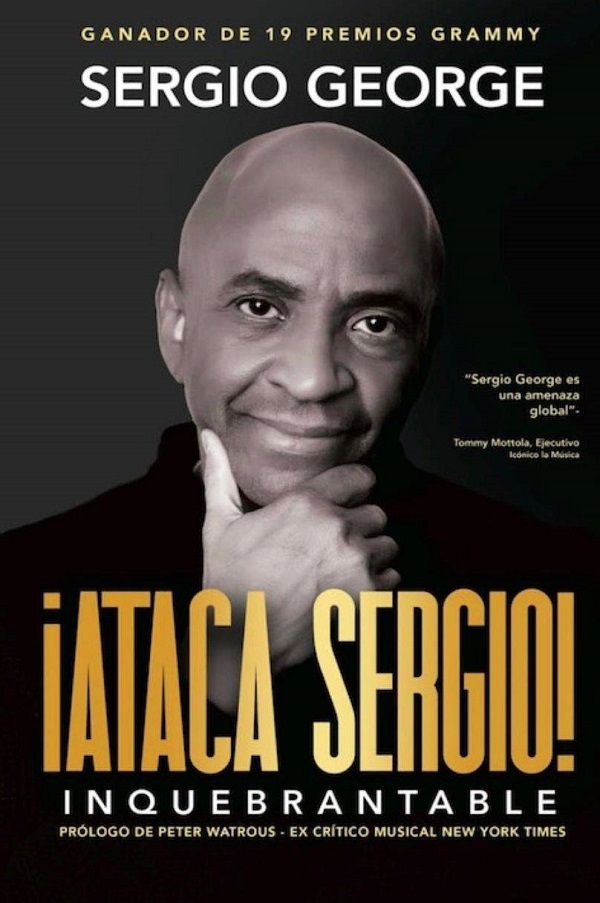
The cover of the text is appropriate for the trajectory of the artist who is the subject of the text. However, the data on the cover that assures that he is the winner of 19 Grammy awards contradicts the text. Specifically, on the third page of the introduction it says that he is the winner of 18 or 19. Evidently, the recently launched book should not be taken as a reference for a subject of such seriousness.
From the legal page it is clear that Sergio George is the author and that Janice Rodriguez was in charge of editing. Sadly, the work lacked editorial care, which detracts from the literary value of what is presented. There are many expressions that seem to be literal translations from English and that do not necessarily maintain the idiomatic integrity of what the author wants to express. Now, if that were the case, you should stop counting the missing and extra accents.
Having said that, I am going to manage my criticism, since space is limited and the idea is not to write another book about the “book”. Certainly, in the world of the versed salsero, of which I am one, the most awarded producer in Latin music has a great story to tell. But his literary delivery fell short. I understand the intention to approach his complaint as a self-help book. But that grand intention also failed.
In his usual combative style Sergio George launches harsh criticisms of salsa artists. Resentment has won out over objectivity. Each blow takes away the value of his exposition, until it becomes the outlet that we all need to have at given moments.
Of course, emotional maturity is what prevents one from publishing matters that should remain in the privacy of conversations between the affected parties.
With a high sense of arrogance, characteristic of narcissistic personalities, the author accuses the “great salseros” of having murdered salsa because of their ego, pointing them out as the culprits of the death of the “musical genre”.
This becomes another of the great contradictions of the text. At times he claims that salsa is not a genre, but on multiple occasions he refers to salsa as a musical genre. On the other hand, he says that salsa is in danger of extinction shortly before assuring that it is dead. His point of view in that sense is not clear either, although he does state near the end that there is a legacy that does not die.
I believe in the evolution of the species and I see that the adaptations through which salsa has gone through are similar to the genetic modifications necessary so that, within each species, the fittest survive.
The text has several anecdotes. However, due to the lack of details, these do not add value to the construction of the history of salsa. In some of them, the names of certain characters are not mentioned. I guess the author did not want to enter into a request for relays or preferred not to risk dealing with legal controversies.
With so much that Sergio George has contributed to the history of Latin music, it is a mistake that the book has not been given more structure and objectivity.
Sergio George has been a cornerstone in the history of Afro-Latin rhythms and is the owner of a brilliant musical career that has made many shine. But to that exposure, the text does not do justice either.

Also Read: Metamorphosis: from music to photojournalism, a reinvention without limits
It is always a pleasure for us to talk with important figures from the Latin music industry in the United States and today it was the turn of the incredibly talented producer, arranger, composer and pianist Irving Flores, who has been kind enough to connect via Zoom and talk a little about his career and personal life.
After the usual greetings and introductions, Irving started talking about what inspired him to get started in music which, in his case, was his father.
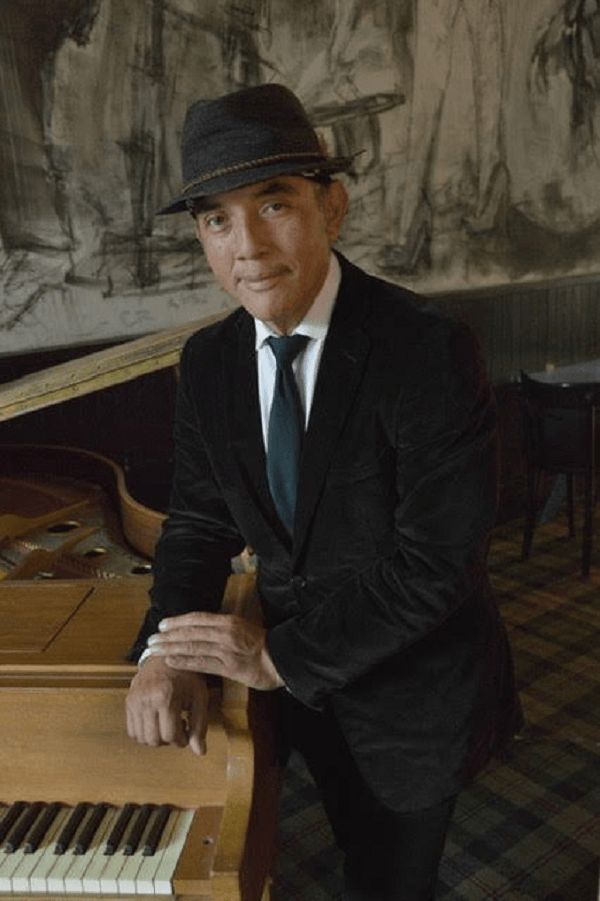
Irving’s first important contact with music was his father, who was a professional saxophonist in the 60’s and even worked for a big band in Tamaulipas, Mexico, the artist’s native country.
He was his first musical maestro and the one who helped him take his first steps in this complicated world, to the extent that Irving also started playing the saxophone encouraged by his father. The young man always wanted to learn how to play piano, but the high level of salinity in the city of Tampico damaged this type of instruments. It is then that he chose the organ which, being electronic, withstood the weather conditions, but he never discarded the instrument he was most passionate about.
Once he began his career as an orchestrator and arranger, he was exploring all wind instruments such as the saxophone, trumpet, and trombone and string instruments such as the guitar. He played the saxophone professionally for some years, studied at the National Conservatory of Music and received private music lessons to strengthen his knowledge.
So, as was the case with many other Latin musicians, Irving perceived music as a job in which experience has been much more important than the academic part. In fact, he told us that, as a child, he saw his father sitting writing music and making arrangements, which led him to imitate him and do the same.
When he has beraly 15, he was perfectly capable of arranging at a professional level, an experience that served him well in Mexico City when dealing with the best composers of his native country, such as Luis Demetrio, Vicente Garrido, Eugenia León and maestro Armando Manzanero. He was also Paulina Rubio’s musical director for many years.
For years, Irving spent three or four days each week in a studio, which gave him the necessary experience to prepare for what was to come in his professional future.

Irving married a U.S. citizen and had a daughter with her, which made it much easier for him to get a visa to travel to the United States. After he split up with his wife, he specifically chose the city of San Diego because his daughter lives here and he wanted to see her grow up.
Although that was the primary reason for his move there, he immediately noticed that there was much scope for him to work on his own stuff and make many contacts. One of them was Dave Scott, thanks to whom he was able to write music for the San Diego Symphony Orchestra.
The artist assures that, regardless of the place he used to live, he never lost his way and never stopped learning everything he could about music.
One of the greatest experiences he had in this city had to do with taking the place of Oscar Hernandez in the Spanish Harlem Orchestra. It turns out that Hernandez lost his luggage and passport on a flight, so someone had to take his place in the concert the band would have the next day in Mexico City. It was then that Gilbert Castellanos recommended Irving for this task.
Hernandez and Irving met, each one put their terms and reached an agreement. The founder of the orchestra bought the artist a plane ticket and went to assume the role of pianist that Hernandez could not take that night and the result could not be better. Since then, Irving and the orchestra has been on excellent terms and both he and the world famous pianist became good friends.
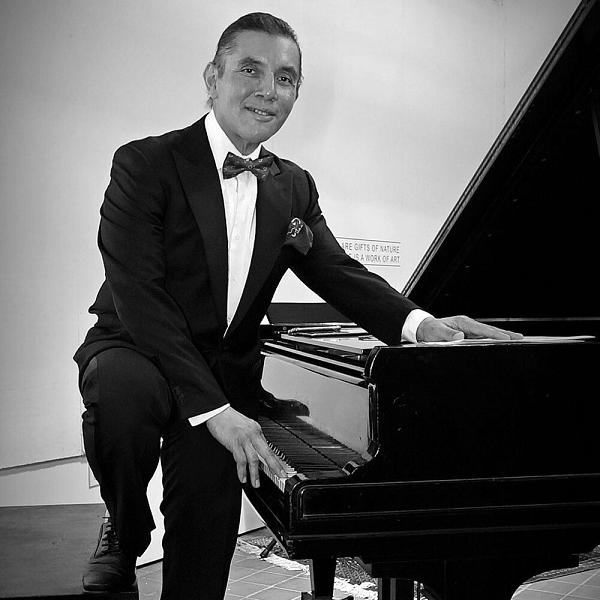
According to Irving, one advantage Latin musicians have is that they are able to play all styles of music, which gives them a greater range of action compared to other artists. We are also influenced by Latin music, Afro-Antillean music and Afro-Cuban music. These elements help us a lot to do our job. American musicians tupically specialize in a single context or genre, but Latinos don’t have those limitations,” Irving said on the subject.
Although the pianist specializes in makings arrangements for jazz, the above mentioned shows that he is perfectly capable of entering any other genre, which has led him to work with great artists with many styles.
One of the most interesting cases was Luis Miguel. One of his most important producers, Alejandro Carvallo, spent some time in Los Angeles, where he and Irving met and forged a friendship. That is how he started writing arrangements for ”El Sol de Mexico” and had a very good experience working for him and his team.
In the case of the San Diego Chamber Orchestra, a composer working for the institution (and Irving’s friend) named Dave Scott needed an urgent arrangement at that time, but they did not have the budget for the relevant work. So, he asked Irving what they could do, to which he replied that he needed a few days to write a new arrangement. The following two weeks, the pianist had no time even to sleep, but he achieved the goal and wrote ”A Tribute to Frank Sinatra”. According to Irving himself, this has been one of the most important projects he has had in his entire career.
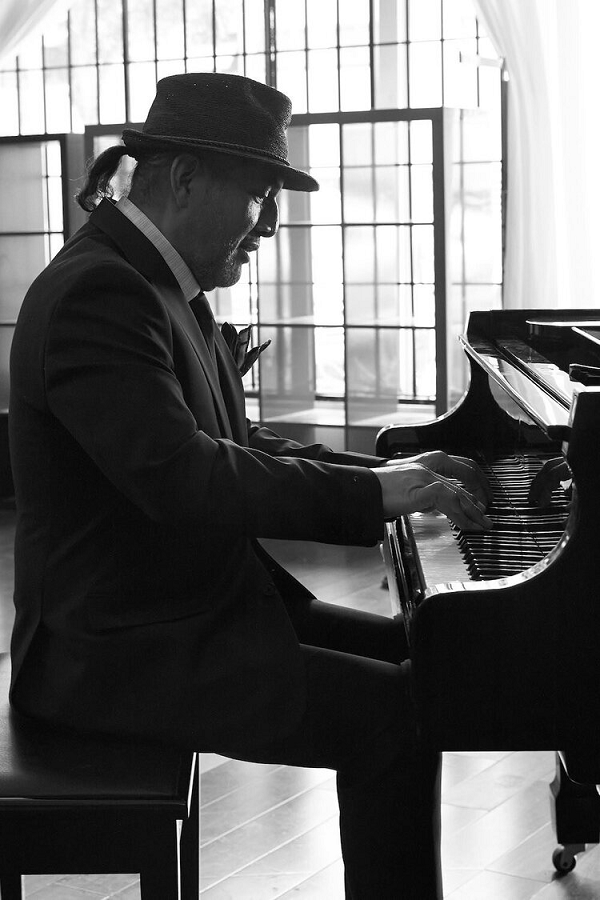
In the year 2021, Irving became an American citizen, which is certainly a great honor for anyone who lives in that country and also a great responsibility. The artist seems to know this very well.
When we asked Irving about this topic, his answer was not so much based on the artistic aspect, but on everything that involves the acquisition of citizenship as a Latino. In this sense, the artist emphasized that the cultural and even judicial environment in which we grew up in most of our countries are completely different from those of the United States, so adapting to this country is a real challenge, but well worth it.
In his case, the pianist also says that he was as disciplined as possible in each of his decisions to be able to get to the point where he is now. In that sense, he has always done his best to exercise his career as a musician with excellence, but always respecting U.S. laws at all times. He said this because he knows many talented people who were unfortunately imprisoned or deported for making mistakes in this regard.
On the same subject, he also said that it is very important to follow the rules for American society to accept you as a member and give you all the opportunities you are given as a citizen with all the letters.
Musically speaking, having a U.S. passport has provided him with the possibility to travel and tour anywhere in the world without any problem, which is extremely important for the growth of an artist’s career.
Pedro Juan Rodríguez, Pete “El Conde” Rodríguez “La Realeza de la Salsa” (Born in Ponce, Puerto Rico on January 31, 1933).
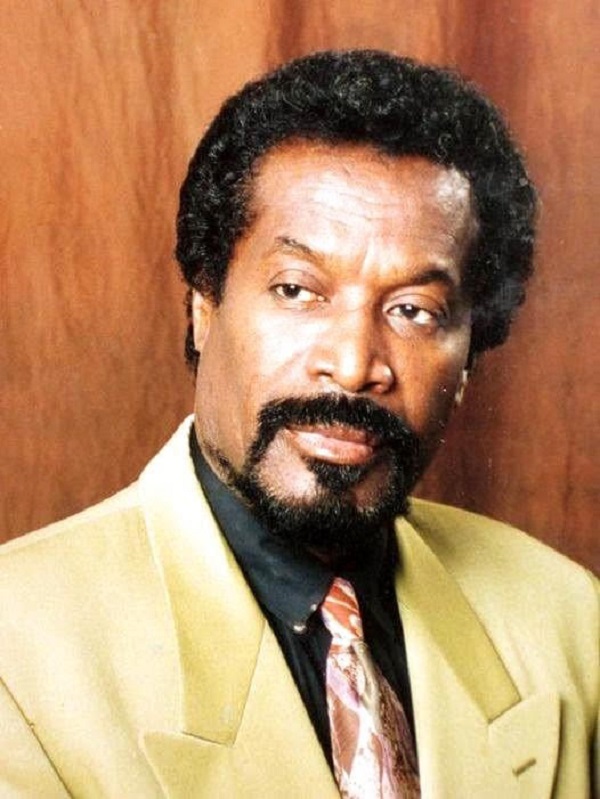
His father, who made his living as a musician playing in a string quartet that entertained parties and social gatherings, guided him during his first steps as a musician.
By the age of 6, little Pedro was very skilled with the bongo and singing popular Puerto Rican songs of the time.
Things became difficult after the death of his father and as a teenager Pete had to emigrate to the United States (1946) to live with his aunt in New York.
Once in New York, Pete managed to establish himself as a percussionist in the Orquesta Oriental Cubana. Before, long before joining the great Pacheco, Pete had to go through several orchestras among which stand out: Las Jóvenes Estrellas de Cuba (57), the Típica Novel and the Broadway from which he left for personal reasons.
In May 1962 Pete Rodriguez (he was not yet called El Conde), joined Pacheco in a Charanguero orchestra (flute, violin, rhythm and chorus). The first album with Pacheco was Suavito in 1963.
By 64 Jhonny Pacheco and Jerry Massucci founded Fania Records and created the internationally recognized Fania All Stars.
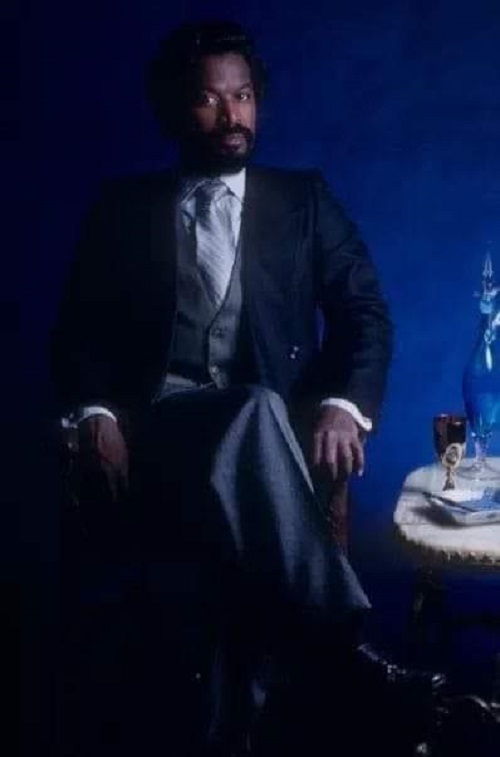
Rodriguez’s first appearance with Fania was at the Greenwich Village Red Garter Club in 1968.
For reasons of life Pete had to leave Jhonny Pacheco’s group; the concrete reasons for this separation will remain a mystery, but it seems that his departure was due to personal disagreements with other members of the group.
After Pacheco, Pete packed up his motets and moved with Rey Roig and the Sensación group (1964-1968). From his time with this group w For the years 66-67, Pete returned to the ranks with Pacheco. This was a more mature stage where the marvelous duo achieved their greatest hits: Azuquita Mami, Convergencia, La Esencia del Guaguanco, Sonero, Viralo al Reves and others.
The turmoil of the time, the world events, the new way of dressing and people’s way of thinking made Pete change his appearance; he let his beard grow and changed his hairstyle a little. This change gave him a new image and a new name “EL CONDE”.
The Pacheco-Rodriguez duo lasted approximately 8 years, since in 74 El Conde decided to go solo.
That same year El Conde released his best selling and Grammy award winning album El Conde (1974). Two years later (1976) El Conde became part of the Salsa Hall of Fame immortalizing himself with Catalina la O.
In 1993 El Conde made way for his son Pete Emilio and his daughter Cita Rodriguez who joined the group as second voice and backing vocalist.
The family was already complete because Francis Rodriguez, his wife, was in charge of the administrative and financial part of the group.ere the following songs Salsa, Bailando Conmigo and his hit El Rincón.
El Conde made his last recording on the Masterpiece Album (1999) with Tito Puente (1923-2000) and Eddie Palmieri. This album is considered posthumous because in that same year (2000) Tito and El Conde passed away.
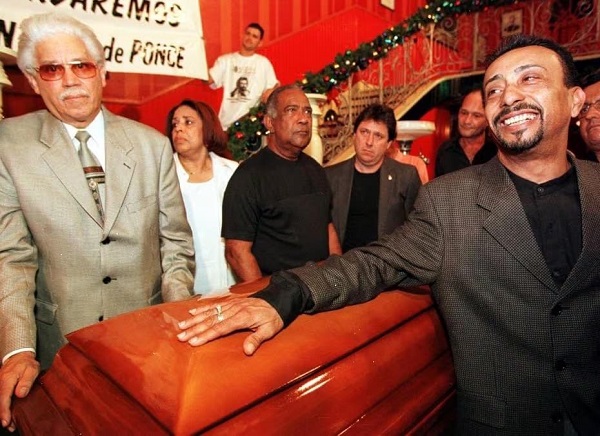
His remains were taken to his native Puerto Rico. He is survived by his wife Francis, his two sons Cita and Pedro Emilio, and his grandchildren.
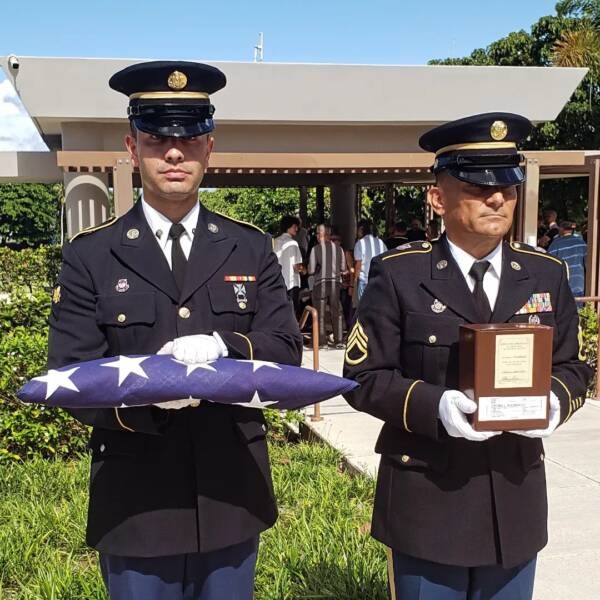
Source: El Pozo de la Salsa
Also Read: Héctor Martignon has been one of the most sought-after pianists on the Latin jazz scene in New York








CANADADIRECTORY OF NIGHTCLUBS |
||
|
|
|
|
|
|
|
|
|
|
|
|

UNITED STATESDIRECTORY OF NIGHTCLUBS |
||
| CALIFORNIA | FLORIDA | ILLINOIS |
| MICHIGAN | NEW JERSEY | NEW YORK |
| OHIO | PENNSYLVANIA | TEXAS |
| VIRGINIA | WASHINGTON | |
| JANUARY 2024 FESTIVALS | ||
|
|
 |
The Reno Latin Dance FestJan 04 / 07, 2024 Silver Legacy Resort Casino |
|
|
 |
Houston Salsa CongressJan 11 / 14, 2024 The Westin Houston Hotel, Memorial City |
|
|
 |
Interfusion FestivalJan 11 / 15, 2024 Crystal Gateway Marriott |