• Skip to primary navigation
  • Skip to main content

International Salsa Magazine

  • HOME
  • Previous editions
    • 2026
      • ISM / April 2026
      • ISM / March 2026
      • ISM / February 2026
      • ISM / January 2026
    • 2025
      • ISM / December 2025
      • ISM / November 2025
      • ISM / October 2025
      • ISM / September 2025
      • ISM / August 2025
      • ISM / July 2025
      • ISM / June 2025
      • ISM / May2025
      • ISM / April 2025
      • ISM / March 2025
      • ISM / February 2025
      • ISM / January 2025
    • 2024
      • ISM / December 2024
      • ISM / November 2024
      • ISM / October 2024
      • ISM / September 2024
      • ISM / August 2024
      • ISM / July 2024
      • ISM / June 2024
      • ISM / May 2024
      • ISM / April 2024
      • ISM / March 2024
      • ISM / February 2024
      • ISM / January 2024
    • 2023
      • ISM / December 2023
      • ISM / November 2023
      • ISM / October 2023
      • ISM – September 2023
      • ISM – August 2023
      • ISM July 2023
      • ISM Edition June 2023
      • ISM – May 2023
      • ISM April 2023
      • ISM March 2023
      • ISM February 2023
      • ISM January 2023
    • 2022
      • ISM December 2022
      • ISM November 2022
      • ISM October 2022
      • ISM September 2022
      • ISM August 2022
      • ISM July 2022
      • ISM June 2022
      • ISM May 2022
      • ISM February 2022
      • ISM January 2022
    • 2021
      • ISM December 2021
      • ISM November 2021
      • ISM October – 2021
      • ISM September 2021
      • ISM August 2021
      • ISM July 2021
      • ISM May 2021
      • ISM April 2021
      • ISM June 2021
      • ISM March 2021
      • ISM February 2021
      • ISM January 2021
    • 2020
      • ISM December 2020
      • ISM November 2020
      • ISM October 2020
      • ISM September 2020
      • ISM August 2020
      • ISM July 2020
      • ISM June 2020
      • ISM May 2020
      • ISM April 2020
      • ISM March 2020
      • ISM February 2020
      • ISM January 2020
    • 2019
      • ISM December 2019
      • ISM November 2019
      • ISM October 2019
      • ISM Septembre 2019
      • ISM August 2019
      • ISM July 2019
      • ISM June 2019
    • 2016
      • ISM December 2016
  • Spanish
  • Download Salsa App
    • Android
    • Apple

Search Results for: World Salsa

Jimmy Rodríguez ”El Salsero Mexicano” talked to ISM about his career

El Salsero Mexicano 

Jimmy Rodríguez ”El Salsero Mexicano” is a talented singer born in Mexico City, but spent a lot of his childhood in the city of San Luis Potosí, where he took his first steps as an artist. 

Thanks to his brother and manager, Daniel Rodriguez, we had the opportunity to talk to him and learn more about the interesting career he has had in the world of entertainment. Meet Jimmy Rodriguez and the kind answers he gave to our questions.   

 

Jimmy on stage
Jimmy Rodríguez singing on stage

Beginnings of Jimmy Rodriguez in music   

By the time he got to high school, his talent for singing and charismatic personality made him the ideal candidate to participate in a talent contest, in which he would come in second place the first year in which he participated.    

Jimmy told us that he entered the contest to live a new experience, but he did not expect to achieve such a high place, so he felt very excited and motivated because of what he could achieve thereafter.    

The following year, he managed to get the first place in the same contest because he had spent a whole year studying and getting ready for that important moment. The previous time, he had only rehearsed the days prior, so he decided to take much more time on this occasion and the effort invested paid off.   

As a result of this achievement, the Group Alfa Omega saw the potential in this young man, so they contacted him and offered him to join them. This would be his first paid job in music, which began to teach him how this business worked. 

He began to play with Alfa Omega in events like weddings, and baptisms, which taught him how to entertain and charm an audience, and he is very grateful for this opportunity he had. Unfortunately, it didn’t last long.   

In the end, Jimmy had to leave the group due to his move to Mexico City to continue his studies.   

During his learning process, he developed their skills in playing the guitar and dancing in order to perform better on stage, keeping inmind that singing was his thing and that was not going to change.   

When Jimmy arrived in the United States, he began taking singing lessons for more than nine years to improve his voice. Today, he continues with his vocal learning, as there is always something new to learn in this field.   

Jimmy and Tito
Jimmy Rodríguez and Tito Nieves

Musical genres   

It is not common to find a Mexican who sings salsa professionally, and more if we take into account that many of the most famous Mexicans sing ranchera, norteño music and corridos tumbados. So, we wanted to know why he chose salsa as the genre he wanted to pursue.   

Jimmy explained to us that the first time he sang with a salsa orchestra on stage, half the musicians were Colombian and the other half were Mexican. At that moment, I felt like I had found my soulmate and I knew that’s what I wanted to do. Besides, dancing is very important in salsa and I have always loved to dance,” Jimmy said.   

He finished by saying ”salsa combines my three most important talents, which are singing, dancing and charisma”.   

When asked whether he would enter more typical genres of his country, he pointed out that he loves ballads and would have no problem in performing fusions and collaborations, but his north is still salsa for the moment.   

The Voice and proceeds from the show 

Being in The Voice has always been one of Jimmy’s biggest dreams, which he finally achieved a few years ago and whose judges were Luis Fonsi, Carlos Vives, Alejandra Guzman and Wisin. The best of all is that he made it to the final and he says that his secret to achieving this feat is to always be focused, to give the best of himself, to have a good relationship with show’s production and his colleagues and, above all, to choose a genre that was not typical for a Mexican.    

This particularity made people call him ”El Salsero Mexicano”, a nickname he has continued using to this day with pride in what has been achieved so far.    
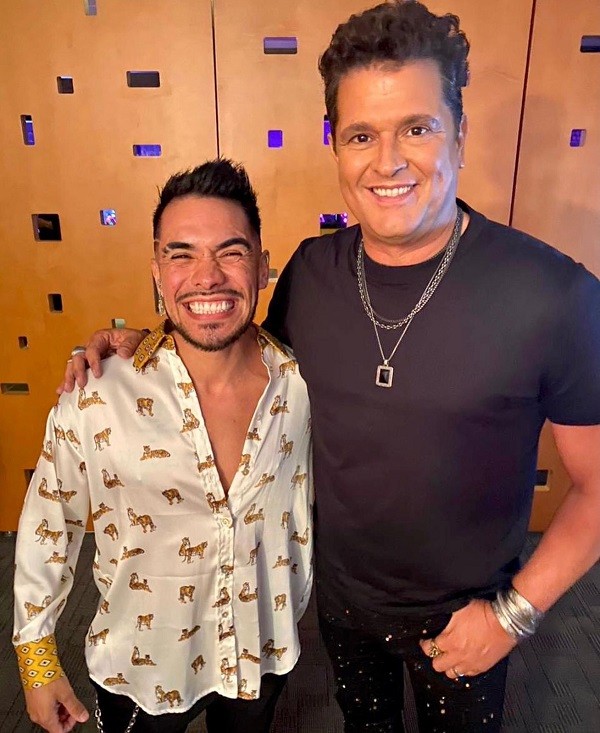
Jimmy and Carlos
Jimmy Rodríguez and Carlos Vives

While he was still participating in the contest, Adolescent’S Orquesta contacted him to have him in the group, which Jimmy accepted and became the first Mexican to be part of this Venezuelan orchestra. In addition to that, Jimmy kept releasing new music in order to stay alive in the public spotlight, as the singer understood that the fame that came La Voz was momentary and he had to take advantage of it.    

Today, he continues touring with Adolescent’s Orquesta, working on an album with Marc Anthony‘s producer and taking singing lessons to further improve his vocal technique.   

And speaking of Marc Anthony, this Puerto Rican artist has been one of the greatest inspirations for the Mexican, who wishes to one day reach that level of talent and fame, although he knows it will not be an easy way. 

In addition to the already mentioned salsero, Jimmy has also been inspired and influenced by the styles of Rubén Blades and El Grupo Niche.   

He has also had the opportunity to share the stage with Tito Nieves, Willie Colón, Jerry Rivera and many others.    

Salsa and comparisons with other genres   

When we wanted to know what Jimmy feels with the current situation of salsa, he says that he is well aware that this musical genre is not going through a good moment due to the popularity of trap, reggaeton and, more recently, corridos tumbados.   

However, he ensures that he does not see this fact as something negative, but as a challenge of bringing salsa back to the place it occupied for years in past decades, so he gives his best every day to offer a fresh sound that appeals to new generations, and not only to fans aged 30 and older. 

Jimmy and Gilberto
Jimmy Rodríguez and Gilberto Santa Rosa


It is what has led the artist to make modifications in regard to the technical aspects, arrangements, lyrics and other details. In the specific case of lyrics, he has opted for simpler words and phrases that can be understood by anyone who listens to them. He continues to maintain the quality and heart that salsa should have, while taking into consideration what new generations are looking for. 

Jimmy understands that everything happens very quickly nowadays due to social media, so he has had to adapt his style to what young people are looking for on digital platforms. That is why when he shows his music on his social networks, he always tries to communicate what he wants from the first second so as not to lose the public’s attention.   

End 

The conversation concludes with a thank-you to all the people who still support the salsa genre and a recommendation to new talents to never give up on their dreams and to work continuously to achieve all what they want. 

Jimmy used his case as an example, remembering that he started singing on buses to help his family and now he assists international awards and reach the level that he has today, so he ensures that dreams come true and we must not lose heart until we achieved them. 

Read also: Life, Career, and death of Juan Carlos Formell 

Israel “Cachao” Lopez Sobrado in fame and respect in the seventies was dedicated to maintain the tradition at the highest level

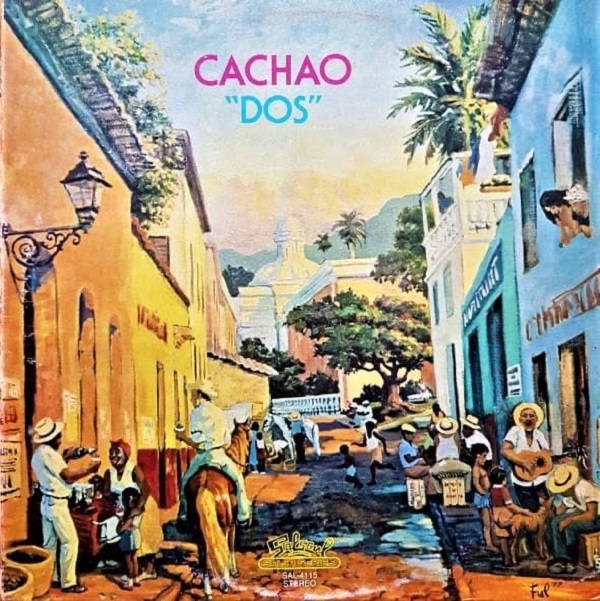
“Cachao Dos” for the year 1977.

It will be enough to mention the name of this celebrity to open a whole range of creativity and genius embodied in what is considered a cult discography.

Since 1931, the year in which he started musically as a member of the Havana Philharmonic Orchestra, the precocious Israel would give a foretaste of the talent he had and that, as time went by, would be consummated hand in hand with his right-hand man and musical accomplice, Orestes “Macho” López, his older brother.

Certainly, music was impregnated in the DNA of the López family, a generating machine of musicians by tradition, something that Lázara Cachao, Israel’s niece and daughter of his deceased younger brother Orlando “Cachaito” Lopez, reaffirms: “The tradition of being musicians comes from the grandparents and great-great-grandparents, all the Cachao are musicians”.

Israel “Cachao” López Sobrado

Regarding his transcendence, he and his older brother Orestes are said to be the creators of the Mambo, a rhythmic variation of the Danzón and a genuine musical expression that would mark a before and after in Latin music.

However, and as it is known, this contribution would change its clothing and would reach worldwide popularity when it reached the hands of another “inventor” born in Matanzas, Cuba, named Dámaso Pérez Prado, who as it is known, gave it another treatment and musical twist reaching surprising popularity.

“Cachao”, after a 31-year stay with the Havana Philharmonic Orchestra, decided to leave Cuba, settling for many years in New York City.

As it is understandable, his presence in this city was more than important for the musical guild and music fans.

He was nothing less than one of the managers and protagonist of the famous Jam Sessions recorded by the Panart whose presence was capitalized among many others by Tito Puente, Tito Rodríguez and Eddie Palmieri.

From the first one we could say, a whole school, a musician with a deep knowledge of his double bass and creator of his own style, bow in hand, and as a prolific composer, with approximately three thousand compositions together with his brother “Macho” López.

The years in New York were musically very good for Israel Lopez as well as in Las Vegas and finally Miami, where he lived until his last days.

Making a discography of him is quite a task and a challenge. However, after his arrival, I remember with great pleasure his collaboration for the album Latin Explosion by Joe Cain and his orchestra in 1964, where among others, Listen dos Trompetas and Mungo, Mungo Baby stand out.

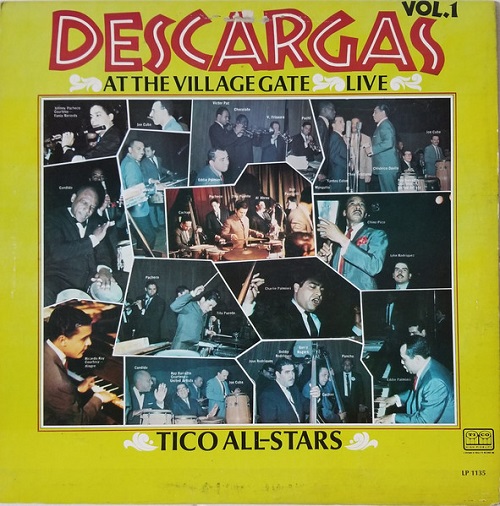
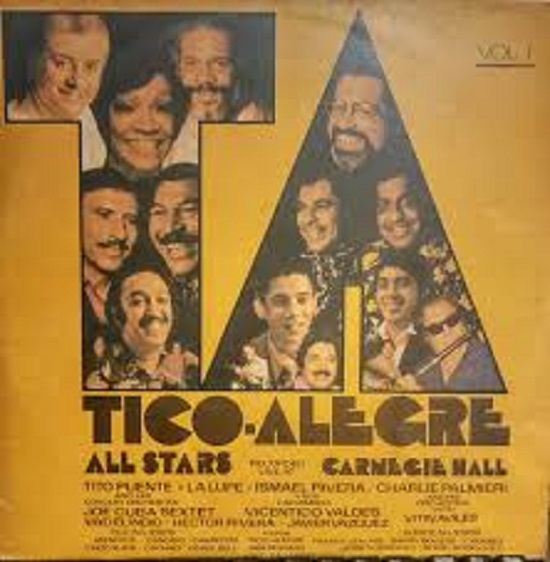
Esta es mi Orquesta, theme/performance of Tito Rodriguez’s musicians emulating what Stan Kent and his Big Band did, or those performances as special guest in the famous Descargas at The Village Gate Live and Tico All Stars, among many others.

The Village Gate Live
Tico All Stars
Tico All Stars

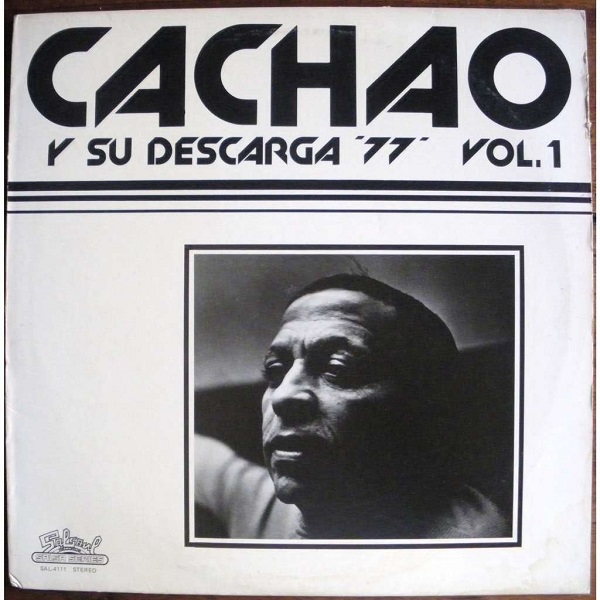
In the seventies, Cachao, with his fame and respect, dedicated himself to maintain the tradition at a supreme level, and from that period, punctually 1977, Cachao will present two epic works, the first one entitled Cachao y su Descarga Vol. 1 and then Cachao Dos, both recorded for Salsoul Records under the production of René López and Andy Kaufman.

Cachao y su Descarga Vol. 1

The latter contains only a total of five tracks, but they are well fulfilled in their purpose of maintaining a fierce defense of the rhythms that Gran Cachao has been proclaiming for years.

This album, like everything else recorded by the double bass player, is genuine and of supreme quality, something that is due to Israel’s responsible and dynamic character, something that the leader Julio Castro can attest to, having not only known him personally but also having worked with his orchestra La Única, which arrived in NYC for a prolonged stay of a little more than half a year.

Cachao Dos
Cachao Dos

Repertory

Ko Wo Ko Wo: (Guiro): Julito Collazo

Israel “Cachao” López: Contrabajo

Julito Collazo: Vocal, Chekere, Conga

Mario Muñoz “Papaito”: Campana

Diane Cardona: Coro

Marcelino Guerra: Coro

Héctor “El flaco” Hernández: Coro

Zunny López: Coro

Frankie Rodríguez: Coro

Fela Wiles: Coro

Jóvenes del Ritmo: (Danzón): Israel López

Israel “Cachao” López: Contrabajo

Julián Cabrera: Congas

Gonzalo Fernández: Flauta de Madera

Oswaldo “Chihuahua” Martínez: Timbales

Charlie Palmieri: Piano

Rolando Valdés: Guiro

Cuerdas:

“Pupi” Legarreta: Violín

Alfredo de la Fe: Violín

Eddie Drenon: Violín

Yoko Matsuo: Violín

Carl Héctor: Violín

Patricia Dixon: Cello

Centro San Agustín: (Danzón-Cha): Israel López

Israel “Cachao” López: Contrabajo

Carlos “Patato” Valdés: Congas

Gonzalo Fernández: Flauta de Madera

Lino Frío: Piano

Rolando Valdés: Guiro

Nelson González: Tres

Mario Muñoz “Papaito”: Percusión

Alejandro “El negro” Vivar: Trompeta

Alfredo “Chocolate” Armenteros: Trompeta

Rafael “Felo” Barrios: Coro

Roberto Torres: Coro

Trombón Melancólico: (Descarga): Israel López

Israel “Cachao” López: Contrabajo

Manny Oquendo: Timbales

Charlie Palmieri: Piano

Barry Rogers: Trombón

José Rodríguez: Trombón

Andy González: Campana

Frankie Rodríguez: Percusión

Gene Golden: Percusión

Milton Cardona: Percusión

Rafael “Felo” Barrios: Coro

Roberto Torres: Coro

Chambelona (Popurrí de Congas): Neri Cabrera

Israel “Cachao” López: Contrabajo

Julito Collazo: Bombo

Lino Frías: Piano

Mario “Papaito” Muñoz: Percusión

Oswaldo “Chihuahua” Martínez: Percusión

Virgilio Martí: Percusión

Eugenio “Totico” Arango: Coro

Rafael “Felo” Barrios: Coro

Read Also: Carlos “Patato” Valdés one of the best percussionists in the history of Latin Jazz

Cachao

Joel Uriola

Latino America / Venezuela / Caracas

Joel Uriola “I am the best, because I surpass myself”

Very soon the theme will be released, Cuidadillo there ok

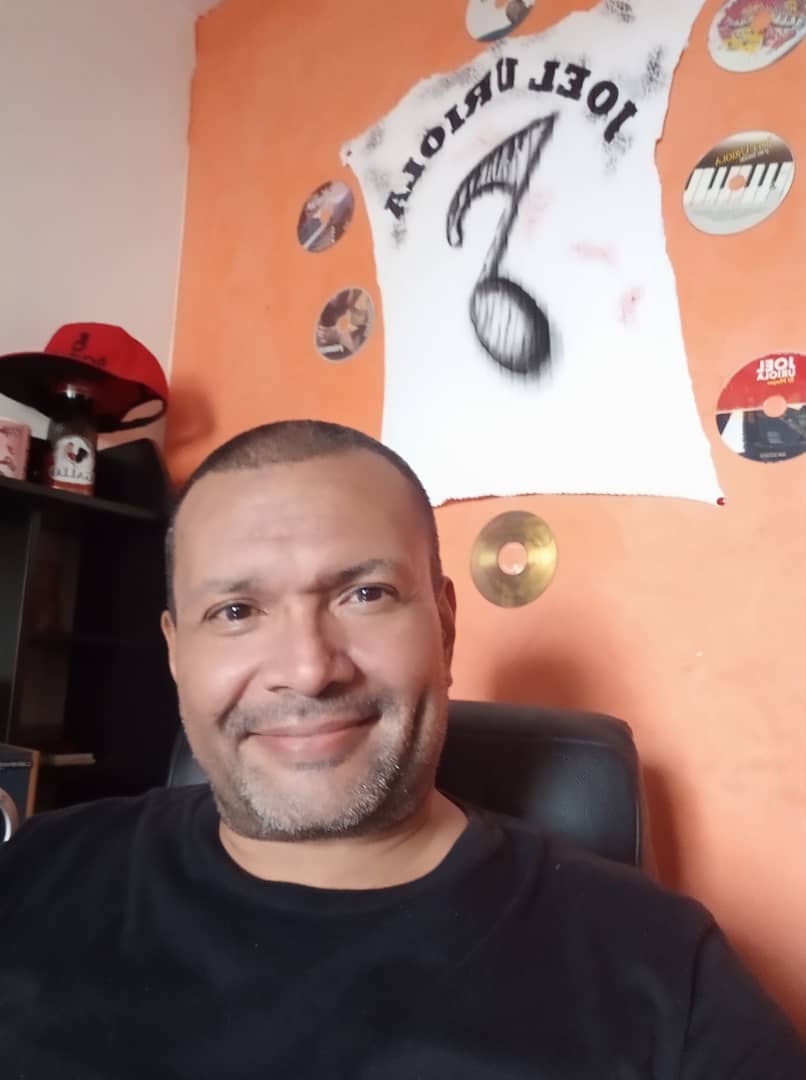
This Venezuelan pianist, arranger and musical producer was born on January 4, 1963 in Caracas, in the popular parish of Antímano, the same one that saw the birth of Sonero del Mundo Oscar D´ León, by chance or his destiny was already written and en route. towards a dream that over the years would come true; be the best and that your work is recognized both nationally and internationally.

In our gathering, Joel tells us that when he is classified as the best, he has nothing to do with competing with others or with airs of greatness, but with surpassing himself in everything he proposes, he tells us that “my path is longer, but I came as Joel Uriola”, his name is a seal that ensures quality work.

With 38 years of musical career, Joel Uriola has plenty of talent, level and experience, in each production he uses the best group of Venezuelan musicians and continues to be at the forefront of music, all this is demonstrated in the more than 1000 musical productions in which he has participated as a performer, director or musical producer, with national and international artists.

Joel Uriola
Joel Uriola

Joel Uriola The best?

“That’s right, metaphysics says that you can’t talk about yourself in a negative way, you can’t sell a product if you don’t have good marketing, you must see beyond, be your own manager, most record companies are in the hands of ignorant people. the music that drive the artist’s work”. “Artists have the obligation to cultivate themselves, learn and not only be musicians, we must project ourselves in a big way”.

How did your childhood develop and what was the atmosphere of the time like?

“I had a good education in my home, with values, a grandmother with character, who told me that no matter where you lived, your behavior would make a difference, she always motivated me, just like my mother who also instilled in me to prepare myself, my grandmother was an enterprising woman, my father was a rumba guitarist and a professor at the Católica”. “I remember that I saw the debut of the Trabuco Venezolano in the CC Propatria, as fate would have it, my mother had an office there, as did the people of the Latin Dimension.”

At what age did you start in music and with which orchestras did you take your first steps?

“My musical beginnings took place at the “Prudencio Esáa” School of Music, starting professionally at the age of 17 with a group called Galaxia, I was the conga player, it was a Son group and we rehearsed at the observatory”. “Then I became part of the Caracuchos of Joseito Rodríguez from 1977 to 1979, whom I met thanks to Jesús “Totin” Rebolledo, later with the Latin Dimension from 1979 to 1980, from Cesar Monges I learned a great deal, and from 83 to 87 with Oscar D´ León.

And why is there that change from the conga to the piano?

“Due to the noise I made in the house when I was rehearsing and the equipment turned on at full volume, my mother subliminally gave me an organ, it was less noise, and then I began to imitate what the pianists did in a self-taught way, I remember the theme of Pete Rodríguez… What things life has, life, life”. “Then my mother bought me a piano and took me to audition at the School of Music and I stayed, I was a student of teacher Tiero Pezzuti, Gerry Well and Samuel del Real”. “In the nightclubs of El Rosal I did many substitutions, there I polished myself, I had a good preparation and some great teachers who are my friends”.

Joel Uriola - piano
Joel Uriola – piano

What anecdotes do you have about your experience of working alongside Oscar D´ León, and about that piano solo on the song “Cuídate bien”, did you ever think that being so young, almost 20 years old, your name would remain forever on the mind of the salsero?

“The time with Oscar was glorious, I got to know many places, we toured for 3 and 4 months, we enjoyed ourselves but we also had a lot of fun, I learned a great deal and disciplined.” “I had the blessing of meeting many musicians that I admired such as Eddie Palmieri, Salvador Cuevas, Barry Rogers, among others, with Domingo Quiñones I made a great friendship.” “As for improvisation, I feel great pride, it was something that came out at that time, I don’t know if it will come out again -laughs-“.

Which musician has been your biggest influence?

Markolino Diamond, Eddie Palmieri, Papo Lucca.

A pianist you admire?

“Markolino Diamond is my idol, a lot of what I do has to do with this guy, if he were alive he wouldn’t exist…”. “He was irreverent, crazy, he broke the schemes.”

How do you see the response of the salsa audience with your productions?

“There will always be admirers and detractors, with the level of awareness that you gain, it doesn’t bother you that there are people who don’t like your work, I make music for everyone”. “Public opinion can kill you if you are not prepared for it, but you must believe in what you do.”

How do you see the support of the media to spread your music?

“Thank God the record companies disappeared, those who knew the least about music controlled them, they decided that it was commercial and that it was not, in the alternative media there is response and support, however, social networks allow you to reach in a matter of seconds many places and you can do your own marketing”.

What do you think about the fusions that you are doing with salsa, for example, salsa and reggaeton?

“It works perfectly, it’s urban salsa, reggaeton with its lyrical content has improved a lot, they’ve softened it, reggaeton artists have great economic and communication support.” “The good things are guaranteed, reggaeton is seen as Salsa was seen in its beginnings, with bad eyes, but you see, Salsa is worldwide even the Chinese dance it, people consume what the radio puts on it, even if it’s bad, there’s room for everyone”.

As a music teacher, what have you contributed to the country?

“Train the next generation, in values ​​and discipline, and that seed continues to germinate, help people regardless of how they sometimes pay you.”

Why musician and not another profession?

“I wanted to be Disip (Venezuela’s intelligence corps), but when one is born marked for something, that’s what goes… My destiny is music.”

How do you see the music industry right now?

“Everyone is recording with their own effort, you make a song, you upload it to the networks, we have that powerful tool in our favor; the record companies limited you, hardly any albums are recorded anymore”.

Can you live from music?

“Well… Thank God I can do it, every day I get up like a conuquero to work, I can live from music.”

Of the 9 productions under your belt, which do you think is the best or the most important for you?

“Babalawo (2009), the best achieved, the best worked in all aspects, was sold in all religious houses.”

What motivated you to form your own orchestra?

“I’ve always been a leader, that’s why I decided to form my own orchestra, everyone has their moment”.

Isn’t it a difficult job to compose and arrange?

“You are born for this, it is not difficult, you must study and prepare yourself, my muse can arrive at 3 a.m., I get up and add or season my music in my own way, I listen to traditional Cuban music, jazz that inspire me.”

What is Joel Uriola doing right now?

“Currently I dedicate myself to producing for other artists of the Salsero genre, always offering quality, the most recent is the work with the Mercadonegro Orchestra with the theme Rumba Negrito”.

You are the arranger of the 3 songs that made the Bailatino orchestra known internationally, you have been the Producer and arranger in five songs of “Rumberos del callejón”, among other Venezuelan artists. What does it feel like to contribute so that other Venezuelans are successful?

“At the moment you do things, you do it with the best intention, and that is the greatest satisfaction, helping others grow regardless of how they pay.”

Do you feel that unity and camaraderie are lacking in the salsa guild?

“Totally, without unity nothing is achieved.”

What do you think of copying, imitating and not creating?

“He who imitates is destined to fail, one must have personality, you must not cling to something foreign to survive, what you do has more value, you must have creative capacity”.

Future plans or present?

“I am recording two songs, Cuidadillo there ok composition by Maurice Melo, a salsa with tasty rhythmic elements, timba and hard sauce, and the second song You are the teacher has a Christian connotation, with the Praise Orchestra, the song is my own. , a cool sauce with Christian sauce”.

Joel reaffirms us “My road is long, but I arrive as Joel Uriola, I am who I am, I am the best”.

Francisca’s

North America/ United State / California

Francisca’s. An Italian-Venezuelan Restaurant with Trendy Style

For several years Francisca’s has been in the heart of the Mission district in the San Francisco city. Its peculiar style and the combination of European and South American foods make it one of the trendiest restaurants nowadays.

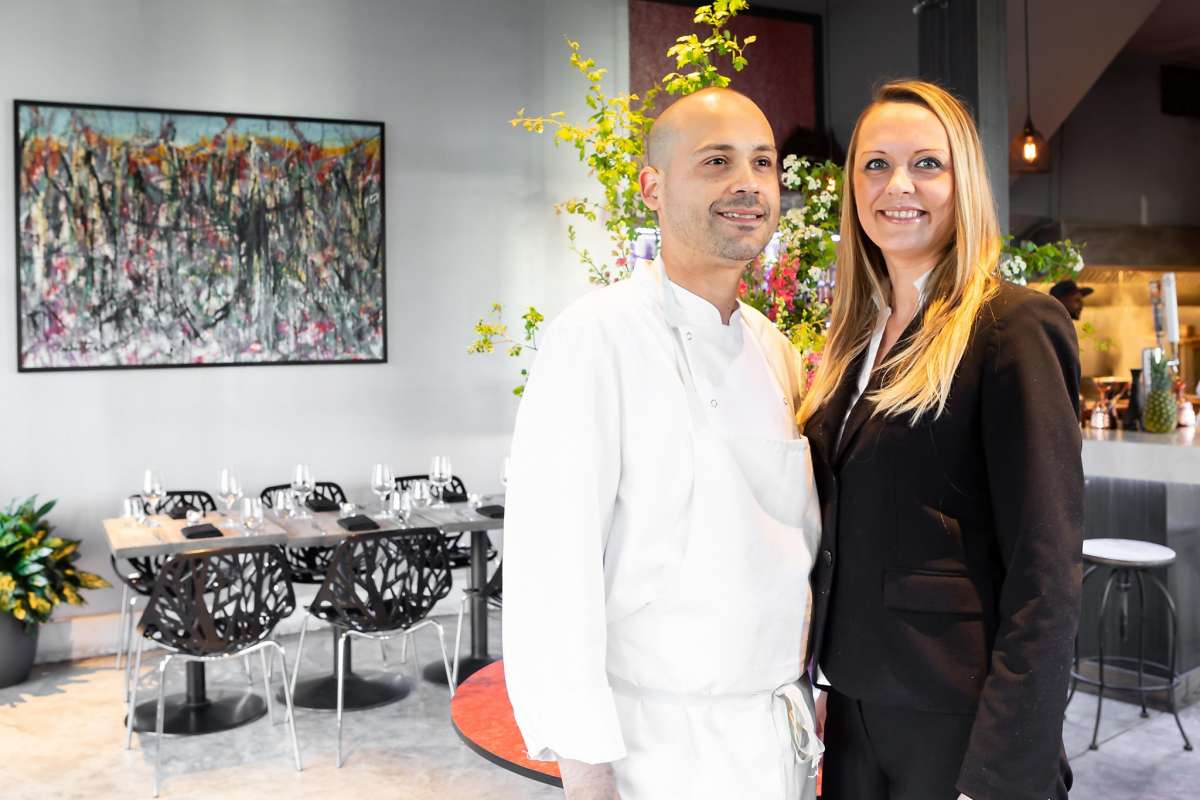
Francisca's Restaurant - Manny and Katherine
Francisca’s Restaurant – Manny and Katherine

The owners: Manny and Katherine, whose partnership between them is revealing and innovative, it creates an atmosphere of hospitality with personalized attention that projects the value and story of each of the dishes that stand out in its menu.

Manny, a tireless Venezuelan chef with wide experience prepares each different dish daily in his tasting menu that you can try for $39 and if the whole table participates you pay $65. This menu is based on four-courses that this culinary art enthusiast prepares, undeniable, with a lot of dedication, imagination, and skill that have allowed Francisca’s to be positioned as one of the sure destinations to visit in San Francisco when delighting the most demanding palates is the point.

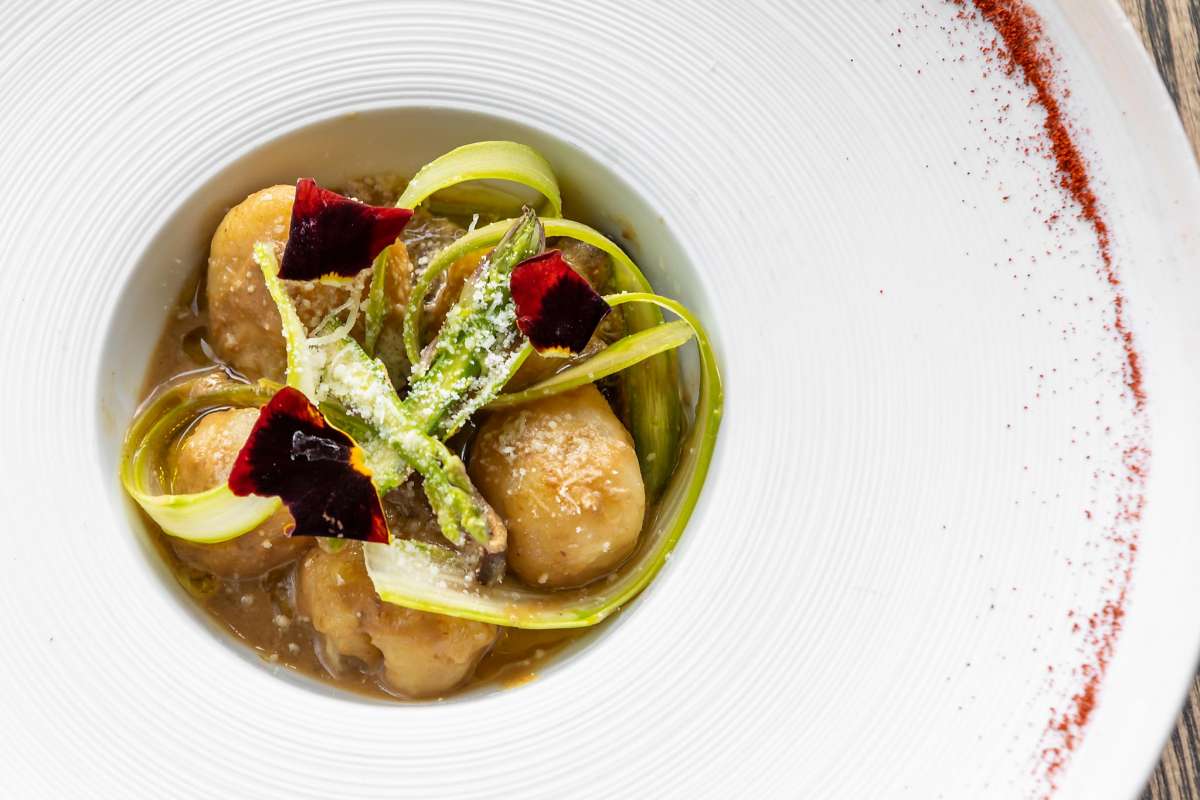
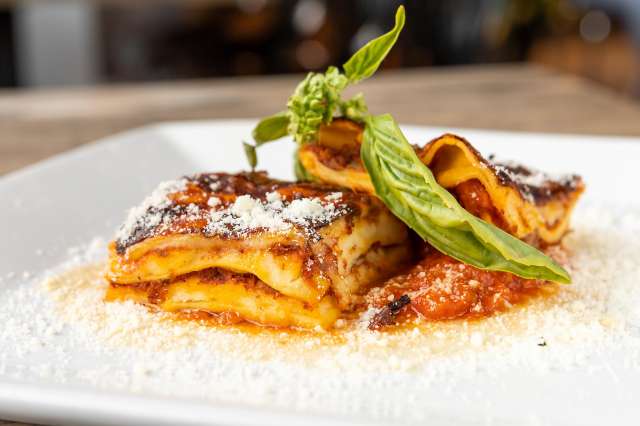
Although his first and powerfully popular restaurant was Mr. Pollo in 2010, it’s Francisca’s that has managed to surface this new trend of mixing Italian foods with traditional Venezuelan ingredients. It’s for that we can find in this restaurant seductive and hypnotic dishes such as Plantain Lasagna (Dish of greater receptivity) and Yuca Gnocchi. While the traditional Venezuelan breakfast “Arepas” is always present in the recommendations of Manny and Katherine for their visitors.

Francisca’s is attended by around 30 people daily to taste an affordable price the visual show of artistic decoration to make things more beautiful and then eat them. In addition to not being able to resist their cocktails duly identified with the origin country.

This restaurant with the inspiration of high cuisine, unique concept and mixture of sounds typical of a famous place for the quality of its food with fresh ingredients purchased directly at the San Francisco’s farmers market (Ferry Building) keeps alive the spirit of Latin American cuisine within of the trends recipes of European cuisine.

“Being a chef for me is everything.” Manny Torres

History

The ingenious idea of ​​putting a woman’s name on the restaurant was Manny. Francisca is the name of his grandmother and his main influence to dedicate to the fascinating world of culinary art. She taught him the true value of obtaining fresh ingredients in the farmers market, as well as making him aware of the true importance and passion for hospitality.

But, let’s go a few years back. Before Francisca’s, Manny had four restaurants, one of them was “The Palace”, which had a considerable number of loyal visitors, however, a raging fire destroyed the venue in 2015. Nonetheless, Manny reopened this space after a complete remodeling and having undergone the corresponding inspections, and we know it as Francisca’s now.

For some time, Manny and Katherine were traveling on two continents. They visited countries such as Aruba, France, Spain, and Italy. And Eureka! From there derived his inspiration for the creation of his exotic and exquisite dishes. After him seeing a different perspective of the kitchen and its formulas for the preparation of the recipes, Manny obtained the main ingredient for the preparation of his Menu in Francisca’s; he had the creativity to make the perfect and successful combination in all his meals.

“In the United States, European food is cooked with so many rules. There are rules for everything. In Europe, there aren’t rules. No one follows the rules and it’s more relaxed”, Manny told an American digital media.

Venue: 3047 Mission Street, San Francisco, CA 94110

Contact: 415.374.5747

Francisca´s opens:

Tuesday – Saturday Dinner: 5:30pm-10:00pm

Saturday Vegetarian Brunch: 10:30am -3:30pm

Sunday Regular Brunch: 10:30am-3:30pm

Manny’s Curiosities:

  • He studied at the Engineering School in Columbus, Ohio.
  • He arrived in the U.S. in 2001.
  • The names of Manny’s four restaurants are: Mr. Pollo, Roxy’s Cafe, The Palace, and Coco Frio.
  • He loves washing

4-course Tasting Menu:

First course: Soup or Salad

Second course: Appetizer or Pasta

Third course: Entree Protein-based, Vegetarian or Pescetarian dish

Fourth course: Dessert

Francisca´s Offers:

  • Capacity: Max seated: 29 people/ Max standing: 75 people
  • Noise Level: Moderately High
  • Accessibility: gender-neutral bathrooms
  • What to ask for: Arepas, Yuca Crispy, Tasting menu (without everyone at the table needing to participate), Plantain Lasagna and Yuca Gnocchi
  • Vegetarian Options: Three appetizers and tacos of vegetables available
  • Drinks: a full bar with wines available to buy
  • Reservations can be made

For more information, please visit: https://www.FRANCISCASSF.com/

SOCIAL CHANNEL:  https://www.facebook.com/FRANCISCASSF/

1 New artist Wito Rodriguez “I am distinct and different”

Norte America / Estados Unidos / Florida

Wito Rodriguez. “I am distinct and different”

Irwin “Wito” Rodríguez was born in Chicago to Puerto Rican parents and got his start in the musical field as a singer and musician. During his teenage years, he performed with a Rock and Roll band as a guitarist.

In 1968 Wito Rodriguez decided to move to “La Isla Del Encanto”, Puerto Rico, in order to search for his musical roots and experience the spicy sounds of his beloved Latin Ritmo.

His first encounter in the Salsa genre was with a Puerto Rican percussionist from the 60’s called “Chacón y su Orquesta”, where Wito learned all the Latin rhythms such as Guaguancó, Boogaloo, Mozambique, etc.

Chacón was his coach in Latin percussion instruments and Wito also fell in love with maracas.

Wito Rodriguez returned to Chicago in 1971 to join “Orquesta La Justicia” a local band that opened shows for artists such as: Ismael Rivera, Ray Barreto, Willie Colón, El Gran Combo and the legendary “Fania All Stars”.

Like many young men of that time, in 1973 Wito Rodriguez decided to join the United States Army and was sent to Europe.

During his stay in Germany, Wito Rodriguez took singing lessons with the Opera singer Barbra Sutton, and at the same time he created two bands with the names of “El Conjunto Sabor” and “La Sonora Antillana”.

These orchestras accompanied artists of the Salsa genre such as: Adalberto Santiago, Ismael Miranda, Tito Allen, Santitos Colón, Pete “El Conde” Rodríguez and the queen of Salsa, Celia Cruz.

After his retirement from the army, Wito joined forces with German band leader Rudi Fuesers and created the European Salsa Orchestra “Conexion Latina”.

With Conexion Latina, Wito Rodriguez recorded two albums; “Calorcito” and “Un Poco Loco”.

He also had the great experience of recording two songs with the band of Director and Arranger Peter Herbolzheimer.

During the 80’s, Wito wanted to broaden his horizons by forming his own groups called “Wito Rodriguez y Orchestra” and “Wito Con Cache”.

Missing his family and friends, Wito “crossed the pond” to return to the United States to finish his Army career.

He never gave up his passion for music, a new big band sound was on his mind, and he returns to the spotlight with the Wito Rodriguez Salsa Jazz Orchestra under the musical direction of trumpeter and arranger, Gino Picart.

“What a wonderful world” or “What a Wonderful World” is his third album released in January 2015.

Although busy in 2016 with live performances, a new album had also been produced and recorded between South America Venezuela and Orlando, Florida.

The most recent production called “Como el Viento” will be released in 2017. This album contains a compilation of songs recorded over the years in Europe than ever for the Western Hemisphere. I hope you enjoy your first solo release… What a wonderful world!

In 2018 Wito released another CD called “The Best of Wito” which has a mix of all the songs that fans thought were the best and respected their preferences.

Wito also has four new singles that he has released from his new album, which will be available from February 2019.

Through the internet platforms you can find these releases.

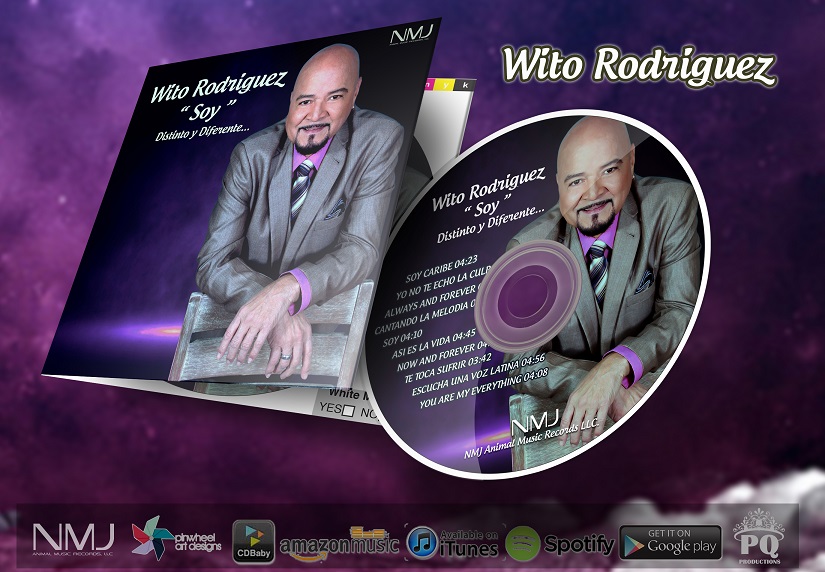
Always and Forever, Soy Caribe, Yo No Te Echo La Culpa and Now and Forever are the ones that have been released so far.

“As a bilingual singer, I am blessed to contribute to the music industry in my songs, singing them in English and Spanish, unity through my music in a mix of salsa and R&B, etc.” Wito Rodriguez

In the year of 2018. Wito Rodriguez was blessed to be nominated at the Hollywood Music Media Awards (HMMA) in Los Angeles, CA in November 2018.

You can also see his certificate as an honoree at the Fox Music Awards USA, Miami in November 2018, who was nominated and honored for being the Army Veteran Salsero Singer.

The Chicago Salsa Congress was one of its great events in 2018.

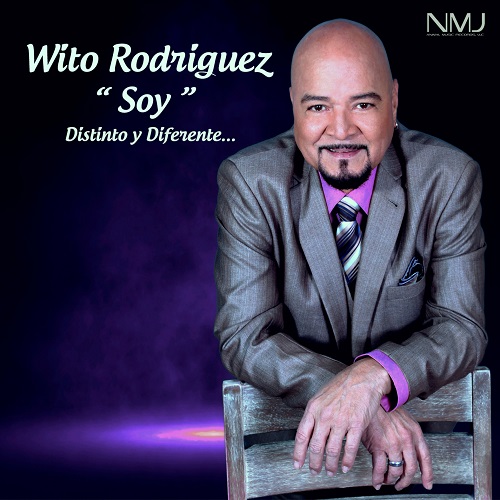
In March 2019 his new bilingual production Soy Distinto Y Diferente came out with the song Soy Caribe already nominated at the Hollywood Media Music Awards on November 20, 2019 in Hollywood California.

NMJ Animal Music Records LLC. [email protected]

PQ Promotions/Management Jenny Morales [email protected]

(682-554-4851 or (813-785-3086))

  • « Go to Previous Page
  • Page 1
  • Interim pages omitted …
  • Page 112
  • Page 113
  • Page 114
  • Page 115
  • Page 116
  • Interim pages omitted …
  • Page 189
  • Go to Next Page »

International Salsa Magazine (ISM) is a monthly publication about Salsa activities around the world, that has been publishing since 2007. It is a world network of volunteers coordinated by ISM Magazine. We are working to strengthen all the events by working together.