• Skip to primary navigation
  • Skip to main content

International Salsa Magazine

  • HOME
  • Previous editions
    • 2026
      • ISM / April 2026
      • ISM / March 2026
      • ISM / February 2026
      • ISM / January 2026
    • 2025
      • ISM / December 2025
      • ISM / November 2025
      • ISM / October 2025
      • ISM / September 2025
      • ISM / August 2025
      • ISM / July 2025
      • ISM / June 2025
      • ISM / May2025
      • ISM / April 2025
      • ISM / March 2025
      • ISM / February 2025
      • ISM / January 2025
    • 2024
      • ISM / December 2024
      • ISM / November 2024
      • ISM / October 2024
      • ISM / September 2024
      • ISM / August 2024
      • ISM / July 2024
      • ISM / June 2024
      • ISM / May 2024
      • ISM / April 2024
      • ISM / March 2024
      • ISM / February 2024
      • ISM / January 2024
    • 2023
      • ISM / December 2023
      • ISM / November 2023
      • ISM / October 2023
      • ISM – September 2023
      • ISM – August 2023
      • ISM July 2023
      • ISM Edition June 2023
      • ISM – May 2023
      • ISM April 2023
      • ISM March 2023
      • ISM February 2023
      • ISM January 2023
    • 2022
      • ISM December 2022
      • ISM November 2022
      • ISM October 2022
      • ISM September 2022
      • ISM August 2022
      • ISM July 2022
      • ISM June 2022
      • ISM May 2022
      • ISM February 2022
      • ISM January 2022
    • 2021
      • ISM December 2021
      • ISM November 2021
      • ISM October – 2021
      • ISM September 2021
      • ISM August 2021
      • ISM July 2021
      • ISM May 2021
      • ISM April 2021
      • ISM June 2021
      • ISM March 2021
      • ISM February 2021
      • ISM January 2021
    • 2020
      • ISM December 2020
      • ISM November 2020
      • ISM October 2020
      • ISM September 2020
      • ISM August 2020
      • ISM July 2020
      • ISM June 2020
      • ISM May 2020
      • ISM April 2020
      • ISM March 2020
      • ISM February 2020
      • ISM January 2020
    • 2019
      • ISM December 2019
      • ISM November 2019
      • ISM October 2019
      • ISM Septembre 2019
      • ISM August 2019
      • ISM July 2019
      • ISM June 2019
  • Spanish
  • Download Salsa App
    • Android
    • Apple

Search Results for: cabrera

Toñito Laya

Latin America / Venezuela / Caracas

On this occasion we have the privilege of meeting the new Venezuelan talent Toñito Laya (singer), son of Maestro Antonio “20 DEDOS” Laya, who was one of the most significant conga players in the Venezuelan salsa movement in the 1980s, director of the “ Banbankere Orchestra” of Petare with two musical productions; giving him more than enough reason to grow in Latin music, such as “el Son”, “la Rumba”, “la Guaracha”, “el Danzón“, “Boogaloo”, “la Timba” and “la Salsa” being This is the beginning of his artistic and musical career.

Starting in the 90s, he entered the Bigott Foundation where he had the opportunity not only to learn the various rhythms in Afro-Venezuelan percussion, but also developed as a dancer in one of the most important groups in Venezuela when it comes to popular traditions. “Vasallos del Sol”, eventually becoming “Vasallos de Venezuela” in 2016, where he had 16 concerts, productions, albums and national and international tours; Colombia, Mexico, United States, South Korea and Japan, among others.

In 2006, a project called “Comprehensive School of Latin Tradition Dance 100% Tumbao” began, where many dancers were trained in the Cuban Salsa Casino genre, combining this training with Venezuelan traditions, making them understand that traditions come first. Venezuelans. Then they participated in the most important events and competitions in Venezuela, they even became Latin American Champions of “CUBAMEMUCHO 2009” in the city of Caracas-Venezuela, thus managing to represent the country in the grand final to be held in the city of Munich-Germany, 2010 .
Toñito Laya
Toñito Laya

He also tells us that in 2009, they were invited to participate in a new project but this time not to dance, but to “sing” in a group that by then had no name but a particular genre such as “Son Cubano” . From that moment Toñito began his musical career to develop in a somewhat unexpected way, he was a founder and assumed the commitment of being in charge of this group as one of its leading singers for more than 7 years, where the themes arose:

To me that, La Ruñidera, Bilongo, El Jamaiquino, I hear a drum, among others; They were part of his first musical repertoire. With two record productions together with the already structured band “La Séptima Bohemia” he consolidated his musical career as a singer, going through a training process with different teachers and vocal coaches such as:

Ronald González, Fanny Olano, Gustavo Gerardo and Marcial Istúriz, among others. others, who would help him develop in the middle of music. National tours, award nominations and concerts allowed him to share the stage alongside large-scale national and international groups such as:

Francisco Pacheco, Canelita Medina, Alexander Abre y su Habana de Primera, Manolito y su Trabuco, El Septeto Santiaguero, José Alberto “El Canario” to mention a few. Toñito records for the year 2012, the song “She takes me”, a song that in turn would be the title of the second album becoming an icon of parties, dances and social events not only in Venezuela but in many salsa and salsa dancing countries. casino in the world.

In the year 2016 Toñito Laya arrives in Aztec land to embark on a new path, he begins by residing in the city of Cancun-Mexico to sing in some local groups and participate in various projects such as: Los Panas.com, La Formula Perfecta, Grupo Swing Latin among others.

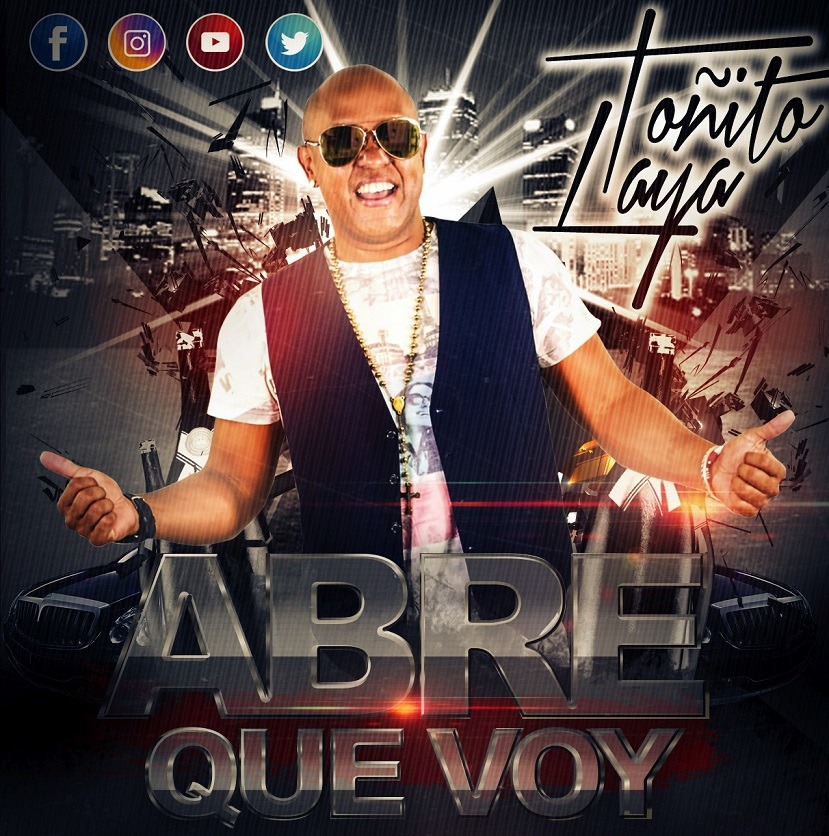
This new stage as an artist prompts him to consider a new musical challenge but this time as a solo singer with a well-defined and focused vision, his pleasant experience as a dancer motivates him to dedicate his first promotional single “ABRE QUE VOY”, this being the complement of an orchestra, for the musicians and their singers “EL BAILADOR”.

“ABRE QUE VOY” is the result of the work of talented and renowned Venezuelan musicians who give an important plus to this Musical production of “Maurice Melo”, this first single is created, performed by Toñito Laya, in the company of the Venezuelan talent of the following musicians:

  • Piano and arrangement: Joel Uriola.
  • Bass: Jesús Torres “Mandinga”
  • Percussion: Yomar Méndez “Caballo”
  • Trombone: Jhonal Rivero.
  • Trumpet: Edward Platter.
  • Baritone sax: Michel Peña.
  • Choirs: William “Wywy” Buznego, Carlos Guzmán and Ramfis Fajardo.
  • Recorded in the studio: A Tempo Records by Heyzer Cabrera.
  • Mixing and Mastering: Heyzer Cabrera.

Caracas – Venezuela 2018

If you want to meet or contact Toñito, you can follow him through:

●      E-mail: [email protected]

  • Facebook: https://www.facebook.com/tonito.laya
  • YouTube: https://www.youtube.com/channel/UCUkjU7SFnPc_W-XJDlMMzRg
  • Twitter: https://twitter.com/negrolaya


Son Cubano is one of the most popular musical styles in Cuba and Kiki Valera is one of its leading exponents

Over the last century, this style of traditional Cuban music has contributed to many other musical genres, including jazz, cha cha cha, mambo, salsa, songo and timba.

Cuban Son is one of the most popular musical styles in Cuba and Kiki Valera is one of its greatest exponents.

Cuban son is the music that made the Buena Vista Social Club worldwide stars in the late 1990s, but Kiki Valera comes from a family of musicians whose involvement with Cuban son predates BVSC by decades.

Kiki Valera is the eldest son of the famous septet La Familia Valera Miranda, a multi-generational traditional music group from Santiago de Cuba.

Since the 19th century, La Familia Valera Miranda has played an important role in Cuban culture by collecting and preserving the deep-rooted traditions of the legendary Sierra Maestra mountain region.

Their debut album, “Antología Integral Del Son”, released in 1982, helped initiate the explosion of interest in traditional Cuban music.

Kiki, like most of her family, is a virtuoso. A multi-instrumentalist, composer, arranger, sound engineer and producer, he is best known as one of the world’s best players of the Cuban cuatro, a medium-sized guitar with 8 strings grouped in sets of 2.

Kiki Valera is the eldest son of the famous septet La Familia Valera Miranda, a multigenerational group of traditional music from Santiago de Cuba.

Kiki learned the Cuban tres under the guidance of his father Felix as a child.

He later attended one of Cuba’s most prestigious music schools, the Esteban Salas Conservatory, in Santiago de Cuba and by the age of 15 was touring internationally.

Kiki continues to conduct, compose, arrange and perform internationally. She also performs and teaches in Seattle, Washington, where she contributes to the vibrant Pacific Northwest music scene.

His current project features several other internationally renowned artists, including Coco Freeman (former singer for Adalberto Alvarez y su Son and NG La Banda), vocalist Carlos Cascante (three-time Grammy Award winning vocalist for the Spanish Harlem Orchestra), trumpeter Alexis Baró (Cubanismo and Omara Portuondo) and bongocero Pedro Vargas (Barbarito Torres’ band). (Kiki Valera)

“Vacilón Santiaguero” is Kiki Valera’s second solo release in the United States after many distinguished years as the director of La Familia Valera Miranda in Santiago de Cuba.

He goes beyond his core group to present collaborations with some Grammy® award winning musicians and features his favorite trumpet players, some born in Cuba, some born in the U.S., but all with reputations jus????ficadas for playing Cuban music for love, if not DNA.

Son Cubano is one of the most popular musical styles in the world.

“Vacilón” is one of those words that doesn’t have a perfect English equivalent to Cuban Spanish, but something that’s a really good time (a little rum or aguardiente always helps).

So what sets this project apart from the vast mountain of excellent traditional albums already out there? Not only is there Kiki’s custom-made Cuban cuatro, which brings a unique texture to the sound, rather than a tres, but, in his jazz-influenced hands, you’ll occasionally hear twists and turns in his improvisations that you probably weren’t expecting when you first glanced at the song titles, which are mostly Cuban evergreens.

Thanks to Kiki’s creative arrangements, this is no mere recycling of covers of these classic songs.

Kiki is as exacting with the recording, mixing and mastering work as he is with the arrangements.

Much of the recording and mixing was done in Kiki’s custom home studio, and Grammy® winner Michael Lazarus mastered the project.

The result will be an audiophile’s delight, a reason, I might add, to want the physical product for your collection (Kiki Valera).

Kiki Valera – Vacilón Santiaguero (2024).

Tracks:

  1. Este Vacilón (Felix Valera Miranda)
  2. El Ají de Cocina (Felix Valera Miranda)
  3. Sobre una Tumba una Rumba (Ignacio Piñeiro)
  4. El Penquito e’ Coleto (Francisco Repilado “Compay Segundo”)
  5. Funfuñando (Arsenio Rodriguez)
  6. La Guajira (Olga de Blanck)
  7. Mari-Juana (Juana María Casas)
  8. Muñequita Feliz (DR)
  9. El Empanadillero (Teodoro Benemelis)
  10. Pájaro Lindo (Felipe Neri Cabrera)
  11. Dos Gardenias (Isolina Carrillo)
  12. El Cuarto de Tula (Sergio Gonzales Siaba)

Musicians:

Kiki Valera (Cuban cuatro, guitar, bass, harpsichord, maracas and backing vocals).

Pedro Vargas (congas, bongos and backing vocals)

Steve Guasch (Backing vocals)

Carlos Cascante (Lead vocals on tracks #1,#4,#5,#7,#9,#10,#12)

Francisco “Coco” Freeman (Lead vocals on tracks #2,#11)

Joshuah de Jesus (Lead vocal on tracks #3,#8)

Raquel Zozaya (Lead vocals on track #6).

Special guests:

Alexis Baró (Trumpet on tracks #1, #3, #4, #6, #9, #11).

Steve Mostovoy (Trumpet on tracks #1, #3, #3, #6, #11)

Michael Rodríguez & Jonathan Powell (Trumpet on track #8)

Pete Nater & Dennis Hernández (Trumpet on tracks #2, #5, #7, #12)

Brian Lynch & Thomas Marriott (Trumpet on tracks #1#0)

Leon Q Allen (Trumpet on track #4)

https://www.kikivalera.com/

Also Read: Yilian Cañizares, an excellent Cuban musician, studied in her hometown in the strictest tradition of the Russian school of violin

Felipe Pirela | The Bolero of America

North America / USA / New York

Felipe Pirela:

En mi barrio el empedrao
Parroquia Santa Lucia
Había una barbería
Que era muy populachera
Te lavaban en ponchera
La silla se reclinaba
Y Luis el perro pelaba
Al son de una periquera

Felipe Pirela
Felipe Pirela

This is the sound of the tasty gaita performed by the group Sabor Gaitero and Los Gaiteros de Pillopo. It refers to a barbershop in a picturesque neighbourhood of Maracaibo in the Venezuelan state of Zulia. It was in this popular neighbourhood of Maracaibo, El Empedrao, that Felipe Antonio Pirela Morón was born in 1941. It was probably in this popular barbershop that he got his first haircut, and it was certainly in some corner of the neighbourhood that he took his first steps as a singer, perhaps interpreting gaitas or some other popular genre. The young Felipe was far from imagining that he would become “El Bolerista de América” (The Bolero of America).

The son of a bricklayer, Felipe Pirela Monsalve, and a housewife – an artist at heart – Lucia Morón de Pirela, the boy began his musical career as a child, supported by his mother, in small radio singing competitions. Incredibly, at the age of 13, together with some boys from the neighbourhood and his two brothers, he founded the group Los Happy Boys, which performed in various venues in Maracaibo, without even imagining that he would later become the main star of Billo’s Caracas Boys, a group that, upon arriving in Venezuela, debuted under the same name, Billo’s Happy Boys, directed by the Dominican maestro Billo Frometa.

At the beginning of his singing career, Felipe specialized as a bolerista, performing songs by prominent singers such as the Chilean Lucho Gatica, the Cuban bolerista Olga Gillot and Venezuela’s favorite tenor Alfredo Sadel.

Felipe Pirela
Felipe Pirela

Radio Caracas Television had the honor of making Felipe’s image public for the first time in 1957, through an amateur program in which Felipe placed third. Unfortunately, there were no video recording systems in those days, so there is no record of this historic achievement. Later, the now defunct and legendary Venezuelan regional television station from Maracaibo, Ondas del Lago, served as a springboard for Felipe, who was one of its founding artists.

These performances allowed him to sign a contract with the station in 1958, after which he moved to Caracas, where he performed on Radio Caracas and in various nightclubs.

Shortly thereafter, he returned to Maracaibo to join the orchestra Los Peniques, with whom he recorded his first album in 1960 and began his professional career.

Like most of the artists, baseball players and boxers from Maracaibo, Felipe was a man of humble origins, pobre del pobre, with limited economic resources, who for a time missed opportunities to be noticed despite his immense talent.

Felipe Pirela
Felipe Pirela

Fortune smiled on him when Maestro Billo Frometa heard him sing, at a time when the arranger, director and musician from Quisqueyano was preparing to restructure his band, Billo’s Caracas Boys, and at the same time hired another singer from Maracaibo, the remarkable José “Cheo” García. This hiring gave an enormous boost to the already famous Billo’s Caracas Boys; the band acquired great international prestige, performing throughout America and Europe, popularizing the immortal mosaics that for many years enlivened the parties and were the favorites of the Venezuelan public.

Not for nothing, Billo’s Caracas Boys Orchestra has been called the most popular in Venezuela, the Caracas and Venezuelan clubs, Latin American countries and even the European continent (Tenerife, Spain) showed full houses during the band’s performances. In these performances, the acclaim for Felipe Pirela was total. Huge demonstrations of support, full houses and legions of fans followed the “crooner” on his tours.

When Venezuela’s favorite tenor, Alfredo Sadel, left the popular genre and his country to devote himself to opera, Pirela almost immediately replaced him in the favorite place of Venezuelans.

In 1961, “El Bolerista de América” recorded with a string orchestra conducted by Billo, the long playing Canciones de Ayer, including old songs and songs of that time, a recording that marked his resignation and departure to Mexico, where he also had memorable successes.

Felipe Pirela boleros with guitars

In 1964 he married Mariela Montiel, a marriage that resulted in the birth of a daughter, Lennys, and in which La Retirada was quickly marked by the fact that Amor se Escribe con Llanto (Love is Written with Crying) and that it probably does not last a lifetime.

Canada and Mexico witnessed his successes in ’67 and his return to Venezuela. Successful performances in Miami that same year motivated him to reside in the United States, where he tried to structure his own record company, a project that came to nothing and he was deeply disillusioned and returned to Venezuela, later residing in Puerto Rico, where he was taking La Última Copa when he was tragically assassinated in 1972.

For some, his career was marked by Sombras Nada Más, but for the vast majority, “El Bolerista de America” remains in the memory as one of the most unique stars of Latin American music of all time.


For Mario Cabrera Bello

Mario Cabrera Bello


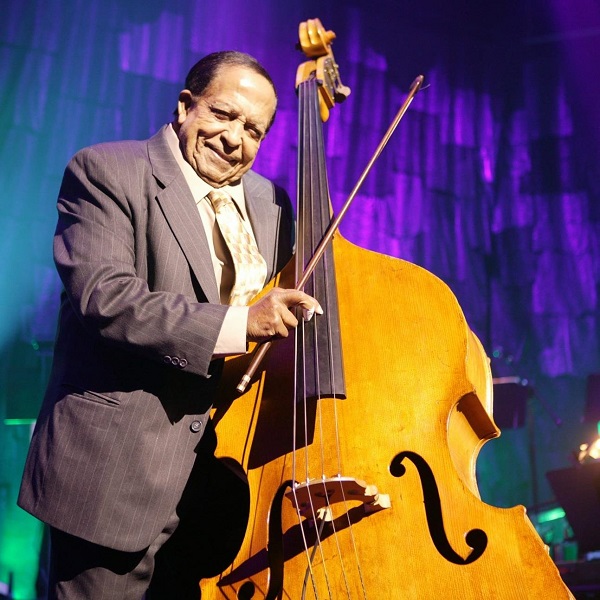
Israel “Cachao” Lopez Sobrado in fame and respect in the seventies was dedicated to maintain the tradition at the highest level

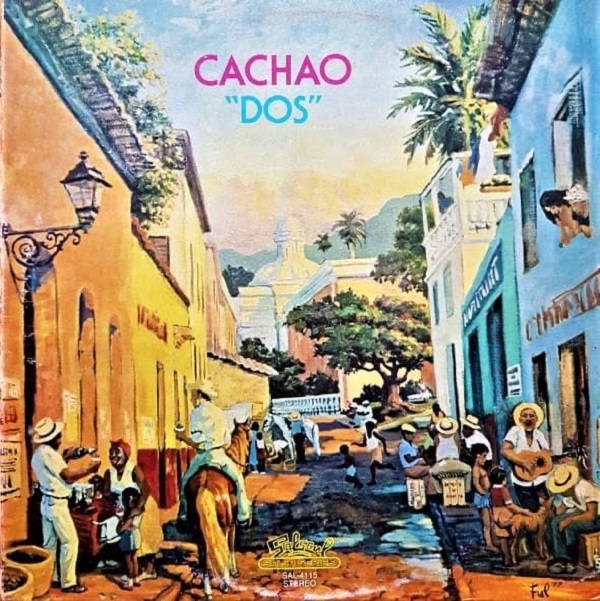
“Cachao Dos” for the year 1977.

It will be enough to mention the name of this celebrity to open a whole range of creativity and genius embodied in what is considered a cult discography.

Since 1931, the year in which he started musically as a member of the Havana Philharmonic Orchestra, the precocious Israel would give a foretaste of the talent he had and that, as time went by, would be consummated hand in hand with his right-hand man and musical accomplice, Orestes “Macho” López, his older brother.

Certainly, music was impregnated in the DNA of the López family, a generating machine of musicians by tradition, something that Lázara Cachao, Israel’s niece and daughter of his deceased younger brother Orlando “Cachaito” Lopez, reaffirms: “The tradition of being musicians comes from the grandparents and great-great-grandparents, all the Cachao are musicians”.

Israel “Cachao” López Sobrado

Regarding his transcendence, he and his older brother Orestes are said to be the creators of the Mambo, a rhythmic variation of the Danzón and a genuine musical expression that would mark a before and after in Latin music.

However, and as it is known, this contribution would change its clothing and would reach worldwide popularity when it reached the hands of another “inventor” born in Matanzas, Cuba, named Dámaso Pérez Prado, who as it is known, gave it another treatment and musical twist reaching surprising popularity.

“Cachao”, after a 31-year stay with the Havana Philharmonic Orchestra, decided to leave Cuba, settling for many years in New York City.

As it is understandable, his presence in this city was more than important for the musical guild and music fans.

He was nothing less than one of the managers and protagonist of the famous Jam Sessions recorded by the Panart whose presence was capitalized among many others by Tito Puente, Tito Rodríguez and Eddie Palmieri.

From the first one we could say, a whole school, a musician with a deep knowledge of his double bass and creator of his own style, bow in hand, and as a prolific composer, with approximately three thousand compositions together with his brother “Macho” López.

The years in New York were musically very good for Israel Lopez as well as in Las Vegas and finally Miami, where he lived until his last days.

Making a discography of him is quite a task and a challenge. However, after his arrival, I remember with great pleasure his collaboration for the album Latin Explosion by Joe Cain and his orchestra in 1964, where among others, Listen dos Trompetas and Mungo, Mungo Baby stand out.

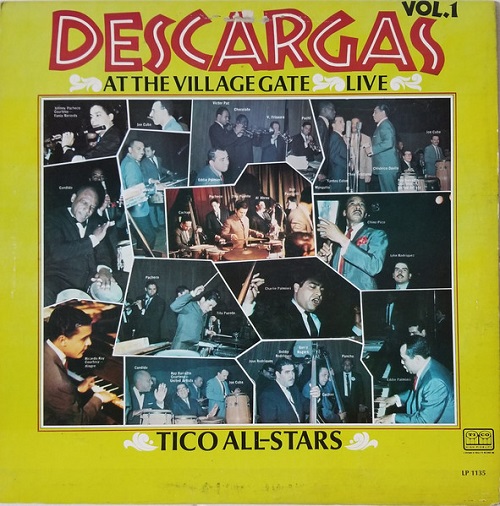
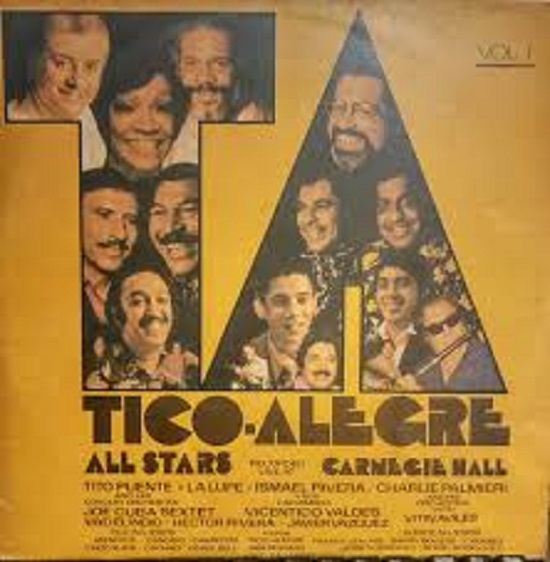
Esta es mi Orquesta, theme/performance of Tito Rodriguez’s musicians emulating what Stan Kent and his Big Band did, or those performances as special guest in the famous Descargas at The Village Gate Live and Tico All Stars, among many others.

The Village Gate Live
Tico All Stars
Tico All Stars

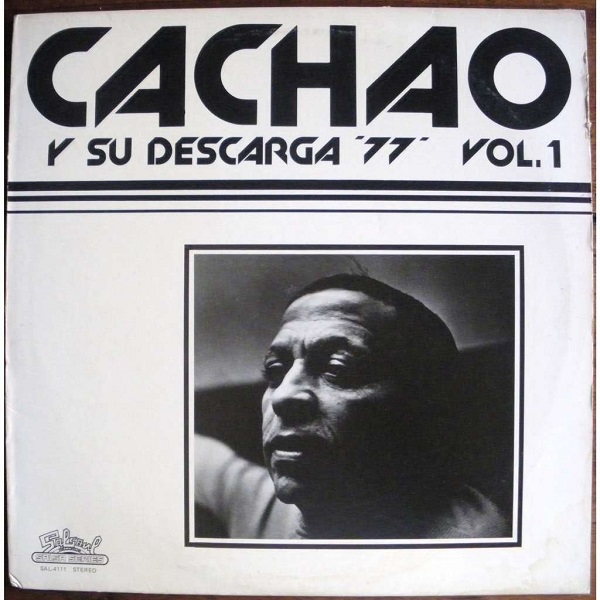
In the seventies, Cachao, with his fame and respect, dedicated himself to maintain the tradition at a supreme level, and from that period, punctually 1977, Cachao will present two epic works, the first one entitled Cachao y su Descarga Vol. 1 and then Cachao Dos, both recorded for Salsoul Records under the production of René López and Andy Kaufman.

Cachao y su Descarga Vol. 1

The latter contains only a total of five tracks, but they are well fulfilled in their purpose of maintaining a fierce defense of the rhythms that Gran Cachao has been proclaiming for years.

This album, like everything else recorded by the double bass player, is genuine and of supreme quality, something that is due to Israel’s responsible and dynamic character, something that the leader Julio Castro can attest to, having not only known him personally but also having worked with his orchestra La Única, which arrived in NYC for a prolonged stay of a little more than half a year.

Cachao Dos
Cachao Dos

Repertory

Ko Wo Ko Wo: (Guiro): Julito Collazo

Israel “Cachao” López: Contrabajo

Julito Collazo: Vocal, Chekere, Conga

Mario Muñoz “Papaito”: Campana

Diane Cardona: Coro

Marcelino Guerra: Coro

Héctor “El flaco” Hernández: Coro

Zunny López: Coro

Frankie Rodríguez: Coro

Fela Wiles: Coro

Jóvenes del Ritmo: (Danzón): Israel López

Israel “Cachao” López: Contrabajo

Julián Cabrera: Congas

Gonzalo Fernández: Flauta de Madera

Oswaldo “Chihuahua” Martínez: Timbales

Charlie Palmieri: Piano

Rolando Valdés: Guiro

Cuerdas:

“Pupi” Legarreta: Violín

Alfredo de la Fe: Violín

Eddie Drenon: Violín

Yoko Matsuo: Violín

Carl Héctor: Violín

Patricia Dixon: Cello

Centro San Agustín: (Danzón-Cha): Israel López

Israel “Cachao” López: Contrabajo

Carlos “Patato” Valdés: Congas

Gonzalo Fernández: Flauta de Madera

Lino Frío: Piano

Rolando Valdés: Guiro

Nelson González: Tres

Mario Muñoz “Papaito”: Percusión

Alejandro “El negro” Vivar: Trompeta

Alfredo “Chocolate” Armenteros: Trompeta

Rafael “Felo” Barrios: Coro

Roberto Torres: Coro

Trombón Melancólico: (Descarga): Israel López

Israel “Cachao” López: Contrabajo

Manny Oquendo: Timbales

Charlie Palmieri: Piano

Barry Rogers: Trombón

José Rodríguez: Trombón

Andy González: Campana

Frankie Rodríguez: Percusión

Gene Golden: Percusión

Milton Cardona: Percusión

Rafael “Felo” Barrios: Coro

Roberto Torres: Coro

Chambelona (Popurrí de Congas): Neri Cabrera

Israel “Cachao” López: Contrabajo

Julito Collazo: Bombo

Lino Frías: Piano

Mario “Papaito” Muñoz: Percusión

Oswaldo “Chihuahua” Martínez: Percusión

Virgilio Martí: Percusión

Eugenio “Totico” Arango: Coro

Rafael “Felo” Barrios: Coro

Read Also: Carlos “Patato” Valdés one of the best percussionists in the history of Latin Jazz

Cachao

Veruska Verdu

Latin America / Lima / Peru

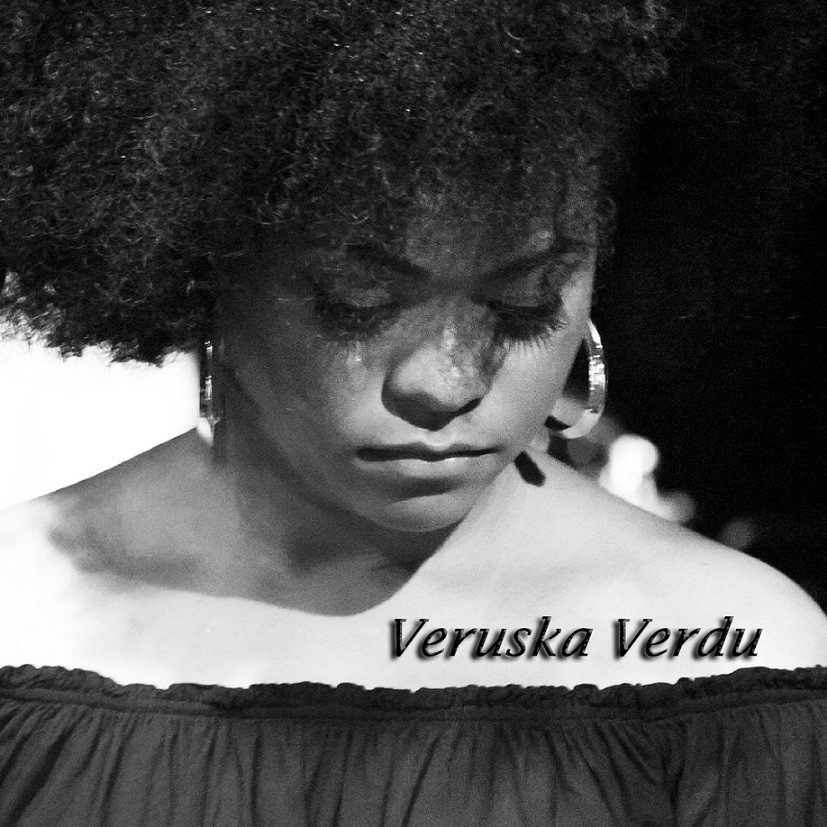
Veruska Verdu “The only formula to keep the Salsero genre alive is to give support and credibility to the next generation”

Veruska Verdu
Veruska Verdu

Despite her youth, Veruska Verdu knows where she is going, without forgetting the roots where she comes from, this young woman has an interpretative strength and intensity that made her be considered by Peruvian critics as “The new Voice of Venezuela”, we do not doubt it , sings salsa and bolero very well, in addition to strolling through Afro-Venezuelan rhythms. In Venezuela, we enjoyed many of his presentations with the different orchestras with which he worked, and we witnessed how he left his soul in each one of his presentations and performances.

His greatest musical influence has been Celia Cruz and Oscar de León in terms of the salsa genre, and in the Afro-Venezuelan genre he admires Betsayda Machado and the Experimental group “Vasallos de Venezuela”. She tells us that, “in her family there are no musicians”, her grandmother and grandfather were rumberos and she believes that the musical vein comes from there, thanks to her grandparents, and to have the unconditional support of her parents and relatives, who have helped him get to where he is.

From Afro-Venezuelan music to salsa, from Barlovento to Caracas, from Venezuela to internationalization, this is how her career goes, in constant growth and evolution, nothing stops her from demonstrating her artistic quality and continuing to establish herself in this tough market.

Barlovento has a rich folk manifestation, all this mix of rhythms is in Veruska’s blood, therefore, she likes rumba, partying, music.

“What a black rock, how does she get into the rumba”

Veruska Verdu - Photo
Veruska Verdu singing in a concert

How were your musical beginnings?

“In my town of La Balsa, in the Panaquire parish, it was there that I began to sing music of the Afro-Venezuelan genre, thanks to Professor Adrián Méndez, I began to participate in the “Canta Claro” Festivals, in the cultural activities that were held, They invited me and I went, I had great support from my teacher, my school teachers, my family and the residents of the town”.

“I continued with my popular singing training at the high school, I participated in the high school voice representing my municipality Acevedo and the high school where I studied, I met my guide teacher Richard Rivero, who invited me to participate in the Afro-Venezuelan music group “Ritual Negro de Barlovento”, where I had the opportunity to travel and learn more about this beautiful genre that identifies us as Venezuelans”.

After this beginning, how was your evolution?

“I went to Caracas to work with other groups, among them are; Drum Show from Venezuela, Caña y Miel, Autochthonous from La Vega, Freddy Madera, Grupo Cosecha, Grupo la Calenda, among others”. “I received an invitation from some friends whom I love Miroslava Torres and Fernando Mozas very much, they encouraged me to join the Venezuelan Orchestra “Simón Bolívar”, I took them at their word, I auditioned and stayed, I participated for a time with the orchestra, I learned much more of our genre, stepped on stages that I had no idea I could step on”.

“Then my singing teacher Corina Peña motivated me to participate with the “Latino Caribeña Simón Bolívar” Orchestra, thank God I auditioned and I also stayed.”

Tell us about your time with the “Simón Bolívar” Latin Caribbean Orchestra?

“The teacher Alberto Vergara saw my interest in belonging to the orchestra, just that day the Venezuelan lyrical singer Iván García was arriving, who was going to sing in a musical project called “Negrísimo”, the teacher gave me the opportunity to be participated. of this great concert with García”.

“Later came more concerts with the orchestra, many learnings with maestro Vergara, for me he is number one, he is super important in my life, he helped me open my senses towards the music of the Latin Caribbean genre, love it, respect it, I give it thank you for giving me the opportunity to belong to the orchestra, for being part of the row of singers”.

“With the “Latino Caribeña” Orchestra, I stepped on incredible stages just like with the Afro-Venezuelan one, but here it was another level, another feeling, feeling the euphoria of the public that likes salsa, moving so many people, transmitting to so many people, thanks to the orchestra many people have known me and support me”.

So the “Simón Bolívar” Latin Caribbean Orchestra has been a springboard for his career.

“Of course, it has been the showcase to show the gift that God gave me, to all those who value this beautiful feeling and support me, I must thank all the teachers, all those who have been there for my musical growth, the orchestra It will never cease to be present in my career, in my present, in my future, I will always be grateful for it, thanks to it I met the teacher Alfredo Naranjo and his Guajeo, who took me into account to participate in his project”.

How did you feel working alongside Alfredo Naranjo?

“With Maestro Naranjo I got the proposal to do my first concert, which was called “Caminando”, this was in the Experimental room of the “Bod Cultural Center”, he likes things to go well, he left me a great learning to work with his side”. “The concert was super nice, I had as a guest Alfredo, my godfather Rodrigo Mendoza and my great brother musician par excellence and multi percussionist “Patatín” Guacaran, I also had the opportunity to meet Edgar “Dolor” Quijada, Soledad Bravo and Rafael “The “Chicken” Brito”.

Your career has been constantly on the rise, how has your time in the different groups been?

“I participated in a project called “Ellas son Boleros”, with Anais Torrealba, Gisela Guedez, with professor Corina Peña, I was with all those bolero ladies in Venezuela, this was under the production of David Peña “Zancudo”. “On the other hand, Carlos Padrón was there, he called me to participate in the 10th anniversary of Rumberos del Callejón, I feel very happy, because Domingo Quiñones, Maelo Ruiz, Gilberto Santa Rosa, Luis Fernando Borjas, Memo Arroyave, Gonzalo Díaz participated there. , wow!, a lot of people who have years of experience and I am like the puppy of the project, and look, however, Carlos believed in my talent and made me be part of his production”.

“I was with the Sopranos for a while, on the album that won the Pepsi Music Awards (Decade), my choirs are out there, with Sonero Clásico del Caribe, a Son institution in our country.”

How have you felt taking on these challenges?

“It has been tremendous, to have the support of some tremendous musicians who are legends, “Nene” Quintero, the pianist par excellence Pedro Pérez, very cool, in all those groups that I have been thanks to the projection I had with the Latin Caribbean Orchestra and my commitment day by day to all this”.

Veruska Verdu
Veruska Verdu

Apart from singing, do you play any instrument?

“I had a short time at the Bigott Foundation, they taught me certain things to learn to compose, I like to play the guitar, and now I am dabbling in the bass”.

From Afro-Venezuelan music to salsa, how was that transition?

“We are not very far away, remember that Afro music its main root is the drum, just like in the Caribbean genre, in salsa, the root is the percussive, the blows, the leather, the key, the swing, that taste, that sense of enjoying what you do, rather the Afro-Venezuelan genre helped me a lot because of the free way of singing.”

“I feel freedom when singing salsa, because I learned in Afro-Venezuelan music how to improvise, to have that ability, I have enjoyed it, in some shows I remember any verse from some party or ass e` puya and singing salsa I say it, it is “cheveroski” as they say around here”.

Did you ever think that being so young you would be next to many who have years of musical career and are already recognized in this medium?

“I never imagined it, it is a blessing from heaven, I am just starting out on the path of music, I still have a long way to go, God has given me the blessing and joy of being able to share the stage with El “Pollo” Brito, Edgar “Pain” Quijada, Alfredo Naranjo, Francisco Pacheco, meeting Betzayda Machado, being with Sonero Clásico, Canelita Medina, I feel happy that in my short time I have met wonderful people and been able to share the stage with them, just like here in Peru”.

What do you think of the support for national talent in Venezuela?

“It has been excellent, I feel that right now they are giving credibility to the successor generation, it is very important to give support, it is the only formula for the genre to remain alive, credibility must be given to the one who is being born and has the ability to make music”. “In Venezuela they have given the artist great support.”

You continue to be “Enchanted with life” despite the regrets…

“If everything was placed on a silver platter, there would be no achievements, the greatest satisfaction is hard work and discipline, I am living my experience that seems spectacular to me, I am enjoying my moment, I am learning things that I did not know in its entirety, I am maturing as an artist and as a person.

“All things go through a moment of difficulty, we must always highlight the good things.”

Its jump to Peru a market that is in the musical arena, the critics baptized it as “The new Voice of Venezuela”, What do you think of this?

“I am grateful that in Peru they have that appreciation of me, it feels super good, on each platform that I mount I will give my best, my tricolor goes with me upstairs.”

How has the receptivity of the Peruvian public been?

“It is not easy to arrive in a country and start from scratch, however, it is a matter of continuing to work, to continue showing what we are made of and to make good music, to do a job like a ant, things have flowed in a very good way, I have participated in productions of the master Tito Manrique, Manongo Mujica, I met the people of a group that I greatly admire Peru Negro, they play Afro-Peruvian music, I did concerts with Carlos Mosquera, a super singer, incredible, a blessing from heaven.

“The support of the Peruvian public is always present, what should Veruska do, continue working constantly, I must thank you for having been very receptive to the work that I am doing.”

In Peru they also have payola?

“In the whole world there is payola, this market is managed like this, salsa, merengue, joropo, tango, pop, jazz, reggaeton, you have a good product, but many times you have to “encourage” the person to show it.”

How do you see the salsa movement at the moment?

“It is a good time to continue highlighting our genre, we are in the here and now, ah! which is not the same as in the past, those times do not compare, for me this is a super excellent moment, many people are doing their work, Víctor Cardona, Carlitos Padrón, Pumaband, La Latino Caribeña, right here in Peru, how many new artists they have, all these people have been promoting salsa”.

Tell us about your solo career.

“It has not been easy, but I continue to give my all, thanking the people who have supported me even without knowing me, I must thank Mr. Alberto Vale who has joined this Veruska project and tells me; -black let’s go forward, everything will be fine, -let’s do this, that-”.

Your first musical production “Fusion -Venezuela – Mundo”, which musicians participate in it?

“Sabrosito Así”, is the promotional theme, we wanted to make a very cool fusion, which was reflected there, thanks to Juan Carlos Linares who gave us all the support to materialize this single and that people knew it, I had excellent musicians; Mario Pasmiño as Musical Director, in addition to Patatín Guacaran, Gisel Brito, Gray Peña, Aarón Cabrera, Ángel Peña, Jeison Ascanio and Darwin Latan”. “This experience was great, beautiful, in the Velvet studio.”

Define yourself in one sentence

“Feeling and rumba, I like the alegríadera”.

Venezuela in one sentence

“Good people, hardworking, like my people none.”

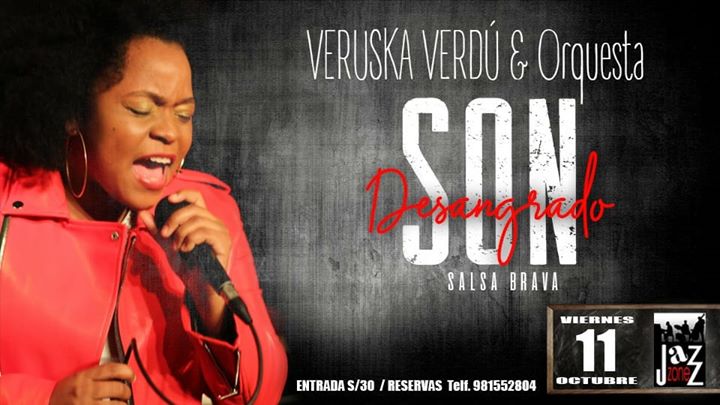
Veruska Verdu Orquesta Son Desangrado

Translated by: Thisby Ferrara


By Eiling Blanco, Correspondent for Latin American


  • « Go to Previous Page
  • Page 1
  • Page 2
  • Page 3
  • Page 4
  • Page 5
  • Page 6
  • Go to Next Page »

International Salsa Magazine (ISM) is a monthly publication about Salsa activities around the world, that has been publishing since 2007. It is a world network of volunteers coordinated by ISM Magazine. We are working to strengthen all the events by working together.