• Skip to primary navigation
  • Skip to main content

International Salsa Magazine

  • HOME
  • Previous editions
    • 2026
      • ISM / April 2026
      • ISM / March 2026
      • ISM / February 2026
      • ISM / January 2026
    • 2025
      • ISM / December 2025
      • ISM / November 2025
      • ISM / October 2025
      • ISM / September 2025
      • ISM / August 2025
      • ISM / July 2025
      • ISM / June 2025
      • ISM / May2025
      • ISM / April 2025
      • ISM / March 2025
      • ISM / February 2025
      • ISM / January 2025
    • 2024
      • ISM / December 2024
      • ISM / November 2024
      • ISM / October 2024
      • ISM / September 2024
      • ISM / August 2024
      • ISM / July 2024
      • ISM / June 2024
      • ISM / May 2024
      • ISM / April 2024
      • ISM / March 2024
      • ISM / February 2024
      • ISM / January 2024
    • 2023
      • ISM / December 2023
      • ISM / November 2023
      • ISM / October 2023
      • ISM – September 2023
      • ISM – August 2023
      • ISM July 2023
      • ISM Edition June 2023
      • ISM – May 2023
      • ISM April 2023
      • ISM March 2023
      • ISM February 2023
      • ISM January 2023
    • 2022
      • ISM December 2022
      • ISM November 2022
      • ISM October 2022
      • ISM September 2022
      • ISM August 2022
      • ISM July 2022
      • ISM June 2022
      • ISM May 2022
      • ISM February 2022
      • ISM January 2022
    • 2021
      • ISM December 2021
      • ISM November 2021
      • ISM October – 2021
      • ISM September 2021
      • ISM August 2021
      • ISM July 2021
      • ISM May 2021
      • ISM April 2021
      • ISM June 2021
      • ISM March 2021
      • ISM February 2021
      • ISM January 2021
    • 2020
      • ISM December 2020
      • ISM November 2020
      • ISM October 2020
      • ISM September 2020
      • ISM August 2020
      • ISM July 2020
      • ISM June 2020
      • ISM May 2020
      • ISM April 2020
      • ISM March 2020
      • ISM February 2020
      • ISM January 2020
    • 2019
      • ISM December 2019
      • ISM November 2019
      • ISM October 2019
      • ISM Septembre 2019
      • ISM August 2019
      • ISM July 2019
      • ISM June 2019
  • Spanish
  • Download Salsa App
    • Android
    • Apple

Search Results for: cabrera

Major Latin radio stations in New York

The current radio

Radio has always been present in a very important part of our lives, which is information and communication. Over time, it has also been a bridge for the most deprived to go public with their complaints and for new artists to make their work known. After the emergence of the internet, traditional radio stations had to adapt to the new era and air their content through the diverse digital platforms that have appeared in recent years. This is how all these shows have avoided their possible disappearance due to the lack of traditional radio listeners.

New York is one of the cities that has several of the most important radio stations in the United States whose content can be easily found in the web search engines. In view of the importance of radio and locution in entertainment and treatment of sensitive topics in society today, we consider it appropriate to name some of the main Latin radio stations in New York for the public to get to know them.

El Vacilón de La Mañana
El Vacilón de La Mañana team consisting of DJ Ash, Gerpis Correa, Natalia ”Vacilón”, Francis Mendez, Jessica Pereira and DJ New Era

Mega 97.9

Mega 97.9 is a radio station operating in New York City whose tropical format offers musical genres such as salsa, merengue, reggaeton, and bachata. Its official name is WSKQ FM and its headquarters is located in the Empire State Building, as it is the case with many other stations.

It was created in 1951 under the name WEBD FM and its programming consisted of pop and jazz music of the time, but that was slowly changing. There were many changes of names, personnel, directors, presidents and much more, so the current programming is radically different from that of past times. In 1993, its name changed to Mega 97.9 and its content became based on tropical and Latin genres, which caused a revival of the station and a very considerable increase in the audience that it had until that year.

Among its most watched programs, we can mention the now defunct ”El Vacilón De La Mañana” and ”On Fuego: The Daddy Yankee Show”.

El Palo Con Coco
El Palo Con Coco team consisting of Tony Sanchez ”El Tiburón”, Coco Cabrera and Diosa Fernández

WXNY X96.3

WXNY X96.3 is a station mainly focused on contemporary adults whose main language is Spanish and is broadcast on the frequency 96.3 FM. The programming focuses on providing the biggest hits of the moment in terms of Latin rhythms and some entertainment programs that address contemporary issues in the entertainment world. Two of the most popular shows are ”La Gozadera” and ”El Palo Con Coco”.

Radio Puerto Rico

Radio Puerto Rico offers the most popular music from both the present and the past in the salsa genre. It streams Latin music of all genres such as salsa, reggaeton, merengue, vallenato, among others. At any time of the day, listeners can tune in and listen to El Gran Combo de Puerto Rico, Marc Anthony, Ismael Miranda, Ismael Rivera, Marc Anthony, Daddy Yankee, Don Omar and many others. Some of its shows are ”Al Son de Harold Montañez”, ”La música de tierra adentro”, ”Música Tropical” and ”Repartiendo su fortuna”.
Havana Club Radio
Havana Club Radio’s logotype

Havana Club Radio

As the name suggests, Havana Club Radio is a radio station that seeks to unite all Cubans around the world in becoming one voice. Its waves play the island’s typical genres such as salsa, salsatón, rumba, danzón and more. It has very good ratings in several major cities in the United States and gives Cubans and Latinos in general the opportunity to connect with their homelands, even if they are far away.

Read also: Interview with Colombian singer-songwriter Potty Lozano

Carlos “Patato” Valdés one of the best percussionists in the history of Latin Jazz.

On November 4, 1926 in the Los Sitios neighborhood of Havana, Cuba, Carlos “Patato” Valdés was born. Known as Patato, he is, quite simply, one of the best percussionists in the history of music.

Patato was born into a very santera and very musical family, his father was a tres player of Los Apaches, the port germ of two illustrious sonera groups: the Sexteto Habanero and the Sexteto Nacional.

He learned to play the tres and the botijuela before turning to percussion, first on the cajones and finally on the congas.

He was an extraordinary percussionist of outstanding participation with the “Conjunto Kubavana”, “La Sonora Matancera”, “Conjunto Casino” and the “Orquesta de Tito Puente”, among other groups, both Son and Latin Jazz.

Formed in rumbero gatherings and carnival groups, Valdés became a professional in the early forties, after trying his luck as a boxer and dancer.

Carlos “Patato” Valdés uno de los mejores percusionistas en la historia del Jazz Latino

He played with Conjunto Kubavana, La Sonora Matancera and El Conjunto Casino. He accumulated nicknames: Zumbito (for his performances at the Zombie Club), Pingüino (for a dance he did on television) and Patato (for his small size), and in those days, dedicating oneself to music in Cuba guaranteed hardship. Besides, Patato wanted to experiment and that was not possible playing for dancers or tourists.

In 1954, he emigrated to New York, like his leather friends: Cándido Camero, Armando Peraza, Mongo Santamaría and the pioneer Chano Pozo (murdered there in 1948).

He immediately began working with Tito Puente. His first recording in the United States was the album Afro-cuban, by trumpeter Kenny Dorham, which opened with the intoxicating Afrodisia. Those were good times for tropical music.

He was the first percussionist to improvise “Solos” with 3 or more Congas at the same time. In addition, he was the creator of the “Congas Afinables”, instruments on which he would ride to dance making them sound rhythmically.

Patato Valdes was an excellent musician, an unforgettable person. Nervous and diminutive, he spoke with an impenetrable Cuban accent; he dressed elegantly, hiding the necklaces and bracelets of Changó and other “orishas”. He looked like a living caricature, but when he hit the percussions he became a divine creature: he had power, spectacularity, sense of melody.

Those skills made him an ambassador of Afro-Cuban rhythms in the jazz world, although he will also go down in history for his extraordinary rumba recordings.

In 1956, Patato appeared in the film Y Dios creó a la mujer, teaching the dances of his homeland to Brigitte Bardot. A great moment, although an implacable Guillermo Cabrera Infante criticized the actress’s movements: “she seems to commit suicide by dancing a cross between mambo and chachachá, a really toxic cross between mambo and chachachá”.

A flexible musician, Valdés sounded as comfortable playing with Machito’s big band as with Herbie Mann’s group. However, he felt indebted to the “rumba de solar” and in 1968 he recorded a revolutionary album with his friend Eugenio Arango, alias Totico.

The exuberant Patato & Totico had genuine Havana flavor, but enriched the basic percussion instrumentation with Cachao’s contrabass and Arsenio Rodriguez’s tres.Patato expanded the creative possibilities for percussionists by playing with three or more congas.

He also made their lives easier by developing a tunable conga: fed up with the traditional method (heating the leather over fire), he installed a metal hoop and keys for tensioning.

Carlos "Patato" Valdés
Carlos “Patato” Valdés

The LP company mass-produced his model, which was to become the standard for conga players. To promote it, he formed the Latin Percussion Jazz Ensemble with Tito Puente, Jorge Dalto and Alfredo de la Fé, among others, an orchestra that would end up becoming Puente’s big band in the early 80s.

It was during this period with Dalto that the album we have chosen for today began to take shape. It was titled “Patato, Master Piece” and it synthesizes all of Patato’s genius.

“Masterpiece” is an album that travels first class through tango, jazz, descarga, guaguancó and bolero, always in a masterful way and with a luxury crew made up of names like Jorge Dalto, Artie Webb, Michel Camilo, Jerry and Andy González, Nicky Marrero, Ignacio Berroa, Joe Santiago, Néstor Sánchez, Vicentino Valdés, and Sabú Martínez, among others.

The Art of Flavor.

Unfortunately Dalto had already passed away when in 1993 the project was released by the venerable German label Messidor, the same label that had already financed some impressive sessions of Patato with Mario Bauzá or Bebo Valdés, with whom he would later record the famous El Arte del Sabor.

Jorge Dalton
Jorge Dalton

In fact, the great Argentine pianist had to be replaced for the last recording sessions that were made 6 years ago since his illness was too advanced, but he left us some incredible arrangements that were kept in the great majority of the themes.

Dalto left us in 1987 when he was only 39 years old. His replacement was nothing more and nothing less than a very young Michel Camilo.formed by 9 cuts among which we especially want to highlight the huge versions of Cute and Nica’s Dream, Masterpiece is an essential album for all lovers of Latin-jazz with capital letters and that is why we wanted to share it on a day as special as today.

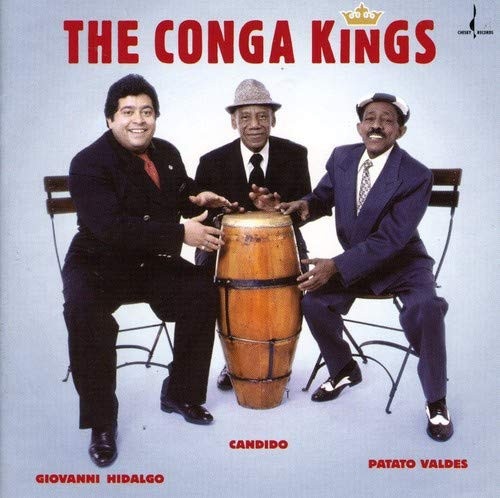
Already recognized as a legend, Patato became more visible in the last 25 years: he had his own band, Afrojazzia, although The Conga Kings, with Cándido and Giovanni Hidalgo, turned out to be more popular.

The Conga Kings Giovanni Hidalgo, Cándido Camero y Patato Valdez

He even made his way onto the modern dance floors, with a remix of San Francisco tiene su propio son. Just as he was returning from playing in California with the Conga Kings, his breathing began to fail.

The plane he was on had to make an emergency landing in Ohio to admit him to a hospital. The 81-year-old percussionist, a heavy smoker, was on his way to his beloved New York, but he would never get there. According to his relatives, he held out until December 4, the day of Santa Barbara, the Afro-Cuban equivalent of Changó, when the cables and tubes that kept him alive were removed.

Valdés died in Cleveland, USA, on December 4, 2007.

Fuentes: http://www.herencialatina.com/Patato/Patato_Valdes.htm

Imágenes: Martin Cohen de Congahead.com

Carlos “Patato” Valdés

You can read: Irakere was a Cuban group that developed an important work in Cuban popular music and Latin Jazz under the direction of Chucho Valdés

Edgar “Balín” Ocando Venezuelan percussionist musician based in Mexico

Edgar “Balín” Ocando, Venezuelan musician born in Caracas in the parish of El Recreo, specifically in block 7 and 8 of Simón Rodríguez.

He studied music at the José Reyna school located behind the same building where he lived, he also studied at the Conac de Sarria with maestro Orlando Poleo.

In his childhood he met with friends who had the same restlessness and passion for music, getting together every weekend to make noise as the neighbor said to the one who had to endure the music end after end.

As a result of these rehearsals he ended up in a group with which he began his music career and received his first professional payment at the age of 14 with the group Ases de la Gaita, a group formed by childhood friends in order to get away from drugs, which for the 80s was very strong.

Edgar “Balín” Ocando músico percusionista venezolano radicado en México

In high school he joined the ranks of the Venezuelan Children’s Choir under the direction of maestro Raul Cabrera. During his time in the choir, the son of Professor Cabrera, known as Raulito, formed the salsa group Sabor Latino and became part of it.

Coming from a musical family, he always looked for a way to be close to his uncles Rafael and Yelitza Sivira, who were singers of the Polifónico Rafael Suarez and always looked for a way to be present in the rehearsals.

Yelitza Sivira was the one who took the responsibility to take him and he only sat and watched how they vocalized with the piano with the help of the director Maria Cabrera. It was then when they created the Polifónico Infantil Rafael Suarez and he became a baritone.

Already in adolescence at the age of 17 years old, he started working in a bank through a scholarship granted by the institution Insbanca, and while working, the Coral del Banco Italo Venezolano was created, thus participating in bank choral meetings, it was then that he returned to music as an instrumentalist when he saw in a newspaper advertisement that they requested a drummer to be part of a group of bagpipes, for which he went to the audition where there were countless drummers and of which he was left with the position thus becoming part of Estrellas de la Gaita.

The following year he was invited by a friend to join the group Santoral of Freddy Rangel, arriving to record for the first time in Requena Studios, the following year in full rehearsal with Santoral I was called to join the group Los Caracuchos of Joseito Rodriguez, forming part as a drummer for 2 years and recording in Manoca Studios, it was then where he enters the percussion workshops of the Biggot Foundation with the teachers Alexander Livinali and Williams Troconis.

He was in the ranks of important Venezuelan groups and orchestras such as Los Caracuchos, Catatumbo, Los Casanovas, Melody Gaita, Sabor Latino, Orquesta La Moderna, etc.

Edgar “Balín” Ocando

In 1999 he changed course and moved to Mexico where he has participated as a percussionist and backing vocalist in groups such as Cokodrilos, Kumbia Kings,

Sonora 100% Dinamita, Alicia Villarreal and today he has his own orchestra called Rumba Latina de Venezuela, which he formed in 2005 and has opened concerts for great international figures such as: Oscar D’ León, Willie Colon, Víctor Manuelle, Porfi Baloa y sus Adolescentes, Nigga, etc.

As well as Mexican artists such as Julión Álvarez, Los Tucanes de Tijuana, Mariana Seoane, El Grupo Pesado, Germán Montero, El Poder del Norte, Emilio Navaira among others.

Integrated by musicians of different nationalities from Venezuela, Cuba, Dominican Republic, Mexico and hand in hand with our representation office and record label Indepe Music, we will continue to bring our music to more and more people in every corner of the country.

Edgar Ocando Manager

Phone (52)-8132179324

Email: [email protected]

Edgar Balin Ocando

You can read: Anacaona The Cuban Female Orchestra

Duo: Yiyo Sarante and Fefita La Grande In Concert

The perfect union of Salsa and Typical Merengue in a night to remember

An evening full of emotions will be lived next Saturday, November 12th at the Masal Deluxe facilities (Küchgarten 21 Küchgarten 21 21073 Hamburg, Germany) with the presentations of the exponent of Salsa Yiyo Sarante and Merenguera Fefita La Grande starting at 9 PM to 5 AM accompanied by DJ Cesar (Hamburg), DJ Miguelin Beatz (Berlin), and DJ Sonrisa (Frankfurt) mixing the best of tropical music. Tickets range from €60 (General) to €120 (Platinum VIP).

Yiyo Sarante debuted as a solo artist in 2010

Eduardo Sarante whose artistic pseudonym is “Yiyo Sarante” exponent of hits like Pirata, Maldita Primavera, Tierra Mala, Nos engañó a los dos and Tres semanas, was born in Baní “La Capital del Sur”, the most important city in the province of Peravia in the Dominican Republic.

He comes from a musical family, the seventh son of nine brothers, five musicians and singers. In 1999 Yiyo performed in Bávaro (Punta Cana, Dominican Republic), and four years later he was a member of the Oro Duro orchestra led by his brother Julián Sarante.

In 2011 Yiyo obtained international recognition thanks to the support obtained from radio stations in the state of Florida and the East Coast of the United States for the single Maldita Primavera from his EP titled Single launched in 2103.

During that same year, Sarante made his first tour outside his native country, taking him to step on the different stages of some Caribbean countries such as the Virgin Islands, Aruba, and Saint Martin.

Yiyo Sarante’s discography https://www.facebook.com/yiyosarante extends from his albums Lo Nuevo de Yiyo Sarante (EP-2013), La Voz de la Salsa (2015), La Voz de la Salsa. Vol 2 (2019), Clásicos (2019) to his most recent singles released this year Quiero Perderme Contigo, Llorarás, Eres Pasado, Demonio, and Prohíbeme Verte.

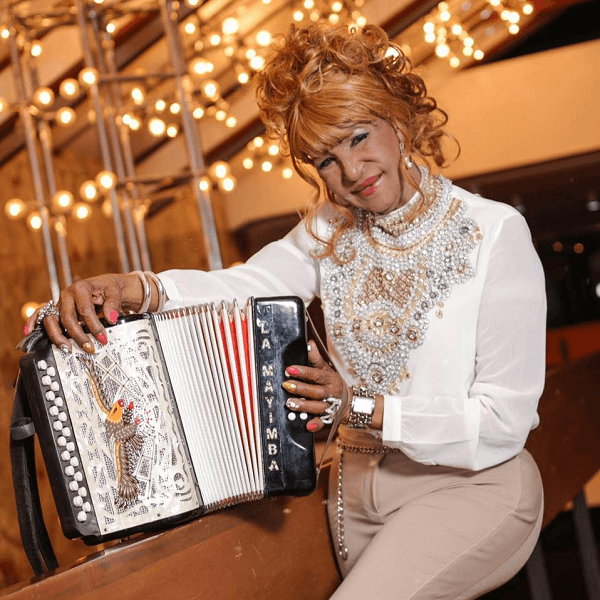
Fefita La Grande is also known as La Vieja Fefa and La Mayimba

On the other hand, the singer, composer, and extraordinaire accordionist, Fefita La Grande (Manuela Josefa Cabrera Taveras) during the last four decades has been an icon of the Dominican Merengue Típico.

This representative of the main musical genre of the Dominican Republic was born on September 18th, 1944, in the municipality of San José de Ocoa. Her father was Eliseo “Seito” Cabrera, an accordionist and owner of a musical instrument repair shop.

Her incursion into the artistic world at a professional level was in 1976 with her first LP Si quiere venir que venga, obtaining great acceptance by the public due to the incorporation of the Saxophone, Congas, and Electric Bass in her melodies when until now there had only been groups of Merengue with traditional instruments: Accordion, Güiro, and Tamboril.

With this new variant of Merengue and with a musical environment dominated by men, Fefita became the first woman to transcend borders and travel to Europe to present this new and authentic style of the Caribbean, in addition to taking her performance to different countries of Latin America thus defining the path for the new generations of Dominican women dedicated to music.

Throughout her artistic career, the performer of La Chiflera (1999), has received various distinctions and has played at Yankee Stadium (New York) with Romeo Santos, and her popularity has led her to participate in major film productions in her country native as Nueba Yol 3: Bajo la nueva ley (1997), Perico Ripiao (2003), and Ponchao (2013) among others.

In 2017, she made the single La Pimienta Es La Que Pica in collaboration with Milly Quezada and Maridalia Hernández, obtaining great support from her followers.

Fefita La Grande https://www.facebook.com/viejafefard has recorded more than 200 songs and her repertoire of greatest hits includes Vamo’ a hablar inglés, O te menea o te apea. Her latest production is La Ciudad Corazón launched in 2021.

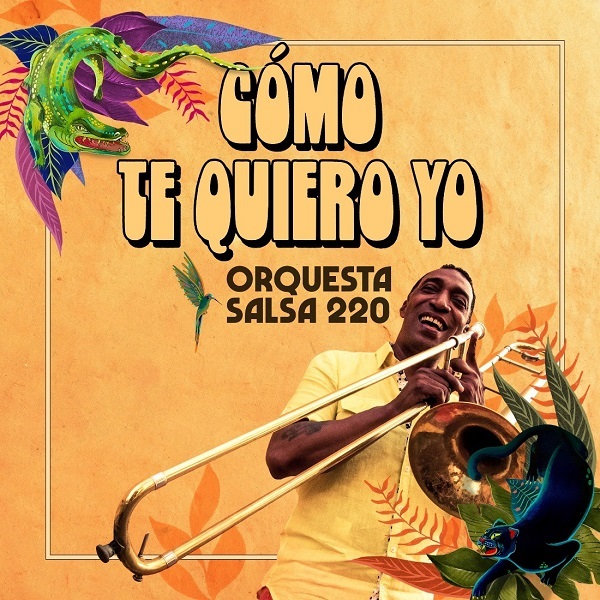
The recently released single “Cómo te quiero yo” is the preview of what will be the album, Sabrosura y Tradición, soon to be released also in acetate.

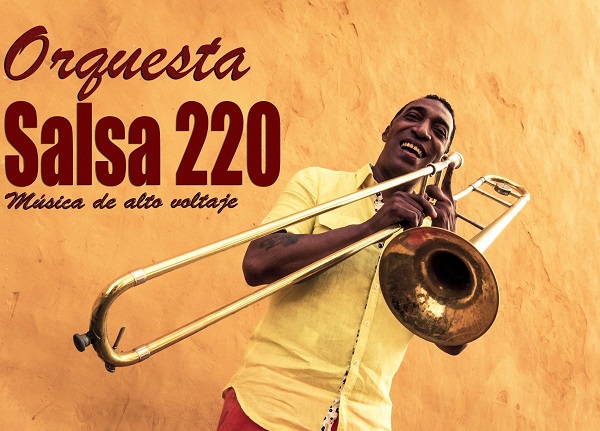
With a fifty-year career in music, the leader of the Salsa 220 Orchestra, Colombian trombonist Oscar “El Gato” Urueta releases the second song of the musical concept he now directs.

“El Gato” delivers his latest single “Cómo te quiero yo”, composition and arrangement by Venezuelan pianist Alberto Crespo; this time with Rodrigo Mendoza, remembered for his time with Dimensión Latina de Venezuela, on vocals. Urueta got in touch with Alberto Crespo after seeing his work in social networks.

This single, in my opinion, deserves international diffusion because of the Afro-Caribbean interpretation in this concept described by Urueta himself as high-voltage salsa.  I listened to the track and I feel obliged to highlight it for bringing us a classic salsa concept, without being more of the same; so let’s go to the mambo, here is what you hear:

During the first 10 seconds, Rodrigo Mendoza leads the vocal part opening the theme as if opening a door; inviting the listener to go on a musical journey that merges various cultural influences.

At the first minute mark it is already known that the trombones of Oscar “El Gato” Urueta and Eliel Rivero are in charge of the musicalization.  At minute 1:45, Alberto Crespo’s piano solo delights us without making it dense.

This piano solo, from which the salsa dancer who dances in tune can benefit, seems to embrace in perfect synchrony the sound of José Soto “Mortadelo”‘s bass.

At minute 2:30 the trombones take over the song, and melodically give way to the tumbadora, in the hands of Carlos Padrón; meeting with the sound of the same in a tasty instrumental correspondence full of cadence and Caribbean flavor.

At minute 2:36, the bass of José Soto embraces again the sound of the tumbadora.

At minute 2:40 the tumbadora turns on the mambo. At minute 2:42 the tumbadora leads the percussion, opening the way for a bell that plays with the coros of Luisito Cabrera, Rodrigo Mendoza and Edgar “Dolor” Quijada, as well as interweaving with the trombones.

The trombones persist and sustain a mambo of those that bring “more salsa than pesca’o”, as we say in Puerto Rico; until around minute 2:55 the conga, the timbal and the bell execute a forceful cut and in unison, to return the arrangement to the trombones.

At minute 4:00, the leader’s trombone seems to be in sync with the percussion and vocalist to close the track; shortly after the trombones enter into a brief correspondence with the tumbadora, just before Padrón’s campaneo concludes the track at minute 4:25.

Urueta has a healthy musical trajectory, surrounded by the greats of the salsa sound.  “El Gato” was part of the Colombian orchestra La Protesta, when Joe Arroyo was the group’s vocalist. Urueta was also part of the now world renowned Grupo Niche, replacing Alexis Lozano on trombone. Urueta traveled to New York City with Grupo Niche as part of the first international tour of the group founded by the late Jairo Varela. He later settled in Miami where he was part of the orchestras that accompanied stars such as Frankie Ruiz, Hansel y Raúl and Santos Colón, to name a few.

Coincidentally, “El Gato” Urueta joined Hansel y Raul’s orchestra when the song ‘Maria Teresa y Danilo’ had become a hit throughout Latin America. Urueta shared the stage with musicians of the stature of Israel López “Cachao”.

In the 1990s, Urueta was a musician with Joe Arroyo’s Orquesta La Verdad, with whom he traveled around the world.

After participating in several concerts accompanying Richie Ray and Bobby Cruz, about five years ago, Urueta took on the task of forming the Orquesta Salsa 220 with which he presented the single “Guaguancó sabroso”, which featured Puerto Rican Rico Walker as guest artist on vocals.

“Cómo te quiero yo” is the preview of what will be the album: Sabrosura y Tradición, soon to be released also on acetate.

Bella Martínez

You can read: Sigo entre amigos de Luis “Perico” Ortiz


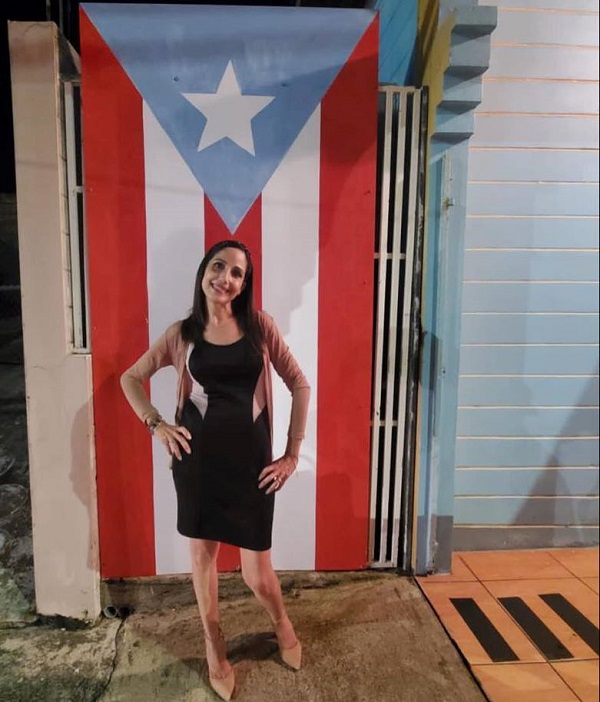
By Bella Martinez, ISM Correspondents, San Juan, Puerto Rico

  • « Go to Previous Page
  • Page 1
  • Page 2
  • Page 3
  • Page 4
  • Page 5
  • Page 6
  • Go to Next Page »

International Salsa Magazine (ISM) is a monthly publication about Salsa activities around the world, that has been publishing since 2007. It is a world network of volunteers coordinated by ISM Magazine. We are working to strengthen all the events by working together.