• Skip to primary navigation
  • Skip to main content

International Salsa Magazine

  • HOME
  • Previous editions
    • 2026
      • ISM / March 2026
      • ISM / February 2026
      • ISM / January 2026
    • 2025
      • ISM / December 2025
      • ISM / November 2025
      • ISM / October 2025
      • ISM / September 2025
      • ISM / August 2025
      • ISM / July 2025
      • ISM / June 2025
      • ISM / May2025
      • ISM / April 2025
      • ISM / March 2025
      • ISM / February 2025
      • ISM / January 2025
    • 2024
      • ISM / December 2024
      • ISM / November 2024
      • ISM / October 2024
      • ISM / September 2024
      • ISM / August 2024
      • ISM / July 2024
      • ISM / June 2024
      • ISM / May 2024
      • ISM / April 2024
      • ISM / March 2024
      • ISM / February 2024
      • ISM / January 2024
    • 2023
      • ISM / December 2023
      • ISM / November 2023
      • ISM / October 2023
      • ISM – September 2023
      • ISM – August 2023
      • ISM July 2023
      • ISM Edition June 2023
      • ISM – May 2023
      • ISM April 2023
      • ISM March 2023
      • ISM February 2023
      • ISM January 2023
    • 2022
      • ISM December 2022
      • ISM November 2022
      • ISM October 2022
      • ISM September 2022
      • ISM August 2022
      • ISM July 2022
      • ISM June 2022
      • ISM May 2022
      • ISM February 2022
      • ISM January 2022
    • 2021
      • ISM December 2021
      • ISM November 2021
      • ISM October – 2021
      • ISM September 2021
      • ISM August 2021
      • ISM July 2021
      • ISM May 2021
      • ISM April 2021
      • ISM June 2021
      • ISM March 2021
      • ISM February 2021
      • ISM January 2021
    • 2020
      • ISM December 2020
      • ISM November 2020
      • ISM October 2020
      • ISM September 2020
      • ISM August 2020
      • ISM July 2020
      • ISM June 2020
      • ISM May 2020
      • ISM April 2020
      • ISM March 2020
      • ISM February 2020
      • ISM January 2020
    • 2019
      • ISM December 2019
      • ISM November 2019
      • ISM October 2019
      • ISM Septembre 2019
      • ISM August 2019
      • ISM July 2019
      • ISM June 2019
  • Spanish
  • Download Salsa App
    • Android
    • Apple

Search Results for: club

The best of Cuban music in Tampa with Cuband Son Band

We are very happy to be able to talk with Lizandro Muñoz, Liaudriz Fuentes, and Alfredo Sotolongo, who are part of the Cuban music group Cuban Son Band. We will know a little about each of them and the orchestra as such so that the public can get to know them and identify them.

Although all the musicians are coming from Cuba such as the genres they play, they met in Tampa, Florida, where they currently reside and have developed their respective musical careers.

Lizandro playing
Lizandro Muñoz playing at Water Street Tampa in April

How Lizandro, Liaudriz, and Alfredo became interested in music

Lizandro was the first who talked a little about himself and started by describing how his father played the guitar and began teaching his son to do the same. After attending the pre-university studies and playing guitar along with a group for about four years, he did his military service and moved to Spain to work with a number of groups at many Latin music events, especially Cuban music, which was what he played most.

Itis at this point in the conversation that Liaudriz, the group’s keyboardist, joined the meeting. After saying hello and introducing himself, he began to explain that he started in music at a very young age in Cuba, more specifically on the Isle of Youth or the Isle of Pines, as it was known before. As a child, he already had a lot of affinity for the guitar just like Lizandro, but also for everything related to percussion, which led him to take the respective tests to enter a music school.

That was when he went through the elementary, middle, and part of the upper levels. He did not complete the latter, as he got the opportunity to move to the United States. 

When Alfredo, Cuban Son’s violinist, slipped into the conversation, he and the boys joked about whether he remembered how he started in music due to his age. He then relates starting in music at about 10 and is now 66, so much water has flowed under the bridge since then. He studied at the National School of Art up to the fifth level for five years, where he trained as a percussionist, singer, and violinist, but had to withdraw due to family problems. However, his great strength helped him keep the lights on.

By not being enrolled in any institution, he began his training at home. Several members of his family were helping him to continue his dream and one of whom was his uncle, a flutist who played in Los Van Van, who inspired him to follow his path in the world of music. This is how he resumed his academic training and received an A grade in singing and an A grade in violin lessons. 

Liaudriz playing
Liaudriz Fuentes playing the keyboard live

He was in the Cuban Institute of Radio and Television Orchestra, better known as ICRT for its acronym in Spanish, and made some recordings with Los Van Van as a violinist. In 1998, he emigrated to Israel, where he worked as a musician for 10 years and even played in an orchestra known as Jerusalem Salsa Band, in which he alternated with several great artists such as Alfredo de La Fe, Buena Vista Social Club, and many others.

After those 10 years, he moved to the United States in search of new opportunities, which led him to make contact with Lizandro and Liaudriz from Cuban Son, which he joined about two years ago.

Alfredo added that one of the things that brought them together was that his now bandmates were following the way of son, the same path as their ancestors, who were soneros. It is in their blood and they had that in common.

How Cuban Son Band got started

Liaudriz again takes the floor and assures that the affinity between them was also due to the need Cubans feel to continue making music from their native land despite the distance and the way many of them come together to do this work. This is something that has mushroomed in Tampa in recent years due to the large number of Cubans who have arrived there.

“Cuban Son Band emerged from our need to share the music of our country not only here in Tampa, but also in other cities in Florida,” said the young keyboardist on this subject.

Lizandro added that several members of the group came from a much larger orchestra, but for economic and practical reasons, they left it and opted for a smaller, more compact format. This also gave them the freedom to make the music they wanted without consulting many people. 

Alfredo playing
Alfredo Sotolongo playing the violin during a concert

The biggest challenges Cuban Son faced at first

Regarding the receptivity of the people to Cuban Son Band’s work, Alfredo pointed out that they always try to make their music as traditional as possible so that the audience may know it. What has made things easier for them was his senior audience that misses these genres and enjoys listening to them, even if they are not what is trendy right now. There are many new genres in Cuba, such as reggaeton and cubatón, but the audience between 30 and 40 years old are not fans of that kind of music, but of more traditional genres such as bolero, bachata, changuí, and others.

Lizandro also added that as long as they offer something traditional, original, and authentic, language barriers should not be a problem, even though most of their fans are American. One of the biggest challenges for the group has been communication, precisely because of the language of their lyrics, but that has not prevented them from being listened to and fervently supported. 

In addition to that, they rely on covers of well-known English songs to connect even more with their non-Latin listeners, which has made them accept their work even more willingly. Their traditional foundation and open mind to new things have been the key to their progress.

Lizandro, Liaudriz, Alfredo, and Raysel
Trumpet player Raysel Reyes, keyboardist Liaudriz Fuentes, Violinist Alfredo Sotolongo, and guitarist Lizandro Muñoz

Current members of Cuban Son Band

Alfredo pointed out that they always try to be as loyal as possible to their main project, which is Cuban Son Band, but they are also aware that it will not always be possible for them to play only with their main orchestra, as they will have to work on other projects due to their economic situation.

Liaudriz also said that something that benefits them is that Tampa is a city that is growing a lot as for the Latin music scene, resulting in more and more work for them and groups with the same characteristics. This allows them to call each other and help each other without egos or pettiness.

Inspirations for each one

Alfredo was inspired as a singer by artists such as Ibrahim Ferrer, Pacho Alonso, Felix Chappottín, Pedrito Calvo, Oscar D’ León, Gilberto Santa Rosa, among others. in one way or another, all of them have honored Cuban music and that makes them bastions of what Cuban Son wants to achieve.

For his part, Lizandro mentioned Buena Vista Social Club, Omara Portuondo, Compay Segundo, Adalberto Álvarez, Chucho Valdez, Juan Formell, Bebo Valdéz, and Benny Moré.

Read also: Tito Planas talked to us about his Orquesta Afinke and its members

The composer and singer Carlos Xavier reveals unpublished details of his career

The composer and singer with Nicaraguan roots Carlos Xavier is a very good friend of the house due to his collaboration with the Editor of International Salsa Magazine Eduardo Guilarte and we are extremely pleased to have invited him to this edition and to know him in a more personal way. The artist born in San Francisco talked to us about his musical career, his facet as a composer, his great inspirations, among other relevant topics.

Carlos Xavier is a friend
Composer and singer Carlos Xavier is a great friend of the house

Carlos’ beginnings in music

From a very young age, Carlos was already in close contact with music thanks to his father and older brother, since they always sang, played the radio or listened to records they bought. At home, he listened to all kinds of music in both English and Spanish, but it was not until he was 16 years old that he became really interested in singing in a more serious way. He was not accompanied by a teacher to tell him exactly what to do, so he had to start practicing alone and be guided by what he saw in professional singers like Christian Castro, Luis Miguel and Marc Anthony when it was his turn.

As for his musical debut, in 1999, Carlos ventured to look for an orchestra to sing with once he felt ready to prove his vocal skills on stage in front of a crowd. Then, he found Orquesta Caché, which had just been created and was looking for a singer, a post for which he was finally selected and made his first performance with the group that same year. This concert took place at the well known Café Cocomo and, since then, the artist has not stopped. 

Interest in Latin music

Although Carlos states that he likes English music and has recorded several songs in English, he also clarifies that his focus is and always has been Latin music. He has worked on other people’s projects in which English is the base, but whenever he releases something of his, he always tries to base it on Latin or salsa music and always in Spanish. It’s a matter of preference.

This is partially thanks to his parents, who always made sure that their children had as much contact as possible with their Nicaraguan roots through the rest of his family, music, food and Nicaraguan culture in general.

In addition, most of his family also went to live in the United States, so he always spent time with them, which helped Carlos to know much more about Nicaragua and the way of life in that country. They always instilled in him the pride of being Latino and he still keeps that feeling intact. 

Carlos Xavier singing
Carlos Xavier singing live

Solo debut

Although Carlos spent many, many years playing with orchestras, he says that becoming a soloist at some point was always his greatest goal. That moment came in 2010 when the singer released his first single as a soloist called ‘’Mientes’’, which was the piece that gave him the confidence to know he could have a solo career and write his own music. 

When we wanted to know the biggest challenges faced by him, he replied that he never thought of his solo career that way, but that he was working for a purpose, drawing inspiration from his greatest idols who had already achieved what he wanted. He simply saw his goal as something he had to achieve at some point, not as a challenge that would make the path more difficult for him. 

Vive Todo Ahora

‘’Vive Todo Ahora’’ was the representation of the dream of Carlos, who always wanted to be able to release an album of the same quality as those of Marc Anthony, La India, and Frankie Negrón. The fact that it was his first album did not mean that the singer was going to let his first album reveal his inexperience in this field, so he hit the deck and contacted producer Efrain Davila. At that time, Davila was working with Victor Manuelle, Marc Anthony and Carlos Vives, so Carlos decided to send him a message and show him his song ‘’Mientes’’ to cover it in salsa. 

The producer responded enthusiastically that he liked the song and accepted the proposal, leading ‘’Mientes’’ to be released as a single in 2014 and the rest of the album was made and released in the same way. Fortunately, Carlos succeeded in including some of Marc Anthony’s musicians such as bassist Ruben Rodriguez, percussionist Luisito Quintero, backing vocalist Guianko Gomez, among others.

Carlos Xavier and Luis Enrique
Luis Enrique and Carlos Xavier posing for the camera

His facet as a composer

Another facet that has been of vital importance to Carlos’ growth as an artist has been composition and, of course, he has his own creative process, although it is not extremely complex. He simply sits down at the piano and looks for the most beautiful melody he can think of, but it is a creation that is born from the inside of him.

n the year 2000, together with the Orquesta Caché, he had the opportunity to record a cover in Peru, but he told the members of the group that he wanted to write that song in his own hand and they agreed. That is when he created ‘‘Marchate’’ and it was the material they recorded in the aforementioned country.

Even then Carlos showed that he wanted to be original and follow his own ideas, which he finally achieved thanks to his perseverance.

Clubs where he currently plays

As mentioned above, Carlos worked closely with Eduardo Guilarte at Charley’s LG Club in Los Gatos, California for some time a few years ago. Of that time, Carlos recalls that Guilarte was one of the few people who truly praised him for his talent on stage, which he appreciated today. He mentioned that he always offered him nice words and advice regarding the way the industry works, so he has the best memories of his collaboration with the editor of International Salsa Magazine.

For the time being, he keeps playing at other clubs such as Building 43, Vino Godfather Winery, The Dawn Club, among others.

Carlos and Viviana
Carlos Xavier during an interview with Viviana Paez and Brian Lozado on Univision

Read also: Eduardo Ron and his Fondo Blanco Band liven up great events in Miami

Steps Dance Studio Inc.

North America / Canada /  Toronto

Steps Dance Studio

Steps offers a complete curriculum of Salsa, Bachata, Hustle and Latin Dance for all skill levels. Working from a comprehensive dance syllabus designed by Jennifer Aucoin and refined by 20 years of Salsa teaching experience, their professionally trained instructors are patient, dedicated and passionate about their craft. Want you to leave your class and the dancefloor feeling great. The program is designed to allow students to begin anytime! Start any week, even absolute beginners. And come as often as your schedule allows. Steps Dance Studio has classes every night and on weekends, and most levels are offered twice a week or more.



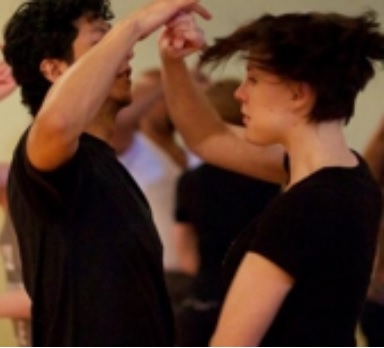
Dancers teachers - Steps Dance Studio Inc.
Dancers teachers – Steps Dance Studio Inc.

Located just a few minutes walk from Bloor & Wellesley subway stations. 819 Yonge St. 3rd floor. Toronto, ON M4W 2G9 SE corner of Yonge St. & Davenport, north of Bloor St.

Meet Jennifer Aucoin, Founder, Executive Director and Instructor.

A full-time salsa instructor, choreographer and event organizer. She is co-artistic director for Steps Dance Company & co-founder of the Women’s Salsa Retreat. As a trained adjudicator, Jennifer has judged competitions in Puerto Rico, Ecuador, New York, Las Vegas, Orlando, Miami, Detroit, Ottawa, Montreal and Toronto. She has also represented Canada on the judging panel for the World Salsa Championships televised on ESPN.

Jennifer Aucoin
Jennifer Aucoin

She is on the judging panel for the prestigious Global Salsa Championships at the World Salsa Summit. Jennifer was also the first instructor in Canada to be certified to teach Latin Hustle by the IHDA. Jennifer is the founder and organizer of the annual Canada Salsa & Bachata Congress, an international salsa festival that takes place in Toronto every October.

This 4-day extravaganza, now in its thirteenth year, is the largest salsa event in Canada and features nightly performances by over 60 dance companies from all over the world and daily salsa workshops given by worldrenowned instructors. The Canadian Salsa Championships, part of the Canada Salsa & Bachata Congress weekend, is the largest and most widely recognized Salsa & Bachata competition in Canada.

Classes offered in Steps Dance Studio

Salsa

  • Salsa Level 1: No previous dance (or salsa) experience required. Start this class at any time. Each class starts with an explanation and review of the basic Salsa step and the timing and rhythm of Salsa music, followed by a new beginner level turn.
  • Salsa Level 2: Geared to those who are comfortable with the basic Salsa step, basic right and left turns and Cross Body Lead. Build on Level 1 material and learn new turns and combinations, add footwork (i.e. Salsa shines) and reinforce your timing and partnering skills. Learn proper posture, frame, weight transfer and connection.
  • Salsa Level 3: Cross body lead patterns, traveling turns, back breaks, checks and different hand hold variations will be linked into fun turn pattern combinations. Start developing a flow of motion between the moves that will make you feel good and look good on the dancefloor.
  • Salsa Level 4: This course will focus on high intermediate level turns and turn pattern combinations, how to maintain balance and connection with your partner while incorporating directional changes & intricate moves, improving musicality, how to remember shines and turn patterns and use them in different combinations, tips on how to be a better leader and follower, adding styling to your dancing – in short, how to be a more complete dancer!
  • Salsa Level 5: This course focuses on taking your dancing to the next level. Advanced level turn patterns, technique and skill development. Execute double spins, multiple turns and variations, intricate choreography, advanced level syncopations and sexy styling. Adapt and combine your moves to suit the level of your partner.

Bachata

  • Bachata Level 1: Bachata is a seductive and flirtatious dance that originated in the Dominican Republic and is played in all Salsa nightclubs. Learn the basic Bachata footwork and how to lead and follow some fun and simple Bachata turns and turn pattern combinations.
  • Bachata Level 2: Learn new turns and turn pattern combinations while focusing on the correct connection, tension and movement of Bachata dancing. Learn body isolation exercises and drills to help make this dance look smooth and sexy.
  • Bachata Level 3: Learn more intricate and complex Bachata turn pattern combinations. Learn how to execute syncopated Dominican style footwork. Learn body isolation exercises and drills to help you to incorporate the sensuous Bachata body movement needed to make this dance look effortless.
  • Bachata Level 4: Learn more intricate and sexy Bachata turn patterns. Add syncopated Dominican style footwork into your partner dancing. Learn how to incorporate the sensuous Bachata body movement needed to make this dance look effortless. Refine your leading & following technique in order to build a connection with each dance partner. And much more… For more information about schedules, classes, lessons, workshops and contacts, visit
Flyer Hustle Foundations

https://www.stepsdance studio.com/

Latin America / June 2025

Oscar D'León's La Crítica was founded in Caracas in 1978

Los Surik group that was created in Victoria Las Tunas CubaIsadora Duncan the creator of Contemporary BalletBeatriz Márquez Castro, an exponent of romantic songs, "Feeling" and BoleroTito Nieves' concert “50 years, history”.Calibrated maracas

DIRECTORY OF NIGHTCLUBS

Argentina flag
ARGENTINA

Aruba circular flag
ARUBA

Belize circular flag
BELIZE

Bolivia circular flag
BOLIVIA

Brazil flag
BRAZIL

Chile circular flag
CHILE

Colombia
COLOMBIA

Costa Rica circular flag
COSTA RICA

Cuba circular flag
CUBA

Dominican Republic
DOMINICAN REPUBLIC

Ecuador circular flag
ECUADOR

Guatenala circular flag
GUATEMALA

Mexico Circular flag
MEXICO

Panama circular flag
PANAMA

Peru circular flag
PERU

Puerto Rico circular flag
PUERTO RICO

Venezuela circular flag
VENEZUELA


Australia and New Zealand / June 2025

Azuquita Entertainment 2025Calibrated maracasMartinez attorney

Directory of Australian and New Zealand nightclubs

Australia circular flag
AUSTRALIA

Azuquita
Azuquita Entertainment & Productions
Sydney NSW, Australia 2000

Bachata ConeXión
Bachata ConeXión
497-499 Queensberry St
North Melbourne VIC 3051, Carlton, Australia 3053

Uruguayan Club
Club Uruguayo de Sydney
56 – 62 Whithford Rd Hinchinbrook
NSW, Australia 2168

El Giza
El Giza Lounge & Bar
152 Lygon Street
Carlton VIC 3053, Australia

La Bodega
La Bodega
12 Fitzroy street St
Kilda VIC, Australia 3182

Noun
Noun Green Square
355 Botany Road Zetland
NSW, Australia 2017

Pachanga
Pachanga
380 Russell St
Melbourne VIC, Australia 3000

The Collaroy
The Collaroy
1064 Pittwater Road Collaroy Beach
NSW, Australia 2097

The Mustang Pub
The Mustang Bar
46 Lake Street Northbridge
Western Australia, WA, Australia 6003

The Night Cat stage
The Night Cat
137-141 Johnston St, Fitzroy
Melbourne VIC, Australia 3065

Urban Salsa
Urban Salsa
Level 1, Suite 1, 136 Victoria Rd North Parramatta
NSW, Australia 2151

Vodka Temple
Vodka Temple
162 Lygon Street
Carlton VIC, Australia 3053

New Zealand Circular flag
NEW ZEALAND

El Barrio
El Barrio Latino Bar
35 Dixon Street
Wellington, New Zealand
+64 4-333 0261
  • « Go to Previous Page
  • Page 1
  • Interim pages omitted …
  • Page 25
  • Page 26
  • Page 27
  • Page 28
  • Page 29
  • Interim pages omitted …
  • Page 124
  • Go to Next Page »

International Salsa Magazine (ISM) is a monthly publication about Salsa activities around the world, that has been publishing since 2007. It is a world network of volunteers coordinated by ISM Magazine. We are working to strengthen all the events by working together.