• Skip to primary navigation
  • Skip to main content

International Salsa Magazine

  • HOME
  • Previous editions
    • 2026
      • ISM / March 2026
      • ISM / February 2026
      • ISM / January 2026
    • 2025
      • ISM / December 2025
      • ISM / November 2025
      • ISM / October 2025
      • ISM / September 2025
      • ISM / August 2025
      • ISM / July 2025
      • ISM / June 2025
      • ISM / May2025
      • ISM / April 2025
      • ISM / March 2025
      • ISM / February 2025
      • ISM / January 2025
    • 2024
      • ISM / December 2024
      • ISM / November 2024
      • ISM / October 2024
      • ISM / September 2024
      • ISM / August 2024
      • ISM / July 2024
      • ISM / June 2024
      • ISM / May 2024
      • ISM / April 2024
      • ISM / March 2024
      • ISM / February 2024
      • ISM / January 2024
    • 2023
      • ISM / December 2023
      • ISM / November 2023
      • ISM / October 2023
      • ISM – September 2023
      • ISM – August 2023
      • ISM July 2023
      • ISM Edition June 2023
      • ISM – May 2023
      • ISM April 2023
      • ISM March 2023
      • ISM February 2023
      • ISM January 2023
    • 2022
      • ISM December 2022
      • ISM November 2022
      • ISM October 2022
      • ISM September 2022
      • ISM August 2022
      • ISM July 2022
      • ISM June 2022
      • ISM May 2022
      • ISM February 2022
      • ISM January 2022
    • 2021
      • ISM December 2021
      • ISM November 2021
      • ISM October – 2021
      • ISM September 2021
      • ISM August 2021
      • ISM July 2021
      • ISM May 2021
      • ISM April 2021
      • ISM June 2021
      • ISM March 2021
      • ISM February 2021
      • ISM January 2021
    • 2020
      • ISM December 2020
      • ISM November 2020
      • ISM October 2020
      • ISM September 2020
      • ISM August 2020
      • ISM July 2020
      • ISM June 2020
      • ISM May 2020
      • ISM April 2020
      • ISM March 2020
      • ISM February 2020
      • ISM January 2020
    • 2019
      • ISM December 2019
      • ISM November 2019
      • ISM October 2019
      • ISM Septembre 2019
      • ISM August 2019
      • ISM July 2019
      • ISM June 2019
  • Spanish
  • Download Salsa App
    • Android
    • Apple

Search Results for: club

Jimmy Bosch. The Creole Trombone of New York.

Norteamerica / USA / Nueva York

Jimmy Bosch was born on October 18, 1959 to a Puerto Rican family in the city of Hoboken in the state of New Jersey.

At the elementary school of his hometown, at the age of eleven Jimmy Bosch was offered a trombone which would give the starting point in his career. According to him, that metallic, valveless, long instrument (which was taller than him) was not necessarily what a child dreamed of; Perhaps, at that time, children dreamed of traveling to the moon, or with an electric guitar that would make them look like The Beatles or, failing that, the Rolling Stones. It didn’t take long for that 11-year-old boy to transform this instrument into an expression of his already visible creativity.
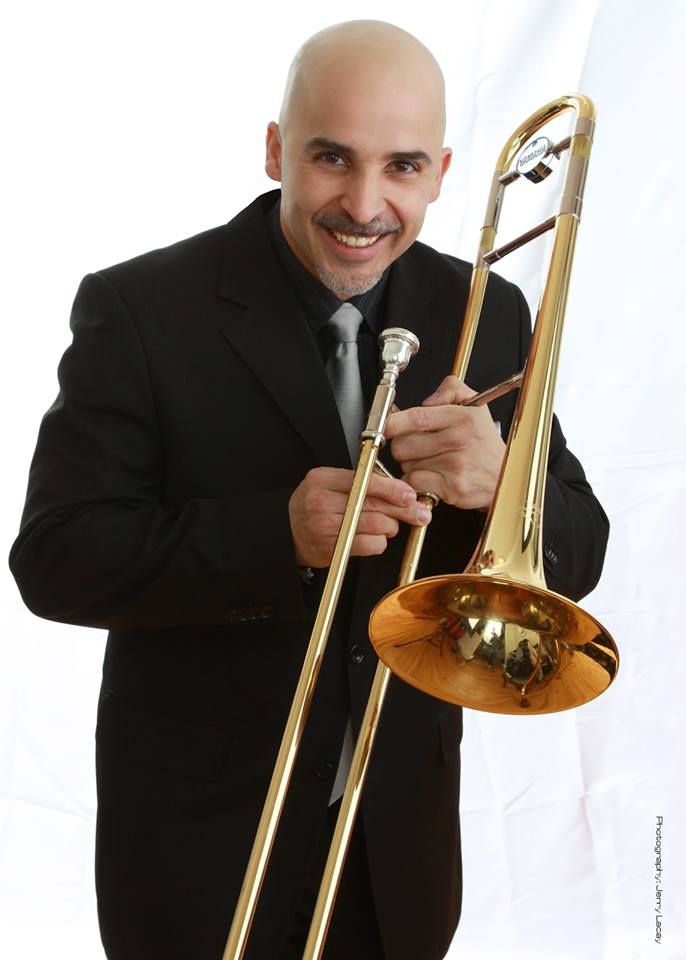
Jimmy Bosch
Jimmy Bosch

At the age of 13, the talented Jimmy was rehearsing with local bands and making his first foray onto the public stage a year or two later. His determination, the Latin blood that ran through his veins and the taste for the genre that had captivated him on so many occasions, led him to play with the most recognized band in the city: Manny Oquendo & Conjunto Libre. His dexterity and ingenuity in playing “moñas” (a section of trombone solos that enrich the melody) helped him to work with them since 1978, which is why it was alongside the Mythical Free Ensemble that Jimmy experienced the freedom to express himself musically with the trombone

On March 11, 1996, Jimmy Bosch debuted with his band at the internationally known S.O.B.’s nightclub. The result was immediate: Publications in the most prestigious newspapers in the Big Apple such as the “New York Times”, praising his excellence and a house full of loyal fans began to crown the dream of this tropical music worker. In this way he becomes a remarkably respected musician and an icon of Latin culture in New York.

His compositions reflect the creativity and depth of who Jimmy Bosch is. He takes his audience on a journey from Bronx-style “funk” to “hot” guajiras, melodious cha-cha-chás, and clearly poetic lyrics awash with feeling. Thus, Jimmy pays tribute to the other teachers who share their presentations generating remembrance and posterity in each one of them.

Jimmy Bosch playing trumpet

In 1998, under the Ryko Latino label, his first solo album, “Soneando trombone”, was released. Jimmy included a “Big Band” with renowned Latin virtuoso artists, such as trumpeter Alfredo “Chocolate” Armenteros, bassist Andy González, and singers like Jimmy Sabater and Pete “El Conde” Rodríguez. They played a mix of Latin styles, including “hard sauce,” of which Bosch is one of its greatest exponents. Bosch not only played a virtuoso trombone, but was also the musical director on that recording.

With his recording debut as a solo artist, Bosch scored a definite success on the international scene. In Europe critics welcomed his musical creations. And in the United States, newspapers such as the Los Angeles Times and The New York Times were full of praise for their brilliant performances.

Jimmy Bosch in concert

At the beginning of 1999, the popular musician returns to the charts with a new production: “Salsa dura“. In this production, including musicians like Steve Turre and Chucho Valdés, it was as diverse, strong, and tough as his first production. The recording also included songs like I’m Still Changing. For the release of “Salsa dura” the Creole trombonist traveled to Europe and performed on countless stages of the Old Continent.

Persevering in his creativity, in 2004 Bosch received new applause in Puerto Rico, presenting his musical proposal at jazz festivals. His bows have accompanied such important figures in the salsa industry around the planet as the aforementioned Free Ensemble of Manny Oquendo and Andy González, Eddie Palmieri, Ray Barretto, Rubén Blades, India, the Lebron Brothers, La Combinación Perfecta, Cachao, Spanish Harlem Orchestra and Celia Cruz among others. He was the musical director of the outstanding Puerto Rican performer Marc Anthony.

The late creator of the Mambo, Israel “Cachao” López, composed for him the song “Lluvia, viento y caña”. The legendary trombone solo can be heard on the Grammy-winning recording, “Master Sessions Vol. 1” produced by Emilio Estefan and Andy García.

This talented musician stamps his signature with his particular way of playing the trombone, becoming his personal stamp in the music industry. Today, Jimmy Bosch is famous for his explosive solos, full of melody, vibration and funk.

Jimmy Bosch live
Jimmy Bosch live

Known by many as “El Trombón Criollo” for the strength of his improvisations, Jimmy radiates his energy to any musical challenge. Jimmy brings us El airplane de la salsa, his latest production, surrounded by high-voltage musicians and soneros.


Latin America / June 2024

Veruska Verdú woman full of BarloventeñasThe city of Caracas is getting ready for a night of pure salsa and joy!Ezequiel Lino Frías Gómez was an excellent musician, pianist, arranger and composer.Son Cubano is one of the most popular musical styles in Cuba and Kiki Valera is one of its leading exponentsCalibrated maracas

DIRECTORY OF NIGHTCLUBS

Argentina flag
ARGENTINA

Aruba circular flag
ARUBA

Belize circular flag
BELIZE

Bolivia circular flag
BOLIVIA

Brazil flag
BRAZIL

Chile circular flag
CHILE

Colombia
COLOMBIA

Costa Rica circular flag
COSTA RICA

Cuba circular flag
CUBA

Dominican Republic
DOMINICAN REPUBLIC

Ecuador circular flag
ECUADOR

Guatenala circular flag
GUATEMALA

Mexico Circular flag
MEXICO

Panama circular flag
PANAMA

Peru circular flag
PERU

Puerto Rico circular flag
PUERTO RICO

Venezuela circular flag
VENEZUELA

Eric Maldonado from La Paris All-Stars’ work behind the scenes

Latin music, more specifically salsa, has had several initiatives over time that have managed to keep it alive and relevant in the popular taste and one of them is undoubtedly La Paris All-Stars Orchestra, which is a musical group based on old school salsa, but with current technological advances. 

The orchestra was created by the producer and sound engineer of Puerto Rican descent Eric Maldonado, with whom we have been able to talk about the group and his own career, so our dear readers can not miss this reading, as it will be very interesting.   

Eric from La Paris in his studio
Producer and sound engineer Eric Maldonado in his studio Paris Recording Studios

How Eric enters the world of music 

Eric begins his story by saying that he was the youngest of the family and both his father and brothers were always playing instruments, so his first contact with music occurred when he was practically a baby. He says that there were always relatives at home every weekend who came together to play jibaro music, salsa, merengue, cha cha cha or whatever they could think of that day.   

These family roots have encouraged to have a deeper interest in music, to the extent that he began to see it as a serious profession and not just a hobby.   

Eric and sound engineering 

By the time he turned 20 in the 1990s, Eric started playing bass in a band for a while, until he tried his hand as a soundman in the local band in New Jersey and realized that this was what he was truly passionate about. It did not take long for him to realize that being a musician was not his thing, but being behind the console and running the machinery behind the stage was. That is when he started purchasing the equipment he knew he would need and learning more about this part of sound engineering. 

Eric defines himself as someone who does not really like to stand out too much or feel really observed by those attending a show, so he prefers to help all he can on the organizational part and at the level of engineering in the events that he is involved. He affirms that his thing is choosing the talent and creating all the music that the musicians or singers are going to use, while he stays behind the stage taking take that everything forges ahead.    

He described feeling satisfied working in this way and has no problem with the artists taking most of the credit in front of the audience.    

The Paris All-Stars Orchestra   

It is important to note that, before founding the orchestra, Eric already had a recording studio called Paris Recording Studios. What inspired him to create a band was an event he did at a club in Florida shortly after moving to that city. The producer already knew some musicians thanks to his work and proposed them to form an orchestra that would take its name from the studio and be called La Paris All-Stars. ”That night, there were so many people who came to see us play that the place was packed and many of them were unable to get in. That’s when I knew this was going to be a success and the creation of the group was a good idea” said Eric about this first test concert.    



Upon seeing how successful this first concert with the group was, Eric decided to record a complete album which he named ”Los Escogidos” since it would only include the best singers that he would choose for this record production.   

He also wanted to clarify that he is the owner of both the studio and the orchestra and both go hand in hand in everything he does.    

Eric from La Paris with Erben
Marc Anthony’s bassist Erben Pérez with Eric Maldonado

The Paris All-Stars Orchestra: old-school salsa with today’s tools   

When we asked Eric if he agreed with those digital media that defined La Paris All-Stars Orchestra as an initiative linking old school with today’s tools, he answered absolutely.   

Noticing that reggaeton and bachata no longer dominate the international market like they once did, Eric took advantage of the fact that there are many new artists wanting to experiment with salsa to make them his clients and work with them from any country such as Mexico, Cuba, Colombia, Venezuela, among others.   

Although he added that he does not limit himself to any genre and works with a bit of everything, he assures that the music he loves the most is and always will be salsa. He regrets that broadcasters do not give a lot of exposure to salsa as before, but also highlights the support the exponents of the genre have received from media and digital stations that have been given a space to new salseros in different parts of the world.    

Eric’s references for the Paris All-Stars Orchestra   

When listening to any of the orchestra’s songs, there is no denying that its work is inspired by several of the biggest referents of salsa and one of them is Ismael Miranda, who was one of the members of the album ”Los Escogidos”, sharing the credits with Kevin Ceballos, Anthony Colón, Frankie Ruíz Jr., among others.   

Eric called the previous artists, who already had an important name in the industry, in order to attract new singers to join his projects and, in this way, make them known to the public. The producer assures that he likes to help new talents and considers them a fundamental part in the promotion and the new rise of salsa today.   

”I am very happy several of these new singers who worked with me have already been blazing their own trail and some of them are even doing big concerts, which makes me very pleased”, he said.   

Eric from La Paris with Jesus
Eric Maldonado with New York salsa singer Jesus Pagan, with whom has worked recently

Latest works of La Paris All-Stars Orchestra   

The first single from La Paris All-Stars in the year 2024 was ”Son Mentiras”, which, according to Eric, was to be part of ”Los Escogidos” at the beginning, but after recording so many good songs and finding so many talented vocalists, he decided to rethink his initial plan and only released it as a single. The final version of ”Los Elegidos” is scheduled to be released in June this year on all digital platforms after finishing a track still missing from the record production.  

We also could not put aside the group’s new release ”Yo soy La Rumba”, which is part of ”Los Escogidos Volumen 4” and features one of the more promising salsa singer currently, Kevin Gabriel, a young talent who was born in Puerto Rico and has managed to participate in several renowned ensembles and orchestras thanks to his great voice.   

One day, Eric heard Kevin Gabriel singing by sheer chance and became fascinated with the young man, but he knew that the label with which he had signed was not exploiting his full potential, so he proposed him to join his project and he accepted. Together with him, Eric released ”Yo Soy La Rumba” and soon there will be an entire solo album of the young singer. This boy is a clear example of what Eric seeks to promote with his work and has no doubt that there will be many more like him, whom the sound engineer will be more than happy to support. 

Read also: Medusa Pop Band delights its fans with a pretty interesting mix of rhythms 

North America / June 2024

Eric Maldonado from La Paris All-StarsIsrael TanenbaumÁngel Tolosa

Eduardo Herrera

Ralph RiveraPBS

Thumbnail about the salsa museum

Las Maracas promo

Martinez attorney


Canada flag

CANADA

DIRECTORY OF NIGHTCLUBS

Dirty Martini
Dirty Martini Oakville
2075 Winston Park Dr
Oakville, OntarioN, Canada L6H 6P5
+1 905 829-8400

El Rancho
El Rancho
430 College St
Toronto, Ontario, Canada M5T 1T3
+1 416 921-2752

LULA LOUNGE
Lula
1585 Dundas West
Toronto, Ontario, Canada M6K1T9
+1 416 588-0307

Marlowe Restaurant & Bar
55 York Blvd
Richmond Hill, Ontario, Canada L4B 3B4
+1 905-771-8645

Sahara
Sahara
1855 Dundas St E
Mississauga Ontario L4X 1M1
+1 905 282-0316

Smokeshow BBQ & Brew
744 Mt Pleasant Rd
Toronto, Ontario, Canada M4S 2N6
+1 416 901-7469

Mangos Kitchen Bar
Mangos Kitchen Bar
1180 Howe Street
Vancouver, BC, Canada V6Z 1R2
+1 604 559-5533

Baza
Baza Dance Studios
1304 Seymour Street
Vancouver, BC, Canada V6Z 1R2
+1 778-379-2292

Studio Nightclub
Studio Nightclub
919 Granville street
Vancouver, BC, Canada V6Z 1L3
+1 604 620-6604


United States flag

UNITED STATES

DIRECTORY OF NIGHTCLUBS

CALIFORNIA FLORIDA  ILLINOIS
MICHIGAN NEW JERSEY NEW YORK
OHIO PENNSYLVANIA TEXAS
VIRGINIA WASHINGTON
JUNE 2024 FESTIVALS
California US circular flag
CALIFORNIA
Promo Queen Afro 2024

Queer Afro Latin Dance Festival

Jun 14 / 17 2024

DoubleTree by Hilton San Jose
2050 Gateway Pl, San Jose
CA 95110, United States

$ 405

Promo California Dance Festival 2024

Sacramento Bachata & Salsa Festival

Jun 20 / 23 2024

DoubleTree by Hilton Hotel
2001 Point W Way, Sacramento
CA 95815, United States

$ 274.99

Louisiana circle flag
LOUSIANA
Promo Mizizi 2024

MIZIZI
Juneteenth Dance Weekender

Jun 15 / 17 2024

Dance Quarter
1719 Toledano
New Orleans 70115, United States

$ 360

Connecticut circle flag
CONNECTICUT
Promo Tri-State

Tri State Dance Festival

Jun 27 / 30 2024

Hilton Stamford Hotel & Executive Meeting Center
1 First Stamford Pl, Stamford, CT 06902, United States

$ 575

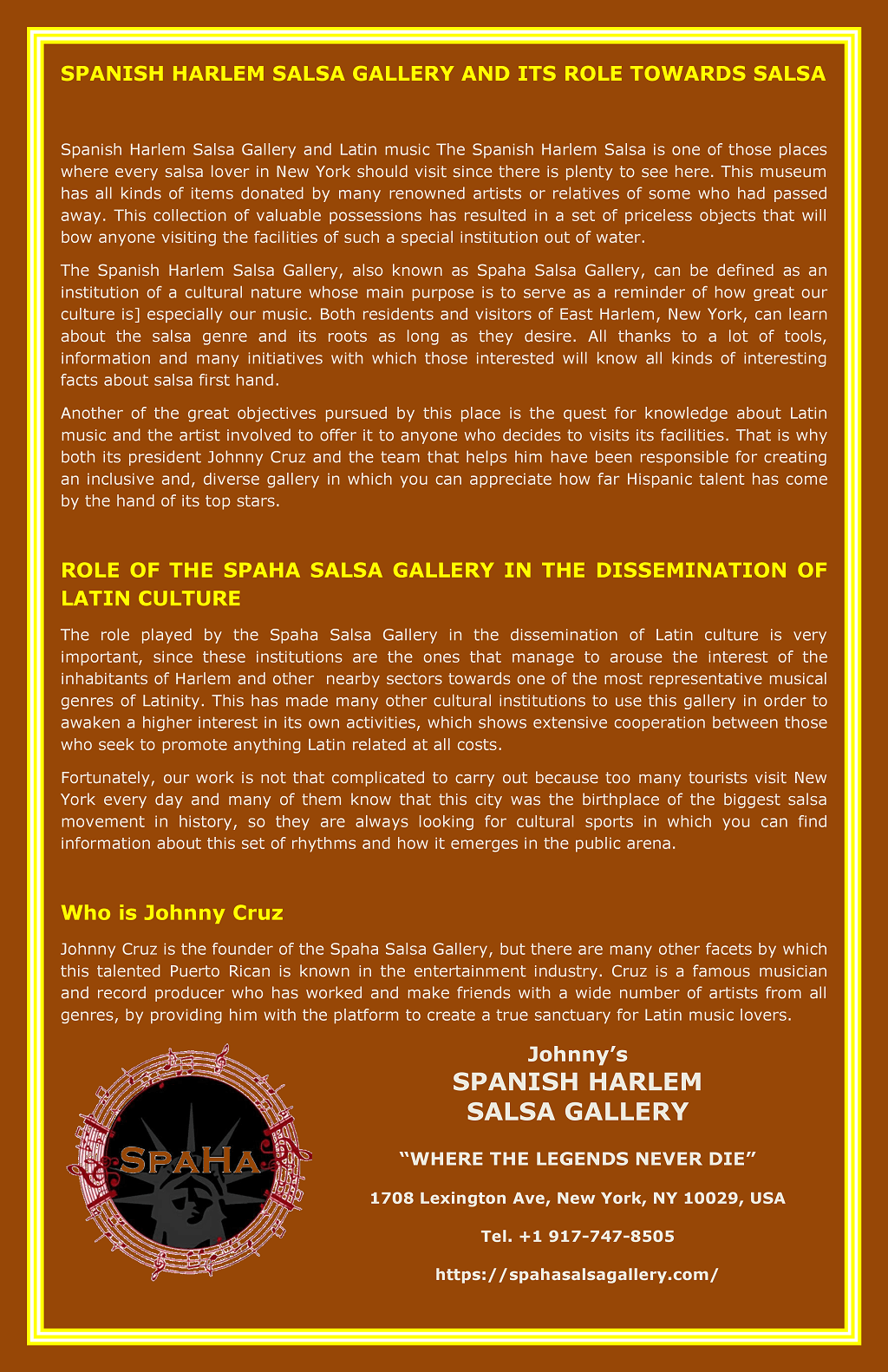
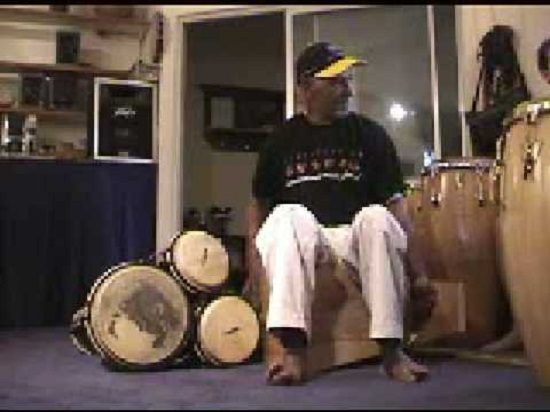
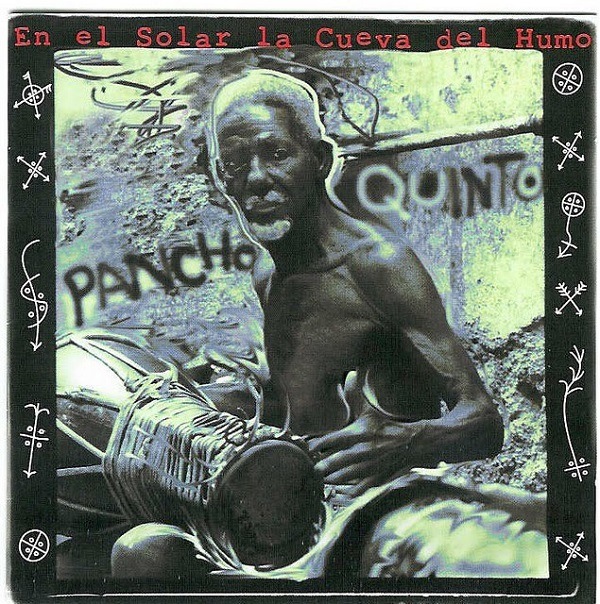
Pancho Quinto is considered one of Cuba’s great rumberos

On April 23, 1933, in the Havana neighborhood of Belen, Francisco Hernandez Mora, known as “Pancho Quinto”, was born.

Remembered man of the Cuban rumba to which he imprinted his own styles.

Pancho Quinto es considerado como uno de los grandes rumberos de Cuba

He accompanied for a long time with his percussion the Las D’Aida Quartet and the Canadian artist Jane Bunnett.

Considered as one of the great rumberos of Cuba by introducing new styles in the Cuban rumba whose artistic baptism was given in the famous comparsa of Los Dandys.

He performed in several groups such as Los Componentes de Batea, Los Guaracheros de Regla and other groups whose banner was the tambor bata, he had a brief stint with the Sonora Matancera and played in the orchestra that accompanied the Cuarteto Las D’Aida at the Tropicana Club.

Later he founded the Guaguancó Marítimo Portuario, a group that became the popular Yoruba group Andaba, which performed with the Canadian artist Jane Bunnett, with whom Pancho Quinto collaborated in other productions, and in the twilight of his career he had three productions as a soloist. This rumbero percussionist lived 71 years.

He was preceded by the sonorous echo of Pablo Roche’s bata lucumí juramentados. Such was the heritage that little Pancho gathered when he arrived in this world in the arms of his great-grandmother Camila, with no other identity than his African blood and his diagonal marks on his face, as was the ancestral custom of his family Ilé in the Gold Coast.

That night the conch shells spoke, and from that moment the child was consecrated to the deity of Shangó, god of music and drums.

He received on his right wrist a leather strap with fine bells, which, according to custom, would protect him and his drums from the bad influences of destiny.

Perhaps that is the reason why Pancho Kinto, when he played, knew that his music reached his ancestors in Oyó, beyond time, light and the Atlantic.

This man, a port man for most of his life, inherited the natural wisdom of those princes who came as slaves to Cuba.

In Pancho’s veins runs the blood of Añadí, a respectable warrior in his tribe who adopted the name of Año Juan in the Cuban sugar mills, that of Atandá, olú batá and drum sculptor in the Yoruba people. He was known here as ño Filomeno.

Both built and endowed with religious foundations the first set of bata drum that was born in the island, and from that remote time the sacred song of the orchestra consecrated to the lucumí altar was heard.

Un 23 de abril de 1933 en el habanero barrio de Belén, nació Francisco Hernández Mora, conocido como Pancho Quinto.

It could be said that they were the survivors of the total of slaves that arrived to America, there is an estimate of fifteen million according to data that I heard the Cuban investigator Leovigildo Lopez say when the first Yoruba congress, celebrated in the Palace of the Conventions in Havana.

But to that fantasy that leads men to the inspiration of that mysterious and mythical love towards life, to that renewed and novel way of singing, dancing, playing, turning the palpable into spiritual and the intangible into vital, men like Francisco Hernández Mora pay tribute, exponent of those traditions that merged in our continent and whose result is none other than the embrace between blacks and whites, although there are groups or castes that do not assimilate it as it is.

I learned a lot with Pablo,” said Pancho in this interview in 1994, when he was just beginning to play with flutist Janet Brunet, with whom he toured internationally, recorded and filmed in Canada.

Pablo was called Akilakua, powerful arm, he was a big black man, he goes on talking, with all gold teeth, ugly as his mother’s pussy, but with something special in his personality.

Of the historical drums he commented that they passed from the hands of the olú batá Andrés Roche to those of his son, later considered one of the greatest bataleros of these times.

Pablo’s father was called the Sublime, because of the way he played the original African bata, he did whatever he wanted with those hands. he added.

Paradoxically, the life of both has always been an unknown for those who try to unravel it or look for a chronological order, as it has almost always happened with many rumberos and composers, I am thinking now of Tío Tom or Chavalonga, but that is not the subject now, What I want to say is that these musicians have been teachers and inspiration for a pleiad of Cuban artists and of other nationalities that with luck have heard of the touches of those drums that officiated in the sacred ceremonies of the orisha pantheons.

From those drums, he commented, were born all the drum sets of secret foundation, because from one is born another, like children.

Among the batá there are two forms, the religious and the aberikula or Jewish, which can even be played by women. Of the old consecrated batá aña there are a few games left in Cuba, but many Jews have emerged, and have lost their orthodox character to serve in many cases for secular parties or to accompany orchestras in public.

Recordado hombre de la rumba cubana a la cuál le imprimió sus propios estilos

Pancho kinto played with those sworn drums when in the town council of Regla they took out the procession of the virgin, although it was Jesus Perez, another of Roche’s students, to whom it corresponded to offer the first public concert with a robe orchestra, a sacrilege for many at that time, and much more if it was an act in the Aula Magna of the University of Havana.

However, five decades after the writer and ethnologist Fernando Ortiz sponsored that concert, Pancho Kinto played the bata in the same university campus to pay homage to the memory of his ancestors with his sonority.

Pancho was a Cuban musician who learned to play quintiar from a very young age and along with this he made his drums and cajones in his own way, his own inventions, as he said, playing the tumbador with a spoon in his left hand, he was just a party of bata and cajon, I saw him do that many times in the fabulous rumbas that were celebrated in a lot in Campanario, where the group Yoruba Andabo used to meet in its beginnings.

There he became known for being a member of the Cayo Hueso group, but Pancho had been playing with them since they were Guaguancó Marítimo Portuario in the port of Havana.

Originally they were Geovani del Pino, Chang, el Chori, Palito, Fariñas, Callava, Marino, Pancho and others, many are gone forever like Pancho, whose unexpected death surprised everyone on February 11, 2005.

Of those anthological sarayeyeos remains the pleasure of the memory, the pleasant memory of the controversies of the quinto and the columbia dancer, the fraternal brawls between the guanguancó improvisers and the masterful recital of Pancho Kinto with the batá and the cajón.

Also Read: Yilian Cañizares, an excellent Cuban musician, studied in her hometown in the strictest tradition of the Russian school of violin

  • « Go to Previous Page
  • Page 1
  • Interim pages omitted …
  • Page 50
  • Page 51
  • Page 52
  • Page 53
  • Page 54
  • Interim pages omitted …
  • Page 124
  • Go to Next Page »

International Salsa Magazine (ISM) is a monthly publication about Salsa activities around the world, that has been publishing since 2007. It is a world network of volunteers coordinated by ISM Magazine. We are working to strengthen all the events by working together.