• Skip to primary navigation
  • Skip to main content

International Salsa Magazine

  • HOME
  • Previous editions
    • 2026
      • ISM / April 2026
      • ISM / March 2026
      • ISM / February 2026
      • ISM / January 2026
    • 2025
      • ISM / December 2025
      • ISM / November 2025
      • ISM / October 2025
      • ISM / September 2025
      • ISM / August 2025
      • ISM / July 2025
      • ISM / June 2025
      • ISM / May2025
      • ISM / April 2025
      • ISM / March 2025
      • ISM / February 2025
      • ISM / January 2025
    • 2024
      • ISM / December 2024
      • ISM / November 2024
      • ISM / October 2024
      • ISM / September 2024
      • ISM / August 2024
      • ISM / July 2024
      • ISM / June 2024
      • ISM / May 2024
      • ISM / April 2024
      • ISM / March 2024
      • ISM / February 2024
      • ISM / January 2024
    • 2023
      • ISM / December 2023
      • ISM / November 2023
      • ISM / October 2023
      • ISM – September 2023
      • ISM – August 2023
      • ISM July 2023
      • ISM Edition June 2023
      • ISM – May 2023
      • ISM April 2023
      • ISM March 2023
      • ISM February 2023
      • ISM January 2023
    • 2022
      • ISM December 2022
      • ISM November 2022
      • ISM October 2022
      • ISM September 2022
      • ISM August 2022
      • ISM July 2022
      • ISM June 2022
      • ISM May 2022
      • ISM February 2022
      • ISM January 2022
    • 2021
      • ISM December 2021
      • ISM November 2021
      • ISM October – 2021
      • ISM September 2021
      • ISM August 2021
      • ISM July 2021
      • ISM May 2021
      • ISM April 2021
      • ISM June 2021
      • ISM March 2021
      • ISM February 2021
      • ISM January 2021
    • 2020
      • ISM December 2020
      • ISM November 2020
      • ISM October 2020
      • ISM September 2020
      • ISM August 2020
      • ISM July 2020
      • ISM June 2020
      • ISM May 2020
      • ISM April 2020
      • ISM March 2020
      • ISM February 2020
      • ISM January 2020
    • 2019
      • ISM December 2019
      • ISM November 2019
      • ISM October 2019
      • ISM Septembre 2019
      • ISM August 2019
      • ISM July 2019
      • ISM June 2019
    • 2016
      • ISM December 2016
  • Spanish
  • Download Salsa App
    • Android
    • Apple

Search Results for: dance

Project Pentagram Agrupación Gaitera de Venezuela in the USA

At present, Pentagram has international recognition for being the group that has made more national tours in the USA

Agrupación “Gaitera” was born in 2008 in the city of Miami, participating in various events and festivals, in 2012, they began to produce themes for the Spectator, which were very accepted by the public.

In 2017, the group was established as a group since they began to accompany great artists of the genre, as Neguito Borjas, Ricardo Cepeda, Nelson Arrieta, Rafael “Pollo” Brito among others.

Agrupación "Gaitera" was born in 2008 in the city of Miami, participating in various events and festivals, in 2012 begin to produce themes for the Spectator, which were widely accepted by the public
Project Pentagram Agrupación Gaitera de Venezuela in the USA

At present, Pentagrama has international recognition for being the group that has made more national tours in the USA and international tours in Panama, Chile, Spain, Argentina, and Colombia.

Members

Robert Richards-Four and Soloist

Jesus “Chuchito” Ibarra-Solista

Fernando Mindeola-Solista

Avelino Romero-Solista

Luis “Chua” Urdaneta-Congas y Coros

José Rafael Querales-Bajo y Coros

Gilberto Ferrer-Teclados

Ronald Guerra-Pianos

Adelmo Gauna-Battery – Timbal

Alejandro Araujo (Timbal)

José “Pokemon” Ferrer-Tambora

Melvin W. Alvarez-Charrasca

Melvin Álvarez Sr. – Furro

Arnaldo Quintero (Contra Bass)

Daniel González (Drums)

At present, Pentagrama is internationally recognized for being the group that has made more national tours in the USA and international tours in Panama, Chile, Spain, Argentina and Colombia
Project Pentagrama Agrupación “Gaitera” born in 2008 in the city of Miami

The Gaita and its History

In the first forms of bagpipes, the chants of the Mass that the Catholic missionaries taught, the percussion of the drums, the characteristic guttural sound of the furro (a derivative of the Zambomba), the maracas and the charrasca were combined, and the cuatro, derived from the guitar, together with the Spanish chants, represented the Iberian contribution.

The performance of the natives contributed the definitive style to this new music.

The following is an extract that comments a little more on the origins of the Gaita:

The origins of the Zulian Gaita have not been established with precision, but it is assumed that it was born with the republican concerns of the people, perhaps in the first decades of the 19th century, as demonstrated by the patriotic Easter songs dedicated to Ana María Campos, the Altagratian patrician who was whipped by order of the fierce Morales when she refused to withdraw her lapidary phrase: “O capitula o monda”.

Traditionally, the Gaita has been linked to the devotion to Santa Lucía in the El Empedrado neighborhood, and in this sense it is recalled that when Father José Tomás Urdaneta was in charge of the parish, he took the noisy bagpipers out of the temple. It can be said that since then, the Gaita has lost the religious character that it had for many years in the cobblestone district, to become definitively an instrument of healthy Easter joy and the most effective means of criticism and protest of the humble people.

Our Gaita has always been characterized by the freshness of its music and the mental agility of its players.

The origin of the Gaita according to Rafael Molina Vilchez

“The Zulian Gaita, like many other manifestations of Latin American costumbrismo, is mestizo. It has a polyethnic genetic mosaic, but its root is Hispanic, although the Hispanic nature is preserved in very different progressions than the maracaibera bagpipe (also called the furro bagpipe), the song of the criollo citadinos, in which it survives with strength, in comparison with the tambora and perijanera bagpipes, in which the blackness leaves a more intense mark”.

This scholar of folklore points out that the gaita is Spanish, but that over time two divergent tendencies have emerged: The maracaibera Gaita and the black Gaita.

This opinion has generated controversy, but it is quite shared, since the term “gaita” has Galician-Portuguese roots: it comes from the Gothic word “gaits” which means “goat”, because the bellows of the Galician gaita are made from the leather of the goat. From Spain through the African Arab countries it reached Turkey, in whose language it is translated as “shepherd’s flute”, which would be in accordance with the drawing Agustín Pérez Piñango found with the Glorious San Sebastián Gaita, which dates from 1668, according to a document located in the old National College of Maracaibo, which brings the lyrics and music in Gregorian characters. It would be the oldest Gaita known.

However, other scholars, among them Juan de Dios Martinez, maintain that the Gaita began with the black slaves in the haciendas of the South of the Lake, as a protest and evoking their festivals in the African areas from which they came.

The Gaita and its History The first bagpipe forms combined the mass chants taught by the Catholic missionaries, the percussion of the drums, the characteristic guttural sound of the furro (a derivative of the Zambomba), the maracas and the charrasca.
Our gaita have always been characterized by the freshness of their music and the mental agility of their performers.

Home

What makes sensual bachata so popular

Why sensual bachata is popular

With the passage of time, music has undergone such a big transformation that it looks no longer as what it was a few decades ago. Just as new musical genres with very modern rhythms have emerged lately, the old ones have continuously adapted to consumers’ changing tastes of this era. Such is the case of bachata, which has progressively succumbing to the sensual fashion that has spread to a good part of current genres. 

Nowadays sensual bachata has gone on to become one of the favorite musical styles for both young and not so young. The best proof of this is that each day there are more radio stations and nightclubs that include in their repertory this music to appeal to the public who support it. 

What has made sensual bachata become so famous? 

This genre from the Dominican Republic and Puerto Rico has always stood out for its waste of romanticism and sensuality, which has made it very famous in the rest of the world. One of the most important characteristics of bachata is the deep connection that should exist between the members of the dance couple in order to infect the audience with magnificent energy and an intimacy out of this world. 

Sensual bachata has become one of the favorite variants for most people, which has expanded enormously thanks to a large number of dancers who have dedicated themselves to seeking new horizons and setting aside traditional styles from previous years. This style has had plenty of promoters, which was the reason it has become so popular in a pretty quick period of time. 

The role of women in sensual bachata 

Why sensual bachata is so popular
Young couple dancing sensual bachata

Without any doubt, women have acquired a leading role in bachata in recent years as it is the female part of the dance that performs the most sensual movements of the choreography. On top of this, there are a more or less intense touch of eroticism and a very vivid interpretation of the music to give the result that the dancers are looking for. After professional dancers started adding these ingredients to their choreographies, there was the emergence of a set of rhythms that reinvented itself and won the support of the public. 

One of the reasons why sensual bachata has gained so much popularity lately is the role played by women during the dance. 

This genre shows us a woman who should be able to take advantage of all her femininity and be very sure of herself at all times. Every part of her body must move to the rhythm of the music without neglecting the load of eroticism needed at any time. 

The best of all this is that every day there are more and more women who want to bring out this sensual side that all women have, so they choose to enroll in dance classes where they are taught to dance these types of rhythms in a professional manner or not so much. A large part of these classes is aligned toward learning delicate body movements, cadence, and much more. 

Home

From Italy Albert Giorgio Giovanni DJ. Lindo Salsa and Bachata

Albert Giorgio Giovanni Fiorentu Dj Lindo is an Italian and Latin music producer (Salsa and Bachata).

Albert Giorgio Giovanni Fiorentu aka Albert Lindo or DJ. Lindo is an Italian DJ. and producer of Latin music (Salsa and Bachata).

Born in Udine, Italy in 1989, he started his career as a dancer in 1997.

In 2008 he graduated as a dance teacher.  In 2011 he moved to Austria (until today) and in 2014 he started working as a dance teacher at the school Conny & Dado in Graz.

In the same year he started his career as a DJ and in 2017 as a producer.

Dj Lindo is an Italian DJ and producer of Latin music (Salsa and Bachata).
Albert Giorgio Giovanni Fiorentu to Dj Lindo producer of Latin music (Salsa and Bachata).

In 2019 (after the first 2 unfortunate productions) the first world production “The Phantom” is released, helped by the pianist and composer Marco Ronca.

In 2020 he obtained his second diploma as a dance teacher and also launched his new single “No Te Detengas” always with Marco and in collaboration with several recognized artists.

Between the end of 2020 and the beginning of 2021, 4 new productions will be ready, a bachata and three salsas (a romantic salsa, a hard salsa and a Cuban salsa) with the collaboration of many recognized artists.

Currently Dj Lindo is part of the record label located in Milan (Italy) Alosibla Music Group and Downbridge Publishing, which each year presents the famous compilation.

Albert Giorgio Giovanni Fiorentu aka Albert Lindo or Dj Lindo is an Italian DJ and producer of Latin music (Salsa and Bachata)
Italian DJ and Latin music producer (Salsa and Bachata)

“SALSA IT”

Did you know the origin of the DJ…

The 9th of March is World DJ Day, thanks to the initiative of the ‘Worl DJ Fund’ and the NGO ‘Nordoff Robbins Music Therapy’. But, do you really know the history of these music mixing artists?

For 16 years this day has been celebrated as a tribute to this sector of music that is so in vogue in our time, which take advantage of his ‘birthday’ to donate what they charge these days to charitable causes.

The initiative was carried out in 2002 by the ‘Worl DJ Fund’ and the NGO ‘Nordoff Robbins Music Therapy’, and has been active for over a decade. But the history of the DJs has a few more years.

For those who still do not know what is behind the acronym DJ, a ‘disc jockey’ is a musician who creates, selects and plays before an audience music of his own or composed by other artists. There are several types, including radio and club DJs.

The first DJ in history

It was Ron Diggins, a British radio engineer who in 1947 built the famous Diggola
Ron Diggins first ever DJ

It was Ron Diggins, a British radio engineer who in 1947 built the famous Diggola, considered the first “mixing table” in the history of music. This home-made portable table included two turntables, lights, microphones, an amplifier and a dozen speakers. And it was made on a coffin wood base.

If we mention Ron Diggins, many of us won’t know who I’m talking about, because this British and radio engineer is considered the first DJ in history.

Many others before Diggins moved in with their records and equipment to cheer on the soldiers but he was the creator of “La Digolla”.

He himself built the first mixer in 1945, although it wasn’t until 1947 that the invention became official.

It was a portable table made of wood, worthy of any party room, it included two plates, lights, microphones, an amplifier and a dozen speakers.

As a curiosity, the wood with which Diggins made the first mixing table in history was casket wood.

Six weeks was the time it took the engineer to build the famous portable table.

Ron Diggins’ dream was to travel all over the UK with his van and “La Digolla”, so he could play his favorite songs.

This pioneer during his professional career was severely criticized by countless musicians who did not approve that the DJ would mix songs without their consent.

Diggins retired in 1995 after playing at 20,000 parties.

In his hard beginnings, traveling kilometers and full of criticism, he would never imagine what he had done, he had invented a profession. A job that would be paid for, more than he could have thought.

The first Disc Jockey in history, died at the age of 90 and in his long life he made 6 “Diggiolas” Some of them were auctioned off at more than $40,000.

“I haven’t invented anything, I just put the same things to a different use, that’s all.

On his 90th birthday, the first disc jockey confessed that, when he started to tour cities and towns with his invention, he received hundreds of criticisms from musicians who did not approve of him mixing their songs without their consent. Diggins retired in 1995 after playing at 20,000 parties.

The big DJ explosion

In the 60s and 70s, with the expansion of the discotheques in Europe and the USA, the creation of a specific technology for this figure of the music began, like the mixer ‘CMA-10-2DL mixer’. It was also the time of the birth of ‘hip-hop’ and ‘disco’ music.

In the 80’s we get the first big names, considered cult DJs, as Larry Levan who played in the ‘Paradise Garage’ in New York, or Frankie Knuckles, with its mixtures of ‘disco’ and ‘synth pop’ led to music ‘house’ in the ‘Warehouse Club’ in Chicago. At the same time, in Detroit, techno was born.

They were years of great impact for the DJs, who saw the birth of their first magazine specifically for professionals, the ‘DJ Times’ in 1988 and held for the first time an exclusive event for DJs of electronic music dance, the ‘Winter Music Conference’ in 85 in Florida.

The DJs of the digital era

The arrival of the ‘rave’ movement in the 90s radically changed the image of DJs and these artists began to project themselves as superstars or ‘Diva DJs’ who establish particular sounds and brands.

These new ‘DJs’ have arrived to our days, taking advantage of the technological innovations of the digital era, and there we have famous names such as the French David Guetta, Armin Van Buuren, Tiesto or Bob Sinclar, who travel the world with their mixes.

Source: https://culturizando.com/


Home

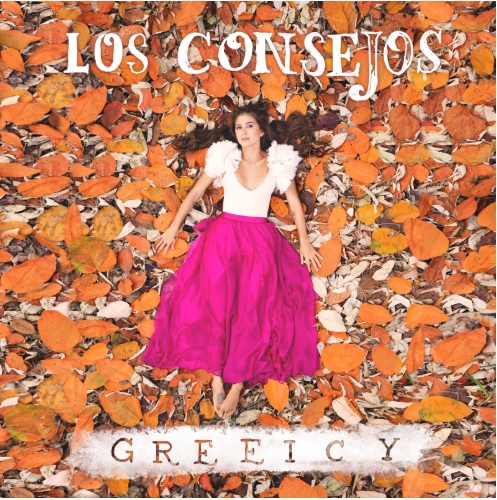
Greeicy premiere “Los Consejos”

Greeicy premieres her new single “Los Consejos” and is nominated for the 2020 youth awards

This time we have the Colombian actress, singer and dancer Greeicy Rendón who has moved into the world of current music; Since she was little, she was interested in acting and music, so with the help of her parents, she began to take acting classes, piano, flute, guitar and singing.

On August 3, 2017, she made her debut as a solo singer with the release of her first single, «Brindemos» and subsequently, in the company of other artists or alone, they developed various musical themes; currently the charismatic and talented Colombian singer and songwriter, Greecy premieres “Los Consejos” the second preview of her new album.

"LOS CONSEJOS" the second advance of his new record material
New single “Los Consejo”

“Los Consejos” is a ballad with a fresh proposal that incorporates urban pop tones with a sweet melody and powerful lyrics that fuse nostalgia and disappointment “Duele quererte y tú tan lejos, tenía la fé de que íbamos a llegar a viejos, me hago la fuerte, pero es complejo, si la tristeza se me nota en el espejo”

The song was written by Greeicy, Andres Torres, Mauricio Rengifo, Keityn, Rudeboyz, Lexuzbeatz, Bullnene, Flybot, and Juan Camilo Vargas Vasquez.

“Los Consejos” is accompanied by a music video, directed by Greeicy and Dario F. Burbano and produced by Mike Bahía, where Greeicy is seen longing for that love that could one day be, while he is seen alone on a swing, transmitting that pain we feel when love escapes from our hands, without really knowing why.

Greecy photo
Greecy photo on an estate

This new song follows in the footsteps of the premiere of “Los Besos” and its version on piano, a song that was initially released in April this year. “Los Besos” already has more than 60 million combined reproductions and its video more than 40 million views and is currently in Spotify’s Top 200 and Top 50 Viral lists in 9 countries, and also in the Top 100 of Apple Music Latino in 11 countries.

“Greeicy Rendón delights with his version of ‘Los besos’ on piano” – RCN Radio

“In this new romantic and fresh version, the charismatic and cheerful personality of Greeicy continues to be reflected, who today is positioned as one of the most important Latin pop artists of the moment.” – 40

Since entering the music scene, Greeicy has become one of the most prominent female figures within the genre, projecting sensuality, sparkle and style. For this reason, she has established herself as one of the most influential female artists, reaching 4.1 million subscribers and almost 2 billion views on her YouTube channel.

The nominees for Youth Awards 2020 were announced through social networks and in the voice of the most important artists of the moment, where the Colombian artist Greeicy achieves a nomination.

The awards given by the leading Hispanic network in the United States Univision, which year after year recognize the best of music, confirm Greeicy’s nomination in the Hottest Core category with their single “Aguardiente”.

The award ceremony will take place live at 8P / 7C on August 13 from Miami, Florida, in compliance with strict public health and safety measures.

Votes are already available at www.premiosjuventud.com/vota until next July 21.

Azúcar Club Cubano – Brazil

Meet the “ Azúcar Club Cubano ” of Sao Paulo, Brazil:

Since the Salsa boom in the sixties, “60” invaded the ears of many Latinos and North Americans, later Europeans, Africans and Asians in restaurants, Academies, clubs, parties and events since they were the novelty of the moment and they had something that made his guests dance with seasoning and fun and for future talents (artists) a new style and / or musical genre.

Brazil is the largest country in South America and is one of the countries with the most energy and positivity. The good humor of its people and its constant party atmosphere make this Brazilian culture one of the pillars of world dance. Among the dances that exist in Brazil, the “Samba” stands out, which is danced during festivals and popular celebrations such as the Carnival, some of the most popular versions include “carioca”, “a baion”, “conga”, “mesemba”, “a batucado” and “carnivale”.

Outside of the carnival there is the Carimbó, Capoeira, Lundu, Baião and “Xote” (typical type of lining dance that is incredibly versatile and has several variations throughout the country, it is a dance that has a mixture of European and African influences, it also incorporates elements of salsa, mambo and rumba, depending on the region of Brazil).

Night Club
Azucar Club Cubano is open

Despite everything in Brazil other musical rhythms are also danced but in less quantity such as salsa and bachata in nightclubs and in Brazil there are a great variety of Latin academies, restaurants and clubs where you can enjoy pleasant music and if what You want to dance Merengue, Salsa and Cumbia, you can go visit the “Azúcar Club Cubano” which is a disco and nightclub that is located at Rua Dr. Mário Ferraz, 423 Itaim – Bibi, São Paulo, Brazil.

Which was inaugurated in August 2000; being the first Latin house in Sao Paulo at that time thanks to the Latin inspiration with its flirty and great Caribbean music. Currently it is recognized for being very cheerful and with excellent service where it had great successes and that until today it opens its doors to all people who like Latin rhythms, both music played by DJs and live music are also performed. events, concerts, festivities (birthdays, anniversaries, celebrations, among others).

Azucar Club Cubano working
In the Azucar Club Cubano

They also have a bar where the most requested alcoholic beverages are Rum and Tequila and among their cocktails are ” El Margarita “, ” El margarita con Tequila ” and ” Mojito “, the latter known as the best in all of Sao Paulo, Brazil; They also have a varied menu so that people can taste good food and the music that they are playing at that time.

The Club opens its doors to the public from Tuesday to Friday from 7:00 p.m. (7:00 p.m.) and on Saturdays from 8:00 p.m. (8:00 p.m.) and there one can pay with any credit card or debit.

Cocktails
cocktails are “El Margarita”, “El margarita con Tequila” and “Mojito”,

For more information you can search through:

WebSite:

Facebook: @ azucarclubcubano

Instagram: @ azucarclubcubano

Correo: azucar@ azucar.com.br

Teléfono: +55  11 3074 3737

Tripadvisor:


Home

  • « Go to Previous Page
  • Page 1
  • Interim pages omitted …
  • Page 162
  • Page 163
  • Page 164
  • Page 165
  • Page 166
  • Interim pages omitted …
  • Page 168
  • Go to Next Page »

International Salsa Magazine (ISM) is a monthly publication about Salsa activities around the world, that has been publishing since 2007. It is a world network of volunteers coordinated by ISM Magazine. We are working to strengthen all the events by working together.