


CANADADIRECTORY OF NIGHTCLUBS |
||
|
|
|
|
|
|
|
|
|
|
|
|










UNITED STATESDIRECTORY OF NIGHTCLUBS |
||
| CALIFORNIA | FLORIDA | ILLINOIS |
| MICHIGAN | NEW JERSEY | NEW YORK |
| OHIO | PENNSYLVANIA | TEXAS |
| VIRGINIA | WASHINGTON | |
CANADADIRECTORY OF NIGHTCLUBS |
||
|
|
|
|
|
|
|
|
|
|
|
|
UNITED STATESDIRECTORY OF NIGHTCLUBS |
||
| CALIFORNIA | FLORIDA | ILLINOIS |
| MICHIGAN | NEW JERSEY | NEW YORK |
| OHIO | PENNSYLVANIA | TEXAS |
| VIRGINIA | WASHINGTON | |
Many Latin Americans have left the name of their culture very high around the world, making people from other nationalities and even continents feel fascinated by these elements and end up adopting them as their own. Such is the case of Nigerian Oluwakemi Odusnya, better known as Kemi, who has been kind enough to share with us a little of her story, her knowledge of the Lucumi language and her relationship with Latin music.

Kemi tells us that she was born in Nigeria, but moved to the United States when she turned 18 in search of a better future for herself. That was more than 10 years ago, so the young woman already had a good idea of how things are handled in her country of residence.
Taking advantage that this is the land of opportunity, she studied computer science and graduated as a software engineer, the profession she is in now.
Additionally, she discovered other passions and hobbies such as Latin music and dancing, especially tango, but we will talk about that a little later on.
In his country of origin, he learned to speak English, which is the official language of Nigeria, and Lucumi, which we will talk about in the next section.
After talking a little bit about her personal life, Kemi went on to explain what the Lucumi language was and how it was perceived today. Contrary to what many online sources might say on the subject, the Nigerian explained that Lucumi and Yoruba were pretty much the same thing, but with a different name.
The group of people who spoke Locumi are no longer called that way because many Nigerians have moved to other countries, so there are other terms to define them today.
Kemi moved on by explaining that, in her country, there are about 300 languages in general, but the official one is English. This in order that the speakers of the other languages can communicate with each other without any problem. Among these native languages, we can mention the ”Pidgin English” which is the result of mixing English with elements from local languages.
In the specific place Kemi grew up, villagers speak Yoruba, which was formerly known as Lucumi. The name change of the language and many terms used in it have been the direct reault of the immigration of many Nigerians to other countries, especially to the West.
In Kemi’s particular case, she was pleasantly surprised to discover the lyrics of Celia Cruz and to find many of the words of her own Lucumi language.

For Kemi, the relationship between Lucumi and a part of Latin music is more than evident. Something that particularly caught his attention was that several songs by Cuban artists constantly made reference to the Yoruba divinities: Oshun, Yemayá, Changó, Elegguá, Oggun, Oyá and Obbatalá.
”For me it was very impressive to see the extent of our culture, since there are many Africans who have had to leave their lands in search of a better place to live, but they do not want to distance themselves emotionally from their country. On the contrary, they want to be as connected as best they can to their country and Latin music, specifically Cuban music, is an excellent tool to stay bonded to their roots” said Kemi on the subject.
”Many just like me who have come to this country find in Latin music and dance a way to stay connected to our traditions. Sometimes, even we feel that we and Latinos have the same ancestors,” Kemi says with a laugh.
Something Kemi pointed out is that the new Nigerian generations no longer perceive Yoruba culture in the same way. In fact, a large portion of the immigration from the African country no longer feels a real connection with the customs of their own country because they became ”westernized” in some way, especially the younger part.
Another important detail highlighted by Kemi is that, in today’s Nigeria, Santeria and other religions like that have begun to be perceived as dark, so many people no longer feel comfortable practicing these cults. In fact, there has been a rise of Christianity and Islam in the country, so not a few locals ended up designing their own ritual by mixing these religions with Yoruba culture so that the latter is not seen as impure.
Those who practice the Yoruba religion in Nigeria are aware that their worship is a mixture of Yoruba culture and Christianity, but they can not say it openly because it looks bad,” Kemi says about this.
To close, Kemi also said that she is neither a Santera nor a practitioner of any religion. Her family is Muslim and she grew up adhering to Islam, but that changed when she moved to the United States. Today, she has a great deal of respect for these aspects of the Yoruba religion, but does not perform any of these practices.

Kemi has a great love for tango, to the point that she practices it two or three times a week for entertainment and physical activity.
Initially, Kemi enjoyed dancing salsa because it reminded her so much of the music of her homeland and Yoruba culture, but after some health complications on her hips, she had to opt for something slower and calmer. That’s when she started to try tango and ended up liking it very much.
After the pandemic, she found that there was a dance academy near he rhome, which motivated her to dance tango to the point where these lessons have become a very important part of her life. She also sees dancing as a way to connect with others and be on the same page.
Read also: Patrón Latin Rhythms manager talks about the band and its plans
North America / USA
Edwin was born in Trujillo Alto (Puerto Rico) in 1974 and when he was 19 years old, he began his artistic career, playing and doing concerts of Plena (Folkloric Puerto Rican Music) in his hometown. Five years later “El Calvito” Reyes enlisted in the US Army in order to give a better future to his family, after a terrible work accident in his previous job (He was an Electrician).

During this year of change (1997) Edwin had his first opportunity in front of the American public as vocalist leader in a consolidated orchestra in these lands, “Papo salsa and his Tumbao” in Fort Stewart Army Post, GA, thanks to the expert eyes of Víctor Paris and Mr. Godreau, “Papo Salsa”.
From March 2003 to 2007, Edwin “El Calvito” Reyes went to combat four times in Iraq and once fought in Afghanistan, but he always felt the need to help relieve the stress of all the soldiers who were in those circumstances like him. In this way he created Saturdays of Salsa in combat for which he received help in the first instance from an U.S. civilian specialist in communications, Mr. Pérez, who contributed a large part of the necessary sound equipment to carry out this incredible idea at the beginning.
Later, Edwin with his percussionist and DJ skills in 2005 returns to Iraq but this time better prepared to carry out the Saturdays of Salsa parties during the fight. During this year he had his first performance in front of a crowd of soldiers and civilians accompanied by an orchestra of 14 musicians live, among which were: the Puerto Rican and master pianist José Pomales, Willie Báez, Julio De La Rosa, and Javier Solivan, among others …

Everyone playing outdoors in the main dining room at Camp Liberty where the stage was. From this success, the band continued its touches until 2007 in this warlike country with an orchestra of more than 15 pieces: Piano, Bass, Trumpets, Trombones, Tenor Sax, Conga, Timbale, Bongo / Bell, Drums, Vocalists and a sound master, with which this wonderful orchestra made a total of 25 presentations. “We were flown like true artist, in helicopters from one base to another, to just perform and then return back to our original base… Playing at Saddam’s Palace (a true palace made of concrete and marble) was the highlight. Also, at Camp Slayer where the biggest dancing crew gathered was an adrenaline rush for us… All with the help of great people who really felt like I felt; boost our own moral in combat!” told us Edwin.
In parallel to his military career, “El Calvito” Reyes participated in the Latin Music Orchestra in the city of Savannah, GA, “Ron con Anís” by the dead musician David Mercado and of which in 2006 he would be its owner under the new name “Orquesta con Clase” reaching objectives such as: leading the Latin American Services Organization (LASO) Festival in Savannah with more than 6,000 attendees; They were the “Guests of Honor” for the Fiesta Atlanta Festival at the Olympic Centennial Park in Atlanta, Georgia, performing in front of 10,000 people. Also, they served as the backup band for: Salsa Legend, Larry Harlow, the 2011 Hotalanta Salsa Congress, and many more.

In 2011 he is part of a selection of elite musicians of the U.S. Army to form a Latin music band called “One & Only” idea of creation by The Army Marketing & Research Group (AMRG) and carried out by the musicians Carlos Negrón and Albert Sánchez. This band, similar to U.S. Army Jazz Ambassadors sang Salsa, Merengue, Bachata and other Latin rhythms for the entertainment of their audience. During his tenure in this band he performed at the annual conventions of the League of United Latin American Citizens (LULAC), which is the largest nonprofit organization in America. He helped many Latinos obtain millionaire scholarships, he was master of ceremonies on three occasions contributing with his knowledge on “The importance to stay positive and reach that goal” and “How the army life will impact your life”.
From 2012 to 2016, he was the Official in charge of the Ensemble. He achieved the inclusion of more musicians to the group including female talent. He had the privilege of meeting political figures such as Michelle Obama, Hillary Clinton and Ricky Rosello (current Puerto Rico’s Governor), as well as acting in front of world-renowned stars such as: his idol Gilberto Santa Rosa, Olga Tañón, Tito Nieves, Jennifer Lopez, and many luminaries of the country’s Hispanic television.
Edwin “El Calvito” Reyes, leader, visionary and humble was also the host of a radio show called “My Salsa Show” in WHCJ 90.3fm at Savannah State University. From there derives his nickname “El Calvito”, thanks to one of his fellow broadcasters of the station and since then he is known as Edwin “El Calvito” Reyes by all his fans.

“ … I play Timbales, Conga, Bongo, Bata, Campana and all minor percussion… I ask not to be considered a master percussionist, as I’m learning the craft of all, but so far I have mastered the playing and singing simultaneously.”
This Sonero, percussionist has composed several songs and has made numerous covers. “You are My Wife” (2016) with arrangements by Castor Ugarte was his first composition with lyrics inspired by his wife.
His most recent single “Mi Tierra Querida”, al Son de Bolero, (2018) showed that doing what he loves has been one of his best keys to his resounding ascent in this career. This composition of the “Virtuoso de la Salsa” Rey Torcat with arrangements of the same Edwin with Eric Maldonado (Owner and Master Engineer at Paris Recording Studios, Tampa, FL) and on the piano, Adam Perez, has been a symbol of hope for all Puerto Rican emigrants based in the U.S. “Mi Tierra Querida” was awarded by the Akademia Music Award for Best Song back in April 2018.
“Mi Ritmo se llama Zalsa” is a theme that he launched this year and invites the dancers to perform their best steps on the track with its fast paced. Lyric by Rey Torcat, produced by Eric Maldonado, and with the participation of: Archie Pereira (piano), Kevin Pagan (Bass), Luis Chafalote (trumpets), José León (trombones) and Ricardo Rodríguez (saxophone Bari). This song currently ranks # 1 in Salsa Tune in Barcelona, Spain, based on the Record Pool of “Gussi DJ” on Tune in Radio.
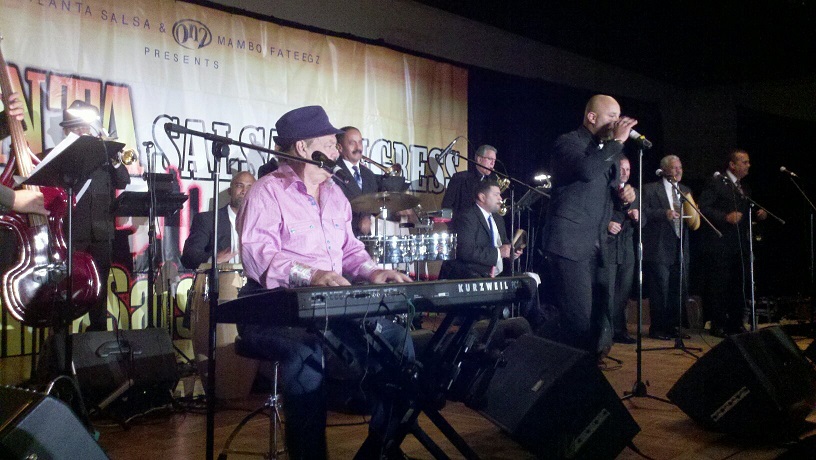
“Soneros de Sangre Nueva” is another song of his authorship and the third that works in conjunction with Rey Torcat. In this single they share together the interpreters: Josean Rivera “El Nuevo Amolador”, Edwin Lebron “Xtraordinario”, Nandy “El Sinsonte” (Conquistador Del Elemento) and Gumbay Navedo (Carmen Sol). Also, the musicians of great trajectory, such as: Banny Maldonado, Grammy Winner, (Timbales), Edwin “Pirulo” Reyes (Congas) and Kokoand Take (Bongo / Bell) and in the choirs the Lead vocalist of the legendary CORPORACION LATINA, Edgardo “Bambino” Otero participated in this hit. Similar to his two previous unreleased tracks “Mi Tierra Querida” and “Mi Ritmo se llama Zalsa”, “Soneros de Sangre Nueva” has had a great acceptance and support from the public knowledgeable appreciative about the new Salsa representation worldwide.
The covers “Ya te Olvide” (2017) original song by the successful Mexican singer Marco Antonio Solis, recorded in the state of Kansas with arrangements by Carlos Ugarte and “RAN KAN KAN. Just for the King”(2009), tribute to Tito Puente under the production of one of the best percussionists, David Lugo with different choirs, Xilofono or Marimba, Trombones, and solos by Conga and Timbal, have screened” El Calvito “Reyes at the top of the most outstanding relief Soneros Salseros today.

With 25 years of musical experience and more than 10,000 presentations around the world, Edwin has stepped on the best stages including the World Peace Festival at the Olympic Stadium in Seoul (South Korea) in front of 82,000 people. He also had appearances in more than 20 Salsa Social events in many clubs throughout the peninsula, participated in the Salsa Beach Festival in Pusan and in two Asia Salsa Congreses with the master trombonist’s band, Greg Peña.
“Salsa is my therapy,
Edwin, who currently resides in Palm Coast, Florida, and after 22 years of service in the U.S. Navy and retired as Chief Warrant Officer, is preparing his debut album to be released in 2019 and doesn’t discard in the future to continue working on behalf of Hispanic communities around the world as a motivational coach, always bringing optimism and hope for a better future for the Latins.

All his music can be downloaded NOW on all digital platforms.
For more information, please visit www.ElCalvitoReyes.com or follow him in all his social networks as Edwin El Calvito Reyes.
Video: https://youtu.be/XMRTsFvpT0A
Latin America / Venezuela / Caracas
Oscar Dudamel, the father of Gustavo Dudamel, director of the Los Angeles Philharmonic Orchestra and the Simón Bolívar Orchestra of Venezuela, has been a musician for many years. Every Friday and Saturday, he receives applause from the public in the place where he plays the trombone since a small stage with “La Otra Banda de Dudamel” the Agraz ensemble, a salsa group whose main course is the songs of the duo made famous by Héctor Lavoe and Willie Colón.

On Sundays, Oscar Dudamel has to be on the other shore and applaud standing up, as parents do, swollen with pride at the talent of their son who, with baton in hand, conducts a world-renowned Symphony Orchestra and if he think about it, his musical vein germinated from the brass bands of charanga, salsa and guaguancó.
After 10 at night it is difficult to find a place in “The Temple of Salsa”, the tickets are not sold out, but the tables and the best stalls of this place located on 7th Street that crosses Bolivar Avenue in Maracay, there fanatics and amateur dancers meet. of salsa and logically admirers of Héctor Lavoe and Willie Colón
Oscar Dudamel on the trombone is accompanied by Charly Guzmán, a talented young man who, at just 18 years old, shows the gifts of his voice; Oswaldo Agraz (musical director, piano and backing vocals), Gerardo Vargas (bass), Vicente Guzmán (timbale), Júnior Narváez (bongo), Diego Camus (conga and backing vocals), Ventura Prieto (trombone) and Johan Figueroa (alternate trombone). It is about the same format, instruments and identical distribution (the trombones next to the vocalist) of the orchestra that captivated him.
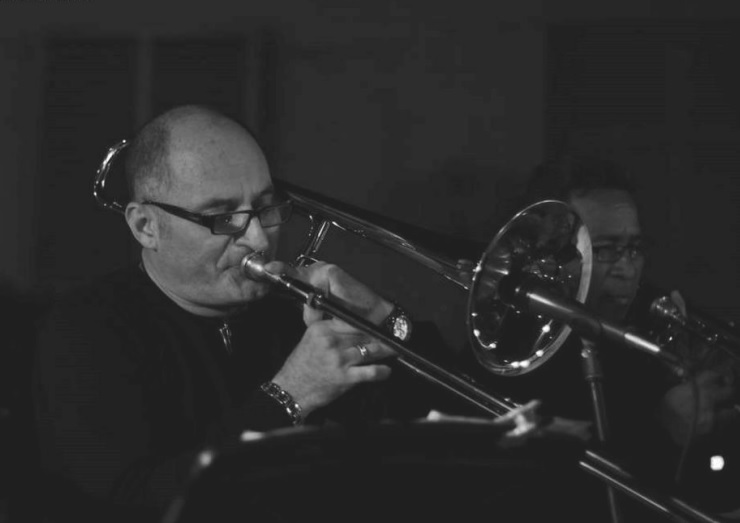
And it is that music often also enters through the eyes, as Oscar Dudamel says, who knew he wanted to be a trombonist when he saw Willie Colón at La Feria de la Alegría holding his instrument while puffing out his cheeks, in that In this way, it is known that the first approach of the today brilliant, young and valued Orchestra Director Gustavo Dudamel to music, was not appreciating the Tchaikovsky that he likes to conduct so much, on the contrary, it was appreciating the music that came out of the trombone of his beloved dad.
The previous June, Oscar paid homage to Hector Lavoe as usual, for commemorating years of his death. “Héctor Lavoe died on Monday, June 29, 1993 at 11:45 in the morning”, an event that he remembers with the accuracy that sad events mark, but despite the pain, with satisfaction and pride, he mentions that his son Gustavo de Only 29 years old, before entering the stage he repeats a special ritual: “Before entering New York to direct, someone asked Gustavo: ‘“Master, what are you listening to? Tchaikovsky? and Gustavo replied: ‘No, Tito Rodríguez because he gives me swing'”.
If someone were to say that Gustavo Dudamel owes a debt to Willie Colón and Héctor Lavoe for his vocation as a musician, he would not be wrong, or acknowledge his father, who has often referred that his son’s versatility is due to the fact that he always listened to popular and classical music. . “I listened to more salsa than Beethoven, that’s why it has so much rhythm,” he says with a laugh.
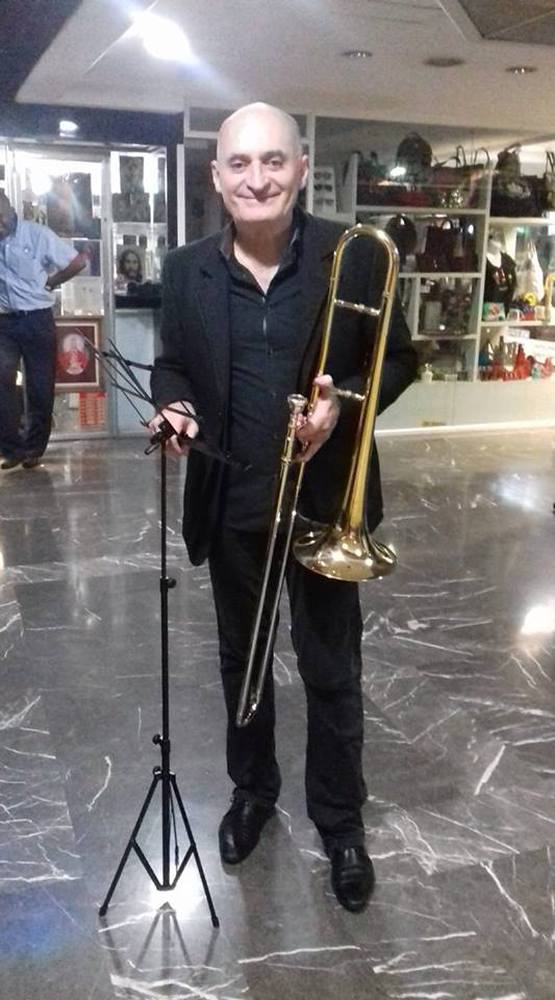
“I am his number one fan. He fulfilled the goals that I, due to various circumstances, could not fulfill, he made the dream that I wanted come true. He has reached where I would have liked”, reveals the father, who sees in his son an extension of his, “ .
In a life marked by music, a soundtrack for falling in love could not be missing. It was during the visit of El Gran Combo de Puerto Rico to Barquisimeto in the late 1970s that Oscar noticed Solange Ramírez, his wife and Gustavo’s mother; Today, 30 years later, when Falsaria sounds in Maracay, the song leads him to remember that indelible moment.
Gustavo Adolfo, as his mother calls him, began playing the güiro before he was four years old; later he would build his own battery out of biscuit tins and safety helmets.
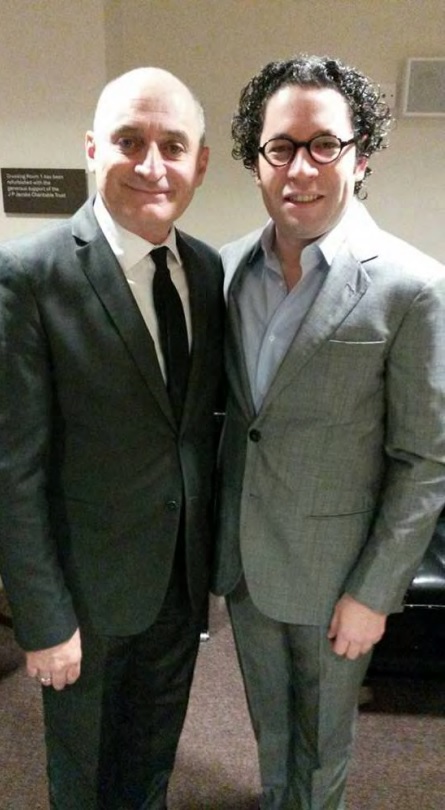
Gustavo received his first knowledge of music from his father, who was then a trombonist with the Lara Symphony, who had plenty of passion to play and lacked patience to teach. He wanted to be a trombonist, like his father, but his small arm could not reach the instrument.
“I imagined that Gustavo was going to be a musician,” he says. “I told him: ‘You have to be the best or among the best and never lose your principles or forget where we come from.'”
At the age of seven Gustavo played the timpani with La Banda Actual and at the age of nine he arranged for this salsa orchestra in which Oscar played for 16 years and with which he met again after many years.
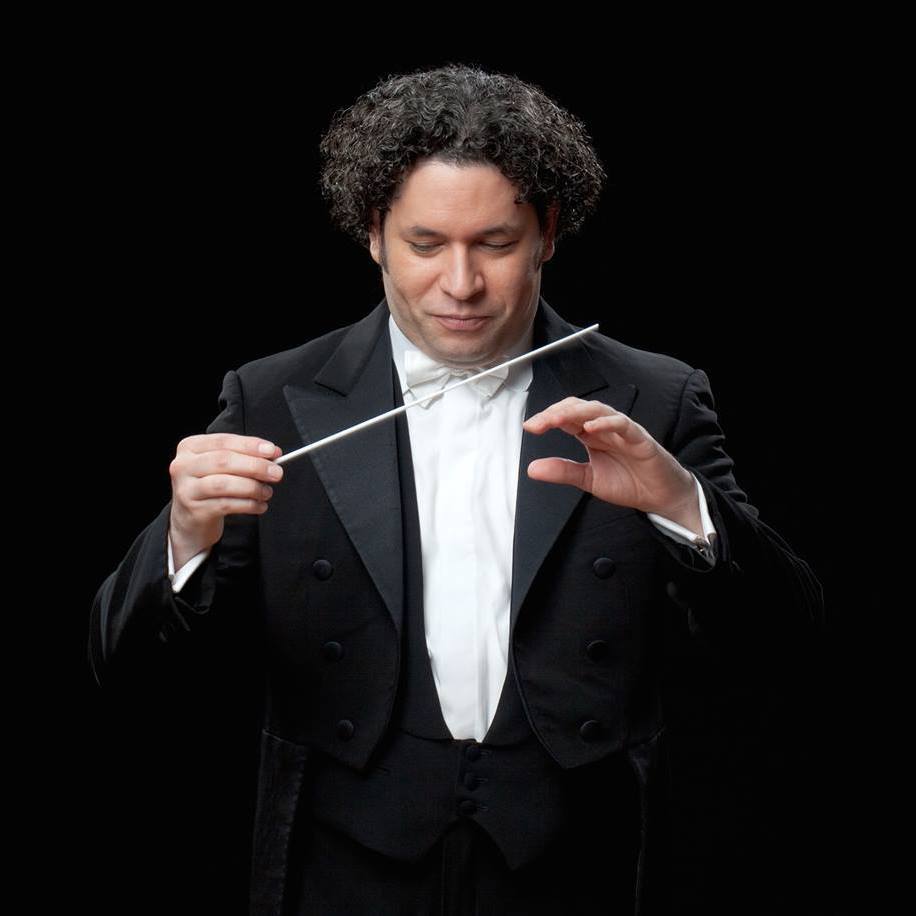
Gustavo decided on the violin, an instrument that adjusted to his size, and at home, father and son had the habit of studying while walking. There were times when one would bend down for the other to pass, so that the slide of the trombone and the bow of the violin would not trip over each other. However, popular music and academic music finally made their own meeting.
Oscar does not shake his hair, but he inflates his lungs with force and from that mouth-to-mouth breathing with his instrument, he manages to get the best out of it…. The father speaks of his salsa orchestra with the same pride that the son (Gustavo) does of his classical musicians.