• Skip to primary navigation
  • Skip to main content

International Salsa Magazine

  • HOME
  • Previous editions
    • 2026
      • ISM / March 2026
      • ISM / February 2026
      • ISM / January 2026
    • 2025
      • ISM / December 2025
      • ISM / November 2025
      • ISM / October 2025
      • ISM / September 2025
      • ISM / August 2025
      • ISM / July 2025
      • ISM / June 2025
      • ISM / May2025
      • ISM / April 2025
      • ISM / March 2025
      • ISM / February 2025
      • ISM / January 2025
    • 2024
      • ISM / December 2024
      • ISM / November 2024
      • ISM / October 2024
      • ISM / September 2024
      • ISM / August 2024
      • ISM / July 2024
      • ISM / June 2024
      • ISM / May 2024
      • ISM / April 2024
      • ISM / March 2024
      • ISM / February 2024
      • ISM / January 2024
    • 2023
      • ISM / December 2023
      • ISM / November 2023
      • ISM / October 2023
      • ISM – September 2023
      • ISM – August 2023
      • ISM July 2023
      • ISM Edition June 2023
      • ISM – May 2023
      • ISM April 2023
      • ISM March 2023
      • ISM February 2023
      • ISM January 2023
    • 2022
      • ISM December 2022
      • ISM November 2022
      • ISM October 2022
      • ISM September 2022
      • ISM August 2022
      • ISM July 2022
      • ISM June 2022
      • ISM May 2022
      • ISM February 2022
      • ISM January 2022
    • 2021
      • ISM December 2021
      • ISM November 2021
      • ISM October – 2021
      • ISM September 2021
      • ISM August 2021
      • ISM July 2021
      • ISM May 2021
      • ISM April 2021
      • ISM June 2021
      • ISM March 2021
      • ISM February 2021
      • ISM January 2021
    • 2020
      • ISM December 2020
      • ISM November 2020
      • ISM October 2020
      • ISM September 2020
      • ISM August 2020
      • ISM July 2020
      • ISM June 2020
      • ISM May 2020
      • ISM April 2020
      • ISM March 2020
      • ISM February 2020
      • ISM January 2020
    • 2019
      • ISM December 2019
      • ISM November 2019
      • ISM October 2019
      • ISM Septembre 2019
      • ISM August 2019
      • ISM July 2019
      • ISM June 2019
  • Spanish
  • Download Salsa App
    • Android
    • Apple

Search Results for: dancers

Where to dance Salsa in London?

Europe/ England/ London

Where to dance Salsa in London?
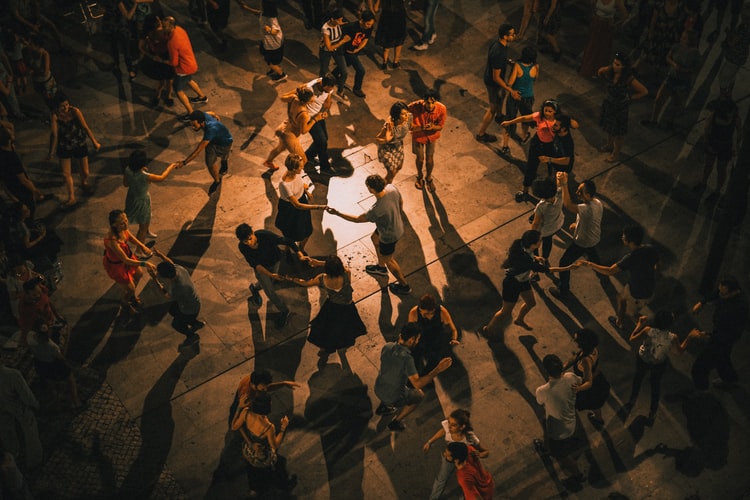
dance salsa
dance salsa

We present you 5 options to go dance Salsa in London

Every place just promise delicious cocktails and a hearty food menu, also features salsa classes, cocktail masterclasses and fun-time Latin party vibes. In London there are all kinds of events and parties, and Latin music is not far behind. So you will find numerous options to enjoy a night of salsa in the English capital.


1.- Caramelo Latin Dance:

It’s a dance school with Salsa On1 and On2 classes, plus they have the option of doing an intensive salsa in one day, so if you go with your salsa friends to London, this is your chance to learn the basics, and leave to dance with them.

From time to time the school organizes an event for social dancing.
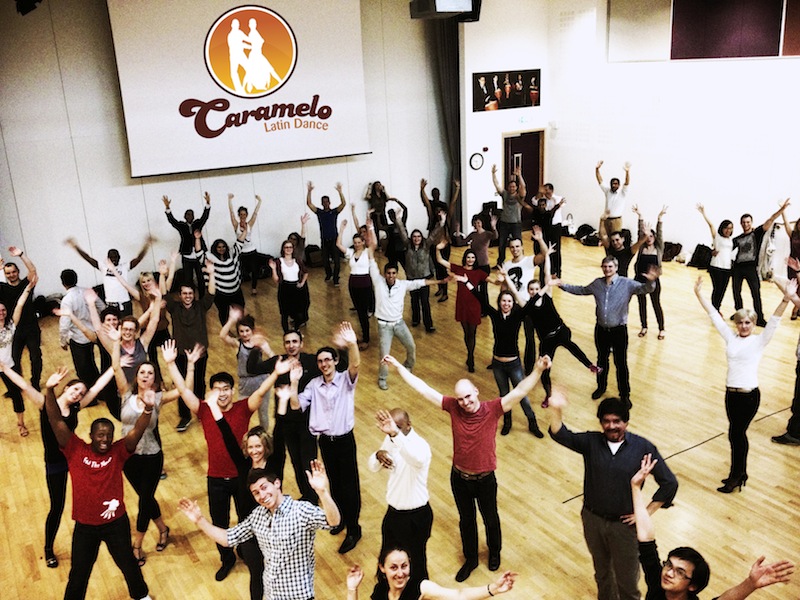
Caramelo Latin Dance

Address: Paddington Academy, 50 Marylands Rd, London W9 2DR.

Metro: Warwick Avenue

Call them:  +44 7572 891570


2.- Hammersmith Salsa & Bachata Club:

6 levels of Bachata and Salsa classes followed by loads of social dancing. Absolute beginners always warmly welcomed. Make new friends, get fit, have fun and dance your night away. Every week DJ Incognito  regularly play the latest Salsa, Bachata, Cha Cha and Latin music. Fun and friendly staff.
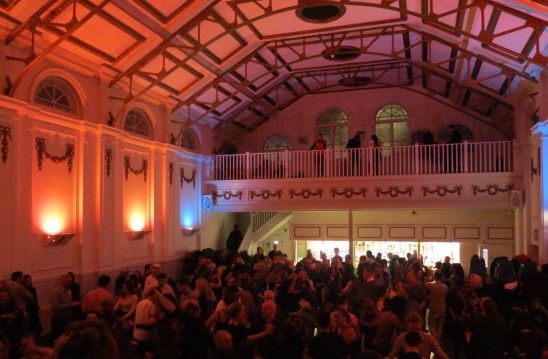
Hammersmith Salsa & Bachata Club
Dance in Hammersmith Salsa & Bachata Club

Address: 11 Rutland Grove, Hammersmith, London W6 9DH.

Call them: +44 7831 715368


3.- Salsa! Soho:

Partying is what they do, and they do it well! Party with them and you will get a big injection of Latin party vibe to your celebration!

They have menus to suit all occasions. Salsa classes every night of the week, amazing drinks menu with over 50 cocktails and of course non- stop latin music. Enquire about booking and plan your party.
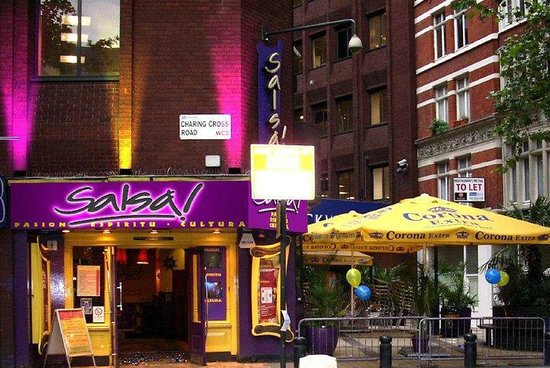
Salsa! Soho
Dance in Salsa! Soho

Address: 96 Charing Cross Rd, London WC2H 0JG

Call them: +44 20 7379 3277


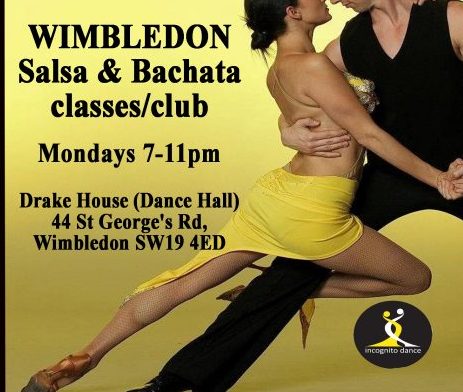
4.- Wimbledon Salsa and Bachata Club and Classes:

Fun & friendly classes for dancers of all levels. Plenty of high quality social dancing to the best and  latest Salsa, Bachata, Cha Cha and Latin grooves. Absolute beginners warmly welcomed. High quality lessons from Beginners to Advanced. No prior bookings needed, just turn up and dance.
Wimbledon Salsa and Bachata Club
Dance in Wimbledon Salsa and Bachata Club

Address: 44 St George’s Rd, Wimbledon, London SW19 4ED

Call them: +44 7831 715368


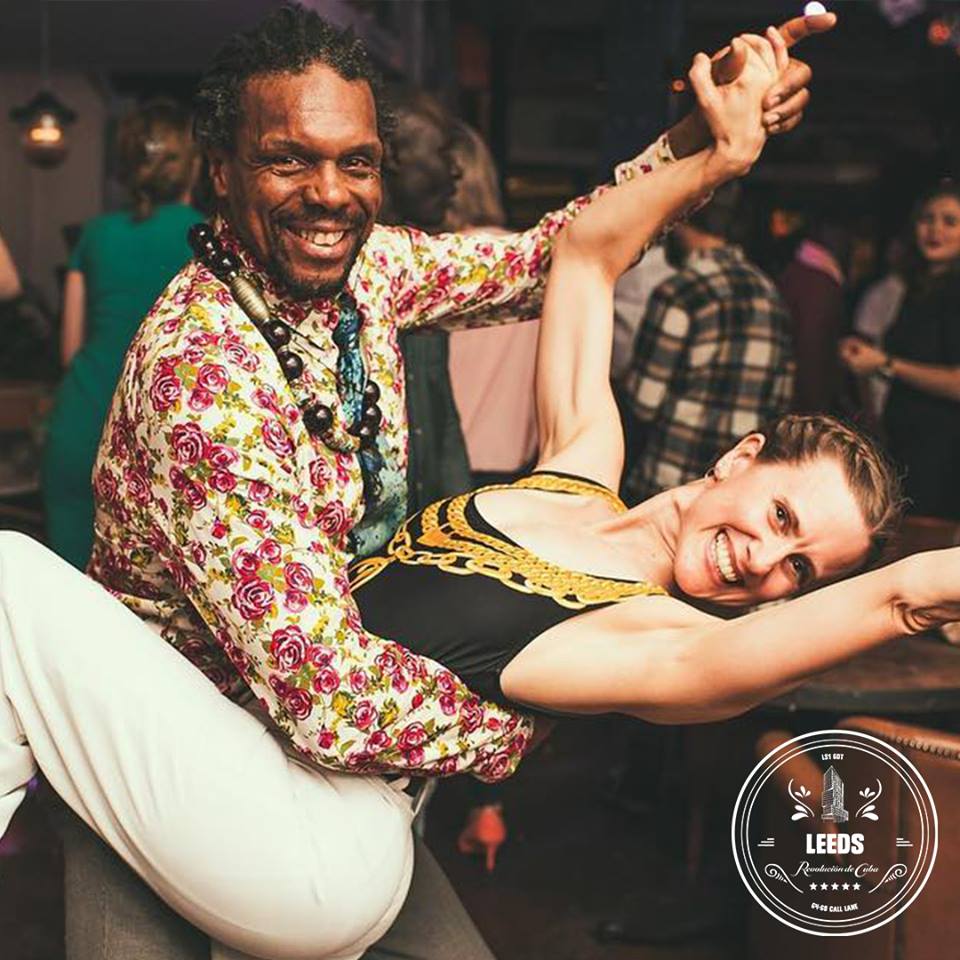
5.- Revolucion de Cuba:

Rum Bar & Cantina. Unique, expertly made cocktails and Latin-inspired food, with amazing music and live entertainment. Feel-good Cuban vibes all year round! This is not only one bar.

It’s the story of a team of rum lovers, who knew that taking on this spirit meant capturing it. And that doing so would lead to a discovery of food, drink, dance and the culture that makes up one of the world’s most exciting and intriguing places: The island of Cuba.
Revolucion de Cuba
Dance in Revolucion de Cuba

Address: More of 15 locations in England, you can choose anyone!

Call them: +44 1423 226133

We hope this alternatives help you enjoy a great party. Tell us how do you spend the night dancing London.

Know the connections of tropical dances

Latin America / Venezuela /Caracas

Tropical Dances:

Did you know that people have several ways of communicating?

Oral communication is what we normally use to communicate in such a way to establish and maintain personal relationships, and to show not only words and express emotions and/or feelings, body communication is used, which can be said in a few words that it is a form creatively expressing through gestures, eye contact, poses, and arm and leg movements; turning this form of communication into something more intimate and accurate without the need for the use of words.

Salsa dancers

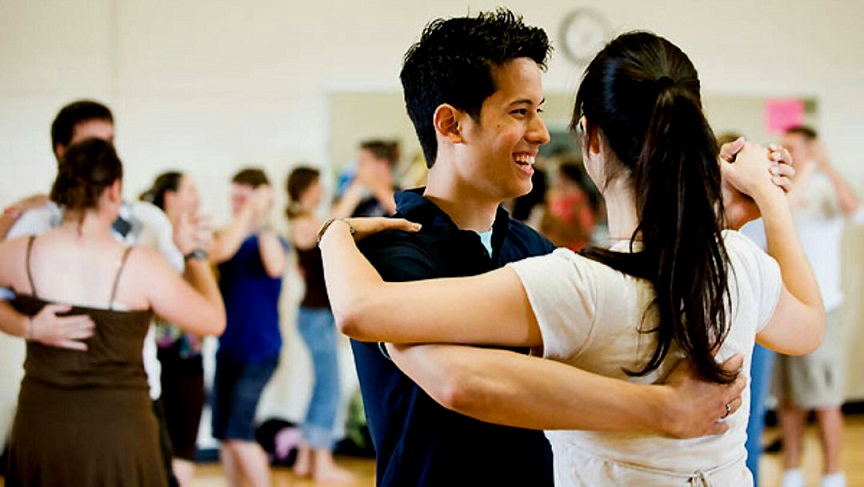
In social activities, one of the most popular is dancing, where body communication is very important since the couple or group needs to know certain signs that indicate “when” or “how”, in order to perform the steps and how. As a result, the success of said interpretation will test the quality, maturity and growth of the dancers in the rhythms they dance.

dancers dancing in a club tropical

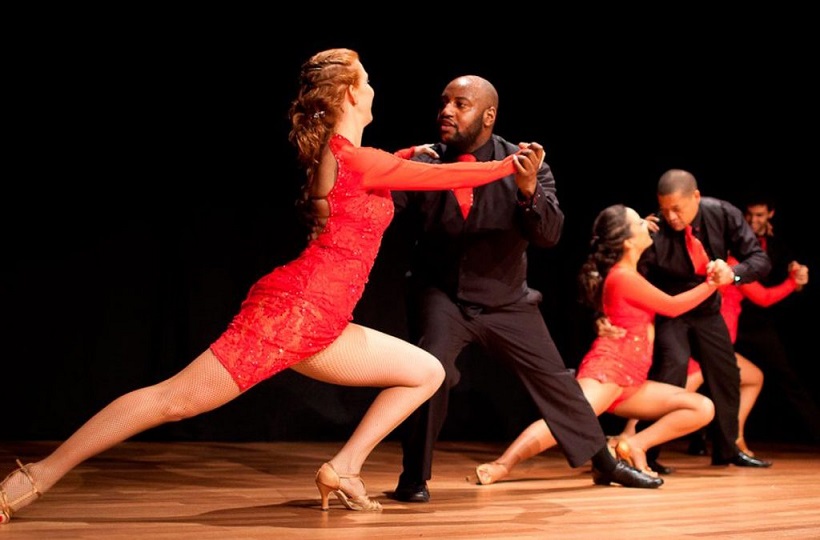
Of course, it should be noted that each musical genre has its own rules, especially in the counting of steps in music, which gives grace, stability and rhythm to the dancers in the song played either in a musical event and is of vital importance not only for a casual event but for a competition. For this reason, it is important to know the steps and turns to perform and have excellent body communication (especially if it is as a couple) to know what they are going to do.

dancers dancing salsa, bachata and other tropical dances

In Latin rhythms, this type of communication is really important, otherwise the grace of the dance is lost. Among the most important Latin rhythms that are essential and/or significant are:

  • Salsa: a Latin tropical rhythm that, although it was born in Cuba due to the mixture of “Guaracha”, “Son”, “Mambo”, “Cha Cha Chá” with a unique style, through time several types emerged ( Salsa Cubana, Salsa en Linea, Salsa Casino, Salsa New York or Mambo style, Salsa Cali style, Salsa Puerto Rican and Venezuelan sauce). In this dance it is very important to pay attention to the look, the hands and arms (the latter in the case of the man since with him he dominates and/or controls the woman in the dance and she must interpret what the next movement is) to thus being able to perform either a simple step or a few laps, of which there is a great variety of them.
  • Bachata: is a danceable musical genre originating in the Dominican Republic, within what is called urban folklore. It is considered a derivative of the rhythmic bolero, with influences from other styles such as the Cuban son and merengue. This dance has great sensuality like the rest of the Caribbean rhythms, where it requires an unbeatable appearance on the part of the dancers when performing it, where that connection with the couple is important so that it can impress the public.
  • Merengue: is a dance music genre originated in the Dominican Republic at the end of the 19th century. It is very popular throughout the American continent, where it is considered, along with salsa, as one of the great dance musical genres that distinguish the Latin American genre.
  • Kizomba: a very sensual rhythm that emerged in Angola, which resulted from the mixture of 3 cultures (Angolan colony, Portuguese colony and part of Cape Verde “Brazil” as well as the French Caribbean of Martinique and Guadeloupe.). In this rhythm, the connection of the couple, especially the woman, is of vital importance, since the movement of the hips is slow and sensual, as are their steps. Did you know that many people have the prejudice that it is a very sensual dance, however, it is as sensual as you want to project it, in the same way it happens with Bachata and Merengue, they can be as sensual as you want to project them or as normal how you want to do it.”

So, if you want to give life, grace, elegance and popularity to your dance, keep in mind, keep in mind these characteristics and how you manage to synchronize with your partner and show your spectators either in a personal party, competition, event and/or or congress, whether national or international, which is a true dance.

dancers pre-performing tropical dances

We spoke with Andrea Chaparro from Lulada Club

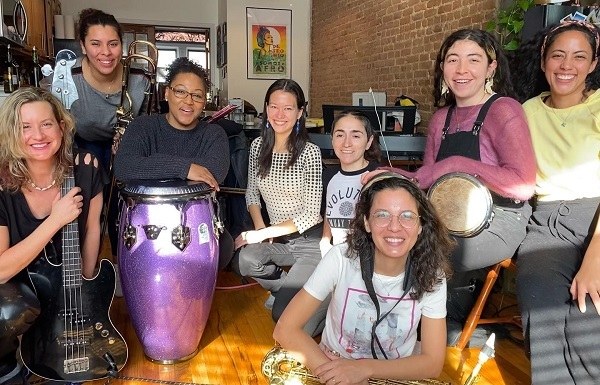
Lulada Club is a group composed entirely of women that plays a good number of Latin music genres such as salsa, bolero, cha cha chá, boogaloo, among others. These girls have a very interesting concept that caught our attention as soon as we checked their social networks, so we decided to get in touch with their director, Andrea Chaparro, who kindly agreed to talk to us and give us more details about the group she leads.   

Andrea Chaparro from Lulada Club
Andrea Chaparro, bandleader of Lulada Club

Name of the orchestra ”Lulada” and how it emerged   

We found the name they chose for the group very curious, so Andrea went on to explain that Lulada is a Colombian drink, specifically Cali (the capital of salsa) that comes from the lulo fruit. She and her partner, who is also part of the orchestra, wanted to pay tribute to this city so important for their careers and for salsa in general.    

The idea came from several sessions and rehearsals in which they were deciding what name to use, but they always knew that they wanted it having to do with Cali. In the end, they thought that ”lulada” sounded very good and mixed the term with ”club”, which originated a result that they all liked.   

Why only girls? 

Andrea recognizes that having a Latin female orchestra is not a novel idea, far from it. In fact, she saw this concept in Cali in several all-female orchestras that have been around for decades, so she wanted to replicate that idea.    

About six or seven years ago, it was when she wanted to create an all-girl group and the opportunity was given to her in the framework of the pandemic. In Colombia, the artist had been playing with other all-male groups, but she began meeting other female musicians and instrumentalists and had the opportunity to organize a group for an event to which she and her saxophonist partner were invited. 

When we wanted to know more about the selection process of the members, Andrea noted that she did a sort of search on Instagram to see their work directly, but several of the girls were brought in and recommended by other members.   

Some of these girls had not had the opportunity to develop their skills because they were always underestimated in the Latin salsa scene for being female or very young, so Lulada Club has been a great opportunity for them to grow and evolve in music.   

Lulada Club and Andrea Chaparro
This is the whole group, Lulada Club

She considers that they have all fit together very well with the group and understand each other perfectly most of the time, which is why she considers that they have been very fortunate to find each other and join their professional lives.    

Andrea and Lulada Club in New York 

At the moment, all of the members of Lulada Club live in New York and have no plans to move to any other place, since their greatest opportunities have been given to them in this city. 

She does say that they are completely open to the possibility of touring both nationally and internationally whenever they find it possible. Indeed, at present, they already have many invitations to attend concerts and festivals in many other cities in the United States, but they will not base the orchestra anywhere else.   

Both Andrea and the rest of the girls feel that their biggest audience is there and many people in positions of power are seeing what they are doing and taking them into account. People, club owners and event organizers have received them with open arms and have taken them into account for events of all kinds.   

One such event is SummerStage on August 2, whose main attraction will be the maestro Eddie Palmieri, who will be offering one of the last concerts of his career after announcing his retirement. It is a great honor for the girls to be able to open for this world-renowned artist who has contributed so much to salsa and Latin music since his beginnings.    

The news about their participation in the event made them very happy and feel that all their hard work has paid off.    

Andrea Chaparro on stage with Lulada
Andrea Chaparro singing on stage

Genres played by Andrea and Lulada Club   

As we have mentioned at the beginning of this edition, there are several Latin genres played by Lulada Club such as salsa, cha cha chá or boogalo, but each one has its own audience. 

In that sense, Andrea said that they play a lot of hard salsa for dancers and classical music coming from the clubs in Cali. There are certain songs that can never be out of their repertoire such as ”Llorarás” by Oscar D’ León, ”La rebelión” by Joe Arroyo, ”Brujería” by El Gran Combo de Puerto Rico, among others.   

In cases where we get a quieter audience, we can play a bolero or cha cha chá, but everything will depend on the reaction of those present to our performance,” said Andrea on this subject. 

In terms of their original songs, they have two recorded and their names are ”La Palma” ”Lulada ya llegó”, which has been very well received by those who have heard it.    

Undoubtedly, Lulada Club has a lot to offer to the audience and fortunately festival organizers and club owners are realizing the great potential of this group, and every day that passes they are taking more into account in their lineups.    

Read also: Allyson Briggs ”La Rubia de La Salsa” 

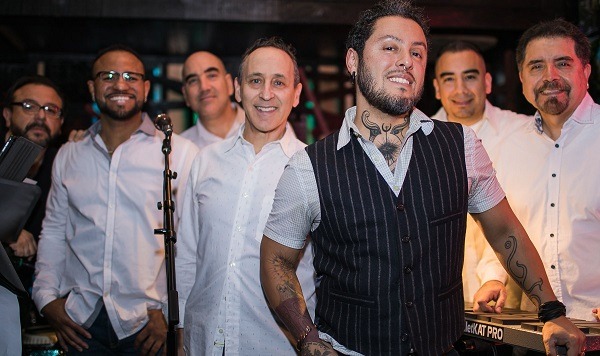
Musical director of VibraSÓN Jake Jacobs is here

VibraSÓN is a musical group that makes life in the state of California, specifically in the San Francisco Bay Area, which has become one of the best options for festivals and nightclubs seeking fresh sounds in terms of salsa, swing and Latin music in general.    

I was pleased to know about this great orchestra, its members and sound thanks to its work at Charley’s LG, Bar and Nightclub where Eduardo Guilarte, our editor, was working and directing everything related to the lineups and musical programming for Latin music nights, more specifically on Tuesdays.   

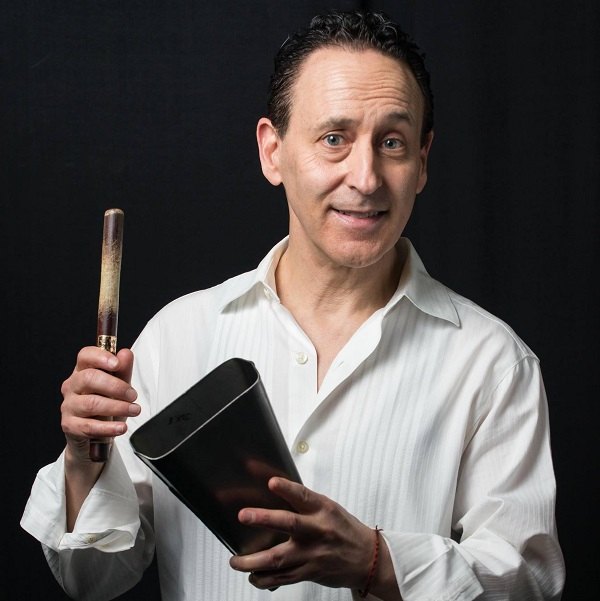
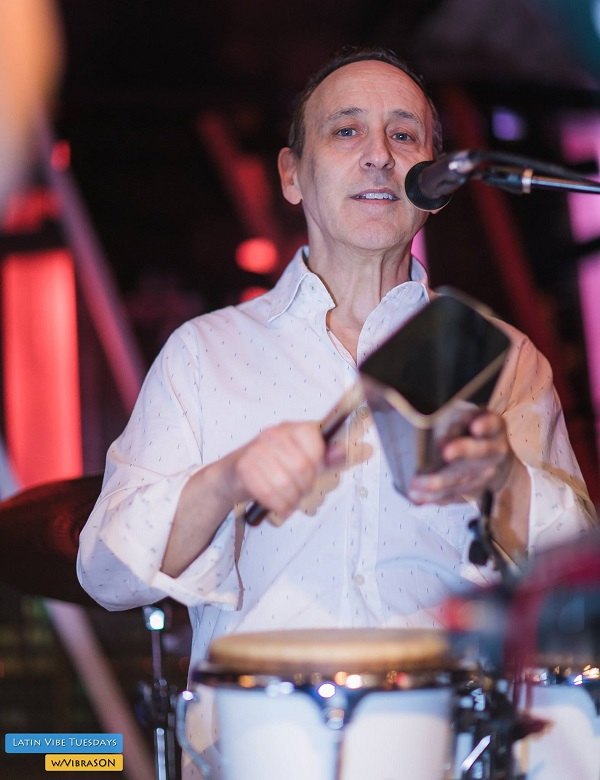
When I made contact, the person who was kind enough to reply was musical director of VibraSÓN. Jake Jacobs, who at the same time works as a producer, percussionist and backing vocalist.    

Jake Jacobs from VibraSÓN
Jake Jacobs, musical director of VibraSON

Talk with Jake Jacobs from the group VibraSÓN   

Jake Jacobs comes from a very interesting background. His first contact with music took place with his father and uncle, both of whom were professional musicians, but Jake says he has always been interested in this world.   

He studied classical piano and music theory at the University of Illinois and took some jazz piano lessons in his passage through the University of California. During these years, the musical director spent roughly 13 hours a day practicing with this instrument to master it as well as possible. 

With time, he became interested in Latin music and dance, which also led him to take dance classes at university. With that knowledge acquired up to that moment, he went to visit New York and his trip coincided with the National Puerto Rican Day Parade (an event held annually in New York and other states to celebrate Puerto Rico and its traditions in the United States). 

This event inspired Jake so much that he returned to the Bay Area with the intention to switch his dance classes to salsa classes. He became so good that he began to teach salsa dance classes himself to numerous students interested in learning these rhythms, something he has been done for over 20 years in widely recognized clubs and dance studios.   

He used to provide these classes twice a week at the Cocomo Club, which was very important at the time and attracted more than 600 people every day. When bands performed live, the future leader of VibraSÓN began to know musicians, who, in turn, gave him music lessons and his first opportunities to play in bands.   


Jake Jacobs with VibraSÓN
Jake Jacobs and the other members of VibraSÓN

Apprenticeships and classes with great musicians 

One of the most impressive credentials that Jake can have is to have studied with some of the best musicians in the San Francisco Bay Area such as Edgardo Cambón, Karl Perazzo, Michael Spiro, Louie Romero, among others. 

Evidently, all these luminaries have taught the producer much of what he knows and applies today, but he ensures that it was not easy to learn from so many ”teachers” at the same time, in both dancing and music performance.   

Ensures that some of the most important things he learned have to do with technique and tips to be applied such as how to play the drums, the notes at the right times, silences and much more. 

He points out that they all taught him valuable and important things, which are still very useful to this day. One of those great lessons was to practice and practice until he achieved the sounds he wanted, especially in Latin music. 

VibraSÓN 

Finally, in 2014, Jake decided it was time to put into practice everything he learned and create his own musical group with his own original details. This is how VibraSÓN came about.    

The origin of his band’s name came from Luis Morales, one of its members. It is based on vibraphone, which is not widely used by the orchestras from the San Francisco Bay Area, but by the dancers and by this new group in their performances. As for the end of the name, it comes from ”son cubano”, a typical genre of the island Jake likes very much.   

Although Club Cocomo unfortunately closed the following year, that didn’t stop VibraSÓN from making its way and becoming one of the most demanded groups in the Bay Area in recent years.   

One of the things that Jake thinks makes his group unique is that there are very few people who use the vibraphone and, due to his training as a dancer, he is always looking to make the most appropriate music for that part of the audience for whom dancing is very important.   

Jake Jacobs in San Francisco
Jake Jacobs performing on stage in San Francisco

How Jake and VibraSÓN read the crowd   

For Jake and the rest of the band, it is very important to read the crowd and see how people react to the music they play at any time. They pay a lot of attention to the dance floor to see what works and what doesn’t with the people they play for that night.   

Having played at clubs such as Charley’s, Bar Fluxus, La Peña Cultural, The Cigar Bar and Space 500, they have prepared a very generous repertoire for each performance. Just as they have written original music, they have also dedicated themselves to perform covers of the most buzzed-about artists in recent times in certain contexts, something that worked out for several orchestras when they need to draw on these resources to entertain the audience.   

This wide repertoire that they now enjoy is what has allowed them to make diverse shows with lots of variety so that those present never get bored, even if they usually go to the same place.   

Another thing they tend to do is add new arrangements and change genres to the covers they do so that they do not sound exactly like the originals and they can inject some of their essence, even if they are not songs written or sung by them originally. ”Even if they are covers, we always try to add our original arrangements so that the dancers enjoy them that much more” said Jake.   

They have also learned to connect with the audience and know what the dancers and the general public want in order to give them exactly what they want. And they did not learn this overnight, but have observed in detail what other orchestras do to imitate what is good and useful.    

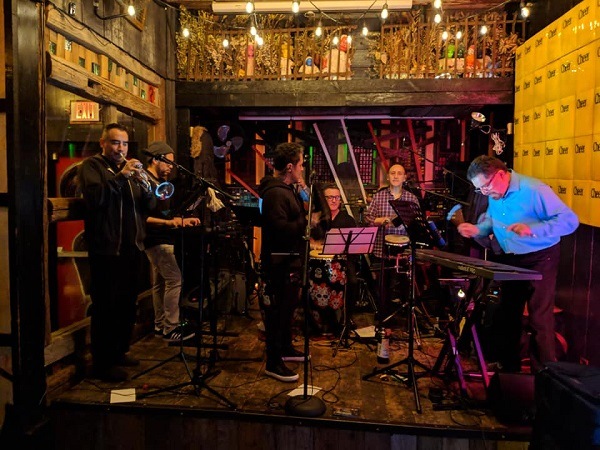
Jake and VibraSÓN on stage
VibraSÓN performing on stage

Tours and future plans of VibraSÓN

At the end of the interesting talk, Jake told us that, for now, they only plan to record new music and other activities that are comfortable for all the members, since many of the musicians are in other orchestras and record for other people, so it is too complicated for them to tour with VibraSÓN. In addition to that, several of them have small children to care for, so it is impossible for them to travel for a long time.   

He is so considerate because he always tries to keep the same members and preserve the unity of the group above all else. It has worked for them, as they have managed to made a name, which will continue to become popular over time. 

Read also: Fausto Cuevas Y La Moderna in International Salsa Magazine 

Cali Fairs 2019

What you should know before arriving in Cali

Cali is the capital of the department of Valle del Cauca, located on the Colombian Pacific. Located at 1,018 meters above sea level, its average temperature is 32 degrees, with a dry climate for most of the year.

The climate of the city is hot most of the day, so it is advisable to wear fresh clothing and elements to protect yourself from the sun.

The city is one of the main economic and industrial centers of Colombia, in addition to being the main urban, cultural, economic, industrial and agrarian center in the southwest of the country and the third nationally.

Cali Fairs - Flyer
Cali 2019 Fairs Flyer

The number of inhabitants according to the result of the last census is 2,420,013 inhabitants, which makes it the third most populous city in the country.

The Alfonso Bonilla Aragón International Airport is located just 35 minutes from the city center.

Salsa is the musical genre that is most listened to in the city; but there are places for all kinds of musical tastes.

The dancers from Cali are recognized for the speed of their movements and there are academies where classes are taught for tourists.

Aguardiente is the typical drink of the region. To consume it, it is recommended to eat first and hydrate well.

A variety of beers, local rum and imported spirits are also available.

It is essential to try the local delicacies: Lulada, marranitas, pandebonos, cholados, chontaduros and shampoos.

If you arrive in Cali at the time of the Fair, it is best that you prepare to live six of the best days of your entire life; where the music, the dance, the gastronomy and the warmth of the Caleños will make you fall in love with this city which they call “La Sucursal del Cielo”.

Cali has a massive transportation system called MIO, which has routes designed to cover the entire city; but you can also get around in taxis. The minimum race has a cost of $4,700. ($1.5)


Places to visit in Cali:

1. Calima Gold Museum

It is an archaeological museum dedicated to the Calima culture located in the historic center of Cali.

2. Boulevard of Colombia Avenue

Also known as the River Boulevard for being located on the banks of the Cali River.

It is a boulevard located in the historic center of the city, in whose surroundings are the Ermita Church, the Coltabaco Building (architectural heritage), the Municipal Administrative Center, CAM; the Puente España, the Jorge Isaacs Theater, among others.

This pedestrian space has become one of the most visited sectors of the city due to its traveling art shows.

3. The Tertulia Museum

It is a museum of modern art and has the most important collection of works on paper in the country.

4. Alameda Park

It is a space for family integration that has become a great cluster of gastronomy, music and dance.

5. Caliwood Museum of Cinematography

It stands out for its emblematic collection of cinematographic, photographic and phonographic devices, which show the evolution of the filming and film exhibition equipment used in Colombia.

6. La Merced Religious Complex

Religious complex located in the place of foundation of the city of Santiago de Cali.

It is made up of the main nave of the church dedicated to Our Lady of Mercy (patron saint of the city), the auxiliary chapels dedicated to Our Lady of Remedies and the Lateran Christ, the religious convent, the museum of religious art and the archaeological museum.

7. Pance River and Health Park

It is one of the most frequented natural places by the inhabitants of Cali.

From the town of Pance to the area known as the Vorágine there are a good number of restaurants and recreational parks.

8. Sebastian de Belalcázar viewpoint

It has a monument that pays homage to the conqueror Sebastián de Belalcázar, who founded the city in 1536.

9. San Antonio neighborhood

Its richness lies in its urban landscape and in the daily expression of its inhabitants, custodians of the oral traditions that gave the city its identity.

It is the cradle of a varied gastronomic offer and fashion shops, as well as religious devotion and the sweet tradition of flower pots on the last weekend of June when the Flower Pot Festival is celebrated.

10. Christ the King

It is the monument that dominates and protects the city with open arms. It is 26 meters high and is located on Cerro Los Cristales.

11. Granada and El Peñon

These neighborhoods are renowned for their hotels, shops, restaurants, bars and nightclubs, with something for everyone.

12. The Cat of the River

It is one of the sculptural works of different artists located on the banks of the Cali River.

The Cat is the work of Hernando Tejada. A series of complementary sculptures can also be found accompanying the cat, called Las Novias del Gato.

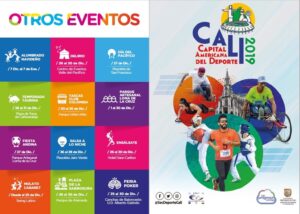
Cali fairs - events
Other events in Cali

Events to return to Cali

Macetas  festival

It is part of a local tradition that celebrates the bond between godparents and godchildren. Every year, during the last days of June, cultural activities, exhibitions and sales of pots, made with sugar candies, are held.

Dance Biennale

It is a festival dedicated to the music of Pacific folklore that takes place in the month of August. It seeks to highlight composers, musical groups and music researchers of Afro-Colombian origin. Gastronomy, clothing and handicrafts are some of the components of this multicultural meeting.

Cali Fairs Flyer
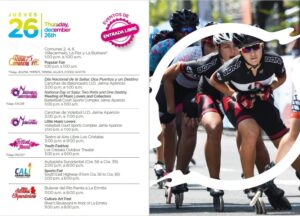
Multiple free events in Cali

Petronio Álvarez Pacific Music Festival

Event that aims to stage theater shows at a local, national and international level, during the month of October.

World Salsa Festival

National and international companies arrive in the dance capital in November to show the country the best of contemporary, urban and folkloric expression.

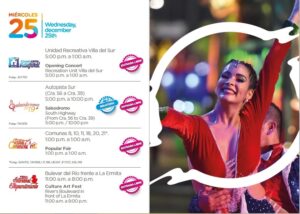
Cali fairs - event flyer
Other events at the Cali Fairs

Cali International Theater Festival

It takes place in Cali every year in the month of September and recognized orchestras and all the salsa schools in the city participate, accompanied by dance academies from other cities and abroad that are represented by around 5,000 dancers.

During the festival, workshops, talks and academic meetings are held around salsa.

Cali Exposhow

It is the most important beauty, health and fashion event in Colombia, it takes place annually in the month of October and brings together important local and international designers and exhibitors.

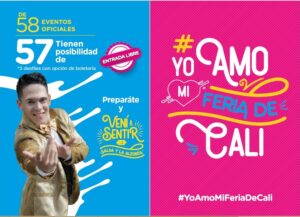
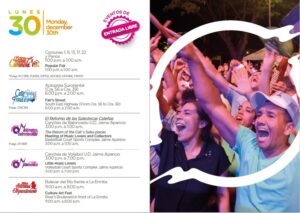
Cali fairs - free
Free events in Cali
  • Information: https://feriadecali.com.co/sobre-cali

  • « Go to Previous Page
  • Page 1
  • Interim pages omitted …
  • Page 24
  • Page 25
  • Page 26
  • Page 27
  • Page 28
  • Interim pages omitted …
  • Page 53
  • Go to Next Page »

International Salsa Magazine (ISM) is a monthly publication about Salsa activities around the world, that has been publishing since 2007. It is a world network of volunteers coordinated by ISM Magazine. We are working to strengthen all the events by working together.