• Skip to primary navigation
  • Skip to main content

International Salsa Magazine

  • HOME
  • Previous editions
    • 2026
      • ISM / March 2026
      • ISM / February 2026
      • ISM / January 2026
    • 2025
      • ISM / December 2025
      • ISM / November 2025
      • ISM / October 2025
      • ISM / September 2025
      • ISM / August 2025
      • ISM / July 2025
      • ISM / June 2025
      • ISM / May2025
      • ISM / April 2025
      • ISM / March 2025
      • ISM / February 2025
      • ISM / January 2025
    • 2024
      • ISM / December 2024
      • ISM / November 2024
      • ISM / October 2024
      • ISM / September 2024
      • ISM / August 2024
      • ISM / July 2024
      • ISM / June 2024
      • ISM / May 2024
      • ISM / April 2024
      • ISM / March 2024
      • ISM / February 2024
      • ISM / January 2024
    • 2023
      • ISM / December 2023
      • ISM / November 2023
      • ISM / October 2023
      • ISM – September 2023
      • ISM – August 2023
      • ISM July 2023
      • ISM Edition June 2023
      • ISM – May 2023
      • ISM April 2023
      • ISM March 2023
      • ISM February 2023
      • ISM January 2023
    • 2022
      • ISM December 2022
      • ISM November 2022
      • ISM October 2022
      • ISM September 2022
      • ISM August 2022
      • ISM July 2022
      • ISM June 2022
      • ISM May 2022
      • ISM February 2022
      • ISM January 2022
    • 2021
      • ISM December 2021
      • ISM November 2021
      • ISM October – 2021
      • ISM September 2021
      • ISM August 2021
      • ISM July 2021
      • ISM May 2021
      • ISM April 2021
      • ISM June 2021
      • ISM March 2021
      • ISM February 2021
      • ISM January 2021
    • 2020
      • ISM December 2020
      • ISM November 2020
      • ISM October 2020
      • ISM September 2020
      • ISM August 2020
      • ISM July 2020
      • ISM June 2020
      • ISM May 2020
      • ISM April 2020
      • ISM March 2020
      • ISM February 2020
      • ISM January 2020
    • 2019
      • ISM December 2019
      • ISM November 2019
      • ISM October 2019
      • ISM Septembre 2019
      • ISM August 2019
      • ISM July 2019
      • ISM June 2019
  • Spanish
  • Download Salsa App
    • Android
    • Apple

Search Results for: dancers

Meet and learn the Venezuelan Salsa

Latin America / Venezuela / Caracas

Meet and learn the Venezuelan Salsa

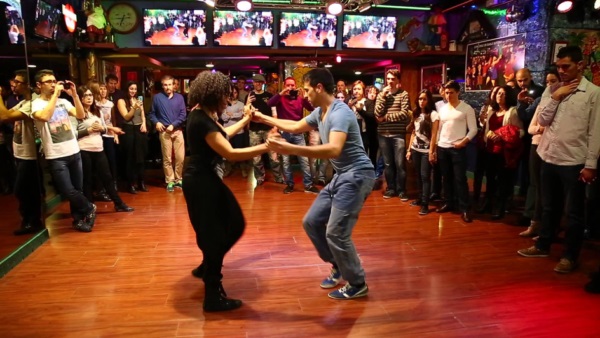
Did you know that in Venezuela the basic traditional Salsa is known as “Salsa Cero”, where the only thing anyone needs is “Not knowing how to dance”, knowing the basic steps of salsa, hearing and feeling the rhythm of the music and the musicalization.
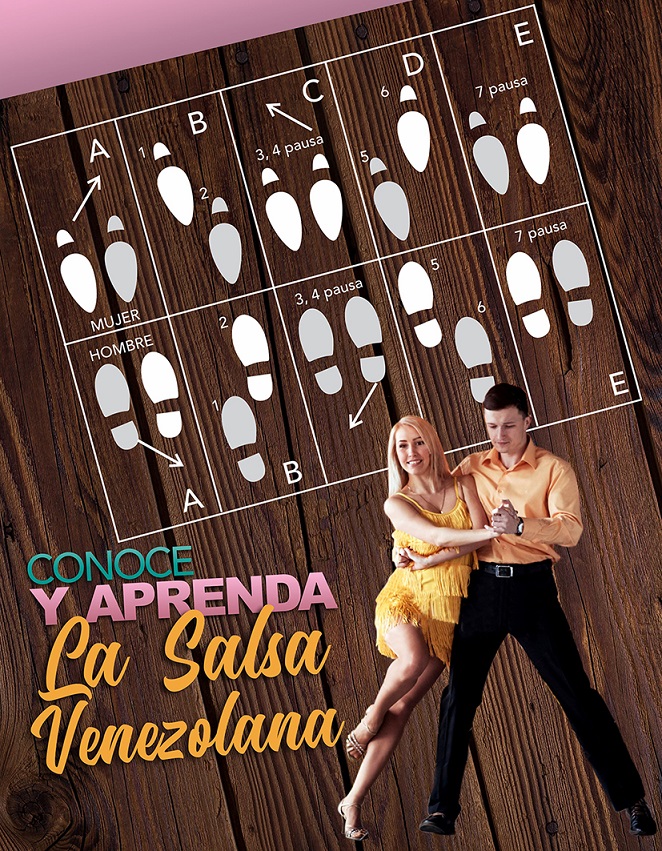
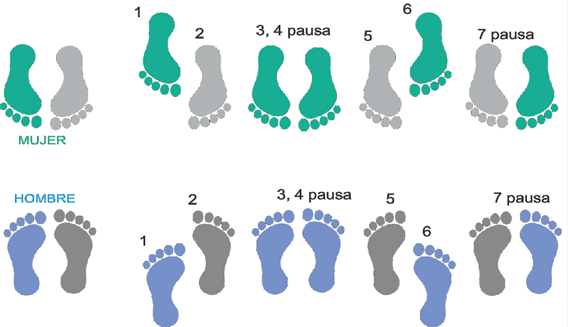
The basic steps of the sauce are:

  1. Paso de lateral and/or lateral: This basic step consists of three steps that are executed on the first three beats of the bar. The fourth beat of the measure is a pause where no step is performed. The three steps are repeated in reverse in a second measure to complete a sequence of the step.
  2. Cruzado o cross: en este paso los pies se mueven de la siguiente manera: En el golpe 1, el pide derecho da un paso por delante del pie izquierdo, de manera que lo cruza. En el golpe 2, el pie izquierdo cruza al pie derecho, y así sucesivamente.
  1. Gait: It is a very similar step to the side, but this time it consists of taking two “2” steps forward and two “2” backwards, advancing in short steps and repeating the cycle. With this step the dancer can execute it alone or with a partner, the latter is not performed and is usually executed in a couple but not face to face, since the two people cannot perform the march at the same time.     
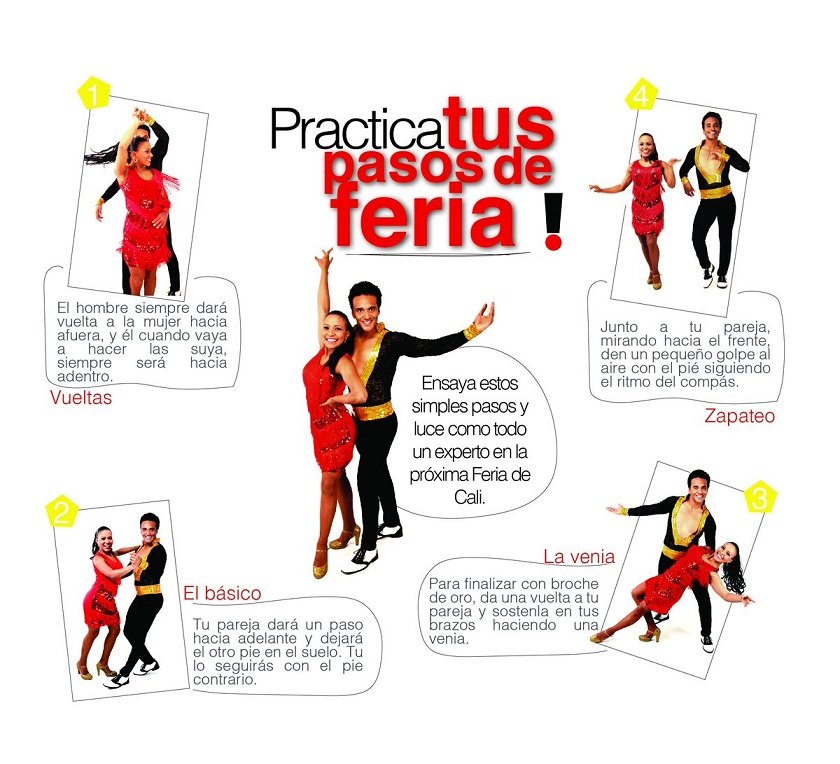
  1. Turns: The turns in both the man and the woman can be done with any of the steps mentioned above. The turn is usually done in step 1 where the man invites the woman to perform her basic step to turn, everything will depend on the entry made by the couple. There are different types of laps, we mention the basic ones on this occasion:
a.   Return of the woman/man.

b.   Back in Croos.

c.   Return of the man.

d.   Right left.

e.   The butterfly.

f.    The Bridge.

g.    The 70.

h.     Sixty.

Did you know that Salsa Cero is not just for learning to dance?

Many people who practice or learn “Salsa Casino” take the workshop and/or zero salsa classes to learn to “count” the music that is being danced since musical counting is the fundamental basis of any dance.

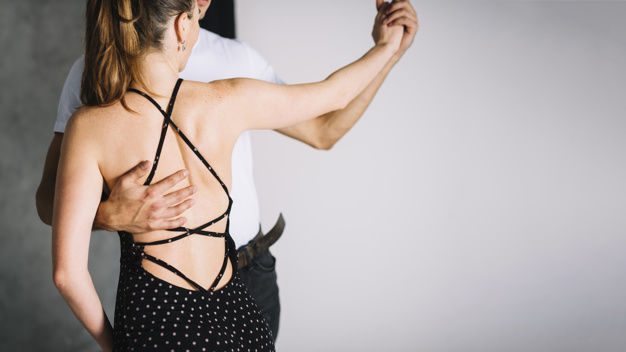
One of the characteristics of this rhythm is the corporal expression, since there are details or corporal messages that make the couple understand how to move or what turn they are going to perform and these details can be known with the look, position of the hands and the body. before and during the return to perform. These details are very important especially in the man who is the one who controls and/or manipulates the woman so that she dances to the beat.

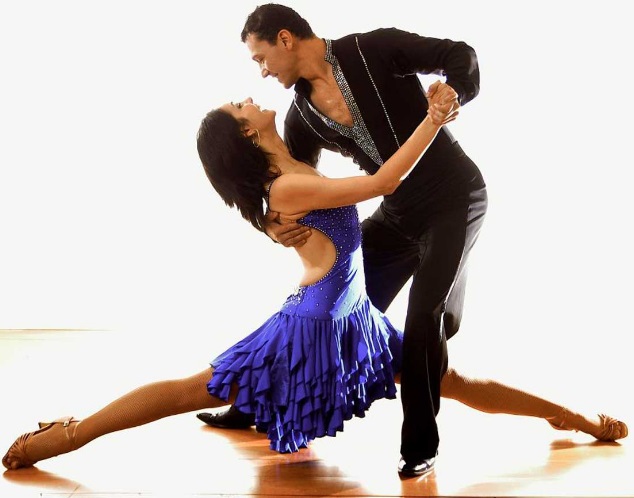
Among the different styles of salsa, Venezuelan salsa has a very special and interesting detail and that is that it is a very sensual style, in which the dancers make thousands of turns and constantly hug each other, showing their potential, emotion and feelings at the moment.
5 best places to dance in Barcelona

Europe - Spain - Barcelona

5 best places to dance in Barcelona

We tell everything you need to know about it

Everyone wants to seize time when they travel, so we save you the search and show you the 5 places where you can go dancing salsa, bachata, merengue and all those vibrant tropical rhythms.

Europe cannot resist the swing of Latin music, dance and guaguancó!

1.- Antilla Salsa Barcelona

Antilla Salsa Barcelona is a discotheque specialized in Latin Music, the best option for your nights of Salsa in the city. Pass by the discotheque and share with us our happiness, our rhythm and our unique atmosphere. Approach to discover the musical selection of our DJs: salsa, bachata, kizomba, merengue, rumba, cha-cha-cha, casino wheel… They see and enjoy all our activities: exhibitions by renowned dancers, Free workshops and the collaboration of the Salsa-boys… Come and enjoy our unique and special environment!

Their school organizes the courses quarterly, and in the summer it also offers Intensive Courses and free Workshops for those who want to take advantage of their vacation period. Their School of dance receives pupils of all levels and for the different specialties and rhythms, too.

Antilla Salsa Barcelona

Address: Carrer d’Aragó 141, 08015 – Barcelona

http://www.antillasalsa.com

www.antillaescueladesalsa.com


2.- Mojito Club

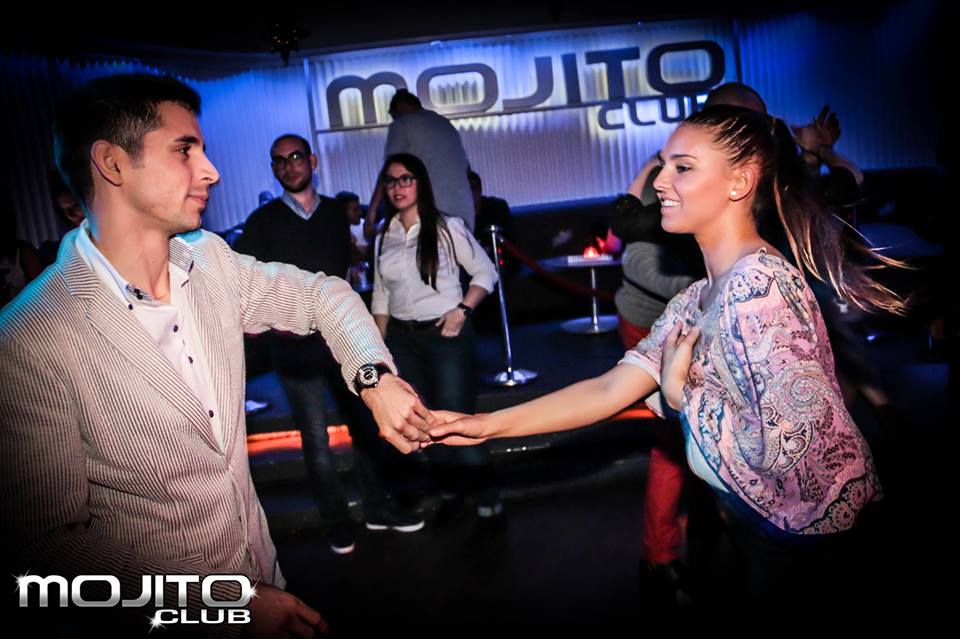
Mojito Club is offering three salsa-nights a week and has one night completely dedicated to Cuban music. If you want latino music, salsa or bachata, Mojito Club is the place to go!  On Fridays & Saturday the club is 100% an international latino music club. You will also find orchestras playing live music that you can strut your moves to. The club is very popular and might be busy on Fridays and Saturdays, so arrive early! Mojito Club is the reference of Salsa, Bachata and Latin music in Barcelona. The classic Mojitos and an international cocktail bar and the restaurant will not leave you indifferent!

Sundays is student’s day! If you are a student of their dance school, Sunday is your day. Enjoy discounts with your VIP card and wardrobes for FREE. If you don’t know how to dance, they have their own Salsa School where you can learn from the first steps to the most advanced movements.

Mojito Club
Mojito Club

Address: Carrer del Rosselló, 217, 08008 Barcelona

http://www.mojitobcn.com


3.- Habana Club

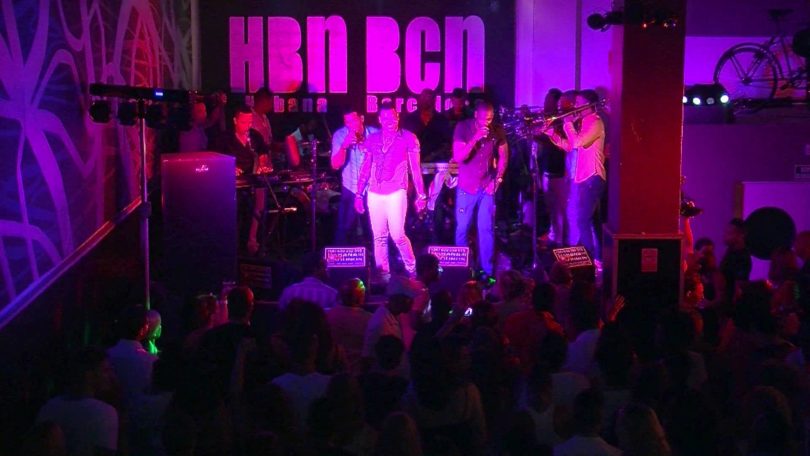
Habana Club is both a dance club and a restaurant in one. Go there for a delicious meal with live music or show off your rhythm and moves on the dancefloor. The club is located in the district of La Barceloneta and is very popular. You’ll definitely enjoy the view! The party in Habana Barcelona consists of a large number of live shows that will make you enjoy music, quality and harmony of your audience to the fullest. A place where you can enjoy a full night, with exquisite dinner, dances with our entertainers and the best tropical cocktails and mojitos in Barcelona.

Habana Club
Habana Club

Address: Passeig de Joan Borbó, 74.


4.- El Bombón

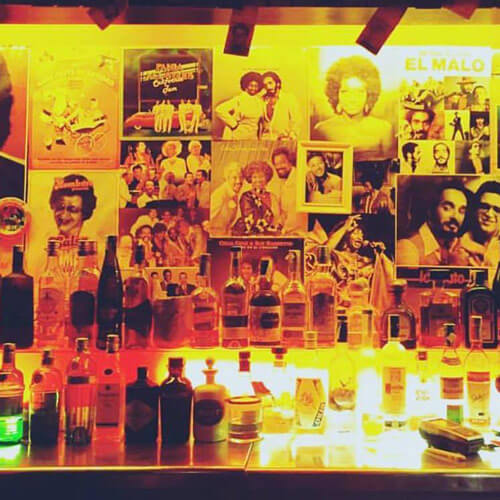
El Bombón is the portal to the Caribbean in the heart of Barcelona. Salsa, latin soul, merengue, caribbean food and cocktails. The best Caribbean tapas in Barcelona and the best music. Amazing cocktails and amazing food!! Really good dancing music but not enough space to dance, so try to go to monday to friday.

El Bombón
El Bombón

Address: C. Mercè, 13 bis, Barcelona.

https://www.facebook.com/bombonbarcelona/


5.- Dio Club

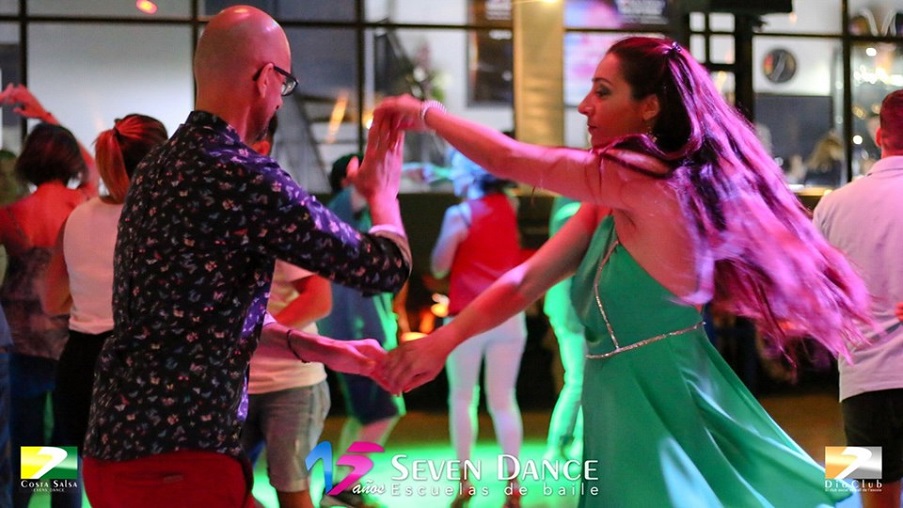
The party for students and partners of the Seven Dance dance school.

It is a magnificent space in the neighborhood of Gracia that has 2 spacious dance halls and that on Thursdays and Saturdays you can go dancing salsa, bachata and kizomba as long as you have your school membership card. You can get your card completely free at the door or by contacting them previously. On Fridays and Sundays you can go dancing ballroom dancing or swinging. It is advisable to check the schedule before going to dance. A lovely place to practice any type of dance offered there, plenty of space, comfortable ventilation and a bar as god commands.

Dio Club
Dio Club

Address: Carrer del Perill, 10 08012 Barcelona

https://www.facebook.com/pages/Dio-Club/544345925626341

La Topa Tolondra & its Salsa with Criterion – Colombia

Latin America / Colombia / Cali

Something magical happens in a unique space in Cali – Colombia: Topa Tolondra

La Topa Tolondra & its Salsa with Criterion ¨ A magical place in a unique space in Santiago de Cali¨

Because what matters is the music and its only and great protagonist “la salsa” a whole universe of happy individuals united by the melody, and all this happens because the salsa is tattooed in the hearts of many caleños and visitors to the area who It becomes evident on the dance floor, where you can find that visiting salsa public from all over the world that dances professionally, there are also those who dance well and those who don’t dance, but who doesn’t give a damn? “nothing”.

Those who are stung or guilla of dancers, those who go in sandals, those who go with tennis, those who go with heels, those who go elegant, those who go relaxed, the dreadlocks with long hair, those with afros, the gentleman and the lady, the chickens, the urban cyclists and even the rockers… and the list is endless because what matters is the music and its only and great protagonist “salsa”

“Lovers of Salsa and Bolero romantics attend weekly without age limits” To the rhythm of the Charanga, the Pachanga, the Boogaloo, the Guajira and the Son Cubano, it is enjoyed every night at the Topa Tolondra. Something unique happens in that magical place and that is that everyone forgets what they will say and they enjoy it from start to finish. In addition, local and international artists such as:

Esteban Copete y su Kintelo Paci co, Habana con Cola, Los Hermanos Lebrón, Clandestina Orquesta, Africali, Ebano y Marl, Bailatino, La Negramenta, Bobby Valentín and among others. For special dates ¬these and events such as Halloween that is approaching are organized. In “La Topa” as it is already known in Cali, sounds resound that arrived in the city between the 50s and 70s, where Salsa shapes the body and bolero its spirit, and going a little deeper we also perceive inclusive energies.

“Having fun is the only requirement to attend” “The Environment” For an unforgettable night you need two halves. The first is a table, chairs, water and drinks. And the second, and perhaps the most important: music and hit.

In Topa Tolondra there is plenty of space for gozadera, to sit down, to toast. Time does not run and there is no decache… “La Música” Here they marry the old guard of Los Hermanos Lebrón, Ángel Canales, La Sonora Ponceña, Frankie Dante and La Flamboyán.

The curatorship of its owner Carlos Ospina, its disc jockey and owner, is to learn it. It is not at all about impressing, it is about knowing how to find the subject at the right time.

¨Variety¨ Mondays are for foreigners. On Tuesdays there is a cinema-forum space and separate classes that are included with the 3 for 1 promotion (for every 3 Salsa songs, one bolero). Wednesdays are the best dancers in the city, Thursdays are dedicated to live salsa.

Finally, Fridays and Saturdays are reserved for these traditional Topa. “To Many Degrees” If your hair is long, bring something to tie it up with. If you are wearing a long-sleeved shirt, roll up the sleeves. If you are one of those people who is not used to consuming water, be prepared to drink what has not been drunk in a year. In La Topa you feel the harsh heat, so it is necessary to establish breaks to go outside to cool off “the heat outside will seem cool to you.”

For a round night, the ideal combination is beer, brandy and water, in dosed sips. Does the temperature exhaust? Yes, but it doesn’t matter if the song that is playing touches your ¬bras and reaches your heart. If you don’t know La Topa Tolondra, be sure to go and if you want to get a clearer idea before visiting, visit their fan page on Facebook www.facebook.com/Latopabar but don’t stay intrigued! Location of La Topa Tolondra. Cl. 5 #13-7, Cali, Valle del Cauca, Colombia Telephone: +57 323 5972646

Samba The dance that wakes up Carnival in Brazil 

Latin America / Brasil 

“The samba” The dance that wakes up Carnival in Brazil 

Despite the fact that carnivals are known worldwide for their costumes and samba parties, none is as good as the carnival that takes place in Brazil, Rio de Janeiro, especially in the Sambadrome, known for being one of the largest open-air spaces in the city. city ​​where one can hold big events.

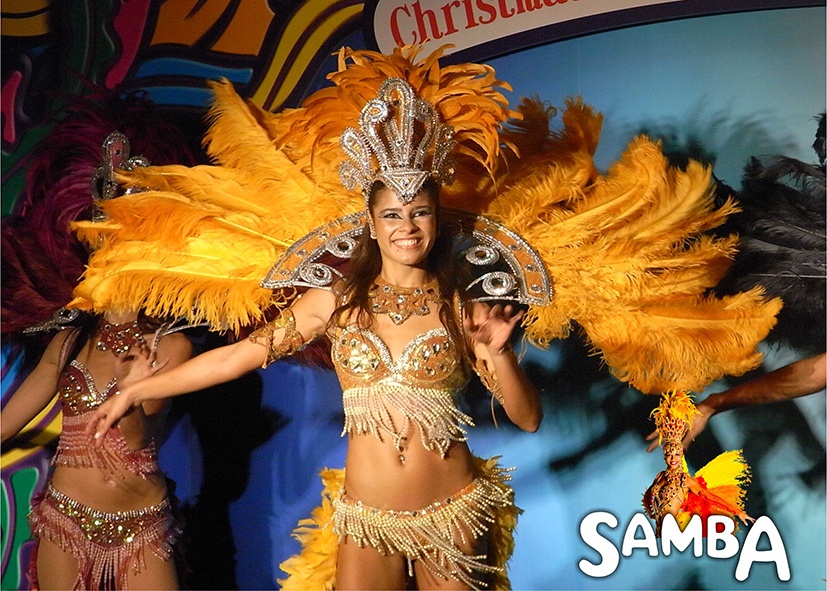
The Brazilian Carnival or the Carioca Carnival is a great event where Brazilians and tourists meet to dance and see the great festivals offered by the different dance academies and/or samba studios where the evaluation of each one will depend on the rhythm, participation, costumes and the originality of the parade.

Samba dancers at the carnival

Samba is the national music of Brazil, which has Afro-Brazilian origin of 2 times 4 times but the beginning was specifically in Angola before reaching Brazil; It currently has a style that has currently received many fusions and is very varied.

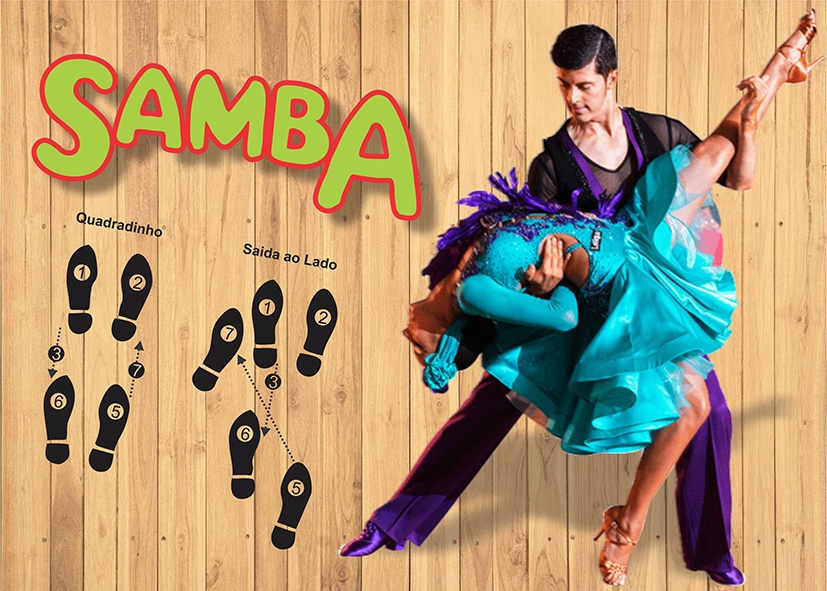
To learn to dance it, one begins with the progressive basic movement that consists of the normal basic step and the lateral basic step (left and right, front and back), then the whisk step that consists of the variation of the lateral basic step and instead of carrying the other foot next to the leading foot, you will take it backwards if you want to know all the details of this step visit the following page (https://es.wikihow.com/bailar-samba), the next step is the stationary walk of samba where the person who performs it in a closed position holding the partner with both hands, unlike the position explained at the beginning; the arms should be extended.

The leader will have his left leg extended behind him, while the follower will have the same position but with his right leg behind him, the inside leg will be the one that stabilizes him and in this way the couple will not move and will stay in one place.

The samba walk is the displacement that is carried out in a very similar way to the stationary one, but in a walking position; it is very similar to the closed one, but it forms an open “V”; the left side of the leader and the right side of the follower should be slightly turned outwards so that the opposite sides of both are next to each other. To perform this move, start with your outside leg diagonally behind your inside stabilizer leg.

One of the secrets so that the movement reflects the essence of this music is the “rebote” between one step and another, there must be a fluid transition that engages the whole body and to achieve this it is possible to think that we are constantly stepping on different objects that appear in our way and that we quickly try to lift our foot so as not to break them. It is very important that this bounce is expressed with the whole body, and not just with the legs.

Among the recommendations to perform an effective and great dance is concentration and looking forward over the shoulders of your partner.

Among the many benefits that dances give, Samba has certain privileges not only physically but also psychologically.

  • On a physical level:
    • Strengthens the legs, as it tones them since the movements are very fast and continuous.
    • Flat stomach, since in the dance they must have the abdominals contracted and the body stretched.
    • Slims the hip for extensive movements.
  • On a psychological level: it releases stress since the person plays sports by practicing it, in such a way that it helps the body to release tension, resulting in fun and relaxation.
Steps to dance samba

Now that we know more about samba and its influence on carnival at an international level, can we say that it is a single style? Well, no… Did you know that the “Carnival” differs in the different ways in which it is carried out or developed in each city?

It is true that there are many traits in common, such as their origins and motivations. One of the most attractive characteristics in Brazil is that it takes place in the open air, which means that the visitor has a more active participation at a lower cost and can dance and enjoy the shows and/or shows that take place during the marches.

by the academies with their dancers wearing their best costumes and Samba steps as well as the allegorical cars and also the public can enjoy and see the electric trios (they are musical groups that travel the city in equipped trucks playing music) at street parties river; and not only in “Rio” it is celebrated but it can be found in Recife and Olinda, in Salvador de Bahía, the city where Samba was born – Florianópolis, among others.

These cities have an architectural beauty that seduces the visitor and transports them historically both historically and culturally.

If you want to have your own experience, do not miss the next carnival in Brazil 2020 that will take place from February 21 to 26, you can buy your tickets here https://www.carnavales-brasil.com/rio-brasil/carnaval /tickets-tickets/dates-2020/buy .

La Candela Salsa Orchestra

Europe / Spain / Tenerife

La Candela Salsa Orchestra

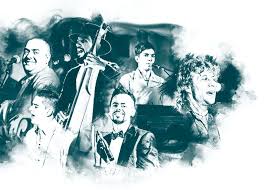
The band is made up of eight musicians settled in Tenerife Canary Islands

La Orquesta Candela Salsa

La Candela is a small independent orchestra that in recent years has made a place for itself among the preferences of salsa dancers.

Her proposal is aimed at “hooking” the dancer with the original rhythms of salsa such as son montuno, guaguancó, mambo or chachachá, recovering the sound of the era in which what is known today as Salsa was forged.

The band is made up of eight musicians based in Tenerife (Canary Islands).

Its target audience is the salsa dancer on1 & on2, a great consumer of this type of music.

However, they have also conquered the hearts of the salsa music lovers who are staunch consumers of hard sauce.

The live La Candela show is a roller coaster of sensations that aims to spread joy and good vibes with a varied repertoire in terms of the danceable rhythms that are included within the salsa genre.

With him they have been presented in Spain and in other European countries such as Germany or Switzerland throughout these five years of activity.

La Candela’s style is inspired by the repertoire and execution style of the master Joe Cuba and his Sextet.

They have brought back to life some of their best classic songs that are still a reference for the dancer today.

With this spirit, her first musical project was born: On Fire, which was released in November 2015 and was a very good business card.

The album includes some classic songs by maestro Joe Cuba, such as “La Palomilla”, “Clave Mambo” or “El Ritmo de Joe Cuba”, along with self-written songs such as our first two singles, entitled “Es Guaguancó” and “For her”.

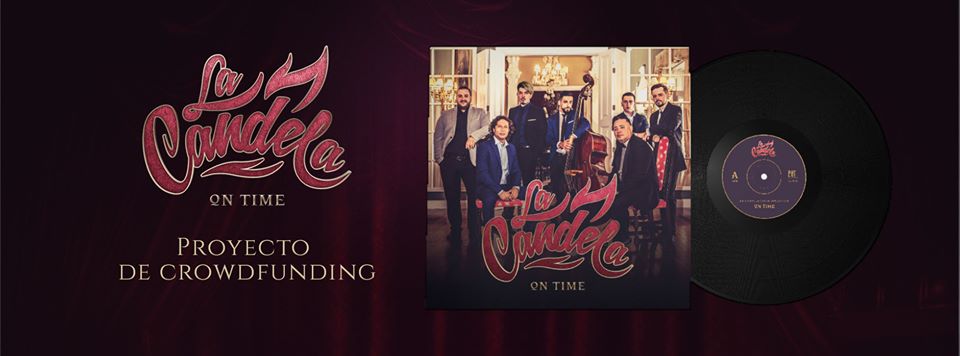
In 2017 and thanks to the executive production of Batlei Productions, a new project by La Candela was born with a closer sound and with many new features, without leaving behind our essence, headed by the first single titled “Se Prentó”, On Time moves between the primitive and the new, rescuing jewels and offering deserved tributes to some of the great pioneers of Afro-Cuban danceable music, like Tito Rodríguez or Frank Grillo “Machito”.

They are currently preparing what will be their third studio album with a new line-up of Musicians

We are also in the process of reserving the album “On Time” with a crowdfounding project, in which 300 LPs of this production have been put on sale in a limited edition: https://qrates.com/projects/20837- on-time In addition, we have launched a merchandising store where you can find all kinds of products with the unmistakable seal of La Candela Salsa Orchestra: https://lacandelasalsa.threadless.com/

  • Video clip of “Sin Ti”: https://youtu.be/WkV2hvCeXhE
  • Switzerland summary video: https://youtu.be/whUDfAx0Fwc
  • Benidorm video summary: https://youtu.be/j3puMxehsQk
  • Website: http://lacandelasalsa.com
  • Facebook: https://www.facebook.com/lacandelasalsa
  • Instagram: http://instagram.com/lacandelasalsa
  • « Go to Previous Page
  • Page 1
  • Interim pages omitted …
  • Page 23
  • Page 24
  • Page 25
  • Page 26
  • Page 27
  • Interim pages omitted …
  • Page 53
  • Go to Next Page »

International Salsa Magazine (ISM) is a monthly publication about Salsa activities around the world, that has been publishing since 2007. It is a world network of volunteers coordinated by ISM Magazine. We are working to strengthen all the events by working together.