



Latin America / Puerto Rico / Puerto Rico
Hernan Olivera is the son of Puerto Rican parents and from an early age he felt a great affinity for Latin music since his father listened to the groups of the moment such as Tito Puente, Celia Cruz, Machito, Ismael Rivera with Cortijo y su Combo, Alegre All Stars, Tito Rodríguez, Santitos Colon, etc.

Then, in the 70s, in the midst of the Salsa Boom, Herman began his love of singing listening to the performances of Chamaco Ramírez, Héctor Lavo’e, Cheo Feliciano and Marvin Santiago, among others. These vocalists were mainly his source of inspiration; That school of soneros served as an apprenticeship for him and that is when he made the decision to sing professionally.

When he was just 15 years old, Herman began his career as a Salsa performer with an orchestra called “La Justicia”, after this he was part of the band “La Sónica” where he met his friend and trombonist Jimmy Bosch, after this He spent time with the “Caramelo” orchestra and later made the most important leap in his career by joining the “Con Conjunto Libre” in 1978, where he left his voice for the first time on the LP “Increíble” from 1981 under the direction by percussionist Manolo Oquendo and Bassist Andy González where he stands out with the song “Decide”.
Then in 1983 he would record with the Conjunto Libre in the production “Rhythm, sound and style” the song “Que Humanity” that would become a success. In 1988 Herman left the group “Libre” and became part of a project by Mr. Fernando Pastrana and under the musical direction of trumpeter Miguel Santiago whose album was called “La Exclusiva” which shared the vocal part with Roberto Mier, in this album stands out interpreting the songs “Xiomara” and “Te vi pasa”.

After this, in 1990 he was invited to record on the album “Salsa Sudada”, for the Valdesa Records label of Víctor Raúl Sánchez “Patillas” and with the musical direction of Isidro Infante, sharing vocals with Mario Muñoz “Papaíto”, Adalberto Santiago, Eladio Peguero “Yayo El Indio” and Pablo Villanueva Branda “Melcochita”; in this work he interprets the themes “La needle” and a tribute to the city of Cali called “Valle plata de salsa”.
He continued with his career as a performer and in 1993 he was once again invited to record the production “Now” with the Free Ensemble, where his great conditions and resources as a singer are undoubtedly reflected, there the song “You belong to me” became a hit in addition to other songs such as “Obsesión” and “El Son” stand out on this album.
Subsequently, he launched an independent project called Herman Olivera and La Exclusiva “Chequea La Mercancía” produced by Fernando Pestana, where the song “Me Extra Spider” is one of the most outstanding. In 1996 he reunited with the Conjunto Libre and made the live album entitled “On The Movie”.

In 1997 he participated in the CD of the band Rikoson All Stars called “Evoluciones Del Son” where he stands out very well in the romantic theme “Aquella Noche”.

In 1998 he was requested by the piano teacher Eddie Palmieri and together with the vocalist Wichy Camacho they recorded the album “El Rumbero Del Piano” in which he stood out as a singer in the songs “Malagueña salerosa” and “Oiga mi guaguancó” that same year. he is invited to the recording studios by the trombonist Jimmy Bosch and they release the album titled “Soneando Trombón” which contains the hit “Otra opportunity” that he performs as a duet with Frankie Vázquez, on this CD the song “Descargarana” is also inserted. ”.

That same duo Olivera and Bosch meet the following year (1999) and make the production “Salsa Dura” where Herman shines interpreting the full “Impact we will have” this album also has the participation of the singers Frankie “Nene” Morales and Frankie Vázquez parallel to this album, the RMM label launches a live CD and DVD entitled “Eddie Palmieri & Friend’s” where Herman looks excellent in the number “Palo Pa’ Rumba”.


To get an idea of the musical family, let’s say that Johnny Rodriguez Sr. also took part in performances and recordings with musicians and singers of the stature of: Alfredito Levy, Joe Quijano, Jose Curbelo, Lou Perez Louie Ramirez, Machito, Miguelito Valdes, Noro Morales, Orlando Marin, Pete Terrace, Pupi Campo and Xavier Cugat.
The father’s enormous musical background was emulated in a great way with ample merits by the son.
Dandy Rodriguez grew up in Spanish Harlem in Manhattan, his home was very musical and when he was in high school he learned the details of percussion represented by the bongos, congas, timbales and drums. Influenced by his father he became interested in music and so in 1962 he joined the band of maestro Tito Puente.
His first professional recording was with Tito Puente and was titled Excitante Ritmo De Tito Puente; after this first album with Puente, “Dandy” Rodriguez began to deepen his musical studies listening and learning from leading musicians such as: José Mangual Senior bongosero from Machito, Rogelio “Yeyito” Iglesias bongosero from Cachao and Vitin Palacio bongosero from Johnny Segui.
He worked with the King of Timbales for more than three decades, initially in the sixties, more specifically from 1962 to 1972, then he rejoined Tito Puente’s band at the end of the seventies and was part of it practically until the death of the famous King of Timbales.
In the extensive career of our Johnny Rodriguez in music we must mention his internship with Joe Cuba’s orchestra, with whom “Dandy” Rodriguez himself says he participated in seven or eight albums since the mid-sixties; the first of them titled Joe Cuba Sextette – Comin’ At Yous; without forgetting to mention that in those albums the name of Johnny Rodriguez Jr. does not appear in the credits due to issues related to contracts with record companies.
His stay with Puente was not a limitation for him to be part of other musical groups, so he also worked for several years with another great of Latin music, the remembered Tito Rodríguez. He was also part of the band of the famous conguero Ray Barreto, replacing Tony Fuentes, and was one of the founders of the famous Típica 73 in 1972 and even took part in a couple of albums with Machito.
In the seventies, during the Salsa Boom, “Dandy” Rodriguez left his mark on recordings with: Jose “Cheo” Feliciano, Charlie Palmieri, Roberto Torres, Willie Rosario, Ismael Quintana, Celia Cruz & Johnny Pacheco, Louie Ramirez, Richie Ray & Bobby Cruz, Fania All Stars, Alfredo De La Fe, Conjunto Clásico, Henry Fiol and Tito Allen.
As we mentioned before, John Rodriguez returned to the band of maestro Tito Puente in 1978 and was part of the band until Ernesto Antonio Puente’s death in 2000 at the age of 77; he participated in this cycle in at least twenty musical works apart from a large number of concerts and performances on tours in different countries around the world.

During the first two decades of the new century, the musical work of maestro Johnny Rodriguez continued and his musical mark has remained in other publications with The Latin-Jazz Coalition, Frankie Morales, Eddie Palmieri, Gilberto Santa Rosa, George Delgado, Victor Manuelle, Rick Arroyo, Orestes Vilato, Mitch Frohman, Cita Rodriguez, Doug Beaver, Adalberto Santiago and Jeremy Bosch.
Also, special mention must be made of the participation of maestro Johnny Rodriguez with a group called The Latin Giants Of Jazz, in the best style of the classic Big Bands made up of great teachers, including some of the former members of maestro Tito Puente’s band; with this group they have published four albums; this project gave rise to another band called The Mambo Legends, who recorded the album entitled: Watch Out! Be careful!
John Rodriguez is without a doubt one of the most prolific percussionists in the world of Latin music called Salsa. The nickname “Dandy” dates back to his childhood when the car he was driven in was bought at a store or shop called “Dandy” and people said look how cute “Dandy” is and from there he stuck with that nickname. In music he is better known as Johnny instead of John.
In (the year 2022) the experienced Johnny Rodriguez had three or four groups with which he is playing, including Dandy Rodriguez and his Dream Team, while teaching percussion classes online.

In his very extensive artistic career, maestro Johnny Rodríguez was part of historic and iconic recordings of our musical culture, some of these albums have been worthy of awards such as the Grammy Award, among which are:
Tribute to Beny Moré – Year 1978
On Broadway – Year 1983
El Rey: Tito Puente & His Latin Ensemble – Year 1984
Mambo Diablo – Year 1985
Goza Mi Timbal – Year 1990
Mambo Birdland – Year 1999
Masterpiece / Obra Maestra Tito Puente & Eddie Palmieri – Year 2000.

Also Read: Jerry Ferrao says in salsa key: “My life is a drum”

Collaboration: Marino de Jesus (1588) from Salsa History from the Dominican Republic
Latin America / Colombia / Barranquilla
This is how the great ‘Cumbre de Soneros’ was lived in Barranquijazz this 15th of Sep-2018.
In a special gala that included the participation for the first time of the Antonio Arnedo Quintet, a determining musician in the languages of Colombian jazz, in which he magnificently managed to introduce the public on a journey through the traditional sounds of the different regions of Colombia under that concept that has come to be known as World Jazz, the atmosphere was warming up for the enjoyment of one of the most vibrant nights of Barranquijazz 2018.
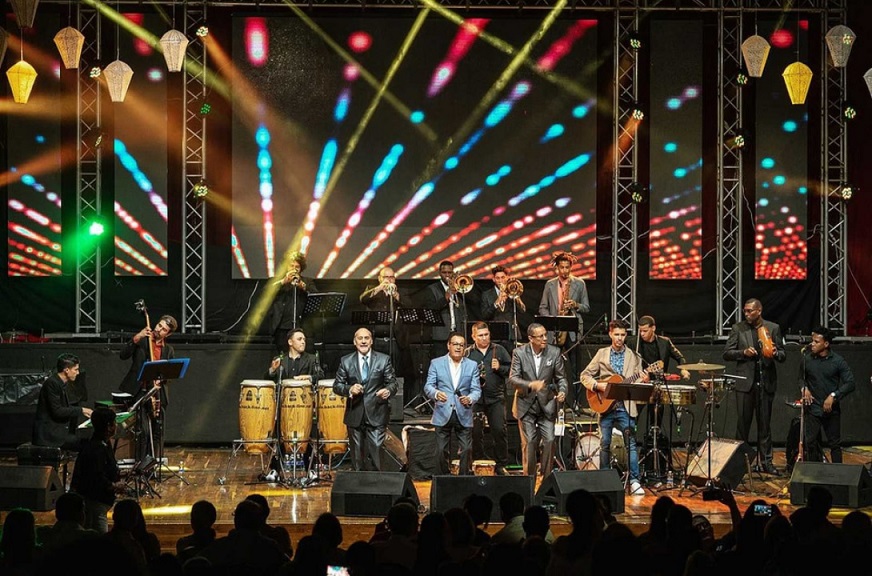
The first of the protagonists of the summit to go on stage was Hermán Olivera, the so-called ‘Sonero of the 21st century’, who demonstrated that he is indeed “the bridge between yesterday and today”, as he says in one of his proclamations in ‘ The heir to flavor’, a piece included on his solo album ‘La voz del Caribe’, a nickname given to him some time ago by Eddie Palmieri, the leader of the orchestra in which Herman has been a member for more than 20 years.
Then it was Ray de la Paz’s turn, who raised the level of the public’s enthusiasm after performing the greatest hits of his career, achieved together with the late arranger and conductor Louie Ramírez. The New Yorker exhibited his powerful voice with the pieces: ‘Everything collapsed’, ‘Only you and I’, ‘Liar’, ‘Let’s go from here’ and ‘Being in love’.
Later, the ‘Pretty Boy’ Ismael Miranda was present. In his greeting to the public he mentioned: “We saw that they did some brutal Olympics and the world found out”, referring to the Central American and Caribbean Games recently held in the arena.
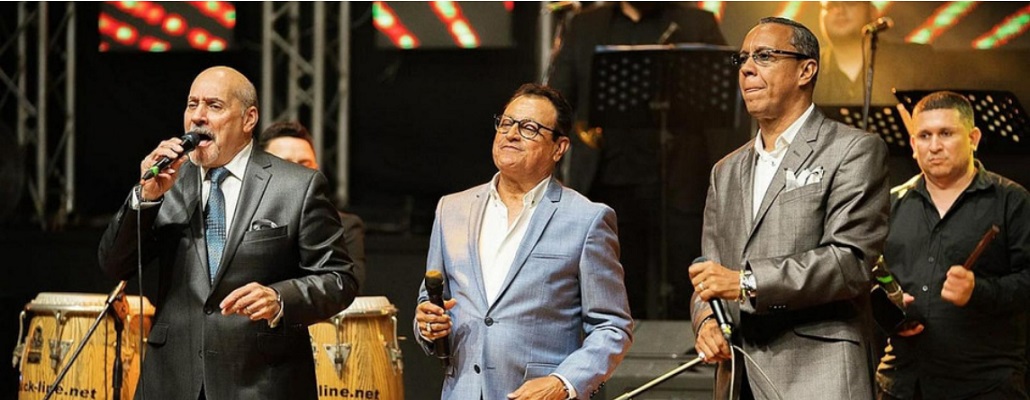
Miranda performed ‘Caretas’, ‘The corners are’ and ‘Don’t tell me it’s too late’. For the closing, Ismael Miranda called Ray de la Paz and Hermán Olivera to the stage, and together they inspired their best soneos, wasting their talent on the song ‘Abran Paso’.
With this show of the highest level, Barranquijazz closed its cycle of galas.
By: Robert Tellez.
More information:
https://www.radionacional.co/noticia/musica/asi-se-vivio-la-gran-cumbre-de-soneros-barranquijazz
He began touring the world in 1949 and met his later wife in 1960 in Peru.
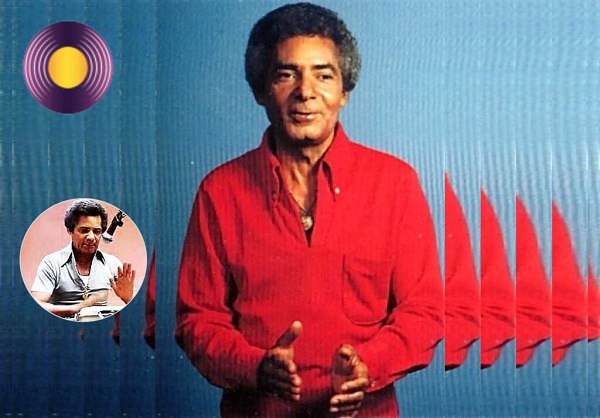
That same year, he settled in New York, participating in the local scene.
He participated in the LP “Patato y Totico” in 1967, he also participated with his brother Eloy Martí, in a Quintet accompanied by Gene Golden, for the year 1979.
Israel López (Cachao), Arsenio Rodríguez, Héctor Cadavieco, Francisco Valdés, Papaíto, Tony Mayari and Mario Cadavieco also worked on that album.
He participated in the “Grupo Folklórico Experimental Newyorkino”, where he was their vocalist and percussionist, in 1975. During his stay with them, he composed the song “Cuba Linda”.
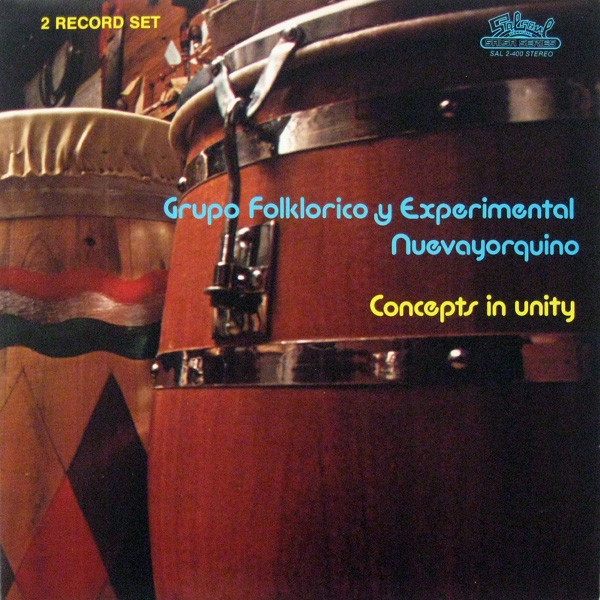
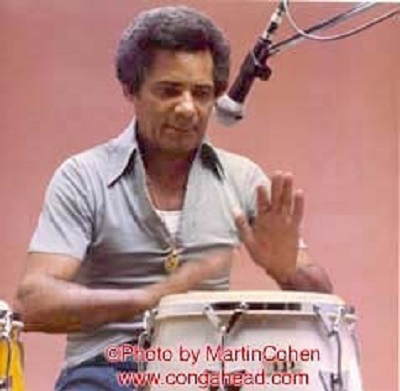
“Iya Modapue”, constitutes in itself, a guaguancó with open rumba being at the same time the favorite number of the “Grupo Folklórico”, and even the first groove that was recorded.
The levels of experimentation and the freedom to unload several rhythms in a single musical performance are the factors producing the attraction of the musicians for “Iya Modupue” (which means Thank You Mother).
The vocal part is in the hands of Virgilio Martí. The trumpet of “Chocolate” Armenteros, the trombones of José Rodríguez and Reinaldo Jorge, the flute of Gonzalo Fernández and the percussion of Frankie Rodríguez stand out.
“Se Me Olvidó” – a bolero by Lolita de la Colina – but adapted in guaguancó to the style of the Grupo Folklórico, which, by the way, turned out to be the piece with the greatest radio airplay in the tropical environment and, therefore, the one that would open the doors to the group. The song was performed by Virgilio Martí, who also plays the congas. In “Se Me Olvidó”, the violin of Cuban Alfredo de la Fe, the quinto of Julito Collazo, the street redoblante of Jerry González and a Mexican marimba played by Andy González in counterpoint to the notes of the double bass, also played by Andy, stand out.
In the early 80’s he formed a band with brothers Andy and Jerry González, and percussionist Ignacio Berroa.
It is worth mentioning Virgilio Martí’s 1985 performance in the film by Cuban filmmaker León Ichaso entitled: “Crossover Dreams” (Sueños truncados). In it, the Havana native plays the role of “Cheo Babalú” and sings the song “Llora Timbero”.
In this film production made in New York City, the actor Rubén Blades, who plays the role of “Rudy Veloz”, also participates. There they sing the song “Todos Vuelven”.
In 1990, he contributed to the “Soundtrack” of the movie Azúcar Amarga.
He maintained a great skill in converting songs from other genres into rumba arrangements. We can mention the adaptation of the song by Brazilian composer Jorge Ben, “Más Que Nada”, which appears on the LP with Patato y Totico. Martí died on October 17, 1995. (Tom Data “Facebook”)
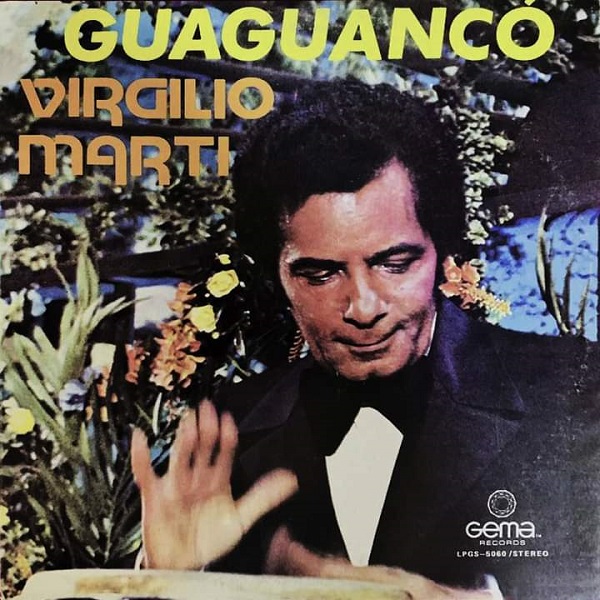
Virgilio Marti – Guaguanco (1979)
Tracks:
Information realized (June 1, 2024)
Sources: