• Skip to primary navigation
  • Skip to main content

International Salsa Magazine

  • HOME
  • Previous editions
    • 2026
      • ISM / May 2026
      • ISM / April 2026
      • ISM / March 2026
      • ISM / February 2026
      • ISM / January 2026
    • 2025
      • ISM / December 2025
      • ISM / November 2025
      • ISM / October 2025
      • ISM / September 2025
      • ISM / August 2025
      • ISM / July 2025
      • ISM / June 2025
      • ISM / May2025
      • ISM / April 2025
      • ISM / March 2025
      • ISM / February 2025
      • ISM / January 2025
    • 2024
      • ISM / December 2024
      • ISM / November 2024
      • ISM / October 2024
      • ISM / September 2024
      • ISM / August 2024
      • ISM / July 2024
      • ISM / June 2024
      • ISM / May 2024
      • ISM / April 2024
      • ISM / March 2024
      • ISM / February 2024
      • ISM / January 2024
    • 2023
      • ISM / December 2023
      • ISM / November 2023
      • ISM / October 2023
      • ISM – September 2023
      • ISM – August 2023
      • ISM July 2023
      • ISM Edition June 2023
      • ISM – May 2023
      • ISM April 2023
      • ISM March 2023
      • ISM February 2023
      • ISM January 2023
    • 2022
      • ISM December 2022
      • ISM November 2022
      • ISM October 2022
      • ISM September 2022
      • ISM August 2022
      • ISM July 2022
      • ISM June 2022
      • ISM May 2022
      • ISM February 2022
      • ISM January 2022
    • 2021
      • ISM December 2021
      • ISM November 2021
      • ISM October – 2021
      • ISM September 2021
      • ISM August 2021
      • ISM July 2021
      • ISM May 2021
      • ISM April 2021
      • ISM June 2021
      • ISM March 2021
      • ISM February 2021
      • ISM January 2021
    • 2020
      • ISM December 2020
      • ISM November 2020
      • ISM October 2020
      • ISM September 2020
      • ISM August 2020
      • ISM July 2020
      • ISM June 2020
      • ISM May 2020
      • ISM April 2020
      • ISM March 2020
      • ISM February 2020
      • ISM January 2020
    • 2019
      • ISM December 2019
      • ISM November 2019
      • ISM October 2019
      • ISM Septembre 2019
      • ISM August 2019
      • ISM July 2019
      • ISM June 2019
    • 2016
      • ISM December 2016
  • Spanish
  • Download Salsa App
    • Android
    • Apple

Search Results for: eddie palmieri

Fanny Almenara better known in the salsa environment as “La Sonera del Callao”

Sonera of Callao, who maintains an impeccable musical career, loving music and recording numerous songs as a soloist and with various singers of first order of the Afro Latin Caribbean genre.

The salsa singer named Fanny Almenara, better known in the music scene as the Peruvian Sonera, was born in Callao, daughter of Don Hector Almenara and Carmen Barreto, the second of 9 siblings.

Fanny studied singing thanks to her mother, she met the best teacher, Mrs. Ana Maria Parodi and entered music at a very early age in the lyrical genre.
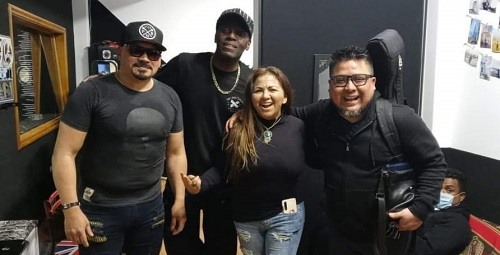
Juan Canevello: Percusionista, Antonio Cartagena: Cantante, Fanny Almenara: Cantante y Oscar Huaranga Bajista y Productor Musical

Her salsa collector father made her listen to the best of the best exponents such as Justo Betancourt, La Lupe, Candido Fabre, Benny More, Ismael Rivera, Los Papines, Irakere, Luis “Perico” Ortiz, etc.
At the age of 16 she fell in love with the genre called salsa and had the honor of singing with Junior Gonzales for the first time and alternated Grandes with Peruvian Orchestras such as Peru Salsa de Beto Villena, Las Estrellas de la Máquina de Boris Gómez, HIt Parade Latino del Callao, La Nueva Generación de Franco Crovetto.
She was chosen as the best new voice of the salsa genre in the 80s.

La cantante de salsa llamada Fanny Almenara mejor conocida en el ambiente como la Sonera Peruana

She made recordings for different groups, and also recorded an unpublished song of her own entitled “Yo te Espero”.

Between the 70s and 80s came to Peru Las Leyendas Latinas with Ray Barreto and Adalberto Santiago, gave him the great opportunity to sing with them Quítate la Máscara.

Then with Linda Caballero (lLa India), the song Mi Primera Rumba, then with the pharaoh of salsa Oscar D’ León the song Toro Mata, also with the great Hermanos Lebrón the song sin negro no hay guaguancó.
With the owner of Soneo Carlos “El Cano” Estremera the theme Ámame en Cámara lenta, with Frankie Vázquez the theme Cuarto de Tula, with Yolanda Rivera the theme Rumba en el Patio, Vity Ruiz brother of Frankie Ruiz the theme La Cura, with Aldalberto Santiago the theme Nadie se salva de la rumba.
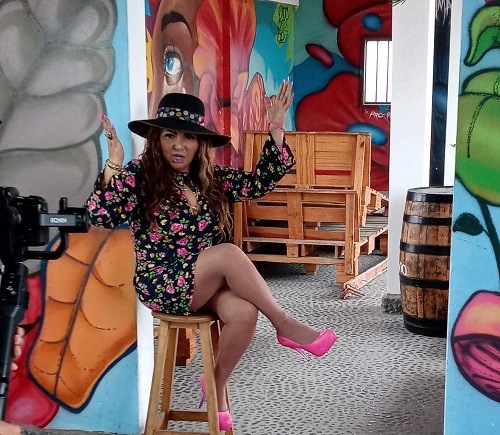
Primera sonera del Callao, que mantiene una carrera musical impecable

And so with her imposing voice Fanny captivated the attention of the greats of salsa, representing Callao and for which the people of Chalaco named her “La Sonera del Callao” (The Sonera of Callao).
For her vast artistic career she was awarded by different musical associations and by the company Pilsen Callao.
(H3) Asocosalsa Peru (Tite Curet Ceremony, Hector Lavoe Bust, Charlie Palmieri and 25th anniversary of artistic life (Okonkolo Association).
Fanny Almenara, continues her impeccable musical career, loving music and recording a song entitled Amor de Mis Amores, salsa version with the Orquesta Ng del Callao director Franco Crovetto.
Although she was in a halt due to the pandemic, she recorded a Challenger “El Virus Se Mata Con Musica” invited by a Cuban musician, which was also recorded by Cuban artists in different parts of the world.

Fanny Almenara
Fanny Almenara

After her voice reached Cuban websites such as “Benny More” “Un Millón De Adalsoneros” “Al Son Del Pinar Del Rio” she was invited to the “Son 8 de mayo” days led by the gentleman of the son Adalberto Alvarez.
Then she also recorded a song written by the King of merengue Milly Quezada “Gracias A Ti” dedicated to those who are always on the front line as doctors and nurses in the Covid 19 and the last thing she has recorded the production of the song La Sitiera Tribute to the diva of Cuba Omara Portuondo in which in that production participated Nelson Gonzales in the tres: Eddie Montalvo on congas, Nohelia Zambrano on violin and Luis Perico Ortiz on trumpet.

Website: Fanny Almenara Oficial

Eliel Rivero, “The Shaman of the Trombone”

The versatility, trajectory, and professionalism of this musician and composer, born in the capital of Venezuela, make him one of the most important and sought-after salsa bastions in the country.

This time comes to Salsa Escrita “La Columna Salsera de Barquisimeto”, the outstanding trombonist Eliel Rivero Rivas, who was born on April 3, 1961, and already has an artistic life with more than 40 years; for this and many reasons, we bring to our readers a complete review about “El Chamán del Trombón”, as he is jokingly nicknamed by his musical friends.

Eliel, welcome to the salsa column, which is currently dedicated to providing information on the happenings of Afro-Caribbean music and therefore also projects and makes known nationally and globally the musical talent here.

Thank you very much Professor Carlos Colmenárez, for giving me this opportunity to share with you and all the regular readers of your prestigious Salsa Escrita “La Columna Salsera de Barquisimeto”, and to spread my career.

To begin with, we want to know how were your beginnings in music? -My life was surrounded by music since I was a child since my grandfather Pablo Emilio Rivas was the first tuba player of the Symphonic Orchestra of Venezuela, besides that in the family gatherings we listened from symphonic music to the most emblematic Caribbean artists of the moment, and so on, until I lived in Los Frailes de Catia, Macapaya sector, there was “La Dimensión Latina” and I was captivated by a cover where the trombone was shown, I think it was Dimensión Latina 76, and since that time I said, I would like to learn to play that instrument, but I did not do it because it was so expensive to buy one. Until one day Rodrigo Mendoza, who had just joined Dimensión Latina and who lived in front of my house, heard me playing a trombone solo of the song “Yo tenía una mujer” by Roberto Roena in a meeting that we often had and he told me: start studying that instrument.

The versatility, trajectory and professionalism of this musician and composer, born in the capital of Venezuela, make him one of the most important and sought-after salsa bastions in the country.
Eliel Rivero, “The Shaman of the Trombone”

From then on my musical career began, I was able to buy a trombone and thus began this beautiful story that I enjoy to this day, thanks to the support of my family. I began to have contact with many musicians in the area, among them, Johán Muñoz, a brother sent to me by God, Antonio Acevedo “Toñito”, son of maestro Dugarte, trombonist of the Sinfónica Venezuela and Alberto Crespo, who also lived in Los Cuatro Vientos de los Frailes.

We all followed the trajectory of orchestras and musicians that rehearsed in the area such as “La Banda y su Salsa Joven”, “La Renovación”, we followed the steps of Alejandro Pérez Palma, Faustino González, Enrique Blanco “El Bachaco”, César Monjes “Albóndiga”, José Antonio Rojas “Rojitas”, Nené and Taíto Piñango and many more. From that moment I began to take my course as a trombonist with seriousness and professionalism until today.

Eliel, where did you study music and with whom? My friend Carlos, I studied theory and solfeggio at the Musical Association of the Federal District with maestros Daniel Contramaestre and Daniel Milano.

I continued my training at the “Simón Bolívar” Conservatory of Music, directed by maestro José Antonio Abreu, and at the “José Ángel Lamas” music school, under the guidance of professors Ángelo Pagliuca, Tiero Pezutti, Antonio Estévez, Erick Colón, among others.

I continued my professional and work training with the “Simón Bolívar” Symphony Orchestra for 40 years, sharing with different masters of national and international music.

At the same time, I had the opportunity to participate as an active or guest musician in national and international orchestras of the salsa genre.

Now that you mention the salsa genre, with which orchestras and vocalists have you participated? Professor, at the national level, apart from the Simón Bolívar Symphony, Municipal Symphony, Venezuelan Symphony and Caracas Philharmonic, I have been on stage with: Bailatino, Oscar D’León, El Pavo Frank, Mariana, Marianella, Andy Durán, Cheo Navarro con Tributo, la Banda Sigilosa, Orlando Poleo, Hildemaro, Alfredo Naranjo y su Guajeo, Silva y Guerra, Saxomanía, Trina Medina, Orlando Watussi, Magia Caribeña, Moisés Daubaterre with Grupo Mango, Bacheo, Servando y Florentino, Naty y su Orquesta, La Negramenta, El Trabuco Venezolano, La Nueva Parranda, Canelita Medina, Javier Plaza, Guarará, among other participations to which I have been invited.

And as for international artists and groups, which ones have you worked with? My friend Carlos, I have had the honor of accompanying: Gilberto Santa Rosa, Celia Cruz, Justo Betancourt, Nino Segarra, Eddie Santiago, Willie González, Roberto Lugo, Ismael Miranda, Maelo Ruiz, Cheo Feliciano, Paquito de Rivera, Andy Montañez and in relation to artists outside the salsa genre: Rafael, Andrea Bocelli and José Luis Rodríguez “El Puma”.

Excellent and admirable career Eliel, now, what can you tell us about who you have recorded with? Indeed Carlos, I have made recordings with the Simon Bolivar Orchestra, Música Latinoamericana, Bailatino, El Pavo Frank, Naty y su Orquesta, Victor Quintana, Rumberos del Callejon, Bacheo, Un Solo Pueblo, Trina Medina, Saxomania, La Dimension Latina with Joseito Rodriguez, La Negramenta, Orlando Poleo, Carlos Julio “El Oso”, Juan Pablo Barrios, Víctor Cardona y su Máquina de la Salsa, Gilberto Santa Rosa con la Sinfónica Venezuela, Cheo Navarro y su Orquesta Tributo, Francisco Requena, Oscar Dudamel, Otilio Galíndez, Luisito Quintero, among others.

Eliel, what can you tell us about your facet as a composer? I started when I was 13 years old and I have written songs for the following artists: Orquesta Los Satélites de Cheché Mendoza with the song “Sufrí por ti” on the LP Di Corazón, I have also written compositions for the Sabadonga orchestra, Oscar Dudamel, Victor Quintana and most for the Bailatino group, of which the hit “Bailatino llegó” was versioned and recorded by the Hispanic Orchestra of Harlem (SHD) of New York under the name “Baila Latino” on the CD “Viva la Tradición”, Grammy award-winning album.

World Artistic Tours? I have performed in Italy, France, Spain, Japan, Germany, Argentina, Colombia, Chile, Switzerland, England, Holland, USA, Mexico, Australia, Cuba, Dominican Republic, and Peru.

Eliel Rivero is one of the most important and sought-after salsa bastions in the country.

At present, what do you do besides being with different orchestras?

Well, Professor Carlos, I am currently involved in pedagogical activities with the trombone, doing master classes and I am a frequent guest in the “Orquesta Nuevo Mundo” of Bogota, directed by Alejandro Orellana, covering symphonic salsa and permanently in the trombone and composer with the group Bailatino.

By the way, how did Cheo Navarro ask you to be part of the staff of musicians of Bailatino y Tributo? In fact, my friend Carlos, that was one night when we were in block 6 of 23 de Enero in Caracas, we greeted each other and he told me that he wanted to make a band to cure us playing the salsa that fed our lives, such as Palmieri, Libre, Mon Rivera, Típica 73, Bobby Rodríguez and others.

And I told him to count on me and since at that time I was playing with Johán Muñoz with Ajoporro of Grupo Mango in private parties, Cheo told me: “Tell Johán if he wants to participate in this project” and the affirmation was not long in coming. As for “Tributo”, the same thing happened, Cheo wanted to record emblematic songs that nurtured his career, and of course, we gave him our support since those of us who recorded in that project are from “Bailatino”.

Eliel Rivero performing pedagogical activities with the trombone.

Finally, what are your social networks? My social networks are Eliel Bailatino on Facebook and eliel_bailatino on Instagram. Concluding, we want to know why that nickname “El Chamán”. Ha, ha, ha, ha, my friend Carlos, that epithet was given to me by my great friends of the “Negramenta” Orchestra. Let me tell you Eliel that for me and for “Salsa Escrita” it was a privilege to have you as a special guest in this issue and from “International Salsa Magazine”, we wish you the best of the best and of course, keep on giving it up with pure tastiness…!

Thank you very much Professor Carlos Colmenárez for this opportunity that you give me and I take this opportunity to send my greetings to the great number of salseros in the city of Barquisimeto and congratulate you for this praiseworthy work of supporting and projecting the musical talent of Venezuela and the world.

Remember not to leave your house…! Until next time and let’s keep on salsing!

Article of Interest: Written Salsa, Barquisimeto’s Salsa Column presents Pamir Guánchez

Photos: courtesy Lisbeth Weffe

ISM: Fanny Almanera better known as La Sonera del Callao

On this occasion we have the opportunity to interview the Peruvian Sonera called Fanny Almanera also known as La Sonera del Callao, her nickname comes from her native country El Callao, Peru.

She was born on January 23 and is the 9th daughter of her parents (Don Héctor Almenara and Carmen Barreto), from a very young age she knew and learned many things about the music of both parents; in the lyrical genre thanks to his mother and his best teacher Dona Ana María Parodi and with respect to his father who is / was a collector of the best exponents of Salsa (especially Cuban and Puerto Rican music), both listened almost all the time to Justo Betancourt, La Lupe, Candido Fabre, Benny More, Ismael Rivera, Los Papines, Irakere, Luis “Perico” Ortiz, among others.

When she turned 16, she realized that she was passionately and in love with the dynamic salsa genre and made the decision to leave the choir and classical music, since her love and her taste is for the salsa musical, thanking her father greatly for showing her , show him and listen to the best collection of salsa music to date … “Music is like medicine … it fills the soul and innovates over time” and over time, while gaining his experience, his own audience would give him their nickname La Sonera del Callao and with the favor of God take his parents, especially his father, to Cuba.

Tribute to Omara Portuondo Living Legend of Cuba
Memory of the brave Sonero Cano

She also had the honor of participating for the first time in the choir to Junior Gonzales and alternate Grandes with Peruvian Orchestra such as Peru Salsa by Beto Villena, Las Estrellas de la Maquina by Boris Gomez, La Nueva Generación by Franco Covetto, during that time chosen as the best nobel voice of the salsa genre for the 80s; and at the same time he made several recordings for different groups, likewise he recorded an unpublished song of his own entitled “Yo Te Espero”.

Unlike other musicians, Fanny Almanera during this season met and currently has friends of renowned musicians, who interacted with her and her family, even before becoming a singer.

Memory of Ray Barreto and singing Adalberto Santiago de Fannia
Ray Barreto and singing Adalberto Santiago de Fannia

Between the 70s and 80s, Las Leyendas Latinas arrived in Peru with Ray Barreto and Adalberto Santiago, who gave him the great opportunity to sing with them “Quitate La Máscara”, then with Linda Caballero (La India), the song “Mi Primera Rumba ”, Then with the salsa pharaoh Oscar de León with the song“ Toro Mata ”and also with the great Lebrón Brothers with the song“ Sin Negro no hay Guaguancó ”. With the Owner of the Soneo Carlos “El Cano” ESTREMERA the song “Amame en Camara Lenta”, with Frankie Vazquez “El Cuarto de Tula”, with Yolanda Rivera the song “Rumba en el Patio”, Vity Ruiz brother of Frankie Ruiz the song “La Cura”, with Aldalbeto Santiago on the song “Nadie se Salva de la Rumba”.

In all these golden opportunities, he managed to ask her many questions to perfect her singing, including knowing more about how to rhyme the phrases and after a while with her imposing voice, Fanny captured the attention of the greats of salsa, representing Callao and for which the Chalaco people named it “La Sonera Del Callao”.

Souvenir of Linda Caballero best known India and Fanny La Sonera del Callao
Singing with Linda Caballero, the best known India and Fanny La Sonera del Callao

She tells us that she is very happy with this great experience acquired, especially that she met many internationally recognized artists, many met them in person and others thanks to social networks, expressed by many who have a very beautiful voice, which is why she sang many songs musical expressing that at the time of singing he likes it because it is his passion with all his steps (vocalization, expression, movement).

During the Covid-19 pandemic it affected her like the rest of the world, in her case the recordings of her musical themes could not be made as before since the recording studio did not work as before, she had to sing with a smaller group of people, they couldn’t get together to practice; Although he was on a halt due to the pandemic, he was able to record a challenger “El Virus Se Mata Con Musica”, invited by a Cuban musician which was also recorded by Cuban artists, which was successful as it was heard in different parts of the world.

Thank God, despite all the complications that arose regarding her musical career, she achieved many things during this pandemic and also remained active thanks to social networks and is currently activating social activities in clubs, where They work in small groups live or online.

Fanny Almenara, continues with her impeccable musical career, loving music and recording a song entitled “Amor de mis Amores”, a salsa version with the Orquesta NG del Callao Director Franco Crovetto.

For her vast artistic career, she was awarded by different musical associations and by the company Pinsen Callao, Asocosalsa Peru (Ceremony Tite Curet, Busto Hector Lavoe, Charlie Palmieri and 25 Anniversary of Artistic Life (Okonkolo Association) and a few days ago she received the award The Miami Radio Salsa Superior Award Director Richard Roman (“La Dama De La Salsa” Award)

Fanny La Sonera del Callao 2021
Fanny La Sonera del Callao the Los Award award from Radio Salsa Superior of Miami Director Richard Roman

After his voice reached Cuban pages like the page “Benny More”, “Un Millón De Adalsoneros” and “Al Son Del Pinar Del Rio” She was invited to the day of Son 8 de mayo led by the gentleman of son Adalberto Álvarez, later I also record a song authored by the Reyna del merengue Milly Quezada “Gracias A Ti” dedicated to those who are always in the front line such as doctors and nurses in Covid 19 and the latest that the production of the song La Sitiera Tributo has recorded to the Cuban diva Omara Portuondo in which Nelson Gonzales participated in the tres, Eddie Montalvo on the congas, Nohelia Zambrano from Colombia on the violin and Luis Perico Ortiz on the Trumpet

For more information:

  • Tik Tok: @fannyalmenara
  • « Go to Previous Page
  • Page 1
  • Interim pages omitted …
  • Page 29
  • Page 30
  • Page 31

International Salsa Magazine (ISM) is a monthly publication about Salsa activities around the world, that has been publishing since 2007. It is a world network of volunteers coordinated by ISM Magazine. We are working to strengthen all the events by working together.