• Skip to primary navigation
  • Skip to main content

International Salsa Magazine

  • HOME
  • Previous editions
    • 2026
      • ISM / May 2026
      • ISM / April 2026
      • ISM / March 2026
      • ISM / February 2026
      • ISM / January 2026
    • 2025
      • ISM / December 2025
      • ISM / November 2025
      • ISM / October 2025
      • ISM / September 2025
      • ISM / August 2025
      • ISM / July 2025
      • ISM / June 2025
      • ISM / May2025
      • ISM / April 2025
      • ISM / March 2025
      • ISM / February 2025
      • ISM / January 2025
    • 2024
      • ISM / December 2024
      • ISM / November 2024
      • ISM / October 2024
      • ISM / September 2024
      • ISM / August 2024
      • ISM / July 2024
      • ISM / June 2024
      • ISM / May 2024
      • ISM / April 2024
      • ISM / March 2024
      • ISM / February 2024
      • ISM / January 2024
    • 2023
      • ISM / December 2023
      • ISM / November 2023
      • ISM / October 2023
      • ISM – September 2023
      • ISM – August 2023
      • ISM July 2023
      • ISM Edition June 2023
      • ISM – May 2023
      • ISM April 2023
      • ISM March 2023
      • ISM February 2023
      • ISM January 2023
    • 2022
      • ISM December 2022
      • ISM November 2022
      • ISM October 2022
      • ISM September 2022
      • ISM August 2022
      • ISM July 2022
      • ISM June 2022
      • ISM May 2022
      • ISM February 2022
      • ISM January 2022
    • 2021
      • ISM December 2021
      • ISM November 2021
      • ISM October – 2021
      • ISM September 2021
      • ISM August 2021
      • ISM July 2021
      • ISM May 2021
      • ISM April 2021
      • ISM June 2021
      • ISM March 2021
      • ISM February 2021
      • ISM January 2021
    • 2020
      • ISM December 2020
      • ISM November 2020
      • ISM October 2020
      • ISM September 2020
      • ISM August 2020
      • ISM July 2020
      • ISM June 2020
      • ISM May 2020
      • ISM April 2020
      • ISM March 2020
      • ISM February 2020
      • ISM January 2020
    • 2019
      • ISM December 2019
      • ISM November 2019
      • ISM October 2019
      • ISM Septembre 2019
      • ISM August 2019
      • ISM July 2019
      • ISM June 2019
    • 2016
      • ISM December 2016
  • Spanish
  • Download Salsa App
    • Android
    • Apple

Search Results for: eddie palmieri

Mark Weinstein Flutist, composer and arranger

North America / United States / New York

With his heart in jazz, Weinstein contributed greatly to the development of the salsa trombone by playing and arranging

Flutist, composer and arranger, Mark Weinstein began his study of music at age six with piano lessons from the neighborhood teacher in Fort Green Projects in Brooklyn where he was raised.

Between then and age 14 when he started to play trombone in Erasmus Hall High School, he tried clarinet and drums. Playing his first professional gig on trombone at 15, he added string bass, a common double in NYC at that time.

Mark learned to play Latin bass from Salsa bandleader Larry Harlow. He experimented playing trombone with Harlow’s band and three years later, along with Barry Rogers, formed Eddie Palmieri’s first trombone section, changing the sound of salsa forever.

With his heart in jazz, Weinstein was a major contributor to the development of the salsa trombone playing and arranging. He extended jazz attitudes and techniques in his playing with salsa bands.

His arrangements broadened the harmonic base of salsa while introducing folkloric elements for authenticity and depth.

Flutist, composer and arranger, Mark Weinstein began his study of music at age six with piano lessons from the neighborhood teacher in Fort Green Projects in Brooklyn
Mark Weinstein Flutist, composer and arranger

The only horn in a Latin jazz quintet led by Larry Harlow in the jam session band at the Schenks Paramount Hotel in the Catskills

The only horn in a Latin jazz quintet led by Larry Harlow at the jam session band at Schenks Paramount Hotel in the Catskills, soloist and arranger with Charlie Palmieri in the first trumpet and trombone salsa band in NYC, arranger and featured soloist along with the great Cuban trumpet player Alfredo Chocolate Armenteros in Orchestra Harlow, and with the Panamanian giant Victer Paz in the La Playa Sextet, and with the Alegre All Stars, Mark’s playing and arranging was a major influence on Salsa trombone and brass writing in the 60s and 70s.

Mark Weinstein continued to record with Eddie Palmieri, with Cal Tjader and with Tito Puente. He toured with Herbie Mann for years, played with Maynard Ferguson, and the big bands of Joe Henderson, Clark Terry, Jones and Lewis, Lionel Hampton, Duke Pearson and Kenny Dorham. In 1967 he wrote and recorded the Afro-Cuban jazz album, Cuban Roots for the legendary salsa producer Al Santiago.

It revolutionized Latin jazz; combining authentic folkloric drum ensembles with harmonically complex extended jazz solos and arrangements. Chick Corea was on piano and the rhythm section included the finest and most knowledgeable Latin drummers: Julito Collazo, Tommy Lopez Sr. and Papaito (timbalero with La Sonora Matancera).

El único cuerno en un quinteto de jazz latino liderado por Larry Harlow en la banda de jam session del Hotel Schenks Paramount en los Catskills, solista y arreglista con Charlie Palmieri en la primera banda de salsa de trompeta y trombón en NYC, arreglista y solista junto con el gran trompetista cubano Alfredo Chocolate Armenteros en Orchestra Harlow, y con el gigante panameño Victer Paz en el Sexteto de la Playa, y con los Alegre All Stars, el hecho de que Mark tocara y arreglara fue una gran influencia en la escritura del trombón de salsa y los metales en los años 60 y 70.

Mark Weinstein continuó grabando con Eddie Palmieri, con Cal Tjader y con Tito Puente. Hizo giras con Herbie Mann durante años, tocó con Maynard Ferguson y con las grandes bandas de Joe Henderson, Clark Terry, Jones y Lewis, Lionel Hampton, Duke Pearson y Kenny Dorham. En 1967 escribió y grabó el álbum de jazz afrocubano Cuban Roots para el legendario productor de salsa Al Santiago.

Revolucionó el jazz latino, combinando auténticos conjuntos de tambores folclóricos con solos y arreglos de jazz extendido armónicamente complejos.

Chick Corea tocaba el piano y la sección rítmica incluía a los mejores y más conocedores bateristas latinos: Julito Collazo, Tommy López Sr. y Papaito (timbalero de la Sonora Matancera).

A principios de los 70 Mark se tomó un tiempo libre de la música para obtener un doctorado en filosofía con una especialización en lógica matemática.

Se convirtió en un profesor universitario y sigue siéndolo hasta el día de hoy. Cuando regresó a la escena musical en 1978 tocando la flauta, escribió produjo y grabó las Suites de los Orishas con la cantante Olympia Alfara, el gran pianista de jazz colombiano Eddy Martínez y los percusionistas Steve Berrios, Julito Collazo, Papaito y Papiro junto con un coro afrocubano. Inédito hasta hace poco, la música de las Suites de los Orishas se convirtió en el tema del Sunday Salsa Show de Roger Dawson en WRVR.

Mark Weinstein volvió al jazz con una venganza, trabajando en conciertos y grabando más de una docena de CDs desde 1997.

Seasoning, su primer CD de flauta experimentó con diferentes escenarios para la flauta, incluyendo un cuarteto con el vibrafonista Bryan Carrott y Cecil Brooks III en la batería y un trío de flauta y dos guitarras con Vic Juris y Rob Reich.

En 1998, Mark grabó Jazz World Trios con el maestro guitarrista brasileño Romero Lubambo y el premiado percusionista Cyro Baptista.

Su exploración de temas brasileños con guitarra clásica y percusión contrastaba con un trío de freebop con Santi Debriano en el bajo y Cindy Blackman en la batería.

Jean Paul Bourelly y Milton Cardone completaron el conjunto con música basada en temas de santería.

El lanzamiento de Three Deuces en 2000, emparejó a Mark con los guitarristas Vic Juris, Ed Cherry y Paul Meyers.

Mark continued to record with Eddie Palmieri, Cal Tjader and Tito Puente
With his heart in jazz, Weinstein contributed greatly to the development of the salsa trombone by playing and arranging – Mark Weinstein

Because of limited distribution and more demand that albums available, Mark rerecorded the material from the original Cuban Roots with new arrangements and the help of such giants of Cuban music as pianist Omar Sosa, percussionists Francisco Aquabella, Lazaro Galarraga, John Santos, Jose De Leon, and Nengue Hernandez. It was co-produced with his nephew, trombonist, violinist and arranger Dan Weinstein for Michael McFadin and CuBop Records.

In 2002 Mark had the incredible opportunity to go to Kiev, Ukraine, where his father was born, to record the music of the Ukrainian composer Alexey Kharchenko. Milling Time, the record that they made, stretched his playing in a number of directions, from modern classical music to smooth jazz to Ukrainian folk music.

He continued his exploration of his roots with a jazz album of Jewish music with Mike Richmond on bass, Brad Shepik on guitar and Jamey Haddad on drums and percussion.

He then turned to Brazil and the music of Hermeto Pascoal’s Calendario do Som, entitled Tudo de Bom with guitarist and vocalist Richard Boukas, Nilson Matta on bass, Paulo Braga on drums and Vanderlei Pereira on percussion.

In 2005 he began his ongoing association with Jazzheads record recording another version of Cuban Roots called Algo Más, with Jean Paul Bourelly playing electric guitar, Santi Debriano on bass, Thelonious Monk award winning percussionist and vocalist Pedrito Martinez,  as well as Nani Santiago, Gene Golden and Skip Burney on congas and batá drums.

His next release on Jazzheads was O Nosso Amor with Brazilian jazz masters Romero Lubambo, Nilson Matta and Paulo Braga along with percussionists Guilherme Franco and Jorge Silva.

In the early 1970s Mark took time off from music to pursue a doctorate in philosophy with a specialization in mathematical logic.
Mark Weinstein He became a university professor and continues to be one to this day

This was followed by Con Alma, a Latin Jazz album featuring Mark Levine on piano, Santi Debriano on bass, Pedrito Martinez playing conga and drummer Mauricio Hererra.

Next a straight-ahead album, Straight No Chaser, with guitarist Dave Stryker, bassist Ron Howard and Victor Lewis on drums. A return to Brazilian music, Lua e Sol, saw Romero Lubambo and Nilson Mata joined by award winning percussionist Cyro Baptista

Mark Weinstein took time out from Jazzheads to record an album for Otá records in Berlin with Grammy nominated pianist Omar Sosa playing vibes, marimbas and piano along with Ali Keita on balafon, Mathais Ogbukoa and Aho Luc Nicaise on African percussion, bassist Stanislou Michalou and Marque Gilmore on drums. Back to Jazzheads, Mark recorded Timbasa with the percussion team of Pedrito Martinez and Mauricio Hererra, joined by Roman Diaz with the young giants Axel Laugart on piano and bassist Panagiotis Andreou. This was followed by Jazz Brasil with NEH Jazzmaster Kenny Barron on piano along with Nilson Matta and drummer Marcello Pellitteri.

His most recent album, El Cumbanchero was recorded with a string ensemble and arranged by Cuban piano virtuoso Aruán Ortiz, along with Yunior Terry on bass and percussionists Mauricio Herrera and Yusnier Bustamante.

Next up is an album of tangos with GRAMMY and Latin GRAMMY nominee, bassist Pablo Aslan, and featuring Latin GRAMMY winner Raul Jaurena playing the bandoneon, pianist Abel Rongatoni and guitarist Francisco Navarro. And many more surprises to come.

Mark took time from Jazzheads to record an album for Otá records in Berlin with Grammy-nominated pianist Omar Sosa
Back at Jazzheads, Mark recorded Timbasa with the percussion team of Pedrito Martinez and Mauricio Hererra, along with Roman Diaz with young giants Axel Laugart on piano and bassist Panagiotis Andreou

Home

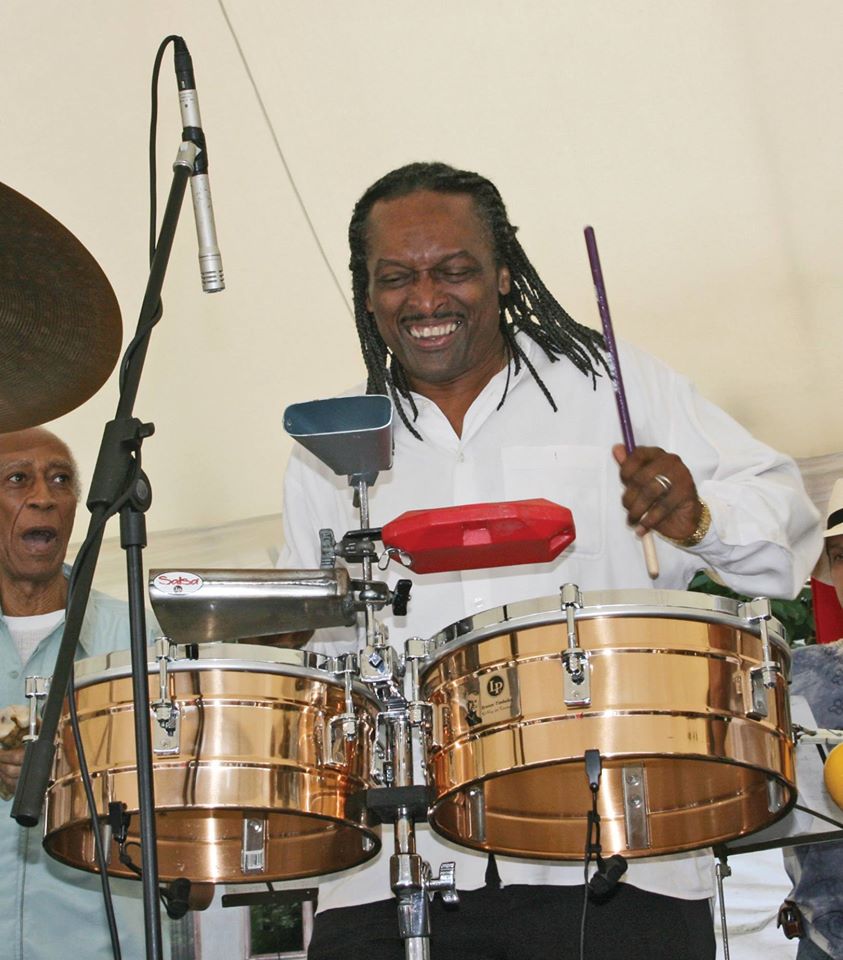
Orestes Vilató is one of the most influential figures in the world of Latin percussion

The Cuban multi-percussionist, Orestes Vilato, is undoubtedly one of the greatest figures in the history of Cuban drums known as timbales.

He is one of the most influential figures in the world of Latin percussion.

He was born on May 4, 1944 in Camagüey, Cuba, and currently resides in San Francisco, California in the United States.

He has worked with many of the best exponents of Cuban popular dance music and Latin jazz, from José Antonio Fajardo and Israel López (Cachao) to Rubén Blades and Carlos Santana.

He is one of the most influential figures in the world of Latin percussion. He was born on May 12, 1944 in Camagüey, Cuba, currently resides in San Francisco, California in the United States
Orestes Vilato is one of the most influential figures in the world of Latin percussion

During the 1950s, the Vilato family moved to New York, the world capital of salsa, where the young Orestes would rise to fame as an innovator of his beloved traditional instrument, “Los Timbales.

While living in New York City for 25 years, Orestes was intimately involved with many musical organizations that played key roles in shaping the course of Latin music around the world.

Among the many groups were: Fania All Starts (founding member), Ray Barretto, Tipica 73 (founding member), Los Kimbos (founder-director), Tito Puente, Johnny Pacheco, Cheo Feliciano, Ismael Rivera, Joe Cuba, Eddie Palmieri, Ruben Blades, La Lupe, Celia Cruz, Rolando La Serie, Chico O’Farril, Lionel Hampton, Los Chavales de España, Cal Tjader.

Other artists he has recorded or worked with include: Winton and Bradford Marsalis, Paco De Lucía, Whitney Houston, Linda Ronstadt, Aretha Franklin, Willie Nelson, Herbie Hancock, McCoy Tyner, Cachao, Andy García, Emilio Estefan, Gloria Estefan, Paquito de Rivera, Dave Valentín, Mongo Santamaría, Armando Peraza, John Santos, Rebeca Mauleon, Giovanni Hidalgo and Raúl Rekow.

In 1980 he moved from New York to San Francisco, California, where he worked with Armando Peraza, in the band of Chicano rocker Carlos Santana.

He later recorded with American jazzmen Bobby Hucherson and Buddy Montgomery, and with Cuban percussionist Luis Conte.

He also works with Jon Santos’ Batachanga Orchestra and Machete Ensemble.

He is one of the most influential figures in the world of Latin percussion. He was born on May 12, 1944 in Camagüey, Cuba, currently resides in San Francisco, California in the United States
Orestes Vilató Born May 12, 1944 in Camagüey, Cuba

In 1992 he recorded with Israel López (Cachao) as well as with Cuban percussionist José Luis Quintana (Changuito).

In 2009 he recorded his production entitled Orestes Vilató ?- Its About Time, with a repertoire in the style of Salsa, Latin Jazz, Descarga.

In 1981, Mr. Vilato moved to the San Francisco Bay Area, where he continues to reside with his family.   From 1980 to 1989 he recorded and toured with Carlos Santana’s renowned band.

Orestes was nominated for a Grammy in 1995 (Latin Jazz category) for his CD, Ritmo y Candela con Patato y Changuito. In 2009 his solo CD Its About Time was nominated for a Latin Grammy.

Orestes has recorded several film soundtracks including  Our Latin Thing, Mambo Kings, Carlito’s Way, Steal Big Steal Little, The Bird Cage, Dance With Me, Just A Ticket, Things To Do In Denver and The Lost City.

He has been a special guest artist at multiple jazz festivals around the country and in Puerto Rico, including the San Jose Jazz Festival.   He has performed and taught at numerous music conservatories including the Berkeley School of Music, UCLA, the University of Fresno, Stanford University, as well as many conservatories abroad.

Orestes was honored at the Yerba Buena Garden, Monterey and San Francisco Jazz Festivals.

Orestes’ style is one of the most imitated and emulated among recording artists.

Orestes Vilató It's about time
Orestes Vilató It’s about Time

Credits
Acoustic Bass – Carlitos Puerto Jr.
Backing Vocals, Handclaps – James Zavaleta
Bass – René Camacho
Bongos, Cowbell – Johnny “Dandy” Rodriguez
Co-producer, Timbales, Bongos, Lead Vocals, Cowbell, Cajón, Guiro, Maracas, Claves, Handclaps, Backing Vocals, Music Director – Orestes Vilató
Congas – Joey De León
Engineer [Assistance] – Joshua Blanchard
Engineer, Mixed By – Jimmy Branly
Executive Producer – Camerina Campillo, Ralph Campillo
Flute, Soprano Saxophone, Alto Saxophone, Tenor Saxophone – Justo Almario
Lead Vocals, Handclaps, Backing Vocals – Adonis Puentes
Mastered By – Peter Doell
Piano – Alberto Salas
Piano, Arranged By, Handclaps, Backing Vocals, Music Director – Rebeca Mauleón
Producer [Associate] – Manolo Santana
Tres, Acoustic Guitar – Ramón Stagnaro
Trumpet – Luis Eric González*, Sean Billings

Home

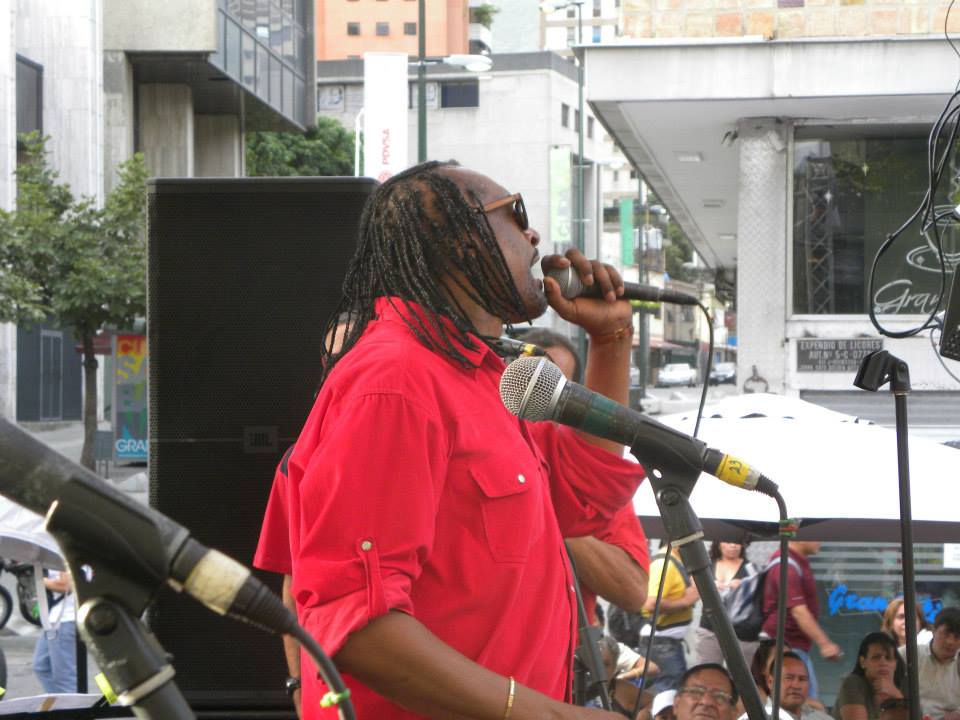
The “Caballero de la salsa” delights us with his new album

North America / United States

The story of an artist

Gilberto Santa Rosa, known as “El Caballero de la salsa”, was born in 1962 in Puerto Rico.

The singer has excelled at performing romantic ballads, boleros, and salsa. His first steps in music were at a very young age. Before reaching adolescence he was already forming youth groups within the tropical genre. For about two years, he was part of the band La Grande, from the hand of greats of the genre.

Colegas is the new album of Gilberto Santa Rosa
Gilberto Santa Rosa has a new album

Elías Lopés, famous Puerto Rican trumpet player, became his teacher and tutor. At the age of 14 he traveled to New York to take his first steps in the musical field and his father entrusted him to Lopés. Santa Rosa is very pleased to have received his teachings.

“The greatest legacy for me was discipline, knowledge of the work you are doing and the challenges; He gave me musical challenges that developed the talent I had at that time, “said the salsa singer.

Gilberto participated in the “Homenaje a Eddie Palmieri” with the Puerto Rico All Star, a great opportunity for his career that was on the rise. In addition, he was in the ranks of the Willie Rosario orchestra.

First steps

In 1986, he got his first opportunity as a soloist. Combo Records allowed him to record four albums; giving it a further boost in the salsa genre. Good Vibrations (1986), Keeping Cool! (1987), De Amor y Salsa (1988) and Salsa en Movimiento (1989) were his first record works.

In 1990, he had the opportunity to change record labels. On this occasion, CBS today is known worldwide as Sony Discos. Company with which he has recorded approximately 24 albums and continues to this day.

Sony Discos trusted him and saw him succeed through the years. Punto de vista, the first production made with the label, received a gold and platinum record. The Man and His Music was quite a special production. It was held in 1995 and reflected a presentation held at Carnegie Hall in New York.

Acting is another of the roles that he has developed with great skill. In 1990, he participated in “La pareja dispareja” with Rafo Muñiz and Luis Vigoreaux, Jr.

In the 2000s he was in other theatrical pieces. He starred in the revival of “La verdadera historia de Pedro Navaja”, a musical that demanded a lot from him on a professional level; and with Cuban comedian Alexis Valdés in the play “Atrácame más”.

“Returning to the theater, this time to comedy, fills me with great enthusiasm and even more so to be able to share the stage with one of the greats of comedy in the United States and Latin America. The truth is that “Atrácame más” takes me out of my comfort zone which is music and challenges me professionally. I’m really enjoying this story and I hope people enjoy it a lot more ”, commented Gilberto Santa Rosa, about “Atrácame más”.

Gilberto Santa Rosa is one of the artists who broke paradigms in the United States and in the rest of the world. From the beginning, the Latin public did not hesitate to follow his career and, of course, attend his meetings. He also had the opportunity to travel to Japan.

He presented himself as a worthy representative of his country and surprised the audience by performing “De cara al viento” in Japanese. A feat that surprised critics due to the difficulty of the language. In addition, it was his beginning in the international market, until today he is acclaimed incessantly.

Gilberto had great acceptance and a box office record in his presentations at the First President Festival in the Dominican Republic, the Lincoln Center in New York with Andy Montañez; at the Anayansi Theater in Panama and at the Universal Studios Amphitheater in Hollywood with Olga Tañón.

The accompaniment by the Symphony Orchestra ended up catapulting him among his followers. They considered it an unprecedented presentation and brimming with talent. It was presented under this format in the United States and broke box office records at the Teresa Carreño Theater in Caracas, Venezuela.

Expresión, 1999

It was one of his most popular albums. The album marked the singer’s career as it was nominated for a Latin Grammy Award, for Best Salsa Album, in its first installment. “Que alguien me diga”, original Omar Alfanno, Panamanian composer positioned him for several weeks on the Billboard. The production featured 13 songs with a total of 55 minutes in length.

The album had great renown in the Central American market, giving it a gold record for sales. In addition, he was chosen by the National Foundation for Popular Culture among the most outstanding of the year 1999.

Gilberto, continued to count successes and praise the work of the greats in the industry. He made several tributes such as the concert “Viva Rodríguez” in tribute to Tito Rodríguez; Tribute that the Orquesta Estrellas de la Fania, to Don Tite Curet Alonso and La Guarachera, Celia Cruz, in New York.

40 … y contando, it was released in 2019. It was a live album, with which he commemorated his 40-year career. The idea was born from his concert at the Coliseo José Miguel Agrelot in San Juan, Puerto Rico. 40… y contando it ranked second in sales of Tropical Albums in the United States and first in sales in Puerto Rico.

The Puerto Rican celebrated his 2020 birthday with the launch of a new collectible album.

Colegas, 2020

Gilberto Santa Rosa - New album cover
The album cover was designed for the Venezuelan artist Gilberto Santa Rosa

In this work, he had sixteen collaborations, bringing together “colegas” known to the audience. The first single is “La Familia”, a duet with the singer Tito Nieves, a Puerto Rican recognized within the genre as well as: Tito Rojas, Luisito Carrion, Pirulo, Nino Segarra, Choco Orta, Jose Alberto “El Canario”, Isaac Delgado and Juan Jose Hernandez.

The arrangements are attributed to Ocana Sordi, (El Guateque De Chombo), James Hernandez (La Fonda De Bienvenido), Jose Madera (Bailadores), Rene Gonzalez (Estoy como nunca), Dino Nugent (Apaga la luz), Ricky Gonzalez (Vamos A Bailar El Son, Eque Tumba), Manolito Rodriguez (Medley Boleros), Marty Sheller (Ban Ban Quere, Caminalo), Ramon Sanchez (Que se sepa), Javier Fernández (Masacote, Tremendo Coco), Louis García (Por la Calle Del Medio , Isidro Infante (El Mejor Sonero, Mario Ague, Sonerito),

Singing with Tito Nieves was a pleasure for him because they share a friendship relationship:

“Tito and I have a friendship that transcends the stage and the day to day. He is my dear brother. His sense of humor is incredible. With him everything is very easy. In fact, it only took 45 minutes for us to have the song ready”, said the salsa singer.

Santa Rosa wanted this album to be a very special tribute to his companions of so many years. He looked for the numbers to fit in some way with the relationship with each colleague.

The 58-year-old singer is a winner of a Grammy and five Latin Grammys. He is in his best moment and it appeared that “Colegas” could have a continuation.

“These things excite me and motivate me to do a second part, because other “colegas” were left out,” he said.

Will it be the beginning of your new musical project? We’ll see!

Home

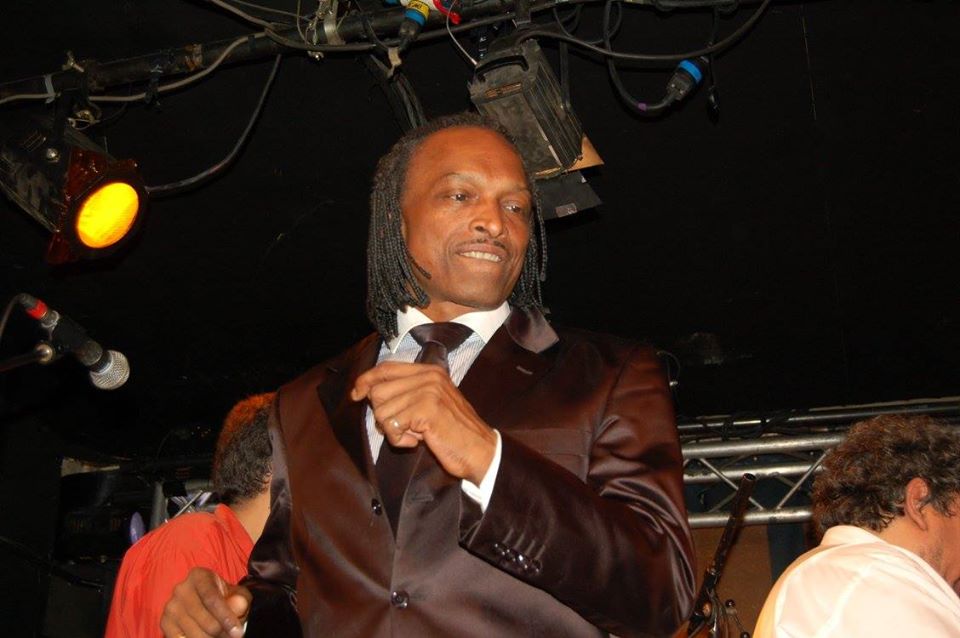
Orlando José Castillo: The Venezuelan sonero graduated in New York

Orlando José Castillo “Siempre Pa’lante”

He (Orlando José Castillo) is catalogued as one of the most important soneros that Venezuela has given to the world and considered a living legend of Afro-Caribbean music for his extensive, successful and extraordinary career during many years; for “International Salsa Magazine”, it is a great honor to have as a special guest on this occasion Orlando José Castillo “Watussi”, born in Marín, Yaracuy state, on March 23, 1949, who, since he was a child, moved with his parents to live in the parish of La Pastora in the city of Caracas.

Welcome Master Watussi and we hope that all salsa lovers through International Salsa Magazine, www.salsamundi.com, will know part of his life.

Thanks to all the staff for giving me the opportunity to read your magazine, which is already observed in Latin America, USA and Europe.

Orlando José Castillo "Watussi" The Venezuelan Sonero graduated in New York
Orlando José Castillo “Watussi”

And well, I am currently living in the city of Milan, Italy and let me tell you that I have beautiful and unforgettable memories of Barquisimeto, so for me it is a pleasure and an honor at the same time, to be sharing with all those people and my country.

To begin with, Maestro Watussi, which were the first groups and orchestras you were part of? Let me tell you that I started with Los Satélites, Federico y su Combo Latino, Porfi Jiménez, Príncipe y su Sexteto and that was super important, since they were the Venezuelan orchestras with which I began to form my career, especially with Los Satélites, Porfi, Federico; I sincerely owe the present of my life to all of them and that is why I do not want to leave them out of the picture.

"Watussi" The Venezuelan Sonero graduated in New York
Orlando José Castillo “Watussi”

Very good teacher, we would like to talk about your career in Puerto Rico and in the United States, with the various groups with which you were part.

Well, I tell you that I left Venezuela in 1979 definitely because I traveled for the first time in 1971, musically speaking, and it was my first international tour to the island of Santo Domingo with Los Satélites and then we returned in 72 and in 1974 we were the first Venezuelan orchestra to set foot on American soil in New York City.

NY being on the most important stage in the world at that time as it was Madison Square Garden and the importance of imposing a hit of musical salsa in the Big Apple, with a song I recorded called “Traicionera”, by the master Carlos Guerra and recorded with “Los Satélites”, after that experience I was founder of the “Renovación”, from there I went to be part of “Federico y su Combo Latino”; Then I worked with Rafael Cortijo and his Combo in Puerto Rico in 1977.

Later, in 1979, I went to the island of Borinquén, Cortijo was already traveling to New York and because I could not accompany him, I was lucky enough to be asked by the maestro Bobby Valentín to be part of his band. I stayed with him for three months and at one point I went to New York, The strike of Puerto Rican musicians, as many Dominican musicians were entering the island, led to Bobby being criticized for having a Venezuelan singer instead of a Puerto Rican one.

Later, in New York, I joined Cortijo and Kako Bastar again, who was another teacher in my career and with him I learned to know that great city and at that time almost all the singers of the orquestas bravas, were beginning to do their own work as soloists and I began to work with Joe Cuba and his Sextet, Eddie Palmieri, Larry Harlow, La Típica 73, until I arrived at the “Conjunto Libre”, I was there for about a year and a half, I recorded with them “El changó de María”.

After I had signed with the Fania label, which was a mistake I made, because Cortijo and Kako were telling me not to do it, since I had Fania in my brain, I rushed and was with them for a year practically inactive in the discography and that cost me not to have recorded the last album with Rafael Cortijo and others.

I recorded with Fania “Mi rumba y yo” and told them to leave me alone, they let me go and I joined the orchestra of “Bobby Rodríguez y su Compañía” for three years, I recorded a very good album, including the songs “María Cristina”, “El Pintor”, “Homenaje a Cortijo”.

In fact Carlos, then I continued with Palmieri in 1987, when I had already recorded the album “Las Calaveras” with José Mangual Jr. and there I began my career as a soloist.

Later on I set up my orchestra in New York, but unfortunately work began to decline due to the closure of venues such as El Corso, Casablanca, Copacabana, El Palladium and that brought as a consequence much less work, but thank God, in 1988 I had the opportunity to go to Paris, invited by my compadre Alfredo Cutuflá, in the place of Cheo Feliciano, to do the dance of December 31st at the New Morning.

Excellent, master Watussi, and it must have been a great commitment to replace Cheo at that time, tell us about this experience. Yes, I was fortunate to take his place because he did not travel at that time without his orchestra and Alfredito Cutuflá told me to get Cheo, I had his telephone number, I gave it to him and he told me that if Cheo did not go, I would go, and well it was a tremendous success with Cutuflá and that opened the doors for me in Europe and specifically in Italy, where my friend Carlos Ugueto was based, who brought salsa to that country.

Orlando José Castillo "Watussi"
Orlando José Castillo “Watussi”

Ugueto played the first album of this genre on his radio program, in his club and after he found out that I was in France, he sent for me and facilitated a tour in Milan in 1990, since in 1989 I was in Panama, singing to my compadre’s daughter Roberto “Mano ‘e Piedra” Durán, his 15 year old party, together with Camilo Azuquita, exactly on December 16, 1989,

but on December 19 the invasion of Panama began and I had to stay there until January 5 and well Carlos, I go to Europe and start my tour in Holland, then London, where I did a show with the master Tito Puente, on December 30, 1990, there I was 2 months in the old continent; I returned to New York, where I was residing, and in 1991 I returned to Europe and that’s when I stayed here for good with my family in Milan.

Orlando José Castillo, when you come to Venezuela, we imagine you will feel very well because you are visiting your homeland?

Of course I do, professor, when I go to my country I recharge my batteries, because there is no place like Venezuela, no matter what happens and I tell you honestly, I hope one day to be able to be in Barquisimeto with you, especially to personally show my appreciation for this gesture of having given my name to that “Peña Salsera Orlando Watussi”, in the middle of 2019, being the first time in Venezuela, to give me an honor of that size; especially my thanks to Dany Castillo and my family there, precursors of that idea, and to all the musicians of the musical capital to whom I send a cordial greeting.

Master Watussi, I am remembering that you were integrating the “Clan of Salsa” here in our city, do you remember that too?

Obviously, my friend Carlos, I was there with one of the bravest singers that Venezuela has given, my little brother Willy Rodriguez, who unfortunately is no longer with us.

Willy “El Guaro”, took care of me in his house for a few days, until I got my house in Barquisimeto; I am going to take advantage of this interview professor, to thank the family of Aldemar Barrera, the family of Honorio, tremendous bass player, Coromoto, who was the engine of that movement; greetings equally to Egidio and to all those panas.

Carlos, I want to greet especially the people of the Orquesta Malecón, I hope that one day we can meet on a stage and make a little effort, or perhaps in the Peña itself.

Orlando José Castillo, what can you tell us about Maestro Baquedano? Santiago Baquedano is one of the best musicians Venezuela has ever given and with him I worked on Margarita Island for a few months and from there I went to “La Salsa Mayor” and then I went to Puerto Rico, but I feel proud to have shared with so many valuable people from my country in my 50 year artistic career.

And let me tell you Carlos, just to finish, I reiterate my congratulations and good wishes for you to continue always with the work you do with this salsa column and your radio program, which aims to support and encourage musical talent in salsa.

Thank you Carlos and God bless you, take care all of you in my country and don’t leave the house! Cool…!.


Home

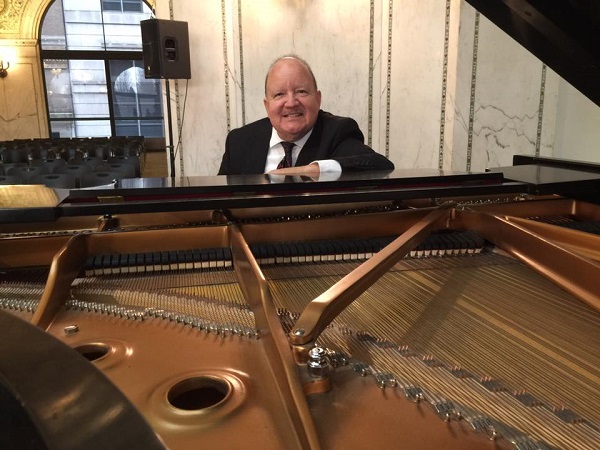
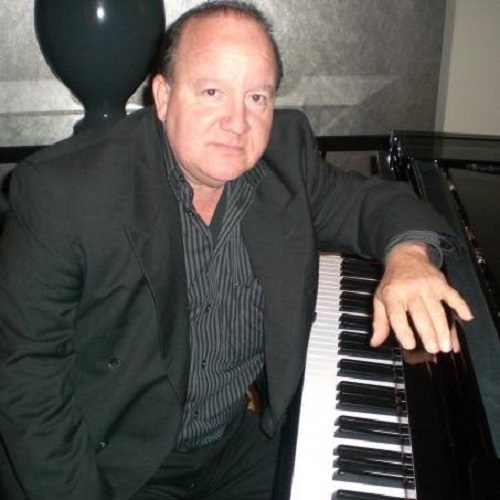
Samuel del Real was an excellent pianist, orchestra conductor, arranger and educator

Born on August 22, 1953 in Barranquilla, Colombia, he was a well-known pianist, orchestra conductor, arranger and educator.

Samuel del Real was an excellent pianist, conductor, arranger and educator.Samuel del Real was an excellent pianist, conductor, arranger and educator.
Samuel del Real was an excellent pianist, conductor, arranger and educator.

He was part of renowned orchestras such as Pacho Galán, La Dimensión Latina and El Trabuco Venezolano and participated in a series of record productions in Caracas, Venezuela.

In 1983 he recorded his first album with his own band. His first hit “Ella No Baila Sola” became the theme song in every night club in Colombia, Venezuela, Peru, Panama, USA among other countries.

In 1985, Samuel moved to Chicago, USA, where he quickly formed his orchestra with members of different nationalities resulting in a mixed sound for his music.

Since then Samuel del Real and his orchestra participated in many festivals, concerts, private events in cities such as Chicago, London, New York, Minneapolis, St. Paul, Detroit, Indianapolis, Miami and more. “Piano Caliente”, ‘Piano Jamboree’ and ‘Piano Navideño’ are the most recent albums that include selections from his extensive Latin jazz repertoire, as well as new interpretations of Afro-Cuban classics from his album entitled Piano Caliente.

Samuel In 1985, Samuel moved to Chicago, U.S.A.

Samuel has ventured not only into the salsa genre, but also into Latin jazz that surprises even those who don’t know him.

It doesn’t take much to realize that Samuel was “El Maestro del Buen Ritmo” and that his music is here to stay.

Samuel del Real: the artist from Barranquilla who triumphed in the United States.

He trained musically and academically, open to the idea of expanding his artistic horizons.

“I began my musical studies in Fine Arts, among my teachers I remember Günther Renz.

In Venezuela I attended the Juan José Landaeta Conservatory and the Caracas Philharmonic Conservatory with the pianist Paul Rosenbloo.

I studied harmony and counterpoint. With maestro Antonio Lauro, composer and guitarist, I completed my academic training”.

At the age of 15 he began his professional career as a pianist in the Pacho Galán Orchestra. There he learned the tricks of popular dance music of the Colombian Caribbean, and the possibilities of sharing with national musicians opened up for him.

DiegoDel Real, my first piano teacher, my advisor, my partner in producing, arranging and recording music.

With him I learned the routine of Caribbean music, he had a very positive attitude towards me. He would summon me before rehearsals to teach me how to play, he would take the score and sit with me at the piano: ‘Play like this’, he would tell me, and ‘play the acor-des this way, this is the tumbao, this is the phrasing’, all with a lot of patience”, he recounted.

“There was Pi¬chirilo on bass, Jorge Pérez on timbales and drums; and Joaquín Pérez on congas. Chicho Sarmiento, Clí¬maco Sarmiento’s son, played the alto saxophone; Pacho Aragón played the tenor saxophone. On trumpets Armando Galán, Raúl Lastra and Chino Acosta.

Rosendo on trombone. Maestro Pacho Galán would arrive to conduct the first set and then he would leave, Armando would be in charge of the orchestra. That’s when my interest in Caribbean folklore began.

I did not record with Pacho’s orchestra because he did not record in that period, but I played a lot of his music and I still play it in Latin jazz.

“For me it was a great school,” he said.

Although he has lived outside the country for many years, when he returns to Barranquilla it is as if he had never left.

It shows in his confidence to walk the streets, to visit places, to call friends, to exchange anecdotes with people he barely knows.

He is a man who lives for music, to which he has dedicated a contagious enthusiasm. That is why when he comes, it is a pleasure to review his career.

“I come to take a little hot temperature and to bring my latest albums for the local public to get to know them,” he said.

In 1975 he formed an orchestra in Venezuela with which he worked at the Hotel Tamana¬co Internacional, while at the same time he was a pianist, administrator and producer of various musical projects in the recording industry of that country.

In 1979 he joined Dimensión Latina, an aggregation with which he recorded Di¬mensión desconocida (1979), el número uno con la núme¬ro uno (1980), Para siempre (1980), Combinación latina Nº 4 (1980), and Cuerda para rato (1981).

“In Dimensión Latina I spent three years with Andy Montañez, Argenis Carruyo and Gustavo Carmona, then I started the orchestra project with my name.

I also recorded with Andy Montañez as a soloist, and made arrangements in recordings for Velvet de Venezuela”.

Samuel also participated in the extraordinary Trabuco Venezolano, led by drummer Alberto Naranjo.

“With Trabuco Venezolano I participated in many concerts in Venezuela.

With them I recorded Irakere and Trabuco, in a live performance at the Poliedro de Caracas. I also recorded Imágenes Latinas.

The Flor y Nata, themes: No me engañes, Rosa de la Noche, Brujería, Almas Blues, Desilusión, (there I do a piano solo that has been highly praised), a pesar de Usted, Orquesta de moda, No quiero Confusión. Retrospectiva del Trabuco Venezolano Vol. 2 (1977- 1984)”.

El Trabuco Venezolano – La Flor y Nata 1984

In 1983 he recorded his first album with his orchestra, the hit was the song Ella no baila sola, which became his letter of introduction.

In 1984 he recorded his second album, repeating his success with the song Cara de Domingo, by the niuyorrican flautist Lou Perez.

The third album with his orchestra was produced in 1987, when he was already living in Chicago.

“When I left Dimensión Latina, Gustavo Cardona, Oscar D’León’s bass player, encouraged me to start my own orchestra.

One of the numbers was Ella no baila so¬la, and when it was played, people stopped to dance. That is why we decided to record that song.

I brought Frankie Paz, a boy from Maracaibo who had auditioned with Dimensión Latina as a replacement for Argenis Carruyo, but César Monje didn’t like it.

I told the boy, I’m going to have my orchestra soon and I’m going to bring you with me”.

Referring to his piano influences, Samuel recalls Noro Morales, Eddie and Charlie Palmieri, Richie Ray and Lino Frias.

Others such as Bud Powell, Thelonious Monk and Oscar Peterson, shaped his vision.

“I liked Noro Morales a lot, I had only one record of his, ‘Maria Cervantes’, which caught my attention since I was a child. One day I decided to arrange it a little differently. I still play it in my Latin concerts.

Del Real took up residence in Chicago in 1985. There he has continued his work moving between Latin dance music and Latin jazz.

I’ve been living there for 32 years, I have my orchestra, I give Latin jazz concerts, and I’ve also worked for other organizations in other cities like Minneapolis and Cleveland.

We do salsa and different Latin American rhythms. The music business has changed, it’s a big investment to make a record, and you have to project it to the singer, limiting the possibility of moving.

That’s why I decided to make Caribbean Latin jazz instrumentals; with that I expose my music without the need to write ten arrangements for a singer with whom you run the risk of him leaving”.

His recent recordings include the Pianos del Caribe series, which includes the discs Piano caliente, Piano jamboree and Piano navideño.

“The first disc of the series, Piano Caliente, brings songs from the 50’s such as Mata Siguaraya, El que siembre su maíz, Besitos de coco…. I made the themes a little more progressive with jazz, but preserving their essence.

I subtly changed the harmonic structures, without distorting them. There the singer is the piano.

Then came Pia¬no Jamboree, with some of my own themes. I do more complex things, trying to penetrate Latin jazz, looking for a space for my musical identity.

It is an interesting work that I would like music lovers from Barranquilla to listen to.

The third album also in the same series is entitled Piano Navideño,

“The first album in the series, Piano Caliente, brings songs from the 50’s like Mata Siguaraya, El que siembre su maíz, Besitos de coco…. I made the themes a little more progressive with jazz, but preserving their essence.

I subtly changed the harmonic structures, without distorting them. There the singer is the piano.

Then came Pia¬no Jamboree, with some of my own themes. I do more complex things, trying to penetrate Latin jazz, looking for a space for my musical identity.

It is an interesting work that I would like music lovers from Barranquilla to listen to.

The third album also in the same series is entitled Piano Navideño, I took as a reference the themes of Christmas. Christmas is very important to me. I am a lover of that celebration.

I took several themes from the international Christmas repertoire and put them in Latin jazz”.

No one doubts that Barranqui jazz or the International Carnival of the Arts would be the perfect setting for his work. Plus, it would be a homecoming in style.

“I think it would be a great opportunity to showcase my music in my city. I am glad that in Barranquilla they are creating spaces like the Carnival of the Arts and the Caribbean Cultural Park, so that people have access to that part of the culture that is music”.

He passed away at the age of 67 on December 10, 2020.

Samuel del Real, who suffered from diabetes, died in Chicago, United States, where he had settled 35 years ago.

Also Read: Thank you Rafael for all you have done for Salsa. Without you many of us would not be salseros

Source and Collaboration By: Marino de Jesus (15889 of Historia Salsera
Republica Dominicana
  • « Go to Previous Page
  • Page 1
  • Interim pages omitted …
  • Page 28
  • Page 29
  • Page 30
  • Page 31
  • Go to Next Page »

International Salsa Magazine (ISM) is a monthly publication about Salsa activities around the world, that has been publishing since 2007. It is a world network of volunteers coordinated by ISM Magazine. We are working to strengthen all the events by working together.