• Skip to primary navigation
  • Skip to main content

International Salsa Magazine

  • HOME
  • Previous editions
    • 2026
      • ISM / May 2026
      • ISM / April 2026
      • ISM / March 2026
      • ISM / February 2026
      • ISM / January 2026
    • 2025
      • ISM / December 2025
      • ISM / November 2025
      • ISM / October 2025
      • ISM / September 2025
      • ISM / August 2025
      • ISM / July 2025
      • ISM / June 2025
      • ISM / May2025
      • ISM / April 2025
      • ISM / March 2025
      • ISM / February 2025
      • ISM / January 2025
    • 2024
      • ISM / December 2024
      • ISM / November 2024
      • ISM / October 2024
      • ISM / September 2024
      • ISM / August 2024
      • ISM / July 2024
      • ISM / June 2024
      • ISM / May 2024
      • ISM / April 2024
      • ISM / March 2024
      • ISM / February 2024
      • ISM / January 2024
    • 2023
      • ISM / December 2023
      • ISM / November 2023
      • ISM / October 2023
      • ISM – September 2023
      • ISM – August 2023
      • ISM July 2023
      • ISM Edition June 2023
      • ISM – May 2023
      • ISM April 2023
      • ISM March 2023
      • ISM February 2023
      • ISM January 2023
    • 2022
      • ISM December 2022
      • ISM November 2022
      • ISM October 2022
      • ISM September 2022
      • ISM August 2022
      • ISM July 2022
      • ISM June 2022
      • ISM May 2022
      • ISM February 2022
      • ISM January 2022
    • 2021
      • ISM December 2021
      • ISM November 2021
      • ISM October – 2021
      • ISM September 2021
      • ISM August 2021
      • ISM July 2021
      • ISM May 2021
      • ISM April 2021
      • ISM June 2021
      • ISM March 2021
      • ISM February 2021
      • ISM January 2021
    • 2020
      • ISM December 2020
      • ISM November 2020
      • ISM October 2020
      • ISM September 2020
      • ISM August 2020
      • ISM July 2020
      • ISM June 2020
      • ISM May 2020
      • ISM April 2020
      • ISM March 2020
      • ISM February 2020
      • ISM January 2020
    • 2019
      • ISM December 2019
      • ISM November 2019
      • ISM October 2019
      • ISM Septembre 2019
      • ISM August 2019
      • ISM July 2019
      • ISM June 2019
    • 2016
      • ISM December 2016
  • Spanish
  • Download Salsa App
    • Android
    • Apple

Search Results for: eddie palmieri

Our friend Tito Allen supports the Salsa Museum

From the Salsa Museum, we can boast of having a long list of important artists who have supported us since the project started or over the course of all these years. One of them is Roberto Romero Caballero, better known as Tito Allen, who is called ”El Elegante de La Salsa” by his most loyal fans as a result of the book ”Swing Latino” by Angel Mendez.
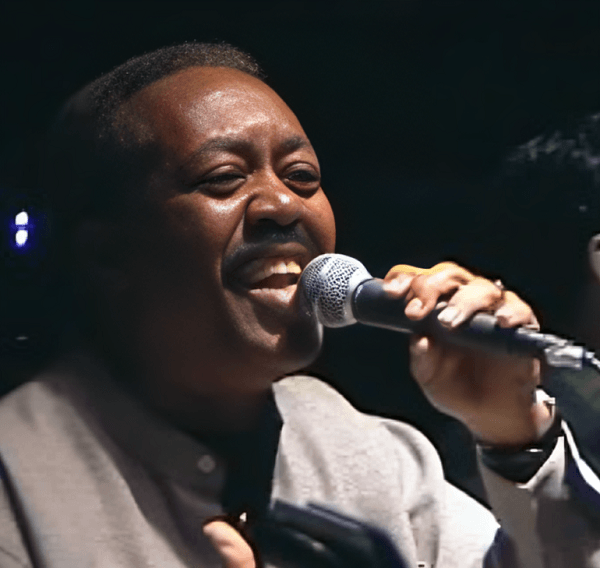
Tito singing
Tito Allen singing live

A little bit of Tito Allen’s biography

Tito Allen was born in the neighborhood of Santurce, municipality of San Juan, Puerto Rico, in 1946. He began his professional career in music as a 16-year-old teenager, when he was already part of groups in which he played the guitar and even performed on Puerto Rico’s Channel 4.

Although it is true that, initially, he was much more inclined to rock and roll and also used to play the bass, he changed his mind as time went by and decided to become a salsa singer, to the delight of all fans of the genre who gained forever one of their greatest Puerto Rican references. The best thing is that he turned out to have an incredible voice, so it was a very wise decision.

Obviously, Tito had his own inspirations to become what he is. In interviews with Tito, from his point of view, Cheo Feliciano is one of the best salseros of all and he has been listening to him since he was with Joe Cuba Sextet. As for the orchestras, he has also revealed that his favorite is that of Bobby Valentín and the song with which he identifies the most is ”Contento”. Another artist for whom he also expressed his admiration and desire to collaborate is the legendary pianist Eddie Palmieri.
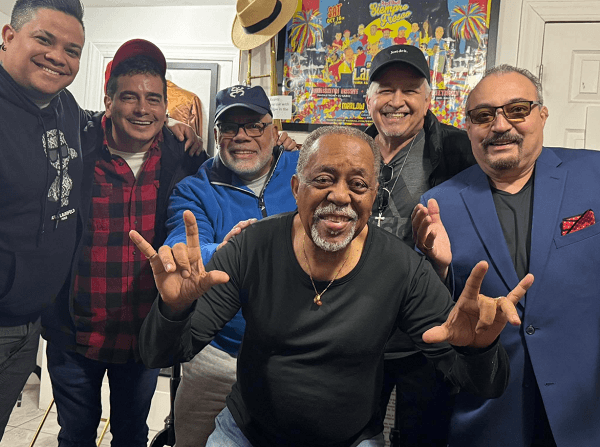
Tito and Johnny
Johnny Cruz, Tito Allen, Viti Ruiz, Jorge Leureyro, Christopher Rey and Ray Sepulveda

Tito Allen’s career

This talented man’s career is so wide that it is impossible to list everything he has done since he started in music, but it is possible to highlight that he has always tried to collaborate with as many groups and artists as possible and the list of recordings he has with other great names proves it. Tito Allen has sung along with Cheo Feliciano, Ray Barreto, La Típica 73, Adalberto Santiago, Papo Lucca, Willie Rosario, Fania All Stars, Pupi Legarreta, among many others.

It should also be noted that the singer traveled to New York in 1972 in order to attend Tito Puente’s shows and try to sing with him, but unfortunately he had no vacancies at that time. In view of this refusal, he decided to meet with pianist Edite Martínez, which resulted in a quintet that used to play in nightclubs.

He went back to Puerto Rico, but traveled again to New York very soon after, since he got a chance to play at ”El Corzo” with Ray Barretto’s orchestra, which was in need of a singer after the departure of Adalberto Santiago. After that, he finally managed to sing with Tito Puente for a few months and then went on to join La Típica 73 and La Puerto Rico All Stars.

All this without counting the large number of productions and recordings in which Tito sang and delivered backing vocals with many other big names in the industry.

Supporting the Salsa Museum 

Recently, Tito visited us at the Salsa Museum to give us his support and promote the institution as so many of his colleagues have done. In our social networks, you can see two pictures of the artist with our president Johnny Cruz, Viti Ruiz, Jorge Leureyro, Christopher Rey and Ray Sepulveda. 

Johnny Cru ISM corresponde in New York City

Read also: Puerto Rican singer Max Rosado and what he had achieved in Washington DC

Papo Vázquez the Pirate & Troubadour of Our Latin Music

Papo Vázquez Enjoying the Bell.

Angel Vásquez, “Papo Vásquez”, was born on February 24, 1958 in Philadelphia, Pennsylvania, USA.

Papo Vazquez
Papo Vazquez

By age 15, Papo Vázquez was playing with local American bands in Philadelphia and accompanying guest artists such as Eddie Palmieri.

At just 17, he moved to New York and was hired to play for trumpet player Chocolate Armenteros’ band, and soon began playing and recording with other top artists on the salsa scene such as The Fania All-Stars, Ray Barreto, Willie Colón, Grupo Folklórico Neoyorquino, Eddie Palmieri, Larry Harlow, and Hector Lavoe.

Vazquez also became a key player in the burgeoning New York Latin jazz scene of the late 1970s, performing with Jerry Gonzalez, Hilton Ruiz, and more.

He began his studies with Slide Hampton, eventually recording and performing Slide Hampton’s World Trombones.

Papo Vázquez Photo by Ernie Gregory (Gone but not forgotten) Thank you Ernie!PV

A Grammy-nominated trombonist, composer, arranger, NEA Master Artist, he has a 50-plus year career in jazz, Latin and Afro-Caribbean music.

Musical Director of the National Puerto Rican Day Parade Orchestra, (NYC/WABC) 2016, 2017, 2018, 2019.

Commissioned by Wynton Marsalis to compose music for Jazz and Art series, conducted and performed with the J@LC orchestra, CD release August 2019 New York Pops Education, Board of Education certified, 2018 and 2019

New music commissioned for Afro Latin Jazz Alliance for the “Nueva Música” concert series.

Nominated for Grammy for Papo Vázquez’s Mighty Pirates, Marooned/Isolated, 2008

Born in 1958 in Philadelphia, Pennsylvania, although his early formative years were in Puerto Rico.

He went on to play and/or record with jazz luminaries Tito Puente, Dizzy Gillespie’s United Nations Orchestra, Chico O’Farrill, Ray Charles, Slide Hampton’s World of Trombones, Jerry Gonzalez Fort Apache, among many others. By the age of 22, Vazquez had traveled the world.

Papo Vázquez Mighty Pirates Troubadours 2023

Vázquez was deeply moved by jazz from a young age. His appreciation and knowledge of indigenous Caribbean music provides him with a unique ability to fuse Afro-Caribbean rhythms with the freer melodic and harmonic elements of progressive jazz.

Beginnings

After spending his early years in Puerto Rico, he grew up in the heart of North Philadelphia’s Puerto Rican community. He purchased his first trombone from a friend for $5 and joined the elementary school band.

At the age of 14, an uncle recommended him to a local salsa band, where he met trumpeter Jimmy Purvis. Purvis inspired Papo’s lifelong passion for jazz by giving him two records: J.J. Johnson’s Blue Trombone and John Coltrane Live at the Village Vanguard. By 15, Vazquez was performing with local Latin bands in Philadelphia and accompanying visiting New York artists such as Eddie Palmieri.

He was a founding member of Jerry Gonzalez’s Fort Apache and Conjunto Libre, as well as the popular Puerto Rican Latin fusion band Batacumbele.

With Batacumbele he performed, composed, arranged and recorded several albums from 1981 to 1985. Upon his return to New York, he joined Tito Puente’s Latin Jazz Ensemble, traveling with them as principal trombonist and touring Europe with Dizzy Gillespie’s United Nations Orchestra.

Leader, Composer and Innovator.

Vázquez has always been deeply moved by jazz, and specifically cites the music of John Coltrane and J.J. Johnson as having influenced him most. In addition, his appreciation and knowledge of the indigenous music of Caribbean peoples gives him a unique ability to fuse Afro-Caribbean rhythms, specifically those of Puerto Rico, with the freer melodic and harmonic elements of progressive jazz.

During his time in Puerto Rico with Batacumbele in the 1980s, he began experimenting with “bomba jazz,” a fusion of jazz and traditional Puerto Rican bomba. In 1993 he recorded his first album as a leader, Breakout. He continued to collaborate with a variety of Latin Jazz artists, contributing Overtime Mambo to Hilton Ruiz’s Manhattan Mambo and Contra Viento y Mareo to Descarga Boricua, Vol. 1.

In 1999, he released a live recording with a number of leading New York Latin and jazz artists, including bassist Andy Gonzalez, saxophonist Michael Brecker, among others. The release of Pirates & Troubadours At the Point, Vol. 1 was followed the next year by At The Point, Vol. 2.

Mighty Pirates Troubadours Songs del Yucayekepor Papo Vazquez
Mighty Pirates Troubadours Songs del Yucayeke
por Papo Vazquez

This project evolved into the Pirates Troubadours, an “Afro-Puerto Rican jazz band” that includes musicians such as Roberto Cepeda of Puerto Rico’s Familia Cepeda folklore group, Milton Cardona and Anthony Carrillo on percussion, and John Benitez, among others. The group performed at festivals around the world and released Carnival in San Juan in 2003, followed by From The Badlands in 2007.

Interest grew as a composer.

He was the first artist to receive a composer commission (Iron Jungle) for the Afro-Latin Jazz Orchestra, then a resident orchestra at Jazz at Lincoln Center.

His first classical composition, Palomita Suite Afro-Caribeña which to date was the first time Bomba y Plena had been performed with a Chamber Orchestra, was commissioned by the Bronx Arts Ensemble and premiered at the Hostos Center for Arts and Culture in the Bronx in 2004.

In 2007, on a commission from the Bronx River Arts Center, he wrote Sube el Río (River Rising) for its Mighty Pirate Orchestra for its 20th anniversary concert “Bronx River Sounds.”

Discography

Papo Vázquez Mighty Pirates Troubadours – Capítulo 10: Breaking Cover, Picaro Records 2020
Cuarteto Papo Vázquez – GV J.S. Bach, Picaro Records 2017
Papo Vazquez Mighty Pirates Troubadours – Spirit Warrior, Picaro Records, 2015
Papo Vazquez Mighty Pirates Troubadours – Oasis, Picaro Records, 2012
Papo Vázquez The Mighty Pirates – Marooned / Aislado, Picaro Records, Nominación al Grammy 2008
Papo Vázquez Pirates Troubadours – From The Badlands, Picaro Records, 2007
El Niño Josele – 2011
Tego Calderon – The Underdog / El Subestimado, Jiggiri Records, 2006
Shakira & Wyclef Jean – Tema de la final mundial de fútbol (“Bamboo”), 2006
Ray Barretto – Normas rican-ditioned, Zoho Music, 2006
Los Pleneros de la 21 Para Todos Ustedes, Smithsonian Folkways, 2005 – Nominación al Grammy,
Bebo Valdes – Bebo de Cuba, Calle 54, 2005 – Grammy, Mejor Álbum de Jazz Latino
Papo Vázquez Pirates Trovadores – Carnaval en San Juan, Cu-Bop Records, 2003
Wayne Shorter – Alegria, Verve, 2003 – Grammy, Mejor álbum instrumental de jazz
Jack Bruce – Sombras en el aire, Sanctuary Records Group, 2001
Freddie Cole Rio de Janeiro Blues, Telarc
Chico O’Farrill “Carambola” Fantasía
Banda sonora de la película Mo ’Better Blues de Spike Lee
Papo Vázquez “Piratas y trovadores – En el punto Vol. I” Cubop
Papo Vázquez “Piratas y trovadores – At the Point Vol. 2” Cubop
Milton Cardona “Cambucha” Clave americana
Arturo O’Farrill “Bloodlines” Fantasy
Chucho Valdés “All Stars Bronx Lebanon New Directions Project” RMM
“Jammin ‘in the Bronx” Papo Vázquez Band, Chucho Valdes & The Machito Orq RMM
Chart Busters con el Dr. Lonnie Smith, Lenny White, Hiram Bullock, Craig Handy, Papo Vázquez, et.al. Chico O’Farrill Fantasía “Pure Emotion”
Steve Berrios Fantasía del “primer mundo”
Descarga Boricua “Descarga Boricua” Tierrazo
Dave Valentin “Tropic Heat” GRP
Juan Luis Guerra 440 “Fogarate” 440
Papo Vázquez “Breakout” Timeless
Ruben Blades “Amor y Control” “Antecedente” & “Caminando” Sony
Hilton Ruiz “Manhattan Mambo” Telarc y “Hands on Percussion”
RMM Tito Puente “Fuera de este mundo” Tito Puente “100” RMM
Jerry Gonzalez Fort Apache Band “Obatala” “Live in Berlin” Enja & “Ya Yo Me Cure” American Clave
New York Latin Jazz All Stars “Feliz Navidad”
Bobby Valentin “Presenta al Cano Estremera” – Bronco Records
Batacumbele “Con Un Poco de Songo” & “En Aquellos Tiempos” Tierrazo
Ray Barretto “Ricanstruction” Fania
Slide Hampton “Mundo de trombones” WEST54
Chico O’Farrill “Calle 54”
Fania All Stars “Habana Jam” Fania
Willie Colon & Ruben Blades “Siembra” Fania
Willie Colon y Celia Cruz Fania
Héctor La Voe “De Ti Depende” – Feliz Navidad, Fania
Mon Rivera “Vuelvo a Vivir” Fania

Sources:

© 2017 por Papo Vázquez. Creado con orgullo.

Textos www.jazzismomedellin.com

Also Read: Eddie Palmieri brought salsa for the first time and live from Sing Sing Penitentiary in New York

Joshua Levine and his quartet have a lot of Guataca

Joshua Levine, artistically known as Josh Levine, is one of so many examples of Americans who, without having any type of Latin roots, fall under the charm of our beautiful music and do not hesitate to make it their way of life. That is why we wanted to talk to Josh, born in New York City, a little more about his career and what brought him to where he is today.

Josh posing with his double bass
Bandleader and bassist Josh Levine posing with his double bass

Josh’s beginnings in music

The first instrument that drew Josh’s attention as a child was the piano, as his babysitter was a piano teacher and offered him some lessons to satisfy his curiosity. The interesting thing is that his teaching was more focused on the ear than on reading music as such, showing that there are musicians perfectly capable of playing without needing a musical score.

However, like any child, he began to have other interests such as skating, to which he devoted much of his time back then. About 10 or 11 years later, his father, who was a great jazz fan, used to listen to this genre at home frequently, to the point that the young man once again felt that passion for what he had practiced so many years ago and began to listen a little more intently to the artists his father enjoyed. 

Seeing his son’s growing taste for jazz, Josh’s father decided to take him to a concert featuring Cedar Walton’s piano trio with Ron Carter on bass and Billy Higgins on drums. He was so impressed by their performance that he decided to study bass that same day, as at the time it seemed to him the most understandable and easiest instrument to learn because of its few notes at once.

He got so good that he even became part of his high school band, a group from where great artists emerged including Carlos Henriquez, a great musical luminary who has worked with Celiz Cruz, Eddie Palmieri and Ruben Blades and is the current bass player for the Jazz At Lincoln Center Orchestra.

Interest in Latin music

For those same years, Josh also learned Spanish and clarified that he does not have any Latin ancestry, so this was not the motive behind his interest in this music. However, he grew up in a neighborhood in Manhattan where many Latino families lived, especially Caribbeans from Puerto Rico, the Dominican Republic and Cuba.

Josh and Jainardo
Josh Levine next to Puerto Rican singer and percussionist Jainardo Batista

Meanwhile, he was also studying biology in college and a little jazz and classical music. Upon graduation, by pure chance, he met a young Venezuelan musician named Roberto Fuentes, who was the director of Alpargata Cantorum (a very famous Venezuelan musical comedy and theater group in the 70s), who wanted to form a band with him and a few other musicians. Fuentes showed Josh a lot of Venezuelan folkloric music, taught him to play cuatro and made him listen to several songs typical of Venezuelan music such as ”Barlovento”, ”El Alma Llanera”, ”La Vaca Mariposa”, ”Pajarillo Verde” and many more.

As for classic salsa, he made him listen to Ismael Rivera, Rubén Blades, Willie Colón and many others.

Other groups Josh was in

Having been in the group with Fuentes gave him what he needed to make contact with many other groups, including that of José Luis Martínez, who was very close to Juan Carlos Formell Sr. Thanks to Martinez he learned a great deal about Cuban music, the way Cuban son is played on the bass, the pronunciation of words in the Cuban dialect, among other things. 

His big break came when he met Jainardo Batista, whom he was a big fan of when he was in his band Nu Guajiro (or Nu D’lux, as it would end up being called). It turns out that Josh went every Sunday to hear them play at the club where they were at the time and, after 10 years of following their music, they finally invited him to play with them.

After a while, the group disbanded, but Josh and Jainardo did not lose touch. And not only that, but they continued playing together and had the idea of forming something new. 

Jainardo, Jeremy, Gabriel, and Josh
Percussionist Jainardo Batista, flautist Jeremy Bosch, Pianist Gabriel Chakarji, and bassist Josh Levine

Cuarteto Guataca 

Cuarteto Guataca was born when Josh and Jainardo decided to form a new group after the breakup of Nu D’lux and counted with the participation of Dominican arranger, composer and tres player Román Lajara and Puerto Rican producer, composer and flutist Jeremy Bosch. He describes them both as musical prodigies, to the point of telling us that Lajara was the representative of the Cuban tres as an instrument at the 2024 National Jazz Day in Morocco.

Josh, Jainardo, Román and Jeremy were the members of the original quartet, but they did not play for a living because it was not enough, but as a sort of part-time job. For the same reason, the four of them also worked on other projects at the same time, as is usually the way with New York today. 

During the COVID-19 pandemic, they started playing in city parks to earn some tips during the quarantine, leading their audiences to grow tremendously and many venues began to hire them to play in their open spaces. At a time when musicians were out of work, they had events at least six out of seven days to a week.

This led to them to be ready to get in a studio for the first time and record their first album, which was released in 2022 and is available on all digital platforms for all to enjoy. It should be noted that Román was not playing as often with Cuarteto Guataca, so he was replaced by Venezuelan producer, composer and pianist Gabriel Chakarji until he got back some time later.

Read also: De Tierra Caliente founder Bronson Tennis talks about his career and band

Federico Betancourt “Pioneer of Salsa in Venezuela”

Latin America / Venezuela / Carabobo

Jesús Federico Betancourt was born in the city of Valencia, Carabobo state, on March 22, 1940. He was always attracted to music from a very young age.

Photo of Federico Betancourt on stage

In his adolescence, he liked Cuban rhythms, being influenced by Sonora Matancera, Mon Rivera, Eddie Palmieri and Joe Cotto. Before entering the entertainment world, he works at the Bank of Venezuela.

He affirms that he has not carried out formal studies at the musical level, learning the necessary theory to be able to perform as an orchestra conductor, but without interest in interpreting any instrument, but with a well-tuned ear, which has allowed him to remain in the music business for decades. , in fact on certain occasions he is named as the King of the Güiro.

Photo by Federico Betancourt

His career began when he entered the Los Selectos Orchestra, where they played songs by the Billos Caracas Boy’s and the Los Melodicos Orchestra, which were at their peak in the 1960s, all this in a particular way, said Orchestra did not go beyond that.

In 1965, Federico Betancourt decides to satisfy his artistic restlessness and founds a band called Federico y su Combo Latino. The members that made up this band were chosen from among the founder and together with Roberto Monserrat.

But it was not until the middle of 1966, when the twenty-six (26) year old undertook the recording of the LP that would make him famous forever. This record production entitled LLEGO LA SALSA, would mark an important stage in Venezuelan Salsa, because it was the first LP that made use of the word SALSA in the country.

Federico Betancourt
Federico Betancourt

Federico Betancourt himself recounts that the Venezuelan announcer Phidias Danilo Escalona had a Radio Program called LA HORA DE LA SALSA, EL SABOR Y EL BEMBÉ, where all the Cuban and Puerto Rican Caribbean rhythms that were fashionable at the time were placed, among those who highlighted La Sonora Matancera with Celia Cruz, Tito Puente, Joe Cuba, Tito Rodríguez among others, and who was the one who supported them the most in terms of recording the album.

The production was recorded under the Palacio label, and the LP was titled LLEGÓ LA SALSA, he affirms that the title was chosen without taking into account the importance that it would revert in the future, he also affirms that it was not the name that gave him success , the album was a “bump” in sales, since all the songs were the most requested at the time, using his words: “The album sold like hot cakes”.

The music lovers of the time requested it on specialized sites such as the LA SALSA album. Federico says: “The father of the word SALSA was Phidias Danilo Escalona, ​​he used it for the first time in his radio program, and I, humbly, with the success of my LP, gave him the push for its mass use.”

Federico Betancourt - Photo
Federico Betancourt – Photo

In Venezuela, the word SALSA was welcomed by the public willingly, since it suggested a mixture of flavors, which was exactly what happened in the Phidias program, but at the level of rhythms. After the appearance of Federico’s album, all the shows that were performed at the level of Caribbean and Cuban rhythms, carried the name of SALSA.

It is important to name the musicians who took part in this historic production: The musicians are: Ali Rojas Bongo and Cencerro, Roberto Monserrat Music Director and Timbal, Pedro Medina Congas, Alfredo Arcas Trombone, César Pinto Trumpet, Enrique Iriarte Piano, Rafael Prado Bass, Carlín Rodríguez Singer and maracas, Dimas Pedroza Singer, Federico Betancourt Güiro and Director of the Orchestra. The musical arrangements were by the famous trumpeter Eduvigis Carrillo (RIP). Production themes:

Llego la Salsa CD - Federico su Combo Latino
Llego la Salsa CD – Federico su Combo Latino
1.- Cocolía

2.- Conmigo
3.- El Pachanguero

4.- Sancocho Caliente
5.- Guaguancó Manía

6.- Celosa

7.- Despierta Rumbero

8.- No Critiquen
9.- Saoco

10.- Baila Yemaya
11.- Café Y Pan

12.- Que Me Querías

After the success obtained with the record work, the time came for the first international outing, which was to Colombia, in 1969. It happened because the singer of Los Melodicos, Víctor Piñero, informed Betancourt that he was stuck in Cartagena and Barranquilla with the themes El Cobrador and Federico Boogaloo. After the information, the young musician went to the neighboring country and got a contract for the famous Reina del Mar parties, in Cartagena, on November 11, 1969.

The experience of the band was so good, that in 1970 they returned to visit the country. From then until our days Federico y su Combo continues to be an emblematic and legendary band in Venezuela, for this reason the WEB of the classy salsero SALSA BRAVA, offers its respects to such an important salsa figure.

Discography
1966 Llegó La Salsa Palacio (LPS-6171)
1966 Salsa y Sabor Palacio (LPS-6185)
1967 Más Salsa Palacio (LPS-6205)
1967 Durísimo – Vol. 4 Palacio (LPS-6216)
1968 Federico Boogaloo Palacio (LPS-6228)
1968 Psicodélico Con Salsa Gilmar (LPG-110)
1969 Mejor Que Nunca Gilmar (LPG-111)
1969 Vibración y Ritmo Sonus (102-17080)
1970 Dos Sets Velvet (LPV-1539)
1970 La Machaca Velvet (LPV-1539)
1973 Federico Si Te Pone A Bailar Palacio (LPS-6332)
1975 Derrape De Salsa BASF (10.068)
1976 Siguelo Ahí…. a Lo Cortico BASF (10.070)
1977 Ayer y Hoy BASF (10.076)
1977 Esto Es Lo Mejor Palacio (LPS-6372)
1978 Mis Exitos y Más BASF (10.079)
1978 Sabor Foca (LPF-10.037)
1979 Federico y Su Combo Foca (LPF-10.120)
1979 Federico y Su Orq. – El Maestro Discomoda (DCM-1128)
1980 Federico y Su Orq. con Memo Morales Discomoda (DCM-1148)
1982 No Le Digan Integra (PF-14.075)
1983 Nuevamente Palacio (LPS-66.541)
1984 SaaaBroooSo! Palacio (LPS-66.552)
Compilation
1996 Mis Exitos y Más…Vol.1 Sonograma
1996 Mis Exitos y Más…Vol.2 Sonograma
1996 Mis Exitos y Más…Vol.3 Sonograma
2005 El Pionero De La Salsa Palacio
2008 Salsa De Oro Gilmar


Larry Harlow and Ismael Miranda: beginning of the so-called “Salsa Arseniana” in honor of the music of Arsenio Rodriguez, the creator of Son Montuno and “King of Guaguanco”

Extracted from the book called: “El origen y la creación de la Salsa”; creator: Mon Rivera, promoter: Al Santiago.

For sale on Amazon kdp, by clicking on the following link:

With which is attached a complete summary of the musical work of Larry Harlow with Ismael Miranda from its creation in 1966 to 71.

At the end is the original song of Arsenio: “Oiga mi Guaguanco”, with the fabulous musical arrangement of Harlow himself in “Salsa Clasica”, with the exquisite singing of the “Niño Bonito de Puerto Rico” Ismael Miranda.

Larry Harlow and Ismael Miranda: 1966 – 1971 with trombones.

Julio Cesar Galindo Alarcón Diplomático de Peru Ministro (R), Historiador Musical. Autor de Libro sobre Creacion de la Salsa

Lawrence Ira Khan, better known in the music scene as Larry Harlow, affectionately known as “The Wonderful Jew”, was born in Brooklyn, New York, on March 20, 1939 and died in New York on August 20, 2021, American musician, orchestra conductor, pianist, composer, musical arranger, producer, creator of the so-called “Latin Opera”, in 73 he was one of the most important disseminators of Afro-Cuban Jazz, “Arseniana” Salsa and Classical Salsa, confirming at the highest level the use of the trombone and the USA instrumental technique, corroborated as the two most important characteristics that identify the new American Musical Movement.

The beginning of Larry’s musical work must be analyzed from his return from Cuba in 1959, after having traveled to the island in the mid 50’s, to know and study Cuban music in its different rhythms, but because of the Revolution he had to return to New York; finding the boom and enthusiasm produced by the Pachanga spread by Charlie Palmieri, Pacheco, Quijano, Orlando Marin, Mon, Eddie Palmieri, Ray Barretto, Richie, among others.

At the end of 65 he forms his orchestra with trombones and application of the instrumental technique of Jazz; he signs a contract with the “Fania” label and plans to record his first album.

In 1966 he recorded his first album called “Heavy Smokin” with Felo Brito’s vocals; L.P. little known, in which stand out: “Tu Tu Ratan”, “Maria la O”, “Rica Combinación”, “Mi Guaguancó”, “Orchestra Harlow” and “Adios Mamá”.

In the same year he recorded his second album called “Gettin’ Off” or “Bajándote”, sung by Ramón Quian: “Monguito” el Unico, an excellent full-length album that was a great success.

Some of the highlights are “Bajandote”, “Guarachita”, sung by Vickie; “Tu no lo creas”, “Meta y Guaguancó”, “Coco May May” and “Cienfuegos”.

In ’66, a young teenager appears singing in Andy Harlow y su Sexteto’s group.

Andy gave him to his friend Joey Pastrana at the beginning of 67 to record the album “Let’s Ball”, in which the young singer Ismael Miranda had his first hit with the song “Rumbón Melón”.

Larry Harlow who lacked a good singer, offered the job to Ismael, who without hesitation accepted it immediately; and debuted with Larry on his third album in 67 called “El Exigente” and thus began the WONDERFUL DUPLE OF LARRY HARLOW AND ISMAEL MIRANDA, who together formed a sensational duet, amazing and impressive, in the History of Classical Salsa.

In “El Exigente” with the debut of the “Niño Bonito de Puerto Rico”, the songs “El Exigente”, “Las luces”, “Rumba me llaman” and “El Mejor” stand out.  The following year, in 1968, he recorded the album, “Orchestra Harlow presenta a Ismael Miranda”.  With this unsurpassable combination, the Classic, Brava and Hard Niuyorquina Salsa begins in the unique style of the “Judío Maravilloso” with the singing of the fabulous Ismael Miranda, one of the most attractive, fine and sharp voices in the history of Salsa, in which stand out the songs: “La Contra- ria”, “Jaguey”, “Yo me voy”, “Lamento Cubano”, “Bobby’s Boo-galoo, ‘Rumba a la vida’ and ‘Mi Guajira si’.

In 1969 he recorded his fifth album and third with Ismael Miranda, called “Mi Mono y Yo”, in which he continues the teaching of Classical Salsa with Afro-Cuban Jazz fusion, in which almost all the songs stand out: “El Malecón”, “Voy para la luna”, “Amorcito Ven”, “Jovenes del Muelle”, “Ven Rumbero Ven”, “Para donde tu vas”, “Mi Madre” and “Traigo Guajira”.  With these last two albums, Larry with Ismael had achieved the expected success; and they had become the favorite orchestra in all the Salsa Concerts that had already become customary in the weekends of the Big Apple.   In ’69, the author witnessed for a month these Salsa Dance Concerts that were usually given in the halls of the Hotels of the New York districts.

DIPLOMATICO DE PERU, MINISTRO (R); HISTORIADOR MUSICAL; AUTOR DE LIBRO SOBRE CREACION DE LA SALSA.

In 1970, Larry introduces the electric piano in his orchestral format; this motivates him to title his album of the same year: “Electric Harlow”.  With the recording of this album really begins the so-called “Salsa Arseniana” of Larry, coinciding with the last year of life of the great Cuban musician Arsenio Rodriguez, the father of Son Montuno and “King of Guaguancó”, Legend and undisputed genius of the development of Cuban music; but, however, having been the most important Cuban musician of the twentieth century, for his contribution of having created the Son Montuno and the modernization of Guaguancó, has NOTHING TO DO WITH THE CREATION OF SALSA:  BUT YES; FOR HIS VALUABLE CONTRIBUTION, WITH THE DEVELOPMENT OF THE MOVEMENT CREATED BY MON.

In “Electric Harlow” stand out: “La Revolution”, the wonderful Salsa arrangement of “Oiga mi Guaguancó”, by Arsenio Rodríguez, “Guasasa”, “Con Dulzura”, “Donde va Chichi” and “Tu Cosita Mami”. In 71 he recorded his album “Abran Paso”, and here we have to refer to Ismael Miranda as a singer-songwriter; because if from his first album recorded with Larry: “El Exigente”; he had already shown his composer’s fiber, having composed some songs together with Harlow; in this 71 album:  “Abran Paso”, he confirms and ratifies his conditions as a singer-songwriter, composing five themes of his authorship, successfully distinguishing the theme of the same name of the album: ‘Abran Paso’, ‘Donde lle- vas el Son’, ‘Abandonada fue’, ‘Oigan bien mi Guaguancó’ and ‘Dolor y Amor’.  Other highlights include: “Se casa la Rumba” and ‘Vengo Virao’, by Tite Curet Alonso.

Orchestra Harlow Vocal Ismael Miranda – Electric Harlow

Having died the penultimate day of 70 Arsenio Rodriguez, Larry Harlow, a few months later had the idea of offering him a posthumous tribute, which materialized with the recording in 71 of an album “Homenaje Póstumo”, which was called “Tribute to Arsenio Rodriguez”, including four hit songs by Arsenio:  “Tumba y Bongo”, ‘No me llores’, ‘Sueltala’ and ‘El Terror’; ‘Arsenio’, Harlow’s theme with Ismael Miranda and ‘Saludos a todos los Barrios’, by Lázaro Prieto.  The Harlow Orchestra in the last two albums was integrated with:  Conductor and piano: Larry Harlow; Singer: Ismael Miranda; Trumpets: Larry Spencer and Ralph Castrello; Trombones:  Lewis Khan, Leopoldo Pineda and Sam Burtis; Bass: Lydio Fuentes; Congas: Frankie Rodríguez; Bongó: Manny Oquendo; Timbal: Phil Newsum; and Tres y Cuatro: Yomo Toro, in “Abran Paso”.

Finally, Larry Harlow participated as pianist in “Red Garter”; and also as pianist and producer in “Chee-tah”.  Ismael Miranda did it as a singer in the two concerts of the “Fania All Stars” in ’68 and ’71.

Julio Cesar Galindo Alarcón

Diplomat of Peru Minister (R), Musical Historian. Author of a book on the Creation of Salsa.

Also Read: Larry Harlow ”El Judío de la Salsa”: innovative and irreverent

  • « Go to Previous Page
  • Page 1
  • Interim pages omitted …
  • Page 6
  • Page 7
  • Page 8
  • Page 9
  • Page 10
  • Interim pages omitted …
  • Page 31
  • Go to Next Page »

International Salsa Magazine (ISM) is a monthly publication about Salsa activities around the world, that has been publishing since 2007. It is a world network of volunteers coordinated by ISM Magazine. We are working to strengthen all the events by working together.