• Skip to primary navigation
  • Skip to main content

International Salsa Magazine

  • HOME
  • Previous editions
    • 2026
      • ISM / May 2026
      • ISM / April 2026
      • ISM / March 2026
      • ISM / February 2026
      • ISM / January 2026
    • 2025
      • ISM / December 2025
      • ISM / November 2025
      • ISM / October 2025
      • ISM / September 2025
      • ISM / August 2025
      • ISM / July 2025
      • ISM / June 2025
      • ISM / May2025
      • ISM / April 2025
      • ISM / March 2025
      • ISM / February 2025
      • ISM / January 2025
    • 2024
      • ISM / December 2024
      • ISM / November 2024
      • ISM / October 2024
      • ISM / September 2024
      • ISM / August 2024
      • ISM / July 2024
      • ISM / June 2024
      • ISM / May 2024
      • ISM / April 2024
      • ISM / March 2024
      • ISM / February 2024
      • ISM / January 2024
    • 2023
      • ISM / December 2023
      • ISM / November 2023
      • ISM / October 2023
      • ISM – September 2023
      • ISM – August 2023
      • ISM July 2023
      • ISM Edition June 2023
      • ISM – May 2023
      • ISM April 2023
      • ISM March 2023
      • ISM February 2023
      • ISM January 2023
    • 2022
      • ISM December 2022
      • ISM November 2022
      • ISM October 2022
      • ISM September 2022
      • ISM August 2022
      • ISM July 2022
      • ISM June 2022
      • ISM May 2022
      • ISM February 2022
      • ISM January 2022
    • 2021
      • ISM December 2021
      • ISM November 2021
      • ISM October – 2021
      • ISM September 2021
      • ISM August 2021
      • ISM July 2021
      • ISM May 2021
      • ISM April 2021
      • ISM June 2021
      • ISM March 2021
      • ISM February 2021
      • ISM January 2021
    • 2020
      • ISM December 2020
      • ISM November 2020
      • ISM October 2020
      • ISM September 2020
      • ISM August 2020
      • ISM July 2020
      • ISM June 2020
      • ISM May 2020
      • ISM April 2020
      • ISM March 2020
      • ISM February 2020
      • ISM January 2020
    • 2019
      • ISM December 2019
      • ISM November 2019
      • ISM October 2019
      • ISM Septembre 2019
      • ISM August 2019
      • ISM July 2019
      • ISM June 2019
    • 2016
      • ISM December 2016
      • ISM November 2016
  • Spanish
  • Download Salsa App
    • Android
    • Apple

Search Results for: live music

No man is a prophet in his own land

“Cherry” Navarro, the Latin American Elvis Presley

As indicated the title of this material, no man is a prophet in his own land and one of the best proofs of that is Cherry Navarro, one of the greatest artists that Venezuela has given birth to, whose talent has not been matched despite the time elapsed.

Alexis Enrique Navarro Velásquez, artistically known as Cherry Navarro, was a Venezuelan singer and musician born in Caripito, Monagas State, on July 9, 1944 with the marriage of his parents Manuel de Jesús Navarro and María de Jesús Velázquez de Navarro. He had five other siblings whoe names were Manuel, Rene. Lelys, Audy and Carlos, the latter also being a great artist today.

After age 14, he moved with his family to the parish of El Valle, Caracas, where he would continue his studies and start his way in the world of music with some friends in his area. One of them was the world famous José Luis Rodríguez ”El Puma”, with whom Cherry shared his passion for music, a group called ”Canaima” and a close friendship.

Alexis Enrique Navarro Velásquez, whose artistic name was Cherry Navarro

Beginnings in music

By deciding that he wanted to dedicate himself professionally to music, he started training in various instruments and performing at small parties and meetings to gain fame and become known. It was not long before he was invited to participate in the TV show ”Show Del Twist”, which would represent a giant leap in the musical and public life of the young artist.

Some time later, he was spotted by Chelique Sarabia, who invited him to join his group and started a media tour that helped him gain even more popularity and fans all over the national territory.

In the 1960s, he met the woman who would become his wife and mother of his son Belkis Montero, a Cuban national, but it did not take long for them to divorce due to the artist’s busy schedule and professional commitments, which prevented him from spending enough time with his family. Their little boy was named José Enrique Navarro Montero.

In 1964, he recorded his first album with Velvet de Venezuela and named it ”Pavísimo” which would contain some of his best known pieces such as ”Hoy”, ”Amor Goajiro” and ”Confidente”. Around the same time, he had a cameo appearance in the movie ”Soltero En Apuros”, in which his song ”Hoy” was part of the soundtrack.

In Mexico, one of the first countries to receive him with open arms, he recorded a long-playing album called ”Me Conformo” and some of his most important songs were ”Me Conformo”, ”Norma” and ”Si Dios Me Quita La Vida”.

Cherry Navarro and his girlfriend María de las Casas Mcgrill

Time in Europe

In 1966, he permanently separated from Montero and started a romantic relationship with former beauty queen María de Las Casas McGill, who would become his public relationist and be a fundamental piece in the internationalization of Cherry as one of the greatest artists of the time. the first steps in that direction were the preparation of Navarro in languages and the Maria’s completion of diplomacy studies.

Thanks to the efforts made by the new love of the singer, both were able to travel to Spain, a country that would be key in the exponential growth in the singer’s popularity. It is in that territory where the young woman got the necessary connections in order to get Cherry to record with the label Polidor, which meant an enormous prestige for a Venezuelan at that time. Not any Latin could record with such an important label in the European country.

Thanks to all the gains made in Europe, he was received in Venezuela with distinction. Finally, the humble young man from Caripito had delivered his dreams and was at the peak of his popularity. Both Cherry and Felipe Pirela were the most played artists of the moment and all the TV shows of that time were fighting to have their performances in their studios. One of those was the show hosted by the unforgettable Renny Ottolina, who received him with all honors despite his short career.

In 1967, while in Madrid, the city chosen by the singer as his work base in the Old Continent, he had the great idea to use the song ”Aleluya” written by Luis Eduardo Aute, make his own version and add to it his particular touch. The result could not have been better. Cherry’s version became a national and international sales success that established the Venezuelan as one of the greatest ones in Latin America. It continues to be listened to in the main radio stations of the country in spite of the decades that have passed.

Cover of the album ''Aleluya''
Cover of the album ”Aleluya”

Death

In the aforesaid year, he had an intense international tour in which he had to travel to Colombia, Mexico and the Antilles. In the middle of the tour, he noticed some signs that something could be wrong with his health, such as the lack of wound healing while shaving, nosebleeds and extreme pallor. Seeing he had a lot of professional commitments, he preferred to ignore these symptoms and move forward with his responsibilities. However, there were so many discomforts that he could no longer ignore them.

In fact, he was once forbidden to travel to Spain where she had a series of performances that could not be postponed, but Cherry refused to cancel his trip and disappoint his fans. His doctor’s advice came after he found some bruises on his stomach and legs.

Soon after, he was diagnosed with bone marrow aplasia and refused a bone marrow transplant with one of his brothers in a desperate attempt to save his life. Unfortunately it was all in vain and the talented Venezuelan finally lost his life on September 28, 1967 at only 23 years of age.

For the Venezuelan society of that day, the artist’s departure was an extremely strong blow and thousands of fans were felt from the very moment that the news announced his death. At 10 am on September 29, the funeral cortege began to scort the body of the singer from the Vallés funeral home to the headquarters of the Asociación Venezolana de Artistas de la Escena (EVADE) and then to Radio Caracas Televisión, a channel with which the artist had an exclusive contract.

TV hosts Guillermo ''Fantástico'' González and Renny Ottolina at Cherry Navarro's funeral
TV hosts Guillermo ”Fantástico” González and Renny Ottolina at Cherry Navarro’s funeral

Alng the way, there were all kinds of intense reactions from many women who admired Cherry in life, such as tears, faints, screams and wailings. It was even reported that 17-year-old Melba Elena Contreras took her own life at the news of Navarro’s death.

During those days, numerous Venezuelan and foreign media outlets reported the news with pictures of the crowd that accompanied this young promise to his final resting place, showing the love that Venezuelan people felt for this musical icon since he became known until his last breath.

Newspaper clipping about Cherry Navarro's death 
Newspaper clipping about Cherry Navarro’s death

Javier Cabanillas and his Cabanijazz Project

It has been a privilege for International Salsa Magazine to talk to Mexican bandleader, professor and musician Javier Cabanillas, who told us in detail about his life from the day he started in music until today, when the fruits of all the hard work and great talent are seen.

Javier Cabanillas playing the conga

Interesting beginnings

Javier begins by speaking of his beginnings in the world of music on the streets of Tijuana, in his native Mexico. He tells us that he used to work in San Diego, USA, and Tijuana is a border city, so he had to cross the border every day in order to fulfill his professional commitments.

On his days off, he often went to what is known colloquially as ”sobremesas” or ”tianguis”, which are closed streets where vendors set up their stands to offer their goods to passersby. In those places, he played the conga, as he felt that this was a space where he could freely express his art in front of an audience, although his dream was to do it on stage. What he did not know was that sooner or later it would come true.

Javier did not think he could walking down a red carpet in Los Angeles, since his activity was completely informal. He was just looking to blow off some steam and drain daily stress. I felt very comfortable playing the conga as I did, but over time, I began to professionalize myself in the musical area and that is how I have gradually achieved what I have set myself out to do,” says the artist.

Although it is a long time ago, Javier remembers very fondly those years because that gentle scene and that communication with people on the street helped him to develop the warmth an artist needs to connect with the audience.

Javier Cabanillas and his Cabanijazz Project at the 62nd Monterrey Jazz Festival

How have your Latin roots affected your career in the United States?

As to how his roots have affected his career, Javier says that he had to learn most things on the go, but always ramaining respectful toward all cultures in which his music was involved. He mentions this as his origins are focused on northern Mexico where the typical thing is to listen to norteño and banda music, but he did not choose those genres for his career, but jazz and Afro-Cuban rhythms. ”I had a lot of respect for that culture because I felt that it was not completely mine, which led me to be much more responsible and respectful when experimenting with this market,” he said.

When talking about learning to play an instrument or genre that does not belong to his culture, he said that there are always some limitations because musical language will always vary. In his case, the kind of musical language comprehensible to him is that of mariachi or banda music, making easier for him to identify certain elements. When he went to live in San Francisco, he spent time with musicians from all nationalities and could realize that they were not able to do many of the things that were not proper from their countries of origin. This makes learning more complicated, but not impossible.

In that sense, Cabanillas says there are some useful techniques to learn to play instruments and rhythms we did not grow up with, so there is a revolution of percussionists and musicians who have managed to break that mold. The Internet has played an extremely important role in all this, as artists of all kinds can access content that helps them improve and develop professionally. In his particular case, YouTube and these online tools did not exist, so he could only count on his ear and imitate what he heard to learn.

Cabanillas' music is based on jazz and Afro-Cuban rhythms
Cabanillas’ music is based on jazz and Afro-Cuban rhythms

The Grammy

One of the great victories in Cabanillas’ artistic life was the Grammy he won with the Pacific Mambo Orchestra. Since the members of the group did not have the necessary funds to produce an album, they turned to other financing options supported by the community through an online fundraising campaign. The intention was that anyone could make a donation or even buy the album in advance.

30 days later, they achieved their goal and recorded the album. Javier was one of the 36 musicians who participated in the production and his role was to be in charge of percussion with his congas. The orchestra was not supported by any major label, so they did everything independently. This gave them more control over what they wanted to offer to the audience, since they were not subject to what any management wanted from them. This meant that the process of preparing the material was very organic and spontaneous.

When the album came into competition in the ”Best Tropical Album of the Year” category, it managed to be among the five best nominees along with Marc Anthony, Carlos Vives, Los Ángeles Azules, Sergio George, Oscar D’ León and many more. Three of them were working with Sony Latin Music, so they had great chance chances to win because they worked with such a big label, while Pacific Mambo did not have all that machinery behind them, not even close.

Javier Cabanillas with the Grammy he won with the Pacific Mambo Orchestra

That’s how we were invited to Los Angeles, walked down the red carpet like the rest of the artists and took a huge surprise to win the Grammy in our category. At that moment, I felt that all my effort was worthwhile” the conguero said excitedly. He confesses that he and his orchestra fellows did not expect the win because they were the least popular nominees in the category. Fortunately, the judges focused their attention on the quality of their work and not on their popularity at the time.

Cabanijazz Project

As noted, the name of the group is a play on words between the artist’s last name and the word ”jazz”. The whole idea came up in Tijuana, where he was clear that he wanted to start a project in which he would not limited to a single rhyming scheme. He did not want to use something as generic and worn-out as ”Javier Cabanillas Y Su Orquesta”, so he started to play with other elements to obtain an original name that would capture the essence he wanted to show. This is how the name ”Cabanijazz Project” was born.

The project started as a quintet that played in several festivals and events, achieving some success in a short time. Later, he added more musicians until having eight. When he started working in San Francisco, he began studying more and absorb the culture around him for a few years. Some time later, he restarted his project again with Bay Area musicians and started uploading his material to music platforms such as ITunes and Spotify.

Among the instruments used by his group, the trombone, the tenor saxophone and the baritone cannot be left out. They are the three largest wind instruments in the brass range, so they were the ones that achieved the sound Javier was looking for in his orchestra.

Another important detail is that the music they play is entirely original and they only change their repertoire a little when they play live.

San Francisco Salsa Festival 2023

One of the group’s upcoming performances will be at the annual San Francisco Salsa Festival to be held in March 2023. Cabanillas says that one day he received an email from the event organizers informing him that Cabanijazz Project was the choice to play there. They were recommended by several of Javier’s friends and colleagues who assured the organizers that the band was the best choice for its quality.

They have already played three times at the festival before the pandemic resulted in the suspension of the event, so the artist and his musicians already have a lot of experience entertaining the tough Bay Area audience. Cabanijazz Project will be the opening band for the festival and will perform along with two other local groups that will also offer their talent to the attendees.

Read also: Tribute to Eddie López for his career

Interview with Colombian singer-songwriter Potty Lozano

Conversation with Potty

It is a great honor for us to announce that we have spoken with the talented and prodigious Colombian singer and songwriter Potty Lozano, better known as Lozano, who had the kindness of spending a few minutes of his time to talk about his story, his former groups, his release as a solo artist, his current projects and much more.

Here are the most important details of the nice chat we had about the most interesting aspects of his career.

Potty Lozano singing on stage

Arrival in the United States

Potty has been living in the United States for over 30 years to further advance his career, which began in his native Colombia. That same year in which she came to the United States, the Kambaro Orchestra, a group where she participated, won the ”Congo de Oro” prize in the category of ”New Orchestra Of The Year”. The aforementioned award is one of the most important in Colombia and is given as part of of the world famous Carnivals of Barranquilla.

The reason why he left his native country is that he wanted to look for new airs and go international as a romantic salsa artist, something that would be extremely complicated if he continued to live in the same place. Thanks to the hard work of the artist, he managed to sign with the record label FONOVISA/MUSIVISA and turn his situation around.

It was the beginning of very successful years, touring Mexico and across the entire European Union and constant professional growth as time progressed.

When did you decide to go solo?

Lozano has said that it was precisely the award he won with the Kambaro Orchestra which motivated him to make progress in other areas of the music field. Another of his main motivations was the success of his song with the Cachaco Orchestra ”Si Tú Supieras”, which led him to continue making romantic salsa for a few more years under the label FONOVISA until the cessation of his contract with this record company. ”That’s when I decided to make some changes in my independent musical life with my own style, have the power to decide, choose songs to please myself and be free to make fusions between Latin Jazz, Bosa, Bolero Jazz and some Caribbean fusions” said the artist.

Potty Lozano next to songwriter and musician Francisco Zumaque

When asked about the best time for an artist to pursue a solo career, he replied that artists gradually mature both musically and personally, leadings them to the point where they feel ready to take that important step and decide that there is a high probability of success. ”There is a click or reset in your senses and you do what you think you have to do, but the important thing is to get it right”, he added.

Differences between commercial salsa and non-commercial salsa

Regarding this important issue, the singer-songwriter replied as follows: ”I love traditional salsa and it is the basis of everything that follows. I am from that generation, but I also grew up in an atmosphere of jazz, bosa, bolero, Colombian street genres and a lot of American pop music, so my brain mixes all that set of rhythms and fuses them in several ideas presented in workshops with my music producers. That’s why I don’t make COMMERCIAL radio music, which every day is more disposable and meaningless, my target has always been cultural, music with soul, harmony, intelligence and possitive messages and effects, but above all, pleasant the ear as music should be”.

He also pointed out that he mixes these genres according to his own musical tastes and the music he listened to when he was a child. All of this with the support from the members of his work team, who are on the same page, although they contribute their own ideas.

Potty Lozano during an interview

”Aquel Loco Miami”

In terms of his latest single ”Aquel Loco Miami”, he told us that ”it is the preamble to a CD in which we are working on, whch is also full of melting pots and rhythms such as salsa jazz, a little conventional salsa with fused touches and more modern salsa using fusions”.

Aquel Loco Miami is a song penned by BRAULIO, a famous Spanish singer and songwriter who is allowing me to record several of his songs. It is a chachachá song where there is no apology to the crime or what happened in Miami in the 70s/80s/90s. It’s just to remind the new generations that negativity can also bring positive things and Miami was in his time the Mecca of Rumba and enjoyment and, despite the violence there was space room for fun”-

Read also: Almost two years of Leon Gast’s departure to another plane

In front of adversity we grow with Johnny Cruz .

North America/ All USA

Johnny Cruz : This month I wanted to dedicate myself to good news, highlighting the work of those who, despite adversity, continue to strive to bring the best to the public. We keep working!

Gilberto Santa Rosa surprises us with his new album Colegas. His most recent phonogram. In this, Santa Rosa invested the last six years and presents 16 collaborations with Cuban artists -Isaac Delgado and Juan Jose Hernandez-Puerto Ricans -Tito Nieves, Tito Rojas, Luisito Carrion, Pirulo, Nino Segarra, Choco Orta among others-, as well as with a Dominican – Jose Alberto “El Canario” -.

Gilberto Santa Rosa - Colegas
Gilberto Santa Rosa – Colegas

The album is preceded by “40… y contando en vivo desde Puerto Rico”, an album recorded in 2018 live at the Coliseo de Puerto Rico in San Juan, to celebrate its 40 years of musical career. The majestic arrangements were the work of Dino Nugent (Apaga La Luz), Marty Sheller (Caminalo, Ban Ban Quere), Ramón Sánchez (Que Se Sepa), Javier Fernández (Tremendo Coco, Masacote), Louis García (Por La Calle Del Medio, Ocana Sordi, El Guateque De Chombo), Ricky González (Vamos a Bailar El Son, Eque Tumba), Manolito Rodríguez (Medley Boleros), José Madera (Bailadores), Rene González (Estoy como Nunca), Isidro Infante (Mario Ague, El Mejor Sonero, Sonerito), James Hernández (La Fonda De Bienvenido).

In good time Santa Rosa presents this production. He positions him on the GRAMMY platform and refreshes him in his role as sonero and incidentally, he extends a helping hand to some who had not recorded Salsa Brava again.

Tracks: La Familia; Caminalo; Que Se Sepa; Mazacote; Apaga La Luz; Sonerito; Por La Calle Del Medio; Nos Vamos A Bailar El Son; Medley Boleros; Ocana Sordi; Bailadores; El Mejor Sonero; Tremendo Coco; Estoy Como Nunca; Mario Ague; Eque Tumbao; La Fonda De Bienvenido; Ban Ban Quere; Guateque De Chombo.

Members: Angie Machado, Jan Duclerc, Jesús Alonso, turbidity Vilchez – trumpet; Charlie Sierra – maracas; Dino Nugent – violín; Johnny Torres, Pedro Perez – bass; Manolito Rodriguez – timbal; Rafy Torres, Toñito Vásquez, Víctor Vázquez, Reynaldo Jorge – trombones – trombone; Richie Bastar – bongo; Sammy García, Jimmie Morales – congas; Sammy Vélez, Josué Urbina; Pedro Méndez, Frankie Pérez, Janice Maysonet – saxophone; Luis Marín, Isidro Infante, Javi Fernández, Ricky González – piano; Orestes Vilató – timpani; Pablo “El Indio” Rosario – percussion; Meñique, Paquito Guzmán, Víctor Manuelle, Luisito Carrion, Justo Betancourt – backing vocals. Guests: Víctor Manuelle, Choco Orta, Juan José Hernández, Isaac Delgado, Yan Collazo, Luisito Carrion, Pirulo, Tito Nieves, Tito Rojas “El Gallo”, Ismael Rivera Jr., José Alberto “El Canario”, Carlitos Ramírez, Michelle Brava, Herman Olivera, Maelo Ruiz.

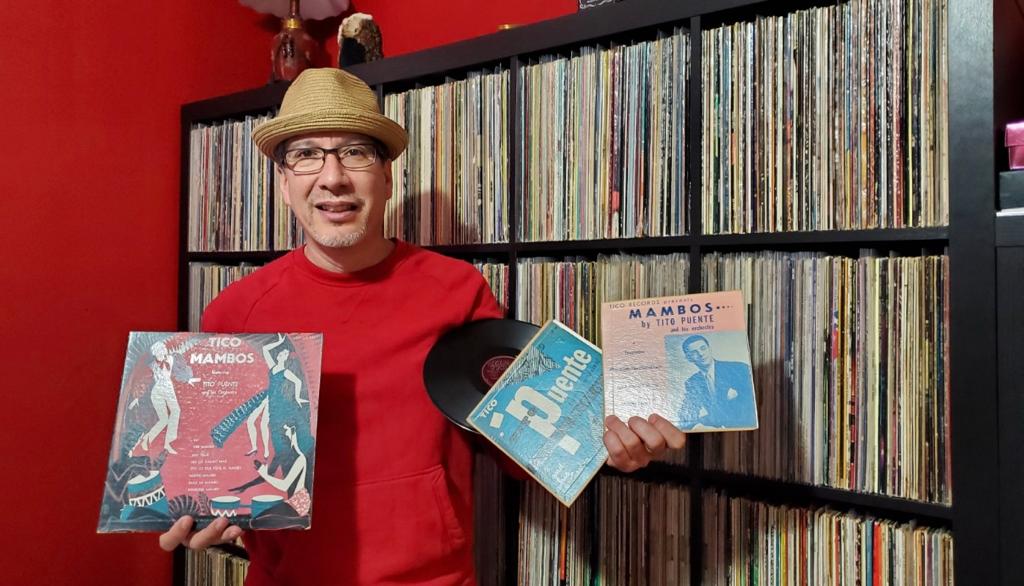
I take this opportunity to greet my good friend Johnny Rodríguez Jr., better known as Johnny “Dandy” Rodríguez, is an American bongo player. He was Tito Puente’s longtime bongo player, and also played with Tito Rodríguez, Ray Barretto, and Alfredo de la Fe. He belonged to various popular bands of the salsa era such as Tico All-Stars, Fania All-Stars, and Typica 73. He is a proud son of El Barrio (Spanish Harlem), New York, and stickball (street baseball) was more interested than music.

Marco Bermúdez - En mi voz
Marco Bermúdez – En mi voz

However, influenced by his father, Johnny, 17, earned the position of playing bongos in the Tito Puente Orchestra. Johnny spent more than 30 years with the orchestra, also working with Tito Rodríguez from 1965 to 1968 and with Ray Barretto from 1970 until the end of 1972. Johnny went on to form Tipica 73, of which he remained a member until 1979. He then returned to the band. Tito’s band, playing alongside him until the time of Tito’s death in May 2000.

Johnny “Dandy” Rodríguez Jr. continues to be a Latin jazz and salsa percussionist. Today he works as a percussionist in different Latin music ensembles, He is unstoppable and is very active with the Latin Jazz Giants (alongside his colleagues and Exclusive LP Artists Jose Madera and George Delgado) and that includes the stars from the original Tito Puente Orchestra. The band plays the famous music from the Palladium days of Tito Puente, Tito Rodríguez, and Machito, and also recorded The Giants Play the Music of the Palladium.

In 2008, Johhny entrusted LP’s Research and Development Department with the design of the John “Dandy” Rodríguez Jr. bongoes from the Legends series. John is proud that these drums, which bear his name, present such a sound and visual characteristics outstanding. Keep going, Johnny!

A few days ago, En Mi Voz, the solo debut of the Ecuadorian singer Marco Bermúdez, was officially launched on the market. This is a very good selection of ten songs, under the master hand of Oscar Hernández, the prestigious and renowned musician who is making his debut as a record producer with Ovation Records.

Pedro Bermudez - Arrasando
Pedro Bermudez – Arrasando

Marco has not saved anything for this premiere. He has met with his colleagues from the “Hispánica del Barrio” and the result could not be better: Jerry Madera, Máximo Rodríguez, Maneco Ruiz, Héctor Colón, Doug Beavers, Reynaldo Jorge, Jeremy Bosch, George Delgado, Luisito Quintero and Jorge González give solvency and flavor to En Mi Voz. The album opens with “Amanecer Contigo”, composed with four hands between Hernández and Bermúdez, where the trumpet solos by Maneco Ruiz and flute by Jeremy Bosch stand out.

Jeremy is also heard with his flute in his fine and heartfelt composition “Canto a mi Mamá” and in “Únicamente tú”, making Marco the second voice. The romantic spirit of the singer of the Spanish Harlem Orchestra and Mambo Legends Orchestra is confirmed in songs like “Solo Basta” and “Tu Regreso”. Oscar’s arrangements guarantee the key melody. Highly recommended this album, it has no waste!

I send my greetings and wishes for a reunion with this excellent salsa singer: Hermenegildo Olivera, or Herman Olivera. Born in Newark, New Jersey, the son of Puerto Rican parents and from an early age linked to Latin music. In the 70s, in the middle of the salsa boom, Herman began his love of singing by listening to the interpretations of Chamaco Ramírez, Héctor Lavoe, Cheo Feliciano and Marvin Santiago, among others. These vocalists were primarily his source of inspiration. When he was just 15 years old, Herman began his career as a salsa interpreter with an orchestra called La Justicia.

Johnny Rodríguez
Johnny Rodríguez

Later he was part of the band La Sónica, where he met his friend and trombonist Jimmy Bosch. After this he spent time with the Caramelo orchestra to later take the most important leap in his career by being part of the Conjunto Libre in 1978, where he left his voice reflected for the first time in the Incredible LP of 1981 under the direction of percussionist Manolo Oquendo and bassist Andy González, where he stands out with the theme Decídete.

In 1990, he was invited to record on the album Salsa Sudada, from the Valdesa Records label of Víctor Raúl Sánchez “Patillas” and with the musical direction of Isidro Infante, sharing vocalization with Mario Muñoz “Papaíto”, Adalberto Santiago, Eladio Peguero “Yayo El Indio” and Pablo Villanueva Branda “Melcochita”; in this work he interprets the songs La Aguja and a tribute to the city of Cali called Valle Plateado de Salsa. Later, it launched an independent project called Herman Olivera y La Exclusiva. Chequea la Mercancía.

Herman Olivera
Herman Olivera

Produced by Fernando Pastrana where the song Me Extraña Araña is one of the most outstanding. For 1997 he participates in the CD of the band Rikoson All Stars, called Evoluciones del Son, where he stands out very well in the romantic theme Aquella Noche. In 1998 he was requested by the piano teacher Eddie Palmieri and together with the vocalist Wichy Camacho they recorded the album El Rumbero del Piano, where he stands out as a singer on the songs Malagueña alerosa and Oiga mi Guaguancó.

That same year he was invited to the recording studios by the trombonist Jimmy Bosch and they released the album titled Soneando Trombón, which contains the hit Otra Oportunidad. Who plays a duet with Frankie Vázquez. On this CD also appears the song Descargarana. That same duo, Olivera and Bosch, meet the following year (1999) and produce Salsa Dura, where Herman shines performing the full Impacto Tendremos. The album also features the participation of singers Frankie “Nene” Morales and Frankie Vázquez. Parallel to this album, the RMM label launches a live CD and DVD titled Eddie Palmieri & Friend’s, where Herman looks excellent in the number Palo pa ’Rumba.

Felix Villalobos
Felix Villalobos

The invitation to tune in to the new Fm / Internet radio station on Live365.com continues: Salsagallery. Good music, interviews with the artists and much more… now with the participation of Felix Villalobos who joins Salsagallery Radio with a segment in which we will be talking about Music.

At the Spanish Harlem Salsa Gallery Museum we are happy to say that we are gradually returning to our activities and we will be opening the gallery sporadically. We do not stop, we continue to work for our music and we will always keep you informed through our social networks. We hope to have more news shortly and that we can return to normal soon.

Publicity
Raymond Stewart
Johnny Cruz
Correspondent
New York

Life and career of Ernie Acevedo

Introduction

This will be a very special edition because we are going to talk about one of the most transcendental figures of Latin music of his time. We are talking about bandleader and percussionist Ernie Acevedo, who has been one of the greatest pillars of the Latin music movement in the United States from the very moment he decided to explore this highly competitive area of arts.

Percussionist Ernie Acevedo recording in the studio

Biography

Ernest ”Ernie” Acevedo was born in New York City and his parents were two Puerto Ricans who were making their living in the United States. His family had deep musical roots, which may be why the young man to devote his life to this wonderful world. This artistic side of the family comes especially from his uncles who played Christian music, with the exception of Jason Youvert. The latter played bass for a few groups throughout his career and one of them was Ray Rodriguez & Duro.

While still very young, little Ernie showed signs of getting great skills with percussion, which made his father decide to take him to play with him and even become a kind of manager for his son and many other young boys with dreams of being artists who entertained parties and celebrations of all kinds in the neighborhood where they lived. This group of boys was called Orquesta Combinación Latina, but it was not long before it would be renamed Sonora Amantes and would have an alignment of instruments totally different from the previous one.

Given that Ernie was always sure of following this path, he chose to prepare as best as possible for it, so he studied at Johnny Colon School and the Brooklyn Conservatory of Music, which contributed enormously to the learing of the musician and would serve him well for what he did next.

All members of Conjunto Imagen

The great beginning of the percussionist’s career was given in the 1970s thanks to his collaboration with the famous bongo player Ralphy Santi, a union that represented a giant leap in the carrer of Ernie. After that, there was an endless list of artists who wanted to work with him such as Héctor Lavoe, Johnny Pacheco, Oscar D’ León, Pete ”El Conde” Rodríguez, Larry Harlow, Daniel Santos, Héctor Casanova and many more.

All of this would be the prelude to the creation of Conjunto Imagen, a group that would be of key importance in the good name of Acevedo as an artist.

Conjunto Imagen

In the year 2021, El Conjunto Imagen was founded on May 21, 1989, starting a legacy impossible to omit in the history of Afro-Caribbean music in the United States, Latin America and the Antilles. The main members of the group were coordinating and agreeing for a while to crystallize this idea that was running through their heads for a long time. Among them were Ernie Acevedo, Jose ”Junior” Rivera, Luis Hernandez, Angelo Gonzalez and many others.

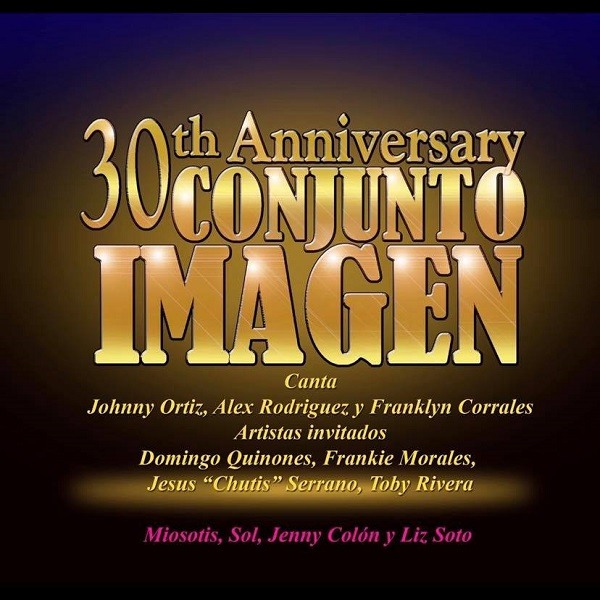
These childhood friends always were clear that they wanted to create a highly successful musical group and go that succeed. In the year 2021, they celebrated their 30th anniversary with their 14th record production entitled ”Los Rumberos”, with which this group proved once more they are one of the most talented Latin groups despite the passage of time. This musical work has great names in the industry such as Juan ”Tiny” Colón in the arrangements, Toby Rivera, Guillermo ”El Pulpo” Colón Jr. and Miguel ”El Zurdo” Rodríguez. Luis Arona Junior Rivera, among others.

Record production to celebrate the 30th anniversary of Conjunto Imagen

Read also: Goodbye to El Canario de Carolina

        By Johnny Cruz, ISM Correspondents, New York, New York City

  • « Go to Previous Page
  • Page 1
  • Interim pages omitted …
  • Page 103
  • Page 104
  • Page 105
  • Page 106
  • Page 107
  • Interim pages omitted …
  • Page 149
  • Go to Next Page »

International Salsa Magazine (ISM) is a monthly publication about Salsa activities around the world, that has been publishing since 2007. It is a world network of volunteers coordinated by ISM Magazine. We are working to strengthen all the events by working together.