• Skip to primary navigation
  • Skip to main content

International Salsa Magazine

  • HOME
  • Previous editions
    • 2026
      • ISM / May 2026
      • ISM / April 2026
      • ISM / March 2026
      • ISM / February 2026
      • ISM / January 2026
    • 2025
      • ISM / December 2025
      • ISM / November 2025
      • ISM / October 2025
      • ISM / September 2025
      • ISM / August 2025
      • ISM / July 2025
      • ISM / June 2025
      • ISM / May2025
      • ISM / April 2025
      • ISM / March 2025
      • ISM / February 2025
      • ISM / January 2025
    • 2024
      • ISM / December 2024
      • ISM / November 2024
      • ISM / October 2024
      • ISM / September 2024
      • ISM / August 2024
      • ISM / July 2024
      • ISM / June 2024
      • ISM / May 2024
      • ISM / April 2024
      • ISM / March 2024
      • ISM / February 2024
      • ISM / January 2024
    • 2023
      • ISM / December 2023
      • ISM / November 2023
      • ISM / October 2023
      • ISM – September 2023
      • ISM – August 2023
      • ISM July 2023
      • ISM Edition June 2023
      • ISM – May 2023
      • ISM April 2023
      • ISM March 2023
      • ISM February 2023
      • ISM January 2023
    • 2022
      • ISM December 2022
      • ISM November 2022
      • ISM October 2022
      • ISM September 2022
      • ISM August 2022
      • ISM July 2022
      • ISM June 2022
      • ISM May 2022
      • ISM February 2022
      • ISM January 2022
    • 2021
      • ISM December 2021
      • ISM November 2021
      • ISM October – 2021
      • ISM September 2021
      • ISM August 2021
      • ISM July 2021
      • ISM May 2021
      • ISM April 2021
      • ISM June 2021
      • ISM March 2021
      • ISM February 2021
      • ISM January 2021
    • 2020
      • ISM December 2020
      • ISM November 2020
      • ISM October 2020
      • ISM September 2020
      • ISM August 2020
      • ISM July 2020
      • ISM June 2020
      • ISM May 2020
      • ISM April 2020
      • ISM March 2020
      • ISM February 2020
      • ISM January 2020
    • 2019
      • ISM December 2019
      • ISM November 2019
      • ISM October 2019
      • ISM Septembre 2019
      • ISM August 2019
      • ISM July 2019
      • ISM June 2019
    • 2016
      • ISM December 2016
  • Spanish
  • Download Salsa App
    • Android
    • Apple

Search Results for: live music

Cache Live Music puts Miami to dance to traditional Latin music

Roland Cache graced this edition with his presence to tell us about his beginnings, the subsequent creation of his band Cache Live Music, and his current career. The American of Cuban descent honors his roots with the music he and his collaborators play to delight their fans at any event they are hired, indicating the pride he feels in representing his parents’ country and how passionate he is about his craft.

Roland shared many interesting details about his musical life, and we are more than happy to share them with our readers in the following lines.
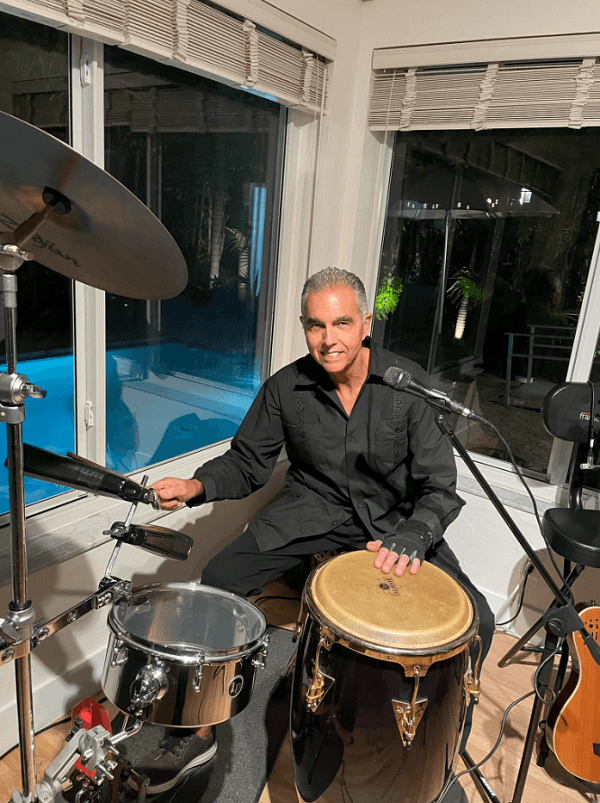
Roland Cache playing
Roland Cache playing drums live at an event

Roland’s musical beginnings as a teenager

As a child, Roland lived in Elizabeth, New Jersey, where some high school friends convinced him to play drums with them. Their favorite genre was the rock of the day, which was the 1960s. A few years later, specifically in 1973, another friend took him to a salsa concert at Madison Square Garden, and he liked what he heard so much that he became more involved in Latin music and left American music aside. 

Seeing great artists such as Tito Puente, Ray Barretto, and other artists of Puerto Rican descent, he learned to play timbales, tumbadora, and bongos, which allows him to play a combination of conga, timbales, and clave at the same time. 

Orchestras prior to Cache Live Music

Before creating his own band, Roland was part of other projects that were training him for what was to come in his career later. One of them was a band from New Jersey, whose members formed La Charanga Casino, which became very popular in that city.

Some time later, Roland could not play for a while, so he has been throwing himself into selling cars and other area businesses. Then, in 1998, he returned to music and created an American band that played rock and jazz with a touch of Latin music.
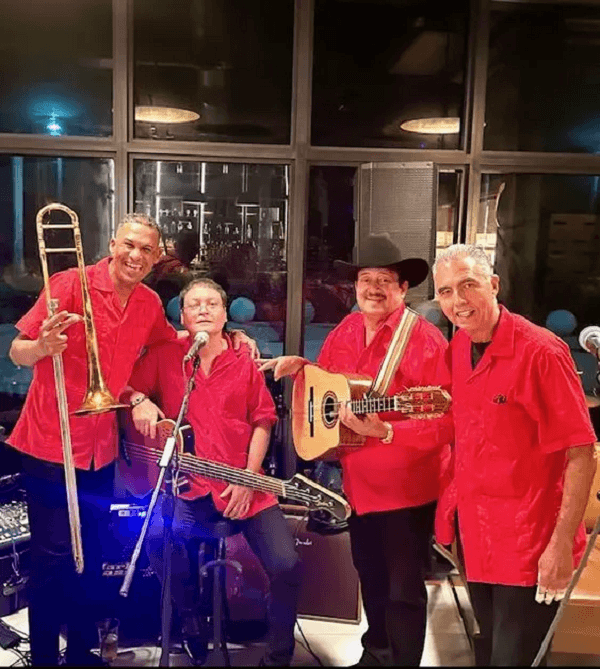
Roland Cache and the rest of the band
Roland Cache and the rest of Cache Live Music

Creation of Cache Live Music 

Eventually, he left the American band and founded a Latin band called Cache Live Music with a group of musicians, some of whom remain alongside Roland to this day. He met most of them through another musician friend who introduced them so he was knowing other artists who joined his project.

Cache Live Music was officially started in 1999, and according to its founder, the hardest thing about keeping a band like this together for so long was the search of opportunities in clubs and other kinds of places. However, Roland says that his experience as a salesman and negotiator has helped him a lot in winning contracts and the best conditions for him and his bandmates.

Current status of Cache Live Music

Today, the core of the band consists are three of its members: the guitarist, the bassist, and Roland, who is a multi-instrumentalist. More recently, Cache included a flutist, a trombonist, and sometimes a singer. This is how, depending on the requirements for a particular event, the group’s leader decides which members and instruments to include for every occasion in order to offer something different.

Cache at an Amazon event
Cache Live Music at an Amazon corporate event

Regarding the repertoire, they only perform covers, but they ensure that each and every song has their personal touch so that they resemble as little as possible to the original versions.

Anyone who wants to hire Cache Live Music can do so through its profile on The Bash by making a deposit and sending a contract to agree on the conditions of the event. However, it is important to note that they are already booked for December and January with corporate parties and weddings, for which we wish them every possible success because they already have the talent.

Tomas Pedro Regalado and Roland
Former Mayor of Miami Tomas Pedro Regalado and Roland Cache

Read also: The Williamsburg Salsa Orchestra: electrifying fusion and salsa flavored with indie rock
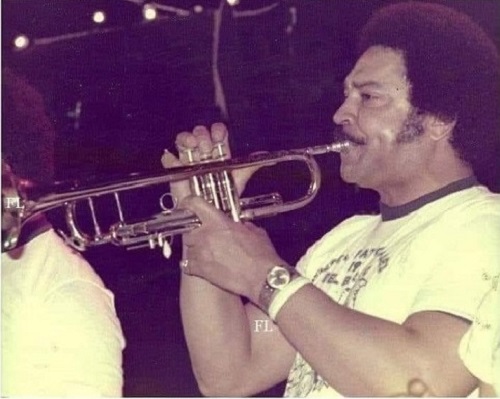
Roberto Rodríguez was a Cuban trumpet player and composer, author of Ray Barreto’s hit song “Que viva la Música” (Long Live Music)

Roberto Reimundo Rodríguez (Cienfuegos, January 23, 1936 – April 18, 1988), was a Cuban trumpeter and composer, who belonged to Ray Barreto’s orchestra, which he would later leave to belong to Fania All-Stars, as lead trumpet player.

Roberto is the author of Ray Barreto’s hit “Que viva la música”.

Roberto was born in 1938, in Cienfuegos (Cuba). He began his musical career at the age of 12, in his native province; cradle of the world famous Orquesta Aragón.


Roberto Rodríguez
Roberto Rodríguez

From an early age he participated in “Las Comparsas de Cuba” and with the orchestra “La Unión Fraternal de Cienfuegos”.

In 1955, he emigrated to the United States and in 1957 he married Nancy Zayas, with whom he had three sons: Roberto Jr., William and Richard.

While growing as an artist, Roberto co-founded the orchestra “Los Jóvenes Estrellas de Cuba” with his long-time friend Ernie Stairs. He later moved on to Wilfredo Figueroa’s orchestra and “Ritmo Swing”.

In 1965, Roberto was recommended to Ray Barreto by Eddie Martinez. Eddie was a pianist for both the TataVazquez and Ray Barretto orchestras.

After listening to Roberto, Ray Barretto recognized that he was in contract with Vivar, one of his former colleagues and musicians, and brought him on board. Roberto remained in Ray’s orchestra for 11 years.

His performance as first trumpet soloist was extraordinary. While in Ray’s orchestra, Roberto composed several famous songs such as: “Yo Soy La Candela”, “Fuego y Pa’Lante”, “Invitación al Son”, “Cienfuegos, Perla del Sur”, “Se Traba”, “El Tiempo lo Dirá”, “O’Elefante”, and the worldwide hit: “Que Viva la Música”.

Roberto Rodríguez
Que viva la música

In 1972, Roberto became a member of the Fania All-Stars as first trumpet and soloist. The documentary “Our Latin Thing” launched Roberto along with the other members of the All-Stars to international fame.

Our Latin Thing

On August 26, 1971 New York City gave birth to a sound that would change Latin music forever. That night at the renowned Cheetah nightclub, the Fania All Stars took the stage with their unique sound that echoed across all borders and reached every country. Fania Records re-releases “Our Latin Thing” on DVD, the film that sparked the salsa movement of the seventies.

Roberto Rodríguez
Our Latin Thing (Nuestra Cosa)

From the concert came a double LP entitled “Live At The Cheetah” and the historic film “Our Latin Thing”. Its director, Leon Gast, documented the events at the Cheetah with the addition of footage of the musicians in the recording studio and scenes of New York’s Spanish Harlem.

The 40th anniversary edition of “Our Latin Thing” includes a DVD with the remastered film, and two CDs with the music from the film and some additional tracks, which can be purchased on the label’s official website.

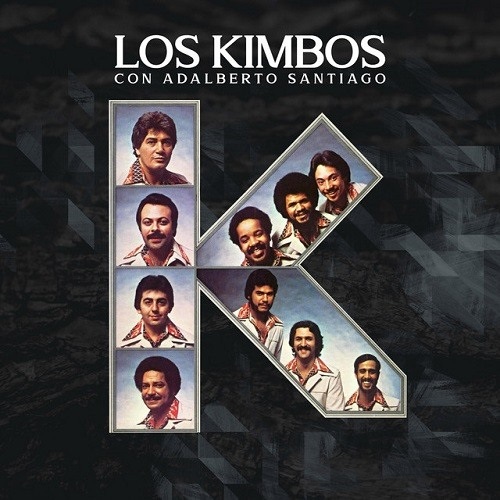
In 1975, Ray decided to take a turn towards a new musical facet and Roberto became part of the group “Los Kimbos”.

Roberto Rodríguez
Los Kimbos

Two years later, in 1977, Roberto joined the charanga band “Orquesta Broadway”. In this group he not only excelled as a trumpet soloist but also as a vocalist. Here he composed new hits, including: “No Se Va a Poder” and “Como Nueva York no Hay”.

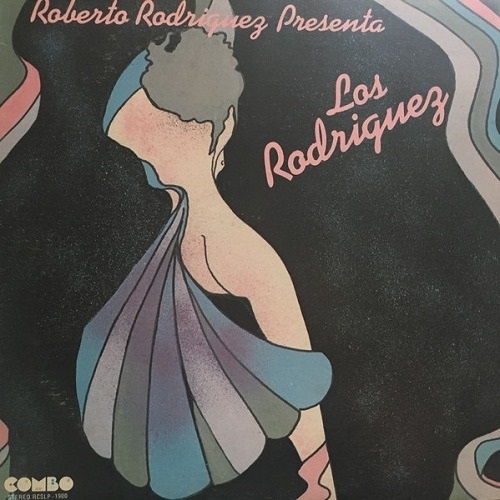
In 1982, Roberto decided to assist his sons in their desire to continue their musical journey and produced the album: “Roberto Rodríguez Presenta a Los Rodríguez”, under the “Combo Records” label.

Roberto Rodrígue
Roberto Rodríguez Presenta a Los Rodríguez

In 1983, Roberto joined the “Los Rodriguez” Orchestra, to perform with his sons Roberto Jr (trumpet player) and Willie (bass player).

His health deteriorated in early 1988, and he finally passed away in April of that year, victim of skin cancer. His son Roberto Rodriguez Jr. followed in his footsteps and has excelled in salsa orchestras in New York.

 Roberto Rodríguez was a Cuban trumpet player and composer

Read Also: Miguelito Cuní recognized among the best soneros of Cuba


Live music and other news in the SF Bay Area

Renowned timbalero, composer, bandleader and vocalist Mario Solomon is the leader of one of the hottest groups performing modern Cuban Dance music in the US: Mario Y Su Timbeko.  Although Mario moved from Oakland to Austin, Texas during the pandemic, he hasn’t stopped his original music from coming out.  His latest single “Sola Te Quedaste” follows three singles that he has released during the pandemic: “Llego Lo Que Te Esperabas”, “Lo Mas Grande” and “Nadie Sabe Nada”.  These songs are to be released as an EP in the first quarter of this year.  Mario Y Su Timbeko consisting of bassist Ayla Davila, guitarist David Lechuga, vocalist and keyboardist Jordan Wilson, pianist and recording producer Jason Moen and conguero Carlitos Medrano will be performing a special concert “Timbeko By The Bay at La Peña Cultural Center, 3105 Shattuck Avenue in Berkeley on Saturday, February 12 starting at 8 pm.

Mario explained that the show is like taking a trip with the history of Cuban Music featuring traditional rhythms of Danzon, Cha Cha Cha, Boleros and Changui which will be the focus of the first set.  The second set will feature original music with selections from the new EP.  Many Bay Area-Northern California dancers and listeners alike are big fans of Timbeko’s infectious timba sound which contains elements of RnB, Gospel and Funk.  Mario hopes to have copies of the EP ready to sell at the dance/concert.  There will also be a dance after party with DJ Antonio included in the admission to the show.  For more information on the concert, visit lapena.org.  For more information on Mario Y Su Timbeko, check out their page on Facebook and Instagram.

Mario Mayito Salomón

Montuno Productions will be presenting a Valentine’s Day Concert as part of their Bay Area Latin Jazz Series at Oakland’s fine art deco California Ballroom located on 1736 Franklin Street.  This triple billed show will feature the debut of Cuban jazz vocalist Jessy Diaz accompanied by 4 time Grammy award winner Oscar Hernandez of Spanish Harlem Orchestra, Edgardo Cambon and Candela and ending the show with be the MP All Star Salsa Project directed by pianist Israel “Izzy” Tannenbaum (formerly of Grupo Niche).  I will be your Master of Ceremonies and DJ for the entire evening.  Cuban food will be available for hungry patrons at the concert/dance.  For more ticket information on this dance/concert, you can visit montunoproductions.com

Major cancellations and postponements continue due to the latest Omicron variant of the Coronavirus pandemic.  The Victor Manuelle concert/dance scheduled for the Hyatt Regency in Burlingame has been postponed until Saturday, April 9th per show producers JC Coral and Bosco Vega.  Cuban born Brother-virtuosos violinist Ilmar and pianist Aldo Lopez-Gavilàn protagonists of the film documentary Los Hermanos/The Brothers cancelled their scheduled January 23rd concert at U.C. Berkeley’s Zellerbach Auditorium.  There is no rescheduled date for that show.

On the local club front, Oakland’s own Fresquecito Timba DJ monthly at La Furia Chalaca near Jack London Square produced by DJ Walt Digz was cancelled as well at the beginning of January but the event will be back in February.  The Ramp in San Francisco has temporarily suspended their live and DJ music shows per order of the San Francisco Port.  The Ramp is hoping to resume their live music dates in March.  Other venues such as Space 550 just didn’t reopen in January but will reopen on February 11th with Julio Bravo y Salsabor headlining their Valentine’s Day weekend party.  You may want to double check that the venue is still open and that live music is still going to be presented on the night that you are planning to go out.

This is Julio
Julio Bravo

A scene of many a popular, crowded club night, Lukas on West Grand and Broadway in Oakland the home of Thursday Cuban nights will close at the end of January.  Ahi Na Ma, the production company in charge of the popular Cuban dance night featuring DJ’s Leydis and Antonio have announced that their weekly event will move to a new location soon to be announced.

Ex El Gran Combo vocalist Charlie Aponte will be visiting the SF Bay Area on Friday, April 1 at Roccapulco, 3140 Mission St. in San Francisco.  Jaffe Events will be presenting the show.  Look for Aponte to feature original material from his recordings as well as the many hit songs he recorded with El Gran Combo during his tenure with this great musical institution.  It promises to be a smokin’ show!!

The Seahorse in Sausalito continues to buck the trend and continues to present live music on their outdoors patio stage on Saturday and Sunday evenings starting around 5 pm.  They are featuring Orquesta Taino Feb 6, Karabali with Karl Perazo of Santana and Michael Spiro Feb 12, Louie Romero & Mazacote Feb 13, Salsa Caliente w/Gary Flores Feb 19, Edgardo Cambon & Candela Feb 20 and Braulio Barrera’s Somos El Son on Feb 27th.  KPOO/KPFA DJ Jose Ruiz is the house DJ behind the decks.

Another venue that has stayed open for business in spite of this tough COVID time is the Cigar Bar, 850 Montgomery St. in San Francisco.  You can still enjoy good drinks, fine food and a selection of cigars for your enjoyment.  They have a full schedule on Fridays and Saturdays for February which includes Somos El Son Feb. 4, N’Rumba Feb. 5, Manteca,  Feb. 11, Josh Jones Latin Jazz Ensemble, Feb. 12, La Clave Del Blanco, Feb. 18, Edgardo Cambon y Candela Feb. 19, The Latin Rhythm Boys Feb. 25 and Pacho Y Orquesta Evolution on Feb. 26.  Schedule subject to change due to COVID so check their calendar to confirm acts.  Visit their website at www.cigarbarandgrill.com

This is Edgardo Cambón
Edgardo Cambón

BY LUIS MEDINA, PRODUCER AND HOST OF CON SABOR ON KPFA 94.1 FM AND SABIDURIA CON TUMBAO ON WORLD SALSA RADIO.COM

Long live music! Repeat after me: “Long live the musicians so they can keep making it”. And I add: “Long live SALSA”.

With a full tank, Transition by Tito Rodriguez, Jr.

Bella Martinez, International Salsa Magazine by the hand of www.SalsaGoogle.com presents and highly recommends this formidable and exquisite production of Tito Rodriguez Jr. The firstborn of the unforgettable Pablo “Tito” Rodriguez.

Long live music!  Repeat after me: “Long live the musicians so they can keep making it”.  And I add: “Long live SALSA”.

As soon as I got my hands on it I listened to it, many times.  Not that I needed an explanation, but I could not stop listening to it and go off to take care of my duties.

So much so that I had to send the radio station of the Puerto Rican salsa singer on vacation for a few days until I finished writing the note that had chosen to write itself.  The CD cover – showing the photo of Tito Rodriguez, Jr. settled on my desk for several weeks as if it belonged to the surface in front of which I sit every day.  Until one fine day I said to myself: Today I hope to be able to understand the instrumental pairing of everything that happens in this piece.

Here I go…

So much so that I had to send the radio station of the Puerto Rican salsa singer on vacation for a few days until I finished writing the note that had chosen to write itself.
With a full tank, Transition (2017) by Tito Rodriguez, Jr.

In the first cut (Bailando con la más fea) there were several bars after the first minute, that transported me to my days of partying in New York during the bravo launch of that orchestra that I haven’t heard for a long time.

Of course, while that orchestra sounded bigger than it was, this one I’m examining today – Tito Rodriguez, Jr.’s – sounds bigger than it is and on steroids; among other reasons because the baritone enhances the personality of this serious sounding arrangement, albeit hand in hand with a jocular lyric.

During the second theme (El vive bien) we experience a very Cuban theme of those that sandungueando the waists of those who follow the leather beats to’ fuete.

Shortly before entering the third minute, the interplay of saxophones and twists in which the baritone and bongo play suggest to me that this song shares the flavorfulness of the pregón that says “Salsa ahí na’ma’ como me gusta a mí…” from one of the tracks on Gilberto Santa Rosa’s production Colegas (2020).  In fact, Gilberto collaborates in this production, specifically in the song Volver.

In the third cut (Ándate nena), the trumpet solo stands out within an arrangement for large orchestra and allows the performance to be sprinkled with conga, marking the nostalgia of the memory of those geniuses that the traditional big bands left us as a legacy.  The saxophones sound like those of the Palladium orchestras.

The 4th track (Volver) is an arrangement where the influence of Bobby Valentín’s inventions is evident.  The track starts like the romantic arrangements of the 1990’s, although with a heavy and dominant piano, prior to the alto saxophone playing that opens the way for the rest of the saxophones in perfect synchrony with the conga, timbal and bongo.  This cut features Gilberto Santa Rosa, although the song didn’t need Santa Rosa to shine.

Tito Rodriguez, Jr. gave way to the most prolific salsa singer in commercial salsa to perform a song that was already the polished diamond of this collection.

Tito Rodriguez, Jr. Timbalero, Arranger, Composer, Producer and Bandleader, Tito Rodriguez, Jr is one of the leading

I found it to be a classic big band arrangement with an avant-garde touch where the saxophones give way to a touch of a musical arrangement that wants to be a sonorous orchestra.  However, the perfection of the thing doesn’t let the sonorous touch tuck in the modern big band concept.  Well, I understand myself.  “Afinca y echa pa’ lante…” said Santa Rosa.

In the fifth track (Con el tanque lleno) the orchestra starts off powerful in sound and playfulness.  The song is about a “convertible, colorado y con el tanque lleno”.  The pregón reads: “Soy soltero y con el tranque lleno” (I’m single and with a full tank).  I don’t think you will be surprised when I confess that this is my favorite song in this collection.  The lyrics are funny, but the arrangement is a smashing one.

The conga’s correspondence with the melodic trombone solo by Alex Zapata’s blows sets the stage for a masterful closing by the saxophone ensemble under the leadership of Ismael Vergara’s baritone.

The sixth track (No vale la pena) is evidence of the chameleonic capacity of Sammy Gonzalez, Jr.’s voice, which can be used to proclaim, to sound, to become the most romantic rogativo in the middle of a heavy song, all within a romantic lyric full of feeling.  Well, rarely does a man play the “victim” of a sentimental breakup.

This is one of those few times, a situation that makes the pregones both jocular and nostalgic at the same time.  The contradiction of suffering and laughing is also visited at the end of the mambo, which makes the theme one of general interest in addition to the musical interest it awakens.

The seventh track (Pa ti morena) is a very brave Cuban son.  I don’t know if this son is played in that unlikely combination of the style of Tito Puente, Machito and Tito Rodriguez knowingly or if it was pure chance.  I felt like I was reaching for heaven while listening to Sammy Gonzalez, Jr.’s vocal performance when the alto saxophone solo brought me back to reality.

The beginning of cut #8 (Para los bailadores) marks the change of tempo to an aggressive one where the bongo is the one telling where the baritone is going. When the vocalist suggests to Tito Rodriguez, Jr. to enter the mambo with an anticipatory “y nos fuimos”, no one doubts the greatness of the orchestra’s sound.

The timbal solo by Tito Rodríguez, Jr. declines when the performer requests “mambo otra vez”.  It is in this track that the distinctive sound of this orchestra is most noticeable, one inspired by the traditional big bands, although influenced by the advanced currents.  In short, this is real salsa and it is salsa to enjoy.  As promised in the lyrics, this song brings to the arena a very cool rhythm that is not to be confused with charanga.

After I finished writing this note, having already listened to the complete production, I was tempted to ask Tito for an audience and ask him “a couple of questions” according to me.  That brief call went on and on and I asked him everything I could, taking advantage of the nobility of the timbalero heir to the musicality and name of one of our greatest musical glories….

During the “cañona” that I wanted to call an organic interview, Tito confirmed that Transición is his fourth album and the first to be titled in Spanish.  Let’s go well, Tito.

This album was preceded by Curious? (1978), which featured José Alberto “El Canario” and Rubén Blades; Eclipse (1995) and The Big Three Palladium Orchestra live at the Blue Note (2004).

Why the title Transición?  I’ll tell you about it next time.  Obviously, Tito deserves another chapter in my salsa journey.  Talk to you soon and I’ll tell you about his 2009 adventure when he was in Puerto Rico fulfilling one of his musical dreams.

Tito Rodríguez, Jr. Transición

By: Bella Martinez “La Escritora Irreverente de La Salsa”

Puerto Rico

As soon as I got my hands on this album, I listened to it many times. Not that I owed an explanation, but I couldn't stop listening to it and go off to take care of my duties. So much so that I had to send the radio station of the Puerto Rican salsa singer on vacation for a few days until I finished writing the note that I had chosen to write itself.
Bella Martinez “The Irreverent Salsa Writer”.

WebSite: Bella Martinez

Home

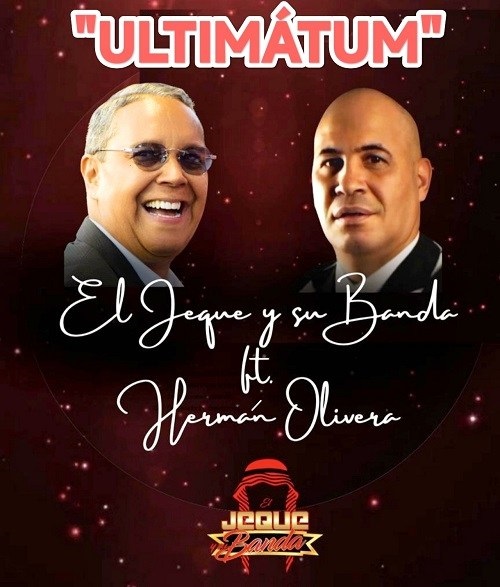
The Jeque and his Band present: “Ultimatum”, a musical gem with Hermán Olivera

A masterful fusion that redefines Guaguancó and Cha-Cha, celebrating the group’s tenth anniversary.

El Jeque y su Banda is a salsa ensemble based in Venezuela.

Under the direction of its founder and general manager, Lic. Ángel Martínez “El Jeque,” and with the impeccable musical direction, arrangements, and piano work of the renowned William “Willie” Melo, the band has established itself as a benchmark in the genre.

El Jeque y su Banda presenta “Ultimátum”, una joya musical junto a Hermán Olivera

Approaching ten years of professional trajectory, maintaining their momentum through persistence, passion, and dedication to their craft, the group celebrates this anniversary with the release of their fourth studio production: Evolución…El Jeque y sus Estrellas.

The Launch: “Ultimátum”

The purpose of this release is to announce the launch of their second promotional single, a piece crafted for the true music connoisseur: “Ultimátum.”

This musical gem features a collaboration with a legend of the genre, a world-renowned sonero and vocalist: Hermenegildo Olivera Suárez, globally known as “Hermán Olivera, El Sonero del Siglo XXI.”

Herman Olivera El Sonero del Siglo XII y Dj. Augusto Felibert

History and Evolution

This romantic-style track was originally recorded in 1981 by the great Puerto Rican interpreter Felipe “La Voz” Rodríguez.

The song was written by the legendary Puerto Rican composer Luz Celenia Tirado, who was the first woman recognized in the island’s challenging guild of troubadours and also performed on that original production.

On this occasion, El Jeque y su Banda takes the work in a new direction, transforming it into an aggressive Guaguancó fused with an elegant Cha-Cha.

The concept for this version was a creative endeavor led by Hermán Olivera, who defined the essence and intent of the track.

Ángel Martínez “El Jeque” y Dj. Augusto Felibertt

Subsequently, Luis Alberto and Willie Melo shaped the project, solidifying the final musical structure under the pen and direction of William “Willie” Melo, with the co-production of Luis Alberto “Redlouis” (Manager, Producer & Booking for Hermán Olivera).

Musical Virtuosity

It is remarkable how these music aficionados manage to mesh Guaguancó and Cha-Cha originally fused with a bolero with a versatility that preserves the essence, cadence, and appeal of the piece.

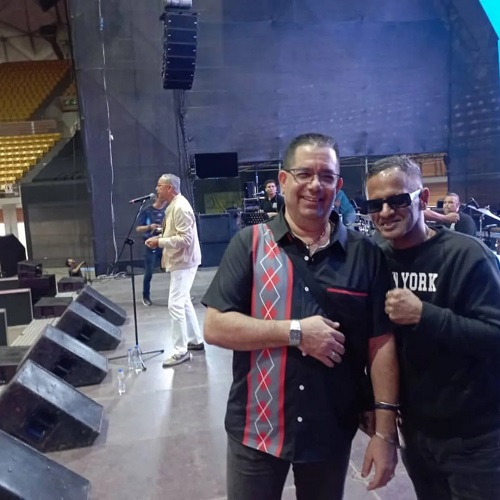
Herman Olivera Soneando Luis Rojas y Augusto Felibertt prueba de Sonido en el marco del evento Salsa Bajo la Cúpula Poliedro de Caracas.

Willie Melo masterfully integrates Hermán Olivera’s characteristic sound, marked by the influences of Manny Oquendo’s Conjunto Libre and the maestro Eddie Palmieri.

The arrangement, loaded with dissonant notes and power, softens its impact with the magic of the Cha-Cha, allowing Hermán to display his artistry in the soneo.

This interplay between the irreverent, the melodic, and the elegant makes “Ultimátum” a mandatory addition to any quality music lover’s playlist.

Production Credits

The excellence of this single is made possible by the participation of these great Venezuelan musicians:

  • Musicians: Yomar “Caballo” Méndez, Julito Antillano, Luis Ruíz, Joel “Pajarraco” Rivas, Frank Haslam, and Willie Melo.

  • Backing Vocals (Cha-Cha): Maestro Nino Segarra, accompanied by Rodrigo Mendoza and Wilmer Lozano.

  • Recording (Lead and Backing Vocals): Nino Segarra Studios (Puerto Rico).

  • Musical Recording, Mixing, and Mastering: Dale Cerebro Estudio, led by engineer Emmanuel “Cerebro” Romero.

Everything stated above summarizes a work with all the necessary elements to become a radio hit and, above all, an essential piece in your music library.

El Jeque y su Banda
El Jeque y su Banda

Sincerely,

Lic. Ángel Martínez “El Jeque”

Collaborations:

Luis Alberto “Redlouis” (Manager, Producer & Booking for Hermán Olivera)

Dj. Augusto Felibertt

Also Read: Hermán Olivera “El Sonero del Siglo XXI”

  • Page 1
  • Page 2
  • Page 3
  • Interim pages omitted …
  • Page 149
  • Go to Next Page »

International Salsa Magazine (ISM) is a monthly publication about Salsa activities around the world, that has been publishing since 2007. It is a world network of volunteers coordinated by ISM Magazine. We are working to strengthen all the events by working together.