• Skip to primary navigation
  • Skip to main content

International Salsa Magazine

  • HOME
  • Previous editions
    • 2026
      • ISM / May 2026
      • ISM / April 2026
      • ISM / March 2026
      • ISM / February 2026
      • ISM / January 2026
    • 2025
      • ISM / December 2025
      • ISM / November 2025
      • ISM / October 2025
      • ISM / September 2025
      • ISM / August 2025
      • ISM / July 2025
      • ISM / June 2025
      • ISM / May2025
      • ISM / April 2025
      • ISM / March 2025
      • ISM / February 2025
      • ISM / January 2025
    • 2024
      • ISM / December 2024
      • ISM / November 2024
      • ISM / October 2024
      • ISM / September 2024
      • ISM / August 2024
      • ISM / July 2024
      • ISM / June 2024
      • ISM / May 2024
      • ISM / April 2024
      • ISM / March 2024
      • ISM / February 2024
      • ISM / January 2024
    • 2023
      • ISM / December 2023
      • ISM / November 2023
      • ISM / October 2023
      • ISM – September 2023
      • ISM – August 2023
      • ISM July 2023
      • ISM Edition June 2023
      • ISM – May 2023
      • ISM April 2023
      • ISM March 2023
      • ISM February 2023
      • ISM January 2023
    • 2022
      • ISM December 2022
      • ISM November 2022
      • ISM October 2022
      • ISM September 2022
      • ISM August 2022
      • ISM July 2022
      • ISM June 2022
      • ISM May 2022
      • ISM February 2022
      • ISM January 2022
    • 2021
      • ISM December 2021
      • ISM November 2021
      • ISM October – 2021
      • ISM September 2021
      • ISM August 2021
      • ISM July 2021
      • ISM May 2021
      • ISM April 2021
      • ISM June 2021
      • ISM March 2021
      • ISM February 2021
      • ISM January 2021
    • 2020
      • ISM December 2020
      • ISM November 2020
      • ISM October 2020
      • ISM September 2020
      • ISM August 2020
      • ISM July 2020
      • ISM June 2020
      • ISM May 2020
      • ISM April 2020
      • ISM March 2020
      • ISM February 2020
      • ISM January 2020
    • 2019
      • ISM December 2019
      • ISM November 2019
      • ISM October 2019
      • ISM Septembre 2019
      • ISM August 2019
      • ISM July 2019
      • ISM June 2019
    • 2016
      • ISM December 2016
  • Spanish
  • Download Salsa App
    • Android
    • Apple

Search Results for: live music

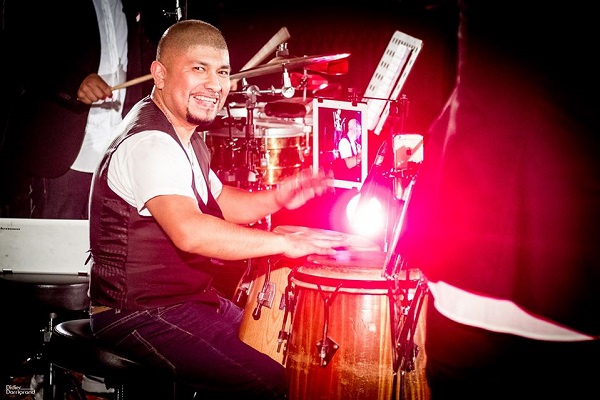
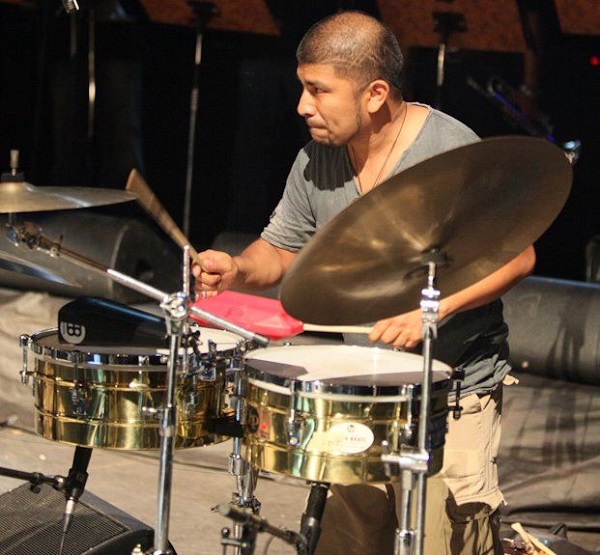
From Peru and based in France we have Wálter Antonio Rebatta Hinostroza is a brand new and spectacular percussionist.

We are honored to present in this new release, one of the most outstanding figures of Latin music, representing the brother country of Peru, who has put the name of the musicians born in Inca lands very high in the world.

With you, directly from France, we have as a special guest Wálter Antonio Rebatta Hinostroza, a brand new and spectacular percussionist, who was born on September 14, 1973, in Bella Vista, Callao, Peru, being artistically known as “El Chato”.

Welcome Wálter to Salsa Escrita “La Columna Salsera de Barquisimeto, Venezuela”. It is a great pleasure to have you as a special guest in International Salsa Magazine, www.SalsaGoogle.com.
Thank you very much to you, my friend, Professor Carlos, for the invitation to your well read and recognized column and I take this opportunity to give a sincere greeting to all Venezuelans who are like my brothers.

How did you start in music? Well, teacher in my neighborhood called Ventanilla, in Peru, I grew up and since I was a child I breathed musical air, where at the age of 6 years old I was already playing “El Cajon”, traditional Peruvian Creole instrument, under the tutelage of my older brother Kike Rebatta, who took me later to learn other percussion instruments and prepare me with music theory, and then enter the music school of the renowned teacher Edelmi Chavez, and thus join the ranks of the most renowned orchestras in my country, such as: La Iniciativa, Orquesta la Grande, Banana Latin Jazz, among others.

Wálter, which international orchestras and artists have you accompanied? I have accompanied and worked with “Los Hermanos Colón” from Puerto Rico and among many groups, I have had the honor of being on stage with my Venezuelan brothers, Hildemaro “El Sonero del Amor”, with whom I have a great friendship, as well as with the master timbalero Alfredo Villamizar, from whom I have learned a lot and from whom I must thank through his column Salsa Escrita. “Chato”, you are currently based in the French city of Grenoble and we would like to know how is the salsa movement, especially in Europe. In fact, professor, in 1995, I came to Europe with the “Orquesta Salsa Perú” and I met Mr. Rodolfo Guerra, with whom a great friendship was born and I became part of the “Orquesta Sincopa Latina”, directed by him, being present in his productions: Salsa que te pasa, Demasiado corazón, Mi bachata, Puerto Rico, Todo, Escándalo, Mi silencio, Mi toque, Habla conmigo and Azafata. Wálter, I have heard that you have accompanied great salsa artists in their presentations, tell me who? I have had the honor of accompanying the late Tito Gómez, Willie González, Luisito Carrión and the great Venezuelan sonero Orlando José Castillo “Watussi”.

Also, let me tell you professor, that I have worked in the Italian television Media Set, in the very popular program “Notte Vola”, also in 2002, I participated in the Tour of the Queen of Salsa, Celia Cruz, along with the orchestra of the prestigious world famous violinist Alfredo de La Fe.

Likewise, my friend Carlos, in 2004, I performed in numerous events with Latin jazz groups, among them “El Royal Cuba”, of the Cuban musician and singer Eduardo Céspedes.
In 2007, I participated in the prestigious and famous festival of San Remo with the singer Daniele Silvestri, with whom I have recorded in his productions. In 2009, I participated in the Italian tour “Terromotati Dil Abruzzo”, conducted by the famous singer Laura Pausini and later that same year I participated again in a tour in the United States for charity with Pausini again.

Excellent Wálter, and what can you tell us about the orchestra you are currently working with and what are your future projects? Professor Carlos, at present I am an official musician of the renowned orchestra “Mercadonegro” and in relation to my projects, is to form my own group and perhaps dabble in bachata, but without leaving aside the salsa, since living in Europe I have met many bachateros. And something very important, my friend Colmenárez, I am also working on the project of my Venezuelan compadre, the musician Edwin Sanz, whom I would like you to interview at some point.

Very good Wálter, congratulations for your career, what are your contacts on digital platforms?  My Facebook is: Wálter Antonio Rebatta Hinostroza and my whatsapp: +41 77 5122633.

We want to wish you the best on behalf of Salsa Escrita “La Columna Salsera de Barquisimeto” and that you continue to put the name of Peru on high in all the stages of the world.

Thank you a thousand times, Professor Carlos Colmenárez, for taking me into account and thus make my career known and offer my greetings, thanks and respect to all the salseros of the world through International Salsa Magazine, www.SalsaGoogle.com and long live salsa, Peru and Venezuela, united forever…!

Cuban singer Daymé Arocena and her pride of being Afrocuban

This is our conversation

Here we are with Cuban artist Daymé Arocena who lives now in Canada. How are you, Daymé? Nice to meet you and great to have you here today.

Hello, nice to meet you. Thank you very much for the invitation. It is my pleasure to be here talking to you.

I understand that your musical career started at the age of eight. What made you start walking this path? What was the experience that made you make that decision?

I never made the decision to become a musician. I think it was part of the package. I never said that this is what I wanted to do because I’ve always done it. From the age of eight, my parents began taking me to music lessons and preparing me to came to the art and music school and the conservatory of music. I started singing with the choir in the community of 10 de octubre, where I came from. That’s how I started performing and getting up on stage as a soloist of a choir.

Daymé Arocena was born in Havana, Cuba

Considering that you come from a musical family and that music was always present at home, I imagine that also influenced your interest in making a career of it.

My family is profoundly musical, but they are not professional musicians. My dad is a music lover, but he is not a musician. My mother is a health care worker, qualified as a child cardiovascular surgeon. Actually, these are people who have a very nice sensibility for music, but they are not professionally dedicated to it.

I grew up in an intense environment. My house had many people; when I was born, there were already 22 people living at home, but some of them found more comfortable spaces to move and we became a family of 14. I was born in the 90’s, which was when the big crisis occurred and big power cuts were more frequent. There were electricitiy for very few moments during the day, so we couldn’t listen to the radio or TV. Then, my uncles and cousins kept singing, so I grew up watching the family sing and dance. In fact, several of my cousins today are folk musicians who went on to play in various traditional musical groups. It was a deeply spontaneous issue. I saw people enjoying and trying to alleviate the sufferings and shortages they were experiencing.

I imagine that musical and artistical growth in this context was very difficult. What challenges did you face in Cuba in becoming the artist you are today?

The mere fact of being born in Cuba is a challenge, but I had to face things beyond the fact that I was born on an island ruled by a dictatorial regime and all that that means. There was a lot of deep racism and a way to slyly to deal with social classes. For all these years, I have tried to purge my energy of resentment and pain caused by the situation and turn all these feelings into light and creativity. In my case, A lot of things happened like feeling uncomfortable in my own skin and not knowing how to deal with my skin color, my hair and my race. Today, I am deeply proud of my blackness and defend it to the death, but I went through a very hard and aggressive process before that.

The young and not so young prople have to know that you can make art and music through your own essence without having to please the eyes of a few.

So you would say that those things that were an obstacle are now part of your cover letter.

Totally. And proudly, too.

Daymé is deeply proud of her blackness

After leaving Cuba

When you left Cuba, what kind of support did you receive? What was the hardest moment?

Although I’ve spent years touring and working for years, I made the decision to leave Cuba a couple of years ago. I received a lot of international support that made my music visible, but it started playing long before I left my country. In Cuba, there is a control mechanism for artists consisting on a permit issued by the minister of culture to be able to practice that profession.

You can graduate from art school with full honors in the world, but that’s irrelevant because you graduate to be a music teacher, not a musician as such. In order to go on stage and get paid for your work, you need a permit issued by the Minister of Culture himself. To get it, you have to go through a lot of bureaucratic barriers such as commissions, auditions, among others. I didn’t have that permit to sing and profit from my singing when I met the record label that launched me as an artist. One day, I was singing in a deeply underground space without anyone’s permission. When I started to sneak into those spaces, my mom always told me to sing with energy because I never knew who was going to listen to me.

One day of those, a person named François Renié was watching me from the audience. This man was the creative director of the Havana Cultura platform. At that moment, they asked me to make a record with international DJs and singers. They invited me to do a casting, I showed up there, was selected and recorded the album despite not having permission to sing. When I was invited to the realease of the record in England, I showed them the music I Wrote and they offered me to sign with them officially.

You have been compared to Celia Cruz, Nina Simone and other artists of this stature because of your style, what do you have to say?

I had no idea who Celia Cruz was and it’s something I’m ashamed of. When I was compared with Celia Cruz, I wondered who she was. I think I really knew her following those comparisons.

Daymé thinks new generations have to know who Celia Cruz was

I think it has to do with that idea of homogenizing Cuban music into one thing. It was when I was compared with Celia that I started to find out about her and knew that she was the most universal of Cuban artists. She had a phenomenal way of petforming, transmitting, impacting and being as authentic. Musicians who do have access to Celia must do their utmost to let the new generations know who she was. If they can’t listen to her on the radio or TV, they can go online to listen to her and find out who La Guarachera de Cuba was.

How do you think Canadians perceive your music? 

I have done very few concerts in Canada as a soloist. In fact, I’m not even there at the moment, but in Puerto Rico. I can’t provide an overview of how Canadians perceive me, but I do think that they are super friendly, docile and open to all kinds of music. They appreciate, dance and enjoy whatever you play. I must thank my ancestors for the expansion of my music beyond the Canadian framework, so I don’t rely on that market for a living.

Do you plan to stay in Puerto Rico permanently?

I came to Puerto Rico to record my next album. I’m super happy and honored to be able to do it on this island so similar to mine because it has so much culture and colorful art. Here, I found the industrialization and visibility that Cuba doesn’t have. I still don’t know if I’m going to stay here for the rest of my life, since Canada enters into my plans in some way, but this is the stage I must live now.

Daymé Arocena is now living in Puerto Rico and recording her new album

Incredible conversation with Felipe Martínez about his career in the SF Bay Area

Here is the conversation 

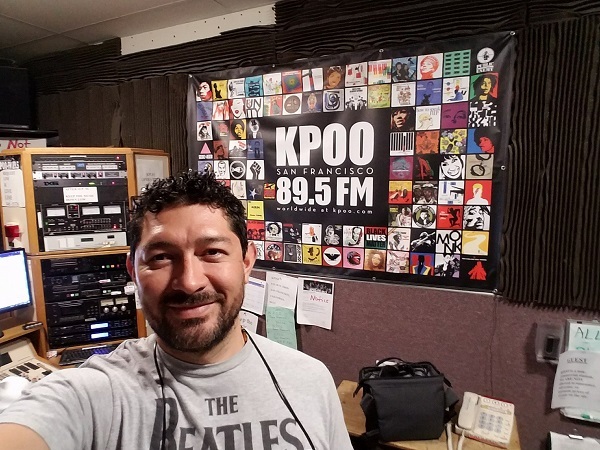
We are here with Felipe Martínez. He is a dance instructor, broadcaster and event organizer. Good afternoon, Mr. Martinez, how are you today?

Very good afternoon. Thank you very much for the invitation.

How did you start your way in the world of music? Did you do it in your native Colombia or there in the United States?

It officially started officially here in the United States, but Colombia also played an important role in this process. In my country, I played soccer and many of my football buddies came from the coast or north of Colombia. I am from the center of the country in Bogotá. When it was our turn to meet in the bus that would take us to our place of practice, each one of them carried a cassette tape to listen to salsa or music from the Colombian Caribbean. That is how I was gradually introduced into the world of music and got interested in salsa and Caribbean music, but I grew up listening to rock and pop.

Felipe Martínez in his studio

So, we can say that your taste in music started in Colombia, but you developed professionally in the United States, is that right?

That is correct. When I came to the United States, I started dancing professionally.

You started working as a dance instructor and then as a DJ when you arrived in the United States. Meaning that you had no experience in these things from your country, but you gained it in your new country of residence.

That is right. In the case of locution, I worked as a radio host for about three years in Colombia. I hosted a show with my friends while attending high school, but we were dedicated to rock because it was the genre I listened to the most. When I came to the United States in 1998, I started dancing, working with several dance companies, and studying for a while before I started teaching, so it did not happen immediately. I studied for about four years, and after that, I decided to teach. As for my work as a DJ, that almost happened immediately. In 1999, I started making music in a little club called Café Caracas in Berkley. It was by pure chance because the hired DJ didn’t show up, so the owner of the club asked me to play for a while to cover that space. I replied yes, so I started playing music that night and it all worked out. They proposed me to keep doing it permanently, I accepted and that’s how my career as a DJ began.

Luis Medina told me in his interview that he is sometimes forced to play music he doesn’t really like, but it’s what the public wants. Apart from salsa, what other genres do you play or mix?

Salsa is just a general term for all these rhythms we have. I usually mix salsa with bachata, merengue or cha cha chá. However, I don’t usually include reggaeton in my repertoire despite its popularity.

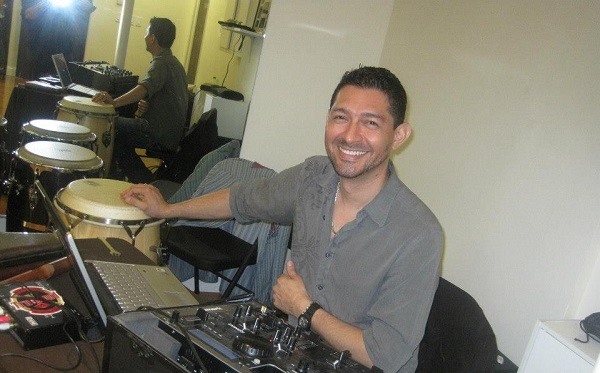
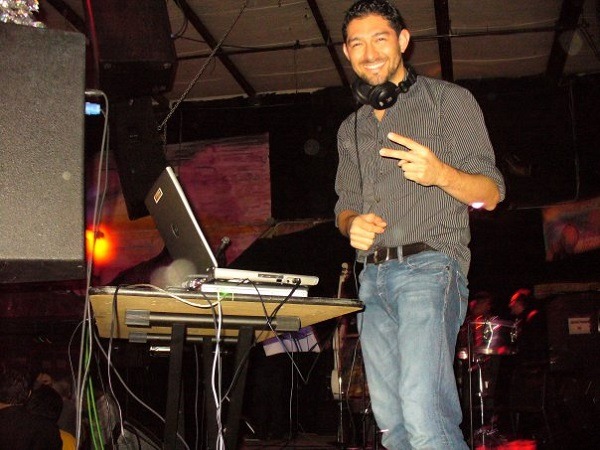
Felipe Martínez in his work as a DJ

How World Salsa Radio started

How did World Salsa Radio start? What drove you to found it?

Worldsalsaradio.com (www.worldsalsaradio.com) started as an adventure alongside a friend at another radio station. The main idea was to educate listeners about the history of records and what they include such as singers, artists, musicians, etcetera. These days, you buy an MP3, but all you can see is the name of the song and the picture, so you lose all the album information such as credits, recording place, among other details.

In my travels around the world, I have known many DJs, whom I contacted when this project started to get them to this station to do shows. Remember that the main objective was to educate the public, then, the guy with whom we started the station took a different path because we had artistic differences, so we decided to separate.

That’s how World Salsa Radio started. During the pandemic in 2020, I was here at home for about three or four months arranging everything. I invited two other friends from the Bay Area, one of them was DJ Orlando Felix, DJ Boricua, and Ivette Fuentes, DJ La Coqui. The three of us started shaping the idea of World Salsa Radio with the same goal of educating as in the beginning. I take care of all the technical part, invite DJs to play, teach them to use the software and tell them what to say. We are already 27 DJs from all over the world and, at the moment, DJ Boricua and I are the ones who run the station.

Indeed, you have DJs from the five continents. How did you manage to unite them all in the same project?

I think the idea that brings us together is the goal of educating the public that listens to us. We want to play great music, but we also want to educate people about what we play. This is something that attracks music collectors because all that information is being lost due to the digital age. I know many who are on World Salsa Radio in person, but I heard the rest of them by other means such as a Facebook Live or YouTube. I contact the ones I like, we exchange ideas and it is explained to them what they should do.

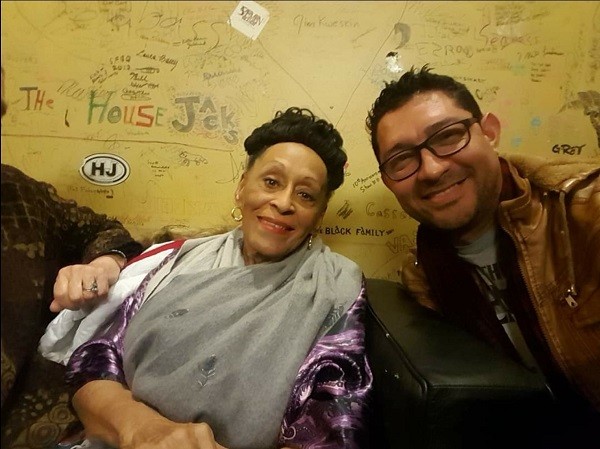
Cuban singer Omara Portuondo and Felipe Martínez

What have been the most noticeable differences in the team?

Each DJ has a different style. We all have a different style even though we are playing Afro-Latin music. Everything played here in California is very different from everything played in Lithuania. Although we all collect the same music, everyone plays it differently.

How dod the public receive World Salsa Radio?

At first, the audicence reception was very small. The first month, we had barely 300 listeners, but we have a very large group of listeners who stay tuned to us despite the time. There are about 100 listeners who are permanently connected with us. We started the project during the pandemic, which was very good for us because everyone was home. So, people who enjoy this music, dancers or musicians listened to our shows on a recurring basis. Two years later, there are already 16,000 people who tune us in every month.

There are many people supporting us without any profit motive because we do this for free. No one is paying us to move the project forward, so we are financed by donations. We also have great support on the advertising side, which has helped us grow.

World Salsa Radio is now ruled by Felipe Martínez

As a dancer and instructor, what do you think people are most passionate about in your classes? What rhythms do they enjoy the most?

As to how I teach, I use percussion much. Since I play the conga, I use this tool to give my classes. I try not to give so much importance to numbers. Many instructors use counting to teach their students, but I try to keep out of it and use percussion. For example, I use the clave and the tumbao.

I think this method works best. If you go to a club with an orchestra playing, the singer is not going to be counting on you to dance, he’s going to be focused on making his music and providing entertainment. For the same reason, you must learn to follow the music without counting.

What have you done to balance all your activities in music?

My activities are linked, but they are separated at the same time. My personal projects have nothing to do with World Salsa Radio. However, when an event invites several DJs from the station, the World Salsa Radio logo joins that production. However, I try to take things apart most of the time.

Your pages, social networks and links to financially support the station.

You can find all the information through worldsalsaeradio.com. In the main part, there is a button that says Donations, which takes you to the station’s PayPal account. People can donate whatever they want to help us, but nothing happens if they can’t. In that case, they can spread the word about the station. In that case, they can show what we do through their social networks and give us publicity.

Felipe Martínez does not combine his activities

Facebook: Eldelaclavesf (https://www.facebook.com/EldelaClaveSF)

Instagram: Eldelaclavesf

Palladium in the New Millenium engalana el “Lehman Center for the Performing Arts”

On March 5, 2022, the heirs to the mambo will reunite once again, this time the concert entitled Palladium in the New Millennium will grace the Lehman Center for the Performing Arts in the heart of New York’s Bronx.

This concert coincides with the coming of age celebration of the establishment of The Big Three Palladium Orchestra.  The initial idea of bringing together the three great Palladium orchestras in this innovative concept came to Mario Grillo, better known in the music world as Machito, Jr. approximately twenty-one years ago.

His counterpart, Tito Rodriguez, Jr. told me about it and, thanks to his complicity, I had a pleasant conversation during which Machito, Jr. shared with me a myriad of details.  Having previously collected and shared the conversations I had with Tito, Jr. and later with Machito, Jr. I must now share the point of view of the youngest of the three mambo heirs -Tito Puente, Jr.- about this trilogy, among other things.  During the beginnings of this historic reunion, Tito Puente, Jr. was barely 30 years old.

As with me, the two oldest members of the trilogy have been very supportive of Tito Puente, Jr.  During an exclusive interview granted for this special assignment, Tito Puente, Jr. expressed his deep appreciation for having been so lovingly guided by Tito Rodriguez, Jr. and Machito, Jr. to the recording of what has become the legacy of the Palladium big three: The Big Three Palladium Orchestra live at the Blue Note (2004).

On March 5, 2022, the heirs to the mambo will reunite once again, this time the concert entitled Palladium in the New Millennium will grace the Lehman Center for the Performing Arts in the heart of New York's Bronx.
Palladium in the New Millenium engalana el “Lehman Center for the Performing Arts” en pleno corazón del Bronx de New York

The youngest of the three heirs of the mambo is doubly celebrating, as he has just released his sixth production, entitled The King and I. It contains nine tracks, as you can hear on the album.  It contains nine tracks, as detailed below:  Picadillo, featuring Humberto Ramírez on trumpet; Salsa na ma, featuring José Alberto “El Canario” on vocals; Pa los rumberos, with a masterful performance by Domingo Quiñones; Oye como va, with a performance by “Mulato Rumbero”, Michael Stuart; Para la niña y pa la señora, with none other than Miguel Angel Barcasnegras, better known as “Meñique” (EPD) on vocals; Hong Kong mambo, instrumental theme that highlights the Puente dynasty, with Ronnie Puente on xylophone; El bribón del aguacero, with Yolanda Duke on vocals; 20 años and El Rey del Timbal.  Let’s be clear that this album is not the big band arrangement to which the eternal King of the Timbal has accustomed us.  It is, however, the best tribute that the youngest of the three heirs of the Palladium pays to his father, keeping the legacy alive and kicking.

As you can see, each of the “Palladium’s Big Three” inherited a timbalero son. Coincidentally, Machito, Jr., Tito Rodríguez, Jr. and Tito Puente, Jr. grew up surrounded by music.  Their family environments, respectively, supported them. Indeed, today, all three are musicians.  These three bandleaders have made it their mission to keep the Palladium legacy alive and well.  Although the mambo heirs have transcended the label of being the sons of the mambo owners, they do not forget that the Patriarchs are still a topic of conversation in musical circles around the world.

As the past is the past and the future is uncertain, here we are already waiting in despair. For this new reunion, first-class musicians have been secured, backing up the three heirs of the mambo.  The musical constellation that will be part of this historic night is formed by: Carmen Laboy on baritone saxophone and musical direction, Jorge Castro on tenor saxophone, Mark Friedman and Al Acosta on alto saxophones; Larry Moses, Seneca Black, Mike Mossman, and John Carlson on trumpets; Gilberto Colón, Jr. on piano, Jerry Madera on bass, John “Dandy” Rodríguez on bongo and Eddie Montalvo on tumbadoras.  On the vocal front, Sammy Gonzalez, Jr. leads with Luisito Rosario and Jeremy Montalvo on backing vocals.

I for one continue to live in salsa, which to put it in more earthly terms is, simply put: magic, fantasy, and illusion.

Article of Interest: Sigo entre amigos de Luis “Perico” Ortiz

By: Bella Martinez “The Irreverent Salsa Writer”

Puerto Rico

Memo Arroyave, entre las voces más importantes e impecables del Caribe

Considered as one of the faithful representatives of Venezuelan salsa, the young vocalist Guillermo José “Memo” Arroyave, born on July 22nd in the city of Caracas, arrives to “Salsa Escrita” for an exclusive interview.

Memo Arroyave, continues to project himself with more and more quality and professionalism, characteristics that define him in the Caribbean music genre at the national and international levels.

In a pleasant and enjoyable conversation with Memo, he told us about his career and his current and future projects.

Memo Arroyave, welcome to Barquisimeto’s salsa column “Salsa Escrita”; it is a great pleasure for us to have you as our special guest and we would like you to tell us about your beginnings in your artistic career.

-Thank you Carlos for the opportunity you are giving me to reach your readers in a direct and fraternal way.

Memo Arroyave

Memo Arroyave, among the most important and impeccable voices of the Caribbean

My beginnings in the world of music and show business date back approximately to 1996, when I was a student of the successful Venezuelan Rafa Galindo (R.I.P.D.), the musical legend of our country.

Then I ventured into the stages forming part of different groups in Caracas, such as Partitura Latina, Orquesta Gente Novel, Orquesta Ensueños, Galaxy Latin Band, El Código Salsero, among others.

-Memo, which artists have you shared the stage with, what can you tell us about them? Professor Carlos, I have had the opportunity to share the stage and accompany, on occasions, as a soloist and others as a backing vocalist, national and international artists of the stature of: Andy Montañez, Ismael Miranda, Viti Ruiz, Christian Fernandez, Adalberto Santiago, Pupy Santiago, Paquito Guzman, Roberto Blades, Jose Mangual Jr, Max Torres, Wichy Camacho, Willman Cano, Nino Segarra, Nelson Arrieta, Marcial Istúriz, Mandinga Star Band, Wílmer Lozano, Wiwi Buznego, Wílmer Cobos, Cheo Valenzuela, Miguel Araujo, Erick Franchesky, Irving Manuel, Ángel Flores, Samir Bazzi, Manuel Guerra y su Orquesta, and in December 2019, I shared the stage with Hermán Olivera, Luisito Carrión and Frankie Vásquez.

-Regarding current projects, what can you tell us about them? I am part of several projects simultaneously my friend Carlos, among which stand out: Orquesta Puma Band, Victor Cardona y la Máquina de la Salsa, La Rumba Sonora de New York, Afro Códigos and recently I was invited to participate in the 10th Anniversary album of “Los Rumberos del Callejón”.

Well Memo, for all that you have given us to know about your talent and dedication, you are an obligatory reference of the salsa show and we would like to know about your most recent and future projects.

-In fact, I recently recorded and released the song “Si falta el Aire”, a composition by the Spaniard David Santisteban, with arrangements by Enmanuel “Cerebro” Romero and under my production.

 Memo Arroyave
Memo Arroyave, continues to project himself with increasing quality and professionalism.

It was recorded in Caracas, Mexico, Miami, and New York, mixed and mastered in the Venezuelan capital, as part of my first musical production. Other of my hits are: “Y lloré”, “No Puedo estar sin ti”, which I did a duet with Rafael “El Pollo” Brito. And as a scoop for your salsa column “Salsa Escrita”, I already have the next promo ready and it is a duet with NG2 from Puerto Rico and last week was the release of the song with José Madera Niño “3º Mundo”, titled: “Me gustas pero…”, which is sounding strong and last year I recorded for a Colombian pianist, but he is based in Washington, United States, which made an album called “10” and among other singers participate: Rodrigo Mendoza, Mariana “La Sonora de Venezuela”, Marcial Istúriz, Gonzalo Díaz, Mike Barrios, which is a talentazo of Zulia state, who is currently in Mexico, my person and other people from other countries.

Soon I will be in the production that is in the process of mixing and where Argenis Carruyo, Oscar Arriaga, Wichi Camacho, and others also participate.

-Excellent Memo, I understand that in addition to your facet as a singer, you also dabble in the media?

That’s right professor, let me tell you that I am the nephew of Fernando Sosa Leal, I have done radio and television since 2002; I started with a radio program in the state of La Guaira, I was the director of the musicalization of Azul 95. 9 FM, then we did “Mundo Latino”, there I was as an animator with Fernando Sosa Leal and Luis Arturo in CMT, then in TVES, but I leave the project to devote myself more to my singing career and also went several times to Puerto Rico to the editions of the National Salsa Day, World Salsa Congress, to give coverage from there for all Venezuela and the Caribbean and recently as the producer of Strike 13 with Fernando Sosa Leal in his Bowling program for Meridiano TV.

Carlos, I wanted to thank you for the focus you give to the singer through your salsa column, if I may say individually and not so much as choristers, which of course is important, but in your work and interviews we have read the support and contribution you give to our musical productions and recordings with orchestras, since this way we make ourselves known to music lovers as well as to the public.

Finally, I want to thank you for your time and congratulate you for this work that you do with a lot of enthusiasm, with desire and that should be appreciated not only by me but by all musicians, artists who are giving it their all and that, if it were not for people like you, it would be even more difficult.

-Your social networks? Through @memomedicen, they are my accounts in R.R.S.S. Thanks, Memo for this connection we had and thank you for accepting the invitation to Salsa Escrita “La Columna Salsera de Barquisimeto”, through International Salsa Magazine, www.salsaGoogle.com, we would also like to have you performing in our twilight city and musical capital of Venezuela and remind all artists that we are to serve them in an unconditional way in favor of our Latin music and obviously the Venezuelan talent that is unquestionably superior every day.

See you next time and let’s keep salseando!

Article of Interest: Henry Valladares, a brilliant, versatile, and disciplined percussionist

  • « Go to Previous Page
  • Page 1
  • Interim pages omitted …
  • Page 117
  • Page 118
  • Page 119
  • Page 120
  • Page 121
  • Interim pages omitted …
  • Page 149
  • Go to Next Page »

International Salsa Magazine (ISM) is a monthly publication about Salsa activities around the world, that has been publishing since 2007. It is a world network of volunteers coordinated by ISM Magazine. We are working to strengthen all the events by working together.