• Skip to primary navigation
  • Skip to main content

International Salsa Magazine

  • HOME
  • Previous editions
    • 2026
      • ISM / May 2026
      • ISM / April 2026
      • ISM / March 2026
      • ISM / February 2026
      • ISM / January 2026
    • 2025
      • ISM / December 2025
      • ISM / November 2025
      • ISM / October 2025
      • ISM / September 2025
      • ISM / August 2025
      • ISM / July 2025
      • ISM / June 2025
      • ISM / May2025
      • ISM / April 2025
      • ISM / March 2025
      • ISM / February 2025
      • ISM / January 2025
    • 2024
      • ISM / December 2024
      • ISM / November 2024
      • ISM / October 2024
      • ISM / September 2024
      • ISM / August 2024
      • ISM / July 2024
      • ISM / June 2024
      • ISM / May 2024
      • ISM / April 2024
      • ISM / March 2024
      • ISM / February 2024
      • ISM / January 2024
    • 2023
      • ISM / December 2023
      • ISM / November 2023
      • ISM / October 2023
      • ISM – September 2023
      • ISM – August 2023
      • ISM July 2023
      • ISM Edition June 2023
      • ISM – May 2023
      • ISM April 2023
      • ISM March 2023
      • ISM February 2023
      • ISM January 2023
    • 2022
      • ISM December 2022
      • ISM November 2022
      • ISM October 2022
      • ISM September 2022
      • ISM August 2022
      • ISM July 2022
      • ISM June 2022
      • ISM May 2022
      • ISM February 2022
      • ISM January 2022
    • 2021
      • ISM December 2021
      • ISM November 2021
      • ISM October – 2021
      • ISM September 2021
      • ISM August 2021
      • ISM July 2021
      • ISM May 2021
      • ISM April 2021
      • ISM June 2021
      • ISM March 2021
      • ISM February 2021
      • ISM January 2021
    • 2020
      • ISM December 2020
      • ISM November 2020
      • ISM October 2020
      • ISM September 2020
      • ISM August 2020
      • ISM July 2020
      • ISM June 2020
      • ISM May 2020
      • ISM April 2020
      • ISM March 2020
      • ISM February 2020
      • ISM January 2020
    • 2019
      • ISM December 2019
      • ISM November 2019
      • ISM October 2019
      • ISM Septembre 2019
      • ISM August 2019
      • ISM July 2019
      • ISM June 2019
    • 2016
      • ISM December 2016
  • Spanish
  • Download Salsa App
    • Android
    • Apple

Search Results for: live music

José Alberto “El Canario” and his orchestra enjoy a great international reputation in the Latin music scene.

His start in music was as a drummer, then as a bongo player, with some 48 years in Latin music and as a sonero, today in International Salsa Magazine through www.salsagoogle.com, José Alberto Justiniano Andújar, better known artistically as José Alberto El Canario, was born on December 22, 1958 in Villa Consuelo in Santo Domingo Dominican Republic.

José Alberto El Canario

El Canario began to have a passion for music from a very young age, first playing drums, bongo and timbales, at the age of 7 his mother Adalgisa, recognized dancer of the golden age of “Radio-Televisión Dominicana”, took him to live on the island of Puerto Rico, as a professional dancer she had to perform in important international theaters.

El Canario began to study in a military school in Las Antillas, then in 1970 he moved with his father to New York, where he began to sing with several orchestras, receiving international attention as the leader of the Típica 73 in October 1977, where he earned 25 dollars for each presentation and recognized it as his university in the life of art.

José Alberto credits his compadre Roberto Geronimo for his successful artistic career. Geronimo discovered him as an artist and managed him for many years. El Canario also sang merengue at the onset of his musical journey.

In 1983, José Alberto established his own band and gained fame as a major Latin star after his debut album Noches Calientes released in 1984.

Jose Alberto is a renowned singer who has recorded numerous chart-topping hits, including “Sueño Contigo”, “Hoy Quiero Confesar”, “Te Voy a Saciar de Mi”, “A Gozar”, “Es Tu Amor”, and “Quieres Ser Mi Amante”, among others, for his 1988 album Sueño Contigo and several others.

His inimitable voice and unmatched improvisational skills have earned him international acclaim. Jose Alberto has collaborated with several contemporary artists such as Johnny Rodriguez, Mario Rivera, Nicky Marrero, Oscar D’Leon, and Celia Cruz.

El Canario began to have a passion for music at a very young age, first playing drums, bongo drums and timbales.

José Alberto “El Canario” has earned multiple gold and platinum records due to his high number of album sales.

He has achieved success not only in the United States and Europe but also throughout Latin America, including his native Dominican Republic, Puerto Rico, Peru, Venezuela, Panama, Colombia, Ecuador, and Costa Rica.

The nickname “El Canario” was bestowed upon him by a New York disc jockey who christened him so in a disco due to his improvisational skills; “Canta canario” was the catchphrase he would belt out through the control microphone.

José Alberto ‘El Canario’ and his Orchestra have gained immense international recognition in the Latin music industry.

His musical prowess and captivating voice make his live shows some of the most thrilling performances.

El Canario, winner of the “Congo de oro” in 2005 – an award given to the best musical groups presented at the Festival de Orquestas del Carnaval de Barranquilla – and of three Latin Grammys in 2013, 2015 and 2018, is one of the undisputed artists of Latin music with a career spanning some 48 years.
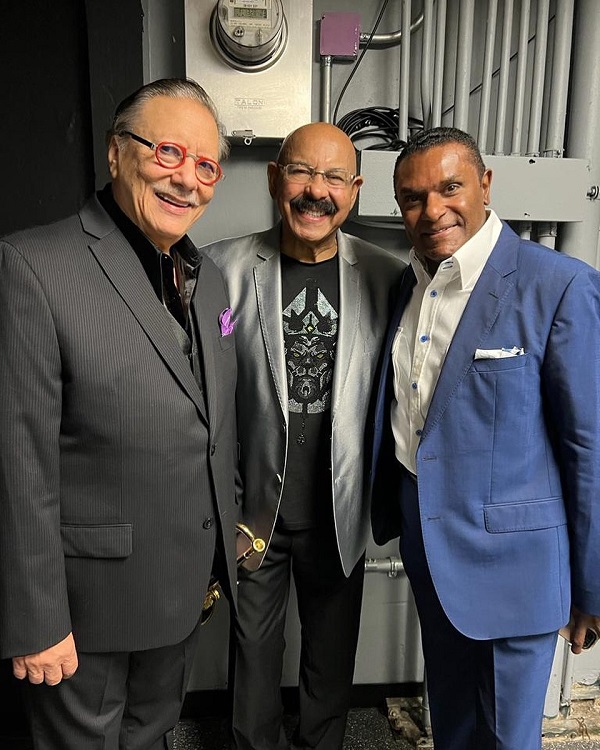
Arturo Sandoval, Oscar D' Leon y El Canario
Arturo Sandoval, Oscar D’ Leon y El Canario

Throughout his career, José Alberto El Canario has gained international recognition for his unique voice and style, but also, according to his biographies, for his improvisations on stage.

José Alberto El Canario y su Orquesta enjoys great international renown in the Latin music scene.

Also Read: Jimmie Morales a conguero for the history of Afro-Caribbean music
Omslig D’ León: “I am the son of the sonero of the world, but I have my own style and I am creating my own musical history

Omslig D’ León enters the world of musical art hand in hand with his father Oscar D’ León, who works functionally as a dancer, choreographer, percussionist, background singer and singer, this young Venezuelan talent has already traveled the world in its breadth and length, through almost all the countries of North America, Europe and Latin America.

Omslig decided to start his career as a soloist and create his own history with new challenges, forming his own orchestra with his own compositions, innovating with his own unique and international style.

Omslig D' León I am the son of the sonero of the world
Omslig D’ León I am the son of the sonero of the world

“He recently toured Europe for more than two months, including performances in Switzerland, Germany, Italy and Istanbul”.

“And with you, the sonero of the world, Oscar D’ León. Any Venezuelan or fan of the emblematic salsero from Caracas would be thrilled to hear such a presentation, but when you carry his blood, the adrenaline is even greater. His son, Omslig, explained it this way.

It was inevitable that I would become a musician. It’s not just my father, Oscar, it’s my mother, it’s my whole family that has music in their blood,” said the son of one of the most important salsa musicians in history.

Omslig, who began his musical career at the age of 16 as a lectern player in his father’s orchestra, with which he toured the world for 23 years, was in Panama to promote his solo career, which recently took him on a European tour that included Italy, Switzerland, Germany and Istanbul, among other countries.

He will stay a while longer in the isthmus, a country that he says has treated him wonderfully, and then he will travel to Peru and Colombia. “People will think that I am 100% influenced by my father.

Although I learned a lot from him, especially responsibility, I have my own style,” said the director of the orchestra La Melena, referring to his musical project in which he covers songs by various artists, including Panamanian Omar Alfano and Venezuelan Frank Quintero.

Omslig D' León I am the son of the sonero of the world, but I have my own style.
Omslig D’ León I am the son of the sonero of the world, but I have my own style.

Not everything is rosy.

Being the son of Oscar D’ León can be very good, but it can also be difficult. He recalled that in the past there were people who “wanted to throw his last name in his face.

“Don’t think that because you’re Oscar’s son it’s going to be easy. I don’t think you sing the same as your father. Things like that have been said to me, but I have moved forward and thank God with his support and a unique style,” he explained.

For those who think that everything has been handed to him on a silver platter, he wanted to leave this anecdote from when he was in Oscar D’ León’s band. “We were in the Canary Islands, we had already finished the show and the next day, very early, we had to take the ferry to another island.

I fell asleep and my dad dropped me off. In the lobby he left me a note saying ‘you have to learn to be responsible’ and that marked me. Then I was able to make it, but I had to pay for everything.

¿Reencuentro de Leones?

Omslig admitted that he would like to reunite with his “soul mate”, his brother Yorman, to start a musical project and, if the opportunity arises, with Iroska, better known as “La Mazucamba”, Oscar’s daughter, who currently lives in the United States.

“A few days ago my dad called me to tell me that why don’t we do something together and the truth is that it would be great. We’ll see, but it was there and something important is going to happen,” he explained.

For now, Omslig is concentrating on his work as a soloist, with several confirmed performances, and continuing his work as a father, already with three children and happily married.

“I will continue to sing my father’s songs, I will continue to keep his name high, but with the tasty and fusion style of Omslig D’ León,” concluded the 42-year-old native of Caracas.

Omslig León enters the musical artistic world hand in hand with his father Oscar D' León.
Omslig León enters the musical artistic world hand in hand with his father Oscar D’ León.

In a few words

One place: Milan, Italy.

One food: lasagna.

Artist: Luis Enrique.

A person you admire: Will Smith.

A musician: Robert Vilera.

Hobby: Painting.

Why Omslig: Oscar, Moises (paternal grandfather) and Ligia (mother).

Also Read: Freddy de Jesús Ortega Ruiz “Coco & su Sabor Matancero”

Sources:

Peggy Blanco (Manager)

Panama El Venezolano

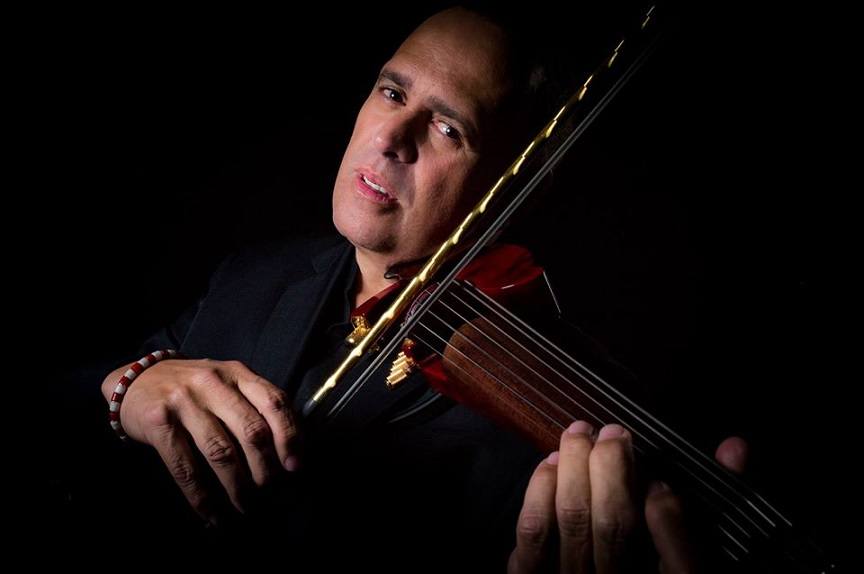
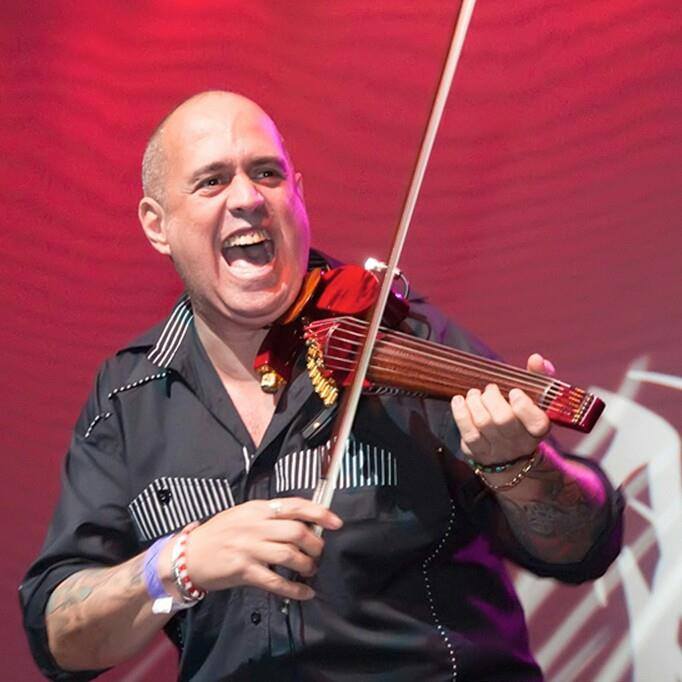
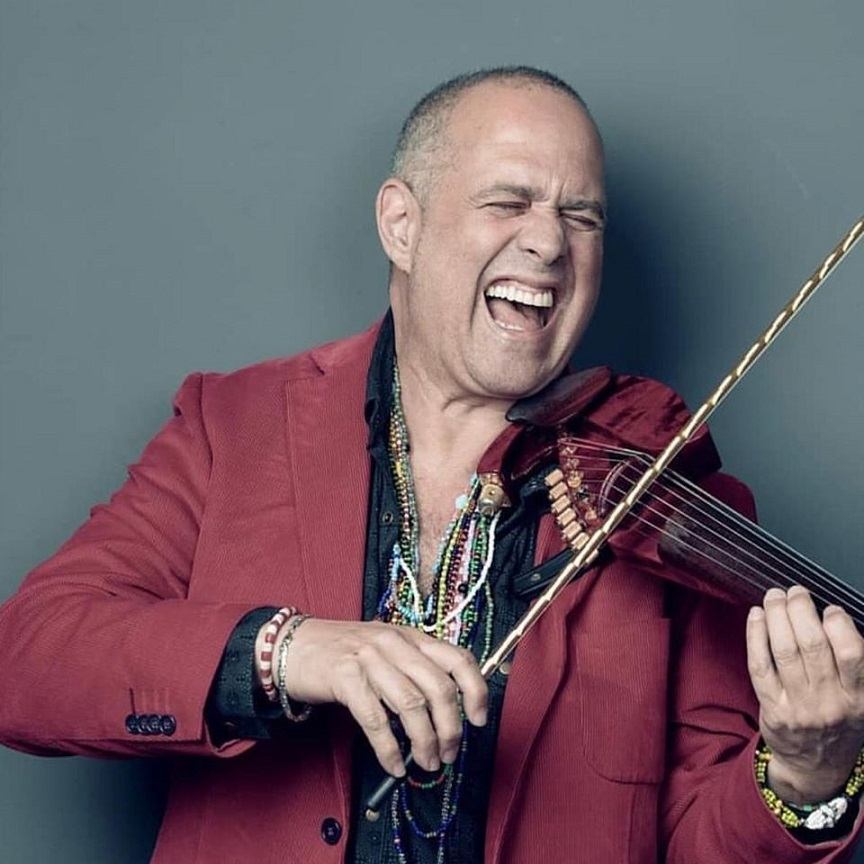
Alfredo De La Fe, is responsible for transforming the violin for Latin Music

Latin America/ Colombia/ Cali

Alfredo de la Fe is a Cuban-American violinist based in New York, who also lives in Colombia.

He is responsible for transforming the violin into a sound much more suitable for Salsa and Latin music, as well as having manufactured and patented his own violin. De la Fe began studying the violin at the Amadeo Roldán Conservatory in Havana in 1962.

Two years later, he receives a scholarship to enter the Warsaw Conservatory, in Poland.

In 1965, he soloed compositions by Mendelssohn and Tchaikovsky with the Metropolitan Opera Orchestra at Carnegie Hall.

Alfredo De La Fe playing the violin

A scholarship at Juilliard opened new doors for him. De la Fe began his professional career, at the age of twelve, when he switched from classical music to Salsa, and accepted an invitation to join charanga legend José Fajardo’s Orchestra.

In 1972, he joined the Eddie Palmieri orchestra. He was a member of the group for a very short period, temporarily moving to San Francisco, where he met Santana. Returning to New York, De la Fe joined Típica ’73 in 1977. Two years later, he released his debut solo album, Alfredo.

In 1980, De la Fe signed with the Fania All-Stars, and produced thirty-two albums for Fania Records. His second solo album, Charanga ’80, was released in the same year.

In 1981, De la Fe became musical director of Tito Puente’s Latin Percussion Jazz Ensemble.

The following year, he confirmed his solo career, signing with Taboga, for whom he recorded the album Triunfo. He settled in Colombia in 1983, and signed with Philips; As a result of this, he released three albums: Made in Colombia, Dancing in the Tropics and Alfredo de la Fe Vallenato, at the end of the 80s.

In 1989, De la Fe signed with Discos Fuentes. Although he was one of the members of the Fania All-Stars for 1995, De la Fe continued his solo career.

He signed with Sony Music in 1997. Two years later, he toured with his own orchestra, appearing at festivals in Denmark, the Netherlands, France, Turkey, and Belgium, and reuniting with Eddie Palmieri and his orchestra for a European tour.

In 2002, after several years in Europe, Alfredo moved back to New York and visited the US with his New York band, led by pianist Israel Tanenbaum.

Alfredo De La Fe
Alfredo De La Fe

Other musicians including bassist Máximo Rodríguez, percussionists Tony Escapa and Johnny Pequeño Rivero, and autistic Andrea Brachfeld.

Discography Solo albums

  • 1979 : “Alfredo”
  • 1980 : “Alfredo de la Fe y la charanga 1980”
  • 1981 : “Para África con amor”
  • 1982 : “Triunfo”
  • 1984 : “Made in Colombia”
  • 1985 : “Alfredo de la Fe Vallenato”
  • 1990 : “Salsa”
  • 1990 : “Los violines de Alfredo de la Fe”
  • 1992: “Los violines de Alfredo de la Fe vol. 2: Sentir de Cuba”.
  • 1993 : “Con toda la salsa Alfredo de la Fe”
  • 1995 : “La salsa de los dioses”
  • 2000 : “Latitudes”
  • 2006 : “Alfredo de la Fe y Fruko (La Llave de Oro)”
Alfredo De La Fe - Photo
Alfredo De La Fe – Photo

Session Artist and Collaborations:

    • 1973 : “The Sun de música latina” por Eddie Palmieri & Amigos Con Lalo Rodríguez
    • 1976 : “De ti depende” por Héctor Lavoe
    • 1977 : “Selecciones clásicas” por José Fajardo
    • 1977 : “El Baquine de Angelitos Negros” por Willie Colón
    • 1978 : “Comedia” por Héctor Lavoe
    • 1979 : “Típica 73 en Cuba – Intercambio cultural” por Típica 73
  • 1979 : ” Necesito tú” por Sylvester
  • 1980 : “Charangueando con la Típica 73” por Típica 73
  • 1980 : “Señor Charanga” por José Fajardo
  • 1982 : “Encima Broadway” por Tito Puento
  • 1997 : “Bravo” por Fania Todo-Estrellas
  • 2001 : “Diferente” por José Alberto (El Canario)


Melao
Melao

René Latin Soul and his journey into music from his home country

René Latin Soul 

After anything we have yet witnessed in the Latin music scene of the United States, we can say that it is undeniable that Cuba is an endless source of talent and passion for music, so this island can never be missing in International Salsa Magazine. On this occasion, it was the turn of producer, musical director, arranger, composer and trombonist René Latin Soul. 

René is a talented Cuban who has managed to gain a very important place in the music industry in this country and we wanted to know how he managed to get there. Do not miss the fascinating conversation we had with the artist.  

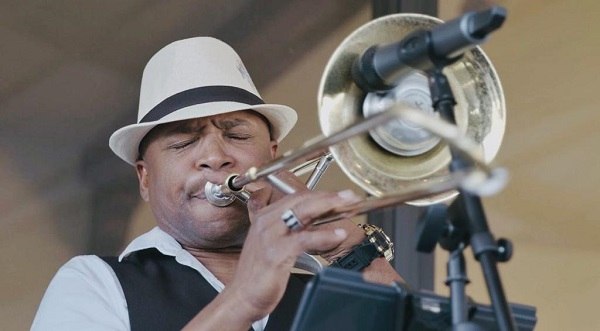
René playing the trombone
René Latin Soul playing the trombone during a performance

Beginnings in Cuba 

René Amet Campos Artigas was born in the province of Camagüey, specifically in the municipality of Nuevitas. He came to music from a very early age, as many of his relatives are musicians, including his father and grandfather. This led him to enroll in the music conservatory when he was only 10 years old. 

He confesses that he always knew he wanted this to be his profession and had no other career in mind for tomorrow, so he always did his best to excel as much as he could in the music business. 

Once he finished school, René entered the military for mandatory service and was part of the general staff band. He was always intended to move to Havana in order to make himself known as an artist and he finally did it to stay for a while and see how he was doing. 

During this time, he was working for several nightclubs that offered live music, but he did it with the trombone given by the army when he was in the staff band, since he just did not have enough money to buy one of his own.  

Unfortunately, the time of the ”Special Period” arrived and this crisis forced him to return to his native Camagüey. However, this was not the end of his dream.   

Upon returning, both René and his father started an artistic project which they named ”Valentín y Los del Caribe” and started working in tourism, specifically in a company called El Cuartón Club which had hotels in Acapulco, Puerto Vallarta and Ixtapa, Mexico.   

Canada and the United States 

While working with El Cuartón, René spent a long spell touring in the Aztec country, which gave him the opportunity to get to know other territories and other ways of doing things. In one of these trips, he made the decision not to return to Cuba and try his luck on new horizons.  

He lived in the capital of the aforementioned country for more than 12 years, during which time he worked as an instrumentalist and worked with several artists belonging to the salsa guild such as La India, Jerry Rivera, Grupo Niche, Oscar D’ León, Los Adolescentes, among many others.   

René on stage
René Latin Soul performing on stage

When he met the woman who became his wife, they started their romantic relationship and began making plans of life in common, between which Mexico fell a long way short, so it was time to put down roots elsewhere. At first, this new place would be Canada, but plans changed and the couple ended up leaving to the United States of America. 

René and his wife spent about eight months living in Canada, but immigration issues became very difficult for them from one moment to another, so it did not take long for them to relocate to the United States.   

René never thought to live here, since the Cuban government instilled an absolutely negative view of what this country represents in children from a very young age and he was no exception. However, all those opinions changed once the musician began to really get to know this nation. Today, he feels he has adapted perfectly and has been here for about six years, when he moved to this country to establish his family and career.  

René Latin Soul & His Quartet 

Once René arrived in the United States with his wife, his situation was very complex as any immigrant’s, so he had to work on things that had nothing to do with music. In fact, he recalls he spent more than a year without playing the trombone because he could not devote himself to music at that time. 

That was it until he started playing trombone with the Kimbalai Orchestra, which he left in December 2021 and went to live in the city of Murrieta, one hour from San Diego. Once there he met Michael Mora, a friend who advised him to exploit the features of the city to start a solo project, which led him to start a solo career, which he finally did. 

As he made a name for himself, he was able to include other musicians in his project, which allowed him to build the quartet he has today. Although René is very happy with what he has accomplished so far, he plans to have a much bigger salsa band in the future.  

René and his piano
René Latin Soul in front of his piano

Music classes 

A very important part of René’s work with music is teaching and this was a point we found interesting to discuss.   

When asked if talent was natural or developed, he said natural. The artist thinks that the ability to play an instrument is innate in the musician, so this person only requires academic training to educate those gifts at a professional level.   

He finishes by saying that ”there is a very particular way of feeling the music and, if you don’t feel it that way, you can’t play it correctly. Time, tuning and melody are essential for anyone who wants to be a professional musician.  

Cuban talent despite the circumstances  

According to one of the descriptions provided by René’s website, the artist is one of the figures who demonstrates the virtuosity of Cuban-born musicians. Of course, considering that the island does not live the same normality as most countries in the world. 

About this, René said that ”clothes don’t make man. The most important thing to a talented person with an instrument is to focus on what he or she has to do and not look at anything around. There may be vicissitudes and shortages, but if you are focused on something you love, you have to find a way to improve and develop yourself in spite of everything”.  

In his case, the musician tells us that he had friends with travel opportunities who brought the most recent findings made in music and he was always interested in knowing these things to apply them to his own technique. 

Read also: Sizzling Summer Nights at the Autry Museum Of The American West 

Carlos “Nene” Quintero comes from a family of musical prodigies

Carlos Vicente Quintero De Jesús, better known as Nene Quintero, was born on October 21, 1946 in the Caracas neighborhood of Marín (a neighborhood of percussionists par excellence), in San Agustín del Sur.

In a family that has produced several musicians, among them his brothers the former “Madera”, Ricardo and Jesús “Chu” Quintero, who died in the Orinoco tragedy; Rafael who lives in Marseille or his nephews Luisito (the “chamo Candela” of Daiquirí), Robert and Chuíto, who live in New York.

During his adolescence he was in several groups and then he played with Los Dementes, the Venezuelan group Pan suerte de Santana with César Monge (Dimensión Latina) and Alfredo Padilla (La Salsa Mayor), Porfi Jiménez, Frank Quintero and Los Balzehaguaos, Yordano and many others.

Carlos "Nene" Quintero comes from a family of musical prodigies
Carlos “Nene” Quintero comes from a family of musical prodigies

-What would be the five main moments of his career?

Nené lists them:

1- Having worked with people I went to see at a radio station and then I got to play with them. That was in the 70’s, in a place called Playboy in Altamira, with their bunnies and everything.

I worked with Lewis Vargas and Rafael “Gallo” Velásquez on trumpets; Moscatt was the saxophonist; Willy Pérez, pianist; Jorge Romero, bassist of Aldemaro Romero’s Onda Nueva; and Marcelo Planchart on drums.

2- When I heard on the radio a song I recorded with Los Dementes: “Rómpelo”, which was very popular. I saw myself as a very famous person, I was heard on the radio for the first time.

3- When Eumir Deodato came and proposed me to go with him to the United States.

I was not in conditions to go because I was working very well, I was doing a lot of jingles, I had two children who were starting to study.

I was sacrificing something that was taking shape: my family. I told him I could go, work and come back. The surprise was when a letter arrived for a tour of Mexico and the United States.

Deodato is a very kind person, he gives you freedom to work, we communicated in “Spanglish” and “portuñol” and he loved beer.

Carlos Nene Quintero

4- Seeing Celia Cruz when I was a kid in Marin, going to visit friends like Johnny Perez, from Sonora Caracas, and some time later working with her, even in her last shows, in Montreal.

Celia’s birthday was the same day as mine, and she looked older, but as soon as she started the music and said “sugar!” she was different, she was transformed.

5- Working lately with my nephews Robert and Luisito gave me a lot of emotion: The three of us on the same stage in New York with Celia Cruz.

But there are more experiences. Eros Ramazzotti, for example. “I chose to go to New York and Miami when things got tough here. I worked with Gato Barbieri and with salsa people.

I would go back and forth, two months out and back. I was recording with a saxophonist who worked with Eros and, the following year while I was in Miami he called me for a six-month tour.

I said yes, they called me the following year again and I spent three years with Ramazzotti touring all over Europe, Brazil, Puerto Rico, Central America, Mexico and Miami.

-Any anecdotes with Ramazzotti? –

Once on his birthday he rented a track where they raced cars. We were drinking, driving, talking, talking, listening to music and they brought a cream cake for Eros.

At one point when he was very close to me with the cake in his hand, I put it in his face. It was a mess with everyone throwing things and pieces of cake at each other.

But I got the impression that he was upset and I went over to apologize and explain to him that it was something that could happen on any South American birthday, especially with a cream cake. He told me not to worry, that it was fine.

Other jobs came through Ramazzotti, such as with Jovanotti and Lucio Dalla.

-And how was it with Little Louie Vega, one of the producers and DJs of the moment?

-I met him through Luisito. We have been touring Europe, the United States and Japan for the last three years, and we recorded with Pushim, a Japanese woman, a song that was in the Japanese top ten.

Meanwhile, “Nené’s” routine continues to be more international than ever between the United States, Europe and especially France, where he has been working with a group that bears his name: Nequin Group, with whom he recorded an upcoming album.

“Working abroad is like working here, but in another language”, he reflects on the matter and says that he is preparing a method for percussionists to work with their feet as well as with their hands.

Carlos Nené Quintero con mi Signature congas (Roberto Quintero)

-What has seemed new to you lately in Europe or in these parts?

-Those jazz works in which there is no conventional group with drums or bass, like what I did with Gerry Weil and Pablo Gil at the Corp Group Cultural Center.

THE BATICONGA AND THE “MCGIVER SET”.

The baticonga is a hybrid: drums with conga. I use bass drum, hi-hat, cimbals, toms, snare and cymbals of various thicknesses.

It has a special redoblante with a rim that does not protrude from the leather so that it does not bother when hitting it like a tumbadora.

It is an idea that I have been maturing. It was born because of Yordano’s album that made him famous, Manantial de corazón, there I recorded all the percussion and when it was time to play it live we needed a drummer and two percussionists. We got the drummer, but things were missing and I started to add electronic pedals, electronic drums, octapads and to use feet and hands.

Then we did an unplugged set and it had to be acoustic with congas, bass drum, snare drum, hi-hat, cymbals.

The McGiver set is a djembe with brushes, cymbals with rivets, a conga that is just like a lid, like a tambourine, and I mount it on top of a snare drum stand and a cowbell. A set that does it all.

SIX INFLUENTIAL PERCUSSIONISTS

Alejandro Blanco Uribe and Airto Moreira: “I saw a lot of Gerry Weil with La Banda Municipal in the 70s and Alejandro as a multi-percussionist with effects and accessories.

That led me to look at Airto’s proposal and to fall in love with percussion at a time when I was playing guitar”.

Trilok Gurtu: “For his fusion of oriental music with rock and jazz. I’ve been hearing him since Oregon, and when I heard him with John McLaughlin on the live album in London my jaw dropped.”

Jack DeJohnette: “As a drummer he has a very floaty groove, he can do with the beats what he wants and the rhythm is always there.”

Tony Williams: “Another drummer. I saw a video that aroused my interest because his technique is like the one I use with the baticonga”.

Carlos Nené Quintero con mi Signature congas (Roberto Quintero).

Giovanni “Mañenguito” Hidalgo: “Since he came out the thing changed, he gave another level to the congas or tumbadoras, with him there has been a ‘before and after'”. – with Roberto Quintero and Luisito Quintero.

Also read: Argenis Carruyo is known in the music scene as “El Volcán de América” (The Volcano of America) due to the power of his voice

  • « Go to Previous Page
  • Page 1
  • Interim pages omitted …
  • Page 12
  • Page 13
  • Page 14
  • Page 15
  • Page 16
  • Interim pages omitted …
  • Page 149
  • Go to Next Page »

International Salsa Magazine (ISM) is a monthly publication about Salsa activities around the world, that has been publishing since 2007. It is a world network of volunteers coordinated by ISM Magazine. We are working to strengthen all the events by working together.