• Skip to primary navigation
  • Skip to main content

International Salsa Magazine

  • HOME
  • Previous editions
    • 2026
      • ISM / May 2026
      • ISM / April 2026
      • ISM / March 2026
      • ISM / February 2026
      • ISM / January 2026
    • 2025
      • ISM / December 2025
      • ISM / November 2025
      • ISM / October 2025
      • ISM / September 2025
      • ISM / August 2025
      • ISM / July 2025
      • ISM / June 2025
      • ISM / May2025
      • ISM / April 2025
      • ISM / March 2025
      • ISM / February 2025
      • ISM / January 2025
    • 2024
      • ISM / December 2024
      • ISM / November 2024
      • ISM / October 2024
      • ISM / September 2024
      • ISM / August 2024
      • ISM / July 2024
      • ISM / June 2024
      • ISM / May 2024
      • ISM / April 2024
      • ISM / March 2024
      • ISM / February 2024
      • ISM / January 2024
    • 2023
      • ISM / December 2023
      • ISM / November 2023
      • ISM / October 2023
      • ISM – September 2023
      • ISM – August 2023
      • ISM July 2023
      • ISM Edition June 2023
      • ISM – May 2023
      • ISM April 2023
      • ISM March 2023
      • ISM February 2023
      • ISM January 2023
    • 2022
      • ISM December 2022
      • ISM November 2022
      • ISM October 2022
      • ISM September 2022
      • ISM August 2022
      • ISM July 2022
      • ISM June 2022
      • ISM May 2022
      • ISM February 2022
      • ISM January 2022
    • 2021
      • ISM December 2021
      • ISM November 2021
      • ISM October – 2021
      • ISM September 2021
      • ISM August 2021
      • ISM July 2021
      • ISM May 2021
      • ISM April 2021
      • ISM June 2021
      • ISM March 2021
      • ISM February 2021
      • ISM January 2021
    • 2020
      • ISM December 2020
      • ISM November 2020
      • ISM October 2020
      • ISM September 2020
      • ISM August 2020
      • ISM July 2020
      • ISM June 2020
      • ISM May 2020
      • ISM April 2020
      • ISM March 2020
      • ISM February 2020
      • ISM January 2020
    • 2019
      • ISM December 2019
      • ISM November 2019
      • ISM October 2019
      • ISM Septembre 2019
      • ISM August 2019
      • ISM July 2019
      • ISM June 2019
    • 2016
      • ISM December 2016
  • Spanish
  • Download Salsa App
    • Android
    • Apple

Search Results for: live music

Ayumi “Azucar” Suzuki, she plays Latin percussion, Classic percussion, Marimba & Vibraphone

Ayumi was born in Japan She graduated from the Faculty of Percussion, Tokyo College of Music.

Ayumi was born in Japan. She plays Latin percussion, Classic percussion, Marimba & Vibraphone.

At the college; she began to study percussion in earnest mainly with classic music and gained experience of ensemble in orchestras, brass bands, musicals, operas, etc.

Ayumi “Azucar” Suzuki She plays Latin percussion.

Ayumi "Azucar" Suzuki She plays Latin percussion At the same time, he began to organize concerts and to participate as a percussionist, keyboard percussionist or drummer.
Ayumi “Azucar” Suzuki, she plays Latin percussion, Classic percussion, Marimba & Vibraphone

At the same time, she started to organize concerts and participate as percussionist, keyboard percussionist or drummer.

She has been also teaching  eurythmics at a nursery school.

In 2015, she started her own band, “Ayumania” that features mostly her original compositions and arrangements, where she fuses Japanese atmosphere into Latin rhythm.

Inviting both Japanese and foreign guests, she has been organizing live concerts in various places in Tokyo.

In July 2017, she released her first album “Oukagekka” in Japan. It has been promoted in overseas radio programs in Colombia, Puerto Rico and New York.

He plays Latin percussion At the same time, he began to organize concerts and to participate as a percussionist, keyboard percussionist or drummer.
She graduated from the Faculty of Percussion, Tokyo College of Music

The Japanese vibraphonist, timbalera, composer and arranger Ayumi Suzuki launches her Ayumania debut, a musical production recorded between Tokyo and Los Angeles that includes 7 original numbers – composed and arranged by Suzuki herself – and two covers: Maria Cervantes de Noro Morales and Mi Amore by Naoya Matzuoka. In this album, Ayumi’s speech establishes a bridge between classical and contemporary Cuban music, with different rhythmic touches and influences that have marked his background as an instrumentalist.

Sakura, a beautiful instrumental melody composed by Suzuki herself, highlights Chiho “Isabel” Saito on the violin, as well as Hiromishi “Yan” Tsugaki on the keyboards, and of course, Suzuki on the marimba and the vibraphone.

Ring Loop is a cadenciosa are montuno with outstanding participation of Takashi Nakazato in the congas; La Lluvia, vocalized by the Cuban Julian “El Pillo” Tapia, presents the solos of Mitsuru Tanaka and Ayumi on the trumpet and vibraphone, respectively.

Knock Knock Knock is a festive cut that builds bridges with Caribbean music, particularly calypso, and salsa and in which Ayumi herself punches the timpani and a mind-blowing one in the marimba.

Saredo Danzon, as the name implies, is a danzon that opens with a solo by Hiromichi Tsugaki on the piano while Umihotaru, with vocals by Julian “El Pillo” Tapia, is an afro rhythm in 6/8 with the intervention of Hiromichi Tsugaki (fender rhodes) and Ludwig Esteban Nuñez (drums).

Suzuki offers a tribute to Noro Morales in his legendary composition of Maria Cervantes. In this piece we hear the participation of Jimmy Branly in the drums and an overwhelming solo of Ayumi in his vibraphone, with that way of playing that only she has.

Branly himself performs the drums in the last two pieces;Suzuki achieves a premium opera that honors her at the rumberos school.

With sophisticaded arrangements. with the elegance and the street necessary to position it is as one of the most

outstanding salseras of the international level. It wil surely be one of the best productions of this 2017.

Ayumania

Sakura emerges with a flow of wind sounds with minor percussions that set the mood for an eclectic and harmonious journey.
Ayumania A material consisting of 7 original songs, two covers and all under the baton of Ayumi.

A modern and contemporary material, original and unusual, is the one that establishes this Japanese multi-instrumentalist Ayumi Suzuki, establishing different arrangements and touches to each theme, this Japanese vibraphonist, timbalera player, composer and arranger establishes a thin line between Cuban music and modern, going through bold and effective rhythmic domains.

A material that consists of 7 original songs, two covers and all under the baton of Ayumi.

Sakura emerges with a flow of wind sounds with minor percussions that make the environment conducive to an eclectic and harmonious journey, one of the fundamental pieces to understand the musical transculturation of this talented woman, the violin solo by Chiho “Isabel” Saito and the keyboards by Hiromishi “Yan” Tsugaki and the marimba and vibraphone by the emblematic Ayumi stand out.

A son montuno can not be missing in this material, Anillo De Lazo where a congas solo by Takashi Nakazato stands out, La Lluvia, a song that already rolls through the wide world of the networks in which the voice of Julián Tapia can be appreciated, the trumpet of Mitsuru Tanaka and the vibraphone of the great Ayumi, undoubtedly a 5 star material, a musical base and instrumentalist of first line that give the incomparable recognition to the musical talent of this great artist and in conjunction with the band.

Ayumi “Azucar” Suzuki


Gerardo Rosales meets Orlando Poleo, who invites him to study Afro-Caribbean percussion in Caracas

Gerardo Rosales was born on July 6, 1964, in Caracas, Venezuela. He has been living in the Netherlands since 1993.

At the age of 8 he started studying piano and at the same time he became interested in playing congas and bongo.

In 1977, at the age of 13, he met Orlando Poleo, who invited him to study Afro-Caribbean percussion at the “Taller de Arte” in the Sarría neighborhood in his hometown Caracas.

From 1977 to 1980, he studied congas and bongo with Orlando Poleo, and timbales with Alberto Borregales.

In 1985, he studies Afro-Venezuelan percussion with Alexander Livinali at the “Fundación Bigott”.

Gerardo Rosales Mr. Tambo

In 1987 Gerardo starts his career with very important figures such as: Soledad Bravo, Cecilia Todd, Canelita Medina, Alberto Naranjo y el Trabuco Venezolano, Maria Rivas, Joe Ruiz, Ilan Chester, Orquesta Café, Trina Medina y Yarake, Victor Cuica among others.

At the same time, Gerardo began his own orchestra called “Salsa 70” and with it he toured the neighborhoods, theaters and night spots of the capital.

In 1992, he receives an invitation to participate in the Expo Sevilla in Spain, with the group ‘Caracas Son 7’.

From that moment on he decided to settle in Europe. In 1993, he releases his first CD “Gerardo Rosales y su Salsa Pa’lante”, in Spain, which was recorded in Venezuela.

At the same time, Gerardo started his own orchestra called "Salsa 70" and with it he toured the neighborhoods, theaters and nightclubs of the capital.
In 1992, he received an invitation to participate in the Expo Sevilla in Spain, with the group “Caracas Son 7”.

From this moment on he is invited to work in France with Alfredo Rodriguez and Orlando Poleo; in Germany with Conexión Latina and Nicky Marrero and in Holland with Saskia Laroo, Jose Avila y su Quimbombo and Cedric Dandaree. In 1995, Paquito D’Rivera invited him to participate in the recording of the CD “Bebo rides again” together with the legendary Cuban pianist Bebo Valdés.

From 1996 until now, Gerardo Rosales has been touring Europe with his own salsa and Latin jazz projects. Gerardo has earned the respect and admiration of the public through his concerts and recordings, managing to spread and project rhythms from Venezuela, Cuba, Puerto Rico, Colombia, Peru, Curaçao, Suriname and the Caribbean.

In 2002, he produced the music for the film “Madamme Jeanette” directed by Paula van der Oest which was nominated for an Oscar as a Dutch film.

These are the titles of his CDs: “Salsa pa lante” (1992), “Venezuela Sonora” (1996), “Señor Tambó” (1998), “El Venezolano” (1999), “Rítmico & Pianístico” (2001), “La Salsa es mi Vida” (2001), Tribute to Fania all stars (2003), Charanga La Crisis “Salsa Antigua” (2005), Mongomania “Tribute to Mongo Santamaria.

Gerardo Rosales has accompanied on tours, recordings and performances in Europe artists such as:

Dee Dee Bridgewater, Benny Bailey, Paquito D Rivera, Bebo Valdés, Toots Thielemans, Jimmy Bosch, Juan Pablo Torres, Herman Olivera, Oscar D’León, José Alberto “El Canario”, Andy Montañéz, Meñique, Edy Martínez, Carlos “Patato” Valdés, Conexión Latina, Orlando Valle “Maraca”, Alfredo Rodríguez, Armando Peraza, Luisito Quintero, Robert Quintero, Ramón Valle, Larry Harlow, Adalberto Santiago, Frankie Vázquez, Oscar Hernandez, Africando, Chamaco Rivera, Luisito Carrion, Jorge Herrera, Edgar Dolor, Dorance Lorza, Ajo Porro, Luisito Rosario, David Cada and Tito Allen.

Discography by Gerardo Rosales:

Gerardo Rosales has accompanied artists on tours, recordings and performances in Europe
Discography by Gerardo Rosales:

2019 Gerardo Rosales “Cachandera and Singapore Vibes” (Single)

2016 Gerardo Rosales “Salsa Vintage” (Download – CD )

2014 Gerardo Rosales “Son Del Sofa” (Single) ITunes

2013 Gerardo Rosales “Síguelo” (CD)

2011 Gerardo Rosales “Chano Pozo’s Music” (CD)

2011 Gerardo Rosales “30 Aniversario” (CD)

2010 Cachao Sounds “La Descarga Continúa” (CD)

2010 Gerardo Rosales “Buscando Chamba” (CD)

2009 Venezuelan Masters Orchestra “Toros y Salsa” (CD)

2008 Gerardo Rosales “Salsa Mundial” (CD)

2007 Our Latin Groove “Bringin’ it All On Back” (CD)

2005 Gerardo Rosales “Mongomanía” (CD)

2005 Charanga La Crisis “Salsa Antigua” (CD)

2004 Gerardo Rosales “Tribute to Fania” (CD)

2001 Gerardo Rosales “La Salsa es mi Vida” (CD)

2001 Gerardo Rosales & Edy Martínez “Rítmico y Pianístico” (CD)

1999 Gerardo Rosales “El Venezolano” (CD)

1998 Gerardo Rosales “Señor Tambó” (CD)

1996 Gerardo Rosales “Venezuela Sonora” (CD)

1992 Gerardo Rosales “Salsa Pa’lante de Venezuela” (CD)

1991 Gerardo Rosales “Salsa Pa’Lante de Venezuela” (33 RPM Vinyl)

Discography of Gerardo Rosales with other artists:

Orquesta Cafe “Criollisima” 1987 (Fama) Venezuela ( Salsa )
Joe Ruiz – Javier Plaza – Jose Torres – Gerardo Rosales

Bebo Valdes “Rides Again” 1994 ( Messidor) Germany ( Latin Jazz )
Bebo Valdes – Paquito D Rivera – Patato Valdes – Amadito Valdes – Gerardo Rosales

Conexion Latina – “La Conexion” 1996 (Enja) Germany ( Salsa )
Rudi Fuesers – Leslie Lopez- Anthony Martinez – Nicky Marrero – Gerardo Rosales

David Rohschild “Looking Up” 1997 (Via) The Netherlands ( Salsa )
David Rothschild – Adalberto Santiago – Banjamin Herman – Gerardo Rosales

Leslie Lopez “Bomba Moderna” 1999 (Buitenkunst) The Netherlands (Latin Jazz)
Leslie Lopez – Ramon Valle – Joe Rivera – Nils Fischer – Gerardo Rosales

The Rosemberg Trio “Suenos Gitanos” 2001 (Polydor) The Netherlands ( Latin )
Rosemberg Trio – Toots Thielemans – Leonardo Amuedo – Gerardo Rosales

Ronal Snijders “Bijlmerjazz 2004 (Independent) The Netherlands (Jazz)
Ronal Snijders – Randal Corsen – Jesse van Ruller – Gerardo Rosales

Cubop City Big Band “Arsenio 2004 (Tam Tam) 2004 The Netherlands (Cuban)
Lucas van Merwijjk – Edy Martinez – Nelson Gonzalez – Gerardo Rosales

Drums United “World of Rhythm” 2006 (Tam Tam) 2004 The Netherlands (World Music)
Lucas van Merwijk – Nils Fischer – Aly N ‘ Diaye Rose – Gerardo Rosales

Samba Salad – Metropol Orkest “Live Vredenburg” 2006 The Netherlands (World Music)
Herman Link – Dick Bakker – Maurice Luttikhuis – Rita Iny – Gerardo Rosales

Aquilez Baez “ La Patilla” 2007 (Cacao) Venezuela (Latin Jazz)
Aquilez Baez – Anat Cochen – Huascar Barradas – Diego Alvarez – Gerardo Rosales

Maria Catharina “Obsecion” 2010 (Independent) The Netherlands (Jazz)
Maria Catharina – Adinda Meertins – Thomas Bottcher – Marc Bischoff – Gerardo Rosales

Masalsa “Resurreccion” 2012 (Independent) The Netherlands (Salsa)
Soeshiel Sharma – Ray de La Paz – Marcos Bermudez – Cachito Vaz – Gerardo Rosales

Izaline Calister “Kandela” 2012 (Coast to Coast) The Netherlands (Latin)
Izaline Calister – Yumarya – Vernon Chatlein – Larc Alban Lotz – Gerardo Rosales

Africando “Viva Africando” 2013 (Sterms Music) France (Salsa)
Boncana Maiga – Oscar Hernandez – Doug Beavers – Luisito Quintero – Gerardo Rosales

Mezcolanza “Headbanger” 2015 (O.A.P Records) The Netherlands (Jazz)
Peter Wenk – Chistof May – David Barker – Mick Paauwe – Gerardo Rosales

Tango Extremo “ Havana” 2015 (JWA) The Netherlands (Latin)
Ben van den Dungen – Rob van Kreeveld – Tanya Schaap – Gerardo Rosales

Orquesta La Potente “ Potente “ 2018 (Independent) Colombia (Salsa)

Coco Ramirez – Guarnizo – Gerardo Rosales

Barry Hay & JB Meijers (Universal Music Group) 2019 The Netherlands ( Pop)

Barry Hay – JB Meijers – Gerardo Rosales.

Gerardo Rosales

( Salsa – Latin – Jazz – Cuban )

Bands – Percussion Workshops – DJ – Percussionist – Shows

+31627862001

[email protected]

The Netherlands

Gerardo Rosales was born on July 6, 1964, in Caracas, Venezuela. He has been living in the Netherlands since 1993
Gerardo Rosales meets Orlando Poleo, who invites him to study Afro-Caribbean percussion in Caracas

North America – FEB 2021

Jonathan Moly

Jonathan Moly released the single “No Volveré”, a song with which he takes advantage of singing to his ex to the rhythm of salsa. This song is produced by Sergio Ramos… [Read more]


Bella martinez

Bella Martínez is an author born in Puerto Rico, who defines herself as a funny but complicated person, like life itself. But she has always carried in her veins her passion for salsa… [Read more]


Juan Manuel Lebron

Music accompanies him from a very young age. Juan Manuel Lebrón is a very complete artist who has ventured into different areas of the entertainment industry, from music to comedy… [Read more]


kadencia orchestra

From Richmond (Virginia), Kadencia Orchestra launches its homage to the percussion instrument linked to joy and to the history of millenary ethnic groups that were expatriated from… [Read more]


Markolino Dimond

Mark Alexander Dimond, baptised like Markolino by his colleagues at the time, was born in 1950 (1950-1986). He was American and lived with his mother and older sister in the… [Read more]


Home


Professor MSc. Carlos Colmenárez

Mauricio Silva with ¡fury!

Composer, arranger, producer, pianist, trombonist, vocalist and conductor he participated in the recording of more than 200 productions.

It is a great honor and the pleasant satisfaction of having one of the most prolific, successful and recognized Venezuelan musicians who works as a composer, arranger, producer, pianist, trombonist, vocalist and conductor as a special guest; who is also recognized by all salsa fans at home and internationally.

We refer to Mauricio Silva, who has a musical lineage inherited from his grandfather Manuel Silva Linares and his father Miguel Angel Silva; the latter stood out as the jazz bassist for Gerry Weil, Billo’s Caracas Boys, Los Melódicos and Orquesta de Porfi Jiménez, among others; his uncle Rafael Silva was considered one of the best and most experienced trombonists in Venezuela.

Composer, arranger, producer, pianist, trombonist, vocalist and conductor He participated in the recording of more than 200 productions
Mauricio Silva with ¡fury!

Some of his brothers are also musicians and include: Josué Miguel Silva (now deceased) and Daniel Silva, an outstanding bassist and singer in diverse orchestras nationally and internationally. His son Briant Silva and his nephew Harold Silva are part of the new generation.

Mauricio Silva was born in Caracas on December 30th and became interested in training very well in his profession from a very young age which is why he studied with great Venezuelan and foreign musicians.

He has participated in the recording of more than 200 productions. Some of them with: Sexteto Juventud, La Crítica de Oscar D’León, Wladimir y su Constelación, Dimensión Latina, Los Satélites, La Salsa Mayor, Arabella y su banda, Los Melódicos, Billo’s Caracas Boys, Silva y Guerra, Mauricio Silva y su orquesta, Oscar D’León, Cheo Valenzuela, Caribbean Magic, Porfi Jiménez, Salserín, Erick Franchesky, Guaco, El Trabuco Venezolano, Wílmer Lozano, Legacy of Venezuelan Salsa, Legacy of World Salsa, among others. His compositions include Se Necesita rumbero (recorded by Oscar D’León), Te haré feliz, Debe ser el amor and Canto al Madera.

To start this interesting interview, we want to welcome to Mauricio to “Salsa Escrita” the salsa column in which we support musical talent and promote the event of our Latin music nationally and globally through International Salsa Magazine www.salsagoogle.com.

Thank you very much Professor Carlos, the truth is that I am very happy to appera as a guest in your widely-read column and I want to send my greetings to your readers and followers, I am very happy to share with you.

Master Mauricio for us it is a pleasure to interact through this prestige means of communication, let me tell you that we consider you a great idol of our Afro-Caribbean music and want to know how you started liking music. Carlos, music means everything to me, it is my formula of life and I am in it as long as I can remember. Through many studies and divine support for everything I have done and although I am not the most successful in the world, I feel very satisfied with it.

Well Mauricio, by the way, by the time you were in the orchestra “La Crítica”, were you influenced by any musician?

Yes, when I was in La Crítica, I was very much influenced by Oscar D’León as the main factor, when I saw him playing and singing with that incredible swing, that definitely left its mark and listening to artists of the time such as Andy Montañez, El Gran Combo, Ismael Rivera, Héctor Lavoe, Celia Cruz and note that life allowed me to work with all of them;

because I worked with Hector, Celia, Oscar and many others from Puerto Rico, Cuba and my training was routed to tropical music by accompanying Daniel Santos, Celio Gonzalez, Alberto Beltran and the commitment was greater to know that they came from the Sonora Matancera and that is how my taste for music was cultivated.

And to start this interesting interview, we want to welcome you Mauricio to "Salsa Escrita" the salsa column, where we project the musical talent and make known the events of our Latin music nationally and globally through International Salsa Magazine www.salsagoogle.com.
Mauricio Silva has participated in the recording of more than 200 productions

When was the idea of singing born, Mauricio? Really, the idea of singing was not one of my goals, it dit not crossed my mind to be a singer, and moreover, being in front of an orchestra got me so nervous, since being behind made feel like a duck to water, conducting, playing, but not facing the public. I did not consider myself a singer, I simply have a normal ear to have a guide to melodies of the songs, the fact that I started singing was with “Salsa, Silva y Guerra”.

Manuel Guerra had asked me for some musical arrangements for one of his projects, which was going to be recorded in Puerto Rico with arrangers from there such as Ray Santos and Máximo Torres.

Manuel Guerra had asked me for some musical arrangements for a project of his, which was going to be recorded in Puerto Rico with arrangers from there, with Ray Santos and Máximo Torres.
“Salsa, Silva y Guerra”

I made arrangements to two of my compositions for him: “Qué linda es la vida”, “Se va el amor”, and well, it was recorded on the island of Puerto Rico, that was spectacular, but the “Black Friday” occurred and costs doubled, so Manuel had to finish the production in Venezuela and then he asked me to help him finish it, we set up the trombone, chorus and I took him to ride the voice, but Manuel had tone problems with the songs, he did not get the tones in the right way, I recorded all the guides to the songs, I learned them and I recorded them for him.

Well, we have been trying to get him to record for 3 months, but he could never record that and the sound guy said that I was doing well without being a singer and he wasn’t.

And yet, at the end, I ended up recording that album, which was called “Salsa, Silva y Guerra”, because I got involved with Manuel Guerra and the label Rodven decided to call it that, and there the singer Mauricio Silva was born without wanting to. I never intended to be a singer, so when it is for you, it is like you do not even take off and so begins my career as a vocalist. Mauricio, we understand that you participated in more than two hundred productions and that shows that you are a very active musician in the music industry due to your professionalism.

When was the idea of singing born, Mauricio? Really, the idea of singing was not one of my goals, it dit not crossed my mind to be a singer, and moreover, being in front of an orchestra got me so nervous, since being behind made feel like a duck to water, conducting, playing, but not facing the public. I did not consider myself a singer, I simply have a normal ear to have a guide to melodies of the songs, the fact that I started singing was with “Salsa, Silva y Guerra”.

Manuel Guerra had asked me for some musical arrangements for one of his projects, which was going to be recorded in Puerto Rico with arrangers from there such as Ray Santos and Máximo Torres.

I made arrangements to two of my compositions for him: “Qué linda es la vida”, “Se va el amor”, and well, it was recorded on the island of Puerto Rico, that was spectacular, but the “Black Friday” occurred and costs doubled, so Manuel had to finish the production in Venezuela and then he asked me to help him finish it, we set up the trombone, chorus and I took him to ride the voice, but Manuel had tone problems with the songs.

He did not get the tones in the right way, I recorded all the guides to the songs, I learned them and I recorded them for him. Well, we have been trying to get him to record for 3 months, but he could never record that and the sound guy said that I was doing well without being a singer and he wasn’t.

And yet, at the end, I ended up recording that album, which was called “Salsa, Silva y Guerra”, because I got involved with Manuel Guerra and the label Rodven decided to call it that, and there the singer Mauricio Silva was born without wanting to. I never intended to be a singer, so when it is for you, it is like you do not even take off and so begins my career as a vocalist. Mauricio, we understand that you participated in more than two hundred productions and that shows that you are a very active musician in the music industry due to your professionalism.

Tell us: look, I had about 200 albums I had them computed, but I don’t know, I lost count.

For example, these days I met again with a musician from Barranquilla, we had already worked together in 1987 during a musical tour of the United States, me as a pianist in an orchestra and him as a timbalero, who is very famous in his city and I made an arrangement for him at that time and he brought back to that work and told me it was on Youtube.

So my participation has been as an arranger, musician, pianist, trombonist, choirboy, apart from the records I have served as a singer or as a guest.

I remember that I worked with “El Trabuco Venezolano”, artists from Panama, Puerto Rico, Colombia, naturally Venezuela, the United States, and Cuba.

I have done many things, both with salsa, boleros, bagpipes and much more, what happens is that I am more known in the salsa style, Venezuelan music, jazz, Bosanova, merengue, the Billo’s music, Los Melodicos, actively participating with them and salsa I have done work with Choco Orta from Puerto Rico, El Canario, Oscar D’León, Arabella, with the song’s arrangement I made of “Callejón” by Tite Curet Alonso; the truth is that I’m not complaining. Mauricio, by the way, an almost obligatory question, what have you made in such confinement by the pandemic there in Miami and how has Covid-19 affected you?

Tell us: well, the year 2020 was very difficult for all of us and the main thing that can never stop is the food and medicines supply; but entertainment and recreation is paralyzed and has timidly begun to move a little bit, but they have even stopped it again because the pandemic is still going on and here vaccination began here but the first to receive them will be the doctors, the nurses, elderly people, children and the general public, which, hopefully, will be the solution by 2021 and so artists will return to the stage.

I was affected by the coronavirus, it really hit me, solitary confinement for 15 days with many symptoms, but it detected with the exam, I did all medical treatment, I went through a lot of depression, but thank goodness I woke up much better one Sunsay and I said, am I cured? (laughter) then I had another test and it was negative, but it is an experience that has killed colleagues, friends and family; here in Florida, more than 2000 people are infected daily and 3000 people die every day in the whole country, but we remain optimistic with respect to work out airy.

Mauricio, do you have any upcoming project? Yes, there are always projects, I am producing new artists that will be know later on, but the global legacy of salsa is the most recent thing I put on the market, it is a tribute to salsa, so that the new generations can get to know that salsa that falled us in love in the 70s, 80s and 90s.

This is on all digital platforms and there is also the legacy of Venezuelan salsa. Likewise, the album “Billo’s Legendarios” in which I got the chance to be the arranger and in charge of the musical part of that production with the participation of: Carlos Vives, Oscar D’León, Charlie Aponte, Wilfrido Vargas, Sergio Vargas, Alex Bueno, Eddie Herrera, Don Fulano and Mily Quesada; in addition, the Venezuelan singer Karina and the vocalists of Billo’s Caracas Boys are special guests.

This is on all digital platforms and there is also the legacy of Venezuelan salsa
The legacy of Venezuelan Salsa.

I am also working with the new from “Adolescentes” in its new phase from the hand of El Negro Mendoza.

I am doing the “Legendary Billo’s No. 2” and in talks with Gilberto Santa Rosa, Tito Nieves, Silvestre Dangon, Carlos Vives, who wants to sing the theme “La Casa de Fernando”, and also I am helping many colleagues because the world of the record has changed a lot, there are no longer record companies that support, so stay tuned to 2021 because very good productions are coming.
“Billo’s Legendary” – Mauricio Silva

Mauricio, tell us, which singers have you accompanied in your successful career? Well, I had the honor of learning and playing with Alberto Beltrán, Celio González, Daniel Santos, those three singers from “Sonora Matancera”, we accompanied them with “La Crítica”, but even then, I accompanied Ruddy Márquez, José Luis Rodríguez, Oscar D’León, Celia Cruz, Héctor Lavoe, Justo Betancourt, Ismael Miranda, Eddie Santiago, Vity Ruiz, Maelo Ruiz, Tito Rojas (QEPD), Pedro Arroyo, Luisito Carrión, Rafu Warner, most of those artists from the 80s and 90s, and many more with whom I had the opportunity to be formed, musically speaking.

Mauricio, to finish, we have a friend in common, Nelson García “Nelsonero” in Barquisimeto, how was your work with him? Speaking of Nelson, is to talk about a great musician, a great person, from the first time I knew him, we were connected, we made a record with very few resources, but there was a magic of a talented boy who looked for a musician that is me and he put himself in his hands, and let them take him, although the songs are mostly from him or almost all the songs were from Nelson and I made those arrangements looking for a style with trombones and baritone sax, resulting in an album with a lot of heart, and from then on.

Many doors have been opened to Nelson for his way of being and he has traveled to many places in the world, and I really love him very much, I ask you to support him because he is one of those real talents, he is not made up, he is not manufactured, he is natural, that is Nelson de Jesus “Nelsonero”.

Dear Salsa fans, regular Salsa Escrita readers, we are very grateful to Mauricio Silva for the interaction we have had, give us a final message: Thank you Professor Carlos, of course, very grateful for allowing me to share in your widely read salsa column in which you promote and support the talent from my country and the rest of Latin America; I hope we can meet up again soon; I have a little bit of Barquisimeto, because I have an aunt who lives in the urbanization El Obelisco, I have cousins, godparents, Rafael Ure and a very big big greeting to all of them.

I love that city a lot, the “Musical City of Venezuela”, I have numerous friends there and I participated in orchestras such as: Nino y si Orquesta, La Banda Actual, they are all friends and we share a lot, so I send my greetings to all of them, thank you for this opportunity Professor Carlos Colmenárez “The Friend of the Salseros” and I hope to see you soon, we love you with fury!

after the rehearsal with the Los Angeles Philharmonic with Gustavo Dudamel and Oscar D'Leon - Mauricio Silva
Mauricio Silva after the rehearsal with the Los Angeles Philharmonic with Gustavo Dudamel and Oscar D’Leon

 See you next time and keep dancing  salsa!


Ángel “Cucco” Peña and a great legacy

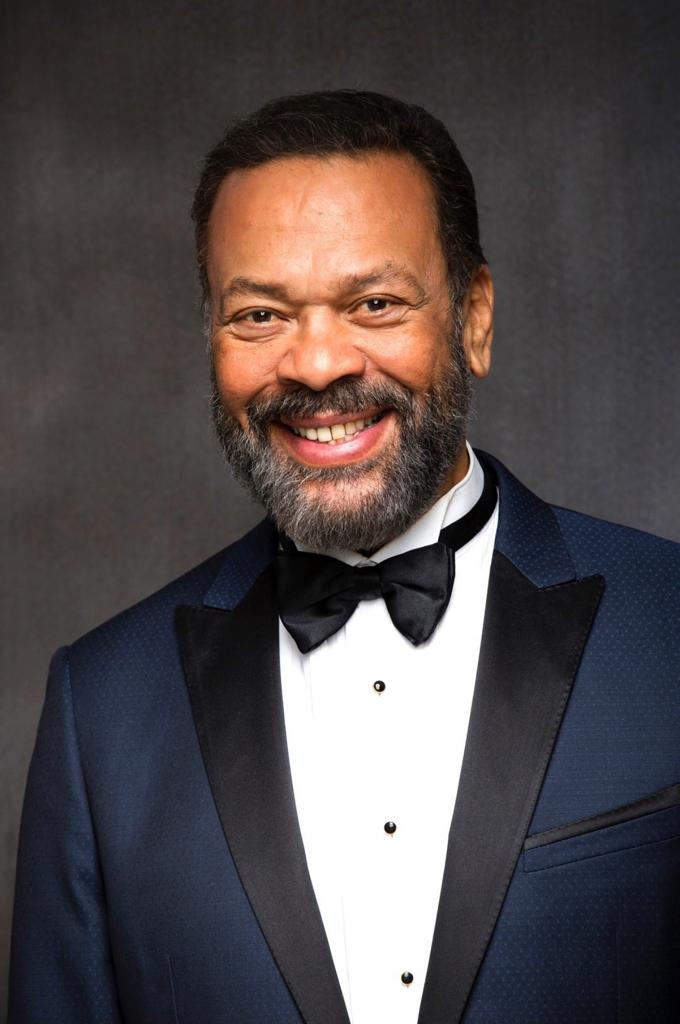
Cucco Peña has donated his emblematic tuxedo to the Spanish Harlem Salsa Gallery Museum

By Johnny Cruz

News from NY City

Who is Cucco Peña

The emblematic tuxedo
Ángel “Cucco” Peña

On September 1, 1948, Angel ‘Cucco’ Peña was born, someone who from elementary school showed his interest in music and as the years passed, showed that there were little flashes of that brilliant talent he had. His talent and passion were aligned, so he always spent his life surrounded by music. Today he could be considered an icon of Latin music thanks to his achievements as an artist and thanks to everything he offered to the industry; he has managed to trace a career full of successes, one that today continues to inspire many people.

Peña’s talent led him to interact in many music-related activities, not only did he graduate from the Puerto Rico Music Conservatory, but also, after graduation, he joined the Pan-American Orchestra, starting with what would be a career full of reached goals. In the orchestra, he would familiarize himself with many different styles that would help him as a musician, since in the orchestra he played a wide variety of music, from bolero, blues and jazz, to pop and even rock.

Cucco Peña’s path

Cucco Peña is a great artist

Cucco left the band and began to trace his own path with everything he learned, he didn’t just become a music director, but a producer, composer, and arranger for many internationally famous artists such as: Ricky Martin, Chayanne, Ricardo Arjona, Olga Tañon, Gilberto Santa Rosa, Luis Fonsi, Franco de Vita and many other artists; despite each artist’s very different styles, Peña’s talent has allowed him to understand perfectly what all of them needed. In his own words, “it is important to see that music has three perspectives: the artist perspective, the company’s perspective, and my own.” Finding a perfect harmony between these three perspectives, Peña has participated in the creation of great themes.

Achievements

The North American has not only managed to collaborate with a large number of renowned artists, but has also achieved a lot of recognition for his work, he is a two times Grammy winner, the first is the Grammy for the best tropical album contra la corriente, Marc Anthony’s album (1999), the second is Latin Grammy for best musical production, this thanks to Olga Tañón’s album, Yo por ti. Grammy is not the only award he has won, he also received a total of 60 Cuspide awards and 40 Addy awards, plus 20 awards from the New York Theater Festival and an “Agüeybaná de Oro” for Director of the Year.

The awards are not everything, he has been both the director and the composer of the Central American games’ opening and closing ceremonies, and the composer of two movie soundtracks (“La Gran Fiesta” and “Nicolás y Los Demás”); Plus, he has produced more than 100 compositions, not to mention that he also worked as a producer for important figures in the industry, such as Lunna, Jerry Rivera, Chayanne, and many others.

Without a doubt, Ángel “Cucco” Peña is a very important figure for the industry, and after a long career dedicated to music, he has shown that his talent is worthy of being recognized.

The new piece of Spanish Harlem Salsa Museum

The invitation to tune in to the new Fm / Internet radio station on Live365.com: Salsagallery continues. Great music, artist interviews and much more.

At the Spanish Harlem Salsa Gallery Museum we are happy to affirm that New York City is preparing to resume its activities little by little. We hope to have more news soon and that we can return to normal soon.

The Museum is open free to the public. We wait for you!

  • « Go to Previous Page
  • Page 1
  • Interim pages omitted …
  • Page 142
  • Page 143
  • Page 144
  • Page 145
  • Page 146
  • Interim pages omitted …
  • Page 149
  • Go to Next Page »

International Salsa Magazine (ISM) is a monthly publication about Salsa activities around the world, that has been publishing since 2007. It is a world network of volunteers coordinated by ISM Magazine. We are working to strengthen all the events by working together.