• Skip to primary navigation
  • Skip to main content

International Salsa Magazine

  • HOME
  • Previous editions
    • 2026
      • ISM / May 2026
      • ISM / April 2026
      • ISM / March 2026
      • ISM / February 2026
      • ISM / January 2026
    • 2025
      • ISM / December 2025
      • ISM / November 2025
      • ISM / October 2025
      • ISM / September 2025
      • ISM / August 2025
      • ISM / July 2025
      • ISM / June 2025
      • ISM / May2025
      • ISM / April 2025
      • ISM / March 2025
      • ISM / February 2025
      • ISM / January 2025
    • 2024
      • ISM / December 2024
      • ISM / November 2024
      • ISM / October 2024
      • ISM / September 2024
      • ISM / August 2024
      • ISM / July 2024
      • ISM / June 2024
      • ISM / May 2024
      • ISM / April 2024
      • ISM / March 2024
      • ISM / February 2024
      • ISM / January 2024
    • 2023
      • ISM / December 2023
      • ISM / November 2023
      • ISM / October 2023
      • ISM – September 2023
      • ISM – August 2023
      • ISM July 2023
      • ISM Edition June 2023
      • ISM – May 2023
      • ISM April 2023
      • ISM March 2023
      • ISM February 2023
      • ISM January 2023
    • 2022
      • ISM December 2022
      • ISM November 2022
      • ISM October 2022
      • ISM September 2022
      • ISM August 2022
      • ISM July 2022
      • ISM June 2022
      • ISM May 2022
      • ISM February 2022
      • ISM January 2022
    • 2021
      • ISM December 2021
      • ISM November 2021
      • ISM October – 2021
      • ISM September 2021
      • ISM August 2021
      • ISM July 2021
      • ISM May 2021
      • ISM April 2021
      • ISM June 2021
      • ISM March 2021
      • ISM February 2021
      • ISM January 2021
    • 2020
      • ISM December 2020
      • ISM November 2020
      • ISM October 2020
      • ISM September 2020
      • ISM August 2020
      • ISM July 2020
      • ISM June 2020
      • ISM May 2020
      • ISM April 2020
      • ISM March 2020
      • ISM February 2020
      • ISM January 2020
    • 2019
      • ISM December 2019
      • ISM November 2019
      • ISM October 2019
      • ISM Septembre 2019
      • ISM August 2019
      • ISM July 2019
      • ISM June 2019
    • 2016
      • ISM December 2016
  • Spanish
  • Download Salsa App
    • Android
    • Apple

Search Results for: live music

Del Campo Dance Studio

North America / USA /  California

Del Campo Dance Studio is proud to be the longest running studio for Salsa dance instruction in the Sacramento area. With a well-rounded program focused on Salsa dancing they have seen countless students dance their way into confidence. Their dance community is welcoming and lively. You’ll find an energy and style that brings life to the dance floor in the group classes, workshops and at the outside weekly venues. Beginners are welcome and encouraged to join. Offering beginner classes on the dance floor, and in studio (no partner needed).

Now is your time to dance!

Salsa is a Latin style of dance that is primarily danced with a partner. The music is energetic and lively with percussions, horns and a distinct latin beat that has you moving in your seat. The dance is made of quick footwork, spins, patterns and a passionate show of body movement in relationship to the music-styling known as cuban motion or latin hip action.

Salsa is an excellent dance for inexperienced dancers to get their dancing feet moving and a favorite style for those who dance with a passionate soul.

Del Campo Dance Studio - Dancers
Del Campo Dance Studio – Dancers

Private lessons

Private lessons are available for individual students or for couples by appointment.

Private sessions are an excellent way for inexperienced dancers to become familiar with the dance style(s) they are most interested in, and a quick way to feel comfortable on the dance floor. Private lessons are also perfect for the more experienced dancer to quickly advance their dancing skills.

Group Classes

Group classes are an important part of the Salsa Dance program. Salsa Dance offers group classes for beginners, and intermediate classes for those who desire to continue learning and keep in-step with their dance training. All of the classes accommodate leaders and followers with attention to steps, partner techniques, rhythm with a touch of style. No partner needed! All you have to do is show up and have fun.

For more information about other dance classes, visit https://www.delcampodance.com/home . Private Lessons

 

Los Boleros Latin Band Bandleader Rudy Furlan kindly talked to us

Cuban music has managed to conquer so many hearts around the world that even many who were not born on the island have come to feel a great fascination for it. Such is the case of the bandleader and leader of Los Boleros Latin Band, Rudy Furlan, with whom we were able to talk for a few minutes about his career and his band.

Rudy playing the guitar
Rudy Furlan playing the guitar for the camera

How Rudy got started with music

Although Rudy was born in Guatemala, he moved to the United States when he was just three months old and has lived in the country ever since. His parents loved music and having parties at home, where various members of the family brought out guitars and broke into song to lighten the mood.

Most of his parents’ friends loved to sing boleros and the Latin classics of the time, which Rudy found pleasant and enjoyed musical activities of the adults around him to the point that he wanted to participate in those impromptu gigs within his means.

Soon after, he started taking guitar lessons at the age of nine, but it was at 16 that he started to take music more seriously and realized that he wanted to play the genres his parents always listened to such as bolero, cumbia, Cuban son, danzón, among others. Only drawback he found was that he could not find boys his age who wanted to play that kind of music, added to the fact that the communication possibilities that we enjoy today did not exist. 

So, Rudy had no choice but to start forming small bands with kids who lived on his block and play rock and other local genres that were normally played back then. However, this whole situation changed when he placed an ad on Craigslist (online classified company). That is when he finally managed to get the people he needed to play what he finally wanted to play and how he wanted to play it.

Rudy at the museum
Rudy Furlan at the Motown Museum in Detroit

Los Boleros Latin Band

Rudy finally fulfilled his dream of playing his parents’ favorite music as an adult and managed to recruit a group which he named Los Boleros Latin Band. The artist chose this name as a tribute to the genre he liked to listen to since his childhood, plus he likes how the name sounds.

In the early 2000s, he set up the band’s website to have an internet presence, which was not very common for Latin bands in Northern California in those years. There was so much rock and soul in that area, but Latin music did not have the boom that it has acquired today.

Practically from day one, they managed to have a lot of work in many events, which led several talented musicians to contact Rudy to work with him. One of them is vocalist Felix Samuel, who comes from Cuba and joined Los Boleros Latin Band in 2009. Felix comes from a family of professional musicians, so it was easy for him to integrate into his family’s craft and exercise it with the same talent and momentum as his relatives.

Something interesting to say about Samuel is that his talent began getting noticed, so he was recruited by an HBO producer to soundtrack the film ‘‘Hemingway & Gellhorn’’ with Nicole Kidman and Clive Owen.

Another important member of the band is Zareen Tangerine, who is also a vocalist in the group and joined it in 2000, making her one of the first to join Los Boleros Latin Band.

Another fundamental part of the band is David Somers, who is currently the group’s saxophonist, although he also plays the flute to perfection. 

Among other members, we can also mention bassist David Pinto, percussionist Dominic Cabrera and Oswaldo Carvajal, who also plays for La Moderna Tradición. 

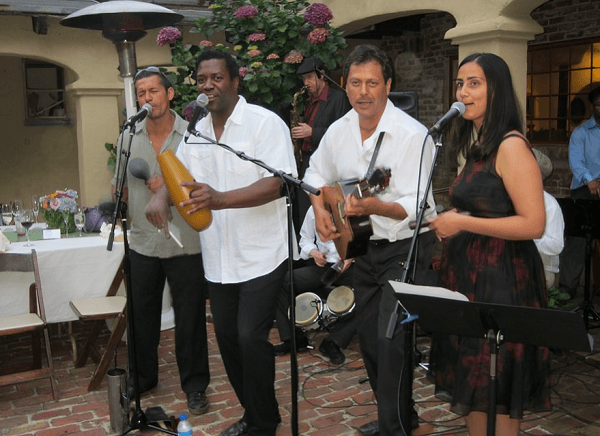
Dominic, David, Felix, David, Rudy, and Zareen
Percussionist Dominic Cabrera, singer Felix Samuel, saxophonist David Somers, bandleader Rudy Furlan, and singer Zareen Tangerine

Great references and inspirations for the music Los Boleros Latin Band makes

A few years ago, Rudy bought an album by Buena Vista Social Club, which he says changed his life completely and made him change direction in terms of the music. He listened to the material every day for months, to the point that he even memorized the songs and started playing them with his guitar.

When forming Los Boleros Latin Band, his musicians played many songs from that album and other great artists such as Eliades Ochoa, Ibrahim Ferrer, Compay Segundo, Omar Portuando and many others. 

Those already mentioned were some of the greatest inspirations Rudy and the members of the band had for their project, this being the vision with which the artist wants to go on through time as far as possible.

Read also: Producer, composer, and guitarist Oscar Almonte innovates with Dominican music

Oscar Dudamel continues to achieve dreams and presents “La Rumba Me Llama”

Legendary Venezuelan trombonist Oscar Dudamel expands his musical vision with a new single that fuses the essence of classic salsa with his unmistakable style, which is why he does not hesitate to express “La Rumba Me Llama”.

This song is part of his upcoming album “Sueño Alcanzado”, a production that will be released on May 30 and represents the culmination of years of musical research, fusing the classic salsa sound with jazz influences and the romantic tradition of boleros.

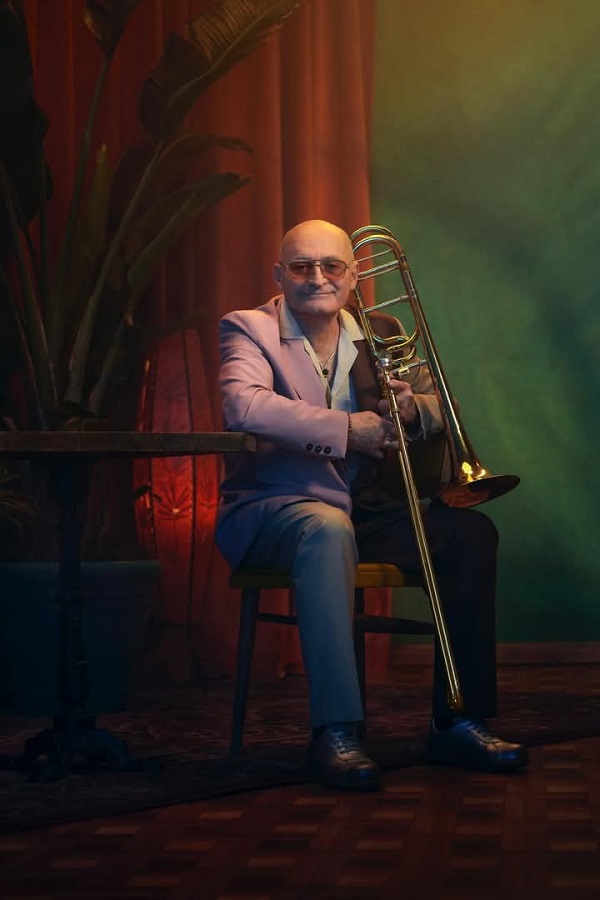
El legendario trombonista venezolano Oscar Dudamel

In “La Rumba Me Llama”, Dudamel brings his trombone to the forefront of a vibrant composition that captures the essence of the rumba as an inescapable call. With a musical structure that evokes the great salsa orchestras and an impeccable instrumentation.

The piece stands out for its meticulous arrangements, powerful brass and an irresistible cadence, faithful to the spirit with which Dudamel has approached his music. The track is an invitation to the dance floor and a testament to the rhythmic power that has defined his career.

The album Sueño Alcanzado not only takes its name from a personal concept of triumph, but also from one of his most significant pieces.

The title track was born in an intimate creative encounter in Caracas, Venezuela, with Maestro Alberto Crespo, composer Eliel Rivero and Solange Ramírez, mother of his son Gustavo Dudamel.

Oscar y Gustavo Dudamel

Dedicated to her son and with her special participation on violin, this piece encapsulates the spirit of a project that transcends the musical to become a testimony of life.

More than a nostalgic production, “Sueño Alcanzado”, of which the song “La Rumba Me Llama” is part, is the reflection of an evolution. The music that accompanied him since his childhood now takes a new form under his direction, in a creative process that has brought together talented musicians with whom he shares the same vision.

His orchestra, based in Madrid, has become the vehicle to continue taking his proposal to international stages, demonstrating that salsa is still alive in every note and every drum beat.

“La Rumba Me Llama” is now available on all digital platforms and is just a preview of ‘Sueño Alcanzado’, Oscar Dudamel’s new album, consolidating his legacy with authenticity and mastery.

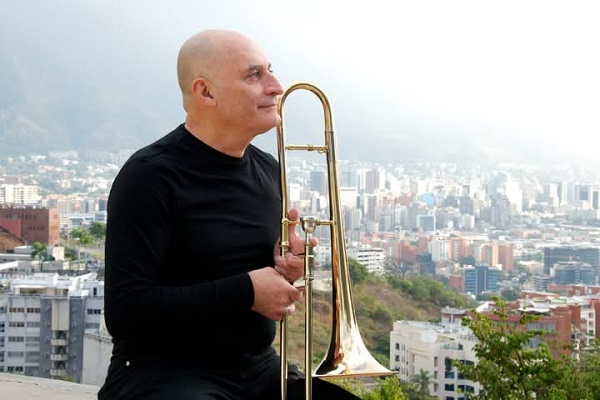
Oscar Dudamel Virtuoso Musician, Trombonist and Orchestra Conductor.

Oscar Dudamel, a Venezuelan trombonist, discovered his passion for salsa as a child when he first heard “La Murga” by Willie Colón. Although his formal musical training began with Maestro Pablo Canela and later continued within El Sistema as a classical musician, that early experience left a profound mark on him, inspiring his dream of playing the trombone and solidifying his love for salsa as his ultimate passion.

Dudamel was born on January 14, 1961, in Barquisimeto, Venezuela. He grew up in a musical family where every gathering was celebrated with music, fostering his passion for the art from a young age. His parents purchased him a trombone, and he began his studies at the Yamaha Music Academy.

Oscar Dudamel sigue alcanzando sueños

At the age of 7, he was enrolled in a music academy under the guidance of Maestro Pablo Canela, a composer and prominent figure in the music of the Lara State region of Venezuela.It was there that he started his training with the Cuatro, the traditional Venezuelan instrument, and the guitar, which became his first instruments.

In addition to his Cuatro training, Dudamel began studying and playing various percussion instruments, further broadening his musical repertoire.

His academic training took place at the Lara State Conservatory in Barquisimeto, and at the National System of Youth and Children’s Orchestras and Choirs of Venezuela, also known as El Sistema.

During his teenage years, he became a member of the Youth Orchestra of Lara State (El Sistema Lara) and the Liceo Mario Briceño Iragorry Band, where he had the opportunity to expand his musical knowledge and explore various genres.

Dudamel entered a new phase of his life when he enrolled at the Vicente Emilio Sojo Music Conservatory to study theory and solfège, continuing his trombone studies under the guidance of his maestro, Óscar Vivenes.

Over the years, he became a member of the Lara Youth Symphony Orchestra of Lara, part of the national network of Venezuela’s El Sistema orchestras, actively participating in classical music.

However, his fascination with the Caribbean rhythms of salsa never disappeared. Thus, he combined his classical training with his passion for salsa, performing with renowned artist and sharing the stage with legends of the genre, such as Héctor Lavoe, Ismael Rivera, Ismael Miranda, Celia Cruz, Justo Betancourt, Marvin Santiago, and other great artists.

In Caracas, Venezuela, he founded his own orchestra, with which he had the opportunity to share the stage with notable figures such as Rubén Blades, Gilbert Santa Rosa, Luis Enrique, Guaco, Oscar D’ León, and many others.

Dudamel’s surname is synonymous with music. He is the father of Gustavo Dudamel, one of the most acclaimed classical music conductors in the world. Gustavo’s well-known fondness for salsa stems from his father, who recently fulfilled his lifelong dream of releasing a solo album titled Sueño Alcanzado, dedicated to his son.

Dudamel currently resides in Madrid, Spain, where he leads his ensemble, Oscar Dudamel y su Orquesta, performing salsa alongside his Venezuelan musician friends and colleagues at Café Berlín Madrid.

Oscar Dudamel y Dj, Augusto Felibertt

‍Research Sources:

Contact: Katie Baloian of Radio Notas (Compartiendo Ideas)

Alberto Crespo (Pianist and Arranger)

Dj. Augusto Felibertt

Café Berlin in Madrid

Also Read: Mariana “The Sonera of Venezuela and for the world”

Our friend Tito Allen supports the Salsa Museum

From the Salsa Museum, we can boast of having a long list of important artists who have supported us since the project started or over the course of all these years. One of them is Roberto Romero Caballero, better known as Tito Allen, who is called ”El Elegante de La Salsa” by his most loyal fans as a result of the book ”Swing Latino” by Angel Mendez.

Tito singing
Tito Allen singing live

A little bit of Tito Allen’s biography

Tito Allen was born in the neighborhood of Santurce, municipality of San Juan, Puerto Rico, in 1946. He began his professional career in music as a 16-year-old teenager, when he was already part of groups in which he played the guitar and even performed on Puerto Rico’s Channel 4.

Although it is true that, initially, he was much more inclined to rock and roll and also used to play the bass, he changed his mind as time went by and decided to become a salsa singer, to the delight of all fans of the genre who gained forever one of their greatest Puerto Rican references. The best thing is that he turned out to have an incredible voice, so it was a very wise decision.

Obviously, Tito had his own inspirations to become what he is. In interviews with Tito, from his point of view, Cheo Feliciano is one of the best salseros of all and he has been listening to him since he was with Joe Cuba Sextet. As for the orchestras, he has also revealed that his favorite is that of Bobby Valentín and the song with which he identifies the most is ”Contento”. Another artist for whom he also expressed his admiration and desire to collaborate is the legendary pianist Eddie Palmieri.

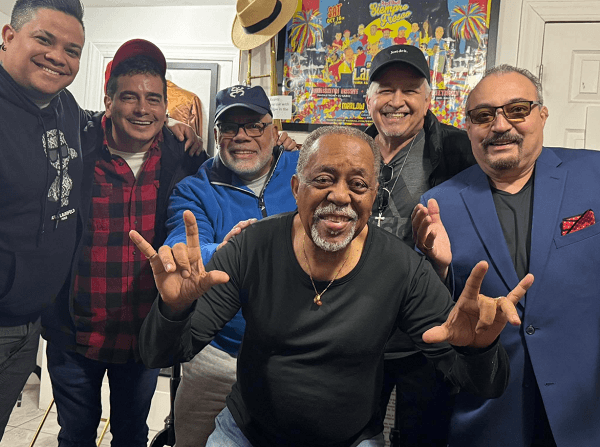
Tito and Johnny
Johnny Cruz, Tito Allen, Viti Ruiz, Jorge Leureyro, Christopher Rey and Ray Sepulveda

Tito Allen’s career

This talented man’s career is so wide that it is impossible to list everything he has done since he started in music, but it is possible to highlight that he has always tried to collaborate with as many groups and artists as possible and the list of recordings he has with other great names proves it. Tito Allen has sung along with Cheo Feliciano, Ray Barreto, La Típica 73, Adalberto Santiago, Papo Lucca, Willie Rosario, Fania All Stars, Pupi Legarreta, among many others.

It should also be noted that the singer traveled to New York in 1972 in order to attend Tito Puente’s shows and try to sing with him, but unfortunately he had no vacancies at that time. In view of this refusal, he decided to meet with pianist Edite Martínez, which resulted in a quintet that used to play in nightclubs.

He went back to Puerto Rico, but traveled again to New York very soon after, since he got a chance to play at ”El Corzo” with Ray Barretto’s orchestra, which was in need of a singer after the departure of Adalberto Santiago. After that, he finally managed to sing with Tito Puente for a few months and then went on to join La Típica 73 and La Puerto Rico All Stars.

All this without counting the large number of productions and recordings in which Tito sang and delivered backing vocals with many other big names in the industry.

Supporting the Salsa Museum 

Recently, Tito visited us at the Salsa Museum to give us his support and promote the institution as so many of his colleagues have done. In our social networks, you can see two pictures of the artist with our president Johnny Cruz, Viti Ruiz, Jorge Leureyro, Christopher Rey and Ray Sepulveda. 

Johnny Cru ISM corresponde in New York City

Read also: Puerto Rican singer Max Rosado and what he had achieved in Washington DC

Mambo Coffee

Latin America / Ecuador / Quito

Mambo Coffee. One year playing El Ritmo

Mambo Coffee - Photo 1
Mambo Coffee – Photo 1

We are talking about the fashionable nightlife space in Quito, a space dedicated to dancing, enjoyment and the city’s nightlife. From its tropical image that clearly denotes its dedication to Latin music, to its context, it calls you to have a good time, with family, friends and in the company of a good musical selection.

In a short time, the Mambo, as it is known, has achieved an important link between all the dance schools in the city, sometimes being the meeting place for these dance professionals. For everyone’s benefit we have bachata and salsa Wednesdays, classic salsa Thursdays and Fridays and tropical Saturdays where we can listen to a musical variety that manages to absorb a very heterogeneous audience.

Mambo Coffee - Photo 2
Mambo Coffee – Photo 2

Michell Castillo, manager, expresses to us, “…the concept of Mambo Café is aimed at a Latin public, salsero, who wants to enjoy a good bar.” Concept that day after day continues to be rooted in the visiting public. “… the name arose from the need for something multicolored for a salsa bar, the conditions of the premises allowed the designer to play with colors and structures that will speak for themselves.” It is striking to see a column decorated with acetate discs, murals and paintings in the best Caribbean style.

We had the experience of collecting impressions from many of the city’s dancers, all express the good atmosphere that is lived in this beautiful place, these institutions have had their doors open to celebrate their anniversaries, special parties, closing of the year and other festive occasions. thanks to the great opportunities that the bar offers us.

Mambo Coffee - Photo 3
Mambo Coffee – Photo 3

The recommendation is to try the range of cocktails, delight yourself with the flavored Margarita, a huge glass that you will surely taste with great fascination, not to mention the Maracuya mojitos and the bulldog tequila that surprises you with a corona beer among the decoration, all a show. The Mambo is still waiting for everyone’s visit, from Wednesday to Saturday making the bailadera fashionable in Quito.

It is located on Ave. Cristóbal Colón, Quito 170517, Ecuador where you can contact them through: Facebook: MamboCafeQuito Email: [email protected] Telephone: +593 2-223-1249

Mambo Coffee - Photo 4
Mambo Coffee – Photo 4
  • « Go to Previous Page
  • Page 1
  • Interim pages omitted …
  • Page 56
  • Page 57
  • Page 58
  • Page 59
  • Page 60
  • Interim pages omitted …
  • Page 149
  • Go to Next Page »

International Salsa Magazine (ISM) is a monthly publication about Salsa activities around the world, that has been publishing since 2007. It is a world network of volunteers coordinated by ISM Magazine. We are working to strengthen all the events by working together.