• Skip to primary navigation
  • Skip to main content

International Salsa Magazine

  • HOME
  • Previous editions
    • 2026
      • ISM / May 2026
      • ISM / April 2026
      • ISM / March 2026
      • ISM / February 2026
      • ISM / January 2026
    • 2025
      • ISM / December 2025
      • ISM / November 2025
      • ISM / October 2025
      • ISM / September 2025
      • ISM / August 2025
      • ISM / July 2025
      • ISM / June 2025
      • ISM / May2025
      • ISM / April 2025
      • ISM / March 2025
      • ISM / February 2025
      • ISM / January 2025
    • 2024
      • ISM / December 2024
      • ISM / November 2024
      • ISM / October 2024
      • ISM / September 2024
      • ISM / August 2024
      • ISM / July 2024
      • ISM / June 2024
      • ISM / May 2024
      • ISM / April 2024
      • ISM / March 2024
      • ISM / February 2024
      • ISM / January 2024
    • 2023
      • ISM / December 2023
      • ISM / November 2023
      • ISM / October 2023
      • ISM – September 2023
      • ISM – August 2023
      • ISM July 2023
      • ISM Edition June 2023
      • ISM – May 2023
      • ISM April 2023
      • ISM March 2023
      • ISM February 2023
      • ISM January 2023
    • 2022
      • ISM December 2022
      • ISM November 2022
      • ISM October 2022
      • ISM September 2022
      • ISM August 2022
      • ISM July 2022
      • ISM June 2022
      • ISM May 2022
      • ISM February 2022
      • ISM January 2022
    • 2021
      • ISM December 2021
      • ISM November 2021
      • ISM October – 2021
      • ISM September 2021
      • ISM August 2021
      • ISM July 2021
      • ISM May 2021
      • ISM April 2021
      • ISM June 2021
      • ISM March 2021
      • ISM February 2021
      • ISM January 2021
    • 2020
      • ISM December 2020
      • ISM November 2020
      • ISM October 2020
      • ISM September 2020
      • ISM August 2020
      • ISM July 2020
      • ISM June 2020
      • ISM May 2020
      • ISM April 2020
      • ISM March 2020
      • ISM February 2020
      • ISM January 2020
    • 2019
      • ISM December 2019
      • ISM November 2019
      • ISM October 2019
      • ISM Septembre 2019
      • ISM August 2019
      • ISM July 2019
      • ISM June 2019
    • 2016
      • ISM December 2016
  • Spanish
  • Download Salsa App
    • Android
    • Apple

Search Results for: live music

The Conjunto Bailatino “La Resistencia Salsera” again “Antes los ojos del Mundo” and here, “No hay quinto malo”

On April 21, 1991, in Venezuela, Bailatino “La Resistencia Salsera” was founded.

The Bailatino Ensemble, was born as a need to revalue and revitalize the Caribbean musical heritage so diverse and original; a heritage that refuses to die because it is part of our Cultural Identities, that is to say, it does not obey the dictates of fashion, nor the whims of the record companies, but our sense of belonging and our pride for the cultural contribution we have given to the world.

Bailatino represents the Salsa Resistance, Salsa without Concessions; it expresses the influences of the best musical groups that interpret the “Salsa Dura”, but, with its own identity.

Bailatino Llegó... Con Todo!!! 2003
Bailatino Llegó… Con Todo!!! 2003

The versatility, trajectory and professionalism of each of its members are known and recognized not only in the salsa world, but also in the wide range of Venezuelan music.

The musicians that make up Bailatino are constantly invited to accompany the best national and foreign orchestras that visit Venezuela; they are also requested in important international stages;

They have recorded different musical genres and are members of various Venezuelan orchestras. José “Cheo” Navarro, Marcial Istúriz, Edgar “Dolor” Quijada, Felipe Blanco, Johan Muñoz, Eliel Rivero, Alberto Crespo, José “Mortadelo” Soto, and Alexis Escobar (R.I.P) and replaced by Leo Pérez, make up a compendium of talent, knowledge and experiences whose result cannot be other than excellence and quality expressed in each of their interpretations.

Bailatino Llegó... Con Todo!!! 2005
Bailatino Llegó… Con Todo!!! 2005

Bailatino is the result of national and international musical influences, such as: La Dimensión Latina, Federico y su Combo Latino, El Grupo Mango, La Salsa Mayor and Tabaco y sus Metales, just to mention a few Venezuelan groups; likewise, Eddie Palmieri, Charlie Palmieri, Grupo Libre, Grupo Experimental Newyorkino, Ricardo Ray, Sonora Ponceña, Fania All Star , Mon Rivera, among others.

In 1995, Bailatino debuted in the framework of the International Theater Festival of Caracas, coincidentally in the spaces that previously was one of the temples of salsa and dance, the now disappeared “Sabor Latino”, formerly called “La Pelota”, sacred contexts of salsa and the nightlife of Caracas.

Bailatino has become one of the most popular and requested groups by the legion of “rumberos” and “rumberas”; salsa men and women, true experts and connoisseurs in the matter.

La Resistencia 2008, Bailatino
La Resistencia 2008

Who organize throughout the year the best salsa parties in Caracas, promoted and spread by means of oral tradition or selling tickets in the famous “Tío Pepe” of Sabana Grande, in Caracas.

These CDs are dedicated to all of them, because with their encouragement we were able to make our dream come true.

Bailatino has also performed on various stages in our capital and internationally:

Museo de Bellas Artes, Corp. Group, Espacios Unión, Trasnocho Cultural del Paseo Las Mercedes; Banco Central de Venezuela, Colegio de Ingenieros, Colegio de Médicos, El Maní es Así; “El Rincón Caribeño (currently “Rumba Aché”), Hawai Kai, El Atrio, Centro de arte la Estancia, celebrated its tenth anniversary at Casa del Artista, Aula Magna, first Metropolitan Salsa Festival, Herman among others. Internationally Bailatino makes his first presentation at the Jorge Isaac theater in Cali Colombia, he was invited to the festival “Salsa al parque” in Bogota Colombia, in 2007 he travels to the city of Dax France for the festival “Toros y Salsa”, in 2008 he travels to Mexico and that same year he performed at the Salsa summer festival in Cali, in that city, he also performed at the prestigious Changó nightclub; in 2009 we were in Australia; all these presentations with resounding success and acceptance.

Bailatino is a network of alliances, solidarity and complicity between musicians, composers, arrangers and friends from different professions and trades, who have contributed their grain of sand so that the Bailatino project, once the proposal was approved by music lovers and dancers, would not remain only in multitudinous presentations and excellent comments from its heterogeneous audience that multiplies every day.

Aniversario 2012
Aniversario 2012

Bailatino, is musical memory transmitted from one generation to another, reinterpreted with all the care and respect that the great masters deserve, who have contributed to design the musical map of Latin America.

The Bailatino group vindicates, once again, the place of honor that Latin Music deserves, not only for the Caribbean, Andean and Afro-American countries; it is a proposal within the framework of a globalized society, but also in a historical moment in which our cultural identities have a great capital to contribute in this multicultural and multiethnic counterpoint that currently exists in the world, in diverse fields and of course in the musical plane.

Currently they are preparing their fifth production entitled “No hay quinto malo”, and at the same time they have released two excellent songs with the brand of “Bailatino”, “Lo mismo de siempre” from the pen of José “Cheo” Navarro and a masterful arrangement José Soto “Mortadelo” in the vocal part Edgar “Dolor” Quijada, the second song entitled “Salsero Soy” composition and arrangements by pianist Alberto Crespo in the voice of the talented young Francisco Rojas and as special guest in this production the Sonero del siglo XXI Herman Olivera performing the song “El que te ama” another excellent composition and arrangements by Alberto Crespo.

Bailatino y Herman Olivera el Sonero del Siglo XXI
Bailatino and Herman Olivera el Sonero del Siglo XXI

For next Friday May 5, 2023 from 8:00 PM they will be performing at the public works club of Maracay in Venezuela with the help of “Taylor Productions” celebrating their 28th anniversary, an event that promises for the public of Maracay since La Ciudad Jardín is their second home.

El Conjunto Bailatino “La Resistencia Salsera”

Read also: Ronald Gòmez One of the most respected young soneros of the New Generation

Great conversation with New York singer Ralphy Ray

All about Ralphy Ray

Ralphy Ray is a New York songwriter and vocalist who spent a lot of his childhood in Barranquilla until he went to Miami to seek new horizons for his personal and professional life. As well as the vast majority of Latin artists who have found their way little by little, he has a very interesting story to tell to all his audience.

Ralphy Ray was born in New York, but grew up in Barranquilla

In International Salsa Magazine, we have been very interested in his story, so we decided to contact him and both he and his manager and friend John Caicedo have been very open to all the communication we did. Here are the issues we touched on during the conversation.

How his childhood influenced his music

Ralphy Ray was born in the United States, but his parents decided to return to Barranquilla when he was six years old, so he studied his primary and secondary in Colombia.

It is there where his interest in music began due to the great diversity of rhythms heard in that country such as vallenato, salsa, merengue, champeta and much more. What most got his attention to this branch of art was a certain group of tropical artists who aparked his love for this great profession to which he would dedicate his life.

When he turned nine years old, he began to study accordion for a short time, as he began to focus his mind on other areas such as singing and ballads. Whenever events were held at school, he was always included or he himself signed up to participate in them, so this curiosity for music continued to grow as the years went by.

His move to Miami

His move to Miami was due to personal reasons at first, since his uncle lived in that city and offered him to go live with him and count on his support once he decided to move to the United States definitely.

Today he says that it was one of the best decisions he could make in the professional field, as he had the opportunity to communicate and interact with local and very important groups in the industry, that’s when he met John Caicedo, who is now his manager and one of his greatest friends since then.

Now Ralphy lives in Miami, which has been very important in his carrer
Now Ralphy Ray lives in Miami, which has been very important in his carrer

He also began to interact and sing with great artists such as Celia Cruz, Eddie Santiago, Rey Ruiz, Luis Enrique, José Alberto ”El Canario” and many more. That is what has given him the experience he has today and made him take the risk of pursuing a solo career with his own style.

Solo career

Ralphy Ray was part of Los Babies De La Salsa, Los Hijos de La Arenosa, Grupos K-Oba, Sonora Carruseles, among others. When asked how he felt about the moment to launch as a soloist, he told us that the experience acquired with the aforementioned artists gave him the confidence he needed to take such an important step.

This decision was made in 2001, which is when he began to record solo. This path began with the single ”Mírala” of his own authorship.

Learning from other artists

Something Ralphy Ray says he has learned from all the artists he has worked with is discipline and the importance of being focused on what he does. Similarly, he also pointed out that you should never stop learning or mastering the technique needed to find the best version of yourself. ‘

‘The artists with whom I shared the stage taught me to give the best of myself at all times and to always be prepared to offer our talent with love and respect to the public”.

As far as things tat he advises not to do, he says that he has seen many artists being overwhelned by stress, fights and inconveniences. He points out that you have to know how to handle all these details and situations in front of the public no matter how difficult it could seem.

”There are also other cases in which some artists end up having friendships and relationships that are not good for them, which can lead them to lose their career and even their life. Many turn to drugs and other vices, but you always have to try to stay away from all that and focus on your own career” said the artist.

He also had memorable experiences and his conversations with Celia Cruz were very meaningful to him. ”La Guarachera de Cuba” always had good advice for new talents such as professionalism, punctuality, good physical image, vocal technique, among other details. ”I had great respect for Celia and I always keep in mind all the advice she gave me” he concluded on this topic.

Now Ralphy lives in Miami, which has been very important in his carrer
Now Ralphy Ray lives in Miami, which has been very important in his carrer

Es El Amor

When we wanted to know the ins and outs of his latest single ”Es El Amor”, he told us that it is part of a group of songs presented to him by a great friend and colleague.

He said to have fallen in love with the lyrics because they are very romantic and do not degrade women, in fact, they speak of a feeling that is being lost in the world: love. ”I want to let my fans and people who follow me know that we must always go with love and live in that beautiful story” said the artist.

As for the music video, he said he chose the beaches of Miami as the location to record his material because of the beauty of the place and that was what he wanted to show to the public. Besides, this city has been very important in his career and he thinks it is one of the most beautiful in the United States.

Read also: Larry Harlow ”El Judío de la Salsa”: innovative and irreverent

Víctor Gabriel Rosario Durán

Latin America / San Juan / Puerto Rico

Many singers have passed through time in the world of music, this time we have the privilege of making our followers known to “Víctor Gabriel Rosario Durán“

Victor Gabriel "Mi Problema"
Victor Gabriel “Mi Problema”

Victor Gabriel Rosario Duran is a great singer and percussionist who was born in San Juan, Puerto Rico on June 27, who showed from a very young age a great interest in tropical genre music since he played drums with his father, who in turn was a percussionist, even with the passing of the years Víctor Gabriel with his sister imitated the Duet “Pimpinela”, making a waste of talents at family parties and at school, so his parents, seeing their son’s talent, decide to enroll him in the Ernesto Ramos Antonini free music school, entering through the percussion department.

During his studies at the music school, he took advantage of his free time to practice “singing” in the square and one day he caught the attention of one of the members of the Latin Revolution orchestra, being at that time of the school salsa orchestra, he was called to audition and was chosen as a singer.

By joining the orchestra they managed to win first places in the “Talent Shows” that they participated in and out of school; and over the years he creates his own orchestra where he manages to win first place as “Best Talent” in the school talent contest, as well as in many other “Talent Shows”. Then he went from percussionist to the singing curriculum to perfect his technique as a singer and from 1994 he joined the group “Caribe Tropical” of Mr. Jorge

Victor Gabriel Rosario Duran live

At 21, he is part of the orchestra led by maestro Elías Lopés, where he recorded as the duo Gaby and Nelson. From the mid-1990s to the present day, Víctor Gabriel has been a singer, chorus girl and percussionist for local groups in Puerto Rico that make their presentations at the main hotels on the island, such as the Marriot Hotel, the now-defunct Hotel Cerro Mar de Dorado and Hotel San Juan, among others. He also continued his collaborations as a singer, backing vocalist and minor percussionist in Plena Libre, Tres Son Salsa, Zacandela, Atabal, the Orquesta La Offer. Don Perignon, and others.

Víctor Gabriel Rosario Duran participated for nine years as one of the main singers of the VSP Orchestra (Villariny Salsa Project), who performed in 2012 on the “National Salsa Day”, where he has had a great musical exposure enriching his extensive race; which has prepared him for what has been the dream of his life, his solo career. For the month of June 2019, Víctor Gabriel launches as a soloist with his first single “Mi Problema”, Salsa Version, which has been a resounding success on different stations worldwide.

Home Media Tour in Mexico and Colombia in its Caribbean Region visiting cities such as Barranquilla, Cartagena, Santa Marta, in the first one he appeared before a large audience LIVE in an activity called “HEROES IN COLOMBIA”, organized by the Military Police in the Battalion paradise, alternating with Chelito de Castro and Poncho Zuleta and which was covered by “EMISORA TROPICANA”.

He was also invited to participate in the “RANCHO CURRAMBERO INTERNACIONAL” in an event called “LA SALSA CONTINUES”, alongside great Colombian musicians such as Ray Palacio, Charlie Gómez, Nelson Fontalvo and Su Tribu Band among others. In less than four months, Víctor Gabriel was the winner with his song “Mi Problema” at the “Paoli Awards”, in the category “Salsa Revelation Artist 2019.”

On November 16, 2019, Víctor Gabriel Rosario Duran won the “Paoli Award”, “Salsa Revelation” in Orlando Florida.

Victor Gabriel Rosario Duran photo in concert

On February 14, he released his song “ASI ES EL AMOR” authored by master John Dávila, on all digital platforms and is taking possession of the different hit parades of stations in the world. Right now he is recording what will be his complete record work alongside prominent artists and musicians from Puerto Rico, such as Jay Lugo, the most important arranger on the island at the moment and who recently won “Grammy” awards with different artists, Omar Lugo and Luis Omar salseros of the new blood of salsa, John Pito Dávila, trombonist and director of different orchestras such as Puerto Rico Power, The John Dávila Orchestra and his Koketones de la Salsa, Viti Ruiz among others.

“What we are sure of is that Víctor Gabriel Rosario Duran, singer and percussionist, is a Boricua who makes his way safely into the Salsa of the new generation.”

Rolando Sanchez

USA / Hawaii / Honolulu

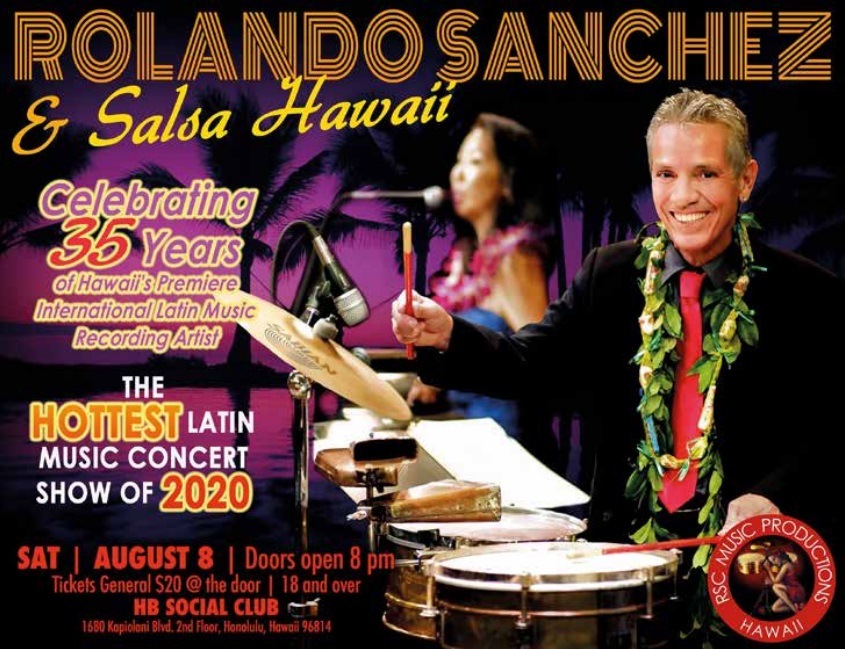
Rolando Sanchez: Percussionist, Singer, Composer, Producer and leader is the best selling Latin American artist in Hawaii

Rolando Sanchez
Rolando Sanchez

Rolando Sanchez Percussionist – Singer – Songwriter – Producer, leader of Hawaii’s Premiere, longest running, bestselling Latin recording artist from Hawaii.

In this Site you will experience the history and achievements of this musical Family called “SALSA HAWAII” for over 20-years, performing, recording, touring and just sharing the love and ALOHA of our Latin Music Wolrdwide.

With CDs sold Worldwide and the number of awards and accolades from press, government, musical organizations, community organizations, locally, nationally and Internationally.

HONOLULU TROPICAL

Celebrating 20 years of Latin Music in Hawaii Rolando Sanchez Salsa Hawaii Singer, Songwriter, Percussionist (timbales-congas-bongos-drums) Recording Artist, and Producer. Born in Masaya, Nicaragua, to a musical, artistic family; his father, an accomplished songwriter, pianist, and singer.

His mother also played piano and sang as with most of his immediate family. His musical influence began at a very young age playing drums with neighbourhood kids emanating the music of the time (i.e.: Beatles, Trini Lopez, Paul Anka, etc.).

In his early teens he began listening to  more Latin music styles, which formed the basis for his music today. The bands that influenced him at the time were Tito Puente, Celia Cruz, Billo’s Caracas Boys, Sonora Matanzera, Sonora Santanera, Daniel Santos, and a Nicaraguan band Los Satelites del Ritmo.

Rolando Sanchez playing drums in concert

In the late 60s, the family relocated to San Francisco, California where he grew up and truly realized that music was to be his life. The music scene in the Bay Area at this time was very diverse. He delved in all the different styles.

During that time, Latin music was beginning to blossom and all kinds of Latin-style bands such as The Aliens, Latin Bloods, Los Beamers, Bandido, Unidad 77, and Limbo began to play in and around the Bay Area.

Cesar’s Club was THE place to be to experience the best Latin musicians (Pete and Coke Escovedo, Roger Glenn, Luis Gazca, Pablo Telles, Victor Pantoja, performing live.

That’s when Rolando Sanchez realized his passion for Latin music and particularly Timbales. Then it happened! Santana Band came out and proved to be the biggest inspiration for all Latin musicians in the Bay Area (the world) including Rolando. It seemed that Latin bands were coming out of the woodwork: Azteca, Malo, Sapo, Dakila, and Salsa De Berkeley to name a few. He played with different bands in San Francisco’s Latin music scene and shortly thereafter, decided it was time to start his own band called SOLAR; they played a mixture of Latin rock and Latin jazz fusion

Rolando Sanchez and his brother Mario (still playing congas with Bay Area bands) were also some of the guys hanging out at Dolores Park in the Mission District playing congas and timbales along with such notables as Raul Rekow, Karl Perazzo, Chepito Areas, Carlos Badia, John Santos, and many other well-known Bay Area Latin percussion artists of today.

His band gained popularity and started playing the circuit where he met and befriended such artists as Pete and Sheila E. and Master Armando Peraza who helped develop his affinity for percussions.

While playing in the Bay Area, SOLAR was billed with bands like Azteca, Azuquita, Sapo, Cal Tjader, Cesar’s All-Star Band, Willie Bobo, and others.

After their break-up, he formed the band SUNSMOKE together with his uncle, Freddie Velasquez, who had just returned to the Bay Area from touring the country with the Phil Driscoll Band. SUNSMOKE quickly became well-known in the Bay Area and they toured the west coast and Canada where they opened for blues master B.B. King and performed at the Canadian Rock Festival with bands from all over the world.

After a couple of very busy years, including recording some demos for major record labels, they broke up and Rolando spent some time in Los Angeles checking out the music scene there. Upon returning to the Bay Area, he joined MESSIAH, one of the hottest Funk/Gospel/Rock/Disco bands. Their single, “Get up on Your Feet and Dance”, became a hit in the International disco scene. MESSIAH then went on to Japan where they enjoyed instant success and toured for 4 months. Shortly after their return, the band broke up and the Rolando Sanchez Band was born. Composing and writing his own material, Rolando released his ­first single cassette with two original songs, “She’s the Lady” and “Cold Hearted Woman”.

Rolando Sanchez
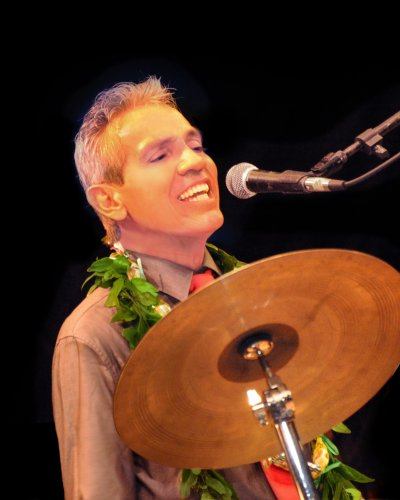
Rolando Sanchez singing

She’s the Lady” was made into a music video shown on local stations on both east and west coasts at  the very beginning of the MTV movement. It featured some of the Bay Area’s ­nest musicians including vocalist Jo Baker (Elvin Bishop Band). After being in the Bay Area for nearly 20 years, Rolando felt the need for a change of pace in his life. In 1984, he visited his sister in Hawaii and the rest, as they say, is history.

Not long after arriving in Honolulu, Rolando decided to make it his home and the place where he would throw his musical fate to the wind.

  1. His very ­first musical engagement in Honolulu was at the Waikiki

Shell with one of Hawaii’s hottest singer/songwriters of that year, Mr. Audy Kimura, in celebration of 25 Years of Statehood. This made it all the more clear to him that he was in the right place.


Good initiatives must be shared!

North America - United States - New York

We were taking the Salsa exhibition to Puerto Rico for the I Encuentro de Coleccionistas de Salsa, we made an exhibition of the clothing, records and instruments used by the Fania All Star orchestra, Tito Puente, Héctor Lavoe, Adalberto Santiago, the Gran Combo and others. For the first time, the last “tuxedo” that Tito Puente used in his participation with the Orquesta Sinfónica de Puerto Rico was exhibited.

Spanish Harlem Salsa Music Gallery, offered an exhibition and Master Class on the history of Salsa at the Escuela Especializada en Música Jesús T. Piñero in Cidra, Puerto Rico. We transported ourselves to Puerto Rico in search of an opportunity to publicize the Salsa Museum-Gallery in New York.

This is part of the efforts being made for the participation and dedication that is made to the people of Cidra in the Desfile Nacional Puertorriqueño 2020 and that is locally coordinated by the Patronato Cidreño along with other civic and professional organizations.

We were able to benefit hundreds of students at this school who are precisely focused on music. The knowledge offered in the three conferences and being able to closely observe the exhibition helped to foster the enthusiasm of the students who make up the campus, unique in the mountains of Puerto Rico, dedicated to the creation of good musicians and knowledgeable in musical art.

We are dedicated to enhancing Latin music and offering spaces focused on arts education, accessible and friendly to the community as a strategic partner.

I thank valuable people such as Laura Torres, Silkia Vázquez, Wilson Nazario and Wilfrido Torres “Puruco” for all the attention and teamwork that we were able to develop during our visit. I cannot stop also thanking my assistant in Puerto Rico, Carmen Cruz; and to Joseph Cruz for his magnificent and beautiful work with me during this pleasant experience.

I also take advantage of this space in International Salsa Magazine because I want to tell you about an artist and a great friend who is doing his best for music and Salsa. Without a doubt, Yova Rodríguez is a long-standing professional who has developed countless projects and initiatives to support those who need it most. With his music, his work and his human quality, he has reached many hearts from New York.


Geovanni “Yova” Rodríguez Ruiz, born in Puerto Rico, had a musical inspiration since he was a child, his uncle Antonio “Toño” Ruiz – his mother’s uncle who played the cuatro – was his first music teacher (melody) and his uncle José Antonio “Pipo” Ruiz Crespo -mama’s younger brother- taught him how to sing aguinaldos (lyrics); and with this they formed the solid foundations that encouraged little Yova to prepare himself accordingly for his foray into the musical world.

The celebration of the Promesa de Reyes, a celebration in which he participated with his mother at his short seven years, leads him to worry about creating and recreating aguinaldos to be interpreted each year, which in some way becomes the seed of composer that we know today.

At the age of 14, he attended the Escuela Libre de Música Ernesto Ramos Antonini in Mayagüez, hand in hand with piano teacher César Toro, rising as vocal leader of the Orchestra after a year.

Years later he gave himself the task of forming his own musical concept, and thus Sakao Aká was born. This orchestra was in charge of accompanying singers such as Camilo Azuquita, Ray de la Paz, Pupy Cantor and Herman Olivera in their presentations in Puerto Rico; and the cover letter for some of these singers to integrate Yova as a chorus girl in their presentations in various countries in Central and South America.


At the end of the 90s, on a trip to Cuba, he was impacted by the music of Fernando Borrego Linares, better known as Polo Montañez, to the point that, some years later upon learning of his death, he had the idea of ​​paying tribute to him, his musical reference, thus giving birth to the idea for her debut feature Homenaje a Polo Montañez (2005), a production of 10 songs by Montañez, and covered by Yova Rodríguez with the participation of renowned musicians from the patio such as Herman Olivera, Héctor “Pichie ”Pérez, Papo Lucca, Edwin“ Caneca ”Rosas, Edwin Colón Zayas, among others.

In 2008, like many of her compatriots, Yova prepares her luggage and heads to the southern United States, where she stays for two years and then moves to New York, a city that has become her center of operations and from where He has extended his working ties as a composer and where he records his next two productions.

The album Letras, canciones y sueños, musical work of 8 songs all written by Yova, comes to light after some years of having published his first production and of having worked silently composing and waiting for his opportunity. This possibility is materialized in 2013.

Already in 2015, the album Mi musa en las voces de mis amigos is released.

Salsa with Yova Rodriguez

Recently, Yova Rodríguez has created more than 420 songs, and many of them have been duly registered with the American Society of Composers, Authors and Editors (ASCAP) under the registry “El Negrito De Delia Music” . “Exceso de amor” is the first composition he has interpreted and recorded; like the song “No me odies”, it is the first recording of a song by him made by a third party.

Now they are going to hear more from Yova, as some productions that will include her compositions are in the process of recording / publishing. Attentive to the upcoming releases of the young Puerto Rican percussionist José Jomar Marcano, the master trumpeter Luis González, the young trombonist, arranger musician and also singer Leo Morales; the renowned DJ Andy Rodríguez, better known as DJ ANDY and the Venezuelan sonero Marcial Isturiz .

As always, remember that Spanish Harlem Salsa Gallery is in 1708 Lexington ave New York N.Y. 10029. Open free to the public all Thursdays & Fridays from 4 to 7 pm and Saturdays from 1 to 8 pm. Check the updates in our website: spahasalsagallery.com.

Also, The Johnny Cruz Show, the # 1 Salsa Show on television on all 5 Boroughs of New York on CH67. Saturdays from 3:30 to 4:30 pm.

Contact: Johnny Cruz. 917-747-8505. [email protected]

By Johnny Cruz, ISM Correspondent, New York, New York


  • « Go to Previous Page
  • Page 1
  • Interim pages omitted …
  • Page 96
  • Page 97
  • Page 98
  • Page 99
  • Page 100
  • Interim pages omitted …
  • Page 149
  • Go to Next Page »

International Salsa Magazine (ISM) is a monthly publication about Salsa activities around the world, that has been publishing since 2007. It is a world network of volunteers coordinated by ISM Magazine. We are working to strengthen all the events by working together.