• Skip to primary navigation
  • Skip to main content

International Salsa Magazine

  • HOME
  • Previous editions
    • 2026
      • ISM / May 2026
      • ISM / April 2026
      • ISM / March 2026
      • ISM / February 2026
      • ISM / January 2026
    • 2025
      • ISM / December 2025
      • ISM / November 2025
      • ISM / October 2025
      • ISM / September 2025
      • ISM / August 2025
      • ISM / July 2025
      • ISM / June 2025
      • ISM / May2025
      • ISM / April 2025
      • ISM / March 2025
      • ISM / February 2025
      • ISM / January 2025
    • 2024
      • ISM / December 2024
      • ISM / November 2024
      • ISM / October 2024
      • ISM / September 2024
      • ISM / August 2024
      • ISM / July 2024
      • ISM / June 2024
      • ISM / May 2024
      • ISM / April 2024
      • ISM / March 2024
      • ISM / February 2024
      • ISM / January 2024
    • 2023
      • ISM / December 2023
      • ISM / November 2023
      • ISM / October 2023
      • ISM – September 2023
      • ISM – August 2023
      • ISM July 2023
      • ISM Edition June 2023
      • ISM – May 2023
      • ISM April 2023
      • ISM March 2023
      • ISM February 2023
      • ISM January 2023
    • 2022
      • ISM December 2022
      • ISM November 2022
      • ISM October 2022
      • ISM September 2022
      • ISM August 2022
      • ISM July 2022
      • ISM June 2022
      • ISM May 2022
      • ISM February 2022
      • ISM January 2022
    • 2021
      • ISM December 2021
      • ISM November 2021
      • ISM October – 2021
      • ISM September 2021
      • ISM August 2021
      • ISM July 2021
      • ISM May 2021
      • ISM April 2021
      • ISM June 2021
      • ISM March 2021
      • ISM February 2021
      • ISM January 2021
    • 2020
      • ISM December 2020
      • ISM November 2020
      • ISM October 2020
      • ISM September 2020
      • ISM August 2020
      • ISM July 2020
      • ISM June 2020
      • ISM May 2020
      • ISM April 2020
      • ISM March 2020
      • ISM February 2020
      • ISM January 2020
    • 2019
      • ISM December 2019
      • ISM November 2019
      • ISM October 2019
      • ISM Septembre 2019
      • ISM August 2019
      • ISM July 2019
      • ISM June 2019
    • 2016
      • ISM December 2016
      • ISM November 2016
  • Spanish
  • Download Salsa App
    • Android
    • Apple

Search Results for: music

Romantic duos in Latin music

The month of love is coming, and nothing better than accompanying those moments with good music. Latin music has always been loaded with romance, passion, heartbreak, and despite that each of the listeners feels identified with the lyrics, and moves to their rhythms. Added to the great artists, both the active ones and those who have already left, there have been songs that raise the level due to the union of two of those singers. In this article we tell you about the most romantic duos in Latin music.

These are the most romantic duos in Latin music

Marc Anthony and La India – Vivir Lo Nuestro

One of the most popular salsa songs at the start of the new millennium. This work launched both singers to stardom. To this day it is a song that many couples definitely identify with, with lyrics like:

“En una noche cerrada

Voy a detener el tiempo

Para soñar a tu lado

Que nuestro amor es eterno”

The eternal love between both parties, the desire to shout to the world how much you love your other part, and that there is no obstacle to stop them, is the message they want to give.

“En un mundo sin razas

Sin colores, ni lamentos

Sin nadie que se oponga

En que tu y yo nos amemos”

Despite the resounding success of the song, and the boost it gave to both their careers, they are currently not on good terms, which shows that although the song is loved by its fans, and speaks of a love without barriers, external factors can end a relationship, be it friendship or professional. So it doesn’t look like we’ll be getting a fresh, live version of this romantic classic anytime soon.

Maná and Rubén Blades – Sábanas Frías

This is a combination that few expected back in 2002, but Blades has never hidden his desire to collaborate with many artists. On this occasion it was the Mexican Rock group Maná, who had the great opportunity not only to mix the talent of the group with the great Panamanian artist, but also the fusion of two genres, rock and salsa so characteristic of Rubén. 

The song talks about how lonely a person in love feels, without their other half living under the same roof. So as the track progresses, he invites his love to live together, to take care of each other forever, and share everything.

“Y te cuidaré por siempre y donde quiera

Te amaré como uno quiere a su bandera

Yo te quiero compartir todo, todo mi amor

Te comparto mi cuarto, mi cama, mis besos

y todo, todo amor”

This is one of the emblematic songs of Maná Revolución de Amor album, released in 2002. As its name indicates, it is totally dedicated to love, that’s where Sábanas Frías came from, but nobody expected the collaboration with Rubén Blades to bring that tropical sound so typical of Panama.

Eddy Herrera and Liz – A Dormir Juntitos

Merengue is another genre that does not escape love, and one of its hymns is A Dormir Juntitos by the Dominican singer Eddy Herrera, who invited the Venezuelan Liz, known for having been part of Los Melódicos, so that both of them could mix their talents in this song.

If you take a look at the lyrics, it’s not completely a love song, but more about heartbreak, since it talks about a couple who are separated, and although they still love each other, they can’t sleep together again. 

“Y yo te veo

A través de la ventana cuando te vas

Y llorando me dan ganas de decirte, quédate

Por qué estamos durmiendo solos

Si nos seguimos queriendo

Si nos seguimos amando

No dejamos de lado el orgullo y volvemos”

Víctor Manuelle and Oscarcito (Yakozuki) – Si Tú Me Besas

Puerto Rican singer Víctor Manuelle is well known for the romantic lyrics that make up his songs. For 2011 he worked with the Venezuelan producer Oscar Hernandez, better known as Oscarcito or with his new name Yakozuki. This is how Si Tú Me Besas was born, a song that was originally covered in 3 versions for the album Busco Un Pueblo, so you can enjoy the song in salsa, pop and ballad.

“Bésame despacio

Y no se te ocurra dejar libre

Ningún beso ni ningún espacio

Con ese cuerpazo

Dame el privilegio de viajar hacia el espacio”

The lyrics talk about the experience of kissing your partner, and everything that this awakens in both parties. It not only talks about the feelings that arise from a kiss but also that you can forget the world through it. There is a fourth version of this song, although it follows the salsa genre, it is sung by both Víctor and Oscar, which got more followers in many countries.

This is just a small glimpse of all the great duos that Latin music has given us over the years. Without counting all those who will come, since the new generations show more and more talent.

La Sonora Matancera musical congregation of long trajectory and its sound quality, is one of the most popular in the Caribbean island “Cuba”

It was founded in Matanzas in 1924 under the name of La Tuna Liberal.

Its first members were: Valentín Cané, director and tres player, Manuel Valera, guitar and second voice, Manuel Sánchez (Jimagua), timbal, Ismael Governa, cornetín, Pablo Vázquez Govín (Bubú), double bass, Domingo Medina, guitar, Ismael Goberna, cornetín, Julio Govín, guitar, José Manuel Valera, guitar, Juan Bautista Llopis, guitar.

In 1926 Carlos Manuel Díaz Alfonso (Caíto), falsetto voice and maracas, and Rogelio Martínez Díaz (El Gallego), guitar, joined the group and it adopted the name Sexteto Soprano.

On January 12, 1927, under the name of Estudiantina Sonora Matancera, they moved to Havana. In November of that year they recorded their first two recordings for the Victor label: Fuera, fuera, chino, by José Manuel Valera, and El porqué de tus ojos, by Valentín Cané.

With the definitive name of Conjunto Sonora Matancera, it began its transmissions on the radio station El Progreso Cubano (later Radio Progreso). At that time it appeared on Radio Atwater Kent; in 1932, at the suggestion of Rogelio Martínez Díaz, it took the name of Sonora Matancera, and began its performances in the Havana Sport dance academies, and later in Marte and Belona, and later became part of the cast of CMQ Radio. In 1935, trumpeter Calixto Leicea joined the group; in 1939, composer, pianist and orchestrator Severino Ramos, who gave the Sonora its distinctive sound with his orchestrations.

La Sonora Matancera congregación musical de larga trayectoria y su calidad sonora, es una de las más populares en la isla caribeña “Cuba”

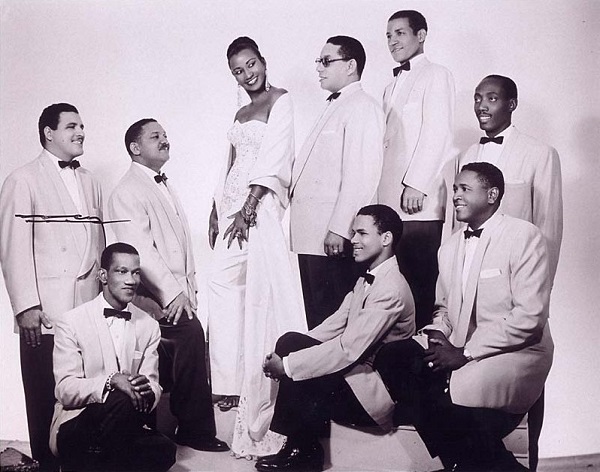
In 1944 pianist Lino Frias and trumpeter Pedro Knight Caraballo joined the group, who with Calixto Leicea formed the most interesting trumpet duo in the history of Cuban ensembles; in 1945 singer Bienvenido Granda Aguilera; in 1948, Angel Alfonso Furias (Yiyo), tumbadora. At this time the Sonora Matancera was formed by Rogelio Martínez Díaz, director, guitarist and chorus; Pablo Vázquez Govín (Bubú), double bass; José del Rosario Chávez (Manteca), timbal; Ángel Alfonso Furias (Yiyo), tumbadora, who replaced Valentín Cané; Calixto Leicea, first trumpet; Pedro Knight Caraballo, second trumpet; Lino Frías, pianist; Carlos Manuel Díaz Alfonso (Caíto), falsetto voice and maracas; Bienvenido Granda, singer and claves; and Celia Cruz, who soon became the stellar singer we knew and the mainstay of the Sonora Matancera hits. Thus began a period that critics have called the golden age of the Sonora.

In 1950, with the advent of television, the Sonora Matancera was one of the first musical groups to perform on this medium. It also signed a contract with the Seeco record company, with whose recordings it made a name for itself in the international market. In 1952, Raimundo Elpidio Vázquez replaced his father, Pablo Vázquez, on double bass (when Rogelio Martínez Díaz died in 2001, he took over the leadership of the group).

In 1926, it changed its name to “Septeto Soprano”. That same year, Carlos M. Díaz “Caíto” accompanied Eugenio Pérez in the choir.

Later in 1927, on Caíto’s recommendation, Rogelio Martínez joined the group and the name of the group was changed to Estudiantina Sonora Matancera.

Sonora Matancera
Sonora Matancera

With a great desire to improve the group travels to Havana where they get in touch with the record company “RCA Victor” and make their first recording on January 12, 1928.

At the beginning of the thirties, the group began to adapt to the new rhythms that were appearing at that time as well as adapting new instruments, such as the grand piano, which was played for the first time in the group by Dámaso Pérez Prado, who years later would become the “King of the Mambo”.

But it was in 1935 when the group took the name La Sonora Matancera, and with this change it introduced a new trumpet player: Calixto Leicea, who replaced Ismael Goberna, who died a few months later due to health problems.

The unforgettable José Rosario Chávez “Manteca”, who replaced the resigned “Jimagua”, also joined the band. Humberto Cané joined the group playing the tres and his father Valentín Cané began playing the tumbadora.

In 1938, Dámaso Pérez Prado retired and left the vacant piano position to Severino Ramos, who soon after became the musical arranger of the group.

During the first years of the forties they made presentations in dance academies, cabarets and in Radio Progreso Cubano, they also included in their repertoire: guarachas, montunos.

On January 6, 1944, two musicians from Arsenio Rodriguez’s group joined the group: Lino Frias (author of the popular song Mata Siguaraya) who began to play the piano and Pedro Knight who became the second trumpet player of the Sonora Matancera.

In the month of December, Bienvenido Granda enters the band recommended as vocalist, being his first recording “La Ola Marina” by Virgilio González, and with him they sign a contract with the nascent record label Panart Records. Valentín Cané, Israel del Pino, Caíto and Humberto Cané made recordings with this label.

In the middle of 1946 the founder Valentín Cané suffers asthmatic problems that force him to leave the group, dying two years later. Before the group joined Panart Records, it recorded other songs for the “Varsity” label, without the name of the Sonora Matancera appearing on the labels, here the first version of “Se Formó la Rumbantela” by Pablo Cairo, “Tumba Colorá”, “El Cinto De Mi Sombrero”, Bienvenido Granda and Humberto Cané participated in these numbers.

El Regreo de La Sonora Matancera 2022 2023

Members

Trumpets: Calixto Leicea and Pedro Knight

Double Bass: Elpidio Vázquez, replacing his father Pablo Vázquez, “Bubu”.

Piano: Lino Frías

Timbales, Bongó and Campana: José Rosario Chávez “Manteca” Chávez

Tumbadora: Ángel Alfonso Furias “Yiyo”.

Guitar and Choir: Rogelio Martínez

Maracas and Chorus: Carlos Díaz Alonso “Caíto”.

Claves and Choir: Bienvenido Granda.

Last January 13, 2023 they turned 99 years old and are still going strong from generation to generation.

Source:

Enrrique “Culebra” Iriarte, Venezuelan pianist, arranger and orchestra conductor.

Bibliography: Ecured Cuba

La Sonora Matancera 

You can read: Carlos “Patato” Valdés one of the best percussionists in the history of Latin Jazz

Wálter Rebatta from Peru is one of the most outstanding figures of Latin music

We are honored to present in this new delivery, one of the most outstanding figures of Latin music, representing the brother country of Peru; who has put very high the name of the musicians born in Inca lands to the world.

With you, directly from France, we have as a special guest Wálter Antonio Rebatta Hinostroza, a brand new and spectacular percussionist, who was born on September 14, 1973, in Bella Vista, Callao, Peru, being artistically known as “El Chato”.

Welcome Wálter to Salsa Escrita “La Columna Salsera de Barquisimeto, Venezuela”.

Wálter Rebatta desde Perú es una de las figuras más resaltantes de la música latinaWálter Rebatta desde Perú es una de las figuras

It is an immense pleasure to have you as a special guest in International Salsa Magazine through www.SalsaGoogle.com.

Thank you very much to you, my friend, Professor Carlos, for the invitation to your well read and recognized column and I take this opportunity to give a sincere greeting to all Venezuelans who are like my brothers.

How did you start in music? Well, teacher in my neighborhood called Ventanilla, in Peru, I grew up and since I was a child I breathed musical air, where at the age of 6 years old I was already playing “El Cajon”, traditional Peruvian Creole instrument, under the tutelage of my older brother Kike Rebatta, who took me later to learn other percussion instruments and prepare me with music theory, and then enter the music school of the renowned teacher Edelmi Chavez, and thus enter to form ranks in the most recognized orchestras in my country, such as: La Iniciativa, Orquesta la Grande, Banana Latin Jazz, among others. Wálter, which international orchestras and artists have you accompanied? I have accompanied and worked with “Los Hermanos Colón” from Puerto Rico and among many groups, I have had the honor of being on stage with my Venezuelan brothers, Hildemaro “El Sonero del Amor”, with whom I have a great friendship, as well as with the master timbalero Alfredo Villamizar, from whom I have learned a lot and from whom I must thank through his column Salsa Escrita.

Wálter Rebatta Multi-Percusionista Peruano

“Chato”, you are currently based in the French city of Grenoble and we would like to know how is the salsa movement, especially in Europe. In fact, professor, in 1995, I came to Europe with the “Orquesta Salsa Perú” and I met Mr. Rodolfo Guerra, with whom a great friendship was born and I became part of the “Orquesta Sincopa Latina”, directed by him, being present in his productions: Salsa que te pasa, Demasiado corazón, Mi bachata, Puerto Rico, Todo, Escándalo, Mi silencio, Mi toque, Habla conmigo and Azafata.

Wálter, I have heard that you have accompanied great salsa artists in their presentations, tell me who? I have had the honor of accompanying the late Tito Gómez, Willie González, Luisito Carrión and the great Venezuelan sonero Orlando José Castillo “Watussi”. Also, let me tell you professor, that I have worked in the Italian television Media Set, in the very popular program “Notte Vola”, also in 2002, I participated in the Tour of the Queen of Salsa, Celia Cruz, along with the orchestra of the prestigious world famous violinist Alfredo de La Fe.

Likewise, my friend Carlos, in 2004, I performed in numerous events with Latin jazz groups, among them “El Royal Cuba”, of the Cuban musician and singer Eduardo Céspedes.

In 2007, I participated in the prestigious and famous San Remo festival with the singer Daniele Silvestri, with whom I have recorded in his productions.

Wálter Antonio Rebatta Hinostroza

In 2009, I participated in the Italian tour “Terromotati Dil Abruzzo”, conducted by the famous singer Laura Pausini and later that same year I participated again in a tour in the United States for charity with Pausini again.

Excellent Wálter, and what can you tell us about the orchestra you are currently working with and what are your future projects? Professor Carlos, at present I am an official musician of the renowned orchestra “Mercadonegro” and in relation to my projects, is to form my own group and perhaps venture into the bachata, but without leaving aside the salsa, since living in Europe I have met many bachateros.

And something very important, my friend Colmenárez, I am also working on the project of my Venezuelan compadre, the musician Edwin Sanz, whom I would like you to interview at some point.

Very good Wálter, congratulations for your trajectory, what are your contacts in the digital platforms? My Facebook is: Wálter Antonio Rebatta Hinostroza and my whatsapp: +41 77 5122633.

Wálter Rebatta
Wálter Rebatta

Finally, we want to wish you the best on behalf of Salsa Escrita “La Columna Salsera de Barquisimeto” and that you continue to raise the name of Peru in all the stages of the world.

Thank you a thousand times, Professor Carlos Colmenárez, for taking me into account and thus making my career known and giving my greetings, thanks and respect to all the salseros of the world through International Salsa Magazine, www.SalsaGoogle.com and long live salsa, Peru and Venezuela, united forever.

Known artistically as Mahel, Singer, composer, percussionist and professional model

You can read: Walter Rebatta

Benefits of music in pregnancy

Music and pregnancy

On a number of occasions, science has shown the benefits that music has for the health of humans in general and of course the stage of pregnancy could not be the exception.

It turns out that listening to music can be highly beneficial for both the future and the baby on the way, who already has the ability to perceive sounds on his own from the sixteenth week of gestation. Throughout this material, we will be talking about the influence that music has on this very special stage of a woman’s life and the child she has in her womb.

A baby can perceive sounds from the sixteenth week of gestation

Music and the realtionship of the fetus and the mother

While it is true that it has not been proven that music affects the baby’s intelligence and development, it is known that it is a very powerful catalyst of emotions for the mother, which will affect her child at a physiological level. This is because the child can perceive both nervous and quite moments that his mother feels at some point as part of the connection that both human beings already have. Although the baby cannot hear as an adult would do, he is capable of capturing the eotions of his mother unconsciously.

This connection is even strengthened by their heartbeat synchrnization, which are in time with the rhythm of the song they listen to at the same time. If the mother listens to her favorite song at that moment, she will relax and feel a state of well-being almost immediately, which will also happen with her child.

If a song makes a pregnant woman happy, her baby will be happy too

Another important detail is that the mother produces endorphins that make her feel happy and comfortable at that moment, which will also be noticed by her little one, who will also be infected by these sensations. Many would recommend classical music or medias designed for future mothers, but songs that are simply to their liking and help to relax them from daily stress are also a good option.

A fetus’s perception of music

Thanks to a study by Institute Marqués entitled ”Fetal facial expression in response to vaginal music emission”, it is known that a fetus can hear clearly sounds from his mother’s body such as her heartbeat and breaths, but outside sounds from are completely distorted, which of course includes music. It was also discovered that the only sound waves that are clearly perceived from the womb are those coming directly from the vaginal canal.

Most of the sounds will be perceived as distorted by the baby

Specific benefits of music for the fetus

One of the main benefits  music for the fetus is the stimuation of the brain areas and cells responsible for language by this set of sounds, which greatly helps this area to develop correctly. In fact, there have been ultrasounds that show many babies can be seen opening their mouths and trying to vocalize while there is a background melody.

Another great benefit of listening to music for babies is intense stimulation of heart rate by these sounds, which makes the heart pump faster, the cells achieve a better oxygenation and the brain has a more complete development.

In addition to this, prolonged exposure to music may cause the baby to stay calm for a longer amount of time and cry less once he is born.

Read also: Chevy El Pitirre De La Salsa and his interesting career

”Salsa Con Sabor’’ and its contribution to salsa music

Platfoms to promote salsa

Just as we always promote the artists and musicians who keep alive salsa and Latin genres, we also think it is important to highlight the work of communicators who have taken the task of continuing to spread the traditional Latin music through the resources that technology has made available to us. Such is the case of Charlie Perez and the web page ”Salsa Con Sabor”, which he has been running for several years.

We talked to this talented young man, who has illustrated very well how his work has been throughout these years with the management of ”Salsa Con Sabor”, interesting anecdotes and what he earned from all this process.

Charlie Pérez, administrator of ''Salsa Con Sabor''
Charlie Pérez, administrator of ”Salsa Con Sabor”

Conversation with Charlie Perez from ”Salsa Con Todo”

Salsa Con Sabor was born in 2010. I was always a salsa enthusiast and it runs in the family because my father has always loved tropical music, salsa, guaguancó, son montuno, bolero, among others. I became curious about these topics while naving in the social networks, so I created a Facebook page whose aim was to be a music space to share with salsa fans around the world. By this means, we began to share music, artist biographies, salsa history, salsa ephemeris and many more” were the words spoken by Charlie when asked how this project came about.

He also told us that the page was gaining a popularity that he and his team decided to shape this idea through the creation of a website, a YouTube channel and accounts in the rest of social media. All this led several independent artists to send their musical works to ”Salsa Con Sabor” to be shared and diffused.

Important to note that all members of this great team are professionals nothing linked to the world of music. They are simply people who enjoy Latin genres and want them to stay alive over time.

Charlie Pérez and his wife Wilendy Rosario

What do you see in an artist before spreading his or her music?

I like to support all artists, but I don’t deny that I focus a lot on the quality of the work presented. I always check certain aspects such as the cover art, the image and how music was worked, showing whether or not an album will be worth it. We always give the opportunity to all artists to send us their work, but they must have a standard quality” said Charlie on the subject related to unknown artists sending him their albums.

Successes to date

Perez has told us that he feels incredibly grateful for all the doors ”Salsa Con Sabor” has opened for him. He has met many important people in the industry and artists with whom he has developed good friendships, something he really values.

This space has also allowed him to expand to other fields. In the case of Charlie, he is a marketer and always had the desire to start his own business, which added to his knowledge of the music industry and marketing, led him to create his own advertising agency called Tumba Media Productions. The company is dedicated to dissemination activities such as press releases, graphic design, among other things.

Another thing that has been very important for the future career of this young man has been song writing. Composing his own material has earned him contact with great artists such as Venezuelan singer Néstor Pacheco, who motivated him to make music and with whom he has a clase friendship. They even wrote some songs together such as ”Sabor y Guaguancó” and ”Mamá Inés”.

Logo of the website
Logo of the website

The best experiences with the website

Regarding this point, Charlie replied that his reviews have received many positive messages from the public and many artists. He and his collaborators are very glad that so many people keep an eye on their content and that their platform let them know abut new music in terms of salsa, guaguancó, bolero, son montuno and other associated genres.

We are great popuizers of new music that nobody knows about due to the amount of content you can find, which makes us very happy and be satisfied with our work” says Charlie.

Activity during the pandemic

From the pandemic, we started working on interviews a lot more than before and had to focus on making video content. Video editing tools were very important for us at this stage, since it wasn’t just about doing interviews, but also about downloading them and doing all the corresponding editing to show them to the public in the most professional way possible” says the administrator of ”Salsa Con Sabor” about his experience with the pandemic.

He also told us that there were many artists he interviewed with whom he thought would never connect, which was made possible thanks to the tools that technology offers us today. In that sense, his wife Wilendy Rosario was very important in this entire process, as she was in charge of making contacts and conducting many of these interviews in that frame of time. She is described by her husband as a fundamental part of this project thanks to her communication style and charisma.

Read also: Broadcaster and host of Con Sabor Y Amor Latino Tatiana Mezarina

  • « Go to Previous Page
  • Page 1
  • Interim pages omitted …
  • Page 25
  • Page 26
  • Page 27
  • Page 28
  • Page 29
  • Interim pages omitted …
  • Page 302
  • Go to Next Page »

International Salsa Magazine (ISM) is a monthly publication about Salsa activities around the world, that has been publishing since 2007. It is a world network of volunteers coordinated by ISM Magazine. We are working to strengthen all the events by working together.