• Skip to primary navigation
  • Skip to main content

International Salsa Magazine

  • HOME
  • Previous editions
    • 2026
      • ISM / May 2026
      • ISM / April 2026
      • ISM / March 2026
      • ISM / February 2026
      • ISM / January 2026
    • 2025
      • ISM / December 2025
      • ISM / November 2025
      • ISM / October 2025
      • ISM / September 2025
      • ISM / August 2025
      • ISM / July 2025
      • ISM / June 2025
      • ISM / May2025
      • ISM / April 2025
      • ISM / March 2025
      • ISM / February 2025
      • ISM / January 2025
    • 2024
      • ISM / December 2024
      • ISM / November 2024
      • ISM / October 2024
      • ISM / September 2024
      • ISM / August 2024
      • ISM / July 2024
      • ISM / June 2024
      • ISM / May 2024
      • ISM / April 2024
      • ISM / March 2024
      • ISM / February 2024
      • ISM / January 2024
    • 2023
      • ISM / December 2023
      • ISM / November 2023
      • ISM / October 2023
      • ISM – September 2023
      • ISM – August 2023
      • ISM July 2023
      • ISM Edition June 2023
      • ISM – May 2023
      • ISM April 2023
      • ISM March 2023
      • ISM February 2023
      • ISM January 2023
    • 2022
      • ISM December 2022
      • ISM November 2022
      • ISM October 2022
      • ISM September 2022
      • ISM August 2022
      • ISM July 2022
      • ISM June 2022
      • ISM May 2022
      • ISM February 2022
      • ISM January 2022
    • 2021
      • ISM December 2021
      • ISM November 2021
      • ISM October – 2021
      • ISM September 2021
      • ISM August 2021
      • ISM July 2021
      • ISM May 2021
      • ISM April 2021
      • ISM June 2021
      • ISM March 2021
      • ISM February 2021
      • ISM January 2021
    • 2020
      • ISM December 2020
      • ISM November 2020
      • ISM October 2020
      • ISM September 2020
      • ISM August 2020
      • ISM July 2020
      • ISM June 2020
      • ISM May 2020
      • ISM April 2020
      • ISM March 2020
      • ISM February 2020
      • ISM January 2020
    • 2019
      • ISM December 2019
      • ISM November 2019
      • ISM October 2019
      • ISM Septembre 2019
      • ISM August 2019
      • ISM July 2019
      • ISM June 2019
    • 2016
      • ISM December 2016
      • ISM November 2016
  • Spanish
  • Download Salsa App
    • Android
    • Apple

Search Results for: music

The 5 most famous Latin music DJs in USA

Latin music is characterized by its incomparable rhythm. Those who have Latin blood vibrate when listening to songs that remind them of their roots. However, Latinos are not the only ones who enjoy them, audiences of all ages and nationalities end up trying to dance to the tune of salsa, merengue or bossa nova.

Its growth has been increasing over the years and more and more Latino artists are performing on large stages; Important events in the United States and become the favorites of non-Hispanic people.

For this reason, it is very common to listen to these types of songs in different bars and clubs. Some DJs based in the US have wanted to enhance their roots and, even when they dabble in other genres, they are still famous for their Latin mixes .

Famous DJs of Latin music

DJ Deorro

Erick Orrosquieta, is a DJ and music producer, born in California but to Mexican parents. It is characterized by its inclination towards electro house. However, it does not neglect the Latin music sets. To his credit he has pieces such as “Bailar” with Elvis Crespo, where he did not hesitate to place his personal stamp.

Dj Deorro
Dj Deorro

He is working on a new album where he plans to gather more Latin songs and songs in Spanish. Even when he tours different countries, he always plays in his native USA again.

“I want to grab the sounds we used to hear when we were little, cumbia, merengue, mariachi, everything, in order to give them new music”

DJ Louie Vega

Luis Ferdinand Vega Jr. is an American with Puerto Rican roots. His uncle was nothing more and nothing less than the famous singer Héctor Lavoe. Little Louie Vega, as he is also known, grew up surrounded by Latin music. For this reason, his training and his passion for music of this style have always been noticed.

Dj Louie Vega
Dj Louie Vega

He is one of those artists who enjoy each show and immerse themselves in what they do. Dj Louie had his beginnings at parties in the Bronx and has not neglected his Hispanic side. Making different Latin mixes that he does not stop taking advantage of in many of his presentations. One of his most requested songs is “My people by Héctor Lavoe”. He has also participated in songs with a tropical rhythm like “Starring” with Roberto Roena and performed live with the accompaniment of different percussionists.

“Music comes from our hearts and we try to express it. We don’t look at the others, we just follow what we think is our path, ”  he told ­estaybullshit.com.

DJ Buddha

Dj Buddha
Dj Buddha

Urals Vargas, born in the United States, is a renowned DJ, songwriter, producer and music publisher who has earned a good place in the industry. Recognized for including Latin music and dancehall among his mixes. He is one of the critics’ favorites and remains in constant innovation. DJ Buddha has an album called “Ultra Latino” that contains some of his most requested Latin tracks. In addition, it has countless tracks produced, remixed or written that today belong to renowned Latino artists.

“For me, success has been not putting myself alone in a genre because I make electronic music, … and yet, I have also made songs in the Latin market,” he said in an interview with Deyanira Martínez.

DJ Alex Sensation

Dj Alex Sensation
Dj Alex Sensation

He is a Colombian who grew up in the United States and from an early age began mixing at nightclubs. He also worked at the station La Mega 97.9 Fm, walking through different musical genres but not forgetting where he came from.

“I grew up listening to salsa and cumbia because of my roots. One of the fi­rst clubs where he played on the weekends was a Dominican club. There, I learned about the Dominican culture Bachata, Merengue, typical merengue when I was still very young. I made many Dominican friends and fell in love with their culture. I mix everything under that genre,” he commented for an interview.

He is considered a very valuable artist for music. In fact, he has participated in different festivals, parades in the Dominican Republic and Puerto Rico and has been awarded the ACE, an award from the Association of American Entertainment Critics.

DJ Cristhian Terán

Dj Cristhian Terán
Dj Cristhian Terán

This is a Venezuelan who has positioned herself in the city of the sun. Its proposal is based on Latin rhythms and is the favorite of most nightclubs. He has a history that has accompanied her since its inception in Venezuela. Caramelos de Cianuro, Chyno, Nacho and Guaco are some of the artists from her country with whom she has shared the stage. However, he has also managed to rub shoulders with singers such as Maluma, Alexis and Fido and Arcangel. Cristhian is one of the DJs who has managed to get the most out of the Latin genres and keep them present in the United States. His music is usually heard in the different clubs in Miami.

” Latin music “, a legacy that does not go out

Musical genres have been part of the citizen’s common life for more than fifty years. In principle, it originated to differentiate religious music from other styles. Starting the great variety of musical genres that we know today. The term “Latin music” was born in the United States to refer to the rhythms from Latin America.

This is due to the large number of groups that emerged in the 1950s. It sought to differentiate African American music from Latin American ones. From now on, different rhythms belonging to this category have come off, such as: salsa, merengue, bachata, cumbia, bossa nova, among others.

Long live Latin music!

Salsa, merengue and bachata, to name just a few, have become the flag of most Latinos; inside and outside their borders they dance, sing and teach others to move with that particular “son”. It is a rhythm that prints passion and a lot of dedication. The music industry is part of the history of this genre. Those who have managed to belong to their ranks have been immortalized through their songs. This movement has been on the rise, making those who were born in Latin American lands proud and accommodating documentaries and movies. Everyone wants to tell a story around Latin music!

5 movies you can’t miss

Films have become a window into the past and what we do not live but would like to recreate. In the case of music, there have been many themes that have been exposed. For this reason, we wanted to compile some of the best ones. You will love their content and you will want to see them immediately. Make your notes!

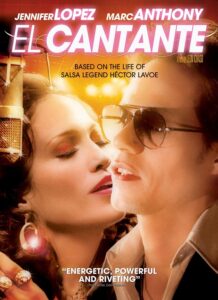
El Cantante, 2006

Movie - The Singer, 2006

The Singer, 2006

Héctor Lavoe is a Puerto Rican legend. A singer, composer and musical producer with a voice and talent what catapulted him as the greatest salsa performer in history. The film starring the also Puerto Rican Marc Anthony describes Lavoe’s life from his teenage years. The singer, as he is fondly remembered, traveled to New York City at just 16 years old.

Against his father’s will, he decided to go after his dreams. In the scenes we can see how he is part of a musical group and perform in a bar, he meets Eddie (Manny Pérez), Willie Colón (John Ortiz) and gets his first contract with a record label.

However, you will also get to know the darker side of Héctor Lavoe who went through drug and alcohol problems. Héctor meets and falls in love with Puchi (Jennifer López), mother of his son and a very important character in the film. Puchi accompanies him on this path of constant ups and downs until little by little his life begins to change.

They lose their son Tito, as a result of an accident with Héctor’s weapon, and he is definitely not the same again. A story that shows us the success of an artist, his talent and dedication, without neglecting his bad habits that led to his death.

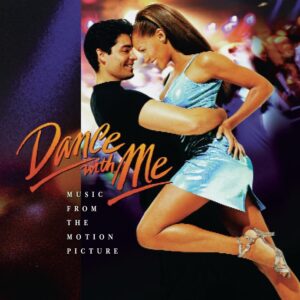
Dance with Me, 1998

Dance With me - Img

Dance With me – 1998

A film in which rhythm and romance will run through your veins. Chayanne and Vanessa Williams play a dance couple who meet in the middle of a great coincidence. Rafael Infante (Chayanne) loses his mother and decides to travel from Cuba to Texas to meet his father, the owner of a dance school.

When she gets to see him, she doesn’t know how to tell him the truth and prefers to apply for a job as a cleaning assistant. However, they realize how great a dancer he is and he begins to have participation in the academy. In the scenes we will be able to see how they get together through dance and enjoy the Latin rhythms. A fun film that should be among your weekend selection. Enjoy it!

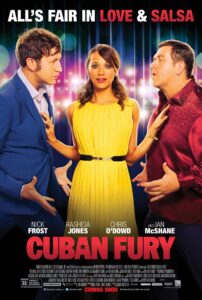
Cuban Fury, 2014

Image of Cuban Fury 2014

Cuban Fury 2014

It tells us a story of love, self-improvement, improvement of self-esteem and, of course, salsa. Bruce Garrett (Nick Frost) is attracted to his boss Julia (Rashida Jones) and wants to conquer her through dancing. Garret had qualities for salsa but during his teens he was intimidated and put it aside.

Today, he wants to regain that rhythm, overcoming self-esteem issues and personal fears. For the character it is not easy to leave behind those events that marked his life. However, you must put aside self-pity and allow the dance to define everything. Will it have good results? Find out for yourself!

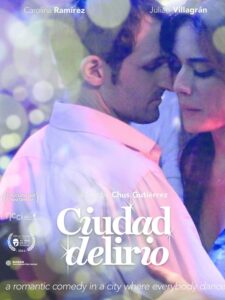
Ciudad Delirio, 2014

4- City of Delirium 2014

City of Delirium 2014

Cali, Colombia becomes the setting for an adventure full of dance and new experiences. Javier (Julian Villagrán) is a Spaniard who travels to Colombia for work and cannot help but fall in love with its people, customs and women. He meets Angie (Carolina Ramírez) a Colombian who owns a dance school. Their encounters are marked by the music and dancers that characterize this city. Javier ends up learning to dance salsa and guess what? Become an expert!

If you want to know more, find it now!

Shine, 2017

Shine 2017 - Latin music
Shine 2017 – Latin music

Shine tells us about two Puerto Rican brothers Ralphi Matas (Jorge Burgos) and Junior (Gilbert Saldivar) who have separated due to bad experiences and after a few years, they meet again. Between them, an even greater distance is created when they are on opposite sides of the fight for the gentrification of the area where they grew up.

The dance and cultural roots are present throughout the film, with Uncle Julio (Nelson Gonzales) trying to unite them again. Drama, dance and romance take sides in Shine, a very common story among Latinos in the United States who struggle not to let their principles die.

Latin music is life, it gives color, improves mood and is part of a cultural legacy that will continue to be maintained through the years. Every day new exponents of the genre appear and this will continue to happen over the years. So be it!

Influence of Latin Music in Europe and Vice Versa


European union 


When we refer to any Latin element that has been influential at the European continent or vice versa, it is almost inevitable that we think back to the Discovery of the Americas on the part of Christopher Columbus.

It was about this time when various instruments present in cumbia and salsa started to be used. No wonder we attach so much importance to this event, as this is how Spanish and the Portuguese arrived in the so-called New World. It is no coincidence that these languages are the protagonists of these rhythms at this time.

While it is true that Europe gave its languages to Latin music, we cannot fail to mention that the African slave trade played a major role in this context. Its beats and drums closely tied to religious ceremonies were inspirational for salsa, bachata and samba and African-American music, in which the famous Jazz may be included.

Neither can we leave out the fact that many pre-Colombian civilizations created many types of percussion music instruments, which are very present in Andean music and its very traditional flute-like sounds.

 What has led Latin American music to become so popular in recent times?

There is no denying that Latin music has achieved a tremendous global reach in recent years, but things were not always like this. In the past, it was ballads of love with heartbreaking lyrics that dominated this market and its primary target audience was female.

With the passing of years, this reality radically changed. We can see it in the emergence of an encouraging number of commercial songs and very simple to dance like La Macarena by Los Del Rio, Livin La Vida Loca by Ricky Martin, A Dios Le Pido by Juanes, among others. These pieces of theme music were the ones that broke the barrier of traditional radio in due course.

Later, hip hop and R&B gave origin to other urban rhythms that took hold of everyone’s attention

Bongos
Bongos


Latin music for some time now

That mode of nightclubs of Latin origin that have been inaugurated  the length and breadth of the old continent is nothing new. What is new though is the type of attendees received in these places in recent years. There’s a very large audience of all ages who show real interest in rhythms whose language they don’t even know, but they do not seem to care at all. In fact, this peculiarity seems to give an extra touch of excitement to the point. They see Latin music as an array of sounds and rhythms that may not understand, but that simply cannot stop dancing them.

When making a comparison of the monotonous pop style with this recent wave of Latino artists that have been conquering hearts throughout the world, it is evident that things are different now and did not seem to go back to the way they were. What is true is that traditional styles have been overthrown surprisingly.

It is not a secret that singers such as Shakira or Ricky Martin became immensely popular in the late nineties and the early 200All Posts0s, but now things go much further. We are saying that there is a very important number of musicians in these genres that have drawn the attention of all audiences of all ages and countries.

Further, there is a lot of Americans who have appropriated these styles and the Spanish language to give a lot of freshness to their musical projects. A telling example is the Canadian Justin Bieber who has worked with Luis Fonsi and other artists from Latin America, giving as a result a fan base that became interested in these genres and the Spanish language.

It looks like musical lyrics no longer need to be in English to reach all corners of the globe and make everyone dance. In fact, many people look for this type of music to enjoy it, even if they understand little to nothing about it.

Orchestra Latin music playing in the roads

What can we deduce from all this?

After having analysed all these data, we can say that Latin music is a very rich and intense mix of a cluster of cultures that were linked up between them until we find the heterogeneity that we see today. Undeniably, this whole process of miscegenation between so many rhythms would not have been possible under the influence of pre-Columbian, African and European culture. However, the same can be said in the opposite case.

Yes, this also occurs in the contrary case. Europeans’s musical tastes are no longer those of a few decades ago. Nowadays, there are many adults and young people who cannot stop dancing when they listen to certain salsa or merengue songs that have gone across all possible borders.

In short, we are talking about a continuous feedback loop between both cultures that keeps going until now. No musical rhythm is completely pure and Latin rhythms are the perfect example.

Image source 1: http://nuevacaravana.blogspot.com/2010/08/bongo.html

Image source 2: https://presencia.unah.edu.hn/noticias/los-origenes-de-la-musica-y-la-identidad-en-america-latina-4-de-4/

Image source 3: https://www.correo.ca/2015/07/willie-colon-la-clave-es-la-experimentacion/

Image source 4: https://www.youtube.com/watch?v=QH_3h43nGf4


Bebo Valdés is considered one of the central figures of the golden age of Cuban music

On March 22, 2013 in Stockholm, Sweden, Dionisio Ramón Emilio Valdés Amaro, better known as Bebo Valdés, died.

He was an excellent musician of Cuban music and Afro-Cuban jazz, considered one of the central figures of the golden age of Cuban music.

In addition to being a pianist, his best known facet, he has been a composer, arranger and orchestra conductor.

He was born in Quivicán, Cuba, on October 9, 1918. He was the father of the Afro-Cuban jazz pianist Chucho Valdés (b. 1941). From 1931 to 1935 he studied piano in his hometown with Moraima González; in 1936 he moved with his family to Havana, where he studied music theory, harmony and composition with Oscar Bofartigue.

In 1938 he made his professional debut with Happy D’Ulacia’s orchestra. He played in Havana, since the 1940s, in the orchestras Ulacia, García Curbelo, Julio Cueva and Orquesta Tropicana, and recorded albums with groups dedicated to performing Afro-Cuban jazz.2

Known among his family and friends by the affectionate nickname of Caballón because of his considerable stature, he composed mambos, such as La rareza del siglo, which covers the genre recently introduced by Pérez Prado and which would change the course of Cuban music. From 1948 until 1957, he worked at the Tropicana cabaret as pianist and arranger for Rita Montaner.

The Sabor de Cuba orchestra, of Bebo Valdés, and that of Armando Romeu, made the show of this night club, in which Valdés stopped performing in 1957, when he was hired by Ernesto Roca, of the Peer International Music Publishers, to make arrangements for Xiomara Alfaro and Pío Leyva; at the same time, he joined Guillermo Álvarez Guedez, of the Panart and Rolando Laserie in Radio Progreso. With his orchestra Sabor de Cuba, he accompanied singers Reinaldo Henríquez, Orlando Guerra (Cascarita), Pío Leyva and Ada Rex; Beny Moré also sang with this group, and Chucho Valdés made his debut.

About the descarga or jam session, there are multiple versions, this is the one by Bebo Valdés which, due to the concreteness of data, dates and record labels that made the recordings, is the most objective: “One night in October 1952, I was resting in a cabaret in Havana with members of the Tropicana orchestra.

Bebo Valdés Fue un excelente músico de música cubana y jazz afrocubano, considerado como una de las figuras centrales de la época dorada de la música

It is important to know that since 1948, Cuban, Mexican or even American musicians used to meet on Sunday afternoons at the Tropicana to play descarga, in the course of which we mixed jazz and Cuban rhythms.

Sometimes the descargas were held at four o’clock in the morning, at the end of the [Tropicana] show. The percussionist Guillermo Barreto was the one who animated them; we had received Roy Haynes, Kenny Drew, Sarah Vaughan, Richard Davis and many other musicians passing through; in fact, all the great names of jazz paraded through the Tropicana.

All of that could have been recorded, but no one was interested. So, that night Irving Price, the owner of a record store on Galiano Street, announces to me that producer Norman Granz is in town and that he can’t believe that Cuban musicians are capable of playing jazz.

Granz and Price ask me to go to the studio to record. It was September 16, 1952. So, I called some musicians, but I myself was late for the session, because in the morning I had another recording for RCA: I was going to accompany a singer! When I finally arrived at Panart’s studio, Granz had already left for the United States.

We called the orchestra The Andre’s All Star, after the name of Irving Price’s record store. We had decided to play classic jazz tunes, such as Distrust, Taboo, Sleep and Blues for Andre. At the end of the session, as there were still a few minutes available for the record, I started playing a riff, from which we improvised. We called that track “Con poco coco.”

The record was titled Cubano! and the participating musicians were all from the Tropicana cabaret: Gustavo Más, tenor saxophone; Alejandro Vivar (El Negro Vivar), trumpet; Kiki Hernández, double bass; Guillermo Barreto, timbal; Rolando Alfonso, tumbadora and Bebo Valdés, piano.

The works it contains are the same as those mentioned by Bebo Valdés, and the label, Mercury. In 1955, Bebo Valdés recorded, in the studios of Radio Progreso, Holiday Habana and She Adores the Latin Type, for the Decca label, which contained mambo, chachachá, bolero, jazz descarga, even jazz with bebop tendencies.

According to Luc Delannoy, in 1956 the Panart recorded Cuban Jam Session, with Julio Gutiérrez and Pedro Jústiz (Peruchín), as directors, and the musicians Alejandro Vivar (El Negro Vivar), Edilberto Escrich, Osvaldo Urrutia (Mosquifin), Emilio Peñalver, José Silva (CHombo), Juan Pablo Miranda, Salvador Vivar, Jesús Esquijarrosa (Chucho), Oscar Valdés, father, Marcelino Valdés, Walfredo de los Reyes and José Antonio Méndez. The participation of Israel López (Cachao) in a descarga did not occur until 1957, when the Panart recorded Descargas cubanas, with the participation of Cachao himself, Guillermo Barreto, Gustavo Tamayo, Rogelio Iglesias, Richard Egües, Andrés Hechavarría (El Niño Rivera), Rolito Pérez, Alfredo León, Arístides Soto (Tata Güines), Alejandro Vivar (El Negro Vivar), Generoso Jiménez, Orestes López (Macho), Emilio Peñalver and Virgilio Vixama. In other years, there were also recordings of downloads, and some unrecorded ones, such as those recalled by Leonardo Acosta at the Cuban Jazz Club, held between 1958 and 1960, with the participation of Pedro Jústiz (Peruchín), piano; Guillermo Barreto, drums and pailas, and Arístides Soto (Tata Güines), tumbadora (drums). This proves -or at least shows another side of the coin- that Bebo Valdés was one of the initiators of descarga in Cuba, a resource used by Cuban musicians in the most diverse instrumental formats, genres and styles of our popular music, as, for example, did the composers of the filin movement.

On June 8, 1952, with a band of twenty musicians, Bebo unveiled the batanga rhythm in the studios of RHC Cadena Azul; among the three singers in the orchestra was Beny Moré.

Bebo Valdés un virtuoso de la música cubana

That same year he travels to Mexico with the purpose of recording a disc with this new modality of Cuban music, which also included a new choreography; they were not successful, and, according to Bebo Valdés, “the batanga died a natural death”.

When he left Cuba in 1960 due to disagreements with the Cuban government, Bebo also abandoned his family, his wife Pilar Valdés and his five children (including Chucho). Bebo Valdés goes to Mexico, then moves to Los Angeles, California, where he works with singer Miguelito Valdés; from there he travels to Spain, where he records two albums as director of the orchestra that accompanies Chilean singer Lucho Gatica.

Later he toured England, France, Holland, Germany and Finland with the Lecuona Cuban Boys. In 1963 he settled in Sweden, and worked with the Hatuey Orchestra, a Swedish group playing Cuban music. In Sweden he formed a new family when he married in 1963.

International career

After thirty years of relative anonymity, on November 25, 1994, Valdés received a call from Paquito D’Rivera, who invited him to record a new album in Germany for the Messidor label. A new beginning in his career took place at the age of 76 with the recording of Bebo Rides Again.

He participated in Fernando Trueba’s film Calle 54, along with, among others, pianist and composer Chucho Valdés, Paquito D’Rivera, Elaine Elías, Chano Domínguez, Jerry González, Michel Camilo, Leandro J. Barbieri (Gato Barbieri), Ernesto Antonio Puente (Tito Puente), Arturo O’Farrill (Chico), Israel López (Cachao), Orlando Ríos (Puntilla) and Carlos Valdés (Patato).

In 2004 he traveled to Salvador de Bahia, Brazil, to participate in Trueba’s film El milagro de Candeal, along with Carlinhos Brown, Marisa Monte, Mateus Aleluia and César Mendez.

Bebo y Chucho Valdés una verdadera dinastía de la Música Cubana

An integral musician capable of tackling the most diverse genres and styles of music, not only as a pianist and composer, but also as an orchestrator and orchestra conductor of sublime values; of solid technical training, both theoretical and pianistic, Bebo Valdés is one of the all-time greats of Cuban music. He was, with Israel López (Cachao) and Patato Valdés, nominated for the Latin Grammy Award for El arte del sabor, best traditional tropical album 2002.

In 2002, Fernando Trueba produced Lágrimas negras, an album that unites flamenco singer Diego el Cigala with Bebo Valdés on piano.

After its release in 2003, it became an international success, recognized with a Grammy, three Music Awards, an Ondas Award, five Amigo Awards, three Platinum Discs in Spain and one each in Argentina, Mexico and Venezuela. The New York Times praised the album as Best Latin Music Album of the Year and opened the doors to a tour of Paris, New York, London, Havana, Buenos Aires, Tokyo, Mexico City, Madrid and Barcelona, among others. By the end of 2004 the album had sold more than 700,000 copies worldwide.

He retired to Benalmádena, a village in the province of Málaga (Spain), until his death in Stockholm (Sweden).

Chucho Valdés

Read also: Carlos “Patato” Valdés one of the best percussionists in the history of Latin Jazz

Rosa Maria Peña Collado, Rome and its Sauce Online TV program Music and Entertainment

Latin America / Peru

Rosa María Peña Collado: “ROMA Y SU SALSA” is an On Line TV Program with a MAGAZINNE format of MUSIC and ENTERTAINMENT that has as its main objective to promote the permanent diffusion of the Peruvian national talent and international guests that work in the different musical and artistic genres.

The Program “ROMA Y SU SALSA” begins its transmission in March 2015 through the web address http://www.radiomiraflores.com and later in other media such as

Rosa María Peña Collado - Roma y su Salsa
Rosa María Peña Collado – Roma y su Salsa

Roma y su Salsa

http://www.radioondadigital.com/tv

http://www.eccoradio.pe

http://www.caracolrecord.pe

where it has been executed in a sustained way (with two periods) until now.

In the itinerary of interviews and presentations, Peruvian members and talents of   ORCHESTRAS have paraded such as

Zaperoko La Resistencia Salsera del Callao

K’llao Salsa, N’Samble,

Creole Sax, Perkutao

Sabrosura

La Chola Caderona

Salome

Beto Chira and Orchestra

Las Estelares de la Rumba

The Wizards of Sauce

Sauce Suggestions

Son Canelas

Rock Band Stirrup

SINGERS AND COMPOSERS

Antonio Cartagena

Edilberto Cuestas CANTES Willy Rivera

Johnny Rojas

Kike Peña

Pablo Villanueva “Melcochita”

Victor Zanelli

Manolo Rodriguez

Carlo Supo

Shanney Hurtado

David Roman

Marcelo Villar

Martin Lopez

Anne Kolher

Laura Mau

Fanny Almenara

Sandra Cardenas

Rosa María Peña Collado

SINGERS AND IMITATORS

Paquito Português “Frankie Ruiz”

Isabel Castro “La India”

MUSICIANS AND COMPOSERS

Carlos Orozco

Isaac Sanchez

Juan Rebaza

Juan Arana

Juan Medrano “Cotito”

Manuel Leon

Daniel Venegas

MUSICIANS

Cesar Vivanco

Urban Collac

Maximum Chest

Mita Barreto

Lucho Cueto

John Canevello

Aldo de Dios

Omar Basallo

Percy Chinchilla

Carlos Nieves

Guillermo Arias

Jesús Zavala (visually impaired percussionist)

WRITERS

Mario Aragon

DANCERS AND CHOREOGRAPHERS

Charles Anton

Julio Zegarra

Joel Pictures

Daniel Vivanco

COLLECTORS

Walter Renteria

Beto Onetto

Albert Cologne

ANIMATORS AND PRESENTERS

Jorge Eduardo Bancayan

Dante Corrales

Oscar Godos

INTERVIEWS PERUVIANS LIVING ABROAD

Cesar Correa

Daniel “The Cat” Arboleda

Hector “Jereto” Ferreyra,

Rosa María Peña Collado

SINGERS AND COMPOSERS

Renzo Padilla “El Borincaico”

Mirko Radovic

Mike Ortiz, Luchito Muñoz

MUSICIANS AND COMPOSERS

Ahmed La Torre

Kiki Sanchez

Rafaelo Parejas

DANCER AND CHOREOGRAPHER

Cecilia Villalobos

DJ’s SALSA

Armando Carrasco

August Felibertt

(Caracas – Venezuela)

INTERNATIONAL ARTISTS

Pedro Brull

Roberto Blades

Pichie Perez, Jose Lugo (RIP)

Alberto Martinez

Alex D’Castro

Vitti Ruiz

Jose Fajardo Jr.

Nolberto Velez

Gerardo Rivas NG2

Patty Padilla

TELEPHONE LINK

Herman Olivera

Papote Jimenez

Ramonita Parra

Raffi Torres

DANCER

Allien Ramirez (Tri World Salsa Champion)

PRODUCER

Albert Torres (RIP)

Finally, it has been planned to resume the interviews via zoom in order to continue the permanent work of diffusion of the art and talent of the great SALSA FAMILY, complemented by the online radio that is under construction.

Rosa María Peña Collado

Peru: Roma y su Salsa

Rosa María Peña Collado

Driver

“ROME AND ITS SAUCE”

  • « Go to Previous Page
  • Page 1
  • Interim pages omitted …
  • Page 23
  • Page 24
  • Page 25
  • Page 26
  • Page 27
  • Interim pages omitted …
  • Page 302
  • Go to Next Page »

International Salsa Magazine (ISM) is a monthly publication about Salsa activities around the world, that has been publishing since 2007. It is a world network of volunteers coordinated by ISM Magazine. We are working to strengthen all the events by working together.