• Skip to primary navigation
  • Skip to main content

International Salsa Magazine

  • HOME
  • Previous editions
    • 2026
      • ISM / March 2026
      • ISM / February 2026
      • ISM / January 2026
    • 2025
      • ISM / December 2025
      • ISM / November 2025
      • ISM / October 2025
      • ISM / September 2025
      • ISM / August 2025
      • ISM / July 2025
      • ISM / June 2025
      • ISM / May2025
      • ISM / April 2025
      • ISM / March 2025
      • ISM / February 2025
      • ISM / January 2025
    • 2024
      • ISM / December 2024
      • ISM / November 2024
      • ISM / October 2024
      • ISM / September 2024
      • ISM / August 2024
      • ISM / July 2024
      • ISM / June 2024
      • ISM / May 2024
      • ISM / April 2024
      • ISM / March 2024
      • ISM / February 2024
      • ISM / January 2024
    • 2023
      • ISM / December 2023
      • ISM / November 2023
      • ISM / October 2023
      • ISM – September 2023
      • ISM – August 2023
      • ISM July 2023
      • ISM Edition June 2023
      • ISM – May 2023
      • ISM April 2023
      • ISM March 2023
      • ISM February 2023
      • ISM January 2023
    • 2022
      • ISM December 2022
      • ISM November 2022
      • ISM October 2022
      • ISM September 2022
      • ISM August 2022
      • ISM July 2022
      • ISM June 2022
      • ISM May 2022
      • ISM February 2022
      • ISM January 2022
    • 2021
      • ISM December 2021
      • ISM November 2021
      • ISM October – 2021
      • ISM September 2021
      • ISM August 2021
      • ISM July 2021
      • ISM May 2021
      • ISM April 2021
      • ISM June 2021
      • ISM March 2021
      • ISM February 2021
      • ISM January 2021
    • 2020
      • ISM December 2020
      • ISM November 2020
      • ISM October 2020
      • ISM September 2020
      • ISM August 2020
      • ISM July 2020
      • ISM June 2020
      • ISM May 2020
      • ISM April 2020
      • ISM March 2020
      • ISM February 2020
      • ISM January 2020
    • 2019
      • ISM December 2019
      • ISM November 2019
      • ISM October 2019
      • ISM Septembre 2019
      • ISM August 2019
      • ISM July 2019
      • ISM June 2019
  • Spanish
  • Download Salsa App
    • Android
    • Apple

Search Results for: radio

Rumberos del Callejón

North America / USA

Rumberos del Callejón “Celebrando” The Salsera Culture

After 11 years of trajectory, Rumberos del Callejón return with their third record label “Celebrando” for Salseros lovers from all continents. An album that since its inception has gained great acceptance by the public knowledgeable of this Tropical genre.

Logo - Rumberos del Callejón
Logo – Rumberos del Callejón
Rumberos del Callejón with the saxohone artist

“Celebrando” will feature several unpublished tracks that highlight the evolution of this orchestra created in Caracas – Venezuela in 2007. These singles will be interpreted mostly by guest artists of the current movement, internationally recognized for their extensive and successful musical career.

Rumberos del Callejón

Celebrando will have a modern and emblematic sound effect, since it has the outstanding voices of: Tito Nieves, Maelo Ruiz, Gilberto Santa Rosa, Domingo Quiñonez, Sixto Yorente “El Indio”, Luis Fernando Borjas, Wilmer Lozano and with the already prestigious vocal harmonies, members of this musical group: Rodrigo Mendoza, Gonzalo Díaz, Angelito Vallenilla, Memo Arroyave and their new musical bet, the young singer, Veruzka Verdú.

Wilmer - Rumberos del Callejón
Wilmer – Rumberos del Callejón

This group that owes its name to the San Pedro alley located in the popular Catia area, west of the Venezuelan Capital managed to obtain the collaboration of these international guest artists on their album not only thanks to the current avant-garde technology, but also to the printed constancy and always present in the director Carlitos Padrón, who took up the challenge with his father Carlos Padrón (founder of the orchestra) to produce “Celebrando”, which also had the privileged pens in the composition of the songs by Rodrigo Mendoza and Angelito Vallenilla.

Veruzca Verdu - Rumberos del Callejón
Veruzca Verdu – Rumberos del Callejón

“ For me Salsa is a way of life. It’s passion and culture. Carlitos Padrón “

This album with almost 4 years of production was recorded in the main cities of the American continent: Caracas, Santo Domingo, Cuba, Miami, Orlando and mainly in the recording studio “Chongo Records” belonging to the director, founder, composer and percussionist of the band, Carlitos Padrón, in New York.

Gilberto Santa Rosa - Rumberos del Callejón
Gilberto Santa Rosa – Rumberos del Callejón

“Celebrando” has the participation of important Venezuelan arrangers of the tropical genre, such as: Alberto Crespo and Willie Melo, who along with Carlitos Padrón took care of all the sound material of the production to get to the music market with a lot of “modernism and melao”, commented Carlitos Padrón. Currently, Celebrando is in the final phase of remastering and mixing so that dancers from the 5 continents are able to enjoy this new record proposal that Rumberos del Callejón will offer them soon.

“… We have international guests of great trajectory, which are a bit difficult to get but with the Grace of God, today, I think we have an Artwork”. Carlitos Padrón
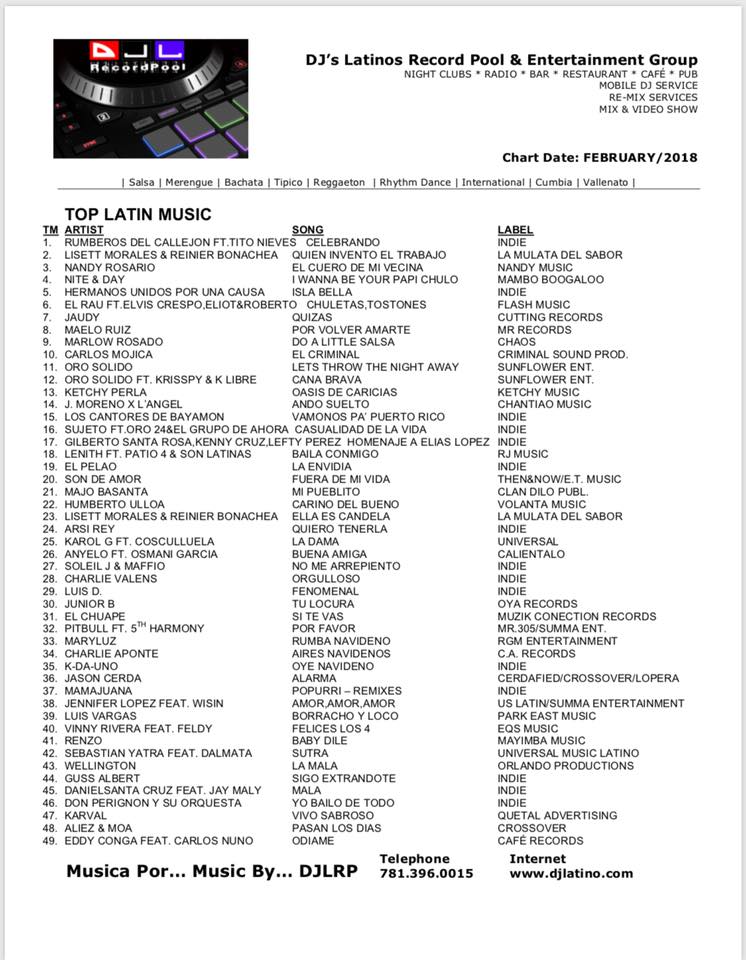
Check List - Rumberos del Callejón
Check List – Rumberos del Callejón

Recently, “Celebrando” whose name also titles the album, was the first single released by the group in November 2017 on all digital platforms and radio stations worldwide, and which last February managed to reach # 1 on the DJs chart.

The theme “Celebrando” has the participation of the Salsero Puerto Rican singer, Tito Nieves and the composition of the Venezuelan Angelito Vallenilla. The musical performance was in charge of the excellent Latin American musicians:

José Tabares (bass), Carlitos Padrón (Timbal), Alberto Crespo (piano), Marc Quiñones (conga), Bobby Allende (bongó), Manuel Maneco Ruiz (trumpets), Pablo Santaella (trombone), José Antonio Fariñas Gutiérrez (baritone), and in the choir: Rodrigo Mendoza, Leo Gruber, Wilmer Lozano and Angelito Vallenilla.

With this third record production product of the celebration of their 10th Anniversary, Rumberos del Callejón, hope to take their music to every corner on the planet and continue betting on the support and integration of new generations in salsa music.
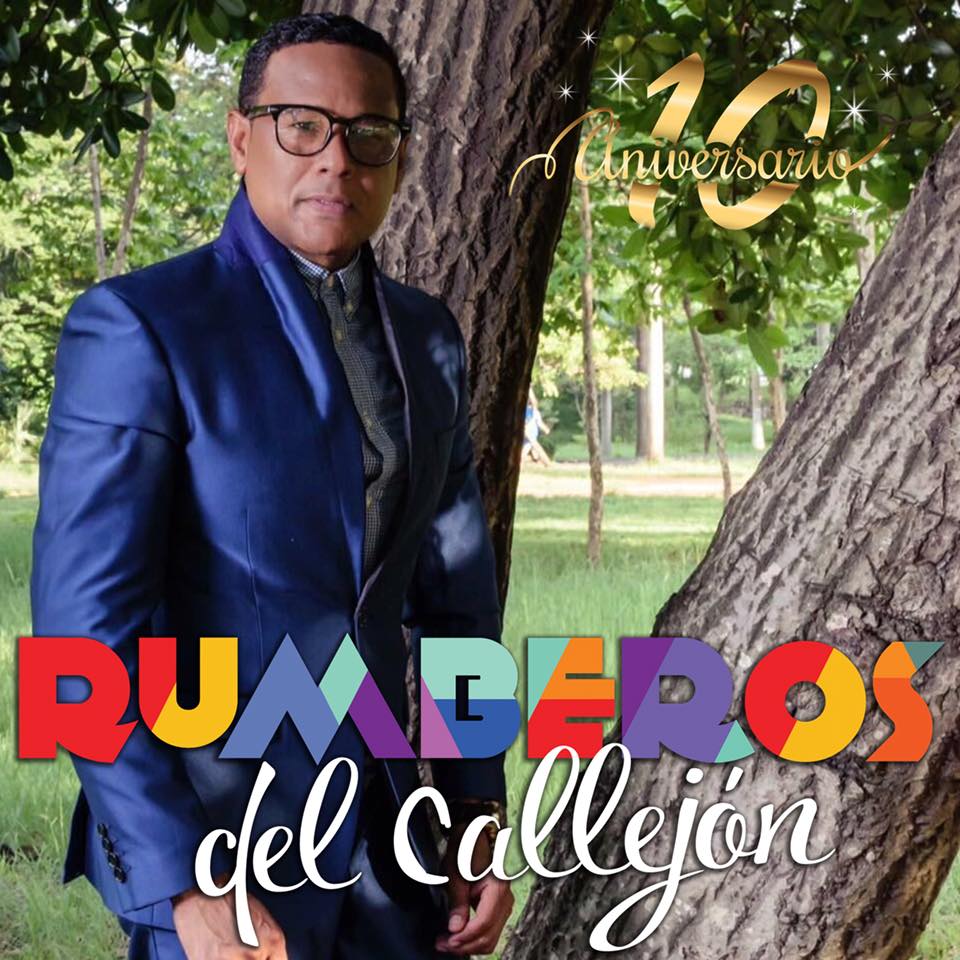
Angelito Vallenilla - Rumberos del Callejón
Angelito Vallenilla – Rumberos del Callejón

“For me, the biggest success is to be able to say that I have in my production the biggest salsa singers of today, nationally and internationally.” Carlitos Padrón

Rumberos del Callejón’s Discography:

In order to rescue the golden age of Salsa in the 70s, 80s and 90s, the Orchestra Rumberos del Callejón was created with a total of 13 members at the beginning, currently, they are 12 members. Their great musical proposal was captured in their first record production titled “De la Nada” (2008) under the label Callejón Música. This album is composed of 11 songs, including: Aquí Se Puede, Pa ‘Lante Otra Vez, Chechere Guma by Justi Barreto, among many others.

Rumberos del Callejón - Se Acabo el Silencio
Rumberos del Callejón – Se Acabo el Silencio

After 4 years, they release their second album “Construyendo” (2012) with such emblematic songs as “Cuando te toque llorar” by Puerto Rican balladeer José Feliciano, likewise, the production of “Constuyendo” was in charge of the director, timbalero and composer, Carlitos Padrón with arrangements made by the renowned Puerto Rican producer, Ramón Sánchez.

Rumberos del Callejón - de la nada
Rumberos del Callejón – de la nada

And Finally, for the musical performance Padrón decided to gather the best musicians from the NY area: Isidro Infante (Piano), José Tabares (Bass), Pablo Santaella (Trombone), Ray Colón (Bongó), Nelsón Jaime “Gazú” (Trumpet) , Manuel Ruiz (Trumpet), Iván Renta (Saxo Baritone) and Robert Quintero (Congas).
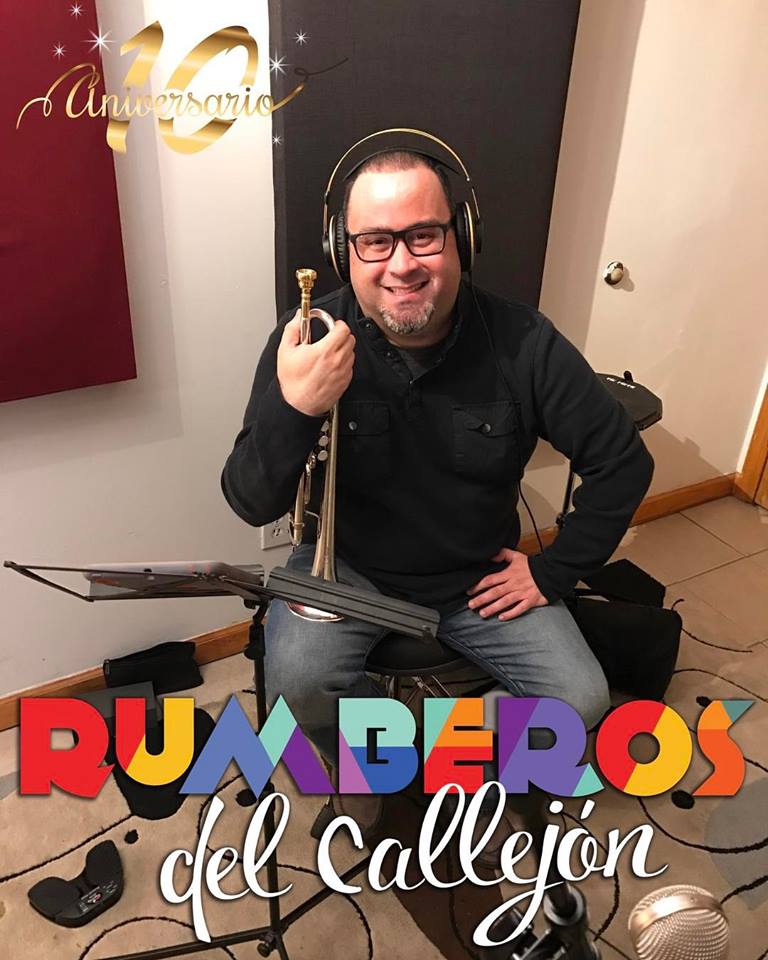
Trumpet Artist - Rumberos del Callejón
Trumpet Artist – Rumberos del Callejón

For more information, follow them at:

  • Facebook: https://www.facebook.com/pg/rumberosdelcallejon1
  • Instagram: @rumberos_del_callejon
  • The Official Accounts on YouTube and Soundcloud: Rumberos del Callejón.
Rumberos del Callejón

Latin jazz and mambo trumpeter Jonathan Powell and his great collaborations

Trumpeter Jonathan Powell is one of the many examples that show how much so many American artists have looked at Latin music over the last few years, so this is a great opportunity to know one of the many stories about what our heritage has achieved in this country.

Jonathan playing
Musician Jonathan Powell playing the trumpet live

Instruments that caught Jonathan’s attention

An important fact to remember is that Jonathan’s parents were musicians. His father played the electric bass and his mother played the cello, so he obviously has a lot of talent to get from. However, his interest in music turned to a slightly different way.

The instrument through which the artist is best known today is the trumpet due to his great skill at handling it, but it is not the only instrument he has learned to play. He also plays the trombone, the tuba and other bass instruments, but does not have the same fascination with them as with the trumpet.

His interest in music began when he was in high school and became part of a few student bands, resulting in more than 30 years of musical career.

Jonathan’s academic training

Most of what Jonathan has got to learn comes from the experience he has gained through his work, although he does not devalue formal music education. In fact, he attended the North Carolina School of the Arts and studied with that institution’s best teachers in the area of classical music.

When he turned 19, he made the decision to move to New York, where he has lived ever since. While there, he did not care as much about further studying music, but gaining as much experience as he could through practice.

Jonathan recording
Jonathan Powell recording music for his album ”Mambo Jazz Party”

Interest in Latin music

Although Jonathan’s interest in music began with the classical genre, his move to Florida made him seek other horizons. In Florida, he and his brother Jeremy began to make contact with radio stations that played Latin genres and this led them to meet the Garcia-Herreros brothers, Juan and Victor, who are two very experienced musicians in Latin jazz, but also in Latin music in general. The boys returned to Florida after studying at Berklee College of Music and started a band with Jonathan and Jeremy until they had to move to New York.

When Jonathan graduated from high school and also moved to New York, he was reunited with Juan and Victor who offered him to join their orchestra La Creación, with which he played every weekend for several years. This would be what the young musician would describe as his first real experience in the world of music, leading him to participate in the orchestra La Excelencia and to play with Arturo O’Farrill and Eddie Palmieri. 

Learning from other great artists

Just as Jonathan has played with O’Farrill and Palmieri, he has also been able to share the stage with Miguel Zenón, Tito Puente Jr, Oscar Hernández from the Spanish Harlem Orchestra, Israel Tanenbaum and many others.

Despite not having received much academic training, the opportunity to have played with the aforementioned music stars and many more really taught him many things that he would not have learnt in any educational institution. He assures that from whom he learned the most was Maestro Palmieri, since the legendary pianist is very generous when it comes to sharing his knowledge with whoever needs it, thanks to his extensive experience in this rich world.

‘‘Palmieri has been around since the fifties and sixties and has played with the most important artists of his generation, so he has a lot to teach. People have no idea how much he knows and how deep his knowledge on music is,” said the trumpeter about one of his great living inspirations.

However, as a trumpet player, another of his great inspirations was Puerto Rican arranger, composer and producer Juancito Torres for the way he played, since he considers it very special and unique compared to many other musicians.

Jonathan and Palmieri
Maestro Eddie Palmieri and Jonathan Powell smiling for the camera

Nu Shanga

Eager to manage his own musical group, Jonathan gives the public a very interesting proposal which he baptized Nu Sangha, inspired by Tibetan language, since these two words together mean ”new community”. With this group, he had much more freedom when choosing how he wanted to address each rhythm and wanted to give a much more modern approach to the type of jazz he had been playing through electronic elements few times used before.

In the case of Nu Sangha, he enjoyed everything he did professionally and was able to experiment with everything he had learned so far in creative ways, leading him to release the albums ”Transcend” and ”Beacons of Light”.

Mambo Jazz Party

In Jonathan’s own words, Mambo Jazz Party, the artist’s most recent musical work, the entire process of recording it took more than 10 years, since that was the time taken to create all the music that appears in the record material. He started the creation in 2014 and it was not until 2022 that Jonathan added the final details such as some missing vocals, but he assures that all the time spent on the album was worth it.

On the album, we can find Jimmy Bosch, guitarist Nir Felder, flutist Itai Kriss, pianist Manuel Valera, vocalist Ariadne Trujillo, singer Anthony Almonte and many other great artists who embellish this creation.

In other interviews, Jonathan has described this album as a mix of traditional salsa and Latin jazz elements, electronic sounds and a lot of spiritualism, which can summarize very well what this musical work represents for Jonathan Powell. 

Mambo Jaszz Party by Jonathan
Cover of the album ”Mambo Jazz Party” by Jonathan Powell

Read also: Great Christmas salsa songs and their stories

Virgilio Martí was an excellent rumbero and composer of the classic “Cuba Linda” where he was vocalist and percussionist in Grupo Folklorico Experimental Newyorkino

Virgilio Martí, born in 1919 in Havana, Cuba.

Virgilio Marti
Virgilio Marti

Fine Rumbero, Singer, Composer, Arranger, Percussionist, Actor and Orchestra Director well known since the late 40’s, especially as a guaguancó singer.

He began touring the world in 1949 and met his later wife in 1960 in Peru.

That same year, he settled in New York, participating in the local scene. He participated in the LP “Patato y Totico” in 1967, he also participated with his brother Eloy Martí in a Quintet accompanied by Gene Golden for the year 1979.

Israel López (Cachao), Arsenio Rodríguez, Héctor Cadavieco, Francisco Valdés, Papaíto, Tony Mayari and Mario Cadavieco also worked on that album.

He participated in the “Grupo Folklórico Experimental Newyorkino” where he was their vocalist and percussionist in 1975. During his stay with them, he composed the song “Cuba Linda”.

Another work of Martí of great remembrance is the album titled: “Saludando A Los Rumberos” published by the Caimán label in the early 80’s and in which the Cuban acts as vocalist and main star.

Grupo Folklórico Experimental Newyorkino

In it Martí is involved with talents such as: Tony Cofresí, Andy and Jerry González, Yomo Toro, Paquito Pastor, Ray Romero, Claudio Roditti and Ignacio Berroa, among others.

“Iya Modapue” is in itself a guaguancó with open rumba, being at the same time the favorite number of the ‘Grupo Folklórico’, and even the first groove to be recorded.

The levels of experimentation and the freedom to unload several rhythms in a single musical performance are the factors producing the attraction of the musicians for “Iya Modupue” (which means Thank You Mother).

The vocal part is in the hands of Virgilio Martí. The trumpet of “Chocolate” Armenteros, the trombones of José Rodríguez and Reinaldo Jorge, the flute of Gonzalo Fernández and the percussion of Frankie Rodríguez stand out.

“Se Me Olvidó” a bolero by Lolita de la Colina but adapted in guaguancó to the style of the Grupo Folklórico, which, by the way, turned out to be the piece of greatest radio diffusion in the tropical environment and therefore, the one that would open the doors to the group.

The song was interpreted by Virgilio Martí, who also plays the congas. In “Se Me Olvidó”, the violin of Cuban Alfredo de la Fe, the quinto of Julito Collazo, the street redoblante of Jerry González and a Mexican marimba played by Andy González in counterpoint to the notes of the double bass, also played by Andy, stand out. Here it is worth mentioning that Alfredo de la Fe is a virtuoso violinist and among his many performances, I remember his work with Eddie Palmieri, Larry Harlow (the wonderful Jew), the Fania All-Stars and the avant-garde Típica 73.

In the early 80’s he formed a band with brothers Andy and Jerry González, and percussionist Ignacio Berroa.

It is worth mentioning Virgilio Martí’s 1985 performance in the film by Cuban filmmaker León Ichaso entitled “Crossover Dreams” (Sueños truncados).

In it, the Havana native plays the role of “Cheo Babalú” and vocalizes the song “Llora Timbero”.

In that film production made in New York City, he also participates with actor Rubén Blades, who plays the role of “Rudy Veloz”, where they sing the song “Todos Vuelven”.

In 1990, he contributed to the “Soundtrack” of the movie Azucar Amarga.

He maintained a great skill in converting songs from other genres into rumba arrangements.

We can mention the adaptation of the theme of the Brazilian composer Jorge Ben, “Más Que Nada” in which he appears on the LP with Patato and Totico.

Martí died on October 17, 1995.

Virgilio Marti – Guaguanco (1979)

Tracks:

  1. Amanecer (Armando Manzanero)
  2. Todos vuelven (Rafael Otero)
  3. A tus pies (D.R.) (Agustin Lara)
  4. My childhood (Laureano Martinez)
  5. Saluting the rumberos (Manolo Albo)
  6. I’m going to divide it (R. Livi)
  7. Acanapon (D.R.)
  8. The little handkerchief (D.R.)
  9. Que susto (Virgilio Marti)
  10. Odiame (Rafael Otero)
Virgilio Marti - Guaguanco (1979)
Virgilio Marti – Guaguanco (1979)

Information realized (June 1, 2024)

Also Read: Carlos “Nene” Quintero comes from a family of musical prodigies

Contributor: Dj. Augusto Felibertt (International Salsa Magazine)

Betty Zapata ¨The Lady of Salsa¨

Latin America / Venezuela / Caracas

In Venezuela, Caracas, the neighborhood is a way of life with its own identity. The neighborhoods of the entire National Territory, its inhabitants, become outstanding characters. Such is the case of Betty Zapata who was born in the emblematic La Pastora Parish located in the Capital (Caracas). There he spends his childhood in a neighborhood of colonial and historical houses of Venezuela.

Betty Zapata ¨The Lady of Salsa¨

There are many memories of that legendary Zone, they are inevitably built by those associated with survival, preparation, development, work, love, struggle and family formation, its magic and what marked it for life… . “Music”.

My connection with music is due in part to the fact that I live in a popular area where the music that was heard was Afro-Caribbean (mostly Salsa), the parties or meetings in my house and the neighborhood were always enlivened by that type of music, the most rooted and sticky collectively, originating the most varied dancers.

In the Carnestolendas festivities, improvised platforms (Templetes) were installed to stage the most varied costume and dance contests. Leaving my childhood and beginning my adolescent stage, I participated in dance competitions, obtaining recognition and prizes that were awarded to the young people of my generation.

I attended festive celebrations (dance meetings) with my older sisters at the age of 12, not because I was a dancer, but to not leave me alone, since I was the youngest of 3 sisters, this allowed me to share with people older than me and which I was learning the different dance styles “remembering with great affection the Cayender family, made up of excellent dancers” they are part of my school and love for dance. My cadence, flavor and body movement also allowed me to learn until I had my own dance style.

The music of the moment was the Danzones, Billo’s, Melodicos and in my house my sisters listened in the 70’s to Joe Cuba, Ricardo Rey and Bobby Cruz, Eddie Palmieri, the Latin Dimension prevails, Grupo Mango, Salsa Mayor, La Banda and his Young Sauce. That stuck with me forever and I felt drawn to Salsa.

That gave me the basis to fully incorporate myself into the exciting world of music. In the Barrio salsa is something essential, if you don’t dance it, enjoy it, feel it, you’re nothing.

Attending a meeting, an event, a concert, a presentation, a party or a meeting and there is no salsa, you feel an emptiness since with it we enjoy, we share, we dance and it definitely puts us to enjoy.

Photo - Betty Zapata ¨The Lady of Salsa¨
Photo – Betty Zapata ¨The Lady of Salsa¨

In the course of my 6 decades of existence, I have not ceased to be linked to it in different facets: as an audience, spectator, guest, contestant, jury, organizer, producer and director of events.

Each of these participations has allowed me to stand out, stand out and be a well-known, popular and loved person, a reference in the organization of a good party, night events, presentations of representative groups of the world of Salsa such as:

Ray de La Paz, Herman Olivera, Frankie Vásquez, Bobbie Valentin, Willie Rosario, Spanish Harlem Orchestra, Sonora Ponceña, La Selecta, Mulenze, Carlos Cano Estremera, Julio López, Yolandita Rivera, Mambo Legends among others, and for those from the Patio: Bailatino, Rumberos del Callejón , Ensamble La Calle, Albondiga y su Pandilla, Repicao, Tributo, On Fire, La áquina de la Salsa, La Negramenta, Gerardo Rosales, Javier Plaza’s Son Risa Orchestra among others.

This has allowed me to be an obligatory reference when it comes to producing and making an event of great importance and musical quality where the Dancing Public is respected and appreciated, providing them with the comforts to enjoy an excellent show and Latin music is seen as an element of identity that belongs to all of us to live it and feel it.

I am (Betty Zapata) currently planning and developing projects in the short, medium and long term and to give you a heads-up I am giving you the scoop: I am here with my radio program to promote, support, disseminate and promote our exciting and magical world of Caribbean music.

Luis Medina

Norte America / USA / San Francisco

Luis Medina, Con Sabor

During his tenure as the KPFA 94.1 FM Music Director, Luis Medina was a staunch advocate for the station music programs. His vast knowledge of different genres of music kept the music programming strong and relevant.

Through his direction, the station was recognized as a leader in innovative World Music programs that bolstered the genre’s popularity in the market. He also expanded the diversity of voices on-air by placing more women, Latinos and people of color as program hosts and producers.

Luis raised the visibility of the radio station through successful event sponsorships, including contract negotiation, live event marketing and promotion with the following partners: Live Nation, Another Planet Entertainment, SF Jazz, San Francisco Jazz Festival, Yoshi’s Jazz Clubs, Cal Performances, Monterey Jazz Festival, Stern Grove Festival, SF Flamenco Society, La Bohemia Productions,  Slims/Great American Music Hall, Bimbos 365 Club and others.

Luis has tirelessly contributed to the station’s on-air fundraising campaigns as well as voice overs for public service announcements and in-house station promotions. He currently continues to work behind the scenes as music consultant for the station.

DJ Luis Medina
DJ Luis Medina

In his radio program Con Sabor, he has interviewed hundreds of renowned artists and musicians. His interview with the legendary Israel Lopez “Cachao” is featured in the PBS documentary film “Cachao, Uno Mas” produced by actor/producer/director Andy Garcia.

Luis was Entertainment Director for MECA  (Mission Economic and Cultural Association) from 1986-1998.  He managed the Cinco De Mayo, Carnaval San Francisco and the 24th Street Festival De Las Americas events during his tenure, coordinating programming for up to 3 simultaneous stages.  He featured varied music from Rock to Brazilian to Salsa, as well as DJs and entertainment.

He was also an Entertainment Consultant and Director for SFCAT (San Francisco Cultural Arts and Traditions) from 2011 to 2012, which was organizing the SF Carnaval.

Other events and clients he has worked with include The San Francisco Giants, the Oakland Museum, the NFL Super Bowl Party, U.S. Navy Fleet Week Events, Cultural Music Productions, A.S.R.P. Productions, Terry Pimsleur & Associates, Salsa Dulce Productions, ARAM Productions and San Francisco State University.

Awards

  • The Armando Peraza Award for community service to the Latin and Music community, Voices Of Latin Rock Autism Awareness Benefit, 2012
  • Certificate Of Honor, City & County Of San Francisco for many contributions to Latin Music in radio and media as Music Director and Radio Producer/Host 2010.
  • Certificate Of Recognition, California Legislature Assembly for contributions to Latin Music through his work as radio host, producer and DJ 2010.
  • Achievement in Outstanding Lifetime Service in Radio – Western Region Puerto Rican Council 2008
  • Achievement In Latin Music Promotion-Lifetime Award-San Francisco Salsa Congress 2001
  • Espíritu De La Música Latina Award of the Marta Martinez Fund for Radio Programming excellence and positive contribution to the Northern California Latino Community, Marin County Foundation 1999

All this information was provided from Luis Medina official website http://luisemedina.com/

  • « Go to Previous Page
  • Page 1
  • Interim pages omitted …
  • Page 14
  • Page 15
  • Page 16
  • Page 17
  • Page 18
  • Interim pages omitted …
  • Page 65
  • Go to Next Page »

International Salsa Magazine (ISM) is a monthly publication about Salsa activities around the world, that has been publishing since 2007. It is a world network of volunteers coordinated by ISM Magazine. We are working to strengthen all the events by working together.