• Skip to primary navigation
  • Skip to main content

International Salsa Magazine

  • HOME
  • Previous editions
    • 2026
      • ISM / March 2026
      • ISM / February 2026
      • ISM / January 2026
    • 2025
      • ISM / December 2025
      • ISM / November 2025
      • ISM / October 2025
      • ISM / September 2025
      • ISM / August 2025
      • ISM / July 2025
      • ISM / June 2025
      • ISM / May2025
      • ISM / April 2025
      • ISM / March 2025
      • ISM / February 2025
      • ISM / January 2025
    • 2024
      • ISM / December 2024
      • ISM / November 2024
      • ISM / October 2024
      • ISM / September 2024
      • ISM / August 2024
      • ISM / July 2024
      • ISM / June 2024
      • ISM / May 2024
      • ISM / April 2024
      • ISM / March 2024
      • ISM / February 2024
      • ISM / January 2024
    • 2023
      • ISM / December 2023
      • ISM / November 2023
      • ISM / October 2023
      • ISM – September 2023
      • ISM – August 2023
      • ISM July 2023
      • ISM Edition June 2023
      • ISM – May 2023
      • ISM April 2023
      • ISM March 2023
      • ISM February 2023
      • ISM January 2023
    • 2022
      • ISM December 2022
      • ISM November 2022
      • ISM October 2022
      • ISM September 2022
      • ISM August 2022
      • ISM July 2022
      • ISM June 2022
      • ISM May 2022
      • ISM February 2022
      • ISM January 2022
    • 2021
      • ISM December 2021
      • ISM November 2021
      • ISM October – 2021
      • ISM September 2021
      • ISM August 2021
      • ISM July 2021
      • ISM May 2021
      • ISM April 2021
      • ISM June 2021
      • ISM March 2021
      • ISM February 2021
      • ISM January 2021
    • 2020
      • ISM December 2020
      • ISM November 2020
      • ISM October 2020
      • ISM September 2020
      • ISM August 2020
      • ISM July 2020
      • ISM June 2020
      • ISM May 2020
      • ISM April 2020
      • ISM March 2020
      • ISM February 2020
      • ISM January 2020
    • 2019
      • ISM December 2019
      • ISM November 2019
      • ISM October 2019
      • ISM Septembre 2019
      • ISM August 2019
      • ISM July 2019
      • ISM June 2019
  • Spanish
  • Download Salsa App
    • Android
    • Apple

Search Results for: radio

Ronald Borjas is a Venezuelan singer, musician and composer

Ronald Borjas is currently considered one of the greatest exponents of salsa in Venezuela with an international projection that grows every year.

He is a Venezuelan singer, musician and composer, born in Maracaibo, the capital of the state of Zulia, on November 19, 1981.

Ronald Borjas is a Venezuelan singer, musician and composer

At the age of 10, his love for the timbal was born, a few years later, at the age of 14, he began singing as a soloist in the Bochinche Orchestra. Throughout his adolescence he stood out as a soloist in bands such as: Caribe, Asterisco, VHG and Bacanos.

He completed higher education at the Cecilio Acosta University (UNICA) where he obtained the degree of Bachelor of Music – Musical Education in 2002. In the same year he went on stage with the Venezuelan Super Band GUACO, where he debuted as a soloist and composer with the song “Te vas” from the album “El Sonido de Venezuela”.

Not only did he develop as a composer, Ronald also plays other percussion instruments such as the bass, the guitar and also the trumpet.

After 11 years as one of the main voices of Guaco, in 2014, Ronald decided to take another path and that is when the great project of his life began, developing his career as a soloist in genres such as Salsa, Bachata and Pop.

Ronald debuted as a soloist with the song “Te Doy Mi Voz” dedicated to his fans, with which he received the nomination for the Latin Grammy for “Best Tropical Song”. That same year, his musical godfather, Salsa legend Oscar D´ León invited him to his show at Madison Square Garden in New York, where he introduced him to thousands of people and baptized him as his “godson”.

That same year, he released “Te Encuentraré” a song that reached #1 on the Venezuelan radio charts Record Report and its video clip, filmed in New York, managed to enter the ranking of the most viewed videos on the HTV channel.

In 2015 he began his musical expansion to other borders, achieving success in countries such as Ecuador and Colombia where his third single titled “Dame Tu Amor” was positioned in the first places of the radio stations as well as in his native Venezuela, while in Peru, it was named the “tropical song of the summer”.

Ronald Borjas is currently considered one of the greatest exponents of salsa in Venezuela with an international projection.

At the end of that year he officially released his first album “Da Capo” with an event that brought together in Caracas, Venezuela a hundred figures of the national show, as well as the press, radio and TV of the country in an unprecedented event. This release in its first weeks, managed to accumulate more than 10,000 digital downloads on his official website www.ronaldborjas.com.

“Da Capo” had valuable collaborations and a first featuring with his godfather Oscar D´León, with whom he recorded “La Quiero Para Mi”. In addition, this album has songs by Amaury Gutierrez, Robert Vilera and his uncle Neguito Borjas, among others.

In 2016 he began releasing his song “Cántalo” which quickly became an anthem of joy and managed to position itself in the first place on Venezuelan radio. That year he won several national awards of great importance such as “Mara de Oro Internacional”, “Cacique De Oro”, Explosión Creativa and Supremacy, all of which recognized him as the “Salsa Singer of the Year”.

That same year he signed a contract with Sony Music as an artist from the Andean Region and embarked on his first international concert tour entitled “Da Capo tour” with which he visited Aruba, Panama and several cities in the United States.

In 2018, he released “Loco por Volverte a Ver” a song he wrote with Nacho Mendoza, Cáceres and Sharo Torres. He also made his second featuring with the “Caballero de la Salsa” Gilberto Santarosa with whom he released “Ellas te van lleva” the first collaboration with an international artist that also managed to position itself as number one on the radio charts.

Ronald Borjas is currently considered one of the greatest exponents of salsa in Venezuela

Shortly after, in 2019, he received a double nomination for “Album of the Year” with the song “Lo que pase aquí” as one of the songs on Tonny Succar’s album titled “Más de Mi” and “Salsa of the Year” with the song “No Queda Nada”. In addition to the collaboration he did with “Quintero´s Salsa Proyect” which was nominated for “Salsa Album of the Year”.

Also in 2019 he released his second album entitled “Bailamos Otra Vez” where he recorded songs of his own, as well as those of Servando Primera, Oscarcito and Amaury Gutiérrez. From this album come hits such as “Amor Demente” “Estoy Dispuesto” “Tu y Yo Tenemos” “Te Quiero para Mi” among others.

Shortly after he announced his collaboration with another former Guaco partner, Nelson Arrieta with whom he released the song “Sobran Los Momentos” which also gives name to the tour they would do together where they traveled through countries such as Argentina, Chile, Ecuador, Mexico, Colombia, Spain, Peru, Panama and the United States achieving great acceptance by the public.

He started the year 2020 with several collaborative releases. “Para Ustedes” from the album origenes where he participated as a guest and achieved #1 on the radio in Venezuela, then he released the song “Juegos Eróticos” with Victor Muñoz and promoted it in his country with great acceptance.

The “pandemic” stage begins and confinement did not stop him. In March he releases the version of the song “María Antonia” by the Venezuelan singer Gualberto Ibarreto, in April he releases “Aunque Parezca Extraño” with Manuel Petit who invites him to this collaboration. In May, together with his uncle Neguito Borjas, Jorge Luis Chacín and Nelson Arrieta they join in a project entitled “Los Mágicos”. In June “Ahora Me Llama” comes out, a song he had recorded for Rumberos del Callejón.

As if that were not enough, in July he records an intimate concert where he invites Victor Muñoz, his uncle Neguito Borjas and Nelson Arrieta to release it as a gift to his fans through his YouTube channel.

He closes the last months of 2020 with the song “Mía” written by Ronald and Salvador Solano that became the anthem of the ´Zumba´ reaching several places in the world. After this, he released one of his songs, “Ya Lo Decidí,” with which he again achieved first place on the radio and was accepted by the entire public.

He started 2021 as a special guest at Gilberto Santarosa’s concert at the Filmore Theater in Miami, where they performed the song “Ellas Te Van Llevando” together. Months later, he released the song he recorded as a duet with José Alberto “El Canario” entitled “A Mi Me Gusta” which quickly managed to position itself on the main playlists of digital platforms in the world. He closed that year with the song “Dime Cómo Hago” which he recorded with Nelson Arrieta and Oscarcito, a salsa that took over the public’s taste and today is one of the most chanted in his concerts.

2022 started with another important collaboration with Motiff, a song titled “Me Descontrola” which quickly entered the top spots on radio billboards and digital platform listings, and was also the song chosen by the renowned company Zumba to use as the official song at its world events.

In 2022, he also launched a very ambitious musical project that he carried out with his friends and fellow countrymen Adelmo Gauna and Nando De La Gente called “Los Pikis” with which they released a series of videos where they compiled erotic salsa hits from the 80s and 90s. Such was the success that in just two months they achieved more than a million views on YouTube.

In May 2022, the live concert titled “Sobran Los Momentos” premieres where Nelson Arrieta and Ronald Borjas invite the founder and lead voice of Guaco, Gustavo Aguado, and together perform several of the hits of the Venezuelan super band, such as “Vivo” “Pídeme” “Eres Más” and “Lo Eres Todo”. Oscarcito was also there performing his hit “Si Tu Me Besas” and the one he has with Arrieta and Borjas “Dime Cómo Hago”. All this incredible material can be enjoyed on the official YouTube channel of Ronald Borjas and Nelson Arrieta.

To close the year, he released the song “Se prende el Parampampan” with his musical friend, Acosta, a fun salsa that unites their musical styles, which together with a video recorded in Puerto Rico, managed to enter the public’s taste, turning this song into an anthem for Venezuelan parties. For his part, Ronald Borjas released a solo single titled “Los Vecinos” which is accompanied by a humorous video directed by Alex Galán.

2023 began for Ronald Borjas with his third featuring with an international artist, this time with the Puerto Rican legend, Tito Nieves. A romantic salsa titled “Te Busqué” that was accompanied by a video where the two singers can be seen in a performance and story. The video currently has more than half a million views on Ronald’s official YouTube channel.

Ronald Borjas
Ronald Borjas

Months later, Ronald reunited with his cousin Luis Fernando Borjas and recorded the song “Cuestión de Tiempo”, which was widely accepted by the public, surpassing two and a half million views of the video and positioned itself as one of the most listened to songs by “Lo Borjas” on digital platforms. This name gave rise to a joint tour with which they have traveled to the main cities of Venezuela, achieving sold out in each one of them.

He closed the year with a great concert “Live in Miami” where he reunited several of his musical colleagues and friends, such as Oscarcito, Victor Muñoz, Motiff, Los Pikis and for the first time since their separation, Toto and Beet from the group Caibo joined together with Ronald, performing the hits “La Despedida” and “La Promesa”. This great reunion of artists can be found on Borjas’ YouTube channel and has also surpassed more than 600,000 views in less than a year.

2024 began with his fourth song in a duet with an international artist, this time with the Nicaraguan, “the prince of salsa” Luis Enrique with whom he recorded “Y Si Mañana”. A great launch was made through the media in Venezuela and it has been a song that quickly became the favorite of the public of both singers and in a few weeks it was positioned in the main salsa lists on Spotify.

After this success, Ronald begins his “Tour LATAM 2024” through Colombia, Chile, Argentina, Peru, Panama and Uruguay, countries where he managed to sell out all his performances and reunite with his public after several years. The success of this tour will soon take him to Europe where he will be performing several shows in Spain and other countries that have not yet been announced.

Also Read: Tribute to Johnny “Dandy” Rodríguez Jr. His first recording was professionally with Tito Puente in 1964 and was titled “Exciting Rhythm of Tito Puente”

Raúl Vargas and his flamenco rumba duo Dos Bandoleros

One of the Latin genres that has been gaining more popularity in California, specifically in the Bay Area, is the Spanish flamenco rumba, so it is no coincidence that every day there are more and more exponents of this genre who have achieved a huge level of fame and respect among both their peers and the public.   

One of them is Raul Vargas, who has given us the honor of talking to us about his career and the projects he is currently working on, so we cordially invite you to read in order to learn more about this talented Spanish singer.   

singer Raúl Vargas
This is Spanish percussionist and singer Raúl Vargas

How Raúl got started in music   

Raul remembers being fascinated by music when he was still very young in his hometown, Madrid. At home, they he used to listen to what his parents played on the radio, but he does not remember anyone in his family being a musician or working it, so he was the first one to have a professional interest in this field.   

He also remembers listening to his mother’s cassettes with which he could enjoy all kinds of artists such as Julio Iglesias, Raphael, Camilo Sesto, Pimpinela and many others. However, as Raul grew older, he began to listen to what he liked just like his brother.   

When he was 16, he began to learn on his own to play the guitar using the songs he liked at the time. At age 17 he wrote his first song and, shortly after he went to live in Eklanda, Sweden, where he started writing many more songs and  take music more seriously, but he still did not see it as his profession.   

It is important to note that, while it is true that music was a very important part of Raul’s life, this was not what he did for a living, but cooking. Thanks to his career as a cook, there were many countries and cities that the young man managed to visit, although he was always accompanied by a guitar or drum he played during his free time.   

Raúl playing
Raúl Vargas playing the guitar

Arrival in the United States   

After having visited many places around the world, Raul met a group of Spaniards in Australia, who suggested him to go to a guesthouse for traveling musicians in the Latin Quarter in San Francisco to see what he felt about it. It turned out to be an excellent decision as he met many professional musicians who were able to make a living from their art, which prompted the young cook to do the same and follow the dreams he felt truly passionate about.   

This is how Raul decided that San Francisco should be his final destination, so he decided to remain in that city permanently. From then on, he continued to travel to other places for work and pleasure, but always returned to what he considered his new home.    

Once he settled in the United States, he started playing for several bands and focused all his time and effort on what really filled his soul and spirit: music.   

First groups and bands   

Despite being born in Spain, Raul had never played Spanish music before and preferred rock and pop, but contact with artists from so many countries in San Francisco made him rethink everything he had done so far. Many began asking him why he had never before sung or played flamenco rumba being Spanish, which led him to do more research on the genre from his country and start playing it. 

No much time would pass before the guitarist created his own flamenco rumba band, which he named ”Mala Maña” and was conceived as a circus theater and music group composed of eight people. It had a duration of three years and all these musicians, long time later, became part of the band Makrú. 

Additionally, he was also part of a duo alongside a guy from Guadalajara, Mexico called ”Fulanos”, which also contributed to the artist’s experience in terms of groups. 

Raúl and Muchacho
Raúl Vargas and guitarist Muchacho Mandanga

Dos Bandoleros 

The duo Dos Bandoleros started about six or seven years ago and its creation is described by Raul as a ”very lucky accident” thanks to which he met who today is his partner in this project. 

It turns out that Raúl and his Makrú bandmates were experimenting with playing in duos and trios to see how things went, which led him and his guitarist to play at a French wine bar on Monday nights. One of these days, they were approached by a young man named Alberto Gutierrez, known artistically as Muchacho Mandanga, who introduced himself and also started playing at the bar along with another Spanish percussionist.  

Weeks passed before both Raul and Muchacho could not take their partners to play due to personal problems, so the venue manager proposed the to join them that day. The chemistry between them was so great that they continued playing together and never apart again.   

At the beginning, they only played flamenco rumba, which was what got closer to each together in the first place. Later on, they started playing cumbia, Latin rock, salsa, Cuban son and many more. 

Read also: Guatemalan group Malacates Trébol Shop enchants with its Latin rock and ska 

Momotombo SF with former members of Malo and Santana

There is no doubt that The Bay Area has many talents, so there are always groups and people to talk about. Today it was the turn of the talented American percussionist of Nicaraguan origin Leo Rosales, with whom we had the pleasure of chatting about his life and projects with both the group Malo and his current band Momotombo SF.   

This Latin rock legend has so much to tell and we are happy to hear him and make known his success and great struggles in the world of music.   

Leo was born in San Francisco
Percussionist Leo Rosales was born in San Francisco, but his family is Nicaraguan

Leo’s beginnings in music 

Leo’s interest in music began at home with his parents, who, as we have already said, come from Central America, which greatly the young man and the steps he would take a few years later.   

It turns out that his father was a radio host at the station Radio Mundial and his uncle was a musician in the 1940s in Nicaragua, where both developed their careers linked to music for a long time. However, they decided that the Central American country did not offer them the opportunities they were seeking and decided to move to San Francisco and build their families there. 

It was in San Francisco where Leo was born, his father decided to return to his job as a radio host at the station Coffee and his uncle met important musicians who helped him adapt to the musical environment in that place. All this coupled with the numerous family parties held at Leo’s house with Latin music aroused an enormous interest in the child for this world. 

Tradictional music, salsa and Latin jazz inspired him to listen to all kinds of genres and bands, but not only in Spanish. He also became a big fan of The Beatles, The Rolling Stones, James Brown, among others. 

He loved what he heard so much he even decided to learn to play the drums on his own by ear. Then, he started using cooking pots and sticks to rehearse at home in an improvised way until he had the opportunity to use professional instruments.  

Leo playing
Leo Rosales playing the drums

Leo’s start in music professionally 

Leo was so hell-bent on making a name for himself in music that he got yogether with some friends and colleagues with the same interests to create an improvised group with which he gradually managed to play at parties and small street festivals. 

They also began to perform in larger events and to meet more and more important people in the industry. Also Leo and the other young people began to make friends with other groups, which led to new job opportunities for several of them.   

Around the same time they met the world famous businessman and concert promoter Bill Graham, who stated taking musicians to all over to San Francisco. This gave Leo the opportunity to play at the Fillmore West as well as other famous bands such as Chicago, Cold Blood, The Doors, The Gratful Dead, among others.   

There was a night when a friend invited him to see a band play that would completely change the vision Leo Rosales had of music because they did not just play rock, but also conga, timbales and other Latino-oriented instruments. That group turned out to be Carlos Santana’s band in 1968. 

Leo was so impressed with the group that the way he conceived music changed completely and he decided that this was the same direction he wanted to pursue. That is how he started playing Santana’s songs in various nightclubs, which led him to meet his brother Jorge Santana. 

Grupo Malo 

By the time Leo met Jorge, he was leading the group Malo. It all happened when the young man was about 17 or 18 years old and the same friend who took him to see Carlos invited him to see Jorge play with his band. At the request of the friend’s brother, Leo was given the opportunity to play the timbales, which he learned to play in the rock genre thanks to having listened to Santana for so long. 

After having played in several places with the group Malo and thanks to his high level as a musician, he was invited by one of the founders of the group, Arcelio García, to rehearse with the rest of the members. After rehearsing with them for a while, Leo became a permanent member of Malo and, shortly thereafter, he began touring the United States with them.  

All these performances helped the artist to become much more professional in his trade and to meet many other prestigious musicians.  

Gabriel Manzo
Co-founder of Malo and guitarist Gabriel Manzo

Momotombo SF  

After being in the group Malo for a long time, the priorities of some of its members changed. While Arcelio and Jorge continued with the Malo project, Leo and one of the ex-guitarists, Gabriel Manzo wanted to continue playing the same music, but did not want to continue using the group’s name out of respect for those who were still there and in order to avoid legal problems.  

That is when Leo talked to Arcelio and Jorge to ask for their opinion about it and they agreed that there was no problem with the birth of a new group, but it needed its nae changed. For this reason, the percussionist and his bandmates used one of Malo’s songs called Momotombo to refer to the new band they created. 

`‘Momotombo” is a song written by composer Pablo Tellez that pays homage to the Nicaraguan volcano near the town of the same name. Then, they began to refer to themselves as ”Momotombo with former members of Malo & Santana” to make it clear where its members come from. This was more than five years ago. 

”What we want is to keep alive the essence of Malo and Santana’s music with the same love with which we did it years ago, while respecting the original founders and those who were still there. On the contrary, we want to honor them and make it clear where we come from” said Leo, who evidently has full respect to Malo and its founders, who gave him the opportunity of his lifetime. 

Read also: The Bolivian charango with Spanish roots 

North America – July 2018

Salsa warriors radio thubnails - North America - July 2018

Borinquen thubnails ingles - North America - July 2018

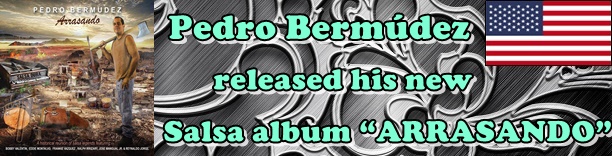
Pedro Bermudez thubnails ingles - North America - July 2018

Orchestra GUAPA tells us its history and progress

Latin America / Colombia / Bogota

GUAPA

In Bogotá, Colombia is and formed the musical group GUAPA. Its name is due to the talented and handsome beauty singing the good salsa of the members: Claudia, Evelin, Kathe, Astrid, who are accompanied by ten professional musicians who undoubtedly support them with strength and energy, in order to provide a good show to your viewers.

GUAPA Orchestra
GUAPA Orchestra

Javier Ortega, Musical Director of GUAPA, with a great career in groups such as Grupo Niche, Willie Colón, Yuri Buenaventura, Grupo Gale among others, confirms the success of the group’s staging.

They started in 2013, with Claudia Burbano, a singer and representative, under the direction of maestro Javier Ortega, former member of the Niche group, Yuri Buenaventura, Grupo Galé and currently with Willie Colón, who are the creators of this great group: GUAPA Orquesta .two


His first single was a cover of Amanda Miguel, “Asi No Te Amará Jamás”, starting his success; opening the doors internationally and at the end of that year, they recorded their first live DVD, with the songs “No Renunciaré” and “Salsa Guapa”, an unpublished song, authored by the teacher Javier Ortega who represents the group, making known the swing and talent of these beautiful representatives of the female salsa genre in different media and countries such as Mexico, Peru, Venezuela and the United States.

In 2014, they released a new single with the participation of the great salsa singer Gustavo Rodríguez, during the holiday season, called “Christmas Arrived”, authored by Javier Ortega, being highly requested. Then in 2015 a new proposal arose, a new theme, “You are Talking About Me”, authored by the great master Hansel Camacho, who was widely listened to and liked by the public in unexpected places such as Uruguay and Tel Aviv, thus expanding the salsa space. world.

GUAPA Orchestra flyer

There was also a proposal from “Women Singing Salsa Dura”, which pays a great tribute to the greatest exponent of salsa “La Fania All Star”, called “Tribute to Fania”, with the participation of great exponents of Colombian salsa. such as Mauro Castillo, Christian Fernández, Jairo Andrade and Carlos Guerrero, who were part of the majestic Grupo Niche and the incomparable Grupo Galé, opening radio spaces as large as Puerto Rico and New York, positioning themselves as great representatives of Colombian salsa.

Guapa
Guapa

They are currently presenting their new single, “Colombia”, authored by Javier Ortega, dedicated to all the beautiful Colombian people who make their homeland in the world and miss their land. Made up of its lead by four excellent voices:

Claudia, expressing her feeling, dedication and charm; Astrid, showing her sensuality, charisma and dynamism; Kathe with her beauty, harmony, sweetness and dance; and Evelyn, exposing her strength, versatility and handsomeness; being accompanied by nine professional musicians with great experience who support them and with them they gather a conglomerate of ingredients that make GUAPA have a spectacular show and good salsa to enchant its wonderful audience.

They mention the following to all those who want to know about them: “This is how GUAPA arrives to offer you a safe and excellent show with lots of salsa, beauty, handsomeness, to enchant the world.”

GUAPA Orchestra Integrants

For more information:

Facebook: https://www.facebook.com/claudia.a.alban

Twitter: https://twitter.com/guapaorquesta?lang=es

Instagram: https://www.instagram.com/guapa_orquesta/

Souncloud: https://soundcloud.com/rquesta

Youtube: https://www.youtube.com/channel/UCSMUpMy_gG_oFu23mo1y-ag

GUAPA-COLOMBIA: https://www.youtube.com/watch?v=qImB8tjicWc

GUAPA-Feat Carlos Guerrero/Christian Fernández/Mauro Castillo/Jairo Andrade-HOMENAJE A FANIA: https://www.youtube.com/watch?v=EGIOnswJPyA

GUAPA-Feat Gustavo Rodríguez-LLEGÓ NAVIDAD: https://www.youtube.com/watch?v=Pw6QG6cKwQE

GUAPA-Estás Hablando De Mi: https://www.youtube.com/watch?v=7TTHZjbm3z8 GUAPA-Así No Te Amará Jamás: https://www.youtube.com/watch?v=y40pAt2lbuo\

GUAPA-Salsa Guapa: https://www.youtube.com/watch?v=cU33u2hDO-8

GUAPA-No Renunciaré: https://www.youtube.com/watch?v=w2o9ShiqQyo

GUAPA-Así No Te Amará Jamás: https://www.youtube.com/watch?v=jOT1I2Ojq5w

GUAPA-Fuego A La Jicotea: https://www.youtube.com/watch?v=eNw88B6LNqY

GUAPA-Partes Rumbaland: https://www.youtube.com/watch?v=3IGyGnkIntE

Claudia B.-Firma OK
Claudia B.-Firma OK

PROGRAMS: GUAPA – Music DNA Program

Part 001: https://www.youtube.com/watch?v=hN8_hJbATwQ&t=5s

Part 002: https://www.youtube.com/watch?v=tkuhbmnL19M&t=10s


  • « Go to Previous Page
  • Page 1
  • Interim pages omitted …
  • Page 16
  • Page 17
  • Page 18
  • Page 19
  • Page 20
  • Interim pages omitted …
  • Page 65
  • Go to Next Page »

International Salsa Magazine (ISM) is a monthly publication about Salsa activities around the world, that has been publishing since 2007. It is a world network of volunteers coordinated by ISM Magazine. We are working to strengthen all the events by working together.