• Skip to primary navigation
  • Skip to main content

International Salsa Magazine

  • Home
  • Previous editions
    • 2026
      • ISM / January 2026
      • ISM / February 2026
    • 2025
      • ISM / December 2025
      • ISM / November 2025
      • ISM / October 2025
      • ISM / September 2025
      • ISM / August 2025
      • ISM / July 2025
      • ISM / June 2025
      • ISM / May2025
      • ISM / April 2025
      • ISM / March 2025
      • ISM / February 2025
      • ISM / January 2025
    • 2024
      • ISM / December 2024
      • ISM / November 2024
      • ISM / October 2024
      • ISM / September 2024
      • ISM / August 2024
      • ISM / July 2024
      • ISM / June 2024
      • ISM / May 2024
      • ISM / April 2024
      • ISM / March 2024
      • ISM / February 2024
      • ISM / January 2024
    • 2023
      • ISM / December 2023
      • ISM / November 2023
      • ISM / October 2023
      • ISM – September 2023
      • ISM – August 2023
      • ISM July 2023
      • ISM Edition June 2023
      • ISM – May 2023
      • ISM April 2023
      • ISM March 2023
      • ISM February 2023
      • ISM January 2023
    • 2022
      • ISM December 2022
      • ISM November 2022
      • ISM October 2022
      • ISM September 2022
      • ISM August 2022
      • ISM July 2022
      • ISM June 2022
      • ISM May 2022
      • ISM February 2022
      • ISM January 2022
    • 2021
      • ISM December 2021
      • ISM November 2021
      • ISM October – 2021
      • ISM September 2021
      • ISM August 2021
      • ISM July 2021
      • ISM May 2021
      • ISM April 2021
      • ISM June 2021
      • ISM March 2021
      • ISM February 2021
      • ISM January 2021
    • 2020
      • ISM December 2020
      • ISM November 2020
      • ISM October 2020
      • ISM September 2020
      • ISM August 2020
      • ISM July 2020
      • ISM June 2020
      • ISM May 2020
      • ISM April 2020
      • ISM March 2020
      • ISM February 2020
      • ISM January 2020
    • 2019
      • ISM December 2019
      • ISM November 2019
      • ISM October 2019
      • ISM Septembre 2019
      • ISM August 2019
      • ISM July 2019
      • ISM June 2019
      • ISM May 2019
      • ISM April 2019
      • ISM March 2019
      • ISM February 2019
      • ISM January 2019
    • 2018
      • ISM December 2018
      • ISM November 2018
      • ISM October 2018
      • ISM September 2018
      • ISM August 2018
      • ISM July 2018
      • ISM June 2018
      • ISM May 2018
      • ISM April 2018
      • ISM March 2018
      • ISM February 2018
      • ISM January 2018
    • 2017
      • ISM December 2017
      • ISM November 2017
      • ISM October 2017
      • ISM September 2017
      • ISM August 2017
      • ISM July 2017
      • ISM June 2017
      • ISM May 2017
      • ISM April 2017
      • ISM March 2017
      • ISM February 2017
  • Download Salsa App
    • Android
    • Apple
  • Spanish

Search Results for: radio

Thank you Rafael for all you have done for Salsa. Without you many of us would not be salseros

On August 29, 1926, Rafael Ithier was born in Rio Piedras, Puerto Rico. Brilliant and talented pianist, composer, arranger, producer and founding director of the University of Salsa “El Gran Combo de Puerto Rico”.

Thank you Rafael for all you have done for Salsa.

Former member of Cortijo y su Combo. Don Rafael Ithier is by his own merit an authentic living legend of salsa worldwide.

The Korean War was imminent. The young Puerto Rican soldier Rafael Ithier, in the service of the U.S. Army, feared being sent to the battlefield. Music was his thing.

He had been a pianist in several ensembles in his native San Juan before his military service.

His mission at that time (1950) was to organize an orchestra to liven up the parties at the military base.

But the group did not progress because the soldier with the soul of a musician did not hurry the coupling of the incipient band.

He wanted to buy time. “Sorry, sergeant, the band is not ready to perform,” Ithier would say every time he was called upon. In the end, his cunning saved him from war. Several of those musicians would later form the Borinqueña Mambo Boys band. From then on, Ithier would earn his living at the piano.

With that same astuteness, and after six glorious years and a painful separation from Combo de Cortijo, one of the most successful groups in West Indian music, this self-taught musician founded El Gran Combo de Puerto Rico.

He called several of the best musicians of the defunct Combo and two very young singers: Andy Montañez and Pellín Rodríguez.

May 26, 1962 marks the birth date of the orchestra, which today has become a living legend of the genre, with 48 years in the salsa music scene and 57 recordings.

Since its first presentation at the Rock and Roll saloon in Bayamón (Puerto Rico), the Gran Combo revolutionized West Indian music with an innovative clave rhythm for that time, which was aimed at the dancer’s ear.

The jocular lyrics of their songs with Andy Montañez’s and Pellín Rodríguez’s strong voices made an immediate impact.

In addition, the band’s fresh image and colorful choreography soon gave the band its own identity, at a time when orchestras were proliferating.

For its founder, “fidelity to an original style, but at the same time adaptation to musical evolution and group discipline have allowed us to get to where we are today,” says the 84-year-old bandleader. With this formula they survived the difficult times of the industry, the genre and the passing of the years and fashions.

Thank you Rafael for all you have done for Salsa. Without you many of us would not be salseros

One of the difficult moments that Ithier remembers was when the two flagship voices of the group left in the seventies. According to the musician, “many decreed the death of the Gran Combo”.But once again, the director’s wisdom came to the fore when he found two voices that matched the band’s style.

The arrival of the new singers (Jerry Rivas and Charlie Aponte) reflected Ithier’s knowledge and leadership in managing his orchestra. When Rivas, white and blond, was introduced to replace the stellar Andy Montañez, the other musicians, most of them dark-haired, looked at him with suspicion. Ithier, with his traditional good humor, responded: “You can rest assured, he’s a black man painted white”.

On the cusp of success today few remember the vicissitudes to consolidate, after the disintegration of Cortijo y su Combo (due to indiscipline of the musicians, among them Ismael Rivera), from where the base of musicians of the Gran Combo came from. Ithier recalls how they were branded as “traitors” by the public and the musical milieu.

“Several times we were hired in clubs and when we arrived to play and they saw us, they closed the doors. Those were difficult times, we didn’t even have a place to rehearse”. The orchestra was on the verge of disappearing, says its director, who, disillusioned, locked himself in his house, determined to give up music.

Rafael Ithier received Honorary Doctorate Degree

“The musicians came looking for me and after begging me to conduct for a while, I returned. The truth is that with so many problems I thought the group would last one or two years at most and look where we are now,” confesses Ithier.

But the constancy, the iron but friendly discipline and the virtuosity of the 14 members of the group paid off. In 2005 alone, they performed in 137 shows around the world.

Los Mulatos del Sabor, La Bandera Musical de Puerto Rico or La Universidad de la Salsa, nicknames by which the legendary group is known, are now in their 48th year.

The successful musical life of El Gran Combo de Puerto Rico is linked in every musical note to the style andpersonality of its director and founder Rafael Ithier. This pianist describes himself as a self-taught musician who never attended a conservatory.

His musical school was the street and his discipline to learn from the musicians of his time. Ithier, born in Rio Piedras, Puerto Rico, in 1926, has proven throughout his 63-year career to be a visionary of Latin music. In the 1960s, when he founded the group, he cemented his own style based on the rhythms that dominated the music scene of the time, such as bogaloo, jala-jala, bomba and plena. As for him, he was always a classical pianist.

In the seventies he understood the new direction that West Indian music was taking, already known as salsa, and he adapted to the changes.

He introduced the trombone to the brass section to give it a modern sound. Thirty years later, when the romantic salsa trend emerged, the Gran Combo knew how to stay current and worked in this line, without losing its style, but even so, the critics came.

“Music evolves like everything else and we adapt to the changes. Many orthodox of the genre do not accept it and criticized us, but for this reason many orchestras disappeared”. However, Ithier is one of the defenders of classic salsa and a critic of the so-called salsa monga (romantic), today in decline due to the resurgence of salsa dura.

“Those little guys missed the formula. They didn’t know what the clave was and they took away all the flavor of our music, they all did the same thing and that scared the dancer away. They even said that the clave was a delay in the music”.

In Latin music industry and genre circles, his influence is more than recognized.

It was Ithier who Gilberto Santa Rosa sought out for advice and support to become a soloist after having played with orchestras such as Willie Rosario’s. At present, Rafael Ithier continues in the direction of the Gran Combo and has no plans to retire, although he has not sat at the piano for three years due to hearing loss, according to himself, “due to an illness poorly cared for by not stopping traveling with the orchestra.”

Source: Alejandro-Gonzalez Teodoro (Dr Ted Alejandro Jr)

Also Read: The Royalty of our Latin Music Pete “El Conde” Rodríguez first singer signed by Fania Records label

International Salsa Magazine presents the Dj, Jeferson Flores, triumphing in Europe

Currently, they are known through the abbreviation “Dj” or the term “deejay” respectively, and in previous times, they were called “disc jockey”, to those people, which select and mix recorded music and thus be heard by a certain audience, thus issuing its sound in locations such as: discos, mini clubs, clubs, dances, events, concerts, bars, restaurants and rumbas, demonstrating their versatility, knowledge and bringing joy to their followers, listeners and dancers.

In this issue of International Salsa Magazine, we present a Venezuelan musician, selector or dj, who is currently triumphing outside our borders and extolling the name of our country.

Jeferson Flores, born in Caracas in 1992.

We refer to Jeferson Flores, born in Caracas in 1992, and from a very young age he was inclined to music, because his father, also worked as a professional dj of salsa music rhythm and this somehow influenced Flores to learn the trade and legacy acquired thanks to his father.

Beginning with only 15 years of age to musicalize, using in first place the formats of compact discs “cds” and “cuatromil quinientos”, in the Caracas saraos known as “Picoteros” and in the remembered “Minitecas”, and in second place demonstrates his skill in the “plates”, when using the formats of discs in acetates or vinyl, selecting salsa for the dancer and he also commented us that with the passing of the years and until the present time, he stands out and characterizes himself for being a professional salsa dj; he stands out and is characterized for being a “dj crossover”, that is to say, what it means in the Spanish language, dedicated to “mix” with the use of “controllers” his excellent musical repertoire. International Trajectory.

The performance abroad of our guest of this month in International Salsa Magazine, has been quite extensive and successful, beginning to work in Colombia, where he worked as a “resident dj” for five years in a prestigious nightclub in Bogota, then began his period, musicalizing in Ecuador, Poland, Germany and is currently based and makes professional life in Barcelona, Spain, being described by specialists as one of the “Dj Crossover” more complete and versatile, placing Latin music in their dances. And as a result of his excellent performance in the Iberian country, he was the winner last year of the “Latino de Oro” award, in the categories: Salsa Dj and Dj Crossover, respectively, and by the way, in this year’s edition 2024, he has been nominated again in both categories for this award, considered one of the most important of the music in the European continent.

As for his most recent performances as a “musical selector”, last Saturday, June 28, he was mixing salsa at a location in the city of Marbella, Spain, in an event called “Venezuelan Night”, and next Saturday, July 6, he travels to Madrid to make the rumberos of the “mother country” enjoy, integrating the line-up of the Dj show, the “Fiesta Blanca”, alternating in this opportunity with the musicalizers: Reni Herrera, Ditxon Mercado, Dj Argenis and Dj “El Negrito Caliente”.

Finally – he told us – Jeferson that his work in Spain has been very well liked and he is one of the most requested Djs in the rumbas every weekend. His social networks and contacts are, instagram: jefersonfloresoficial2, facebook: Yeferson Flores, Tik tok: @jefersonflores457, Youtube: jefferson flores.

Dj. Jeferson Flores
Dj. Jeferson Flores

Email: [email protected], Booking: +34691292564. From International Salsa Magazine in Palo Alto, CA www.salsagoogle.com, we wish Dj Jeferson Flores, the best of success and continue to succeed in Europe for the pride of Venezuelans, always putting good salsa for the dancer …! Until next time and let’s keep on salsaing. Dj. Augusto Felibertt and Carlos Alberto Colmenárez Oropeza.

The first DJ was British radio engineer Ron Diggins.

Contrary to what many may imagine, it was not a bohemian musician in a garage or some friends in a ghetto. The first DJ was British radio engineer Ron Diggins, who in 1949 invented the Diggola, which today is considered the first “mixing desk” in the history of music. The home-built Diggola had two turntables, lights, microphones, amplifier, speakers and was built on a wooden coffin (yes, coffin) base.

With his Diggola at the ready, and like a good DJ, he loaded his equipment into a van and began playing records at the hundreds of UK events where he was hired, causing the crowd to go wild. “I didn’t invent anything, I just put the same things to a different use,” he commented in the magazines of the time, never imagining that his creation would be the beginning of a revolution in music, where DJ’s and beatmakers would take beats to every corner of the planet.

Ron Diggins, throughout his life, played records in more than 20 thousand parties, retiring only in 1995, after 46 years of career in front of the decks. Passionate about music, he passed away in 2011 at the age of 91, leaving an eternal legacy.

Dj. Ron Diggins
Dj. Ron Diggins

In 2020 it will be 25 years since Diggins retired from the dancefloors. And we commemorate it with music, without a minute of silence, because a life with silence is the last thing the first DJ in history wanted.

Article written by @comte_con_eme, member of the Urban Roosters Army.

Also Read: Djane Shina una Pasión Convertida en Realidad

Edwin “El Calvito” Reyes. From combat to Beats

North America / USA

After participating in the largest military coalition in the history of the United States, Edwin “El Calvito” Reyes has shown that the phrase “If you dream that you can achieve it” is totally true. Dreams are achievable with perseverance, dedication and talent, qualities that this dreamy Sonero has, who will launch his record label soon for all Salseros lovers who support the new blood of the Salsa.

Edwin was born in Trujillo Alto (Puerto Rico) in 1974 and when he was 19 years old, he began his artistic career, playing and doing concerts of Plena (Folkloric Puerto Rican Music) in his hometown. Five years later “El Calvito” Reyes enlisted in the US Army in order to give a better future to his family, after a terrible work accident in his previous job (He was an Electrician).

Edwin “El Calvito” Reyes - Photo
Edwin “El Calvito” Reyes – Photo

During this year of change (1997) Edwin had his first opportunity in front of the American public as vocalist leader in a consolidated orchestra in these lands, “Papo salsa and his Tumbao” in Fort Stewart Army Post, GA, thanks to the expert eyes of Víctor Paris and Mr. Godreau, “Papo Salsa”.

From March 2003 to 2007, Edwin “El Calvito” Reyes went to combat four times in Iraq and once fought in Afghanistan, but he always felt the need to help relieve the stress of all the soldiers who were in those circumstances like him. In this way he created Saturdays of Salsa in combat for which he received help in the first instance from an U.S. civilian specialist in communications, Mr. Pérez, who contributed a large part of the necessary sound equipment to carry out this incredible idea at the beginning.

Later, Edwin with his percussionist and DJ skills in 2005 returns to Iraq but this time better prepared to carry out the Saturdays of Salsa parties during the fight. During this year he had his first performance in front of a crowd of soldiers and civilians accompanied by an orchestra of 14 musicians live, among which were: the Puerto Rican and master pianist José Pomales, Willie Báez, Julio De La Rosa, and Javier Solivan, among others …

Edwin “El Calvito” Reyes in concert

Everyone playing outdoors in the main dining room at Camp Liberty where the stage was. From this success, the band continued its touches until 2007 in this warlike country with an orchestra of more than 15 pieces: Piano, Bass, Trumpets, Trombones, Tenor Sax, Conga, Timbale, Bongo / Bell, Drums, Vocalists and a sound master, with which this wonderful orchestra made a total of 25 presentations.  “We were flown like true artist, in helicopters from one base to another, to just perform and then return back to our original base… Playing at Saddam’s Palace (a true palace made of concrete and marble) was the highlight. Also, at Camp Slayer where the biggest dancing crew gathered was an adrenaline rush for us… All with the help of great people who really felt like I felt; boost our own moral in combat!” told us Edwin.

In parallel to his military career, “El Calvito” Reyes participated in the Latin Music Orchestra in the city of Savannah, GA, “Ron con Anís” by the dead musician David Mercado and of which in 2006 he would be its owner under the new name “Orquesta con Clase” reaching objectives such as: leading the Latin American Services Organization (LASO) Festival in Savannah with more than 6,000 attendees; They were the “Guests of Honor” for the Fiesta Atlanta Festival at the Olympic Centennial Park in Atlanta, Georgia, performing in front of 10,000 people. Also, they served as the backup band for: Salsa Legend, Larry Harlow, the 2011 Hotalanta Salsa Congress, and many more.

Edwin “El Calvito” Reyes on the radio

In 2011 he is part of a selection of elite musicians of the U.S. Army to form a Latin music band called “One & Only” idea of creation by The Army Marketing & Research Group (AMRG) and carried out by the musicians Carlos Negrón and Albert Sánchez. This band, similar to U.S. Army Jazz Ambassadors sang Salsa, Merengue, Bachata and other Latin rhythms for the entertainment of their audience. During his tenure in this band he performed at the annual conventions of the League of United Latin American Citizens (LULAC), which is the largest nonprofit organization in America. He helped many Latinos obtain millionaire scholarships, he was master of ceremonies on three occasions contributing with his knowledge on “The importance to stay positive and reach that goal” and “How the army life will impact your life”.

From 2012 to 2016, he was the Official in charge of the Ensemble. He achieved the inclusion of more musicians to the group including female talent. He had the privilege of meeting political figures such as Michelle Obama, Hillary Clinton and Ricky Rosello (current Puerto Rico’s Governor), as well as acting in front of world-renowned stars such as: his idol Gilberto Santa Rosa, Olga Tañón, Tito Nieves, Jennifer Lopez, and many luminaries of the country’s Hispanic television.

Edwin “El Calvito” Reyes, leader, visionary and humble was also the host of a radio show called “My Salsa Show” in WHCJ 90.3fm at Savannah State University. From there derives his nickname “El Calvito”, thanks to one of his fellow broadcasters of the station and since then he is known as Edwin “El Calvito” Reyes by all his fans.

Edwin “El Calvito” Reyes

“ … I play Timbales, Conga, Bongo, Bata, Campana and all minor percussion… I ask not to be considered a master percussionist, as I’m learning the craft of all, but so far I have mastered the playing and singing simultaneously.”

This Sonero, percussionist has composed several songs and has made numerous covers. “You are My Wife” (2016) with arrangements by Castor Ugarte was his first composition with lyrics inspired by his wife.

His most recent single “Mi Tierra Querida”, al Son de Bolero, (2018) showed that doing what he loves has been one of his best keys to his resounding ascent in this career. This composition of the “Virtuoso de la Salsa” Rey Torcat with arrangements of the same Edwin with Eric Maldonado (Owner and Master Engineer at Paris Recording Studios, Tampa, FL) and on the piano, Adam Perez, has been a symbol of hope for all Puerto Rican emigrants based in the U.S. “Mi Tierra Querida” was awarded by the Akademia Music Award for Best Song back in April 2018.

“Mi Ritmo se llama Zalsa” is a theme that he launched this year and invites the dancers to perform their best steps on the track with its fast paced. Lyric by Rey Torcat, produced by Eric Maldonado, and with the participation of: Archie Pereira (piano), Kevin Pagan (Bass), Luis Chafalote (trumpets), José León (trombones) and Ricardo Rodríguez (saxophone Bari). This song currently ranks # 1 in Salsa Tune in Barcelona, Spain, based on the Record Pool of “Gussi DJ” on Tune in Radio.

Photo of Edwin “El Calvito” Reyes

“Soneros de Sangre Nueva” is another song of his authorship and the third that works in conjunction with Rey Torcat. In this single they share together the interpreters: Josean Rivera “El Nuevo Amolador”, Edwin Lebron “Xtraordinario”, Nandy “El Sinsonte” (Conquistador Del Elemento) and Gumbay Navedo (Carmen Sol). Also, the musicians of great trajectory, such as: Banny Maldonado, Grammy Winner, (Timbales), Edwin “Pirulo” Reyes (Congas) and Kokoand Take (Bongo / Bell) and in the choirs the Lead vocalist of the legendary CORPORACION LATINA, Edgardo “Bambino” Otero participated in this hit. Similar to his two previous unreleased tracks “Mi Tierra Querida” and “Mi Ritmo se llama Zalsa”, “Soneros de Sangre Nueva” has had a great acceptance and support from the public knowledgeable appreciative about the new Salsa representation worldwide.

The covers “Ya te Olvide” (2017) original song by the successful Mexican singer Marco Antonio Solis, recorded in the state of Kansas with arrangements by Carlos Ugarte and “RAN KAN KAN. Just for the King”(2009), tribute to Tito Puente under the production of one of the best percussionists, David Lugo with different choirs, Xilofono or Marimba, Trombones, and solos by Conga and Timbal, have screened” El Calvito “Reyes at the top of the most outstanding relief Soneros Salseros today.

Edwin “El Calvito” Reyes performing at the concert

With 25 years of musical experience and more than 10,000 presentations around the world, Edwin has stepped on the best stages including the World Peace Festival at the Olympic Stadium in Seoul (South Korea) in front of 82,000 people. He also had appearances in more than 20 Salsa Social events in many clubs throughout the peninsula, participated in the Salsa Beach Festival in Pusan and in two Asia Salsa Congreses with the master trombonist’s band, Greg Peña.

“Salsa is my therapy,

Edwin, who currently resides in Palm Coast, Florida, and after 22 years of service in the U.S. Navy and retired as Chief Warrant Officer, is preparing his debut album to be released in 2019 and doesn’t discard in the future to continue working on behalf of Hispanic communities around the world as a motivational coach, always bringing optimism and hope for a better future for the Latins.

Edwin “El Calvito” Reyes - A New Design - Made with PosterMyWall
Edwin “El Calvito” Reyes – A New Design – Made with PosterMyWall

All his music can be downloaded NOW on all digital platforms.

For more information, please visit www.ElCalvitoReyes.com or follow him in all his social networks as Edwin El Calvito Reyes.

Video: https://youtu.be/XMRTsFvpT0A

Brisa Tropical con Taino

North America / USA / Oklahoma

Brisa Tropical con Taino. The Oklahoma´s Salsero program in Spanish

For almost 30 years, the state of Oklahoma has among its ranks of entertainment, “Brisa Tropical con Taino”, the first spanish radio show with Salsero sound, made especially for the Latin community in the country.

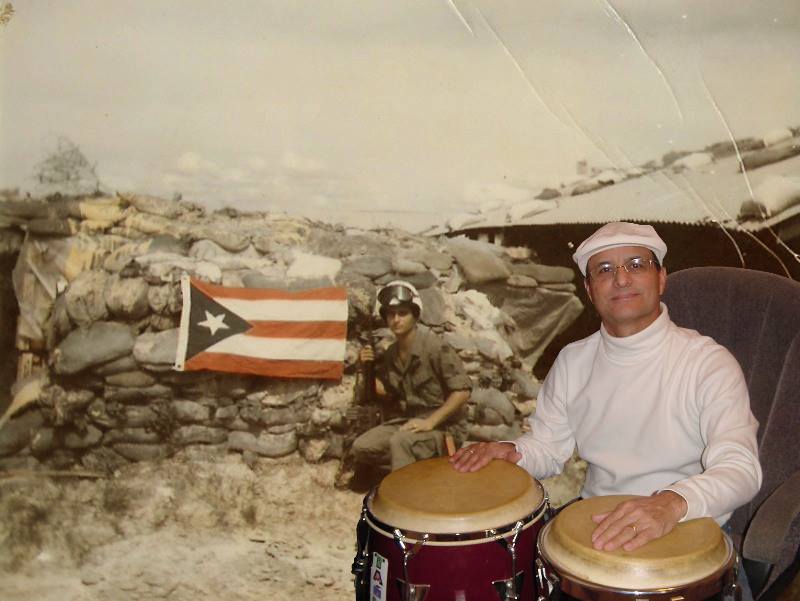
Its creator, founder, host and producer is the Puerto Rican Lino “Taino” Roldán Torres, a Disabled Vietnam and Persian Gulf wars Veteran, salsa lover, who together with his wife Carmen decided to undertake this project for the Latin market unattended for so many years.

Brisa Tropical with Taino

This pioneering program began its transmission for the first time in 1992, through the Amplitude Modulation (AM) dial. At first, this format had three hours of broadcast of only Tropical Music in its programming, novelty that made him a creditor of a preferential site in Frequency Modulation (FM) in 1995, with a duration of one hour in addition to the one established at the beginning in the AM circuit.

This way, Brisa Tropical con Taino had a total of four hours of continuous Latin music with advertising spaces, musical information and artists´ biographies, these transmissions lasted 18 uninterrupted years in that radio space.

Nam - Brisa Tropical con Taino
Nam – Brisa Tropical con Taino

“AN ANNOUNCER SHOULD FOCUS ON THE MUSIC AND LEAVE ASIDE ANY OTHER SUBJECTS THAT ARE NOT APPROPRIATE.”

Lino started with the idea of a Latin program for Latinos at a Local Radio Station when he arrived in Oklahoma after his work in the military in the early 90’s, at the same time, this retired military man with 23 years of service also worked as a DJ in two European countries: Italy and Germany. “… When I arrived to Oklahoma, I noticed the absence of a radio station in Spanish of tropical rhythms, such as Salsa, Merengue, Etc.

Taino in the studio
Taino in the studio

I went to several radio stations, but they were not interested in having a program in Spanish. I went to the commercial establishments of the city and told them about my idea that would bring them a market that was unexplored (the Hispanic market). The merchants and other commercial institutions immediately told me that they would give me their support. I presented the idea to an AM station, and they accepted it. (My goal was FM, but this opened the doors)”, Taino told us.

Currently, Brisa Tropical con Taino is developed only by network 2.0 since 2015, going from a Radio Program to a Digital Salsera Station with 24 hours programming each day with live interruptions between 10AM and 3PM, using that is commonly known as “Voice Track” for the rest of the time.

With this change, this interactive Web Station based in the city of Jenks, south of Tulsa in Oklahoma, has managed to obtain a loyal and numerous audience in Europe, the Caribbean, all of Latin America, the United States, and especially in remote areas such as: Iraq and Afghanistan, where the station fulfills a gratifying mission, as they carry greetings from the hundreds of soldiers deployed in those war zones to their relatives in the U.S. and Puerto Rico.

The also sociologist, Lino Roldan, along with his wife and great collaborating friends, are responsible for producing the varied programming for all Salseras generations all week, as well as to bring information capsules about Health, Consumer, Home Security, Maintenance of automobiles, etc., always with the firm purpose of bringing entertainment and, at the same time, education for the listening public.

Taino
Taino

“… LA SALSA LLEGÓ PARA QUEDARSE Y ES MUNDIAL”

This non-profit digital broadcaster is committed to the community, sponsoring Salsa events (without cost) such as: cruises and artist presentations, as well as helping to promote several activities of various organizations. In the same way, they are always present and united with the community in cases of emergencies such as natural disasters caused by the past hurricanes Mitch (1998) and María (2017), collaborating with the collection of food for the victims.

Lino “Taino” Roldán, as a good Salsa lover, hopes to continue praising this tropical music for many years, transmitting through his digital station different interpreters’ songs from all over the world, and to continue with this important work and pasion, Lino and Carmen need to raise $1000 in the account opened in “Go Fund Me” for maintenance expenses and music royalties that they promote. Would you like to help them?

Carmen and Lino Roldán - Brisa Tropical with Taino
Carmen and Lino Roldán – Brisa Tropical with Taino

“… AT MY AGE, PROJECTS AND GOALS ARE DONE EVERY DAY. I FEEL HAPPY WITH WHAT I DO”. Lino Roldán

For more information, please visit www.brisatropical.com or download the app for Smartphone Radio La Brisa Tropical.

Latin America – October 2018

Radio Nacional Colombia thubnails ingles Latin America - October 2018

Candela Salsa Orquesta thubnails ingles Latin America - October 2018

Anacaona orchestra thubnails ingles Latin America - October 2018

Papo Luca el gigante del sur thubnails ingles Latin America - October 2018

EL Sonero Natural de Leo Mendoza thubnails ingles Latin America - October 2018

Toñito Laya thubnails Latin America - October 2018

  • « Go to Previous Page
  • Page 1
  • Interim pages omitted …
  • Page 16
  • Page 17
  • Page 18
  • Page 19
  • Page 20
  • Interim pages omitted …
  • Page 64
  • Go to Next Page »

International Salsa Magazine (ISM) is a monthly publication about Salsa activities around the world, that has been publishing since 2007. It is a world network of volunteers coordinated by ISM Magazine. We are working to strengthen all the events by working together.