• Skip to primary navigation
  • Skip to main content

International Salsa Magazine

  • HOME
  • Previous editions
    • 2026
      • ISM / April 2026
      • ISM / March 2026
      • ISM / February 2026
      • ISM / January 2026
    • 2025
      • ISM / December 2025
      • ISM / November 2025
      • ISM / October 2025
      • ISM / September 2025
      • ISM / August 2025
      • ISM / July 2025
      • ISM / June 2025
      • ISM / May2025
      • ISM / April 2025
      • ISM / March 2025
      • ISM / February 2025
      • ISM / January 2025
    • 2024
      • ISM / December 2024
      • ISM / November 2024
      • ISM / October 2024
      • ISM / September 2024
      • ISM / August 2024
      • ISM / July 2024
      • ISM / June 2024
      • ISM / May 2024
      • ISM / April 2024
      • ISM / March 2024
      • ISM / February 2024
      • ISM / January 2024
    • 2023
      • ISM / December 2023
      • ISM / November 2023
      • ISM / October 2023
      • ISM – September 2023
      • ISM – August 2023
      • ISM July 2023
      • ISM Edition June 2023
      • ISM – May 2023
      • ISM April 2023
      • ISM March 2023
      • ISM February 2023
      • ISM January 2023
    • 2022
      • ISM December 2022
      • ISM November 2022
      • ISM October 2022
      • ISM September 2022
      • ISM August 2022
      • ISM July 2022
      • ISM June 2022
      • ISM May 2022
      • ISM February 2022
      • ISM January 2022
    • 2021
      • ISM December 2021
      • ISM November 2021
      • ISM October – 2021
      • ISM September 2021
      • ISM August 2021
      • ISM July 2021
      • ISM May 2021
      • ISM April 2021
      • ISM June 2021
      • ISM March 2021
      • ISM February 2021
      • ISM January 2021
    • 2020
      • ISM December 2020
      • ISM November 2020
      • ISM October 2020
      • ISM September 2020
      • ISM August 2020
      • ISM July 2020
      • ISM June 2020
      • ISM May 2020
      • ISM April 2020
      • ISM March 2020
      • ISM February 2020
      • ISM January 2020
    • 2019
      • ISM December 2019
      • ISM November 2019
      • ISM October 2019
      • ISM Septembre 2019
      • ISM August 2019
      • ISM July 2019
      • ISM June 2019
  • Spanish
  • Download Salsa App
    • Android
    • Apple

Search Results for: rhythm

“El Caballero de la Salsa” Kicks Off “Íntimo” in Puerto Rico

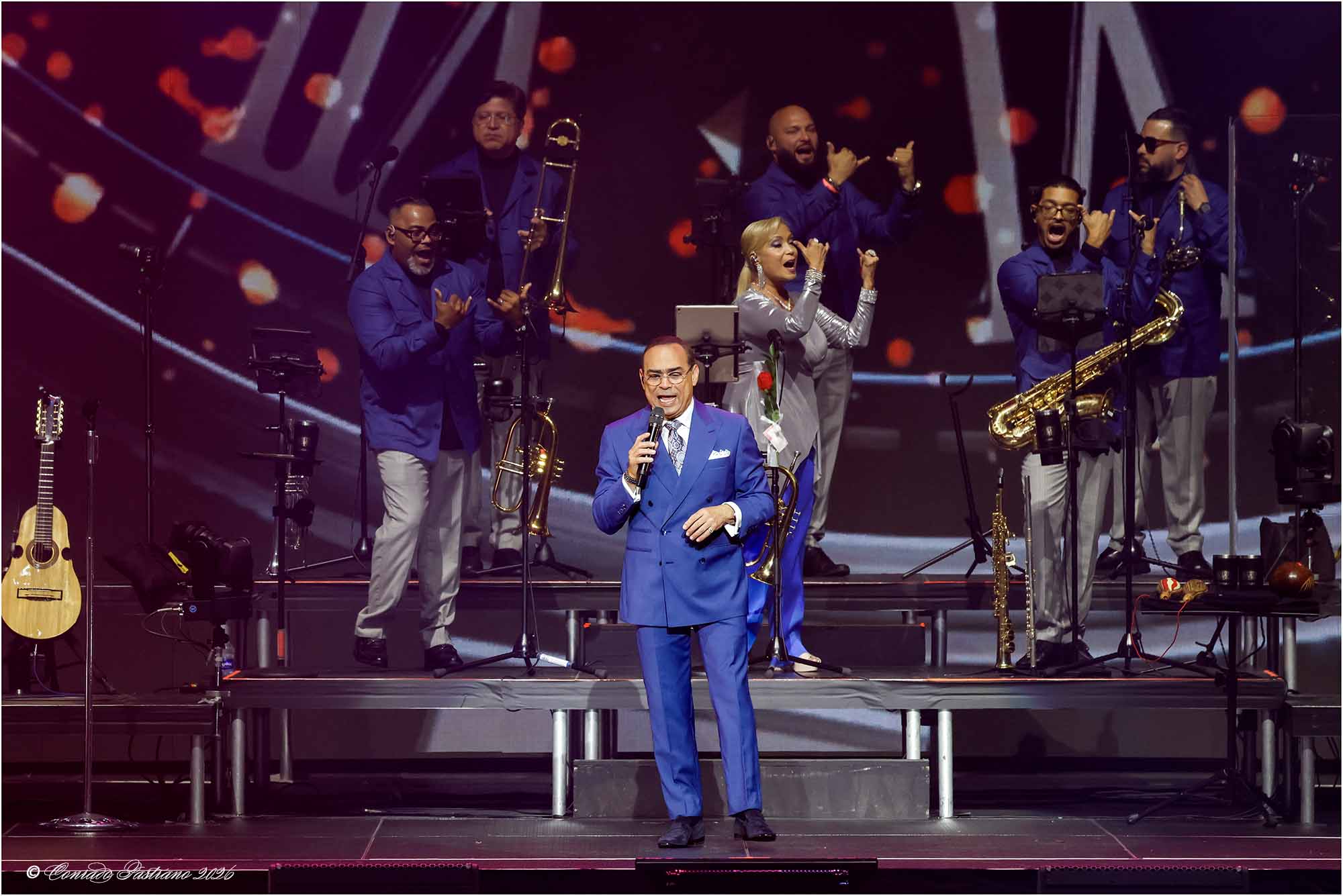
With performances on February 14 and 15, 2026, at the Coliseo de Puerto Rico, Gilberto Santa Rosa started the year “at home” with two sold-out shows and the successful launch of his “Íntimo” tour. That is always the goal. On the island, the audience is as demanding as they are generous and the singer knows it. Following the concerts, “El Caballero” posted on social media: “Puerto Rico, thank you for giving us two nights full of love, dancing, and so much music at home! What a thrill it is to sing at home!”
“El Caballero de la Salsa” Kicks Off "Íntimo" in Puerto Rico
“El Caballero de la Salsa” Kicks Off “Íntimo” in Puerto Rico

On January 30 of this year, the album that shares the tour’s title was released. In Puerto Rico, two shows were scheduled for Valentine’s Day weekend. The first coincided with Valentine’s Saturday; the second was added for the following day due to how quickly the first round of tickets sold out.

At exactly 6:46 PM on Sunday, February 15, 2026, the stage of the Coliseo de Puerto Rico welcomed Gilberto Santa Rosa’s orchestra to begin the second concert, marking the salsa singer’s long-awaited reunion with the Puerto Rican public. According to a press release from Edumil Ruiz’s agency: “These performances are part of a series of special concerts celebrating the month of love (…) and represent the long-awaited reunion of ‘El Caballero de la Salsa’ with his Puerto Rican audience after two years since his last performance on the island.”

A Night of Rhythms and Ovations

The performance began with high energy and impact from the very first track. The opening bars were seasoned with the sounds of the Puerto Rican cuatro, played by Fabiola Muñoz. “Déjate querer” featured a timbal solo by Pete Perignon, while “Cartas sobre la mesa” highlighted Saviel Cartagena’s saxophone. These were followed by “Ahora o nunca,” “Tú,” “Amor para la historia,” “Quiéreme,” and “Almas gemelas,” which featured Juan Carlos Vega on an aerophone solo; followed by “Yo no te pido” and “Conciencia,” for which the audience gave the artist a thunderous standing ovation.

Between songs, Santa Rosa took a moment to address the crowd: “I was born, raised, and live here. And it moves me to know that here in Puerto Rico, I am still dearly loved.” He added that he is a fan of singing to the brokenhearted with “scorned” lyrics set to savory, danceable arrangements. Addressing the contradiction of that combination, he stated, “We Puerto Ricans are capable of crying and dancing at the same time,” capping the explanation with: “That’s just how passionate we are.”
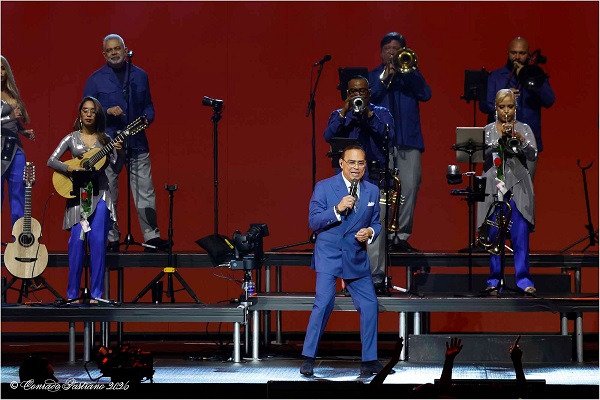
152 With the performances on February 14 and 15, 2026 at the Coliseo de Puerto Rico, Gilberto Santa Rosa began the year in "his home" with two sold-out shows.

152
With the performances on February 14 and 15, 2026 at the Coliseo de Puerto Rico, Gilberto Santa Rosa began the year in “his home” with two sold-out shows.

After his remarks, “Gilbertito” explained he would welcome a beloved artist to sing “Misterio,” an urban salsa track with lyrics “about a relationship where you don’t know if it’s coming or going, starting or ending.” Gerardo Rivas took the lead in his solo role, which required Pete Perignon to fill in on the congas while Pedro Marcano took over the timbales.

Tributes and Special Guests

Later, Gilberto Santa Rosa dedicated a segment of the concert to a legend Puerto Rico bid farewell to last December. He stated that Rafael Ithier was a musical genius whom he considered a mentor and a father in music, dedicating the iconic “Las hojas blancas” to him. Notably, the production featured a team of sign language interpreters who translated the entire concert in real time.

The repertoire also included “Vino tinto,” “Cosas nuevas” highlighting Pedro Marcano on the flugelhorn and “No me dejes solo,” which kicked off with a mozambique rhythm and rumba clave on the drums, courtesy of Gerardo Rivas and Tito Echevarría. The most anticipated moment arrived when Santa Rosa asked the crowd to join him in a chorus that allowed “El Caballero” to pay his respects to special guests. The “Choliseo” vibrated as the crowd chanted: “Mira quien llegó / Quién está ahí / Qué bueno que te vino a ver” (Look who arrived / Who is there / How good they came to see you). The tenacious sonero greeted the following guests in perfect rhyme and with his trademark elegance: Don Perignon, Luisito Ayala, Luis Vázquez, Juan José Hernández, Elwood Cruz, Marilin Pupo, Cucco Peña, Lissette Álvarez, Willie Chirino, his wife Alexandra Malagón (whom he called “The owner of my heart”), and Ismael Miranda, among others.

The evening continued with “No pensé enamorarme otra vez” and “Para vivir,” for which he was joined by Yeika Álvarez and “a representation of the Arturo Somohano Philharmonic Orchestra of Puerto Rico.”
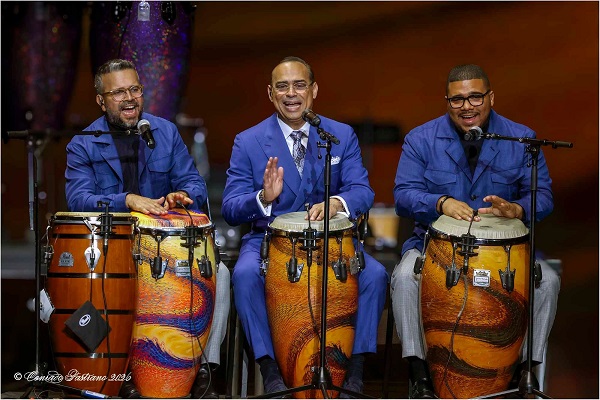
Gerardo Rivas (Hijo de Jerry Rivas el reemplaso de Jimmie Morales), Gilberto Santa Rosa y Pete Pergnon

A Monument to Nostalgia

“Tengo una muñeca,” followed by a fusion that progressed from boogaloo to cha-cha-cha and finally to salsa with Gilberto showcasing his skill on the maracas led us into a monument of nostalgia. The memory of the conga player Santa Rosa had worked with since their days in Willie Rosario’s orchestra until his passing in 2021 was honored with “Impaciencia.” The song showcased the Jimmie Morales Signature Series drums by Remo Percussion©, which sponsored “El Rey del Seco” (The King of the Dry Hit) from 2005 to 2016.

During this segment, “El Caballero” displayed his own skills as a talented conguero while singing, accompanied by Gerardo Rivas (the orchestra’s conga player) and Pete Perignon (the timbalero) on either side. While the audience was spellbound by the sight of the three musicians at their drums, this writer wondered if Gilberto was reminiscing about the days when he used to imagine he was a singer, using an upside-down trash can as a drum in the group led by Don Perignon.

The “Army of One”

This intervention was followed by “La agarro bajando,” which preceded the introduction of the band members, “musically directed by the master of the trombone,” Georgie Torres. The lineup included:

  • Backing vocals: Yeika Alvarez and Gino Ramírez.
  • Puerto Rican Cuatro: Fabiola “The one who holds her own” Muñoz.
  • Trumpet: Rebecca Zambrana (with the orchestra for 29 years) and Pedro Marcano.
  • Trombone: Anthony Rosado (also a ballroom dance champion).
  • Saxophone/Flute: Francisco “Paquito” Cruz and Saviel Cartagena.
  • Piano: Luis Marín.
  • Congas: Gerardo Rivas.
  • Timbales: Pete Perignon Morales.
  • Bongos: Rafael “Tito” Echevarría.
  • Bass: The legend Johnny Torres.
  • Keyboard/Aerophone: Dr. Juan Carlos Vega.
  • Vocals: Michael Pérez.

Santa Rosa also praised the technical and audiovisual teams, producer Rafo Muñiz, and Edumil Ruiz, noting that “all these people make this work.”

After identifying his team who gave a masterclass in what the military calls an “Army of One” the hits “Conteo regresivo,” “Perdóname,” “Que alguien me diga,” and “Que manera de quererte” rang out. Gilberto Santa Rosa celebrated Valentine’s weekend by once again proving why he holds the loyalty and preference of his Puerto Rican fanbase.

From the start, the energy never wavered. The crowd sang and danced along with the artist, the musicians, and the dancers on stage. The vast repertoire serves as a reminder of the countless hits “El Caballero de la Salsa” has collected throughout his prolific career.

Bella Martinez Puerto Rico


Also Read: Bandleader and conga player Tony Rosa tells us how he built his career

Latin Bayarea WebSite

North America / USA

Latin Bayarea WebSite

Sitio web de Latin Bayarea

At present, the search for information about Latin music and its culture in California (USA) has been put into the technology, because it is a very practical tool. On the internet, you can find an online site where you can investigate practically everything: music, culture, entertainment, clubs and concerts. The Web site is Latin Bay Area.

Among its many events that advertise monthly is that of:

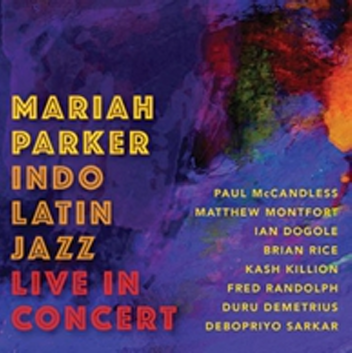
Mariah Parker’s Indo Latin Jazz Ensemble CD Release Concert

This concert celebrates the upcoming release of Mariah Parker’s new CD, Indo Latin Jazz Live in Concert.

According to Latin Beat Magazine, Mariah Parker’s Indo Latin Jazz Ensemble “blends the rhythmic syncopations of Latin jazz music with the entrancing, asymmetrical meters of East Indian rhythms resulting in first- class world music. Intriguing melodies that draw musical inspirations from the tempos of Brazil, Cuba, India, and Spain make for an uplifting serene yet passionate musical journey into an idealworld.”

Sunday, January 22, 2017, 7:00 PM Freight and Salvage

2020 Addison Street

Berkeley, California

Tickets: $24 in advance, $28 at the door

For more info, call (510) 644-2020 or visit www.thefreight.org

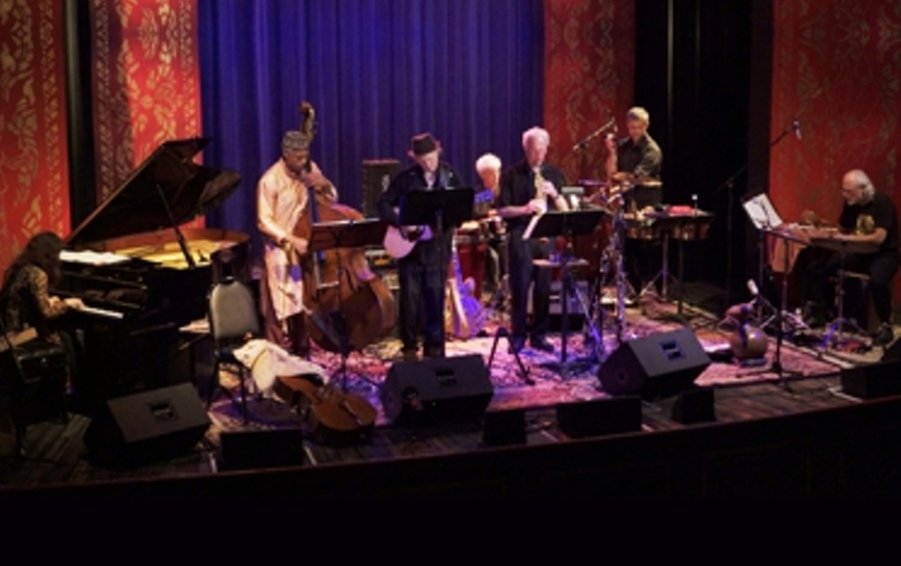
Featuring Mariah Parker (composition, piano, santur), Paul McCandless (woodwinds), Matthew Montfort (guitar), Kash Killion (bass, cello), and percussionists lan Dogole, Brian Rice, and Michaelle Goerlitz.

Indo Latin Jazz Live in Concert CD Release 1/20/17

Lanzamiento del CD "Indo Latin Jazz Live in Concert", 20/01/17
Lanzamiento del CD “Indo Latin Jazz Live in Concert”, 20/01/17

In 2009, Mariah Parker launched her Indo Latin Jazz Ensemble with a sold- out debut concert at Yoshi’s in Oakland, California. Mariah’s new release for AncientFuture.com records, “Indo Latin Jazz Live in Concert,” captures the magic of that first performance, as well as subsequent Northern California concerts at the Freight & Salvage in Berkeley, the Throckmorton Theater in Mill Valley and a studio session at Bob Weir’s TRI Studios in San Rafael. These multi-track live recordings were painstakingly mixed and mastered over a seven-year period by veteran Ancient Future producer Matthew Montfort. Indo Latin Jazz Live in Concert is a follow-up recording to Sangria, Mariah’s debut CD, which received airplay on over 468 New World, Jazz, and Latin radio programs, and earned over 365 reviews and media placements, including two songs that ascended to the Smooth Jazz Now Top 100 Songs of 2009 Chart.

Bios Mariah Parker

Mariah Parker in concert

(Composition, piano, santur) http://www.mariahparkermusic.com

“Parker, who holds a degree in music from UC Santa Cruz, wrote the eight instrumental compositions on this exquisite collection of pieces that fuse Latin rhythms with influences from South America and India with a dash of straight-up American jazz. It’s an intoxicating blend of East and West performed by musicians of astounding virtuosity. Like all the best jazz bands, this group is as disciplined as it is innovative, stopping on a dime when the composition calls for it and soaring into gorgeous landscapes of free association the next moment that are as pleasing as they are adventurous.

Mariah Parker's
Mariah Parker’s

This is sophisticated stuff, an album of global fusion performed by a group with character, charisma and the confidence that comes across when world-class musicians at the top of their games come together and create magic in the here and now of a live performance.” -Marin Independent Journal

Mariah Parker has been playing music from the time she could reach the keys on the grand piano in her family home. While completing her degree in music at UC Santa Cruz, she worked with ethnomusicologist Fred Lieberman and drummer Mickey Hart on the “Planet Drum” project and became fascinated with the possibilities of bridging musical concepts from different traditions.

She has performed her original compositions in festivals in the US and Europe. A gifted composer and band leader, she released her first solo recording of her compositions, “Sangria,” in February of 2009. This release received extensive airplay and critical acclaim worldwide.

“Dazzling…. Parker’s subtle and sensuous sounds reflect exotic flavors of India, the Middle East and Latin America.” -Palo Alto Daily News.

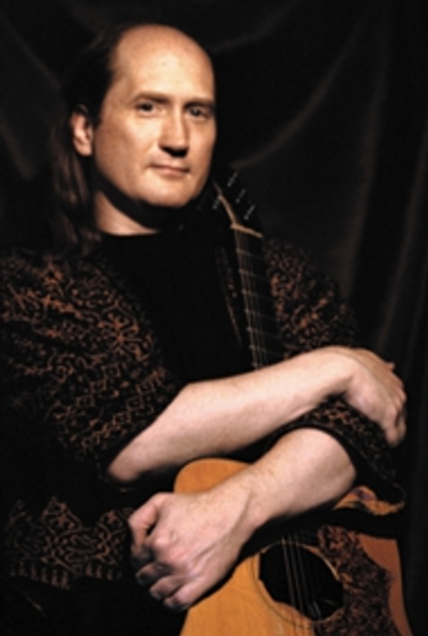
Matthew Montfort (Scalloped Fretboard Guitar)

Matthew Montfort
Matthew Montfort

Recently recognized as one of the world’s 100 Greatest Acoustic Guitarists, Montfort is a pioneer of the scalloped fretboard guitar and the leader of the seminal world fusion music ensemble Ancient Future. He has performed concerts worldwide, including at the Festival Internacional de la Guitarra on the golden coast of Spain near Barcelona and the Mumbai Festival at the Gateway of India in Bombay.

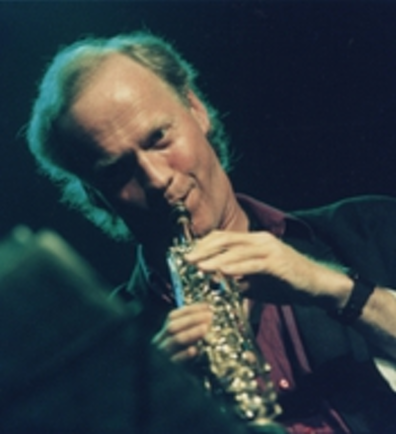
Paul McCandless (Reed Virtuoso)

Paul McCandless
Paul McCandless

During a distinguished career spanning three decades, Grammy-winning woodwind virtuoso Paul McCandless has brought a soaring lyricism to his playing and composing that has been integral to the ensemble sound of two seminal world music bands, the original Paul Winter Consort and the relentlessly innovative quartet, Oregon.

A gifted multi-instrumentalist, McCandless has specialized in an unusually broad palette of single and double reed instruments that reflect his grounding in both classical and jazz disciplines.

lan Dogole (Global Percussion)

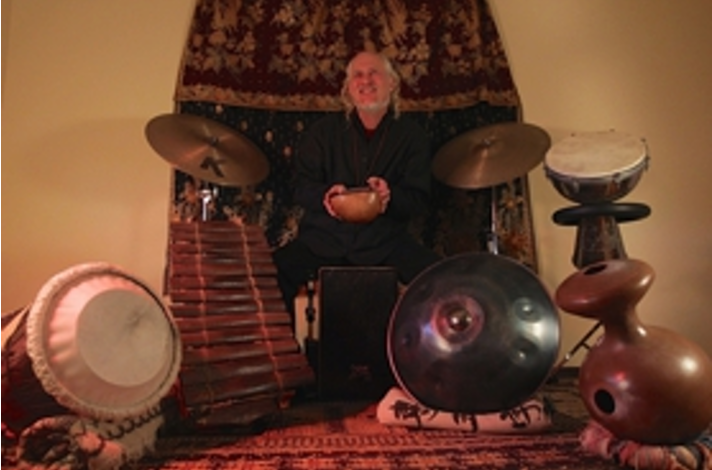
Ian Dogole is an accomplished bandleader, composer, and multi- percussionist who has recorded and performed with artists such as Hamza el Din, Tito La Rosa, Ancient Future, and Alex de Grassi on a wide variety of percussion instruments, including udu, cajon, hang, African talking drum, kalimbas, cymbals and dumbek.

Ian Dogole
Ian Dogole

Kash Killion (Bass, Cello)

Kash Killion plays cello, bass and assorted African and Middle Eastern stringed instruments, and has worked with Donald Byrd, George Cables, Billy Higgins, Cecil Taylor, John Zorn, Sun Ra, Butch Morris, George Lewis, Reggie Workman, and the Sun Ra Arkestra.

Brian Rice (Latin Percussion)

Brian Rice is a highly acclaimed musician specializing in Latin, Afro- Cuban, and Brazilian percussion who performs with acts such as Mike Marshall with Choro Famoso and the Antionio Calogero Quartet featuring Paul McCandless and Mike Manring.

Brian Rice
Brian Rice

Michaelle Goerlitz (Latin Percussion)

A talented percussionist with a focus on Brazilian, Afro Cuban, Venezuelan and Peruvian rhythms, Michaelle has played, recorded and toured with Mark Levine, Wayne Wallace, Houston Pearson, Denise Perrier, Joan Jeanrenaud, the Pickpocket Ensemble, Samba Rio, Novo Tempo, Bossa 5-0, and many others.

Latin America / March 2026

Adriana Mosquea 03 2026Andy Durán 03 2026Porfi Jiménez 03 2026Willie Colón 03 2023El Caballero de la SalsaSymphonic Bestial Sound 2026

March 2026 – Festivals

Puerto Rico circular flag
PUERTO RICO
42 Zalsa 03 2026

Día Nacional de La Zalsa

Mar 22, 2026

Plaza de la Independencia
Av. Franklin Delano Roosevelt
San Juan 00920, Puerto Rico

$ 30.00 + ivu & c.s

Bella MartinezCalibrated maracas

DIRECTORY OF NIGHTCLUBS

Argentina flag
ARGENTINA

Aruba circular flag
ARUBA

Belize circular flag
BELIZE

Bolivia circular flag
BOLIVIA

Brazil flag
BRAZIL

Chile circular flag
CHILE

Colombia
COLOMBIA

Costa Rica circular flag
COSTA RICA

Cuba circular flag
CUBA

Dominican Republic
DOMINICAN REPUBLIC

Ecuador circular flag
ECUADOR

Guatenala circular flag
GUATEMALA

Mexico Circular flag
MEXICO

Panama circular flag
PANAMA

Peru circular flag
PERU

Puerto Rico circular flag
PUERTO RICO

Venezuela circular flag
VENEZUELA


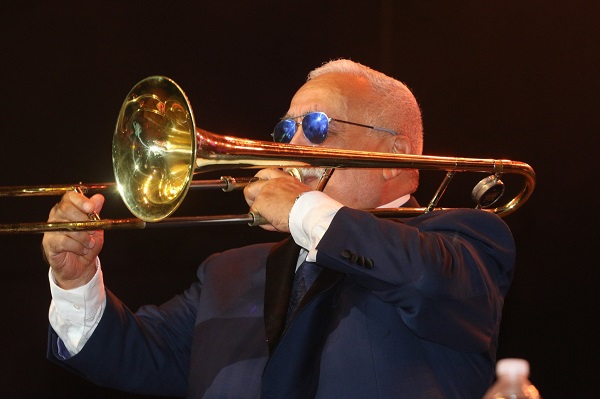
Willie Colón The “Architect of Salsa” Enters Immortality

February 21, 2026, will be etched into the history of Latin music as the day the “street trombone” fell silent to become an eternal echo.

A Sorrowful Farewell: February 2026

After several days of uncertainty and reports regarding his delicate health, the passing of William Anthony Colón Román was confirmed in New York City at the age of 75.

Willie Colón, the Architect of Salsa, Passes into Immortality

Producer, trombonist, visionary. He was the architect of a sound that broke the mold and redefined salsa from New York for the entire world.

With his aggressive trombone, his innovative musical concepts, and his leadership within the historic Fania All-Stars, he marked an era that can never be repeated.

The musician, who had already shown signs of physical frailty following his retirement from the stage in 2023, suffered severe respiratory complications that kept him hospitalized during his final days.

Iconic figures like Rubén Blades and the entire Fania family have expressed their grief, noting that we haven’t just lost a musician, but the “Malo” (The Bad Boy) who revolutionized the visual and sonic identity of Latinos in New York.

A Legacy of Rebellion and Sophistication

Unlike other bandleaders, Willie Colón didn’t just make music; he told cinematic stories. From his early days with Héctor Lavoe to his era of social consciousness with Rubén Blades, Colón transformed salsa into a vehicle for urban narrative.

With his aggressive trombone playing, innovative musical concept, and leadership within the historic Fania All-Stars
  • Innovation: He was responsible for putting the trombone at center stage, creating that “heavy,” raw sound that defined the Bronx.
  • Identity: Through his iconic album covers (emulating FBI “Wanted” posters), he constructed the mystique of the Latin anti-hero.

His Eternal Anthems

Willie Colón’s catalog is the backbone of every party and social reflection in Latin America. Among his most remembered tracks, more relevant today than ever, are:

Song Significance
El Gran Varón A milestone in social lyrics regarding identity and redemption.
Idilio The most romantic and melodic facet of his mature era.
Pedro Navaja The ultimate expression of narrative salsa produced alongside Blades.
Gitana A classic of sentiment and rhythmic fusion.

Beyond the Trombone: Activism and Service

In his later years, Willie Colón’s life was also defined by his work offstage. He served as an activist, a community leader in New York, and held positions in organizations advocating for Hispanic rights. His life was a testament to the fact that art and social commitment can walk hand-in-hand.

Producer, trombonist, visionary. Architect of a sound that broke molds and redefined salsa from New York to the world.

Producer, trombonist, visionary. Architect of a sound that broke molds and redefined salsa from New York to the world.

The Centennial on the Horizon

Though the Maestro has physically departed in 2026, his office and family have made it clear that his music will live on. Releases of unedited material and tribute concerts are expected as we pave the road toward the centennial of his birth in 2050.

“Time passes, and I am left unable to speak to you”  Willie Colón.

His music will continue to speak for him on every corner where a trombone sounds and in every heart that feels the pulse of urban salsa.

His talent was more than rhythm: it was identity, the barrio, resistance, and living history. Today, we don’t just say goodbye to a musician; we say goodbye to a pillar, a North Star, and an entire chapter of our Latin culture.

Anecdote:

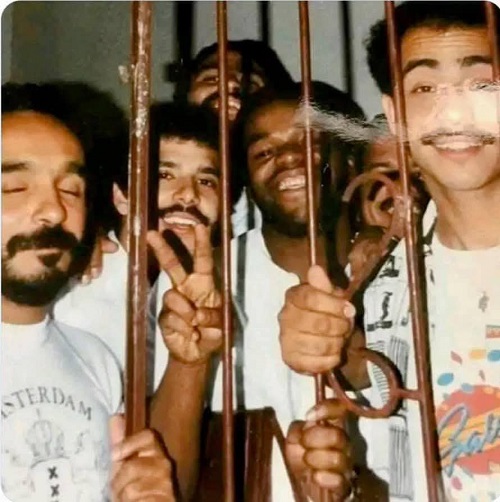
Willie Colón had a notorious incident in Medellín in 1985 when he refused to perform at the Iván de Bedout Coliseum because the promoters of “Rumba Producciones” failed to pay the agreed amount. Police arrested him along with 13 of his musicians, and they were detained for two days at the Belén neighborhood police station.

The audience, who had waited for hours, grew unruly, leading to riots that resulted in six injuries and significant property damage. This episode inspired the song “Especial No. 5,” which narrates Colón’s experience inside cell number five of that station.

Willie Colón had an incident in Medellín in 1985

Special Contribution by Julio Cesar Galindo Alarcón (Lima, Peru)

A posthumous tribute to the great Willie Colón (1950-2026): The greatest disciple of Mon Rivera by his own admission and today a legend of our passionate salsa.

Willie Colón: From “Classic Urban Salsa” to “Symphonic Salsa”

His musical production clarifies and proves that “salsa” does not only originate from Cuban and Puerto Rican rhythms, but also from American, Brazilian, and other Latin influences.

When Willie produced and recorded his 1977 instrumental-only album, El Baquiné de Angelitos Negros, he expanded the orchestral lineup to include violins, saxophone, flute, cello, and trumpet. While the work had little commercial success and went largely unnoticed during his triumphant career, it served as more than just a platform for his “salsa” fusions with Jazz, Funk, Soul, and R&B. It was the starting point for producing grander orchestral arrangements with a larger number of musicians, thus becoming the precursor to what is now known as “Symphonic Salsa.”

Four years after this beginning, in 1981, this “Symphonic Salsa” reached its peak when Willie released his second solo album, Fantasmas dedicated to and motivated by the loss of his younger sister, Cindy. The album included a track he composed, with musical arrangements by Luis Cruz, titled “Toma Mis Manos” (Take My Hands).

This piece, dealing with the somber theme of death, is considered by this author (due to the quality of the composition and the fabulous “Symphonic” orchestration) to be an authentic and grand masterpiece of “Classic Salsa.” It blends Funk, Soul, R&B, and Bossa Nova with Willie’s excellent vocals, serving as a spectacular prelude to that other legendary, yet often overlooked, symphonic track recorded in 1991 by the “Canary of Carolina,” the great Lalo Rodríguez: “El niño, el hombre, el soñador y el loco.”

To conclude, with the immense pain that his departure brings, I accompany this tribute with the aforementioned song: “Toma Mis Manos,” an unforgettable composition by the recent legend of our “salsa” the great Willie Colón, famously known as “The Bad Boy of the Bronx.”

The legendary musician and his wife Julia Colón were married for decades and share three children (

The legendary musician and his wife Julia Colón were married for decades and share three children

Also Read: The legacy of Leopoldo Pineda, the ambassador of the trombone in La Maquinaria Fania All Stars

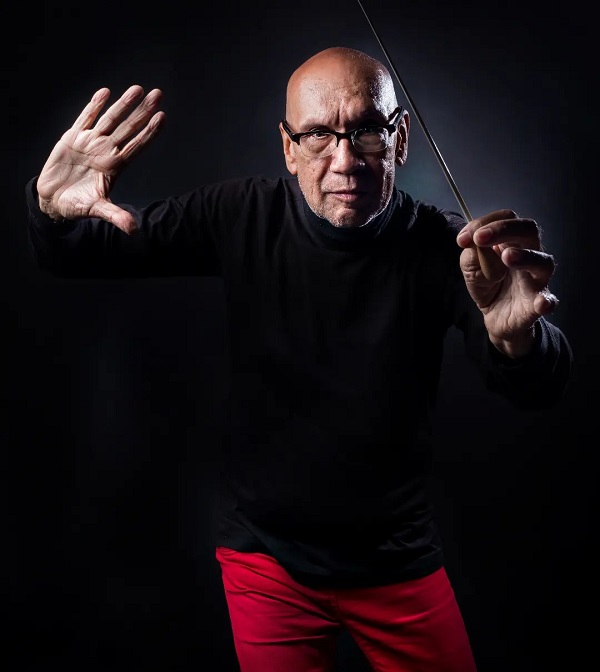
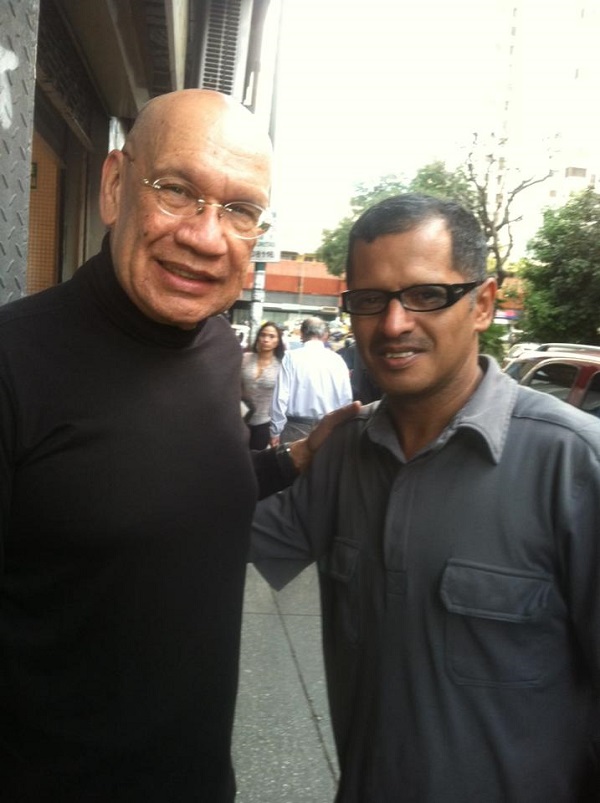
Andy Durán: The Architect of Mambo and Latin Jazz

If there is one name that embodies technical elegance and rhythmic passion in the contemporary Caribbean, it is Andy Durán.

A musician, arranger, composer, and conductor, Durán has spent over four decades serving as the guardian of the big band sound. He keeps the flame of legends like Tito Puente and Pérez Prado alive, but with a distinctive signature that fuses academic precision with popular soul.

Andy Durán El Arquitecto del Mambo y el Latín Jazz

Born in Caracas, Venezuela, on January 2, 1949, as Nelson Valor Ramos, this extraordinary artist is today an essential figure in music production and direction.

The Musician: Master of the Arrangement

Andy Durán is more than just a conductor; he is a scholar of musical structure. His academic background has allowed him to master the art of the arrangement the ability to transform a simple melody into a complex masterpiece where twenty musicians move as a single, unstoppable force.

  • The Big Band Sound: He is one of the few directors who has kept the large orchestra format relevant in Venezuela. His ensemble, Andy Durán’s Latin Jazz Big Band, is an institution renowned for its rhythmic precision and powerful brass section.
  • Stylistic Versatility: While Mambo is his backbone, his repertoire flows seamlessly through Jazz, Salsa, Mambo-Jazz, and traditional Venezuelan music.
  • Cult Discography: Albums such as Tropicalia, Mambo 2000, and his acclaimed tribute to Tito Puente, Fidelidad, are essential pieces for any collector of the genre.

The Person: The Educator and Music Lover

Behind the baton, Durán is known for his humility and profound work ethic; he is frequently described as a “gentleman of music.”

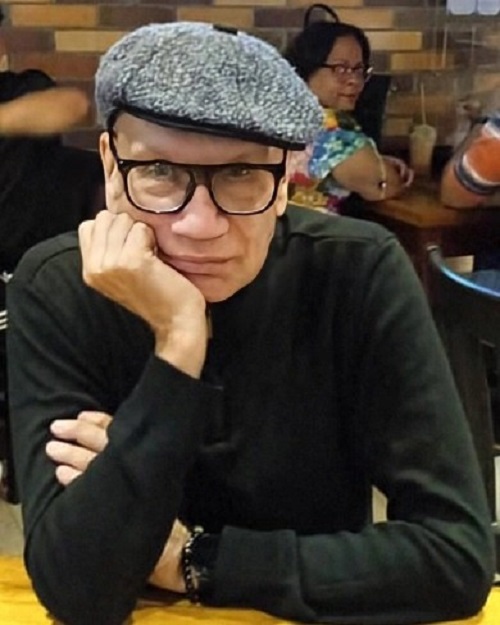
Nacido en Caracas, Venezuela, el 2 de enero de 1949, bajo el nombre de Nelson Valor Ramos
  1. Relentless Researcher: Beyond performance, he is a historian of rhythm. His concerts often turn into masterclasses where he explains the origins of the pieces, always honoring the original composers.
  2. Generational Bridge: He has served as a mentor for young Venezuelan musicians, integrating new talent into his ranks and proving that classic Caribbean genres have no expiration date.
  3. Cultural Resilience: In an era dominated by commercial trends, Durán remains faithful to acoustic quality and the complexity of Latin Jazz, earning the respect of international critics.
  4. Si existe un nombre que personifica la elegancia técnica y la pasión por el ritmo en el Caribe contemporáneo, ese es Andy Durán
    Si existe un nombre que personifica la elegancia técnica y la pasión por el ritmo en el Caribe contemporáneo, ese es Andy Durán

Career and Legacy

Andy Durán is one of the greatest exponents of Salsa and Latin Jazz in Venezuela. With 16 albums to his credit, he holds the most extensive discography of any Venezuelan jazz artist. Additionally, he is recognized as the country’s premier music copyist.

His beginnings date back to his youth with the group Nelson y su Sexteto. In 1978, he founded the Orquesta Palladium. Shortly after, he adopted the stage name “Andy Durán” to avoid confusion with other artists of the era and because it was easy to remember and write.
Since 1982, he has been fully dedicated to professional music, working alongside giants such as Aldemaro Romero, Eduardo Cabrera, the Billo’s Caracas Boys, Los Melódicos, and Soledad Bravo. In 1985, he released his first LP, Mambo Salsa. Among his most notable works are:

Nacido en Caracas, Venezuela, el 2 de enero de 1949, bajo el nombre de Nelson Valor Ramos
  • Tropicalia Caraqueña
  • Canelita y Andy Durán: Tribute to Celia Cruz
  • Tito & Tito (A tribute to Tito Puente and Tito Rodríguez)
  • Salsa Dura y Descarga: A Tribute to Fania
  • Fiesta con Billo

Reflections by Andy Durán: Is Singing Easy?

The Requirements: Flawless pitch, breath control, phrasing, and diction; in addition, a strong memory for melodies, lyrics, and orchestral arrangements.

It is highly recommended to know how to dance according to the genre being performed (e.g., Salsa). It is also beneficial to have basic acting skills to handle dramatic themes when necessary.

Andy Duran y Dj. Augusto Felibertt

Reading is mandatory to develop a rich vocabulary for improvisation or public speaking; it also prevents embarrassing spelling errors in written lyrics. Keeping the vocal cords healthy and trained is a vital matter. Music theory and sight-singing are the ideal, essential, and unavoidable tools.

Finally, a singer must define their style and repertoire with great care. One must invest in professional orchestral arrangements and have an arranger-director or advisor—this is an investment, just like stage attire.

Remember, my fellow singers: a director’s worst nightmare is a singer who is out of tune, off-beat, and forgetful.

Best regards to all vocalists and singers.

Maestro Andy Durán: Director, Arranger, and Composer

P.S. Vocalists must meet two more requirements: keep your nerves in check and sing from the heart.

Also Read: Víctor Cuica “The Eternal Breath of Latin Jazz and Venezuelan Identity“

  • « Go to Previous Page
  • Page 1
  • Interim pages omitted …
  • Page 8
  • Page 9
  • Page 10
  • Page 11
  • Page 12
  • Interim pages omitted …
  • Page 129
  • Go to Next Page »

International Salsa Magazine (ISM) is a monthly publication about Salsa activities around the world, that has been publishing since 2007. It is a world network of volunteers coordinated by ISM Magazine. We are working to strengthen all the events by working together.