
• Skip to primary navigation
  • Skip to main content

International Salsa Magazine

  • HOME
  • Previous editions
    • 2026
      • ISM / April 2026
      • ISM / March 2026
      • ISM / February 2026
      • ISM / January 2026
    • 2025
      • ISM / December 2025
      • ISM / November 2025
      • ISM / October 2025
      • ISM / September 2025
      • ISM / August 2025
      • ISM / July 2025
      • ISM / June 2025
      • ISM / May2025
      • ISM / April 2025
      • ISM / March 2025
      • ISM / February 2025
      • ISM / January 2025
    • 2024
      • ISM / December 2024
      • ISM / November 2024
      • ISM / October 2024
      • ISM / September 2024
      • ISM / August 2024
      • ISM / July 2024
      • ISM / June 2024
      • ISM / May 2024
      • ISM / April 2024
      • ISM / March 2024
      • ISM / February 2024
      • ISM / January 2024
    • 2023
      • ISM / December 2023
      • ISM / November 2023
      • ISM / October 2023
      • ISM – September 2023
      • ISM – August 2023
      • ISM July 2023
      • ISM Edition June 2023
      • ISM – May 2023
      • ISM April 2023
      • ISM March 2023
      • ISM February 2023
      • ISM January 2023
    • 2022
      • ISM December 2022
      • ISM November 2022
      • ISM October 2022
      • ISM September 2022
      • ISM August 2022
      • ISM July 2022
      • ISM June 2022
      • ISM May 2022
      • ISM February 2022
      • ISM January 2022
    • 2021
      • ISM December 2021
      • ISM November 2021
      • ISM October – 2021
      • ISM September 2021
      • ISM August 2021
      • ISM July 2021
      • ISM May 2021
      • ISM April 2021
      • ISM June 2021
      • ISM March 2021
      • ISM February 2021
      • ISM January 2021
    • 2020
      • ISM December 2020
      • ISM November 2020
      • ISM October 2020
      • ISM September 2020
      • ISM August 2020
      • ISM July 2020
      • ISM June 2020
      • ISM May 2020
      • ISM April 2020
      • ISM March 2020
      • ISM February 2020
      • ISM January 2020
    • 2019
      • ISM December 2019
      • ISM November 2019
      • ISM October 2019
      • ISM Septembre 2019
      • ISM August 2019
      • ISM July 2019
      • ISM June 2019
  • Spanish
  • Download Salsa App
    • Android
    • Apple

Search Results for: rhythm

North America / May 2024

Medusa Pop BandOscar Larrañaga from BatacháGuido Herrera-YanceYelba HeatonPedro ''Pocholo'' Segundo

PBSThumbnail about the salsa museum

Las Maracas promo

Martinez attorney


Canada flag

CANADA

DIRECTORY OF NIGHTCLUBS

Dirty Martini
Dirty Martini Oakville
2075 Winston Park Dr
Oakville, OntarioN, Canada L6H 6P5
+1 905 829-8400

El Rancho
El Rancho
430 College St
Toronto, Ontario, Canada M5T 1T3
+1 416 921-2752

LULA LOUNGE
Lula
1585 Dundas West
Toronto, Ontario, Canada M6K1T9
+1 416 588-0307

Marlowe Restaurant & Bar
55 York Blvd
Richmond Hill, Ontario, Canada L4B 3B4
+1 905-771-8645

Sahara
Sahara
1855 Dundas St E
Mississauga Ontario L4X 1M1
+1 905 282-0316

Smokeshow BBQ & Brew
744 Mt Pleasant Rd
Toronto, Ontario, Canada M4S 2N6
+1 416 901-7469

Mangos Kitchen Bar
Mangos Kitchen Bar
1180 Howe Street
Vancouver, BC, Canada V6Z 1R2
+1 604 559-5533

Baza
Baza Dance Studios
1304 Seymour Street
Vancouver, BC, Canada V6Z 1R2
+1 778-379-2292

Studio Nightclub
Studio Nightclub
919 Granville street
Vancouver, BC, Canada V6Z 1L3
+1 604 620-6604


United States flag

UNITED STATES

DIRECTORY OF NIGHTCLUBS

CALIFORNIA FLORIDA  ILLINOIS
MICHIGAN NEW JERSEY NEW YORK
OHIO PENNSYLVANIA TEXAS
VIRGINIA WASHINGTON
MAY 2024 FESTIVALS
Florida circle flag
FLORIDA
Baila Tampa Festival 2024

3rd Baila Tampa Latin Dance

May 02 / 05 2024

Hilton St. Petersburg Carillon Park
950 Lake Carillon Dr.
St Petersburg, FL 33716

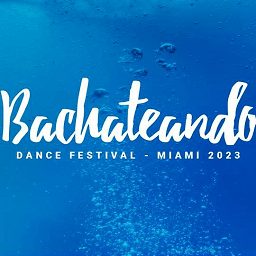
Bachateando 2024

Bachateando Miami Dance Festival

May 22 / 27 2024

Eden Roc Miami Beach
4525 Collins Ave.
Miami Beach, FL 33140

Meryland Circle Flag
MERYLAND
World Dance Festival Baltimore 2024

World Dance Festival Baltimore

May 09 / 12 2024

Hilton Baltimore
Inner Harbor 401 West Pratt St.
Baltimore, MD 21201-1629

California US circular flag
CALIFORNIA
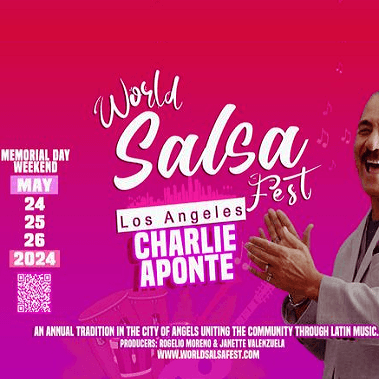
World Salsa Fest 2024

WORLD SALSA FEST

May 24 / 26 2024

MARRIOTT HOTEL BURBANK 
2500 N Hollywood Way
Burbank, CA 91505

Oregon circle flag
OREGON
Portlans 2024

Portland Salsa Congress

May 31 2024 – Jun 03 2024

Sheraton Airport Hotel
8235 Northeast Airport Way
Portland, OR 97220

Grupo Batachá, Houston’s Premier Latin band

Latin talent has been spreading across the United States over the years and every day more salsa bands and orchestras are becoming better known in states where we never would have imagined before. Such is the case of Grupo Batachá, known as ”Houston’s Premier Latin Band”, which is established in the state of Texas and whose director, Oscar Larrañaga, was kind enough to give us some minutes of his time to answer some questions regarding his career and the group lead by him.   

Oscar, Founder of Batachá
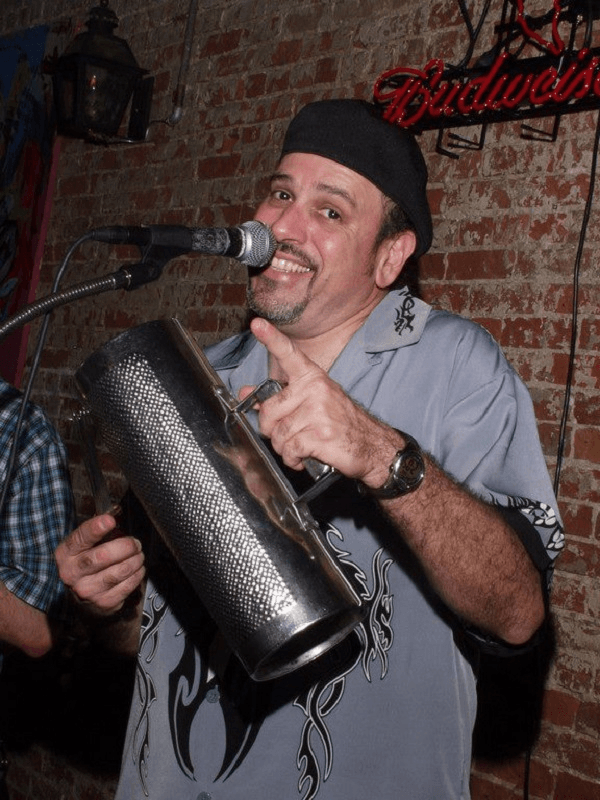
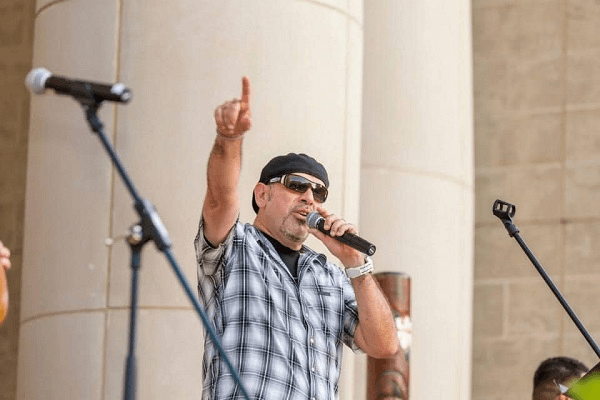
Oscar Larrañaga, founder of Grupo Batachá, playing the güiro in a concert

Oscar’s beginnings in the music world 

Oscar has told us that as a child he always knew he was meant to devote himself to music. Even since he was in preschool, he showed signs of how would be his future in music by showing interest in certain instruments and styles.   

The musical figure who has inspired him most in his family was his great-grandfather, who was part of a philharmonic. Oscar heard many stories about the musician, the way he played and how good he was at what he did, which led his great-grandson to want to be like him someday.    

It should be noted that, at all stages of his formation, he never obtained any academic training related to music. Everything he knows about the job he has learned on his own through constant practice and attention to everything he wanted to emulate.    

However, it was in 1990 that his career officially began many years later in the United States. It was there when he finally decided to create a project with a few musicians he began to perform at Latino family events such as weddings, quinceañeras, birthdays, among other events. This gave him the necessary experience to know how an orchestra works on stage and, of course, fitted for what was to come next in his career.   

Oscar in a performance with Batachá
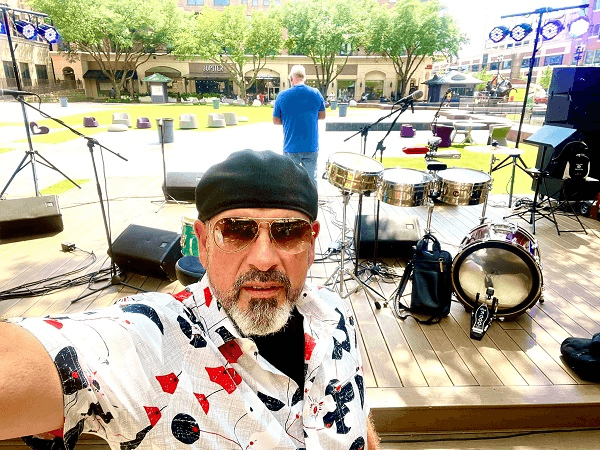
Oscar Larrañaga showing the stage where Grupo Batachá would perform that day

How Grupo Batachá began   

Oscar revealed to us that Grupo Batachá was founded in 1997 in Houston, Texas, and made up of the artist and four other members who joined him at that time. They all decided together that Oscar was the best choice to lead the band and chose him as their director, a position he still holds today. Many members have come and gone, but he has always managed to ”keep the ship afloat” at all times despite the changes.   

He explained to us that the name ”batachá” is a term that comes from Cuba and its literal meaning is ”fun times”. In addition, when he was in his early twenties, Oscar met the members of a group with the same name in Guatemala and liked it very much from the first time he heard it. For him, ”batachà” is synonymous with fun and having a good time, things he sees represented in his work with the band. That is why his album is called ”Batachando” and would be something like ”disfrutando” in Spanish.   

Languages played by Grupo Batachá   

While it is true that Grupo Batachá makes music in several languages such as Spanish, English and Portuguese, Oscar wanted to make it very clear that everything he and his bandmates do is aimed at salsa influenced by the typical Cuban flavor that comes from drums and Yoruba culture, elements that are primarily handled in Spanish. This is why the main language of the group is and will continue to be Spanish.   

In terms of clave, it is much easier for the group to get into the correct rhythm in Spanish for what we have explained above. For the same reason, English, Portuguese and any other language are not a priority for Batachá at this time.    

Batachá is influenced by the Cuban Flavor
Grupo Batachá’s music is influenced by the typical Cuban flavor that comes from drums and Yoruba culture

How Grupo Batachá manages its performances 

During the band’s 15-year trajectory, Grupo Batachá has performed at more than a hundred weddings, quinceañeras, birthday parties, anniversaries, corporate events, among others. In each and every one of these performances, Oscar and his bandmates have always stood out for their professionalism and great musical quality, so they have no problem to obtain contracts and clients of this kind very often.   

As for the method the band uses to select their clients, there is not much to explain. Oscar simply gives priority to the client who agrees on a date first and then tries to reach an agreement with the one who makes his request later, although he emphasized that this does not happen very often.   

About this, he said he feels very lucky to bring joy to different types of public with what he likes more than anything in the world, which is music. It makes him really happy to be able to live from what he loves and, by extension, to transmit that same happiness to those who have the opportunity to attend one of his shows. 

Read also: Don Perignon and La Puertorriqueña are prides of Puerto Rico 

The Soul of Latin American culture – Salsa, Merengue y Lambada

Latin American / Venezuela / Caracas

Did you know that Salsa, Merengue and Lambada are rhythms that have been enjoyed in the last decade? Well, this link that unites them is the energy and passion for life, expressing itself in music, showing itself in the romance of couples dancing in harmony and with dance it unites them even more in a sentimental way as in fellowship.

These rhythms were born from a very urban environment, where each dancer can freely show their personality in the movement, however, following certain rules that each genre has, where one can follow each step and technique or do it spontaneously. For example:

✓ Never use the same foot twice, it must be alternated (right, left, right…).

✓ Dance with your partner as a mirror, that is, if you go to the right, your partner goes to the left.

✓ Transfer of weight from one foot to another as steps are performed.

Salsa is a rhythm that originates from the synthesis of Cuban son and other Caribbean music genres, with jazz and other American rhythms. One of the main contributors comes from the African rumbas along with the cumbia, the guaguancó, the guajira, the Cuban son, the mambo, the montuno son, the cha cha cha, among others.

It can be said that salsa is one of the most important rhythms in the music industry where it has many characteristics of its contributors, for example, “salsa” is close to “mambo” due to the steps executed in counts of eight, its movements and patterns are unique, however, it is a side-by-side dance with different turns.

Couple dancing Salsa

The Merengue has its origin in the Dominican Republic and has a huge degree of popularity in the Caribbean area, it is a slow rhythm that increases its speed at the end of the dance, it is similar to the bolero but it is danced more than anything in groups than with a partner.

The secret of the dance is based on the transfer of weight from one foot to another, where each Latin genre has a characteristic that differentiates them, the best example is the similarity that everyone believes that “salsa” has with “merengue”, where Salsa has 4 beats, where the first beat touches the floor lightly with the tip of the foot quickly, which is known as “TAP” and this is repeated in four “4” and eight “8”, instead The merengue does not exist, this “TAP” is only 2 beats, it is a constant rhythm, very simple, whose speed of steps is marked by the musical rhythm.

But both genres have to have in the dance a movement of the hip, shoulders and position of the hands that characterizes them, marking the sensuality of Latin rhythms.

The “Lambada, a Brazilian genre that originated from the small cafes and bars that came from the garrafa dance, is believed to have been the product of rhythms such as the “Carimbo” and the “Merengue” with influences brought from the “Forro” and the “Samba” so it has a lot of Caribbean music influences, but the melody is the combination of Caribbean drums, brass and electric guitars with an added touch of Spanish elements and the flavor of the local indigenous people. It first spread to Bahia, Europe, Japan, the USA and the Middle East. It is currently danced in nightclubs and dance clubs, since its creation its jiv, merengue, rumba, even sevillanas and acrobatic maneuvers have evolved.

It is a 3-beat dance (fast – slow – fast) where the first step is taken with the first beat of the music, the second is the movement of one of the 2 senses and the third is the transfer of the weight back to the center moving the leg more slowly.

This dance is danced with the whole body, women dance pointe, flex the knees and the trunk moves in the opposite direction to the lower part of the body, if the hip rotates in one direction the rib cage rotates in the opposite direction. It can be danced alone or as a couple (they dance very close together giving the impression that it is one person), where the man molds his partner in the dance and the woman can embellish the dance with head movements or a controlled intentional fall producing a wave from the knee to the hips and shoulders.

If you want to know and learn some basic steps of the mentioned rhythms, look for the book in movement Latin Dance Dessi and Orod Ohanian and get passionate with these three “3” hot dances. Or follow us and watch the following videos to learn how to dance merengue, salsa and lambada.

Venezuelan businesswoman Joanna Torres is an example to follow

There are many Venezuelans who, due to the economic and political crisis that has affected their country in recent years, have had to set off for new horizons and leave their homeland to look for a better future for themselves and their family. Such is the case of the businesswoman and founder of Arepas Latin Cuisine Joanna Torres, with whom we had the pleasure of conversing with recently. 

This talented young woman has a fascinating history of success and is a true inspiration to any Latino wanting to open paths in the United States or anywhere else in the world. That is why, from International Salsa Magazine, we decided to contact her and share her journey in the land of opportunities.  

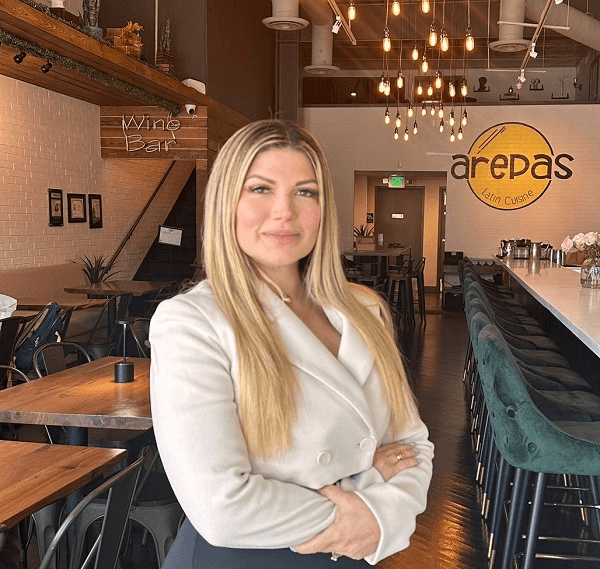
Businesswoman Joanna Torres
Venezuelan businesswoman and founder of Arepas Latin Cuisine Joanna Torres

Arrival in San Jose   

The first American city where Joanna arrived was Miami and her goal was to do a master’s degree, since she had studied her undergraduate career in Venezuela. Once there, she realized that she had a lot of trouble learning to speak English and there were few opportunities to practice it, since all with whom she interacted with spoke Spanish. 

It was then when a friend suggested the idea of moving with her to the city of San Jose, where it would make it easier for her to learn the language and spend time with people who spoke it all the time.  

How Joanna began to conceive the idea of becoming a businesswoman 

Two years after Joanna arrived in San Jose, she began working in a clinic and, together with her experience in administration and accounting, she learned everything she could about medical coding and the way medical procedures were coded. This gave her enough experience to dare to open his own medical consulting firm which has more than 22 years of operation and a total of 150 employees in Venezuela. 

The entire staff of the consulting firm residing in the South American country speaks English and takes care of serving all customers in the United States. Joanna even took it upon herself to provide her workers with their own fiber optic internet by contacting some telecommunications engineers, since this service in Venezuela is extremely poor. 

Since the medical consulting firm gave her the necessary experience as a businesswoman, she decided to expand into another area she was very passionate about: cooking. Joanna had been wanting to start a food truck in parallel to her current company for some time and saw the opportunity to do so through a friend and former college classmate who owned restaurants and food businesses. She proposed to Joanna to buy one of her restaurants and partner with her, which she finally accepted and that is how the first Arepa Latin Cuisine restaurant was born.   

Joanna and her team
Joanna Torres and part of her team in San Jose

Reducing failure possibilities for Arepas Latin Cuisine 

Joanna was aware that the possibilities of failure of her idea were high, but she told us that her extensive knowledge of finance was fundamental to overcome all obstacles. 

She was always clear that she had to look for ways to generate more income within the same company. That is why she and her staff have been responsible for providing lunch to employees from technology companies, making food for events such as birthdays or weddings, organizing pop-ups (temporary restaurants created to promote new menus and specific events) in order to innovate and always earn a stable income in the corporation. 

The businesswoman points out that she always tries to innovate, and with regard to this, she said ”I have invented some taco-arepas with which I use arepa flour to make the tacos and give them a different touch, so it would be a combination of both dishes. I always try to innovate and do different things to surprise people and keep them from getting bored”. 

”At the San Francisco headquarters, we have chosen the strong liquor license to start offering Venezuelan typical drinks and rum such as Diplomático or Ron Santa Teresa. We are also doing some remodeling in the place to make it much more pleasing to the eye” she continued. 

In addition, both the San Jose and San Francisco headquarters offer live music for diners to enjoy good Latin music while tasting their food. There is also a dance floor for those who wish to move to the rhythm of the orchestra of that day.   

Joana’s grandmother as an inspiration to create Arepas Latin Cuisine 

After taking the required steps, the first Arepas Latin Cuisine restaurant headquarters were opened in October 2021, but it was not easy. This was an effort made over many years in which Joanna did her best to be able to reach that point. 

The beginning of everything was her grandmother, with whom the Venezuelan learned everything she knows about cooking. She was a cook, a cooking teacher and taught cookery courses and workshops to support her 12 children because she was widowed at a very young age. Joanna tells us that, at that time, she and her children made ground corn arepas to sell to markets and restaurants. 

All this made her an inspiration to Joanna and led her to learn to cook since she was just nine. As a child, she knew that cooking would be important in her life. 

Lots of secrets that Joanna learned from her, such as the way in which the dough has to be kneaded, the difference between making homemade arepas and arepas to sell, the amounts of ingredients to be used, the way to prepare the fillings for the dishes, among other things.   

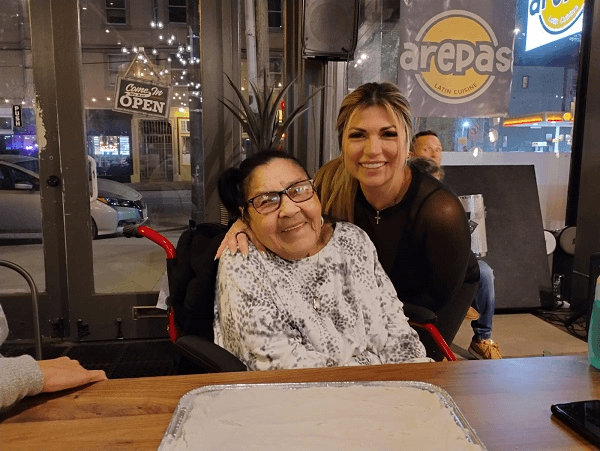
Joanna and her grandmother
Joanna Torres posing next to her grandmother, who sadly passed away on April 1, 2023

Reception to Venezuelan food in San Jose 

Joanna ensures that her recipes have been a boom in California, since there was no authentic Venezuelan food in San Jose, so her project was a pioneer in this area.   

The reception her food has got with Americans, Chinese, Indians, Vietnamese and many other nationalities has been truly amazing because dishes from Arepas Latin Cuisine, besides being extremely delicious, were something that has never been seen before.   

The taste for food at Arepas reached such a point that the restaurant provides lunch to more than 300 employees in several technology companies such as Netflix, Snapchat and Tinder. It is worth noting that workers who are benefited greatly appreciate being able to enjoy a rich and varied menu every day.   

The biggest challenges Joanna faces as a businesswoman  

One of the biggest challenges Joanna has faced is to find employees who know the Venezuelan and Colombian cuisine (there are also several Colombian dishes on the menu) as it should be. ”Finding cooks with great experience has been complicated, but with the arrival of Venezuelan and Colombian migrants in California, we have been able to find staff with knowledge in the culinary arena” said the businesswoman on this topic. 

For her, it is vitally important to employ people who are very clear about how to cook the main Colombian and Venezuelan dishes, so she takes this into account when recruiting her talents.   

In addition to that, Joanna also sells Venezuelan products and has a hard time finding them in San Jose, so she has to bring them directly from Florida in order to sell them in California.  

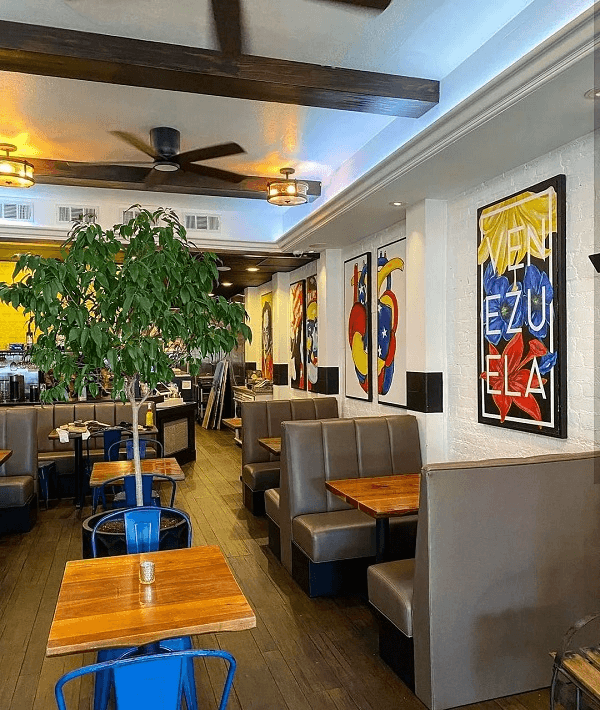
Joanna’s restaurant inside
That is what Arepas Latin Cuisine looks like on the inside

Advice for Latino migrants 

When Joanna was asked to give advice to future Latino migrants who wish to move to the United States, the first thing that she pointed out was that they must work very hard in that country to get ahead. In her particular case, she claims to have had three jobs at the same time, since she was alone in the United States and lived only from what she earned. 

She also added that ”you have to make sacrifices to succeed in life and always do things well according to the laws of the country that welcomes you. I think that there are many Venezuelans who confuse ‘native cunning’ (taking advantage or others and the economic, political and judicial system failures to do whatever you want without consequences) with intelligence, which makes them believe that they are above others and make serious mistakes. You have to do things well and eventually the much-desired success will come,” said Joanna on such an important issue. 

Read also: Young Puerto Rican singer Jeremy Bosch supports the Spanish Harlem Salsa Museum 

Cajiao, says he always had a taste for good music: the tangos and ballads of the 50s and 60s

Danilo Cajiao was born on February 9, 1969 in Cali Colombia son of Marina Munevar and Antonio Cajiao family with three siblings Walter, Patricia and Raul.

From my father I inherited the musical taste for Afro Antillean rhythms, we listened at home to the Sonora Matancera, Benny More, Arsenio, Daniel Santos and many more.

Danilo Cajiao was born on February 9, 1969 in Cali, Colombia.

There was always a taste for good music: the tangos and ballads of the 50s and 60s.

When I was a student I participated in several music festivals at school and I was part of several dance and Andean music groups.

I always liked salsa and my favorite artist of the genre will always be Angel Canales.

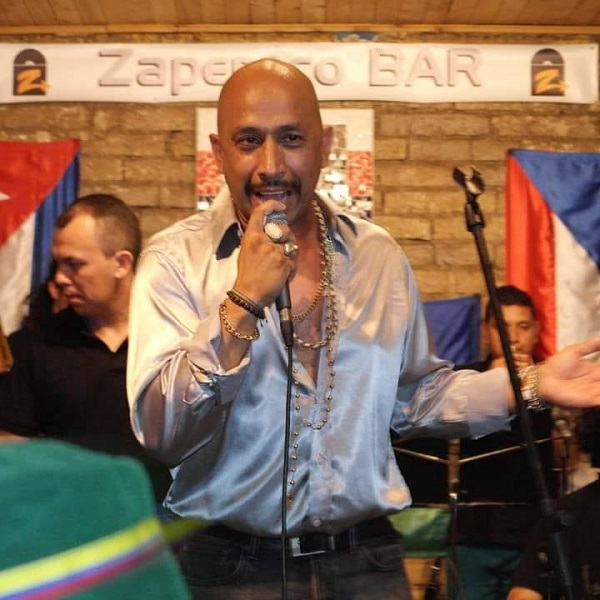
After the appearance of the program “YO ME LLAMO” in Colombia I was motivated to start the process to achieve the perfect imitation of Angel Canales.

I began my presentations in small salsa bars with a dance floor and I did about 4 songs of Diferente, as I went along the character was being perfected and the public and the owners of the bars were asking for something more.

I then created “the Orchestra SON DE LA 8″ in 2013 with the purpose of making the accompaniment and mount all the music of the different Angel Canales.

Orquesta SON DE LA 8

The market was opening and the support of the salseros was very large, We have had much acceptance in the salsero environment in Colombia.

Participating in major events locally, nationally and internationally:

Leyendas Vivas De la Salsa in Medellin Colombia,

Salsa al Parque Cali, Salsa al Parque Bogotá, Homenaje a la Salsa, Tributo a los salseros and Noche Blanca.

I have alternated and shared stages with several national and international artists and orchestras.

Orquesta Brodway, Orquesta Colon, Nelson y sus Estrellas, Gran Combo de Puerto Rico, Henry Fiol, Adalberto Santiago, Luisito Carrión, Papo Cocote, Cano Estremera, Moncho Santana, Orquesta Zodiac, Luigui Texidor, Frankie Vásquez, Tony Molina, Orlando Marín, Orquesta la Inmensidad and Orquesta la 33.

Danilo Cajiao, says there has always been a taste for good music, the tangos and ballads of the 50s and 60s.

International presentations:  

Guayaquil Ecuador and Caracas Venezuela.

Endorsed and supported by the family of ANGEL CANALES and by him I have taken my tribute to the most recognized places and salsa clubs in Colombia.

Apart from accompanying the Diferente Angel Canales with the orchestra Son de la 8 we have made our own music always keeping the line of heavy salsa and with good taste.

Angel Luis Canales “El Diferente”.

There were nine record productions by Angel Canales between 1975 and 1987, twelve productive years.

By 1970 Angel Luis Canales had put his voice on an album by African-American pianist Mark Dimond, and five years later Dimond’s orchestra was renamed “Angel Canales y Sabor”.

The immense musical freedom of Ángel Luis Canales Canales has much to do with the determining influence exerted on him by Rafael Cortijo, Ismael Rivera and the irreverence of the Combo de Cortijo as a whole.

The difference was that those two masons did not have enough money to support their ideas economically (discographically speaking) while Canales had enough because of the money he earned from his profession as a jeweler and diamond cutter.

That’s why he didn’t lower his head to anyone, that’s why he didn’t give in to any advantageous record contracts and made his own record label, that’s why he never paid or bribed radio producers, and he dressed the way he wanted.

That’s why the conservative salseros kept a CIA-like eye on him. And Canales revolutionized everything in his path: from his clothing to his vocal and orchestral arrangements, his presentations and his choice of repertoire.

By 1970 Angel Luis Canales had put his voice on a record by the Afro-American pianist Mark Dimond, and five years later Dimond’s orchestra was renamed “Angel Canales y Sabor”, and with it he would make a mark like few others in the world of salsa, from his total independence, to the freedom for the musicians, his revolutionary shaved head, and a wardrobe that had nothing to do with the salseros, in addition to his voice, repertoire and arrangements. Ángel Canales recorded in 1979 the album “El sentimiento del latino en Nueva York”, and an exquisite version of “Dos Gardenias”, by Cuban composer Isolina Carrillo.

“El sentimiento del latino en Nueva York” was a clarinada similar to “Imágenes Latinas”, the song by Argentine Bernardo Palombo presented a year earlier by Conjunto Libre, in terms of its contents of denunciation and clamor for justice. “Es el sonido que el americano oye/ y no entiende” (It’s the sound that the American hears/ and doesn’t understand).

Musical childhood

Ángel Luis Canales was born on June 29, 1950 in Santurce, Puerto Rico, son of Ángel Luis Canales and Ana Ilda Canales.

At the age of 8 he was already in New York with his parents, who liked to listen to romantic music and also to Cortijo y su Combo.

The Puerto Rican country song was also among his favorites; it was the jíbara song of his people. In time Canales would indicate that Cortijo and Ismael were determining influences in his musical and social journey.

Much has been said that his current retirement is due to Parkinson’s disease, but Ángel Luis Canales is there, he attends private invitations of his friends and remains in the battle line of salsa and life. He is currently 73 years old.

In those years and in school he was more inclined to practical workshops than books and that is why he went to work, recommended by one of his teachers in a jewelry store where from being a messenger he would learn all the secrets of the art of cutting, polishing and mounting diamonds. He became a professional, solvent, and with an extraordinary clinical eye that would serve him a lot later.

Vista larga, his new friends did not speak Spanish, his native language, but fortunately Angel Luis had peers of his generation, and Latinos like the Lebron brothers and Willie Colon himself.

He also took a long view of his internship in the U.S. Army and later assimilated the new trends that emerged in the music being made in New York.

He started out firmly, as we have already mentioned, with pianist Mark Dimond (Markolino), who had been linked to Willie Colón. With Mark he added his voice to some of the songs on the album “Brujería” and later, with the departure of the pianist, the orchestra was renamed “Ángel Canales y Sabor”.

With this band he would record “Sabor” in 1975 and other albums until “El Sentimiento del latino en Nueva York” in 1979.

Two years before the recording of this album, in 1977 Angel Canales made his first visit to a Latin American country, Panama, and the reception he received was such that he would later write a song dedicated to that country.

The same happened during his visit to Venezuela on November 13 and 14, 1981, which became a musical commotion of great proportions at the Poliedro de Caracas.

Likewise in Colombia and Peru he felt the devotion of the public of those nations. Perhaps he did not know the scope of his work and the projection he already had.

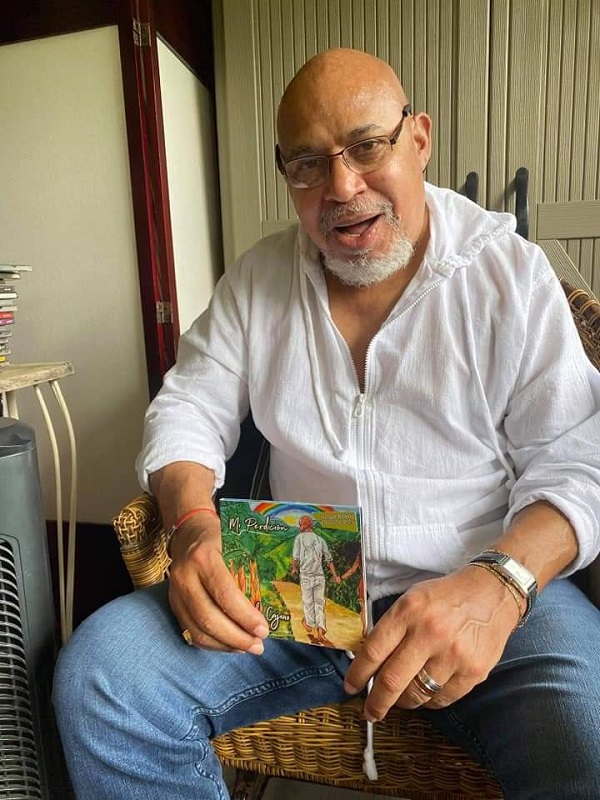
Angel Canales "El Diferente" receiving Danilo Cajiao's production "Mi Perdicion" year 2020.
Angel Canales “El Diferente” receiving Danilo Cajiao’s production “Mi Perdicion” year 2020.

Much has been said that his current retirement is due to Parkinson’s disease, but Angel Luis Canales is there, he attends private invitations of his friends and remains in the battle line of salsa and life. He is currently 73 years old.

Source: TeleSurTv

Also Read: Orquesta la Identidad is one of the most nationally and internationally recognized groups in the salsa genre

  • « Go to Previous Page
  • Page 1
  • Interim pages omitted …
  • Page 42
  • Page 43
  • Page 44
  • Page 45
  • Page 46
  • Interim pages omitted …
  • Page 129
  • Go to Next Page »

International Salsa Magazine (ISM) is a monthly publication about Salsa activities around the world, that has been publishing since 2007. It is a world network of volunteers coordinated by ISM Magazine. We are working to strengthen all the events by working together.