Swing And Tradition Of A Distinguished Venezuelan Artist
Chapter I: Aquiles’ Farewell
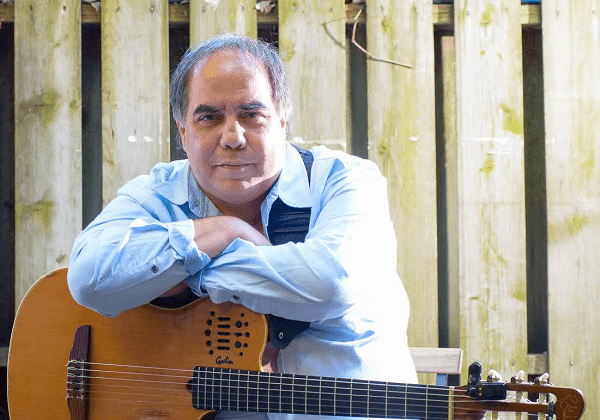
“With all the pain in my soul, I must publicly communicate that my friend, my brother, my accomplice Aquiles Báez passed away this morning at 5 in the morning in the city of Aachen, Germany. Aquiles was in the middle of a concert tour here in Europe. He flies high gordito.” Ramón Arturo Aular (Báez’s friend, musician, and professor at the Aachen Conservatory of Music) informed the community through his Twitter account the Monday, September 12th.
The virtuoso musician, noble guitarist, arranger, and excellent composer died of a sudden heart attack at the residence of his friend Ramón Aular. His last concert was held in the city of Cologne located in western Germany as part of his 2022 European tour, the first he did after the cessation of activities due to the Covid-19 pandemic.
The noble 58-year-old artist had already performed in Spain and was preparing to present his music in some German cities such as Berlin, Tubingen, and Hamburg, before finishing his tour in France and Portugal.
“I think it is important to project the work that one has been developing in other latitudes. This is very interesting because I realize that the music I make is universal, it is not limited only to playing for the Venezuelan diaspora, which of course also provides an audience”. Báez expressed this to an international media.
During his artistic career, he recorded 17 albums and collaborated on more than 150 recordings with other artists. Báez was a professor at the Berklee College of Music (Boston, Massachusetts) and was recognized for his mastery of the guitar with “elements of mixed Caribbean and Afro-Venezuelan cultures with classical music and Jazz.” Fragment extracted from his biography.
In life, he shared stages with artists such as Paquito D´ Rivera, John Patitucci, Romero Lubambo, C4 Trío, Ilan Chester, Simón Díaz, Huáscar Barradas, Worlds of Guitars, Aquiles Machado, Serenata Guayanesa, Iván Pérez Rossi, Fareed Haque, Dawn Upshaw, Richard Bona, Luisito Quintero, Solo Razaf, Marco Pereira, Oscar Stagnaro, and Ensamble Gurrufío.
Before passed away, Aquiles Báez was preparing the publication of two studio albums and the creation of five more. He was also in charge of making the music for the Venezuelan play Mi último delirio, which premiered on September 2nd with the lead role of his friend Héctor Manrique and with great reception from the public and specialized critics.
Chapter II: Getting to know the musicians’ Master to the rhythm of the compass
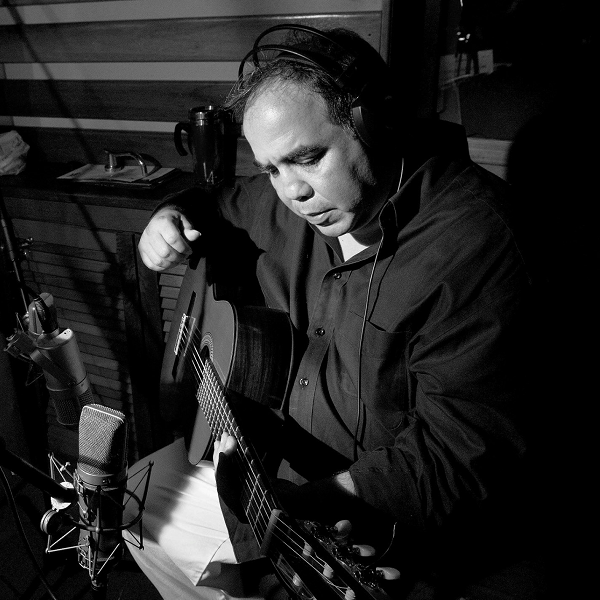
Aquiles Báez was always an irreverent musician who made the type of music that he felt. “It is important to make music from what one feels it is, from that forceful energy that is the act of creating…Lately, I have been respected. It was hard to get that position. They have not always respected me, perhaps because of my way of being, irreverent. The people who manage cultural spaces have always taken me as an anarchist… I consider myself someone accessible, the teacher thing hasn’t gotten to me, seeing everyone below me, that seems pathetic to me…” Aquiles expressed this to a Venezuelan media.
“Throughout his career, Aquiles has received various awards and recognitions. These include Pepsi music awards and the William Leavitt award given by the Berklee College of Music; In addition, he has stood out with more than a dozen awards as a composer of music for film, theater, and dance. Extracted from his biography.
In 1996, at the age of 32, Aquiles decided to move to the United States to study at the Berklee College of Music in Boston. After two semesters he dropped out, considering that he was “learning the same thing but in another language.” And that was not only his thinking, but also what he demonstrated during his stay as a student at the academic campus, so shortly after he entered the Berklee College of Music again, but this time as a professor.
On this academic campus, he gave “clinics, workshops, and seminars at different universities and musical institutions such as Indiana University, Temple University, Queen College, Krems Summer camp, Curitiba Music Office, The Jazz School in San Francisco, among others, in Europe and the United States”, according to his biography.
Shortly after, he participated as a guest musician on the albums of Panamanian artist Danilo Pérez: Central Avenue (1998) and Motherland (2000), both albums nominated for Grammys.
Aquiles Báez was a founder and member of the board of directors of Guataca productions. In this space, they continue to support emerging Venezuelan artists. Báez’s methodology for finding new talent was to research, listen to them live and contact them. “Why not support those guys who come after you? Why not make life more pleasant for them? Or a lighter path than one had. This road is not easy at all, it has been very hard, and it continues to be hard. And one continues and believes that he has acquired a certain reputation…” Báez expressed this in an interview conducted by a Venezuelan media outlet.
Chapter III: Anecdotes of a famous life
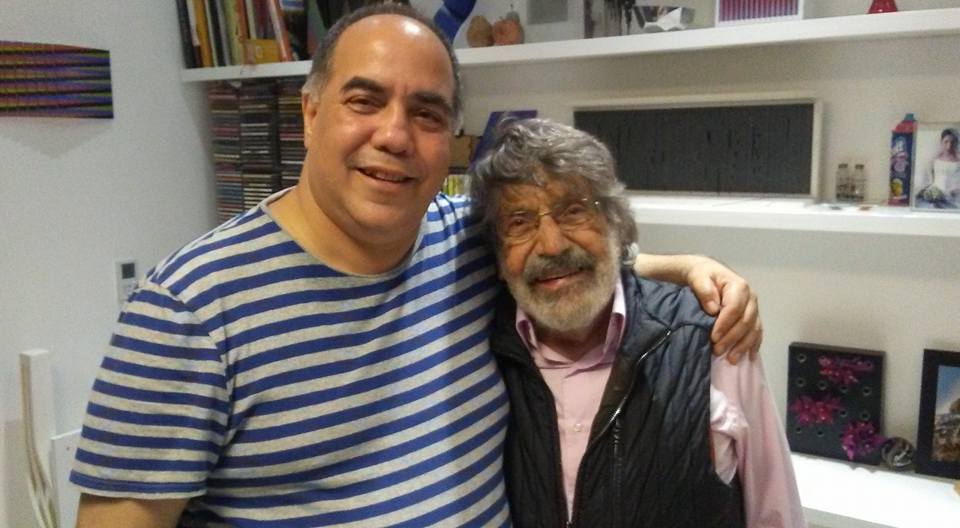
Countless artists expressed their affection and grief for Aquiles’ departure, expressing testimonies of a life full of joy, love, and passion for musical colors.
“One of the artists who has inspired me the most and a great human being. He made it possible for us to make our first album, the tour of the United States and opened the doors of his home for us. We made a lot of beautiful friends with Aquiles. D.E.P, Maestro, compaíto Aquiles Báez”. Jorge Glem (Cuatrista and member of the group C4 Trio).
“The wonderful Aquiles Báez was a musician capable of playing all Venezuelan music of all genres“. Alfredo Naranjo (Vibraphonist)
“Dismayed by the sudden death of my dear friend Aquiles Báez, one of the great musicians of our country, guitar teacher, and eternal officiant of humor and simplicity”. Leonardo Padron (Writer)
“Today we are less. I have just been informed that our admired and beloved musician and my dear friend, Aquiles Baez, has passed away. This news is heartbreaking and unfair. Aquiles is one of the most creative and generous people I have ever met”. Héctor Manrique (Director and theater actor)
“Thank you for being an inspiration in music and a big brother in life. Without your unconditional support, I would not have even reached the corner”. Álvaro Paiva Bimbo (Guitarist and 2022 Oscar nominee for the soundtrack of the Disney movie “Encanto”)
“How can we forget this great friend and fellow adventurer”. Claudio Nazoa (Comedian)
“I was left with the desire to carry out the project we had to record an album together. What profound sadness!” Miguel Delgado Estévez (Musician, arranger, and producer)
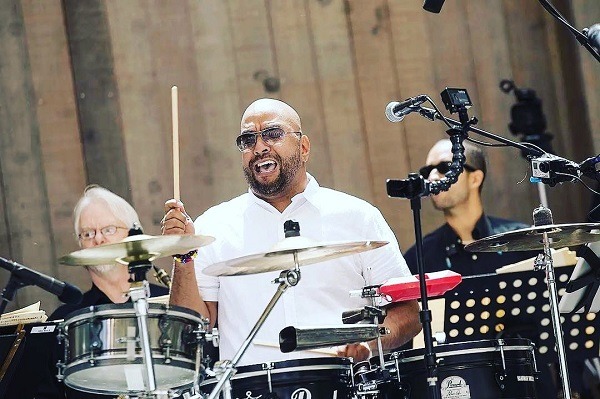
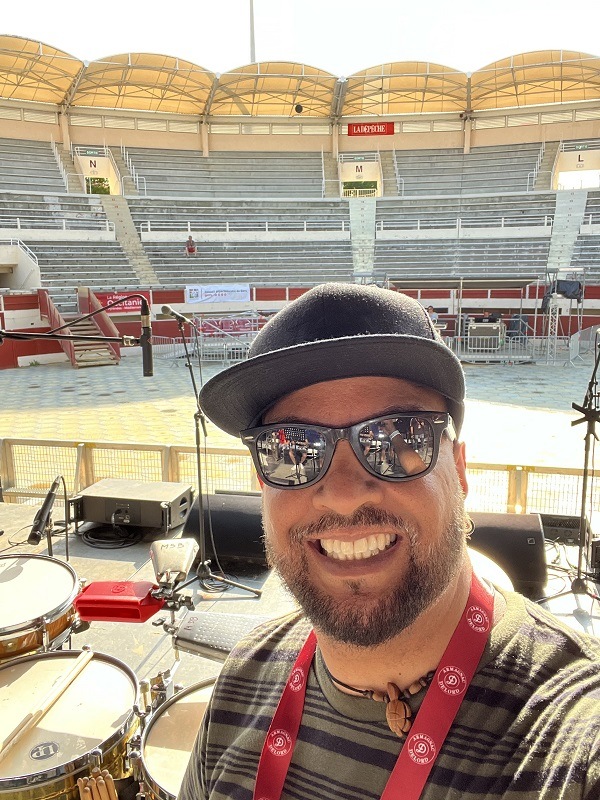
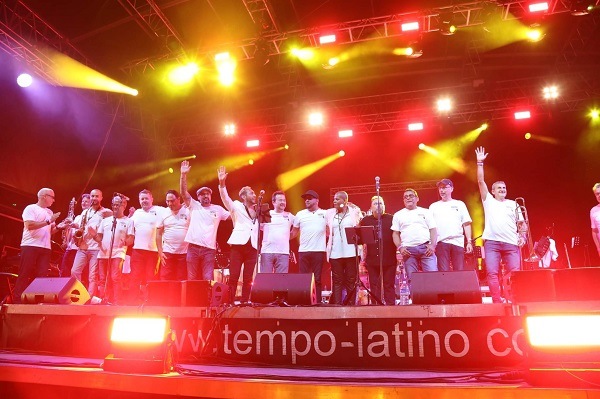
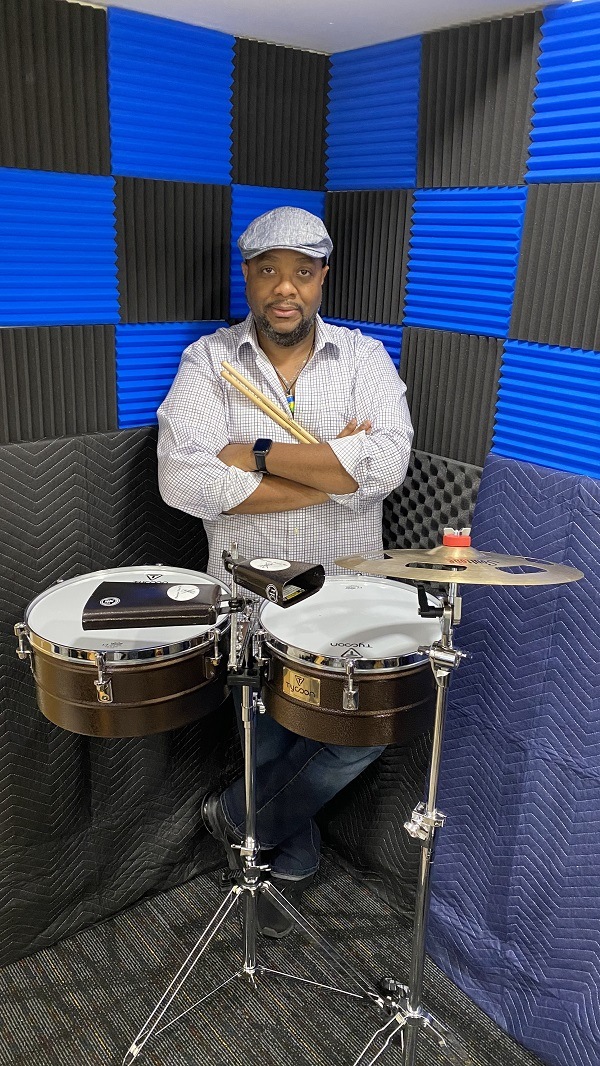
Finally, the Venezuelan percussionist Omar Ledezma Jr. expressed his sorrow for the death of Báez.
LENTEJAS. That’s what the gordo called me. 7 years of my life I played and toured the world with Aquiles Báez. We met at one of his concerts at the Bellas Artes thanks to my dear Carlos Reyes, another great guitarist from our country, at the time I worked at the MACCSI. Years later, arriving in Boston, he called me to be in his group and I couldn’t believe it. The gordo was my musical hero thanks to his Platabanda and the number of times I saw him accompanying great singers. He was the one who told me to grab El Cajón and start putting in the merengue and the gaitas. I knew his bad jokes by heart: “Vamos a tocar la canción de DC: Di si encontraste…”, with him, I learned to be a person first, then a musician, I learned not to make ugly faces if I made a mistake, with him, I had to press on reading, to be punctual, to put my batteries.
Anyway… with the gordo I learned to be a professional musician, because with his virtues and defects, for me, he was the best.
I love you my gordo, wherever you are. Thanks. #aquilesbaez”.
You can continue reading the article about Omar Ledezma Jr. From The Venezuelan Melody To The Caribbean Rhythm.
Here is a small excerpt from this interview of 2021:
Years later, and with experience acquired in presentations, and groups, Omar Jr. met his first mentor, Aquiles Baez, a famous Venezuelan artist, guitar virtuoso. Together with Aquiles, he made his first international tour of the United States. “With Aquiles, I had the pleasure of playing Venezuelan music. We play with many artists in the United States… Thanks to him I developed percussion (Non-autochthonous element) in Venezuelan music”. Ledezma Jr. commented.