• Skip to primary navigation
  • Skip to main content

International Salsa Magazine

  • HOME
  • Previous editions
    • 2026
      • ISM / August 2026
      • ISM / July 2026
      • ISM / June 2026
      • ISM / May 2026
      • ISM / April 2026
      • ISM / March 2026
      • ISM / February 2026
      • ISM / January 2026
    • 2025
      • ISM / December 2025
      • ISM / November 2025
      • ISM / October 2025
      • ISM / September 2025
      • ISM / August 2025
      • ISM / July 2025
      • ISM / June 2025
      • ISM / May2025
      • ISM / April 2025
      • ISM / March 2025
      • ISM / February 2025
      • ISM / January 2025
    • 2024
      • ISM / December 2024
      • ISM / November 2024
      • ISM / October 2024
      • ISM / September 2024
      • ISM / August 2024
      • ISM / July 2024
      • ISM / June 2024
      • ISM / May 2024
      • ISM / April 2024
      • ISM / March 2024
      • ISM / February 2024
      • ISM / January 2024
    • 2023
      • ISM / December 2023
      • ISM / November 2023
      • ISM / October 2023
      • ISM – September 2023
      • ISM – August 2023
      • ISM July 2023
      • ISM Edition June 2023
      • ISM – May 2023
      • ISM April 2023
      • ISM March 2023
      • ISM February 2023
      • ISM January 2023
    • 2022
      • ISM December 2022
      • ISM November 2022
      • ISM October 2022
      • ISM September 2022
      • ISM August 2022
      • ISM July 2022
      • ISM June 2022
      • ISM May 2022
      • ISM February 2022
      • ISM January 2022
    • 2021
      • ISM December 2021
      • ISM November 2021
      • ISM October – 2021
      • ISM September 2021
      • ISM August 2021
      • ISM July 2021
      • ISM May 2021
      • ISM April 2021
      • ISM June 2021
      • ISM March 2021
      • ISM February 2021
      • ISM January 2021
    • 2020
      • ISM December 2020
      • ISM November 2020
      • ISM October 2020
      • ISM September 2020
      • ISM August 2020
      • ISM July 2020
      • ISM June 2020
      • ISM May 2020
      • ISM April 2020
      • ISM March 2020
      • ISM February 2020
      • ISM January 2020
    • 2019
      • ISM December 2019
      • ISM November 2019
      • ISM October 2019
      • ISM Septembre 2019
      • ISM August 2019
      • ISM July 2019
      • ISM June 2019
      • ISM May 2019
      • ISM April 2019
      • ISM March 2019
      • ISM February 2019
      • ISM January 2019
    • 2018
      • ISM December 2018
      • ISM November 2018
      • ISM October 2018
      • ISM September 2018
      • ISM August 2018
      • ISM July 2018
      • ISM June 2018
      • ISM May 2018
      • ISM April 2018
      • ISM March 2018
      • ISM February 2018
      • ISM January 2018
    • 2017
      • ISM December 2017
      • ISM November 2017
      • ISM October 2017
      • ISM September 2017
      • ISM August 2017
      • ISM July 2017
      • ISM June 2017
      • ISM May 2017
      • ISM April 2017
      • ISM March 2017
      • ISM February 2017
      • ISM January 2017
    • 2016
      • ISM December 2016
      • ISM November 2016
      • ISM October 2016
      • ISM September 2016
  • Spanish
  • Download Salsa App
    • Android
    • Apple

Search Results for: salsa in venezuela

Virginia Ramirez is the artist of the XXI century, the Princess of Piano and Voice, the hope that will save the new generations of anti-music

Virginia Ramirez, the talented concert pianist, pianist and singer-songwriter, has been making an impact for her contributions to the music of her country and the world. She was born in the city of San Cristobal, Venezuela and grew up in a family where art, poetry and music were the language of every day.

Virginia Ramírez es la artista del siglo XXI

His mother was a poet (Etha, the Lady of Love), Dr. Enriqueta Martinez, his father Asdrubal Ramirez, a self-taught harpist, guitarist and singer of Venezuelan popular music.

Since she was 7 years old she plays the piano and from a very young age she began to develop her musical skills, she started her training at the Miguel Angel Espinel School with the well-known teachers Edgar Vasquez (Piano) and Heliodoro Contreras (Theory and Solfeo).

She graduated as a pianist, concert pianist and piano teacher at the National School of Music in Havana (Cuba) where she graduated with the highest qualifications and studied at the José Lorenzo Llamozas School and the Simon Bolivar Conservatory of Music.

He has taken courses in harmony and improvisation with professors Gerry Weil, Andres Alen Rodriguez and Mike Orta at the “FIU of Miami” in the jazz department.

Ramirez studied classical piano with Professor Igor Lavrov, recorded her jazz projects with drummer Willy Díaz and bassist José Velázquez in the “Jazz” program of the Venezuelan TV channel “Venezolana de Televisión” in Venezuela on several occasions, and her first album “Espiral de Fuego”.

She participated as a special guest of other groups such as Alberto Borregales and Fredy Roldán and El grupo la Calle.

She participated with a new proposal as a composer and pianist in important Jazz festivals in Venezuela as the “Latin Festival” of the Teatro de la Opera de Maracay (June 2003) and the “Prehot” of the 5th.

Festival de Jazz del Hatillo (October 2003), where he alternated and shared the stage with the American bands of Aaron Thurston (drummer) and Jaime Baum (flutist), receiving excellent reviews from the radio and television press.

She alternates her activity as a jazz concert performer with teaching, as a piano and singing teacher.

In her music school Vicky’s harpsichord.

Her formidable work in music and composition is very beautiful and colorful, because in her proposal she has fused jazz and Afro-Venezuelan elements highlighting the values of Venezuelan and Latin American music and using a variety of drums such as the Culo’e Puya, Quitiplas, Clarines, Cumaco and Chimbangles combining them with the songs of the peoples of the coast of Venezuela making excellent personal harmonic contributions.

He has achieved a high musical concept that has been recognized in the continent and the world, for that incredible capacity to unite the idea of the concert with the characteristics of the Show and for that reason he contributes much more of the pure musical element in each one of his performances.

With a rich repertoire and an unparalleled originality in the world of Venezuelan Female Jazz, this excellent artist is a source of joy and an excellent contribution to the new generations of Jazz.

She has won countless national and international awards and recognitions, among which stand out: World Prize “César Vallejo” for Artistic Excellence, World Prize “El Águila de Oro” for Artistic Excellence 2022, 2023, almo Chispeante prize 2024, awarded by the UHE, world Hispanic writers union, thousand minds for Mexico, and world academy of literature, history, art and culture First Mention in the Juan Sebastián Bach Competition in Havana Cuba.

1993 as a teacher, pianist, concert pianist has participated in various festivals and concerts such as the Fitztrovia Festival in London, in Mexico, Madrid, the south of France, in Colombia with his salsa group tabaco latino, where he performed in different cities, Cali, Bogota and Medellin.

Within the salsa accompanied artists such as: Cheo Feliciano, Hernán Olivera, Meñique Lena Burke the singer Alfredy Bogado of the Venezuelan group “La Calle” and precisely with this group La Calle in the Juan Sebastian Bar when she worked there in 2000 was where they began their activities with salsa in several cycles of pianists, composers and arrangers.

In the Keyboard Museum of Caracas, in a jazz trio with Nene Quintero and William Velázquez on bass, in the Festival a toda Música Caracas, in the opera theater of Maracay and the Simón Bolívar University, among others.

Excellent comments in the national and international critics, have generated the presentation of his CD “Espiral de Fuego” presented by Otmaro Ruiz Jaquest Braunstein and Gerry Weil in his album “Manos y Alma” recorded, outstanding musicians such as: Nene Quintero, Aquiles Baez, Roberto Koch, Gonzalo Teppa.

Carlos Nene Quintero y Virginia Ramírez

Special guests: Vasallos del Sol, Aquiles Baez and C4 trio. This album “Manos y Alma” was presented by Aquiles Baez, Luis Perdomo and Pablo Aguirre from the BBC in London, received excellent reviews from the press in the south of France.

Her performance in the church La Canourgue in the south of France accompanied by the musicians Didier Hennot and Tonny Margalejo and her tour of successive concerts, carried out in France in different cities Mende, Saint Privat Des Vieux, Lozere, Ispagnac presenting her albums mentioned above.

She participated in the assembly and production of the play Cabaret with important theater artists such as Francis Rueda, Cayito Aponte, Natalia Martinez, Adrian Delgado, Karl Hoffman, Luis Fernandez performing in the Rios Reyna hall of the Teresa Carreño in different cities of Venezuela.

Virginia had the luxury of playing keyboards in the Kit Kat Club Band directed by Armando Lovera.

Great impact had her album “jazzguinaldos” produced as a trio with musicians Gonzalo Teppa and Nene Quintero, including as special guests Enio Escuariza, composer of all the lyrics of the album.

Her project “Acro Jazz” opens the horizon towards the world of circus arts, performing in different cultural centers of Venezuela musicalizing with the piano circus works and participating herself as a circus artist with the artist Jesús Piña in a pulsating work in the museum of the keyboard, Trujillo, Valencia among other cities with a new band integrated by Rubén Rebolledo Guitar, Willy Díaz Drums, David Rubio Bass and as special guests Jesús Piña and Kerlly Garcia.

He performed in the city of Morelia and Mexico, founded in 2015 a trio with musicians Fernando Mendoza Drums and Flavio Meneses bass, presenting the music of his albums in different nightclubs like Amati, Café de las Rosas, Casa de la cultura de Uruapan, and other cities of Morelia.
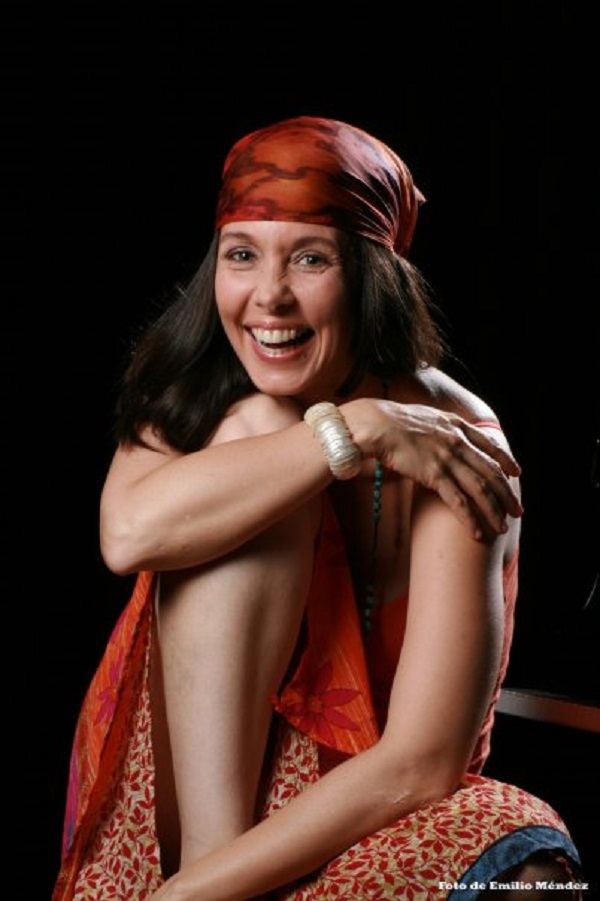
Virginia Ramírez, la talentosa concertista, pianista y cantautora

She accompanied drummer Antonio Sanchez in the house of music in Morelia.

Virginia Ramirez has collaborated with different artists of the Venezuelan music scene such as the group Facundo Project a Venezuelan Rock group, the singer Cheo Linares in his album “llegó la Navidad”, the singer Amarilis Bolaño in her album singing Henry Martinez, the singer Alejandra Gonzales in her album “Joyas de mi País” in the album “Tierra Liberada” and in the project “Venezuela demo”.

Ramirez has made music a matter of life and in her habitat of pianist and concert pianist, prepares for this year a vast plan to musicalize the poetry of the greatest poets of the world and a program entitled “La Totalidad de Virginia Ramirez”, by Cabina 11, Canal Global de Queretaro, Mexico, a country that has already known of her beauty and great talent.

I see in Virginia Ramirez, the complete artist with infinite talents as a pianist, singer, composer, songwriter and circus artist, who intentionally projects herself, illuminating the artistic firmament of the world with daring and magical projects that will always surprise the audience and make them feel the desire to ask for more.

Undoubtedly Virginia Ramirez is the artist of the XXI century, the princess of the piano and voice, the hope that will save the new generations of anti-music.

Dr. Carlos Hugo Garrido Chalem president of mil mentes por México and of the UHE Hispanic World Writers Union. President of the world academy of literature, history, art and culture.

Alterna su actividad de concertista de Jazz con la docencia, como profesora de piano y canto en su escuela de música la clave de Vicky.

Also Read: Wilmer Lozano from a very young age his mother saw in him the desire to be a musician


Latin America / May 2024

Virginia Ramirez is the artist of the XXI century, the Princess of Piano and Voice, the hope that will save the new generations of anti-music

José Antonio “Maceo” Rodríguez was a faithful cultivator of Son Cubano

Pancho Quinto is considered one of Cuba's great rumberos

From Parroquia San Agustín del Sur es Son Marín ¡Aquí Empezó la Cosa...!!A party of dancers at the concert to celebrate Willie Rosario's 100th birthday

Willie Rosario, El Rey del ritmo by journalist and music researcher Robert Téllez M.Unstoppable Hollywood Salsa Fest

Calibrated maracas

DIRECTORY OF NIGHTCLUBS

Argentina flag
ARGENTINA

Aruba circular flag
ARUBA

Belize circular flag
BELIZE

Bolivia circular flag
BOLIVIA

Brazil flag
BRAZIL

Chile circular flag
CHILE

Colombia
COLOMBIA

Costa Rica circular flag
COSTA RICA

Cuba circular flag
CUBA

Dominican Republic
DOMINICAN REPUBLIC

Ecuador circular flag
ECUADOR

Guatenala circular flag
GUATEMALA

Mexico Circular flag
MEXICO

Panama circular flag
PANAMA

Peru circular flag
PERU

Puerto Rico circular flag
PUERTO RICO

Venezuela circular flag
VENEZUELA


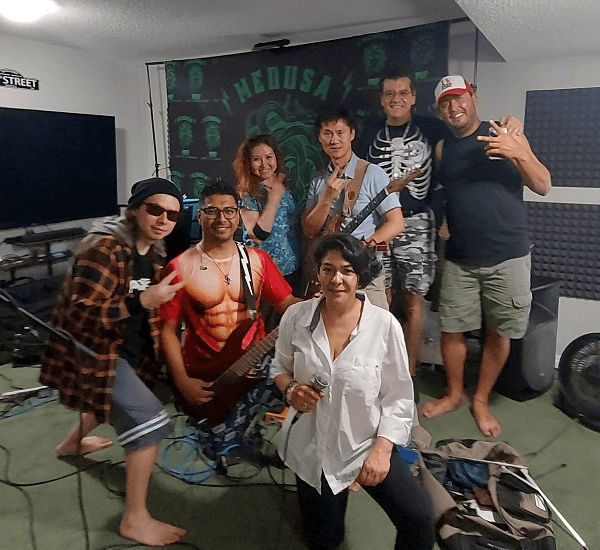
Medusa Pop Band delights its fans with a pretty interesting mix of rhythms

Medusa Pop Band is a group based in the city of Calgary, Canada, that is mainly focused on the Spanish language and Latin rhythms of the 80s and 90s, so it has some very particular characteristics that distinguish it from other bands that can be found in the aforementioned country.  

As we found everything about the Medusa Pop Band very interesting, we contacted its manager to talk to some of its members and know a little more about the band. This is how we have managed to have a wonderful conversation with Lorena Galindo, Eduardo Infante and Willy García, who talked a bit about their beginnings, styles and future projects.   

Medusa’s members
Medusa Pop Band from right to left: bass player Eduardo Infante, drummer Cristian Gonzalez, keyboardist Lee Que Long, lead singer Lorena Galindo, guitarist Kalvin Ma, and percussionist Willy Garcia

Musical backgrounds of the current members of Medusa Pop Band 

As is the case with most bands like this, its members have already been part of other groups until they met and came together to do completely new things. This is how Lorena, vocalist and founding member of the group, who has been working with versatile music for more than 40 years, explains that she had the idea to create this project just two years ago. She even worked with the famous actress and singer Lucero and belongs to the musicians’ union in Mexico City.   

In Eduardo’s case, he has more than 25 years of experience in rock in his home country Mexico, until he decided to move to Canada to try his luck. That was when he met Lorena and was invited to join Medusa Pop Band as the lead bass player.   

On the other hand, Willy has five years of experience in music, so he would be the one who has the least time in this world, which does not diminish the importance of the role he plays. He was in a group called De Cajón, but when receiving the proposal of Medusa Pop Band, he decided that this was what he was looking for and accepted to be the percussionist and be in charge of ”embellishing” the songs, as he himself describes it. 

How Medusa Pop Band was created 

Eduardo heavily emphasizes that the one who started the whole project and put together the team is Lorena, and subsequently, the rest of the team joined his idea. In his case, he saw an advertisement on the internet saying that a group was looking for new members and he was postulated to be part of Medusa. He mentions that what attracted him to this proposal was the style of pop handled by the group and the possibility of playing the bass, which he loved being able to do since he had always played the guitar and it represented a challenge for him. 

Willy commented that he lived very near to Lorena’s home and they already had a friendship for a long time. When he found out that Lorena was also a musician, he was invited to rehearse with the rest of the band and loved the kind of music he listened to and professionalism of the musicians there, so he stayed with them.  

With regard to the name of the band, Lorena explains that she had always wanted to do something with the famous figure from Greek mythology Medusa, in addition there was a nightclub called 

Medusa in Mexico City the singer liked a lot, so it all added up to being the name chosen for her band. In the end, the word ‘‘pop” was added because of the main genre on which the group bases its discography. 

Medusa Pop Band performing
Medusa Pop Band performing live in Calgary, Canada

Why choose Canada to establish Medusa Pop Band? 

‘‘We have chosen Canada to establish the band basically because we all live here and it was in this country that we all met. There was no way for Medusa Pop Band to be born in any other country but this one” said Lorena about the reasons why to establish the band in this country.  

On this, Willy added that the diversity of nationalities in the group has been a great advantage for them in Calgary, as that has allowed each member to bring their own essence to the music they are doing. ‘‘It’s very important for us to have more diversity in the rhythms we choose to make more people happy and please a wider audience. I think Canada is an excellent country for that” said the percussionist. 

Receptivity of the Canadian public towards Medusa Pop Band’s Spanish-language music  

Eduardo has said that the reception from the Canadian public towards them has been warm and has come from less to more. In fact, he commented that the amount of assistants to their shows has been growing exponentially and every day the band are gaining more and more fans at the local level.  

”Currently, we only have music in Spanish because we are focused on the Latin American and Spanish-speaking community, but we also have a musical amalgam of different countries and cultures, which makes Medusa Pop Band even more magical. We are always looking to please all types of audiences” Eduardo continued explaining. 

Lorena also added that she and her bandmates have found that many Canadians love Spanish, to the point that they have learned that many fans have started taking Spanish classes to understand their lyrics, which makes them extremely happy and motivates them to keep creating more and better music.   


Medusa Pop Band rehearsing
Medusa Pop Band rehearsing for a show

Challenges Medusa Pop Band has had to face 

Eduardo took the floor again to affirm that one of the biggest challenges facing the band has been finding Spanish-speaking musicians because there are not many in Calgary and the vast majority of them already have their own projects and bands, so getting the necessary elements for the group has not been an easy task. 

To these words, Willy adds that the hardest thing to find are singers who speak Spanish, so he is glad Lorena handles that part. Faced with these challenges, he ended up by saying that the support of their families has been fundamental in order to move forward, and like any other band, its members spend many hours rehearsing each day of the week. That is why the understanding of their partners and children has made it much easier for them to follow this difficult path to the success they have achieved. 

Nationalities in Medusa Pop Band 

One of the most interesting things about Medusa Pop Band is that its members come from very diverse countries like Mexico, Peru, Colombia, Vietnam and China. This makes the group have elements with a variety of musical cultures so diverse that it could complicate the picture when agreeing to work on their music. 

What Willy has to say about this is that the Latin musicians have a certain ”feeling” to play the music, while the Asians have a completely different one, so guitarist Kalvin Ma and keyboardist Lee Que Long have gone the extra mile to engage with the rest of the team and play their instruments as is required. 

In this regard, Lorena stressed that both Calvin and Lee have done a great job all these years and their contribution to the group has been immeasurable, since they also propose techniques and add different sounds to those already known. 

What has made things difficult for the aforementioned musicians is the language, as they do not speak Spanish and the rest of the band can only communicate with them in English, but that is no impediment to fulfill their role to the fullest. 

Lorena from Medusa Pop Band
Lorena Galindo is the founder and lead singer of Medusa Pop Band

What makes them call themselves an eighties and nineties band? 

Once again, Lorena took the floor to explain that the group describes itself as an eighties and nineties band because many fans of their work who are contemporaries with them, but that does not stop them from playing music of all kinds and all eras, either from the 80s or this same year. What they seek is to make different arrangements so that their covers sound different than their original versions. 

It can be said that the age group that most often follows them goes from 18 to 50 years old, giving Medusa Pop Band a huge range of action. Additionally, the word ”pop” is too general and gives them the possibility to choose from a large range of genres and rhythms that captivate an ever wider audience. 

Read also: Venezuelan businesswoman Joanna Torres is an example to follow 

Latin America / April 2024

Danilo Cajiao was born on February 9, 1969 in Cali Colombia

Oskar Cartaya “My Music, My Friends, My Time”

El “Underground” e “Irreverente” de la Salsa en New York.

Wilmar Lozano from a very young age his mother saw in him the desire to be a musicianRey Ruiz's 'Contigo' concert at the Coca Cola Music Hall in Puerto Rico was Phenomenal.

Calibrated maracas

DIRECTORY OF NIGHTCLUBS

Argentina flag
ARGENTINA

Aruba circular flag
ARUBA

Belize circular flag
BELIZE

Bolivia circular flag
BOLIVIA

Brazil flag
BRAZIL

Chile circular flag
CHILE

Colombia
COLOMBIA

Costa Rica circular flag
COSTA RICA

Cuba circular flag
CUBA

Dominican Republic
DOMINICAN REPUBLIC

Ecuador circular flag
ECUADOR

Guatenala circular flag
GUATEMALA

Mexico Circular flag
MEXICO

Panama circular flag
PANAMA

Peru circular flag
PERU

Puerto Rico circular flag
PUERTO RICO

Venezuela circular flag
VENEZUELA


Cajiao, says he always had a taste for good music: the tangos and ballads of the 50s and 60s

Danilo Cajiao was born on February 9, 1969 in Cali Colombia son of Marina Munevar and Antonio Cajiao family with three siblings Walter, Patricia and Raul.

From my father I inherited the musical taste for Afro Antillean rhythms, we listened at home to the Sonora Matancera, Benny More, Arsenio, Daniel Santos and many more.

Danilo Cajiao was born on February 9, 1969 in Cali, Colombia.

There was always a taste for good music: the tangos and ballads of the 50s and 60s.

When I was a student I participated in several music festivals at school and I was part of several dance and Andean music groups.

I always liked salsa and my favorite artist of the genre will always be Angel Canales.

After the appearance of the program “YO ME LLAMO” in Colombia I was motivated to start the process to achieve the perfect imitation of Angel Canales.

I began my presentations in small salsa bars with a dance floor and I did about 4 songs of Diferente, as I went along the character was being perfected and the public and the owners of the bars were asking for something more.

I then created “the Orchestra SON DE LA 8″ in 2013 with the purpose of making the accompaniment and mount all the music of the different Angel Canales.

Orquesta SON DE LA 8

The market was opening and the support of the salseros was very large, We have had much acceptance in the salsero environment in Colombia.

Participating in major events locally, nationally and internationally:

Leyendas Vivas De la Salsa in Medellin Colombia,

Salsa al Parque Cali, Salsa al Parque Bogotá, Homenaje a la Salsa, Tributo a los salseros and Noche Blanca.

I have alternated and shared stages with several national and international artists and orchestras.

Orquesta Brodway, Orquesta Colon, Nelson y sus Estrellas, Gran Combo de Puerto Rico, Henry Fiol, Adalberto Santiago, Luisito Carrión, Papo Cocote, Cano Estremera, Moncho Santana, Orquesta Zodiac, Luigui Texidor, Frankie Vásquez, Tony Molina, Orlando Marín, Orquesta la Inmensidad and Orquesta la 33.

Danilo Cajiao, says there has always been a taste for good music, the tangos and ballads of the 50s and 60s.

International presentations:  

Guayaquil Ecuador and Caracas Venezuela.

Endorsed and supported by the family of ANGEL CANALES and by him I have taken my tribute to the most recognized places and salsa clubs in Colombia.

Apart from accompanying the Diferente Angel Canales with the orchestra Son de la 8 we have made our own music always keeping the line of heavy salsa and with good taste.

Angel Luis Canales “El Diferente”.

There were nine record productions by Angel Canales between 1975 and 1987, twelve productive years.

By 1970 Angel Luis Canales had put his voice on an album by African-American pianist Mark Dimond, and five years later Dimond’s orchestra was renamed “Angel Canales y Sabor”.

The immense musical freedom of Ángel Luis Canales Canales has much to do with the determining influence exerted on him by Rafael Cortijo, Ismael Rivera and the irreverence of the Combo de Cortijo as a whole.

The difference was that those two masons did not have enough money to support their ideas economically (discographically speaking) while Canales had enough because of the money he earned from his profession as a jeweler and diamond cutter.

That’s why he didn’t lower his head to anyone, that’s why he didn’t give in to any advantageous record contracts and made his own record label, that’s why he never paid or bribed radio producers, and he dressed the way he wanted.

That’s why the conservative salseros kept a CIA-like eye on him. And Canales revolutionized everything in his path: from his clothing to his vocal and orchestral arrangements, his presentations and his choice of repertoire.

By 1970 Angel Luis Canales had put his voice on a record by the Afro-American pianist Mark Dimond, and five years later Dimond’s orchestra was renamed “Angel Canales y Sabor”, and with it he would make a mark like few others in the world of salsa, from his total independence, to the freedom for the musicians, his revolutionary shaved head, and a wardrobe that had nothing to do with the salseros, in addition to his voice, repertoire and arrangements. Ángel Canales recorded in 1979 the album “El sentimiento del latino en Nueva York”, and an exquisite version of “Dos Gardenias”, by Cuban composer Isolina Carrillo.

“El sentimiento del latino en Nueva York” was a clarinada similar to “Imágenes Latinas”, the song by Argentine Bernardo Palombo presented a year earlier by Conjunto Libre, in terms of its contents of denunciation and clamor for justice. “Es el sonido que el americano oye/ y no entiende” (It’s the sound that the American hears/ and doesn’t understand).

Musical childhood

Ángel Luis Canales was born on June 29, 1950 in Santurce, Puerto Rico, son of Ángel Luis Canales and Ana Ilda Canales.

At the age of 8 he was already in New York with his parents, who liked to listen to romantic music and also to Cortijo y su Combo.

The Puerto Rican country song was also among his favorites; it was the jíbara song of his people. In time Canales would indicate that Cortijo and Ismael were determining influences in his musical and social journey.

Much has been said that his current retirement is due to Parkinson’s disease, but Ángel Luis Canales is there, he attends private invitations of his friends and remains in the battle line of salsa and life. He is currently 73 years old.

In those years and in school he was more inclined to practical workshops than books and that is why he went to work, recommended by one of his teachers in a jewelry store where from being a messenger he would learn all the secrets of the art of cutting, polishing and mounting diamonds. He became a professional, solvent, and with an extraordinary clinical eye that would serve him a lot later.

Vista larga, his new friends did not speak Spanish, his native language, but fortunately Angel Luis had peers of his generation, and Latinos like the Lebron brothers and Willie Colon himself.

He also took a long view of his internship in the U.S. Army and later assimilated the new trends that emerged in the music being made in New York.

He started out firmly, as we have already mentioned, with pianist Mark Dimond (Markolino), who had been linked to Willie Colón. With Mark he added his voice to some of the songs on the album “Brujería” and later, with the departure of the pianist, the orchestra was renamed “Ángel Canales y Sabor”.

With this band he would record “Sabor” in 1975 and other albums until “El Sentimiento del latino en Nueva York” in 1979.

Two years before the recording of this album, in 1977 Angel Canales made his first visit to a Latin American country, Panama, and the reception he received was such that he would later write a song dedicated to that country.

The same happened during his visit to Venezuela on November 13 and 14, 1981, which became a musical commotion of great proportions at the Poliedro de Caracas.

Likewise in Colombia and Peru he felt the devotion of the public of those nations. Perhaps he did not know the scope of his work and the projection he already had.

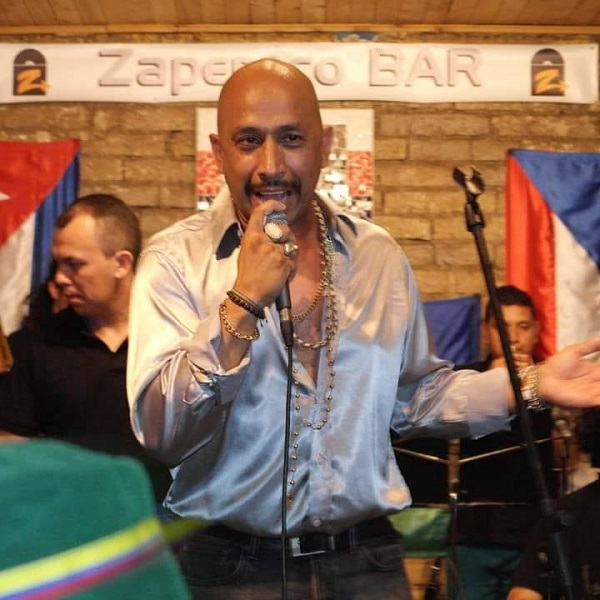
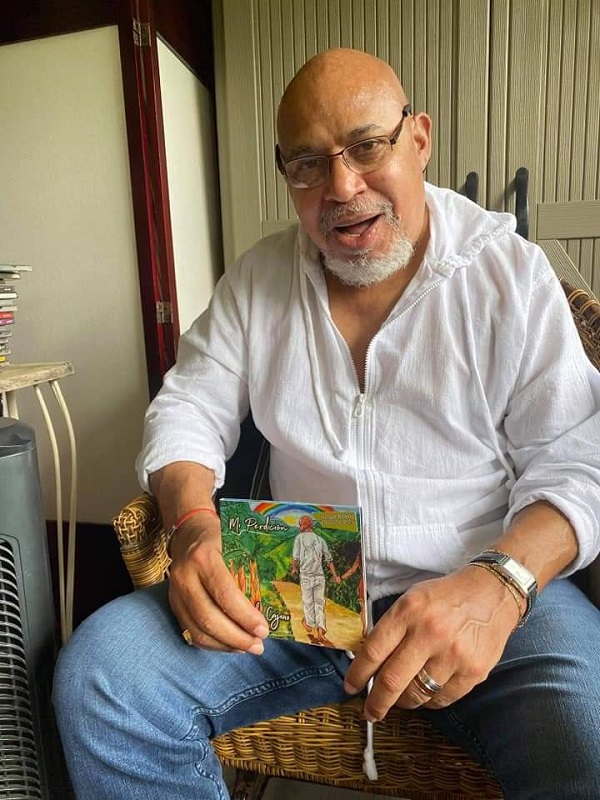
Angel Canales "El Diferente" receiving Danilo Cajiao's production "Mi Perdicion" year 2020.
Angel Canales “El Diferente” receiving Danilo Cajiao’s production “Mi Perdicion” year 2020.

Much has been said that his current retirement is due to Parkinson’s disease, but Angel Luis Canales is there, he attends private invitations of his friends and remains in the battle line of salsa and life. He is currently 73 years old.

Source: TeleSurTv

Also Read: Orquesta la Identidad is one of the most nationally and internationally recognized groups in the salsa genre

  • « Go to Previous Page
  • Page 1
  • Interim pages omitted …
  • Page 54
  • Page 55
  • Page 56
  • Page 57
  • Page 58
  • Interim pages omitted …
  • Page 100
  • Go to Next Page »

International Salsa Magazine (ISM) is a monthly publication covering salsa activities around the world and has been publishing since 2007. It is a worldwide network of volunteers coordinated by ISM Magazine. Together, we work to strengthen salsa events around the world.