• Skip to primary navigation
  • Skip to main content

International Salsa Magazine

  • HOME
  • Previous editions
    • 2026
      • ISM / June 2026
      • ISM / May 2026
      • ISM / April 2026
      • ISM / March 2026
      • ISM / February 2026
      • ISM / January 2026
    • 2025
      • ISM / December 2025
      • ISM / November 2025
      • ISM / October 2025
      • ISM / September 2025
      • ISM / August 2025
      • ISM / July 2025
      • ISM / June 2025
      • ISM / May2025
      • ISM / April 2025
      • ISM / March 2025
      • ISM / February 2025
      • ISM / January 2025
    • 2024
      • ISM / December 2024
      • ISM / November 2024
      • ISM / October 2024
      • ISM / September 2024
      • ISM / August 2024
      • ISM / July 2024
      • ISM / June 2024
      • ISM / May 2024
      • ISM / April 2024
      • ISM / March 2024
      • ISM / February 2024
      • ISM / January 2024
    • 2023
      • ISM / December 2023
      • ISM / November 2023
      • ISM / October 2023
      • ISM – September 2023
      • ISM – August 2023
      • ISM July 2023
      • ISM Edition June 2023
      • ISM – May 2023
      • ISM April 2023
      • ISM March 2023
      • ISM February 2023
      • ISM January 2023
    • 2022
      • ISM December 2022
      • ISM November 2022
      • ISM October 2022
      • ISM September 2022
      • ISM August 2022
      • ISM July 2022
      • ISM June 2022
      • ISM May 2022
      • ISM February 2022
      • ISM January 2022
    • 2021
      • ISM December 2021
      • ISM November 2021
      • ISM October – 2021
      • ISM September 2021
      • ISM August 2021
      • ISM July 2021
      • ISM May 2021
      • ISM April 2021
      • ISM June 2021
      • ISM March 2021
      • ISM February 2021
      • ISM January 2021
    • 2020
      • ISM December 2020
      • ISM November 2020
      • ISM October 2020
      • ISM September 2020
      • ISM August 2020
      • ISM July 2020
      • ISM June 2020
      • ISM May 2020
      • ISM April 2020
      • ISM March 2020
      • ISM February 2020
      • ISM January 2020
    • 2019
      • ISM December 2019
      • ISM November 2019
      • ISM October 2019
      • ISM Septembre 2019
      • ISM August 2019
      • ISM July 2019
      • ISM June 2019
    • 2016
      • ISM December 2016
      • ISM November 2016
      • ISM October 2016
  • Spanish
  • Download Salsa App
    • Android
    • Apple

Search Results for: salsa

Ismael ‘Pat’ Quintana, born in Ponce Puerto Rico, began his musical career in 1961 alongside Eddie Palmieri and La Perfecta

Ismael ‘Pat’ Quintana, born in Ponce, Puerto Rico, began his musical career in 1961 alongside Eddie Palmieri and La Perfecta

smael 'Pat' Quintana, born in Ponce, Puerto Rico, began his musical career in 1961 alongside Eddie Palmieri and La Perfecta
smael ‘Pat’ Quintana, born in Ponce, Puerto Rico, began his musical career in 1961 alongside Eddie Palmieri and La Perfecta

Commemorating one more anniversary of the departure of the Maestro: Ismael Quintana (Ponce, June 3, 1937-Colorado, April 16, 2016) was a Puerto Rican singer and composer of salsa, bolero and other genres of Caribbean music.

He began his musical career in 1961 alongside Eddie Palmieri and La Perfecta, and later continued as a solo singer.

In 1970, he signed with Fania Records and joined the Fania All Stars, in addition to recording more solo albums.

By 2012, his health condition prevented him from continuing to perform and he stopped giving concerts.

In April 2016, he died of a heart attack at his residence in Colorado in the United States at 78 years of age and paid the first tributes.

Quintana was the singer who gave the name salsa to Afro-Caribbean music, after having heard it in Venezuela.

Ismael ‘Pat’ Quintana, born in Ponce, a town rich in culture on the beautiful island of Puerto Rico, moved to New York when he was very young. It was in the South Bronx that he fell in love with Latin music.

Ismael 'Pat' Quintana
Ismael ‘Pat’ Quintana

During these early years, he played percussion with a variety of bands throughout New York City.

He persevered and eventually joined Angel Natel’s orchestra as a teenage bongosero.

During one memorable night in 1959, the band was asked to play a particular number for one of the club’s dancers.

Natel’s singer was not familiar with the song, but Ismael was. He stepped up to the microphone, performed the song and in the process electrified the crowd with his talented voice. That night launched a magnificent career, a career that would eventually position Quintana as one of the most prominent vocalists in Latin music.

In 1961, visionary keyboardist Eddie Palmieri decided to leave the sanctuary of Tito Rodriguez’s eminent orchestra to pursue the dream of forming his own band.

Eddie was present when Quintana auditioned for Orlando Marin’s popular orchestra.

The pianist would eventually track him down and offer him the opportunity to become the lead singer of his new orchestra, La Perfecta.

This proved to be a vital move in Eddie’s quest to become one of the top Latin music bandleaders. Their alliance would last 12 years.

Together, Quintana and Palmieri pushed the boundaries of progressive salsa, creating dissonant improvisations that fused the raw tradition of Afro-Caribbean music (exemplified by the singer’s hardcore sonics) with a relentless desire to experiment (illustrated by Palmieri’s choice of electronic keyboards, use of structures borrowed from other musical formats, as well as meandering solos that had their own idiosyncratic logic).

Quintana inició su carrera musical en 1961 al lado de Eddie Palmieri y La Perfecta

The 1965 album Azúcar Pa’Tí is probably the aesthetic pinnacle of their collaboration. It featured classic salsa anthems such as “Oyelo Que Te Conviene”, included here for your listening pleasure.

Another unforgettable moment was Eddie’s decision to record a double LP set in the Sing Sing penitentiary.

Quintana’s voice sounds appropriately impassioned on that socially significant 1972 concert recording.

By 1973, Quintana had decided to embark on a solo career. He signed a contract with UA Latino Records and recorded two albums of excellent quality.

Quintana En 1970, firma con el sello Fania Records

The second of these two releases gave him the opportunity to sing tangos and ballads, backed by a spectacular orchestra led by South American arrangers Héctor Garrido and Jorge Calandrelli.

Surprisingly, the singer has stated in interviews that he prefers to dance ballads and boleros rather than sing more fast-paced material.

Quintana’s first work for Vaya Records was recorded in 1974, It included the hit “La Blusita Colorá”, which is featured in this collection.

The singer also collaborated with keyboardist and bandleader of La Sonora Ponceña Papo Lucca, as well as Ricardo Marrero.

Quintana y Papo Mucho Talento

In 1975, Quintana was invited to join the legendary Fania All-Stars as one of their lead vocalists.

He appeared in the movie Salsa and participated in many of the combo’s historic performances, delivering a blistering version of the self-written “Mi Debilidad” at Yankee Stadium.

When not traveling the world with the All-Stars, Quintana could be found in the recording studio, working on material that appeared on his albums for Vaya Records.

Ismael Quintana’s name appears on many classic albums from the salsa explosion of the 1970s, both as a background singer and as a percussionist.

His phenomenal vocal abilities have obscured the fact that he is one of the most exciting maracas players in the genre.

He is also an innovative composer, having written many of the songs that make up Eddie Palmieri’s seminal albums of that era.

Quintana is also known as one of the nicest guys in the Latin music business.

A true professional who is never late for his concerts and a devoted family man who doesn’t smoke or drink.

Ponce in Puerto Rico has given birth to several legendary Latin singers, from Héctor Lavoé and Cheo Feliciano to Ednita Nazario and Pete ‘El Conde’ Rodríguez. Ismael Quintana is yet another luminary from that region.

This Latin Heritage compilation is a well-deserved tribute to one of salsa’s best. Fania All Stars.

By:

Marino Del Jesus

Historia Salsera

Dj. Augusto Felibertt

Also Read: The Royalty of our Latin Music Pete “El Conde” Rodríguez first singer signed by Fania Records label

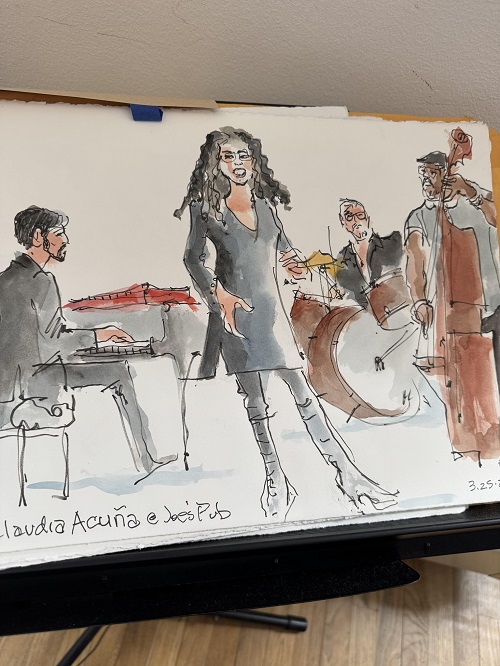
Claudia Acuña She is mainly known for singing jazz standards, ballads, and bossa nova

Claudia Acuña (Santiago de Chile, July 31, 1971) is a Chilean jazz singer considered the most successful Chilean jazz artist of all time. Since 1995 she has lived in New York, USA.

Photo by Hollis King dress by Anthony Manfredonia back stage at Carnegie Hall

She is known mainly for singing jazz standards, ballads, and bossa nova, as well as for developing and promoting Chilean folklore in the United States and the jazz world.

Abandoning the traditional jazz standards she covered in her two works for Verve, Chilean vocalist Claudia Acuña reveals a more contemporary Latin sound, with R&B influences, in her Maxjazz debut.

Undoubtedly Acuña’s most personal work to date, Luna once again displays her immense gift for delicately passionate vocals and interesting arrangements. While still using the smooth, sensitive Fender Rhodes keyboards of longtime collaborator Jason Lindner, Acuña sings more in Spanish on his third disc only Lindner’s “Yesterday You and I” is sung in English and eschews any straight-ahead jazz style for an almost fusion approach.

This is not to say it is jazz-pop, but the delicate melodies are reminiscent of 1970s Airto Moreira and the best Al Jarreau.

Claudia Acuña Se destaca principalmente por cantar jazz standards, baladas, y bossa nova

Although there are few jazz improvisations (most tracks are less than five minutes long), the music remains complex, cultured and sophisticated, with deep harmonies that should please jazz lovers and Latin music enthusiasts alike.  Matt Collar.

Claudia Acuña, born in 1971 in Santiago, Chile, is one of the most representative voices of contemporary Latin American singing.

Her music, which fuses elements of jazz and Chilean folk music, has captured the attention of audiences both nationally and internationally.

Claudia has managed to position herself as a key figure in the diffusion of Chilean culture through her art.

Regina Carter y Claudia Acuña

Early years and formation

From a very young age, Acuña showed interest in music. She grew up in an environment where Chilean musical traditions were part of everyday life. In her childhood, she began to learn about the guitar and piano, which led her to develop her vocal talent. Claudia Acuña trained in the musical field in various institutions, where she cultivated her love for jazz, a genre that would profoundly influence her throughout her career.

Successes and trajectory

Claudia Acuña’s debut in the music world was well received, which opened the doors to a series of presentations in festivals and concerts in Chile and other Latin American countries.

Her debut album, which includes a fusion of traditional Chilean rhythms and rhythms from other cultures, was acclaimed by critics and audiences alike, propelling her career to new heights.

Throughout her career, Claudia has collaborated with leading musicians and participated in important international festivals. Her ability to perform not only Latin American music, but also jazz standards, has made her versatility recognized by her peers and followers.

The albums she has released throughout her career reflect her love for music and her commitment to creating a unique sound that represents her cultural identity.

Cultural Impact

Claudia Acuña is not only a talented singer, but also a fervent advocate of Chilean culture. Through her music, she seeks to preserve and promote the traditions of her country, and often incorporates elements of folklore in her interpretations.

Her presence on international stages has allowed many people to discover and appreciate the richness of Chilean music.

In addition, she is known for her charisma and energy on stage, which makes her a memorable performer in each of her presentations.

Claudia has inspired generations of young musicians in Chile and abroad, encouraging others to explore their cultural roots and express themselves through music.

Recognitions and awards

Throughout her career, Claudia Acuña has been honored with several awards and recognitions, both nationally and internationally. These awards not only highlight her artistic ability, but also her impact on the music community. Claudia continues to work actively in the industry, collaborating with new artists and participating in musical projects that promote Chilean talent abroad.

Conclusions

Claudia Acuña is a Chilean singer who has left an indelible mark on Latin American music. Her music and her commitment to her country’s culture have established her as a unique artist in the contemporary music scene. As she continues her career, her influence is likely to continue to grow, bringing Chile’s rich musical heritage to new audiences around the world.

Claudia Acuna - Luna 2004
Claudia Acuna – Luna 2004

Claudia Acuna – Luna (2004)

Temas:

  1. Esta Tarde Vi Llover (Armando Manzanero)
  2. Yesterday You and I (Jason Lindner)
  3. Tu, Mi Delirio (Cesar Portillo de la Luz)
  4. Arrimate Mi Amor (Pedro Green & Jorge Diaz)
  5. Historias (Claudia Acuña & Jason Lindner)
  6. Chorado (Guinga)
  7. A Meditation On Two Chords (Jason Lindner)
  8. Oceano (Djavan)
  9. Yo No Llevo La Razon (Antonio Restucci)
  10. Lilas (Djavan)
  11. Carita De Luna (Claudia Acuña & Jason Lindner)

Musicians:

Claudia Acuña (Vocals)

Jason Lindner (Acoustic Piano and Fender Rhodes)

John Benítez (Double Bass and Electric Bass)

Gene Jackson (Drums)

Luisito Quintero (Percussion)

Jimmy Greene (Soprano Sax)

By:

Dayhist

Dj. Augusto Felibertt

L’Òstia Latin Jazz

Also Read:  From Chile Nairoby and La Casa del Ritmo with their project “Vinyl Plater Productions”


This is Indiana composer, arranger, music teacher, and trumpet player David Hardiman

Our interviewee today is very special because of the talent and the enormous academic background he has, so we are very pleased to have been able to talk with him. We are talking about the arranger, composer, trumpeter, pianist and music teacher David Hardiman, whom we welcome to International Salsa Magazine.

This is David Hardiman
Music teacher and musician David Hardiman holding his trumpet

A little bit of David’s story

The artist from Indianapolis, Indiana, began his tale telling us a little bit about how he started getting interested in music, which was when he was in fourth grade. That is when he started learning to play the trumpet and piano, taking advantage of the fact that he had one at home.

Unlike other children and young people who find other interests and hobbies besides music, David never stopped and kept playing the trumpet until high school, during which time he played in the marching band, the orchestra, the jazz band and the concert band of the institution.

Years later, he attended Indiana University where he also played in the marching band and concert band. He received his bachelor of music education through which he obtained a lot of classical training that he would later apply to his artistic career, but he did not stop there, as he also began to participate in ensembles with which he played R&B and jazz.

When he returned to his hometown Indianapolis, he was hired by a band with which he started playing blues, tap and jazz at parties, weddings and other events of this type.

In addition to that, he also taught instrumental music for over 11 years at the elementary level. He also taught flute at the fourth grade level and prepared children of those ages to be introduced to instruments until their formation in high school, something very similar to his case when he got started in this world.

The young musician already wanted to expand his horizons and thought about leaving the nest and moving from his home state to try his luck elsewhere, but first he obtained his master’s degree in music education in 1970. This was the final step that would make him realize that he was ready to take flight farther away from home.

David playing the trumpet
David Hardiman playing the trumpet live

Berkeley

In 1971, David went to Berkeley, California, where he began to teach at King Junior High School, which he describes as an excellent experience that taught him a lot about music at the educational and practical level. His teaching specialized in the orchestral and symphonic part of classical-oriented music. At the same time, he spent much of his time playing for clubs and private parties with various orchestras and bands. 

One of his fellow teachers at King Junior High School named Grey Gomez taught at the elementary level and was a trombone player. Gomez told David that he needed a trumpet player for a group called ‘’The Aliens’’, so he proposed him to join the band and play with him at The New Yorker club. This would be the first time the musician played Latin music, more specifically salsa.

Introduction to Latin music in San Francisco

By then, David was looking for new challenges, so he decided that he could not teach at low levels at King Junior High School for life, so he began working part-time at the City College of San Francisco. Parallel to this, he played with another band for various basketball and soccer games during breaks.

Soon after, the musician began directing the big band in the aforementioned institution and teaching at the middle college level outside of San Francisco. When he became a full-time professor at the City College, he was much more exposed to Latin music and genres, which was contrasted with his hometown, as Indiana is not known for its large number of Latin orchestras and musicians. 

David at 12 years old
Young David Hardiman playing the trumpet at 12 years old

In the Bay Area, he began to have much more contact with people from other nationalities and cultures, especially Latinos, which made him listen to various Latin music groups and play with others. He even opened up for great artists such as Celia Cruz and the Fania All Stars.

He also played with the group Café Canela, whose genres are a very interesting combination of salsa, chá chá chá and many more.

San Francisco All Star Big Band 

About 50 years ago, parallel to what he did with other orchestras, he created his own big band named San Francisco All Star Big Band, with which he has played for all kinds of events such as festivals, university parties, religious services, weddings, birthdays, charity balls, nightclubs, among others. 

With this orchestra, he has a few albums which can be found on YouTube and other similar platforms and they are ‘’It’ll be alright’’, ‘’Portrait of David Hardiman’’, and ‘’Music Around The World’’.

Portrait of David Hardiman
Cover of the album ”Portrait of David Hardiman”

Read also: Puerto Rican singer Max Rosado and what he had achieved in Washington DC

ISM / May2025

ISM May 2025 L ISM May 2025 R
SalsaApp Left SalsaApp Right
NA May 2025
LA May 2025
EU May 2025
Africa May 2025
Asia May 2025
Oceania May 2025
Backcover May 2025
Artist May 2025
Letter to the edtor

“We are the Latin music world network”

Do you enjoy Latin music? Would you like to get more involved in this genre and share your passion for Salsa, Bachata, Kizomba, Merengue and more. Why not joint our Global Team of volunteers as a correspondent?
You can ask for more details with no obligation and we’ll be happy to talk to you about the benefits that come with the role [Read more…] about ISM / May2025

Fidelis Studio

Latin America / Venezuela / Caracas

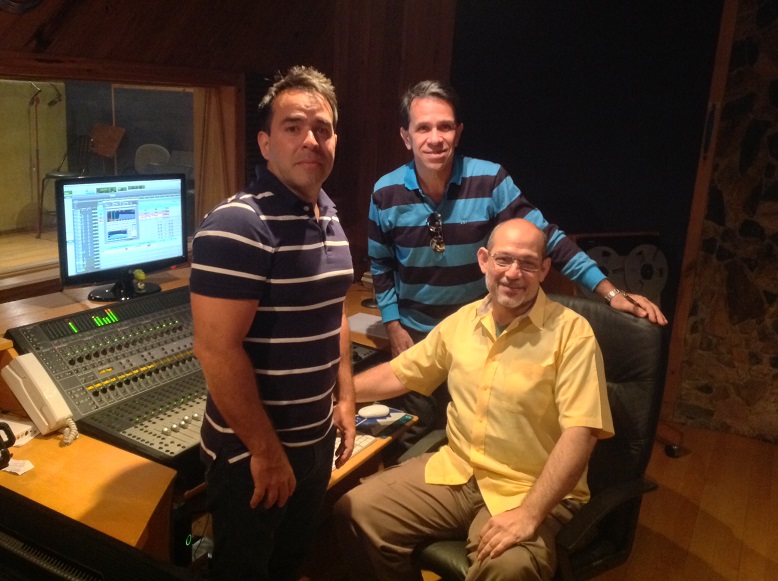
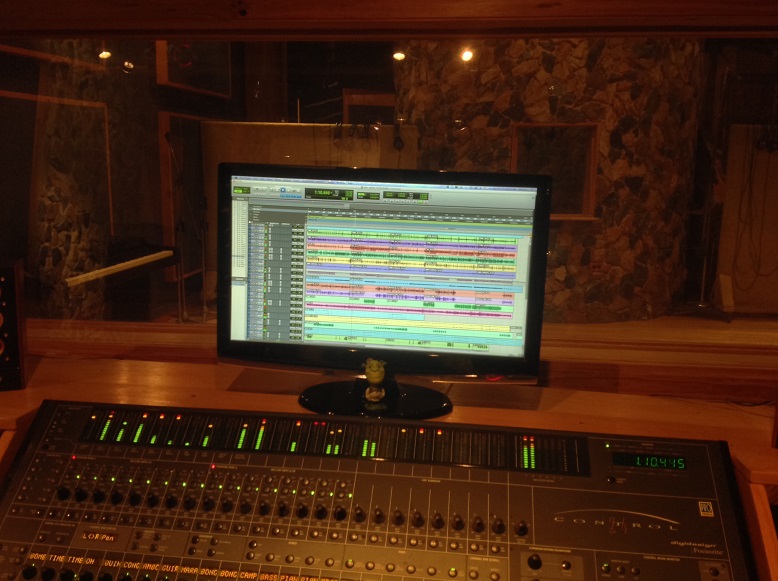
The Fidelis studio is located in Caracas Venezuela, Urb. El Cafetal, El Morao street, Qta. Tere, is an excellent recording studio, where national and international artists and groups created their records; An example of this, Maracaibo 15, Billo’s, Los Melodicos, Salserin, Los Adolentes, Oscar D’ León…, the Latin Dimension recorded 8 of its 20 albums.

Fidelis Studio - Photo 1
Fidelis Studio – Photo 1

Currently those in charge of the study are Javier and Francisco González, who succeed their father Antonio José González “Gonzalito” founder of the Study in 1952 with great professionalism; who, despite being a professional photographer, had the inspiration and musical taste that led him and his friend “Toro” to go to the United States where he studied audio, upon arriving in Venezuela he was recognized as the pioneer of Recording Engineering since he did not This race exists to date in Venezuela.

Fidelis Studio - Photo 2
Fidelis Studio – Photo 2

Javier and Francisco González narrate how the recording of music was at that time, where it was recorded on a “Reel” tape where the channels were previously mixed in the matrix and then passed to the “Stamper” which is a metal disc where it was kept. the information to the factory and later this information was transferred to the acetate disc through electromagnetism.

Fidelis Studio - Photo 3 of Reel Tape
Fidelis Studio – Photo 3 of Reel Tape

As the years went by, recording equipment was modernized, going from “vinyl” to analog cassettes, and now it is digitized to CD’s, and digital formats such as FLAC, mp3… to send over the internet through a computer and with this new technology the artist has higher quality and content capacity than the 33 ½ rpm LP disc to record their songs.

Fidelis Studio - Photo 4 sound program
Fidelis Studio – Photo 4 sound program

Now if the artist wishes to transfer an acetate disc or tape that he had, to a current digital format, the studio is able to make the transition without losing the quality of the music recorded on it.

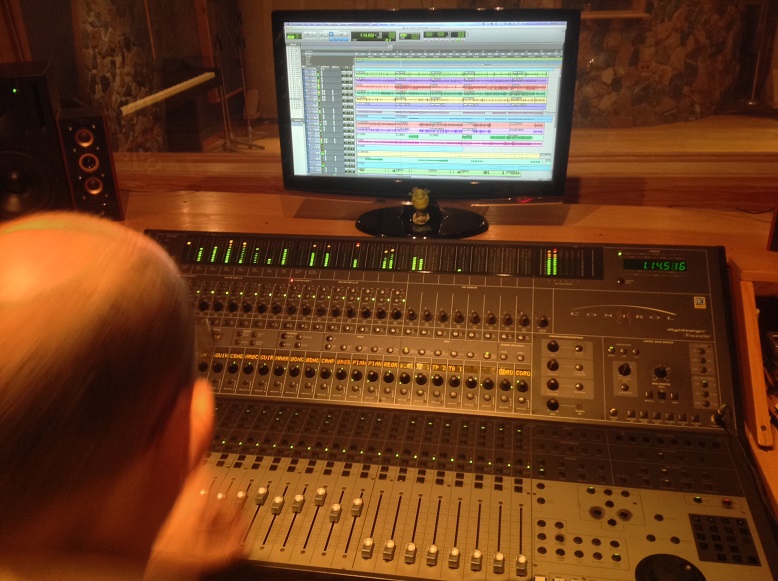
The current recording equipment has 72 channels, usually 24 are used. With each channel the instrument or voice of the artist(s) is recorded, and with the program they are unified, adjusting the appropriate volume levels where the artist or group listens to it and sees if it is to their liking or not, having the ability to modify it.

Fidelis Studio - Photo 5 - instruments and sound program
Fidelis Studio – Photo 5 – instruments and sound program

The studio and especially the room where the singers or members of a band or orchestra are placed has been designed in such a way that the sound that is produced has no alterations such as echo, making the sound that is generated the most pure possible.

They also make recordings both inside and outside the studio, since they have the right equipment (portable studio, headphones, microphones, amplifiers, recorder, among others), so that there would be no difference in the recording either inside the Fidelis Studio or in the outside.

Fidelis Studio - Photo 6
Fidelis Studio – Photo 6
Fidelis Studio - Photo 7
Fidelis Studio – Photo 7

And they tell us that their experiences over the years have been very lively, fun and interesting at the time of making the recordings since each singer or band has their own personality when playing and producing their music, whatever the genre they play, that in the studio all types of music are recorded today.

Fidelis Studio - Photo 8
Fidelis Studio – Photo 8
Fidelis Studio - Photo 9
Fidelis Studio – Photo 9

The most significant artist for the studio and especially for “Gonzalito” according to his children was Alfredo Sadel whose voice ranged from opera to the popular rhythm of Venezuela, later it was Simón Díaz, Mauricio Torrealba… although they are all very important.

Fidelis Studio - Photo 10
Fidelis Studio – Photo 10
Fidelis Studio - Photo 11
Fidelis Studio – Photo 11

The Grammy Awards are a distinction given by the National Academy of Recording Arts and Sciences to recognize an especially outstanding achievement of the music industry to a specific artist, obtaining this award is a great honor since an extensive study is carried out to the CD where sound engineers, producers and other specialists participate to determine the physical and sound quality of the CD created and to participate in this award you must register in the academy to participate.

Fidelis Studio - Photo 12
Fidelis Studio – Photo 12

The Studio currently has 2 Latin Grammy Awards:

1st Recording “Treasures of Venezuelan Music” with Ilan Chester (2010).

2nd Recording “Maria Teresa Chacin Canta Cuentos” with María Teresa Chacín (2012).

Fidelis Studio - Photo 13
Fidelis Studio – Photo 13
Fidelis Studio - Photo 14
Fidelis Studio – Photo 14

Where the team that makes up this renowned recording studio feels proud and happy for the work they are doing.

It should be noted that despite the situation in the country, they continue to provide the best service to singers and musical groups, whether national or international, being a strong competition for other recording studios in other countries, in relation to cost / quality. .

Fidelis Studio - Photo 15
Fidelis Studio – Photo 15

My person who had the opportunity to visit and interview its members, see, know and appreciate the type of study that is Fidelis I can say that the following:

“There are many recording studios in Caracas, Venezuela, but if you want your songs to be recorded with excellent audio quality in a recognized center, don’t think twice and choose them, they are the best”

Fidelis Studio - Photo 16
Fidelis Studio – Photo 16

For more information:

  • WebSite: http://fidelis.com.ve/
  • Teléfono: +58-212-9860722
Fidelis Studio Flyers
  • « Go to Previous Page
  • Page 1
  • Interim pages omitted …
  • Page 129
  • Page 130
  • Page 131
  • Page 132
  • Page 133
  • Interim pages omitted …
  • Page 418
  • Go to Next Page »

International Salsa Magazine (ISM) is a monthly publication covering salsa activities around the world and has been publishing since 2007. It is a worldwide network of volunteers coordinated by ISM Magazine. Together, we work to strengthen salsa events around the world.